
Islandness, Sub-State Agency, and the Resilience of Sasak MSMEs in the Mandalika Economic Zone
 10.21463/jmic.2026.15.2.05
Abstract
This article examines how the Sasak people of Lombok, Indonesia, navigate identity, cultural preservation, and economic survival amid an externally imposed Mandalika Economic Zone development project. Drawing on original fieldwork comprising ten in-depth semi-structured interviews with MSME actors including weavers, homestay operators, local traders, youth leaders, and a civil society representative, this article argues that islandness can be understood not merely as geographic insularity but as a condition of cultural boundedness and adaptive subjectivity. Such boundedness, as this article argues, constitutes a distinct form of resilience for Sasak communities. Rather than passivity in the face of large-scale commodification, Sasak MSMEs exhibit a form of sub-state agency: asserting cultural identity, negotiating market access, and contesting developmental narratives without formal political authority. Utilising Baldacchino’s theorisation of islandness as resource, Grydehøj’s framework of island identity politics, and some International Relations ideas on constructivist concepts of identity and norm contestation, this paper argues that the Sasak case shows how island communities mobilise cultural boundedness as a strategic asset in the global tourism economy.
Keywords
islandness, Lombok, Mandalika, Sasak, MSME, constructivism, cultural resilience, sub-state agency, tourism commodification
Introduction
The rapid growth of large-scale tourism development across the Indonesian archipelago has increasingly positioned local communities as both beneficiaries and subjects of externally designed economic projects. According to the Indonesian government’s own framework, the “10 New Balis” initiative aims to replicate the tourism success of Bali across other island destinations, attracting foreign investment, international events, and global visitors (Ramadhan and Kusumah, 2022). Within this framework, the Mandalika Economic Zone (or Kawasan Ekonomi Mandalika in Indonesian), is among its frontrunners. This demographic and economic ambition has significantly altered the landscape of Lombok’s southern coast, transforming what was once a peripheral region into an internationally recognised motorsport and resort destination.
Short et al. (2000) argue that globalisation has redefined localities as new arenas of international engagement, while Giddens (2003) highlights how global processes are increasingly experienced and contested at the community level. In the Mandalika context, this dynamic is particularly visible. On one side stands Indonesia Tourism Development Corporation (ITDC), a state-owned enterprise managing the Special Economic Zone with a mandate oriented toward investor attraction and international branding. On the other hand, there are Sasak MSMEs whose relationship with the zone is defined by uncertainties.
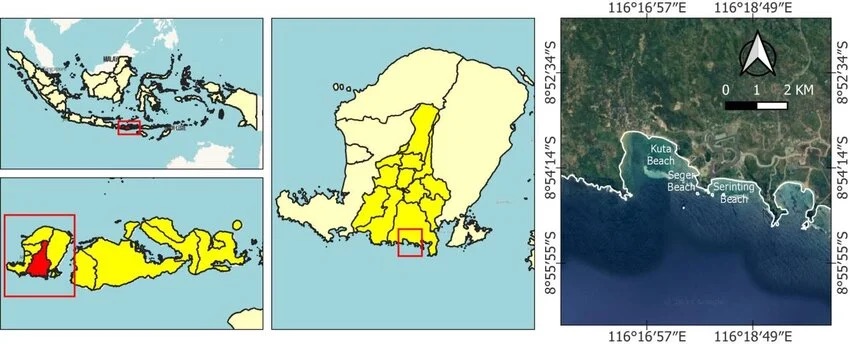
(Source: ResearchGate)
This paper addresses a gap in both island studies and international relations (IR) scholarship by examining how an island community’s cultural identity functions as a form of sub-state agency in the context of externally imposed development. The concept of islandness, as developed by Baldacchino (2004, 2008, 2012) and Grydehøj (2015, 2016), offers a productive framework for understanding why the Sasak response to Mandalika is shaped not only by economic interest but by a deeply rooted sense of cultural belonging that is inseparable from their island condition. When brought into dialogue with constructivist IR theory on identity contestation, islandness becomes a lens through which to understand a form of agency that is real and significant, even if it operates outside formal institutional channels.
This paper makes three interconnected arguments. First, that islandness in the Lombok context is not simply a geographic condition but a historically and culturally constituted identity that shapes how Sasak communities encounter external development. Second, that Sasak MSMEs exhibit a recognisable form of sub-state agency through culturally grounded practices of identity assertion, market negotiation, and norm contestation. Third, that cultural resilience in this context is an active, identity-driven practice that deserves serious attention in both island studies and IR scholarship, even as its limits in the face of structural exclusion must also be acknowledged.
Therefore, this paper proceeds as follows. The next section outlines the methods and theoretical framework, integrating island studies and constructivist IR. This is followed by contextual background on Lombok, the Sasak community, and the Mandalika project. The findings section presents the analytical results from fieldwork, organised thematically. The discussion section explores the broader implications for island studies and sub-state agency research, before the conclusion draws together the article’s key contributions.
Methods
The study used a qualitative exploratory research design to provide context-bound insights into the resilience mechanisms of indigenous Sasak Micro, Small and Medium Enterprises (MSMEs) operating within the Mandalika Special Economic Zone (SEZ). In the face of rapid socio-economic changes associated with the rise of mega-tourism in Central Lombok, this research favours depth, narrative detail, and local perspectives over statistical representativeness or demographic generalisation. Drawing on original fieldwork comprising ten in-depth semi-structured interviews with MSME actors, including traditional weavers, homestay operators, local traders, youth leaders, and a civil society representative, the study captures a range of perspectives on how indigenous entrepreneurs and community stakeholders negotiate the opportunities and constraints associated with tourism-led development.
Given the modest and purposive nature of the sample, this study does not claim to represent the experiences of all Sasak MSMEs or to draw conclusions about any specific occupational category, particularly where only one or two respondents were interviewed. The findings should therefore be understood as illustrative rather than statistically or demographically representative. This paper’s aim is to offer analytically grounded insights into locally situated experiences instead of generalisable claims.
Accordingly, this study does not seek to undertake a comparative cross-group analysis or develop conclusive typologies across the occupational sub-categories represented in the sample. Instead, the analysis identifies recurring themes, shared structural constraints, and diverse adaptive strategies that emerge across participants' narratives, while recognising the heterogeneity of individual experiences. The aim is not to generalise across categories of actors but to illuminate how indigenous Sasak entrepreneurs and community stakeholders make sense of, and respond to, state-led economic modernisation within the specific context of the Mandalika Special Economic Zone.
The authors also acknowledge their positionality in reference to the field site and research participants. The research team consists of Indonesian academics not affiliated with governmental development agencies, political parties, or commercial companies in the Mandalika Special Economic Zone. The authors address the issue only from the academic perspectives of local economic resilience, socio-spatial justice and sustainable development. Thus, the authors are contextually situated outside the Sasak community and do acknowledge that this may impact both data collecting and interpretation. Therefore, to build trust and reduce outsider bias during interviews, we used culturally respectful practices by working with local community guides to help connect with participants and regularly reflected on our own perspectives throughout the analysis. Recognising that as outsiders, we might lack the firsthand experience of local Sasak entrepreneurs, our analysis centers directly on the stories told by the participants themselves.
Islandness as Condition and Resource
Island studies has worked over the past two decades to challenge the treatment of islands as merely peripheral or derivative, defined primarily by what they lack relative to continental centres (Baldacchino, 2004; Pugh, 2013). The concept of islandness has been theorised in increasingly nuanced terms. For Baldacchino (2004, p. 272), islandness is “an emotive state, a distinct way of being in the world,” shaped by geographic separation, bounded community life, and a particular relationship with the sea as both limit and connector. Importantly, Baldacchino (2008, 2012) argues that islandness should not be conceived only as constraint. It can function as a resource, or a foundation for identity construction, political assertion, and strategic positioning in relation to larger states or global economic actors.
Grydehøj’s work extends this argument in several important ways. His research on island identity politics demonstrates that island communities actively deploy their cultural, historical, and linguistic distinctiveness as a means of carving out space within larger political and economic configurations (Grydehøj, 2015, 2016). Islands, he argues, are not passive recipients of mainland or global processes but active agents in constructing and deploying their identities. Grydehøj and Kelman (2017) further argue that resilience on islands is deeply intertwined with cultural practice and social cohesion. Those are factors that can be simultaneously strengthened and threatened by tourism development. Stratford et al. (2011) add to this by arguing for a relational understanding of islands that are not only defined by isolation but through their ongoing negotiations with external forces, a dynamic that is particularly evident in the Mandalika case.
The insularity that characterises Lombok and its Sasak communities is therefore both material and symbolic. Geographically, Lombok is a relatively small island of approximately 4,725 km², separated from Bali to the west by the Wallace Line and from Sumbawa to the east by the Alas Strait. These geographic features have historically shaped patterns of trade, migration, and political authority. But insularity also operates at the level of culture and identity. Sasak communities have maintained distinctive adat (customary law and practice), including textile traditions, architectural forms, and cosmological beliefs that have long distinguished them from both their Balinese neighbours and the Javanese cultural hegemony of mainland Indonesia. This cultural boundedness is central to what this paper means by “islandness.”
Constructivism and Socially Constructed Identity
The intersection of island studies and constructivist IR remains underexplored in the existing literature. Constructivism, most associated in IR with Wendt (1992, 1999), Hopf (1998), and Barnett (2005) proceeds from the premise that the identities and interests of social actors are not fixed or predetermined but constructed through interaction, norm diffusion, and shared understandings. For Wendt (1992), identity shapes interest, as what an actor wants is inseparable from who it understands itself to be. For Hopf (1998), identity is plural, contextual, and always implicated in relations of power, where the construction of self is simultaneous with the construction of others.
Applied to island communities, constructivism offers a way to understand how Sasak identity functions not merely as a cultural artefact but as an active, contested, and strategically relevant construct. The arrival of the Mandalika project with its international tourism branding does not simply transform the economic landscape of the region. Rather, it introduces new identity pressures that threaten to commodify the local culture as a tourism product, repositioning Sasak adat as spectacle rather than social norm. This also implies a potential prioritisation of identities that are “modern,” “global,” and “investor-oriented” over those that are “traditional,” “local,” and “community-based.”
The constructivist question is: how do Sasak communities respond to these identity pressures? The answer, as the fieldwork data suggests, involves neither wholesale accommodation nor wholesale resistance but a complex negotiation; a form of what Barnett (2005) calls “identity work,” in which communities actively reinterpret, selectively adopt, and firmly contest elements of the new order in ways that preserve what they identify as core to their social being.
Sub-State Agency of Sasak MSMEs
IR scholarship has increasingly attended to sub-state actors: regional governments, diaspora communities, indigenous groups, and civil society organisations as participants in the global order, not merely as targets of its effects (Tavares, 2016; Aldecoa & Keating, 1999). To explain the activities of those sub-state actors, usually we employ the lens of paradiplomacy, or the conduct of quasi-diplomatic activity by sub-national governments. However, there are others, less institutionalised and more socially embedded, that the paradiplomacy framework does not fully capture.
What this paper observes in the Mandalika case is a form of sub-state agency that does not map onto paradiplomacy, precisely because the Sasak community actors involved are not governmental or quasi-governmental entities. They are MSMEs that consist of weavers, warung owners, homestay operators, youth organisation leaders, and civil society representatives. Their agency is expressed not through formal negotiation with state or international actors but through the daily practices of cultural assertion and collective identity maintenance. This resonates with what Pelling and Manuel-Navarrete (2011) term “transformative resilience” or the capacity of communities to reshape rather than merely absorb the conditions imposed upon them. In a similar sense, Bevir and Rhodes (2006) describe this as “decentred agency” or the exercise of meaningful influence by actors operating outside formal institutional channels.
The concept of norm contestation from constructivist IR is particularly useful here. Finnemore and Sikkink (1998) theorise the norm life cycle which includes the emergence, diffusion, and internalisation of international norms. On the other hand, they also acknowledge that norms are contested, especially at the local level. Sasak MSME actors, this paper argues, are engaged in precisely this kind of norm contestation: pushing back, in culturally grounded ways, against the norms of large-scale tourism commodification and cultural spectacularisation that they think the Mandalika project is imposing.
The Sasak are the indigenous majority population of Lombok, numbering approximately three million people. Their society is organised around a distinctive adat system encompassing customary law, social hierarchy, marriage practices, agricultural ritual, and textile production. Islam is central to Sasak identity. Most Sasak are Muslim, though the character of Islam has historically been infused by pre-Islamic Wetu Telu practices in some communities, and the interaction between Islamic and pre-Islamic elements has produced a cultural fabric of considerable complexity (Cederroth, 1996; Telle, 2009).
Textile production, particularly the hand-woven songket fabrics, occupies a special place in Sasak cultural life. In traditional communities such as Ende and Sade, both adjacent to the Mandalika zone, weaving is not simply an economic activity but a rite of passage where women are expected to demonstrate weaving competence before they are permitted to marry. The motifs of Sasak textiles carry cosmological and social significance, encoding relationships between human communities, the natural world, and the divine. This embeddedness of material production in social meaning is precisely the kind of cultural boundedness that islandness theory, and specifically Baldacchino’s notion of islandness as resource, helps to demonstrate.
Lombok’s recent history has been shaped by a series of external disruptions: colonial incorporation, post-independence centre-periphery dynamics within the Indonesian state, the devastating earthquakes of 2018, and the COVID-19 pandemic. These experiences have produced a community with significant exposure to external disruption while retaining strong internal social cohesion, not excluding in the wake of the Mandalika Economic Zone establishment.
The Mandalika Economic Zone was designated a Special Economic Zone in 2017 under the administration of President Joko Widodo, forming part of a broader national strategy to develop tourism destinations across the Indonesian archipelago. The zone covers approximately 1,175 hectares along the southern coast of Lombok, centred on the Kuta area of Lombok Tengah regency. It is managed by Indonesia Tourism Development Corporation (ITDC), a state-owned enterprise responsible for land management, infrastructure development, and the attraction of private investment. The construction of the Pertamina Mandalika International Street Circuit was the project’s centrepiece, completed in 2021. The circuit is now capable of hosting MotoGP and World Superbike events.
The development has brought significant infrastructure investment to the region, including a new bypass road, upgraded utilities, and an expansion of international hotel and resort developments. Tourism arrivals to Lombok increased markedly in the years following the first MotoGP events from 2022 to 2025, with the zone attracting international media attention and a significant spike in international visitors around race weekends.
At the same time, the development has been accompanied by considerable social costs: the relocation of communities living within the designated zone, land disputes, environmental degradation through hillside excavation, and the systematic exclusion of local MSMEs from the most economically lucrative spaces within the zone. Stand rental fees at event bazaars, minimum investment thresholds for businesses operating within KEK boundaries, and the preferential treatment of large investors in land allocation have effectively created a two-tier economy: a globally oriented hospitality and entertainment sector with limited linkages to local businesses operating on its margins.
Findings and Analysis
The most striking feature of the fieldwork interviews is the degree to which cultural identity functions not as background context but as active social infrastructure. For Ibu Danker, a 42-year-old weaver from Desa Ende, for instance, the origins of her enterprise are inseparable from the social norms of her adat community. In her own words, it is mandatory that all women in the village be able to weave before they are allowed to marry and are considered independent. The imperative to weave is simultaneously an economic activity, a social obligation, and a marker of belonging that defines participation in Sasak community life.
This embeddedness reflects what Baldacchino (2008) identifies as a distinctive feature of island sociality: the tendency for small, bounded communities to develop dense networks of social obligation and identity practice that serve simultaneously as cohesive and protective forces. On islands, culture is not merely expressed but lived as it structures daily life and social reproduction in ways that resist simple commodification. The cooperative sales system in Ende where finished textiles are pooled and sold collectively is itself a form of bounded economic solidarity that resists the individual market logic that tourism development typically imposes.
Similarly, Ibu Fanani from Sade describes how the motifs of her weavings draw on the cosmological and aesthetic universe of Sasak culture. As she puts it: “The motif of Puteri Nyale, the motif of Subhanale, the motif of serat penginang, and other motifs are also inspired by the fences of traditional Sasak houses and Sasak culture, while the colours are inspired by the rainbow.” Weaving, in this account, is a practice of material rendering of Sasak islandness. The fact that Ibu Fanani also describes adapting some products to modern fashion trends reflects the adaptive dimension of this cultural boundedness. It refutes the notion that the locals are against change, but a strategic negotiation with it, retaining the identity core while accommodating markets.
As for the commodification boundary, Lalu Muhammad Zaki, a 33-year-old youth leader and travel entrepreneur from Kuta, articulates the distinction between what can be commodified and what cannot with considerable clarity. According to him, there are cultural ceremonies that in their very sense are presented as attractions, like peresean and bau nyale. Such rituals are deliberately performed as entertainment and selling points. But for sacred cultures like wedding traditions, not all circles can access them. This reflects a sophisticated form of cultural boundary-maintenance: a deliberate demarcation between the performable and the protected, which allows community members to participate in tourism’s cultural economy without surrendering the core of their social life to it. Grydehøj (2016) observes a similar dynamic in his research on small island communities in Europe, where tourism-facing cultural performance coexists with a protected interior domain of practice that retains its social meaning precisely because it is not exposed to the tourist gaze.
The Uneven Encounter: Structural Exclusion and Its Discontents
The constructivist framework helps to illuminate not only identity formation but the structural dynamics of norm contestation. Across almost all interviews, a consistent narrative emerges: the Mandalika project has generated economic activity, but the distribution of that activity is profoundly uneven, and the norms governing access are experienced as imposed from outside and oriented toward the interests of large capital.
Lalu Alamin, chairman of Solidaritas Warga Ikut Membangun (Indonesian for “Citizen’s Solidarity in Building”), a local NGO that has served as one of the few organised mediators between Sasak communities and ITDC, offers an analytically salient account of this structural dynamic. As he explains: “They (ITDC) use a rental fee system when people want to rent a sales stand, and that stand is priced based on its strategic location.”
The effect, according to him, is to exclude the smallest operators from the most commercially visible spaces within the zone. This is precisely where those spaces that the MotoGP event economy generates. The architecture of access in Mandalika thus reproduces, at the local level, what constructivists might describe as a hegemonic norm structure: a set of rules and expectations that naturalise the primacy of investor capital and position local small-scale enterprise as peripheral and conditional. Amaq Tania, a homestay operator from Kuta, describes the practical consequences of this structure. As he observes:
“The only ones greatly benefited are the large villas and hotels in the vicinity of the zone. For small homestays like mine, it’s just business as usual. When we want to build a dwelling within the zone, we have to comply with government standards, for example by building at least a three-star hotel. And that is something we obviously cannot do.”
This is norm contestation in its most direct form, where a local actor identifies how ostensibly neutral regulatory standards operate to exclude him, and articulates the injustice of that exclusion in terms that, while not formally political, constitute a clear challenge to the developmental logic that the Mandalika Zone embodies.
Ibu Kasmiati, the local warung owner operating on the Mandalika bypass road, captures the spatial dimension of this exclusion. She observes that the pattern of purchasing from tourist visits more often occurs in certain places, namely places owned by the large businesses. As Grydehøj and Kelman (2017) observe in analogous island tourism contexts, the formalisation of tourist economies tends to marginalise the informal, socially embedded economic practices through which island communities have traditionally maintained their resilience.
Also, Alamin’s observation notes that the zone’s buildings display mostly Sumbawanese rather than Sasak architectural ornaments. Sumbawanese is an ethnic group from the neighbouring Sumbawa Island, not from Lombok Island. This speaks directly to what constructivists identify as identity erasure: the substitution of one community’s symbolic order for a more marketable one within a space the first community regards as its own. From a constructivist perspective, this is significant, as the material environment of the Mandalika Zone communicates a norm of cultural irrelevance for Sasak identity, asserting through built form that the Sasak symbolic universe is not the legitimate reference point for development in this space.
Sub-State Agency: Cultural Assertion as Norm Contestation
Despite these exclusions, Sasak MSMEs exhibit a consistent and recognisable form of sub-state agency. This agency is not exercised through formal institutional channels but through a repertoire of culturally grounded practices that assert Sasak identity, build community solidarity, and contest the norms of commodification on terms the community itself defines.
The most visible dimension of this agency is the strategic preservation and selective deployment of cultural practice. The youth, represented by the karang taruna (youth organisation) serves as a crucial vehicle for this work. The organisation has conducted training in pembayunan (traditional Sasak oratory practice) and documented traditional ceremonies for social media circulation, explicitly framing this as cultural preservation in the face of globalisation. As he explains: “We in Karang Taruna Samudra Desa Kuta once conducted pembayun training and participated in other Sasak traditional practices, then we posted it on social media as a way of introducing Sasak culture.” This is community-level norm entrepreneurship in the sense described by Finnemore and Sikkink (1998): the active promotion of an alternative normative framework, one in which Sasak cultural continuity matters as much as the tourism economy.
SWIM’s intervention during the first MotoGP event is particularly interesting to observe. When the event organisers brought in a pawang hujan (rain shaman) from outside the region rather than employing a local practitioner, SWIM organised a public protest. As Alamin recounts:
“When the media was abuzz with the news of Mbak Rara, that popular rain shaman from Bali opening the MotoGP ceremony, we protested. After we protested, praise God, the following year we were able to use a local rain shaman with the same understanding of local wisdom.”
The episode illustrates sub-state agency in practice: a civil society actor, without formal authority, successfully contesting an identity norm whose assumption suggests that local knowledge is inferior to external expertise. Barnett (2005) argues that such episodes of identity-based norm contestation are central to the way communities maintain their sense of agency in encounters with more powerful actors.
Amaq Tania, a homestay owner, represents a different register of sub-state agencies. In his case, the deliberate integration of Sasak cultural practice into a commercial offering in ways that both monetise cultural authenticity and reproduce it. He describes inviting guests to observe and participate in local ceremonies, noting that “guests are very happy to be invited to follow the traditional ceremony process” and that he has been able to generate supplementary income by renting out traditional clothing. He also maintains a deliberately local aesthetic in the homestay environment, incorporating bamboo fencing and ceilings and keeping domestic animals as part of the surroundings. This reflects what Baldacchino (2012) describes as leveraging islandness as resource, turning the distinctiveness of Sasak material and ceremonial culture into a competitive advantage relative to the standardised hospitality while simultaneously sustaining the cultural practices that give that distinctiveness its meaning.
The emphasis placed by both youth leaders on human resource quality as the key to future competitiveness reflects a constructivist orientation toward identity-building as a long-term strategy. The aforementioned examples show that what is currently happening in Mandalika is not passive acceptance of the existing order, but a strategic stance that refuses the logic of dependency. It resonates with what Pelling and Manuel-Navarrete (2011) describe as the political dimension of resilience as the capacity to imagine and work toward alternative futures, not merely to absorb present shocks.
Event-Dependency, Vulnerability, and the Limits of Resilience
The resilience documented in this fieldwork is partial but nonetheless real. A significant structural vulnerability runs through all the interview accounts: the near-total dependence of economic benefit on event cycles, particularly the MotoGP. This dependency is itself a product of islandness in its more constraining register such as limited market depth, geographic peripherality, and the structural subordination of local economy to external event agendas that characterise peripheral island tourism economies (Baldacchino, 2006; Scheyvens & Momsen, 2008).
Ibu Danker’s account illustrates the cyclical character of this vulnerability clearly. As she explains: During the first and second MotoGP events, the number of visitors and buyers increased significantly. But after that, visitors started to dwindle depending on whether there was an event at Mandalika. The event-dependent character of the tourism economy means that the structural gains of Mandalika are fragile and unevenly distributed. Income spikes during MotoGP weekends but fails to generate the sustained, everyday market demand that would constitute genuine economic transformation for small operators.
Ibu Fanani’s observation that visitor numbers have increased by around 30 percent since the Mandalika’s establishment, but that “the ones who shop or buy are not many,” captures a crucial gap between tourist arrivals and actual economic benefit for local MSMEs. The anatomy of this gap is partly spatial and partly structural, as the consumption patterns of MotoGP tourists skew toward international-brand hospitality and entertainment rather than local artisan products. This is consistent with what Britton (1982) identified in his foundational analysis of tourism in small peripheral economies: the enclave character of resort-based tourism, in which the economic surplus generated by visitor spending is captured by large operators and largely repatriated, leaving local MSMEs in a structurally subordinate position.
Although available occupancy data remain limited, figures from one recent event provide an illustrative example of this pattern. During the 2025 Korpri Fun Night Run, hotel occupancy increased from 51.3 per cent on the day before the event to 83 per cent during the event, before falling sharply to 32 per cent on the following day (ITDC, 2025). While these figures relate to a single event rather than the tourism economy as a whole, they nonetheless illustrate how visitor demand in Mandalika can become highly concentrated around major events, lending empirical support to interviewees' accounts of an event-dependent local economy.
On the other hand, the water crisis articulated by Amaq Tania is a particularly vivid illustration of what Alamin describes as the non-inclusive character of the development. As Mandalika's infrastructure systematically prioritises large hotels in water distribution, almost half of the traditional hostels' income is spent on purchasing clean water. This experience also resonates with broader evidence from Mandalika, where a study by Moyle et al (2022) has documented marked inequalities in access to water between hotels and surrounding communities, highlighting how tourism development can reinforce rather than alleviate existing infrastructural disparities. That this basic infrastructural inequity persists despite years of community complaint speaks to the absence of effective mechanisms for sub-state actors to enforce their rights vis-à-vis a development authority with both institutional and legal advantages.
Ibu Kasmiati’s assessment of her own future is perhaps the most sobering in the dataset. Speaking of the land she occupies, which is now legally ITDC property, she says:
“Because the place I currently use for trading is an area owned by ITDC, perhaps in the future this place will be demolished. There is no greater hope that we put in this business, because the results we get are only enough to meet daily needs. Perhaps when I stop trading, there is no other option but to become a farmer or casual labourer.”
This is resilience at its most precarious limit, which demonstrates a community member who has maintained her business through years of development pressure, but has no expectation that the development surrounding her will provide for her security. The constructivist dimension here remains important: Kasmiati is not without identity or agency, but the material conditions she faces constrain the degree to which cultural resilience can translate into economic security.
The Political Unconscious of Islandness
Baldacchino (2010) argues that island peoples frequently maintain a particularly intense sense of territorial attachment, what he describes as an island-land nexus. When that bounded space is reorganised by external authority, it does not merely displace economic activities; it disrupts an identity relationship with the land itself. Alamin’s frustration that Mandalika’s buildings do not resemble Sasak architecture, that the zone does not feel like Lombok, reflects precisely where the experience of spatial identity displacement, and the recognition that the bounded island world in which community identity is rooted has been redesigned by others according to others’ priorities.
From an IR standpoint, this represents a form of norm contestation that operates at the intersection of territorial and cultural identity. This is a combination that, as Wendt (1999) observes, is among the most powerful and persistent drivers of community identity politics. The Sasak community is not claiming sovereignty over Mandalika. But it is asserting a prior and continuing claim to the identity of the space, showing a claim expressed through demands for Sasak architectural forms, for local cultural practitioners at international events, and for equitable market access for local MSMEs. These are the gestures of sub-state agency, namely a vernacular politics of an island people asserting that this place belongs to them.
Ultimately, the Mandalika case offers several contributions to the emerging dialogue between island studies and IR scholarship. First, it demonstrates the analytical value of theorising islandness not only as a geographic condition but as a constructivist resource. The Sasak community’s capacity for cultural resilience is not simply a matter of holding on to traditional practices in the face of globalisation. It is an active process of identity construction, norm contestation, and social boundary maintenance that is deeply shaped by the specific condition of living as a bounded people on a bounded island. The insularity that might appear to make the Sasak community more vulnerable to external development pressures. Despite the limited market scale, geographic peripherality, and dependence on external visitors, those factors uniquely become the source of the socio-cultural cohesion that make resilience possible. This is the paradox that Baldacchino’s theorisation of islandness as resource is designed to illuminate, and the Mandalika case provides it with empirical grounding in the Southeast Asian context.
Second, this paper contributes to the theorisation of sub-state agency in IR. The literature on paradiplomacy tends to focus on formally constituted sub-national governments exercising quasi-diplomatic functions (Tavares, 2016; Aldecoa & Keating, 1999). The Sasak MSMEs and civil society actors documented here do not fit this model. But they are clearly agents rather than mere structures: they make choices, contest norms, deploy cultural resources, and exercise influence in their encounters with state and capital. A more inclusive theorisation of sub-state agency that encompasses the culturally embedded, socially distributed, and often informal forms of agency would benefit from cases like this one.
Third, the analysis points to the limits of resilience as an adequate framework for island communities facing structural exclusion. The cultural resilience documented in this paper is genuine and significant. But it does not, by itself, address the material conditions such as land insecurity, water scarcity, market exclusion, and regulatory disadvantage. Scheyvens and Momsen (2008) argue that for tourism to genuinely support island community wellbeing, it must involve not just the commodification of local culture but the redistribution of economic power. The Mandalika case suggests this redistribution has not occurred, and that in its absence, cultural resilience alone cannot substitute for structural justice.
Finally, there is a methodological contribution for island studies in this paper. The integration of constructivist IR frameworks with island study offers a way to bridge the gap between the macro-level analysis characteristic of IR and the micro-level grounding of island studies ethnography. The result is an analytical vocabulary that can hold together the global (MotoGP, foreign investment, international tourism branding) and the intimate (weaving as marriage rite, rain shamans, bamboo homestays) within a single interpretive frame. This bridging function is, this paper argues, among the distinctive contributions that island studies can make to social science more broadly.
Study Limitations
A primary limitation of this study lies in its small sample size (N=10) and the specific, small-scale nature of the group we interviewed. The sub-distribution in business sectors is limited. However, this qualitative method provides rich and highly contextualized insights into the lived experiences and adaptive strategies of native Sasak Micro, Small, and Medium Enterprises (MSMEs) to the rapid transformation of the Mandalika Special Economic Zone (SEZ). Some occupational categories (e.g. homestay operators, traditional weavers, youth leaders, local traders) are represented by only one to three individuals. Therefore, the empirical findings and thematic patterns presented in this study are context-bound and not intended to be generalizable to the full trade categories or the general MSME community in Central Lombok.
We are aware that small qualitative cohorts cannot reflect the whole spectrum of operational variability, financial risk exposure or institutional access across the region. However, this limitation is consistent with the main aim of the study, which is to provide a nuanced and exploratory rather than confirmatory basis. This study highlights crucial socio-economic vulnerabilities and agency by examining detailed individual pathways of resilience among local players facing state-led mega-tourism expansion. The qualitative results of this study provide basic conceptual frameworks and thematic indicators for further mixed-methods or large-scale quantitative investigations to assess long-term economic sustainability in Mandalika.
Conclusion
The results of this study show that the Sasak people of Lombok are not simply subjects of the Mandalika development project. They are culturally grounded social agents who navigate the pressures of large-scale tourism commodification on the basis of an islandness that constitutes both their vulnerability and their resilience.
This article has argued that understanding these practices requires a theoretical framework that takes both islandness and constructivist IR seriously. Islandness, as cultural boundedness, territorial attachment, and historically constituted social identity, shapes the specific character of Sasak resilience that distinguishes it from generic community resilience narratives and grounding it in the particular condition of being Sasak on Lombok. Constructivist IR, with its attention to identity and norm construction, provides the analytical facet to understand how that resilience operates as a form of political practice rather than merely cultural survival.
In conclusion, this paper shows that the Mandalika case offers a story of agency, where a community that has not surrendered its identity to the demands of global tourism branding. Thus, this paper offers an argument that understanding sub-state agency requires moving beyond formal institutional actors to recognise the culturally embedded, everyday forms of resistance and negotiation through which island peoples maintain their place in the world. In this, the Sasak of Mandalika are neither exceptional nor alone. They are one instance of a broader realm of marginalised communities that exist across the world in forms that are both uniquely particular and structurally shared.
References
- Aldecoa, F., Keating, M. (Eds.), 1999. Paradiplomacy in Action: The Foreign Relations of Subnational Governments. Frank Cass, London.
- Baldacchino, G., 2004. The coming of age of island studies. Tijdschrift voor Economische en Sociale Geografie, 95(3), pp. 272–283.
- Baldacchino, G., 2006. Managing the hinterland beyond: Two ideal-type strategies of economic development for small island territories. Asia Pacific Viewpoint 47: 45–60.
- Baldacchino, G., 2008. Studying islands: On whose terms? Some epistemological and methodological challenges to the pursuit of island studies. Island Studies Journal 3: 37–56.
- Baldacchino, G., 2010. Island Enclaves: Offshoring Strategies, Creative Governance, and Subnational Island Jurisdictions. McGill-Queen's University Press, Montreal and Kingston.
- Baldacchino, G., 2012. The lure of the island: A spatial analysis of power relations. Journal of Marine and Island Cultures, 1(2), pp. 55–62.
- Barnett, M., 2005. Social constructivism, in: Baylis, J., Smith, S. (Eds.), The Globalization of World Politics: An Introduction to International Relations, third ed. Oxford University Press, Oxford, pp. 251–270.
- Bevir, M., Rhodes, R.A.W., 2006. Governance Stories. Routledge, London.
- Britton, S.G., 1982. The political economy of tourism in the Third World. Annals of Tourism Research, 9(3), pp. 331–358.
- Cederroth, S., 1996. From ancestor worship to monotheism: Politics of religion in Lombok. Temenos.
- Finnemore, M., Sikkink, K., 1998. International norm dynamics and political change. International Organization, 52(4), pp. 887–917.
- Giddens, A., 2003. Runaway World: How Globalization is Reshaping Our Lives. Routledge, London.
- Grydehøj, A., 2015. Island city formation and urban island studies. Area 47: 429–435.
- Grydehøj, A., 2016. Toward subnational cosmopolitanism: Understanding the potential benefits of island insularity. Island Studies Journal, 11(1), pp. 327–344.
- Grydehøj, A., Kelman, I., 2017. The eco-island trap: Climate change mitigation and conspicuous sustainability. Area 49: 106–113.
- Hopf, T., 1998. The promise of constructivism in international relations theory.International Security, 23(1), pp. 171–200.
- InJourney Tourism Development Corporation (ITDC), 2025. Okupansi hotel di The Mandalika tembus 83% selama Korpri Fun Night Run 2025. Press release, 13 December. Available at: https://www.itdc.co.id/press-release/okupansi-hotel-di-the-mandalika-tembus-83-selama-korpri-fun-night-run-2025-20251213131657.
- Moyle, B., Moyle, C.-L., Ruhanen, L., Weaver, D., Hadinegoro, R., 2022. Safer destinations, healthier staff and happier tourists: Opportunities for inclusive water, sanitation and hygiene in tourism. Journal of Outdoor Recreation and Tourism, 40, 100458.
- Pelling, M., Manuel-Navarrete, D., 2011. From resilience to transformation: The adaptive cycle in two Mexican urban centers. Ecology and Society, 16(2), p. 11.
- Pugh, J., 2013. Island movements: Thinking with the archipelago. Island Studies Journal, 8(1), pp. 9–24.
- Ramadhan, G., Kusumah, A.H.G., 2022. The 10 New Bali Project in Indonesia, real or gimmick. JHSS (Journal of Humanities and Social Studies), 6(1), pp. 30–34.
- Scheyvens, R., Momsen, J.H., 2008. Tourism and poverty reduction: Issues for small island states. Tourism Geographies, 10(1), pp. 22–41.
- Short, J.R., Dávila, A., Reeves, J., 2000. Globalization and the City. Blackwell, Oxford.
- Stratford, E., Baldacchino, G., McMahon, E., Farbotko, C., Harwood, A., 2011. Envisioning the archipelago. Island Studies Journal, 6: 113–130.
- Tavares, R., 2016. Paradiplomacy: Cities and States as Global Players. Oxford University Press, Oxford.
- Telle, K., 2009. Entangled biographies: Rebuilding a Sasak place of worship. Ethnos 74: 195–222.
- Wendt, A., 1992. Anarchy is what states make of it: The social construction of power politics. International Organization, 46(2), pp. 391–425.
- Wendt, A., 1999. Social Theory of International Politics. Cambridge University Press, Cambridge.