
Maritime Cultural Logic in the Entrepreneurial Practices of Fishpond Farmers on the North Coast of West Java
 10.21463/jmic.2026.15.2.13
Abstract
The coastal communities of Cirebon inhabit a dynamic socio-ecological environment characterized by seasonal fluctuations, tidal flooding, declining marine yields, and limited access to markets and capital. While previous studies have emphasized economic and technical aspects of coastal entrepreneurship, limited attention has been given to the cultural logic underlying entrepreneurial practices. This study examines how maritime cultural logic shapes fishpond entrepreneurship through ecological adaptation, family organization, and local cultural values. Using an ethnographic approach, data were collected through participant observation, in-depth interviews, and field observations. The findings show that livelihood diversification across fishing, aquaculture, and agriculture enables households to manage environmental uncertainty and stabilize income. The family serves as a production unit and a source of social capital through labor sharing, trust-based networks, and risk-sharing mechanisms. Gendered divisions of labor strengthen household resilience, while local values such as tabah (perseverance) and nerimo (acceptance of uncertainty) provide moral resources for entrepreneurial decision-making. The study demonstrates that coastal entrepreneurship is a culturally embedded practice shaped by maritime habitus, family social capital, and local values thereby contributing to a deeper understanding of adaptive and sustainable entrepreneurship in coastal communities.
Keywords
maritime culture, entrepreneurship, fishpond farmers, social capital, gender
Introduction
Coastal regions are socio-ecological spaces marked by persistent uncertainty. In this context, seasonal variability such as shifts in water quality, extreme weather, and tidal fluctuations shape livelihood conditions characterized by risk and instability. For coastal communities, the sea functions as an economic resource and cultural arena that informs moral values, worldviews, and social organization. In these dynamic environments, coastal communities develop adaptive and transformative strategies to sustain livelihoods. An important manifestation of adaptive practices is coastal entrepreneurship, economic activities embedded in ecological knowledge, intergenerational learning, and localized social networks (Kepel et al., 2024; Suadi et al., 2022)
Entrepreneurship in coastal settings is developed from culturally conditioned experiences of the community members in navigating ecological uncertainty. Livelihood practices often result from the interplay between environmental adaptation, income diversification, and the consolidation of social relationships (Nasution and Hartono, 2017; Sanjoto et al., 2021). In this configuration, the family and household function as a productive unit and central institution for generating and transmitting social capital (Fatmasari, 2016; Zamzami et al., 2017). Therefore, understanding coastal entrepreneurship requires conceptualizing economic activity as culturally embedded rather than purely instrumental.
Extensive studies show that entrepreneurial behavior is shaped by cultural values, kinship relations, community norms, and local ecological knowledge. These cultural foundations influence how coastal communities interpret opportunity, assess risk, and make business decisions. Analyzing coastal entrepreneurship requires attention to the cultural, social, and moral dimensions that structure everyday economic life (Satria, 2015).
Cirebon Regency, located on the northern coast of West Java, provides a compelling context for examining the relationship. The region’s maritime economy, shaped by capture fisheries, aquaculture, and brackish-water farming, depends on the ability to interpret ecological signals, manage tidal risks, and respond to seasonal change. For the coastal communities, fishpond farming, fishing, and agriculture are livelihood activities and central elements of a maritime cultural logic that structures the relationships with the environment, family, and risk. The maritime culture is shaped by the position at the intersection of Sundanese coastal traditions and Central Javanese maritime influences. Strong Islamic coastal values, histories of labor migration, and robust kinship systems among the community have contributed to a distinctive economic ethos (Supriadi, 2023). Local values such as tabah (perseverance), nerimo (acceptance), and respect for ecological balance have provided the community with moral frameworks for navigating uncertainty in aquaculture and fluctuating marine yields (Fatmasari, 2016). Livelihood strategies in Cirebon are marked by flexibility. Households frequently diversify between fishing, aquaculture, and agriculture to buffer against ecological instability, a pattern consistent with maritime adaptations across Indonesia and Southeast Asia. This diversification strengthens economic resilience and local maritime identity (Utami et al., 2023; Wahadi et al., 2025; Zamzami and Effendi, 2023).
Recent studies report the importance of locally grounded and culturally embedded forms of entrepreneurship for sustaining coastal and island economies. Studies of maritime communities elsewhere, such as Mendas' (2020) analysis in the Zadar archipelago, underline the centrality of social networks and cultural values in shaping entrepreneurial practice. In Cirebon, fishpond farmers depend on trust-based relationships and family social capital, contrasting with hierarchical patron–client structures documented in other Indonesian fisheries. This suggests that coastal economic arrangements are deeply dependent on local cultural contexts (Arief, 2022).
Gender roles constitute another critical dimension of coastal entrepreneurship. Women in Cirebon play strategic roles in household financial management and product marketing, with many drawing on skills acquired through migration experiences. The contributions reinforce the collective and family-based character of coastal entrepreneurship (Amanatin et al., 2025; Chik et al., 2025; Novianti and Nurkhasanah, 2023).
Despite abundant investigations on coastal communities, studies that integrate maritime anthropology, practice theory, and social capital perspectives to analyze coastal entrepreneurship remain limited. Existing work often prioritizes economic or technological factors, leaving cultural values, kinship structures, and local moral frameworks underexamined. Moreover, discussions on digitalization rarely consider how coastal communities interpret risk and trust. This study examines the effects of maritime cultural logic on the entrepreneurial practices of fishpond farmers in Cirebon, the contribution of family social capital, local values, and gendered divisions of labor to business resilience, and the reproduction of ecological adaptation strategies as part of coastal habitus. A holistic account of coastal entrepreneurship is provided as a culturally embedded practice, contributing to broader discussions on maritime communities and sustainable coastal development.
Theory and Methods
The theoretical framework of this study integrates maritime anthropology, practice theory, and social capital theory into a holistic analytical approach for understanding how fishpond farmers in coastal Cirebon develop entrepreneurial practices within a socio-ecological environment marked by uncertainty. The integration of the three perspectives is essential because coastal livelihoods are shaped by economic factors, dynamic marine conditions, local cultural values, embodied experience, kinship structures, and social networks that underpin livelihood sustainability.
Maritime anthropology provides the conceptual foundation for understanding coastal communities as groups living within oceanic lifeworlds. These modes of existence are shaped by the rhythms of the sea, the materiality of coastal waters, ecological change, and maritime mobility (Dua, 2024). The sea is understood as a resource space and an actor that influences identity formation, moral values, and social organization. Roszko (2022) emphasizes that the sea is a “cultural space” where social and economic relations are negotiated. This perspective is supported by Pauwelussen’s (2017) concept of amphibious anthropology, which views Indonesian coastal communities as navigating land and sea to build social resilience through fluid relational networks shaped by long-term coastal experience. Pauwelussen (2016) argues that coastal resilience is developed through relational rather than institutional forms of organization, enabling adaptive flexibility in responding to environmental change.
Insights from the anthropology of aquaculture contribute to the analysis of coastal entrepreneurship. Costa-Pierce (2022) reported aquaculture as a cultural practice that included local ecological knowledge, moral values, gendered roles, and family-based social networks. This perspective is highly relevant to Cirebon, where fishpond farming is an economic activity and broader cultural system including religious values, family norms, and ecological knowledge internalized through lived experience. Studies from Indonesian coastal contexts similarly show that livelihood diversification, kinship networks, and cultural values constitute the foundation of maritime economic resilience (Zamzami et al., 2025).
To understand how coastal communities make decisions, this study adopts practice theory as a second analytical framework. Bourdieu (2020) argued that social practices, including economic activities, are guided by habitus, embodied dispositions shaped through lived experience. Economic behavior is therefore influenced not only by rational calculation but also by dispositions reproduced through everyday practice. Similarly, Ortner (2006) conceptualized practice as the intersection of structure and agency, through which individuals negotiate cultural norms in the course of everyday action. This perspective helps explain the gendered division of labor within fishpond households, men primarily manage production, while women oversee household finances. These complementary roles are not merely functional but are socially reproduced through a shared maritime habitus.
Recent developments in practice theory offer additional analytical depth for entrepreneurship studies. Gartner et al. (2016) stated that entrepreneurship consisted of socially embedded practices produced within relational contexts including family, kin, and community. This was consistent with Ramadhani (2025) on the Petik Laut tradition in Banyuwangi, where maritime economic actions were grounded in cultural and moral logics. Zamzami et al. (2025) reported the development of cultural entrepreneurship in West Sumatran fishing communities from local values, social networks, and ecological adaptation practices.
The third theoretical framework, social capital theory, explains how networks and trust shape the sustainability of coastal entrepreneurship. Putnam (2000) defined social capital as networks and norms of trust that facilitated cooperation, while Gibbs and Coleman (1990) defined it as a resource embedded in social relations. Bourdieu (2020) reported both the benefits and risks of social capital, stating that networks provided access to resources, information, and support, and formed part of the broader capital structuring social positions. In Indonesian coastal contexts, community-based social networks played a central role in aquaculture success through mechanisms of collective labor, mutual assistance, and community participation (Suryana et al., 2023). Arief (2022) showed that social capital resembled patron–client relationships in some coastal regions, particularly in seaweed aquaculture. These three theoretical perspectives suggest that coastal entrepreneurship in Cirebon constitutes a culturally mediated system of action shaped by ecological dynamics, local values, maritime habitus, and kinship networks.
This study uses ethnographic method to capture the lived experiences and entrepreneurial practices of fishpond farmers. Data were collected through in-depth interviews and participant observation with fishpond farmers and the families. Interviews explored life histories, pond management strategies, perceptions of risk, gender roles, kinship networks, and relationships with bakul (local traders) and relevant institutions. Participant observation was conducted in fishpond sites, households, and local markets to document economic practices, work rhythms, family interactions, and the ecological knowledge employed in everyday decision-making.
Data analysis followed Spradley's ethnographic procedures (Spradley, 1978). The process started with the identification of cultural domains, followed by taxonomic analysis to map patterns of action, componential analysis to examine variations among households, and the formulation of cultural themes representing the maritime logic underlying entrepreneurial practices. Furthermore, validity was ensured through triangulation and member checking. This integrative approach provided a comprehensive understanding of how maritime culture, everyday practices, and family-based social capital shape coastal entrepreneurship in Cirebon.
Study Area
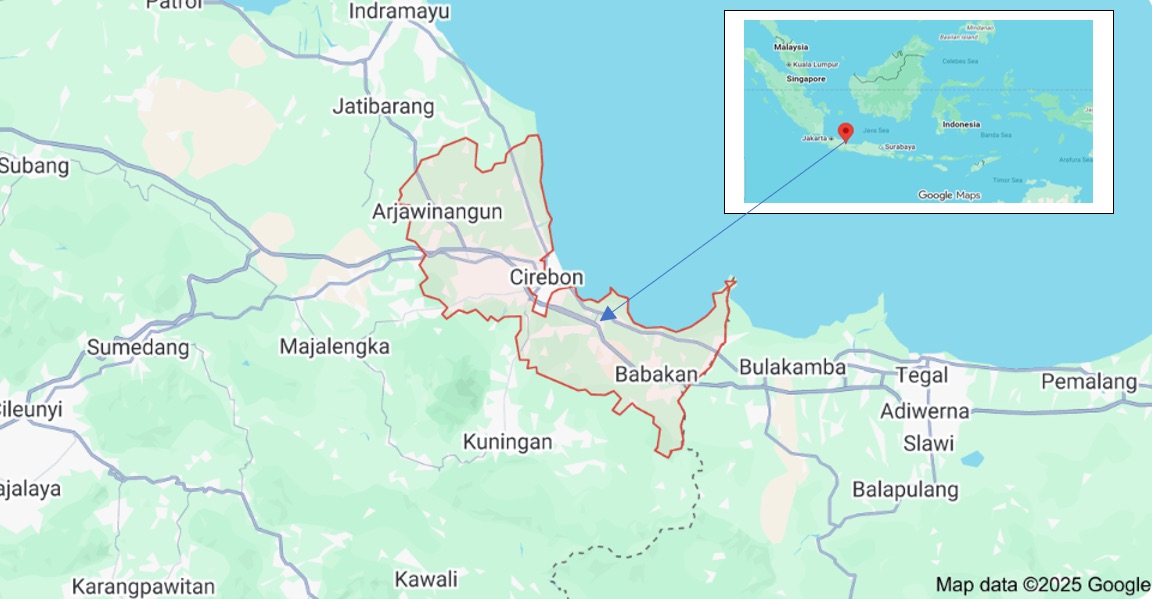
Cirebon Regency is located on the northern coast of West Java, covering 1,076.76 km² with a population of 2.45 million in 2024. Around 65.8% of residents are of productive age, indicating substantial labor potential in coastal and aquaculture sectors. Geographically, the coastal zone consists of eight subdistricts directly bordering the Java Sea, serving as centers of capture fisheries, brackish-water aquaculture, and coastal agriculture. These areas host the highest concentration of aquaculture households in the regency, serving as the major production zones for milkfish, tiger shrimp, and vannamei shrimp.
Beyond the geographic importance, the coastal area holds a deep maritime cultural heritage shaped by a long history of human–sea relations. The north coast has long functioned as a meeting point for Sundanese coastal traditions, Central Javanese maritime culture, Islam, and port-based trading networks, forming a culturally plural and adaptive society. Soekarba (2018) stated that ethnic interaction, port mobility, and historical trade networks produced a cosmopolitan coastal community that remains grounded in local values.
Religiosity shapes local maritime life, while the sea is regarded as a source of livelihood and a cosmological entity. Endang Supriadi (2023) showed that Cirebon’s fishers expressed maritime religiosity through local Islamic practices such as sailing prayers, boat blessings, and rituals for safety before fishing or opening ponds. These rituals strengthen social cohesion and provide a collective means of managing ecological uncertainty. Similarly, Hadid and Surtikanti (2024) reported the significance of Nadran, a sea thanksgiving ceremony that blended Islamic elements, coastal traditions, and cultural symbols to maintain harmony between humans and the sea. In many coastal villages, Nadran remains central to reinforcing communal solidarity and sustaining maritime identity.
The northern coast is vulnerable to tidal flooding, salinity fluctuations, abrasion, and climate-related changes, requiring communities to adapt the livelihood strategies. Tarunamulia et al.'s (2019) study in Cirebon suggested the influence of political–ecological dynamics on decision-making in fisheries and aquaculture, where seasonal change and environmental quality are decisive factors. Similar conditions are evident in the fishpond villages examined, where farmers continually adjust work cycles based on weather, salinity levels, and risks of fish and shrimp disease.
Studies on small-scale fisheries by Suryana et al. (2023) reported that Cirebon’s coastal communities were characterized by strong kinship-based solidarity, gendered divisions of labor, and informal trust networks. These features are especially visible in fishpond communities, where families serve as the primary economic unit, providing labor, capital, and risk mitigation. Business decisions, including product marketing, are strongly shaped by trust-based relationships among kin and local traders.
Livelihoods Diversification as a Maritime Adaptive Logic
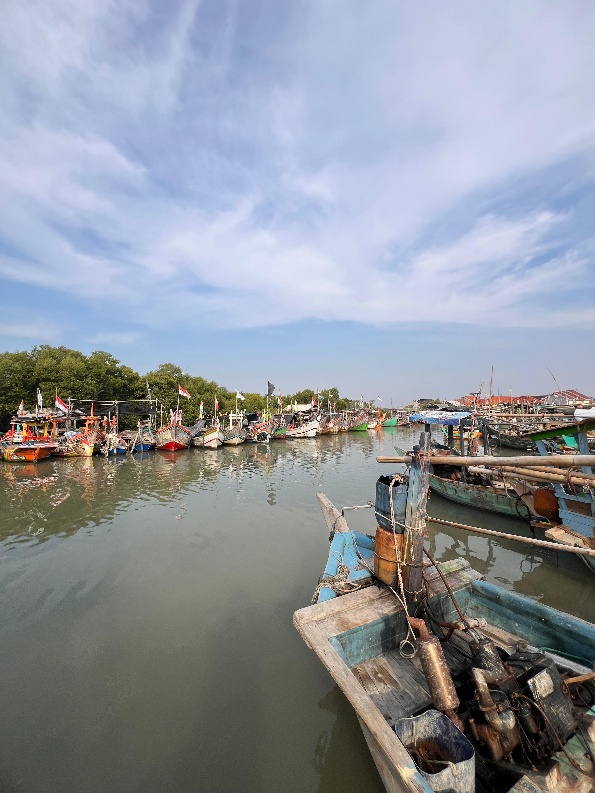
Livelihood diversification is a central finding of this study, illustrating how fishpond farmers develop adaptive strategies in response to ecological and economic uncertainty. Many combine fishpond aquaculture, fishing, and agriculture; shifting between these activities according to seasonal cycles, weather conditions, and environmental risks. These transitions are enabled by strong social capital, which functions as a buffer against livelihood failure (Suryana et al., 2023). Occupational mobility depends on close relational networks among fishers, boat owners, and kin, reflecting the strong kinship-based solidarity that characterizes small-scale fisheries in Cirebon.
Informants explained that when fishponds become unmanageable, they turn to fishing. They return to fishpond management during periods of strong winds, when fishing is less feasible. Agricultural activities on nearby village land or family-owned rice fields provide an additional source of income when neither aquaculture nor fishing is possible. This flexible movement between occupations reflects a coastal habitus grounded in the ability to read natural signs, interpret seasonal rhythms, and assess risk through collective experience. Diversification, therefore, is not merely a short-term economic response but part of a deeply rooted maritime cultural logic that has long shaped coastal livelihoods.
Diversification is also influenced by government policy. Informants explained that support programs for fishers and farmers are more accessible than those specifically targeting fishpond farmers. As a result, many small-scale pond farmers register as fishers or farmers to obtain benefits such as fuel subsidies, fishing equipment, seed assistance, or agricultural inputs. This finding suggests that livelihood diversification is shaped not only by ecological conditions but also by policy structures that inadequately recognize the position of small-scale aquaculture. The coastal economy is therefore produced through the interaction between environmental dynamics and state regulation.
From a maritime anthropological perspective, these findings reflect the amphibious livelihoods described by Pauwelussen (2017), in which coastal communities navigate fluidly between sea and land while reorganizing economic activities through flexible spatial movement. Likewise, Dua (2024) argues that oceanic lifeworlds are constructed through the continuous integration of ecological knowledge, embodied experience, and social relationships. The findings suggest that livelihood diversification represents the reproduction of intergenerational maritime knowledge and can be understood as an expression of maritime habitus through Bourdieu’s practice theory. Rather than relying on formal economic calculations, fishpond farmers move between aquaculture, fishing, and agriculture based on a practical sense developed through lifelong engagement with the coastal environment. Informants frequently referred to "feeling" and "natural signs" when explaining these decisions, indicating that livelihood strategies emerge from the integration of intuition, accumulated experience, and socio-ecological knowledge.
Livelihood diversification represents the integration of ecological adaptation, maritime habitus, and family-based social capital. By maintaining the flexibility to move between the sea, fishponds, and agricultural land, fishpond farmers construct a resilient livelihood system capable of coping with persistent environmental and economic uncertainty. Diversification thus serves not only as a strategy for economic resilience but also as a core expression of maritime cultural identity reproduced through everyday practice.
Family as the Foundation of Production and Social Capital in Fishpond Farming
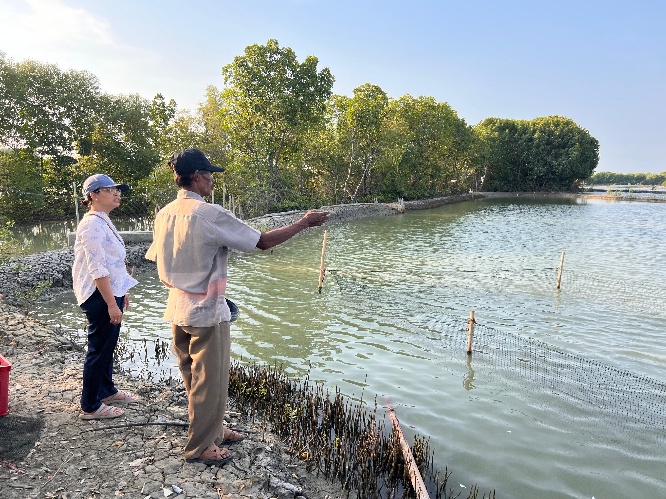
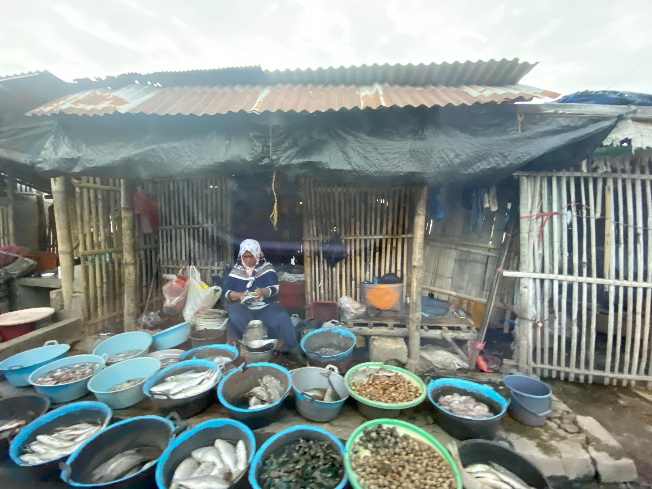
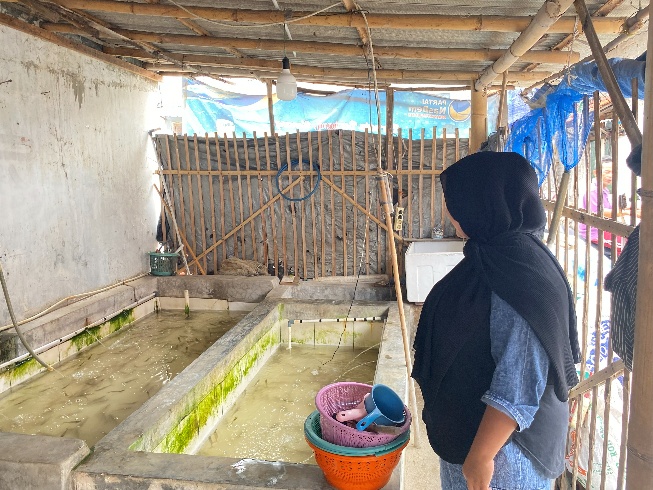
The family constitutes the most important economic unit in the entrepreneurial practices of fishpond farmers in coastal Cirebon. Pond management, business decision-making, financial administration, and risk mitigation are all carried out within the nuclear and extended family. These results indicate that coastal entrepreneurship is an individual activity and family-based production system that integrates labor, capital, local knowledge, and social capital into a single practice. All male informants managed fishponds as the primary occupation, while the wives played key roles in marketing harvests, managing household finances, and maintaining relationships with traders (bakul). The gendered division of labor is developed from everyday practices embedded in local maritime habitus. Women do not work directly in the ponds but manage tasks considered “safer” and requiring precision, calculating profits, negotiating prices, ensuring payments, and allocating income. This division is consistent with practice theory, where everyday actions are shaped by rational choice and social dispositions formed through lived experience, family structures, and internalized local values. Wives grow up in environments that normalize women as guardians of household economic stability. These individuals serve as “family accountants” and social intermediaries with traders, a strategically important position for sustaining the business.
Beyond providing labor, families supply social capital in the form of trust, solidarity, and reciprocal assistance. This social capital functions as an “invisible infrastructure” that keeps fishpond operations running despite ecological disturbances or financial constraints. Informants rarely borrow from formal institutions but depend on relatives for loans to purchase larvae, feed, or repair pond embankments. These exchanges are based on written contracts and trust as well as enduring moral obligations. Therefore, family networks operate as flexible, trust-based “informal banks” that respond quickly to urgent needs. In terms of social capital theory, the dominant form is bonding social capital, characterized by strong ties within homogeneous groups such as family and close kin. Bonding capital reinforces internal solidarity and allows families to endure high levels of uncertainty. Kin provide labor, capital, and market access, preventing economic collapse when harvests fail.
Relationships between fishpond farmers and bakul (trader) in Cirebon differ from the patron–client patterns commonly described in Indonesian coastal literature. Informants reported the relationships with traders as egalitarian, where sellers are free to sell to any buyer, are not bound by long-term debt, and can switch traders when dissatisfied with prices. This contrasts with the strong patronage systems documented by Arief (2022) among seaweed farmers in South Sulawesi. Bakul are selected for trustworthiness, accurate weighing, timely payment, and reliable communication. Trust-based social capital reduces transaction costs, minimizes risks of exploitation, and creates a sense of security in marketing. The traders are partners, reinforcing the position as independent producers who retain control over production decisions while operating within informal market networks.
Families serve as sites for reproducing maritime cultural values such as perseverance, acceptance of risk, hard work, and adaptive work ethics. These values are transmitted informally as children help in the ponds, accompany fathers to sea, or assist mothers in preparing harvests. Tabah, the ability to persist through hardship, is viewed as essential for becoming a fishpond farmer and is cultivated through practice rather than formal instruction. In maritime anthropology, the family functions as a cultural institution that transmits local ecological knowledge across generations. Children learn to read water conditions, assess soil quality, recognize disease threats, and observe parents’ risk management strategies.
Fieldwork studies confirm that small-scale fishpond operations would struggle to survive without family support. Family-based social capital enables households to continue operating despite crop failures. Entrepreneurial practices are shaped by cultural values reproduced within the family, and gendered labor divisions function as adaptive strategies grounded in practice rather than formal norms. The family is a domestic unit and an economic organization, a social institution, and a cultural production space that sustains the entrepreneurial practices of fishpond farmers (Putiamini et al., 2022).
Risk-taking and Resilience as Maritime Ethos
Risk-taking and resilience constitute central elements of the maritime ethos among fishpond farmers in coastal Cirebon. Despite recognizing aquaculture as a capital-intensive and high-risk enterprise, subject to disease outbreaks, extreme weather, salinity fluctuations, and tidal flooding, farmers confront the uncertainties with confidence and religious acceptance. Risk is intrinsic to the occupation since an informant stated, “If you fear losses, you cannot be a pond farmer.” These attitudes reflect a culturally embedded ethos shaped by maritime experience, ecological conditions, and family-based social structures. From a maritime anthropology perspective, coastal communities live within persistent oceanic uncertainty (Dua, 2024), which informs local values, moral frameworks, and adaptive strategies. Farmers manage risk through a range of practical measures. In this context, early harvesting before tidal increases, stock multiple species, adjust pond cycles to seasonal cues, and depend on kin networks for emergency capital. These practices represent practical logic (Bourdieu, 2020), formed through embodied ecological knowledge rather than formal economic calculations.
Spiritual values reinforce resilience, and farmers interpret livelihood outcomes as part of divine destiny while emphasizing continuous effort (ikhtiar). Values such as tabah (perseverance) and nerimo (acceptance) provide psychological stability in the face of repeated losses, where religious practice and maritime ritual strengthen moral control over ecological uncertainty (Supriadi, 2023).
Farmers’ willingness to take risks is concentrated in the production phase. Fear of fraud or non-payment leads many to avoid digital platforms or unfamiliar buyers. Individuals depend on trusted bakul, even when prices are suboptimal. This pattern reflects the dominance of bonding social capital over bridging, where maintaining trust within close networks is prioritized over market expansion. Generally, risk-taking among Cirebon’s fishpond farmers is a culturally grounded ethos shaped by ecological uncertainty, religious values, kin-based social capital, and intergenerational maritime habitus. This ethos shows the persistence in a high-risk sector and reports the deeply cultural character of coastal entrepreneurship.
Limited Innovation and Preference for Rapid Cash Flow
An important result of this study is the limited interest among fishpond farmers in adopting downstream innovations such as product processing, value-added packaging, or digital marketing. Most farmers prefer to sell harvest immediately to local bakul without further processing. This pattern reflects constraints in skills or capital and an underlying economic and cultural logic that consistently shapes coastal entrepreneurship. Farmers emphasize that the focus is on production and downstream activities require additional labor, capital, and time without guaranteed returns. An informant stated, “What matters is fast cash flow.” Quick turnover of capital is essential for starting the next production cycle, repairing embankments, or preparing for tidal flooding and disease risks.
From a maritime anthropology perspective, the preference is consistent with the temporal pragmatism of coastal communities, who operate within highly fluctuating ecological and economic rhythms and prioritize strategies to ensure short-term income stability (Dua, 2024). Downstream processing delays capital circulation and is perceived as a temporal risk incompatible with coastal survival strategies. Farmers lack the financial capacity to invest in freezers, drying equipment, or packaging facilities, since aquaculture requires substantial capital. Family-based social capital, which sustains production, is directed mainly toward meeting immediate cultivation needs rather than supporting innovations. In social capital terms, strong bonding capital is insufficient to stimulate structural transformation such as downstream diversification.
The preference to sell quickly is tied to ecological risk management. Shrimp may be struck by disease at any time, milkfish quality declines when not sold promptly, tidal flooding causes sudden losses, and weather fluctuations affect prices unpredictably. Early harvesting is a common practice among farmers to minimize potential losses. From a practice theory perspective, this reflects a form of practical logic shaped by years of navigating ecological uncertainty, making downstream processing counterproductive to risk mitigation. Unlike coastal regions with longstanding traditions of fish processing (dried fish or shrimp paste), Cirebon’s pond-based aquaculture lacks a cultural foundation for downstream activities. Shrimp and milkfish aquaculture are relatively recent compared to capture fisheries, and no intergenerational transmission of processing skills exists. Downstream work is not viewed as a natural extension of pond farming. Many farmers also report lacking the energy to process products after long days of pond work, preferring to sell directly to familiar traders. Culturally, downstream innovation is not part of the habitus and would require significant external intervention.
Low interest in digital marketing is driven by limited digital literacy and fears of social risk. Farmers are afraid of being defrauded, not paid, or dealing with unreliable buyers. Negative experiences within social circles reinforce the perception that distant markets are more dangerous than local networks. They prefer selling to trusted bakul, even at lower prices. This reflects the dominance of bonding over bridging social capital, where strong trust networks reduce incentives to engage with unfamiliar markets. The results report a clear structural separation between upstream producers (farmers) and downstream actors (traders, processors). Farmers are positioned as “upstream producers,” responsible for cultivation rather than processing. Downstream innovation is described as more appropriate for market-oriented actors. The limited adoption of downstream innovation is obtained from technical and financial barriers as well as deeply embedded cultural role expectations within the local coastal economy.
Conclusion
Fishpond entrepreneurship in coastal Cirebon is a culturally embedded system shaped by ecological conditions, kinship structures, religious values, and a long maritime history. Entrepreneurship is grounded in cultural engagement with coastal environments, where economic activities are connected with social relations, moral expectations, and ecological rhythms. Diversification across fishing, aquaculture, and agriculture forms the core of local adaptive strategies and reflects an intergenerational maritime habitus rooted in embodied ecological knowledge. The family functions as the central economic institution, supplying labor, informal capital, and cultural support, while gendered roles and kin-based reciprocity reinforce household stability. Values such as perseverance, acceptance, and religious devotion strengthen psychological resilience.
Risk-taking is an important component of the coastal entrepreneurial ethos. Farmers adapt boldly to ecological uncertainty but remain cautious in marketing, showing the importance of trust-based economic relations. The preference for rapid cash flow and limited engagement in downstream processing or digital marketing reflects financial constraints and the centrality of proximity and interpersonal trust in the local moral economy. Coastal entrepreneurship differs fundamentally from modern, innovation-oriented models. This is sustained by local ecological knowledge, kinship-based cooperation, and culturally grounded risk management. Effective policy interventions must build on the cultural and social foundations, supporting diversification, strengthening social capital, and promoting innovations in line with local values and trust structures. This study contributes to broader discussions on coastal economic life and reports the value of maritime anthropology, practice theory, and social capital in understanding entrepreneurship in Indonesia’s coastal regions.
Acknowledgement
This study was supported by Indonesia Ministry of Higher Education, Science, and Technology through the 2025 Indonesian Collaborative Research Grant Scheme A (Riset Kolaborasi Indonesia/RKI Skema A PTNBH), No. 1049/UN6.3.1/PT.00/2025.
References
- Amanatin, E.L., Sekarningrum, B., Supangkat, B., Nurwati, N., Gunawan, W., Nurdin, M.F., 2025. Fish Vendors in the Fishermen’s Economic Axis: Resilience of Coastal Women on the North Coast of Java Island. Journal of Marine and Island Cultures 14: 207–214. https://doi.org/10.21463/jmic.2025.14.1.14
- Arief, A.A., 2022. Social Capital in the Patron-Client Dimension Towards the Sustainability of Seaweed Cultivation Businesses in Rural Areas, South Sulawesi, Indonesia. Journal of Marine and Island Cultures 13: 88–107. https://doi.org/10.21463/jmic.2024.13.2.06
- Bourdieu, P., 2020. Outline of a Theory of Practice, in: The New Social Theory Reader. Routledge, pp. 80–86. https://doi.org/10.4324/9781003060963-11
- Chik, N.A., Ibrahim, A.Z., Azman, M.H., 2025. Navigating the Barriers: Social Cohesion and Inclusion towards Entrepreneurial Culture in Coastal Fishing Communities, in: Proceedings of the 6th International Conference on Education and Social Sciences (ICESS 2024). Atlantis Press, pp. 224–240. https://doi.org/10.2991/978-2-38476-392-4_17
- Costa-Pierce, B.A., 2022. The Anthropology of Aquaculture. Frontiers in Sustainable Food System 6: 1–15. https://doi.org/10.3389/fsufs.2022.843743
- Dua, J., 2024. Anthropology of and from the Ocean. Annual Review Anthropology. 53: 165–181. https://doi.org/10.1146/annurev-anthro-041422-012504
- Fatmasari, D., 2016. Analisis Sosial Ekonomi dan Budaya Masyarakat Pesisir Desa Waruduwur, Kecamatan Mundu, Kabupaten Cirebon. Al-Amwal : Jurnal Ekonomi dan Perbankan Syari'ah. 6: 1–23. https://doi.org/10.24235/amwal.v6i1.255
- Gartner, W.B., Stam, E., Thompson, N., Verduyn, K., 2016. Entrepreneurship as Practice: Grounding Contemporary Practice Theory into Entrepreneurship Studies. Entrepreneurship & Regional Development 28: 813–816. https://doi.org/10.1080/08985626.2016.1251736
- Gibbs, J.P., Coleman, J.S., 1990. Foundations of Social Theory. Social Forces 69: 625. https://doi.org/10.2307/2579680
- Hadid, M., Surtikanti, H.K., 2024. Tradisi Nadran Sebagai Kearifan Lokal Masyarakat Pesisir Cirebon dalam Kaitannya dengan Kelestarian Lingkungan. Journal of Socio-Cultural Sustainability and Resilience 1: 81–92. https://doi.org/10.61511/jscsr.v1i2.2024.369
- Kepel, T.L., Sumolang, S., Warouw, M.P., Daulat, A., Undap, N.I., Tondo, F.H., 2024. Maritime Culture of Bantik Ethnic Group from North Sulawesi, Indonesia. Journal of Marine and Island Cultures 13: 108–121. https://doi.org/10.21463/jmic.2024.13.2.07
- Mendas, Z., 2020. Tracing Socio-Economic Impact of Ferry Provision in Zadar Island Archipelago. Journal of Marine and Island Cultures 9: 1–15. https://doi.org/10.1016/j.imic.2015.06.002
- Nasution, Z., Hartono, T.T., 2017. Profil Sosial Budaya Masyarakat Nelayan Perairan Laut di Indonesia. Jurnal Penelitian Perikanan Indonesia 10: 47–53. https://doi.org/10.15578/jppi.10.7.2004.47-53
- Novianti, T., Nurkhasanah, D., 2023. Identification of the Productive Role of Coastal Women in the Utilization of By-Catch Fish in Cirebon District. Barakuda 45: Jurnal Ilmu Perikanan Dan Kelautan 5: 173–183. https://doi.org/10.47685/barakuda45.v5i2.417
- Ortner, S.B., 2006. Anthropology and Social Theory: Culture, Power, and the Acting Subject. Duke University Press, Durham. https://doi.org/10.1111/j.1548-1433.2008.00050_11.x
- Pauwelussen, A., 2016. Community as network: Exploring a Relational Approach to Social Resilience in Coastal Indonesia. Maritime Studies 15: 1–19. https://doi.org/10.1186/s40152-016-0041-5
- Pauwelussen, A.P., 2017. Amphibious Anthropology: Engaging with Maritime Worlds in Indonesia. Wageningen University, Wageningen.
- Putiamini, S., Mulyani, M., Petala, M.P., Soesilo, T.E.B., Karsidia, A., 2022. Social Vulnerability of Coastal Fish Farming Community to Tidal (Rob) Flooding: A Case Study from Indramayu, Indonesia. Journal of Coastal Conservation 26. https://doi.org/10.1007/s11852-022-00854-7
- Putnam, R.D., 2000. Bowling Alone: The Collapse and Revival of American Community. Simon & Schuster, New York. https://doi.org/10.4324/9781912282319
- Ramadhani, C.A.F., 2025. Petik Laut as Cultural Resilience: Balancing Tradition and Modern Life in the Coastal Community of Banyuwangi, Indonesia. Fikri: Jurnal Kajian Agama, Sosial dan Budaya 10: 629–648. https://doi.org/10.25217/jf.v10i2.6620
- Roszko, E., 2022. Maritime Anthropology, in: Pedersen, P., Cliggett, L. (Eds.), The SAGE Handbook of Cultural Anthropology. SAGE, pp. 311–329.
- Sanjoto, T.B., Sari, H.A., Hardati, P., 2021. Fishermen Adaptation to Climate Change in Mertasinga Village, Gunungjati Sub-district, Cirebon Regency. International Journal of Sustainable Development and Planning 16: 869–874. https://doi.org/10.18280/ijsdp.160507
- Satria, A., 2015. Pengantar Sosiologi Masyarakat Pesisir. Pustaka Obor, Jakarta.
- Soekarba, S.R., 2018. The Idea of Pluralism in Indonesian Society: A Case Study of Cirebon City as a Cultural Melting Pot. Journal of Strategic and Global Studies 1: 5–15. https://doi.org/10.7454/jsgs.v1i1.1004
- Spradley, J.P., 1978. The Ethnographic Interview. Harcourt Brace Jovanovich College Publishers, New York.
- Suadi, Husni, A., Nissa, Z.N.A., Trialfhianty, T.I., Ekantari, N., Mustafa, M.D., 2022. Vulnerability and Livelihood Adaptation Strategies of Small Island Fishers Under Environmental Change: A Case Study of the Barrang Caddi, Spermonde Islands, Indonesia. Journal of Marine and Island Cultures 11: 158–176. https://doi.org/10.21463/jmic.2022.11.2.11
- Supriadi, E., 2023. Islam Nelayan. Lawwana, Semarang.
- Suryana, A.A.H., Utami, R.Z., Apriliani, I.M., Maulina, I., 2023. Economic Characteristics of the Fishing Society of Cangkol Village, Cirebon, Indonesia. Asian Journal of Fisheries and Aquatic Research 25: 12–17. https://doi.org/10.9734/ajfar/2023/v25i3663
- Tarunamulia, Hasnawi, Asaf, R., Faizal, A., 2019. Environmental Characteristics and Management Challenges of Brackishwater Fishponds in Cirebon Regency, West Java Province, Indonesia: A Fine-Scale GIS Approach. IOP Conference Series: Earth and Environmental Science. 370. https://doi.org/10.1088/1755-1315/370/1/012067
- Utami, R.Z., Suryana, A.A.H., Apriliani, I.M., Maulina, I., 2023. The Social characteristics of fisherman communities in Cangkol Village, Cirebon, Indonesia. Asian Journal of Fisheries and Aquatic Research 24: 16–26. https://doi.org/10.9734/ajfar/2023/v24i2629
- Wahadi, W., Yana, E., Rusdiyana, R., 2025. Fishermen’s Family Perceptions on Economic Uncertainty and Social challenges. Indonesian Journal of Innovation Studies 26: 1–10.
- Zamzami, L., Effendi, N., 2023. Cultural and Entrepreneurial Attitudes of Fishermen Involved in the Production of Fishery Products in West Sumatra, Indonesia: Implications for Marine Resource Conservation Areas in Village Development. Journal of Infrastructure Policy and Development 7. https://doi.org/10.24294/jipd.v7i3.2629
- Zamzami, L., Hasmira, M.H., Harahap, J., Aliman, M., 2025. Empowering Coastal Community Ecotourism: The Role of Cultural Entrepreneurship Among Fishermen in West Sumatra, Indonesia. Geojournal of Tourism and Geosites 58: 396–404. https://doi.org/10.30892/gtg.58136-1421
- Zamzami, L., Nursyiwan, E., Syahrizal, Ermayanti, 2017. The Local Wisdom in Marine Resource Conservation in Indonesia: A case Study of Newcomers in Pariaman, West Sumatra, in: Proceedings of the 2nd International Conference on Social and Political Development (ICOSOP 2017). https://doi.org/10.2991/icosop-17.2018.61