
Between Coral Reefs and Habitat of Bajau Community
 10.21463/jmic.2026.15.2.11
Abstract
The Bajau community regards the sea as the primary spatial domain of its existence. This research explores Bajau habitat patterns from ecological and geospatial perspectives while contributing to sustainable preservation of cultural heritage and the marine environment. The study aims to: (1) Identify the spatial distribution of Bajau habitats; (2) Examine the synergy between Bajau community and coral reef ecosystems; and (3) Elucidate the conceptual framework linking Bajau habitats with coral reefs. Research findings show that Bajau habitats form a patterned, linear configuration extending from coral reef zones and shallow waters to stilt habitats above the sea, coastal fringes, and terrestrial. Synergy between Bajau community and coral reefs operates adaptively through proximity, coastal space use, and everyday practices sustaining a functional relationship with the sea. This relationship is maintained directly in marine-based habitats through transitional shoreline spaces, and indirectly within land-based Bajau habitats mediated by mobility and infrastructure. The Bajau people conceptualize habitat as a relational socio-ecological-spatial system, where coral reefs, land, and cultural practices are understood as interrelated components that collectively sustain ecological, material, social, and spiritual sustainability.
Keywords
Habitat, coral reef, maritime environment, maritime space, Bajau
1. Introduction
The prevailing paradigm within architectural literature often delineates the land-sea relationship dichotomously: land is viewed as permanent, stable, and habitable, whereas the sea is regarded as fluid, flexible, temporary, and beyond the confines of formal settlements. Jumsai (1989) classifies human built environments into land-based civilizations (7.000 BCE) and water-based civilizations (10.000 BCE), arguing that maritime civilization predates terrestrial habitat. Land-based civilizations are characterized by permanent, enclosed, cave-like structures that rely on compressive systems and deliberately planned and controlled environments. In contrast, water-based civilizations tend to produce relatively non-permanent habitats with open spatial concepts, tensile-compressive structural systems in two or three directions, and environmental management guided more by instinct than formal regulation. These categories provide a framework for understanding land and maritime habitats not only as physical distinctions but as fundamentally different paradigms. This perspective gives rise to the existence of transitional spaces that characteristically define coastal and maritime communities, such as stilt houses over shallow waters, dwellings on coral reefs, and wooden bridges linking land and sea. However, seafaring societies encounter challenges due to the land-sea dichotomy, as their spatial practices reflect a dynamic continuum rather than a distinct separation of land and sea. McNiven (2024) argued that the sea is not merely a resource space but part of the “social space” shaping maritime societies to understand and organize life. While boats were among humanity’s earliest vehicles, the stilt house most probably one of the earliest human-built structures. Conversely, the advent of stone-built structures coincided with the movement of populations onto extensive terrestrial landscapes (Jumsai, 1989).
The Bajau people are a notable exemplar of an ethnic group within society that regards the sea as its primary living space, wherein all aspects of life, including dwelling, subsistence, and daily activities occur. They often regard land as a stopover site to acquire fresh water or to interact with terrestrial communities. Preliminary observations also suggest a strong interconnection between coral reefs and Bajau communities’ life patterns and habitats. Coral reefs are complex and productive marine ecosystems that provide protection from waves, food resources, and breeding grounds for marine life. Within Bajau settlements, coral reefs function as sites for stilts houses construction by arranging dead coral reefs to resemble foundation as a structural base for their dwellings (Caras and Pasternak, 2009).
This study examines the conceptual framework of the sea-oriented communities as the primary object of inquiry and articulates the notion of maritime space as the spatial framework within which their lives unfold. The researchers propose a habitat conceptualization of maritime communities is structured into two interrelated aspects. The first aspect pertains to the consolidated environments, encompassing the sea, coral reefs area, coastal islands, and docks or boat moorings. The second aspect pertains to the built environment, encompassing residential spaces (settlement areas) and supporting facilities associated with dwelling and subsistence activities. These facilities include fishing structures such as rompong—a square or rectangular fish aggregating apparatus made of netted enclosures anchored to the seabed— and bagang, a similar fishing apparatus to rompong but designed as a floating structure rather than anchored to the seabed. Furthermore, babaroh, a provisional resting shelter used by seafaring community members during a far and/or extended fishing or marine harvesting expeditions. Accordingly, the objective of this study is to understand the habitat patterns of Bajau communities from ecological and geospatial perspectives, while also contributing to efforts aimed at the sustainable preservation of both cultural heritage and the marine environment. This study addresses three research questions: (1) where Bajau habitats synergize with coral reef ecosystems; (2) how Bajau communities interact and synergize with coral reef ecosystems; and (3) what conceptual framework underpins Bajau understanding of habitat in relation to coral ecosystems.
2. Literature Review
2.1 The Habitat of Seafaring Community
According to Coolen (2008), dwelling is a subsystem within a broader environmental order where specific activity systems occur; thus, it cannot be understood in isolation but rather as an integral component of a larger environmental structure that accommodates and organizes human activities. Furthermore, Meesters and Coolen (2009) identify three principal meanings of dwelling: (1) as a social place, where individuals gather with family and friends; (2) as a center of activities, in which relaxation constitutes a central value; and (3) as a place of retreat from the outside world. These interpretations emphasize that dwelling extends beyond mere physical shelter, encompassing social interaction, everyday practices, and psychological restoration. Similarly, Rapoport (1969), defines the concept of dwelling goes beyond physical dimensions, but the influence of various socio-cultural factors, the surrounding environment, and the symbolic meanings of identities embedded within it. From this perspective, dwelling reflects cultural values, patterns of behavior and environmental adaptations that shape the built form.
The concept of dwelling deepens understanding of human-environment relationships and promotes more conscious choices that support both humanity and ecological sustainability (Ekperi and Ezedike, 2024). Given the paradigmatic differences between dwelling on land and at sea, this study adopts four key concepts. First, maritime refers to places, rights, institutions, and collective identities shaped through human interaction with the sea (Firth, 1995). Second, maritime culture describes a way of life constituted through engagement with the sea, encompassing economic and social practices, navigation, symbolic systems, and knowledge of marine resource use, where the sea serves as both a livelihood base and a source of meaning and identity. Third, maritime cultural heritage comprises tangible and intangible cultural expressions, including material culture, customs, traditions, practices, landscapes, and representations that embody human-sea relationships and carry cultural, emotional, and functional values (Barianaki et al., 2024). Fourth, coastal and marine regions are transitional spaces connecting land and sea, distinguished by unique landscapes and cultural resources, including archaeological sites, traditional fisheries, maritime communities, and indigenous technologies (Ounanian et al., 2021). Accordingly, habitat of sea-oriented communities is understood as a living space within maritime territories spanning coastal and insular marine regions, where dispersed households and settlements remain integrated as a coherent domestic unit through shared dependence on marine resources.
The discussion of maritime community habitats is inherently complex. Their consolidation demands a careful balance of human intervention (the built environment) and the preservation of the natural resources upon which they depend. Consequently, the concept of the built environment of maritime communities is inseparable from the broader maritime environment inhabited and traversed by seafaring peoples. Historically, seafaring communities or sea nomads were constituted of relatively autonomous hunter-gatherers who practice seasonal mobility, travel extensively and construct temporary dwellings during seasons rather than residing permanently throughout the year (Ariando et al., 2025). Their interactions with marine environments operate across symbolic, cultural, and economic dimensions, thus creating spatial orders that shape knowledge systems, belief structures, meanings, and sustained patterns of life. Those orders create both opportunities and constraints for human action, structuring everyday practices, norms, and values. Concurrently, it is inherently dynamic and subject to transformation (Kołodziej-Durnaś et al., 2022).
2.2 The Bajau Maritime Community
According to Lapian (2009), the term Bajau or Bajo is an exonym assigned by outsiders. Within the community itself, members refer to themselves as “Orang Sama”. However, in regions such as Sabah and Sulu Archipelago, terms Bajau and Sama are used to denote two distinct ethnic groups. Lapian (2009) also notes that the widespread use of both Bajau and Sama across the eastern part of Indonesian Archipelago, suggests that these various groups constitute a single ethnic entity. According to Hoogervorst (2012), the Bajau possess multiple origin legends. Some Bajau communities believe they originated from Johor, Malaysia. According to a pervasive legend, they were dispatched by a king to find a princess who had been carried away by ocean currents. During the quest, they gradually dispersed across the maritime waters of Southeast Asia. According to Lapian (2009), the Bajau (also referred to as Bajo) name is more widely known in eastern Indonesia. They inhabit the Makassar Strait—particularly around Laut Island and eastern coast of Kalimantan, including the area of Bontang and further north; in the gulf of Bone—especially on Bajoe Island facing Watampone; in East Nusa Tenggara—notably on Alor Island and its surroundings; in the Banggai Archipelago east of Sulawesi; in Gulf of Tomini—particularly in Togian Islands and in Torosiaje; in North Maluku—including the Bacan and Halmahera Islands; and in the Sulawesi Sea, along both northern coast of Sulawesi and eastern coast of Kalimantan. Studies by Sopher (1977) and Lenhart (1995) further identify numerous toponyms associated with the “Bajau” name, thereby indicating the spatial extent of the Bajau encompasses maritime regions throughout Indonesia and is not confined to eastern Nusantara.
The Bajau’s distinctive spatial distribution and ethnic identity are closely associated with coastal areas and small islands, where livelihoods depend on fishing, seafaring inter-island trade, coconut cultivation, and other maritime activities (Nagatsu, 2017). For the Bajau, sea is not only a place of residence but also the moral and cultural center of their lifeworld, shaping their knowledge system and connecting them with other maritime peoples, while the land is perceived as peripheral or marginal (Sather, 2024). This close relationship with the sea is reflected in traditional ecological practices, such as mangrove planting to sustain marine ecosystems and ecological balance (Supriyono et al., 2020). Despite this strong maritime identity, Bajau communities have faced persistent challenges. Since the colonial period, political and economic boundaries have restricted their mobility, fragmenting Bajau networks and, in some cases, obscuring their shared cultural heritage (Jubilado, 2010). Government-led relocation of sea-based Bajau communities to land has also had limited success, as only a small proportion of relocated households successfully adapted to terrestrial environments (Ismail et al., 2015). However, although many sea-oriented communities have adopted more sedentary lifestyles, they remain resilient by preserving key elements of their aquapelagic world view, customary practices, and traditional resource management systems, including within state-centered conservation initiatives such as marine national parks (Ariando et al., 2025; Macalandag, 2023).
In the past, a Bajau community utilized and managed marine resources in a sustainable manner according to their socio-economic and political lives. It enables the maintenance of their socio-economic well-being and marine wealth through local wisdom (Lampe, 2012; Satriani et al., 2018), they believe in the existence of sea spirit known as Mbo Madilao, which is regarded as the spiritual center of their life. For the Bajau, sea is not an abstract or empty expanse; rather, it is a space filled with coral reefs, reef flats, mangroves, spawning grounded, currents, wind patterns, and resources cycles that are deeply familiar for them, it refers to a spatial realm saturated with places imbued with historical, cultural, and spiritual meaning (Nolde, 2009). According to Albab (2020), Djohani (1996), Poedjowibowo et al. (2016), Tomascik et al. (1997), a Bajau community recognize four types of fishing grounds distinguished by their distance from settlement, which can be summarized as follows:
- Palilibu: Fishing conducted near the village, allows fishermen to return within a few hours.
- Papongka: Fishing carried out at greater distance from the village, with fishermen typically returning home only after several days at sea.
- Sakai: A fishing tradition undertaken at a considerable distance from village; consequently, fishermen remain away from home for several months or even be absent for up to a year.
- Lame: A relatively modern form of fishing activity. It involves use of large vessels with numerous crew members and high-powered engines. These boats navigate the open sea, often reaching foreign waters, and may remain offshore for several months at a time.
2.3 Coral Reefs
Coral reefs are shallow marine ecosystems formed by carbonate structures produced primarily by reef-building corals and crustose coralline algae, generally extending to the lowest tidal level (Fairbridge, 1997; Gattuso et al., 2014). They provide essential ecological, economic, cultural, and aesthetic functions by maintaining shorelines, supporting seagrass and mangrove ecosystems, and serving as a habitat, shelter, and food resources for diverse marine organisms (Maragos et al., 1996). Coral reefs also sustain human livelihoods through fisheries, raw materials (e.g lime and calcium carbonate), tourism, and diving activities (Mohale et al., 2023). Although they cover less than 1% of the Earth’s surface, coral reefs harbor exceptionally high biodiversity, earning the title “rainforests of the sea” because their complex physical structures provide diverse habitats and shelter for numerous marine species (Miththapala, 2008; Roberts, 2003; Sutthacheep et al., 2022). Despite their ecological significance, coral reefs grow slowly, approximately 3-20 mm per year and require millions of years to develop (Veron, 2000).
Most coral reefs thrive in shallow, saline, clear, and sunlit waters, with optimal temperatures ranging between 260C and 270C. If temperatures fall below 200C or rise above 290C for prolonged periods, most corals will die. Corals require substantial sunlight for growth. Maximum coral growth typically occurred in clear waters at depths of approximately ± 9 and 19 meters. In contrast, corals at depths of 22.5 to 27 meters grow more slowly and exhibit significantly lower variation in growth rates. Below 50 meters, reef-building hard corals begin to decline and gradually disappear due to insufficient sunlight intensity (Baker and Weber, 1975; Brown et al., 2015). When corals die, they leave behind calcium carbonate skeletons upon which new corals subsequently grow, and over time substantial reef walls (massive rock-like structures) are formed (Miththapala, 2008). According to Darwin (1842) in Veron (2000), there are three types of coral reefs, namely:
- Fringing reefs: coral reefs that develop in shallow waters. These reefs are directly adjacent to shoreline or separated from it by a narrow stretch of water.
- Barrier reefs: coral reef systems that grow parallel to coastline and are separated from the mainland by a lagoon. Typically located approximately 10-100 km offshore and may develop in relatively deep waters, as they are often formed upon the remnants of earlier reef structures that originated during periods of lower sea levels in the last glacial age.
- Atolls: ring-shaped coral reef formations that entirely or partially encircle a central lagoon. They are formed when the underlying volcanic island subsides or becomes submerged due to post-glacial sea-level rise following the last ice age.
Southeast Asia hosts the world’s highest-level coral diversity. Indonesia, Malaysia, Philippines, and Papua New Guinea which are collectively known as the Indo-Malay Triangle. Those regions constitute the global epicenter of coral biodiversity, containing approximately 100.000 km2 of coral reefs (about 34% of the world’s total), and providing habitat for more than 600 of ~800 known reef-building coral species worldwide (Burke et al., 2002; Tun et al., 2005). Over the past decades marine biogeographers have proposed various configurations of marine biodiversity centers, all of which converge upon the Indonesia-Philippine Archipelago (Veron et al., 2011). Indonesia and neighboring nations have attracted greater attention from coral reef biogeographers than any other region globally (Briggs, 2005). Veron et al. (2011), argued that “Coral Triangle” should be defined primarily based on diversity of Scleractinia corals and coral associated organisms, particularly reef fishes. The Coral Triangle region contains an exceptionally high share of Indo-Pacific species diversity within a relatively confined geographic area, giving it critical importance for global conservation.
The Coral Triangle is defined primarily by the high diversity of Scleractinia corals and their associated organisms, particularly reef fish. The Coral Triangle encompasses a relatively small geographic area yet contains exceptional marine biodiversity, making it globally significant for conservation. According to Veron et al. (2011), its geological evolution has been shaped by prolonged tectonic activity since the Eocene and repeated sea-level fluctuations during the Pleistocene. While tectonic processes established the archipelagic framework, Pleistocene sea-level changes reconfigured coastlines and produced the complex mosaic of islands, straits, bays, and interconnected coastal ecosystems that characterized the region today. Geographically, the Coral Triangle extends across Southeast Asia and Pacific, with the Southeast Asian sector—including eastern Indonesia, the Philippine Archipelago, and Papua New Guinea—dominated by larger islands and more extensive archipelagic systems. From an architectural perspective, this archipelagic landscape is understood as a relational spatial system in which the interaction between land, sea, and human activities shapes spatial organization, mobility networks, and maritime ways of inhabiting.
3. Research Method
Four stages of research were employed during this study as followed:
- First Stage—Data Collection and Spatial Analysis: The first stage consists of data collection and spatial analysis, beginning with a literature review on Bajau community and an analysis of the spatial distribution of Bajau habitats (Figure 2); and continued with literature review and spatial analysis of coral reef ecosystems (Figure 3).
- Second Stage—The Superimposition of Two Spatial Analysis: Examined the interrelationship of environment and dwelling culture of the Bajau people, utilized Adobe Photoshop as analytical tool to make distribution maps of the Bajau people and coral reef.
- Third Stage—An Analysis of the Bajau Dwelling Culture on Sainoa Island, which Part of Salabangka Archipelago: Sainoa Island was selected because it is inhabited by the majority of the Bajau population within the Salabangka Archipelago. The researcher conducted field research and lived among the Bajau community throughout the study.
- Fourth Stage—Conceptualization of The Findings from Third Stage: This phase aims to identify: (1) Ontological foundations of coral reefs within conceptual framework of maritime habitat; (2) Axiology of Bajau dwelling culture; (3) Survival strategies of Bajau community; and (4) Knowledge systems that emerge from within Bajau community itself.
4. Results
Lenhart (1995) and Sather (1997) noted that based on cultural and linguistic, the classifications of sea nomads can be divided into three major groupings, each characterized by historically independent adaptive trajectories. They are namely: (1) the Moken and Moklen People (Drowned People or Sea-drowned People) —inhabiting the Mergui Archipelago and principal coastal waters of Myanmar. Some groups have also settled and sustained their communities on islands in southern western Thailand; (2) the Orang suku laut (Orang Laut) —distributed across Riau Archipelago and Bangka-Belitung (locally referred to as Sekah, a term which meaning remains unclear or indeterminate), as well as parts of Sumatra and Malaysia. Those in eastern Sumatra and Johor are also known as Orang Kuala, meaning “estuary people” or “river-mouth communities”; and (3) the Sama or Bajau People—as mentioned above, extending from the Sulu Archipelago in southern Philippines (also known as Ba(d)jao), Sabah (Malaysia), and to Indonesia eastern coastal regions, including Kalimantan (Bajau or Bajo), Sulawesi, Nusa Tenggara, and Southern Maluku (Bajo).
Spatial analysis shows that seafaring communities are predominantly distributed in coastal and marine environments with well-developed coral reefs (Figure 1). Most Bajau settlements are located within the Coral Triangle, while the Orang Suku Laut and Moken have experienced more extensive modernization through mining, tourism, and technological development, while many Bajau communities in eastern Indonesia maintain stronger continuity in their maritime traditions. Nagatsu (2017), identified thirteen Bajau clusters in eastern Indonesia based on their geographic distribution, each centered on a core village with a population of over 1.000. From an architectural perspective, these clusters can be understood as maritime spatialities—a spatial system in which settlements scattered across islands, coasts, and marine environments remain interconnected through mobility, kinship, economic exchange, and shared cultural practices. In this system, the sea serves as the primary medium connecting the Bajau communities in Sainoa Island, core settlement of Kendari Cluster.
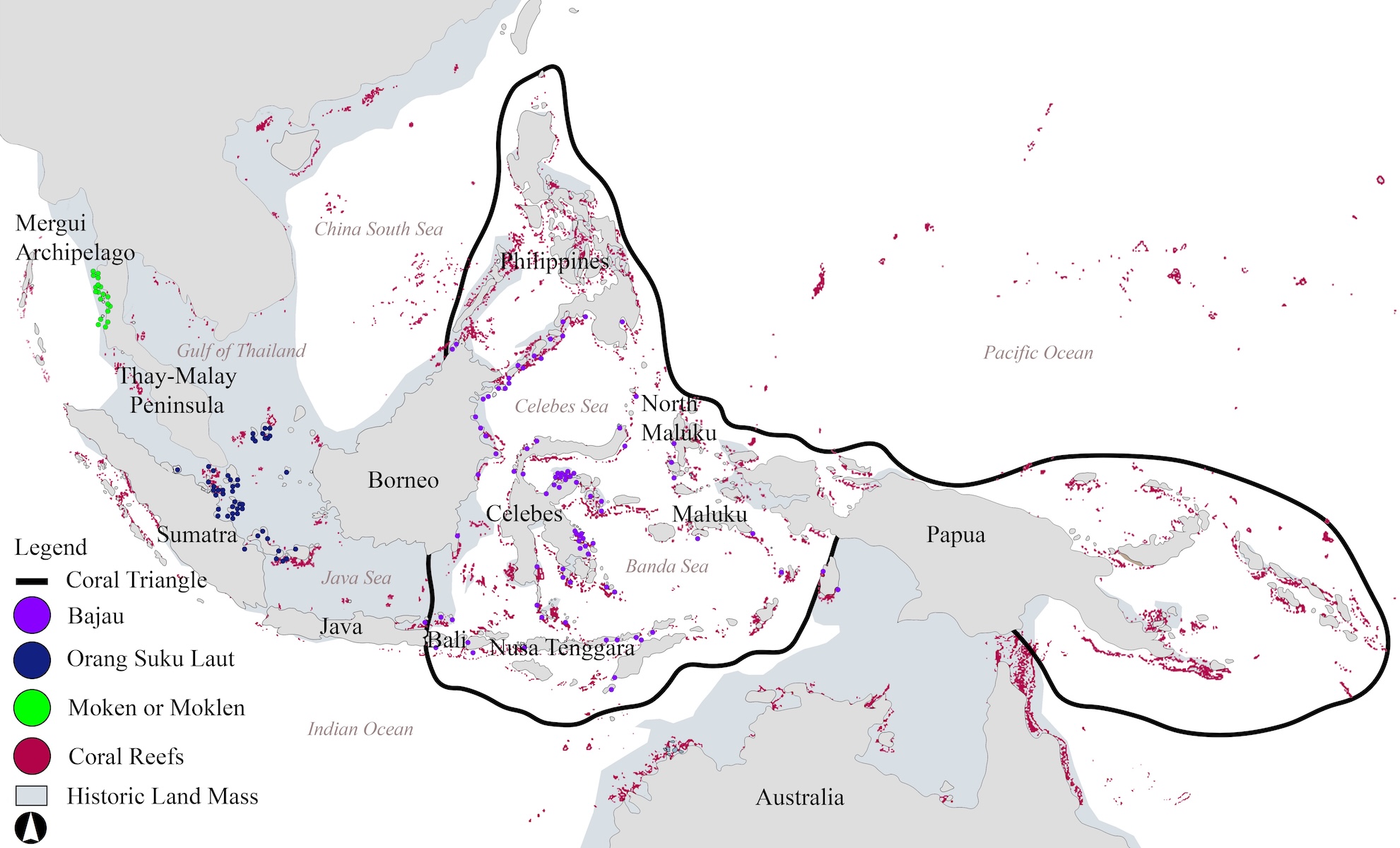
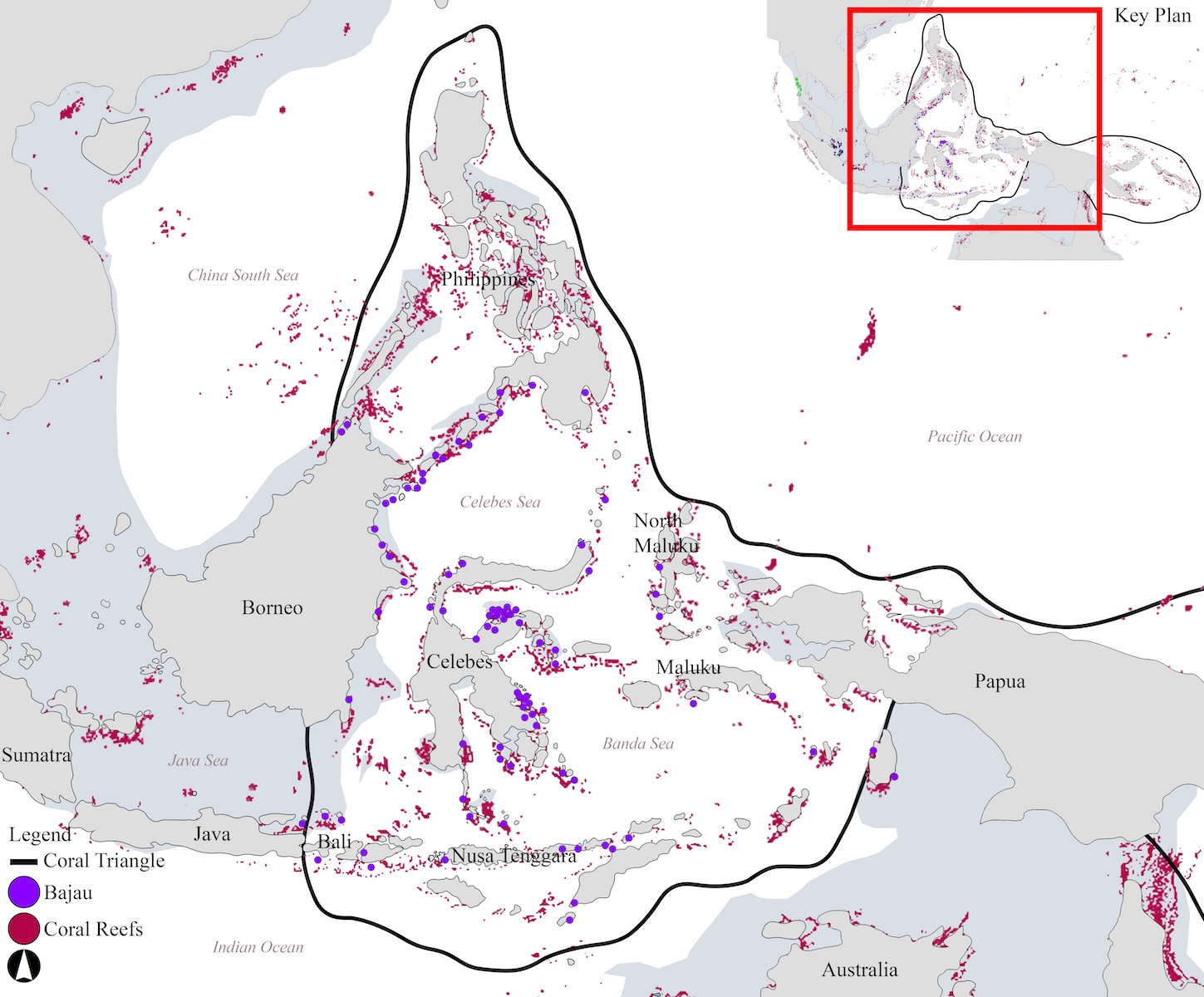
Based on the superimposition analysis conducted, coral reefs were identified as a crucial component in life of the Bajau communities. There are three primary morphological types: fringing reefs, barrier reefs, and atolls. In general, sea-oriented communities have traditionally inhabited areas associated with coral reef ecosystems; however, some of their habitats have gradually shifted to terrestrial locations (Figure 2). This transformation was significantly influenced by governmental efforts during 1966-1988 period to compel sea nomads to abandon their nomadic maritime lifestyle. Paradoxically, these policies generated a range of new social, environmental, and economic challenges. Over time, the communities also experienced a gradual erosion of traditional maritime knowledge, particularly in relation to fishing practices that had previously enabled them to adapt to dynamic conditions of the marine environment in context of climate change (Ariando and Limjirakan, 2019; Firdaus et al., 2019).
Furthermore, one of the principal reasons for their historical preference to settle in proximity to coral reefs was to avoid intervention by colonial administrations and later national authorities, who frequently sought to regulate and restrict their mobility at sea (Warren, 1971). According to Sopher (1977), the historical trajectory of the Bajau communities in the Indonesian Archipelago illustrates significant role of coral reefs—a role that continues to present day—not only as providers of the Bajau’s basic subsistence needs but also as natural barriers protecting them from the force of ocean waves. Distribution of their habitats is not random; rather, it follows ecological patterns that are adaptively aligned with marine environmental conditions. The Bajau inhabit areas characterized by shallow waters, protection from strong waves, and proximity to extensive coral reef formations (Mulyati, 2015). Such environmental conditions for social needs, including spaces of everyday activity. Large atolls with depths ranging from 3 to 10 meters have served as sites of refuge and habitat for Bajau communities for centuries (Tomascik et al., 1997).
According to Tomascik et al. (1997), no other community has maintained a relationship as intimate with coral reef ecosystems as the nomadic boat-dwelling peoples, often referred to as “sea nomads”, of the Indonesian Archipelago. Sandy islets—known among the Bajau as rep—constitute valuable economic assets within the Bajau habitat. During low tide, these sandbanks (rep) are frequented by women and children who arrive in small canoes to gather abundant bivalves and gastropods, both of which are mollusks. Therefore, these sandy islets function as significant communal gathering spaces that directly sustain the Bajau livelihoods. The maritime mobility of the Bajau was not confined to Southeast Asia. Fox (1977), documented the presence and movement of the Bajau people in northern Australia among the fleets visiting Port Essington in 1840. In the context of the Bajau community in Sainoa Island, it is evident that their habitats are distributed across several reef zones that provide substantial food resources. The island is directly bordered to the north and east by Banda Sea, one of the region’s deep-sea basins, characterized by diverse coral reef formations and abundant fish species (Tomascik et al., 1997).
Historically, Bajau habitats were built in coastal areas and on large islands bordering coral reefs and then utilized them in a commercial economy oriented towards fishing: they have sought valuable marine resources such as sea turtles (Eretmochelys imbricate) for their shells and tropical sea cucumbers (Holothuriidae spp.) for export to the Chinese market (Nagatsu, 2017; Sopher, 1977). According to Ariando and Arunotai (2022), ecologically, Bajau habitats are ideally located in locations with access to freshwater sources, close to marine ecosystems such as coral reefs, mangrove forests, and seagrass beds, and close to the open sea, continental slopes, lagoons, and tidal areas. Based on spatial analysis, it was found that the distribution of Bajau habitats are closely linked to the presence of coral reef ecosystems. Most of these habitats are in the Coral Triangle region, known as the center of global coral reef biodiversity.
4.1 The Bajau Community in Sainoa Island, Salabangka Islands, Morowali Regency
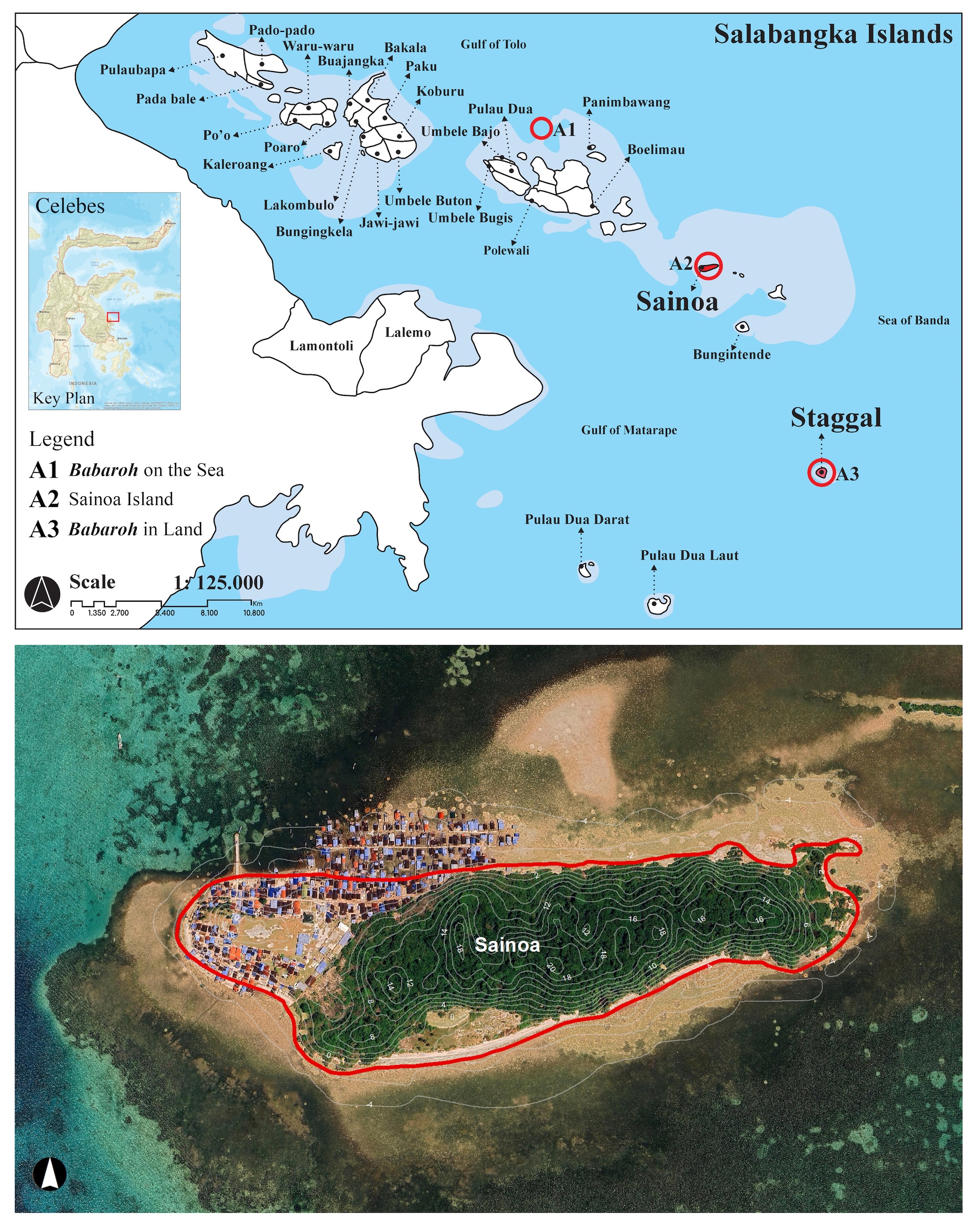
Following Nagatsu's regional classification, the distribution of Bajau settlements can be interpreted as several island clusters characterized by distinct geographical settings and historical relationships. This study focuses on the Kendari Cluster, specifically Sainoa Island in the Salabangka Archipelago, South Bungku District, Morowali Regency, Central of Celebes, Indonesia (Figure 3). The Salabangka Islands are predominantly inhabited by the Bajau and comprises a network of islands that collectively support their habitation system. Within this network, Sainoa Island functions as the principal settlement, while the surrounding islands provide complementary resources and services, including freshwater, temporary dwelling sites (babaroh), marine resources such as mangrove crabs (Scylla olivacea), groupers (Epinephelus spp.), octopus (Octopus cyanea), reef squid (Sepioteuthis lessoniana), red snapper (Lutjanus spp.), and sea cucumbers (Holothuriidae spp.), as well as places for trading, boat mooring, and other daily activities (Figure 4). Accordingly, the following discussion focuses on Sainoa Island to examine how coral reefs and the surrounding island network shape the Bajau habitation system.
Sainoa Island constitutes a residential area predominantly inhabited by the Bajau community, whose livelihood and socio-cultural life is closely dependent on the marine ecosystem. This dependence is reflected in their daily activities, most notably in their occupation as fishermen, as well as in their traditional practices and cultural expressions, which are deeply interviewed with the maritime environment. In line with the dynamics of modernization, the settlement pattern of the Bajau community in Sainoa Island has undergone a significant process of transition. This transformation can be observed in shifts from sea-based dwellings constructed over the water, to coastal settlements along the shoreline, and eventually to land-based residential patterns. At present, the Bajau habitats in Sainoa are no longer exclusively inhabited by the Bajau community; but also occupied by other ethnic groups, including Bungku and Bugis communities.
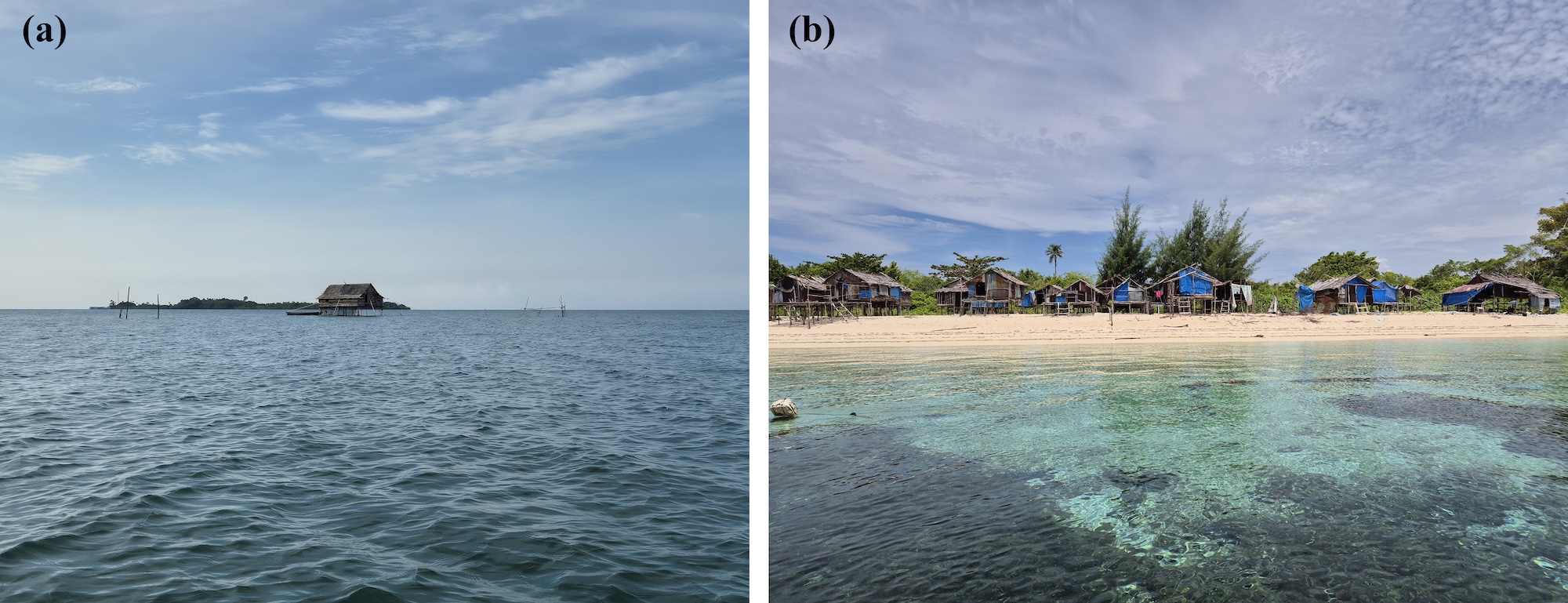
Based on fieldwork conducted from 5–30 August 2025, this study found that the Bajau community of Sainoa possesses extensive ecological knowledge of coral reef ecosystems, including the ability to identify fishing grounds and seasonal variations in commercially important reef fish that has been transmitted across generations. This traditional knowledge is supported by customary institutions that regulate fishing territories and resource access among Bajau communities (Djohani, 1996). However, the transition from a nomadic maritime lifestyle to a more sedentary way of life, together with increasing economic demands and the adoption of more intensive fishing technologies, has weakened these traditional management systems and intensified pressure on coral reef ecosystems through overexploitation (Tomascik et al., 1997). For instance, the Bajau community in Sainoa Island has partially adopted modern fishing techniques in response to growing market demand, shifting from subsistence to commercial fishing. Meanwhile, coastal land conversion and tourism fishing grounds. In response the Bajau continue to establish temporary shelters known as babaroh during seasonal bapongka (fishing expeditions). Located between Panimbawang Island and Gulf of Tolo, these shelters are equipped with karamba to store live catches before distribution or sale, while those on Staggal Island are built in land to support fishing activities lasting several months (Figure 4).
The Bajau predominantly inhabit the Coral Triangle, where many of their living spaces overlap with marine conservation areas. However, conservation initiatives such as the Coral Triangle Initiative (CTI) and Marine Protected Areas (MPAs) have largely been designed from ecological and biological perspectives with limited participation of the Bajau, despite their long-standing dependence on these marine ecosystems (Clifton and Majors, 2012; Roberts et al., 2002; Stacey and Allison, 2019). As a result, conservation policies and state-imposed restrictions have reduced their access to marine resources that sustain not only their livelihoods but also their cultural, social, and spiritual practices (Hleihel, 2020). Given their extensive traditional ecological knowledge and continuous interaction with coral reef ecosystems, the Bajau should be recognized as key partners in the planning and management of marine protected areas. Integrating their knowledge into coastal and small-island governance would strengthen participatory conservation while supporting both coral reef sustainability and the continuity of Bajau cultural landscapes.
4.2 Natural Systems and Navigational Analysis of Bajau Habitat Profile
Hereditary practices have shaped the Bajau way of life for generations (Dasilva et al., 2026). The search for abundant marine resources has led to their spread across Southeast Asian waters, forming spatial residential units consisting of terrestrial houses, coastal dwellings, houses built over the sea, and babaroh (temporary shelters). These habitat units are interconnected, particularly in relation to the location and condition of coral reefs. Coral reefs serve as important indicators in resource exploration, as they provide habitat for a variety of marine life that can be harvested for both daily needs and commercial exchange.
a. The Habitat Profile of the Bajau at Sea
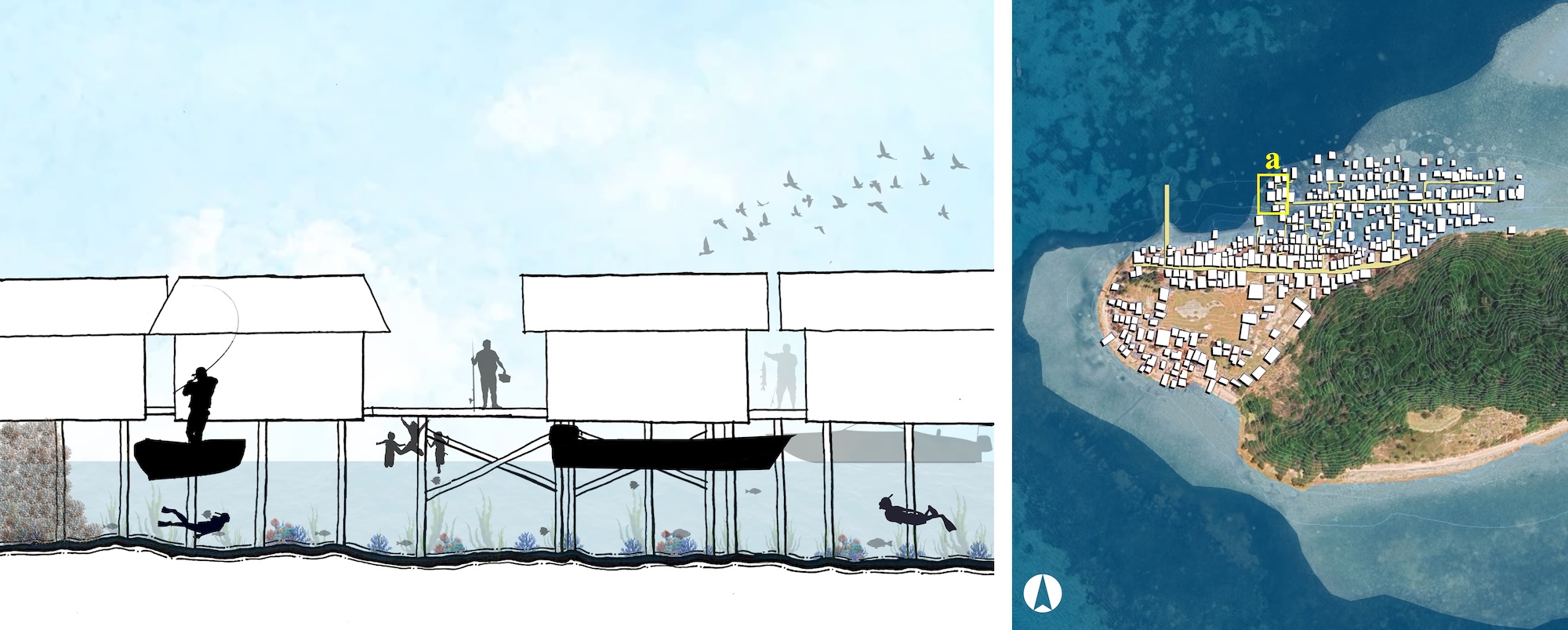
Bajau habitat above the sea demonstrates that spatial distribution of their habitats is situated directly within coastal waters that overlap with coral reef zones. In this context, the sea is not positioned as a boundary, but rather as the primary space of life. Combination of traditional stilt houses constructed with wooden plank walls and calcium silicate board (Kalsi board) through government intervention programs, reflects a process of negotiation between development policies and local maritime practices. The homogenization of building typologies introduced by such programs does not eliminate adaptive flexibility of Bajau community. The use of mangrove wood for bridges (tetean) and dead coral stone as foundations or house yards illustrates a form of ecological synergy with coral reef environments. This practice should not be understood as environmental exploitation, but rather as an adaptive strategy through which the Bajau adjust their habitat to the dynamic conditions of the marine environment. Everyday activities such as mooring boats, swimming, fishing, and line angling reinforce the functional interconnection between residential space and ecology and modern development structures. Within this framework, the sea and coral reefs function as central elements in Bajau worldview, shaping how they construct, interpret, and sustain their habitat (Figure 5).
b. The Habitat Profile of the Bajau in Coastal Areas
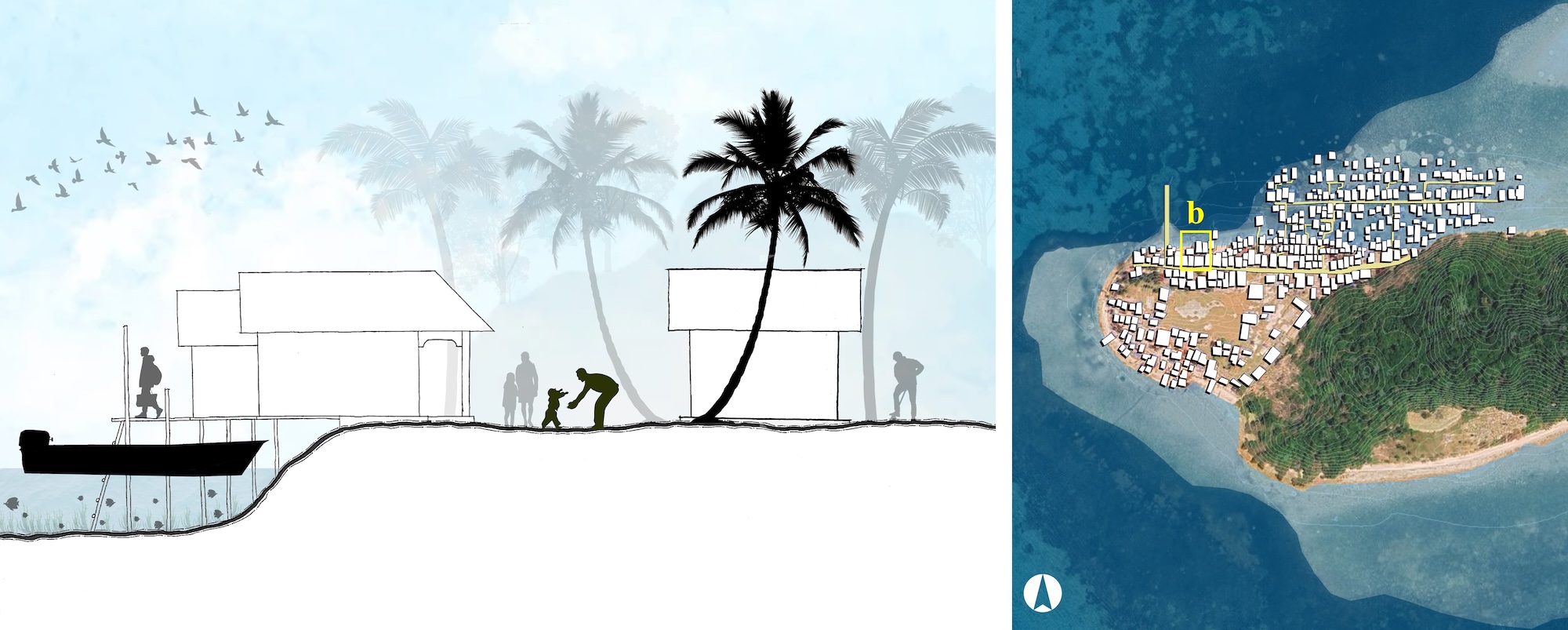
The physical characteristics of the coastal zones indicate that Bajau habitats occupy a transitional interface between the sea and the land. This spatial condition is expressed through stilt houses constructed over the water and along the shoreline, forming a linear habitat pattern that integrates marine and terrestrial environments. The use of timber and elevated stilt construction in seaward dwellings reflects adaptive responses to dynamic coastal conditions while maintaining close ecological and economic connections with coral reef ecosystems. In contrast, the gradual use of concrete in land-based buildings represents an adaptive transformation without diminishing the habitat’s functional relationship with the sea. The shoreline further serves as a boat-mooring space, reinforcing the spatial continuity between habitats and coral reefs through maritime mobility. These characteristics demonstrate that coral reefs are not perceived solely as ecological resources but as integral components of a living spatial system that connects the sea, shoreline, and land into a unified ecological and cultural landscape (Figure 6).
c. Profile of Bajau Terrestrial Habitat
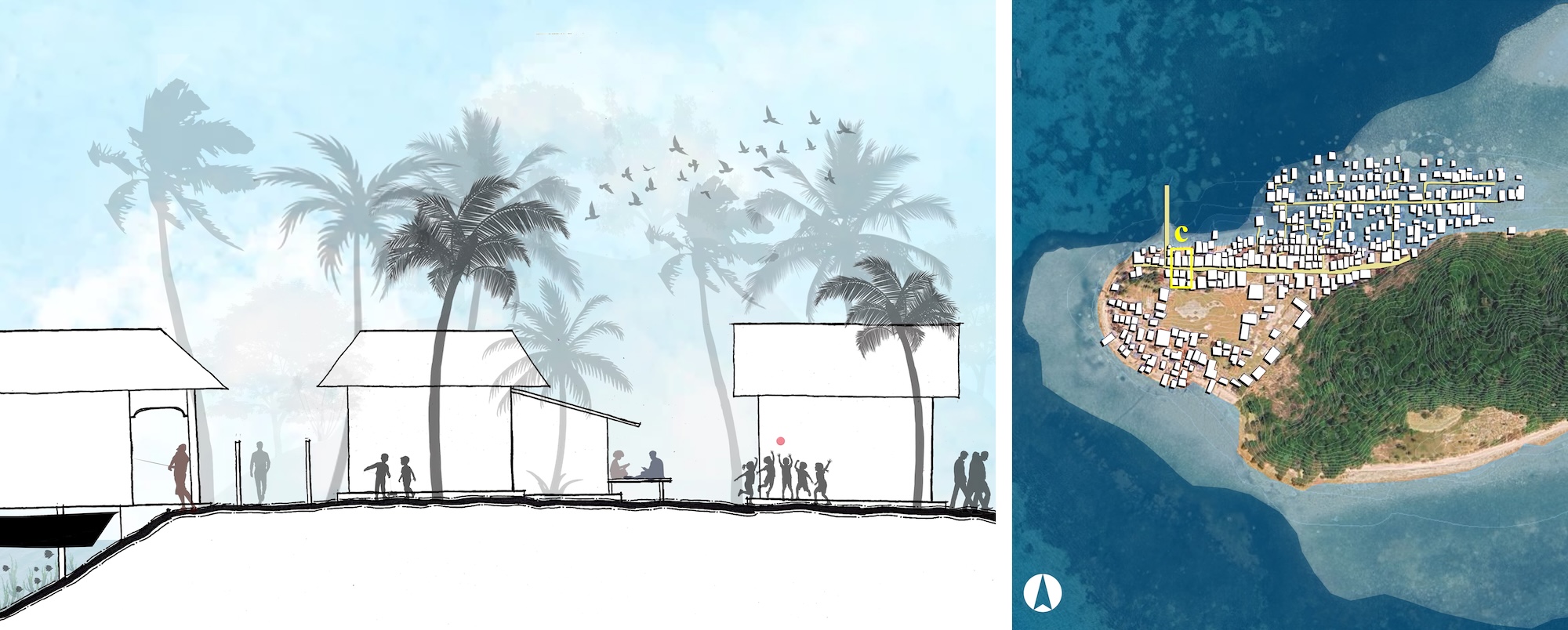
Since the early 2000s, land-based house construction has marked a gradual shift in the Bajau habitat from maritime spaces to terrestrial environments on Sainoa Island. This transition is manifested in the use of earthen footings, concrete structures, and barrier fences that redefine spatial organization and strengthen the relationship between private and public domains. These physical changes demonstrate the integration of the Bajau organizations into a more formal land-based spatial system, increasing spatial distance from coastal waters and cultural distance from the sea. The renovation of the organization’s barrier fence in preparation for Sainoa Island’s participation in the 2025 Morowali Regency inter-village competition further demonstrates that the transformation of the Bajau habitat is shaped not only by local adaptation but also by external development policies and administrative agendas. Consequently, the relationship between the Bajau communities and coral reef ecosystems has shifted from direct, everyday interactions to one increasingly mediated by spatial planning and governance, while their maritime identity continues to persist (Figure 7).
The following Table 1 presents the habitat locations and profiles of the Bajau community in Sainoa Island, Salabangka Islands, categorized according to their spatial positioning, construction typologies, dominant building materials, and their relationship to marine environment and coral reef ecosystems.
| No. | Location | Habitat Profile |
|---|---|---|
| 1. | Sea | Stilt houses, coral-foundation houses, galampah (rear terrace), boat moorings, wooden and concrete bridges, seagrass meadows, and coral reefs. |
| 2. | Coastline | Stilt houses, ground-based foundation houses, galampah (rear-terrace), boat moorings, wooden bridges, docks, and seagrass meadows. |
| 3. | Terrestrial | A house with a ground-based foundation, constructed of concrete materials, a galampah (rear terrace), and enclosed with a boundary fence. |
| 4. | Babaroh (Temporary Shelter) | Stilt houses are located both over sea and on land, situated near coral reefs and fish storage areas. |
5. Discussion
The findings indicate that Bajau habitat is not a singular spatial entity but a spatial continuum extending from coral reefs and shallow seas to coastal and terrestrial environments. Bajau habitats form a linear and stratified pattern in which offshore, coastal, and terrestrial habitats are functionally interconnected. Rather than acting as a geographical boundary, the sea (particularly coral reef ecosystem) serves as the primary spatial domain shaping habitats patterns, mobility, and everyday life. The Bajau-coral reef relationship is adaptive across this continuum. In offshore habitats, it is expressed through fishing, boat mooring, swimming, and the use of mangrove timber and dead coral for construction. Along the coastal fringe, transitional spaces connect sea and land while supporting maritime activities. In terrestrial habitats, relationships become indirect but remain sustained through regular mobility to the sea and continued dependence on coastal and marine resources.
Transformation of construction techniques and building materials—from wooden stilt houses erected above the sea, to hybrid structures combining stilts and ground foundations along the shoreline, and eventually to concrete buildings enclosed by fences on land—reveals a shift in the Bajau community’s conceptual framework in interpreting their relationship with coral reefs. Bajau habitat cannot be understood merely as a residential space, it constitutes a lived environment that is continuously negotiated among maritime values, ecological conditions, and development interventions. Housing programs, the adoption of industrial materials, and spatial arrangements structured through inter-village competitions demonstrate how state policies and development symbols shape the spatial expression of Bajau habitat. At the same time, these processes foster a form of visual homogenization that potentially obscures the community’s ecological relationship with the sea. The findings also indicate that the Bajau are not passive subjects of modernization. Instead, they actively negotiate their maritime identity through everyday practices, the selective use of materials, and the strategic utilization of coastal zones as primary connectors between sea and land. Within this framework, coral reefs function not merely as an ecological backdrop, but as symbolic and functional reference that continually shape how the Bajau constructs, organic, and interpret their habitat amid the dynamics of environmental change and development.
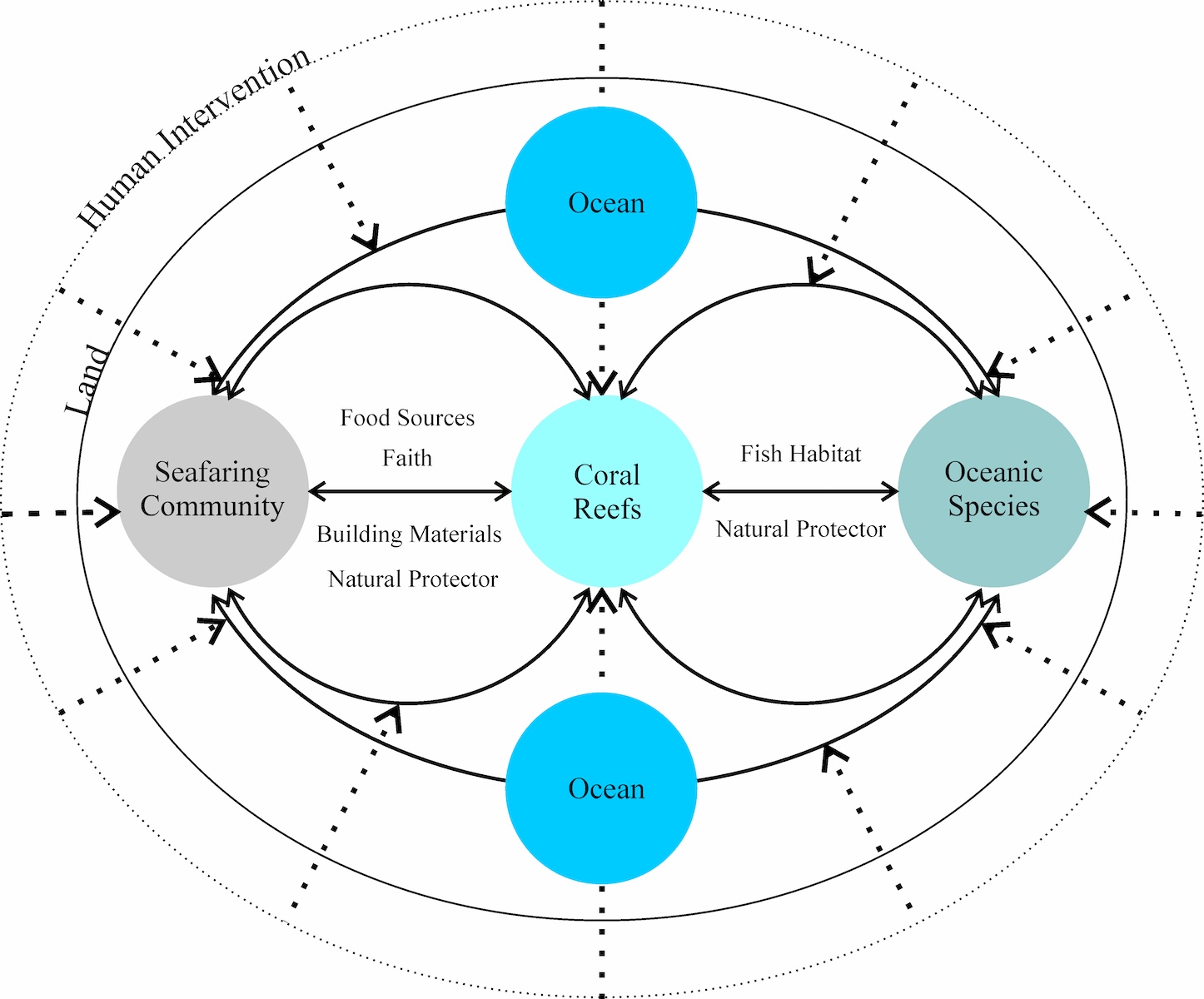
A Bajau habitat is closely associated with coral reef ecosystems, which provide the ecological foundation for their livelihoods. Coral reefs support diverse marine life as food sources and supply dead coral used as building materials. In addition, the Bajau believe that coral reefs, tidal currents, waves, and rocks are inhabited by ancestral spirits, reflecting the spiritual significance of these natural elements (Supriyono et al., 2020). However, Bajau living space extends beyond the sea, as the land provides timber for houses and boats, food resources, and materials for traditional ceremonies and rituals. Consequently, Bajau living space is shaped by the interdependence of land and sea, which together fulfill their ecological, material, social, and cultural needs. Maintaining this balance is essential for habitat resilience, as disturbances to either component, particularly the land, can affect both sustainability of Bajau livelihoods and health of coral reef ecosystems. This relationship demonstrated that Bajau community and coral reef ecosystems constitute a single, interconnected habitat (Figure 8).
6. Conclusion
The distribution of the Bajau community exhibits a layered and linear spatial pattern, extending from coral reefs and shallow waters to offshore settlements and coastal areas. This pattern indicates that a Bajau habitat is not concentrated in a single space but dispersed across a sea-land transition zone. In this zone, the coastline functions as the primary corridor, connecting the Bajau community's living space, maritime activities, and mobility. Evidence shows there is a symbiotic relationship between Bajau and coral reefs. The presence of coral reefs provides the Bajau with resources for their daily lives, and the presence of Bajau communities ensures preservation of coral reefs—like the relationship between farmers and their gardens. This relationship is characterized by adaptations and practices that uphold a functional relationship with the sea. In the Bajau’s habitat in the sea, this synergy is manifestly evident in their fishing activities and the utilization of local materials that are congruent with the ecological conditions. In the coastal zone, synergy is mediated by transitional spaces that integrate land and sea activities. In contrast, in terrestrial habitats, the relationship with coral reefs is indirect, mediated by mobility, infrastructure, and economic dependence on coastal resources. This study proposes a relational socio-ecological-spatial framework to explain the Bajau understanding of habitat. Within this framework, habitat is conceived not merely as a place of residence but as an interconnected system linking coral reefs, the sea, the land, and cultural practices. The resilience of Bajau habitat depends on maintaining the balance among these interconnected ecological, material, social, and spiritual relationships.
Acknowledgements
The author expresses his highest appreciation to the Bajau people in Sainoa Island for their acceptance and the opportunity to stay during the research.
References
- Albab, N.I.U., 2020. Maritime Culture Implementation of the Bajau Settlement - A Case Study of Sama Bahari Village, Wakatobi Islands. Plano Madani, 9(1): 68–78.
- Allen Coral Atlas, 2026. Coral Reefs Map. https://allencoralatlas.org/atlas/#1.00/0.0000/-145.0000, downloaded on July 17.
- Ariando, W., Arunotai, N., 2022. The Bajau as a left-behind group in the context of coastal and marine co-management system in Indonesia. Journal of Marine and Island Cultures, 11(1): 260–278. https://doi.org/10.21463/jmic.2022.11.1.18
- Ariando, W., Arunotai, N., Thabchumpon, N., 2025. Life in and Within Transition: The dynamics of livelihood, identity and governance of Sea Nomads in Southeast Asia. Shima Journal, 19(2): 1-25. https://doi.org/10.21463/shima.269
- Ariando, W., Limjirakan, S., 2019. Traditional Ecological Knowledge of Indonesian Sea Nomads “Orang Suku Laut” on Climate Change Adaptation, in: The 5th EnvironmentAsia International Conference. Chiang Mai, pp. 25–35.
- Baker, P.A., Weber, J.N., 1975. Coral growth rate: Variation with depth. Earth Planet. Earth & Planetary Science Letter, 27(1): 57–61. https://doi.org/10.1016/0012-821X(75)90160-0
- Barianaki, E., Kyvelou, S.S., Ierapetritis, D.G., 2024. How to Incorporate Cultural Values and Heritage in Maritime Spatial Planning: A Systematic Review. Heritage Journal, 7(1): 380–411. https://doi.org/10.3390/heritage7010019
- Briggs, J.C., 2005. Coral reefs: Conserving the evolutionary sources. Biological Conservation, 126(3): 297–305. https://doi.org/10.1016/j.biocon.2005.06.018
- Brown, R., Centry-Gruber, J., Hardesty, J., Meyer, M., Thompson, J., Weir, W., Alvevizon, B., Roth, M., 2015. What and Where are the Coral Reefs?, in: Coral Forest Teacher’s Guide. Department of Environment Cayman Islands Government, George Town, pp. 1–9.
- Burke, L., Selig, E., Spalding, M., 2002. Reefs at Risk in Southeast Asia. World Resources Institute, Washington.
- Caras, T., Pasternak, Z., 2009. Long-term environmental impact of coral mining at the Wakatobi marine park, Indonesia. Ocean & Coastal Management Journal, 52(10): 539–544. https://doi.org/10.1016/j.ocecoaman.2009.08.006
- Clifton, J., Majors, C., 2012. Culture, Conservation, and Conflict: Perspectives on Marine Protection Among the Bajau of Southeast Asia. Society & Natural Resources, 25(7): 716–725. https://doi.org/10.1080/08941920.2011.618487
- Coolen, H., 2008. The meaning of dwelling features (Conceptual and methodological issues), in: Sustainable Urban Areas. Delft University of Technology, Delft.
- Darwin, C.R., 1842. The Structure and Distribution of Coral Reefs. Cambridge University Press, London.
- Dasilva, G.C.K.D., Ninayanti, T.A., Reo, G.T., Meilani, Y., Mukin, M.P.G., Witin, S.S., 2026. Navigating Livelihoods through Traditional Entrepreneurship: Survival Strategies of the Bajo Migrant Community in the Wuring Settlement, Flores, Indonesia. Journal of Marine and Island Cultures, 15(1): 1-23. https://doi.org/10.21463/jmic.2026.15.1.13
- Djohani, R.H., 1996. The Bajau: Future marine park managers in Indonesia?, 1st ed. Routledge, London.
- Ekperi, M.D., Ezedike, E.U., 2024. Martin Heidegger on the Notion of “Dwelling”: Implications for Environmental Sustainability By. Niger Delta Journal of Gender, Peace & Conflict Studies, 4(1): 417–433.
- Fairbridge, R.W., 1997. Coral reefs: morphology and theories, in: Geomorphology. Springer Berlin Heidelberg, Berlin, Heidelberg, pp. 186–197. https://doi.org/10.1007/3-540-31060-6_66
- Firdaus, L.N., Ma’ruf, R., Elmustian, E., Suarman, S., Melay, R., 2019. Traditional Ecological Knowledge on Mangrove Ecosystem Utilization: Learning from Orang Suku Laut Kongky Strait, Lingga. Journal of Educational Sciences, 3(3): 328-339. https://doi.org/10.31258/jes.3.3.p.328-339
- Firth, A., 1995. Three Facets of Maritime Archaeology: Society, Landscape, and Critique. https://www.wessexarch.co.uk/sites/default/files/splash-import/wp-content/uploads/2010/04/Firth-1995-Three-Facets-of-Maritime-Archaeology-140410.pdf, downloaded on March 19.
- Fox, J.J., 1977. Notes on the southern voyages and settlements of the Sama-Bajau. Humanities and Social Sciences of Southeast Asia, 133(4): 459–465. https://doi.org/10.1163/22134379-90002606
- Gattuso, J.-P., Hoegh-Guldberg, O., Pörtner, P., 2014. Coral Reefs, in: Field, C.B., V. R., B., D. J., D., K. J., M., M. D., M., T. E., B., M., C., K. L., E., Y.O., E., R.C., G., B., G., E.S., K., A.N., L., S., M., P.R., M., L.L., W. (Eds.), Climate Change 2014: Impacts, Adaptation, and Vulnerability. Cambridge University Press, Cambridge and New York, pp. 97–100.
- Hleihel, A., 2020. Left Outside: The Bajau-Laut of the Coral Triangle Seascape in the Scope of the International Sustainable Development and Climate Change Agendas Implemented through the Coral Triangle Initiative (Dissertation). University of Vienna, Vienna.
- Hoogervorst, T.G., 2012. Ethnicity and aquatic lifestyles: exploring Southeast Asia’s past and present seascapes. Water History, 4: 245–265. https://doi.org/10.1007/s12685-012-0060-0
- Ismail, I.E., Hj Ahmad, A.S., Ibrahim, I., 2015. Influences of Regional Sama-Bajau Coastal Dwellings: Social Perspectives through Identity Molding. International Journal of Culture and History, 1(2): 115–121. https://doi.org/10.18178/ijch.2015.1.2.022
- Jubilado, R.C., 2010. On cultural flfluidity: The Sama-Bajau of the Sulu-Sulawesi Seas. Kunapipi, 32(1): 89-101.
- Jumsai, S., 1989. NAGA: Culture Origins in Siam and the West Pacific. Oxford University Press, New York.
- Kołodziej-Durnaś, A., Sowa, F., Grasmeier, M.C., 2022. Maritime Spaces and Society, in: International Studies in Maritime Sociology. BRILL, 1: 1–29. https://doi.org/10.1163/9789004503410
- Lampe, M., 2012. Pengelolaan Sumber Daya Laut Kawasan Terumbu Karang Takabonerate dan Paradigma Komunalisme Lingkungan Masyarakat Bajo Masa Lalu. Antropologi Indonesia, 33(3): 216-227. https://doi.org/10.7454/ai.v33i3.2465
- Lapian, A.B., 2009. Orang Laut, Bajak Laut, Raja Laut (Sejarah Kawasan Laut Sulawesi Abad XIX), 3rd ed. Komunitas Bambu, Depok.
- Lenhart, L., 1995. Recent research on Southeast Asian Sea nomads. Nomadic Peoples, 36: 245–260. http://www.jstor.org/stable/43123462
- Macalandag, R., 2023. The Badjao and the Sea: Indigenous entanglements with coastal resource management—The case of the ‘settled’ sea nomads in the Philippines, in: Islands of Hope: Indigenous Resource Management in a Changing Pacific. ANU Press, pp. 109–122. https://doi.org/10.22459/IH.2023.05
- Maragos, J.E., Crosby, M.P., McManus, J.W., 1996. Coral Reefs and Biodiversity: A Critical and Threatened Relationship. Oceanography, 9(1): 83–99. https://doi.org/10.5670/oceanog.1996.31
- McNiven, I.J., 2024. More than the sea: Review of different approaches to seascapes reveals unique transdisciplinary conceptualizations and contributions of archaeology. The Journal of Island and Coastal Archaeology, 20(4): 775-818. https://doi.org/10.1080/15564894.2024.2411686
- Meesters, J., Coolen, H., 2009. Dismantling the dwelling: A systematic approach to investigating the meaning of the dwelling: draft. ENHR 09: Changing Housing Markets: Integration and Segmentation, Prague, pp. 1-26.
- Miththapala, S., 2008. Coral Reefs. Coastal Ecosystems Series. Ecosystems and Livelihoods Groups Asia, IUCN, 1: 1-36.
- Mohale, H.P., Desai, A.Y., Temkar, G.S., Neelmani, 2023. Coral Reef: Their Importance, Threats and Conservation Strategies. Department of Fisheries Resource Management, 13: 65-68.
- Mulyati, A., 2015. Sama Di Lao’ Sebagai Dasar Pembentuk Arsitektur Permukiman Suku Bajo Pulau Kabalutan Sulawesi Tengah (Disertasi). Universitas Gadjah Mada, Yogyakarta.
- Nagatsu, K., 2017. Maritime Diaspora and Creolization: Genealogy of The Sama-Bajau in Insular Southeast Asia. Senri Ethnological Studies (SES), 95: 35–64. https://doi.org/10.15021/00008578
- Nolde, L., 2009. “Great is Our Relationship with the Sea": Charting the Maritime Realm of the Sama of Southeast Sulawesi, Indonesia. Department of History, 9: 15-33.
- Ounanian, K., van Tatenhove, J.P.M., Hansen, C.J., Delaney, A.E., Bohnstedt, H., Azzopardi, E., Flannery, W., Toonen, H., Kenter, J.O., Ferguson, L., Kraan, M., Macias, J.V., Lamers, M., Pita, C., Ferreira da Silva, A.M., Albuquerque, H., Alves, F.L., Mylona, D., Frangoudes, K., 2021. Conceptualizing coastal and maritime cultural heritage through communities of meaning and participation. Ocean Coastal Management, 212: 1-8. https://doi.org/10.1016/j.ocecoaman.2021.105806
- Poedjowibowo, D., Waani, J.O., Warouw, F., 2016. Teritorialitas Pada Permukiman Suku Bajo di Desa Tumbak (Studi Kasus Permukiman diatas Air). Daseng: Jurnal Arsitektur, 5(2): 39–57.
- Roberts, C.M., McClean, C.J., Veron, J.E.N., Hawkins, J.P., Allen, G.R., McAllister, D.E., Mittermeier, C.G., Schueler, F.W., Spalding, M., Wells, F., Vynne, C., Werner, T.B., 2002. Marine Biodiversity Hotspots and Conservation Priorities for Tropical Reefs. Science, 295: 1280–1284. https://doi.org/10.1126/science.1067728
- Roberts, E., 2003. Scientists warn of coral reef damage from climate change. Marine Scientist, 2: 1-21.
- Sather, C., 2024. Sama Dilaut Ways of Being at Sea: Navigating Unbounded and State Space in Island Southeast Asia. Journal of Social Issues in Southeast Asia, 39: 90–124. https://doi.org/10.1355/sj39-1e
- Sather, C., 1997. The Bajau Laut: Adaptation, History, and Fate in A Maritime Fishing Society of South-Eastern. Oxford University Press, Oxford.
- Satriani, Juhaepa, Upe, A., 2018. Resistensi Sosial Masyarakat Suku Bajo (Studi Kasus Atas Perlawanan Masyarakat Di Pulau Masudu Kecamatan Poleang Tenggara Terhadap Kebijakan Resettlement Ke Desa Liano Kecamatan Mataoleo Kabupaten Bombana). Jurnal Neo Societal, 3(2): 408–415. http://dx.doi.org/10.52423/jns.v3i2.4028
- Sopher, D.E., 1977. The sea nomads: a study of the maritime boat people of Southeast Asia. , 1st ed. Singapore: National Museum, Minnesota.
- Stacey, N., Allison, E.H., 2019. Sea Nomads: Sama-Bajau Mobility, Livelihoods, and Marine Conservation in Southeast Asia , in: King, T.J., Robinson, G. (Eds.), At Home on the Waves. Berghahn Books, New York. https://doi.org/10.2307/j.ctv12pns49.21
- Supriyono, A., Alamsyah, Mualimin, 2020. Pirates and the Environment: Bajo Tribe Study in Marine Conservation. E3S Web of Conferences 202, 07003. https://doi.org/10.1051/e3sconf/202020207003
- Sutthacheep, M., Yeemin, T., Aliño, P.M., 2022. Reef Ecology in the Western Pacific for Adaptation to Global Change. Springer Nature, 14: 55–98. https://doi.org/10.1007/978-3-030-97189-2_4
- Tomascik, T., Mah, A.J., Nontji, A., Moosa, M.K., 1997. The Ecology of the Indonesian Seas, Part II. ed. Periplus Edition (HK) Ltd., Jakarta.
- Tun, K., Chou, L.M., Cabanban, A., Tuan, V.S., Philreefs, Yeemin, T., Suharsono, Sour, K., Lane, D., 2005. Status of Coral Reefs, Coral Reef Monitoring and Management in Southeast Asia, in: Clive Wilkinson (Ed.), Status of Coral Reefs of the World: 2004. Australian Institute of Marine Science (AIMS) & Global Coral Reef Monitoring Network (GCRMN), Townsville, pp. 235–275.
- Veron, J., 2000. Corals of the World, 1st ed. The Australian Institute of Marine Science, Townsville.
- Veron, J.E.N., DeVantier, L.M., Turak, E., Green, A.L., Kininmonth, S., Stafford-Smith, M., Peterson, N., 2011. The Coral Triangle, in: Coral Reefs: An Ecosystem in Transition. Springer Netherlands, Dordrecht, pp. 47–55. https://doi.org/10.1007/978-94-007-0114-4_5
- Warren, J.F., 1971. The North Borneo Chartered Company’s administration of the Bajau, 1878-1909: The pacification of a maritime, nomadic people. Ohio University, Athens.