
Beyond the S-Curve: Integrating Tourism Area Life Cycle and Systems Thinking to Navigate Tourism Complexity on Con Dao Islands
 10.21463/jmic.2026.15.2.10
Abstract
Tourism drives the economy of small islands but frequently exceeds ecological and social carrying capacities, undermining long-term sustainability. While Butler’s Tourism Area Life Cycle (TALC) model is widely used to assess destination maturity, it offers a linear, deterministic view that often fails to capture the complex, non-linear interactions driving destination evolution. Addressing this limitation, this study integrates TALC with a qualitative Systems Thinking approach to map the causal mechanisms among sustainability challenges in the case of Con Dao Islands, Vietnam. Results position the island in the transition to the “Consolidation” stage; however, the systems analysis reveals critical structural vulnerabilities hidden by standard growth metrics. Crucially, the analysis highlights the absence of a proactive regulatory feedback loop, suggesting the current system is designed to self-correct only through environmental decline. This study offers a holistic dynamic hypothesis to guide policymakers from reactive planning toward resilient, systemic management.
Keywords
TALC, Systems Thinking, Causal Loop Diagram, Sustainable Tourism, Con Dao
1. Introduction
The development of marine and island economies, particularly in small tropical islands, is closely tied to the growth of tourism (Gössling, 2003). In many coastal areas of the tropical Pacific and Atlantic, tourism drives employment, infrastructure development, and income generation (Gössling, 2003; UNWTO, 2022). However, the long-term viability of island tourism depends not only on environmental quality and natural resources but also on the preservation of island cultural identity and the well-being of local communities, whose traditions, livelihoods, and social values are closely intertwined with fragile island ecosystems (Gössling and Hall, 2006; Mexa and Collovini, 2004; Cruz and Legaspi, 2019). While tourism can support both conservation and economic growth, unregulated expansion, poor land-use planning, and unchecked development often push destinations beyond their ecological, resource, and social limits. These pressures lead to environmental degradation, resource depletion, socio-cultural disruptions, weakening of local cultural identity, and reduced community resilience, ultimately threatening the long-term sustainability of tourism (Kerstetter and Bricker, 2012).
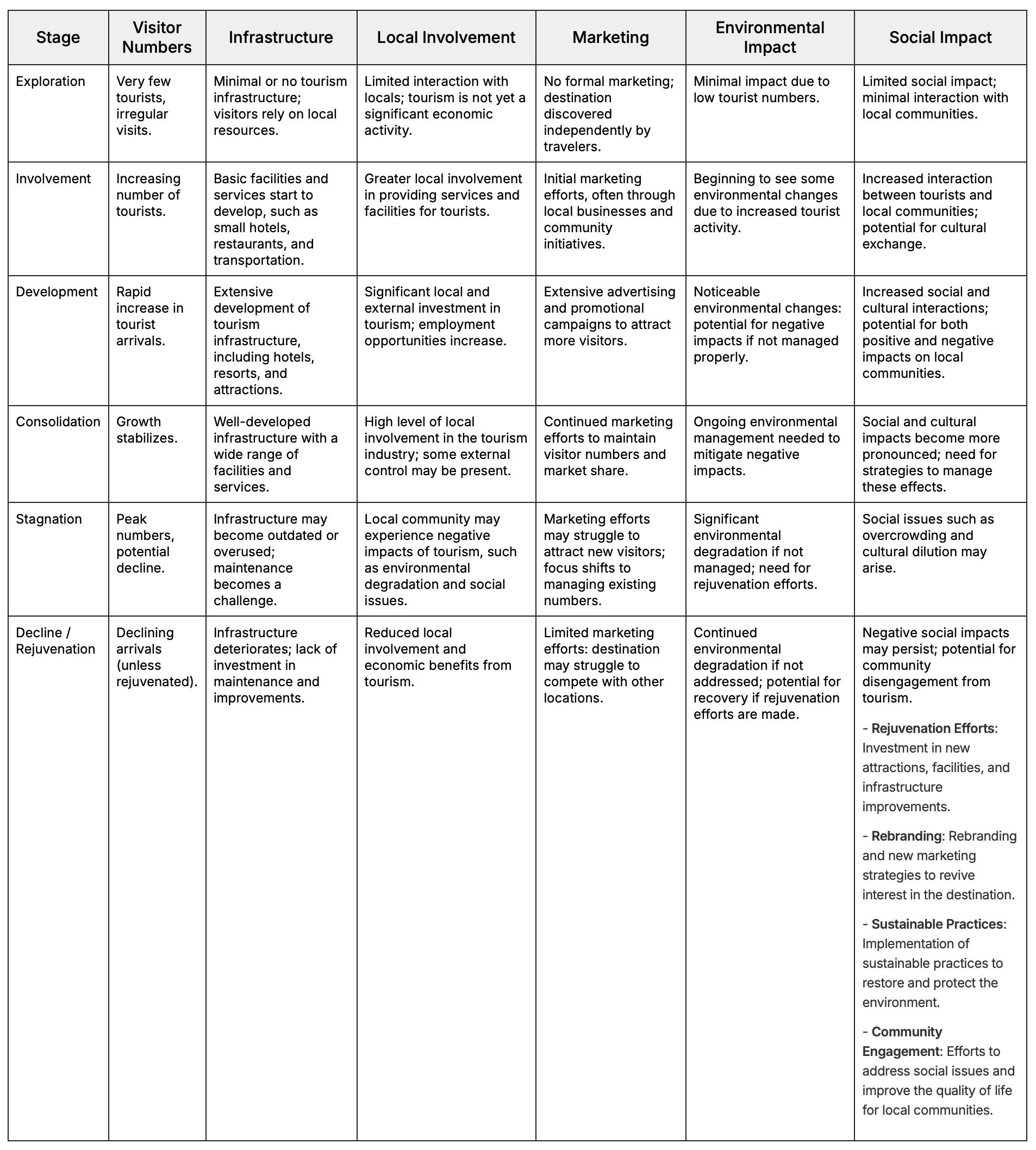
Tourist destinations evolve over time, typically progressing from discovery to mature development, and sometimes, eventual decline (Butler, 1980, 2006). Among the various models explaining tourist growth, Butler’s Tourism Area Life Cycle (TALC) model is one of the most widely applied frameworks due to its systematic approach to analyzing destination growth (Rodrigo et al., 2023; Nazneen et al., 2021; Butler, 2024). The TALC model conceptualizes destination evolution as an S-shaped curve, consisting of six phases: Exploration, Involvement, Development, Consolidation, Stagnation, and either Decline or Rejuvenation (Butler, 1980, 2006). The model suggests that tourism growth is influenced by factors like visitor numbers, infrastructure investment, local involvement, marketing, and the environmental and social impacts related to carrying capacity (Butler, 2006; Hall and Butler, 2006; Lagiewski, 2006).
The pattern demonstrated by the TALC is evident in small island destinations, where rapid tourism growth can strain environmental and infrastructural limits (ECLAC, 2008; Báez-García et al., 2018; Omar et al., 2014). The timeline of each TALC stage varies, reflecting different paths from exploration to decline or rejuvenation. Tourism growth is influenced by local conditions, policies, external factors, and stage duration. For example, a study of 23 Caribbean island states revealed varying tourism development stages shaped by unique factors (ECLAC, 2008). Langkawi Island (Malaysia) has experienced significant tourism growth, raising concerns about over-tourism, resource depletion, and environmental degradation. Despite being well-established, Langkawi faces sustainability challenges and is currently in the Consolidation stage (Omar et al., 2014). In contrast, the Canary Islands (Spain), a mature destination, have undergone all TALC stages, illustrating the long-term evolution of island tourism (Báez-García et al., 2018). The island now focuses on strategies to prevent tourist decline and enhance the tourism product (Báez-García et al., 2018). However, continued development raises concerns about exceeding the ecosystem’s carrying capacity, potentially impacting local communities, the environment, natural resources, climate change resilience, and long-term economic sustainability (Eli et al., 2023; Jurado et al., 2012). Assessing a destination’s position within the TALC model, alongside its carrying capacity, is therefore essential for proactive decision-making. Understanding these dynamics helps policymakers anticipate challenges and implement strategies to mitigate environmental and social issues while ensuring economic stability (Hall, 2011; Rodríguez et al., 2008).
Beyond these environmental and economic dynamics, island destinations are also cultural spaces whose identities, heritage, and community life shape, and are reshaped by tourism development (Hayward and Tran, 2014; Dang, 2021). On small islands, tourism frequently commodifies distinctive cultural assets, from sacred sites to memorial landscapes, while rapid development and in-migration can erode the island identity on which destination attractiveness ultimately rests (Nazneen et al., 2021; García-Buades et al., 2022). Exceeding the social and cultural carrying capacity of an island can therefore be as consequential as breaching its ecological limits (Saveriades, 2000; Kerstetter and Bricker, 2012). A framework for navigating island tourism complexity must consequently engage cultural dimensions and community perspectives alongside biophysical constraints.
While the TALC model remains a foundational framework for analyzing destination growth, recent scholars highlight significant limitations when it is applied to the complex landscape of island destinations. Critics argue that the TALC’s S-shaped curve offers a linear, deterministic view that fails to capture the multi-dimensional evolutionary paths of destinations (McKercher and Wong, 2024). As McKercher and Wong (2024) suggest, destinations behave closer to biological ecosystems with “multiple life cycles” rather than a single birth-to-death trajectory. Furthermore, the smooth progression implied by the model often masks periods of deep instability, shifting political control, and conflicts between local and external interests (Keller, 2024). Crucially, even Butler (2025) recently acknowledged that the model has often been interpreted as a rigid dogma rather than a flexible tool for sustainability. He notes that reliance on visitor numbers alone, the primary metric of TALC, fails to account for “path dependency” and the institutional inertia that makes shifting from growth to sustainability so difficult (Butler, 2025).
Consequently, while TALC effectively diagnoses where a destination is in its lifecycle, it struggles to explain the causal mechanisms of why it is there, or how specific policy interventions might trigger unintended consequences in a complex stakeholder environment. Static indicators, such as carrying capacity thresholds or visitor arrival counts, offer a snapshot of the current situation but fail to inform policymakers about the underlying causes and effects of systemic dysfunction (Zelenka and Kacetl, 2014). For instance, knowing a destination is in the “Consolidation” stage does not explain the dynamic tension between the desire for economic growth and the reality of resource depletion, nor does it map the complex power relationships between diverse stakeholders, ranging from local residents to national investors, who hold conflicting views on development (Keller, 2024). Relying solely on TALC leaves decision-makers reactive rather than proactive. It risks trapping a destination in a “growth paradigm” that overlooks the potential for stability or degrowth as viable sustainable outcomes (Butler, 2025; Keller, 2024).
To navigate these challenges, a methodology is needed that goes beyond linear descriptions to map the non-linear feedback loops driving the tourism ecosystem. Addressing this complexity requires a systems thinking approach, recognizing the interdependence between tourism demand, resource constraints, and policy responses (Baggio et al., 2010). While TALC provides the temporal context, Systems Thinking provides the causal explanation, treating the destination as a “complex adaptive system” capable of co-evolution (McKercher and Wong, 2024), rather than a static product.
Therefore, this study utilizes Systems Thinking as a crucial methodological supplement to TALC. By incorporating the diverse and often competing perspectives of local communities, tourism businesses, government authorities, and other stakeholders, the approach recognizes that tourism development on islands is shaped not only by environmental and economic processes but also by cultural values and community aspirations. This integration allows for a holistic diagnosis of the system’s structure, revealing leverage points for sustainability that linear models overlook. Based on the context of Con Dao, an archipelago off the southeastern coast of Vietnam, this study aims to first determine the position of the island’s tourism growth within the TALC model, and subsequently adopt a systems thinking approach to qualitatively develop a dynamic hypothesis (systems model). This holistic mapping of sustainability challenges offers strategic insights for decision-makers seeking to balance economic growth with environmental and social sustainability, ultimately enhancing the long-term resilience of the Con Dao tourism industry.
2. Material and Methods
2.1. Study site
The Con Dao Islands, located off southern Vietnam, consist of 16 sub-islands covering 76 km². Con Son, the only inhabited island, spans 52 km² and had a population of over 12,000 in 2024. The islands are approximately 185 km from the nearest city and 236 km from a major urban center (Figure 1). Renowned for their ecological, historical, and cultural significance, the islands were designated a Ramsar site in 2013 (Ramsar Sites Information Service, 2013). They feature fragile ecosystems with high biodiversity, including coral reefs, mangroves, and seagrass beds that support endangered species such as sea turtles, birds and dugongs (Con Dao National Park, 2024). Furthermore, as a key node in the international sea turtle conservation network, Con Dao has emerged as a premier tourist destination in Vietnam.
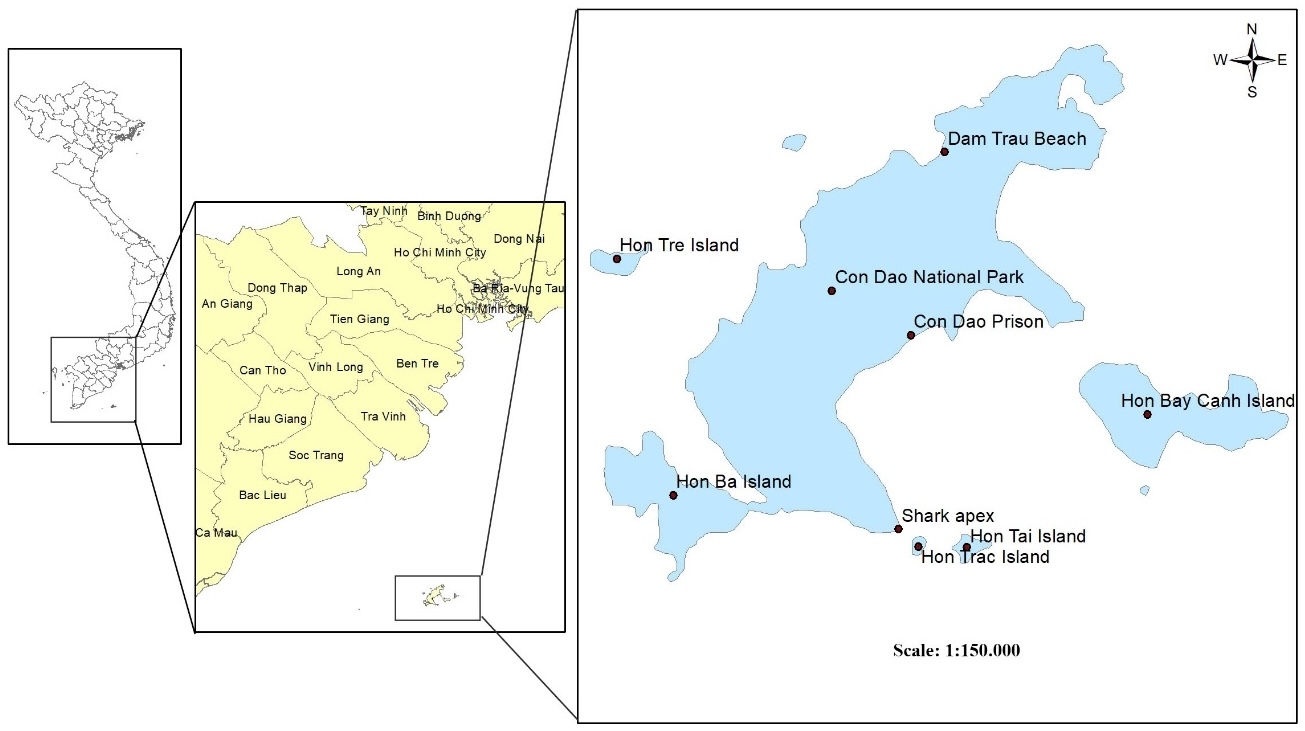
The islands also carry profound cultural and historical significance. Con Son served as a penal colony under successive French colonial and South Vietnamese administrations from 1862 to 1975, and its prison complex, now a Special National Monument, together with Hang Duong Cemetery, the resting place of national heroine Vo Thi Sau, has made the archipelago one of Vietnam’s most important destinations for memorial and spiritual tourism (Hayward and Tran, 2014; Dang, 2021; Mai, 2024). The present community of some 12,000 residents largely descends from post-1975 settlers, and local identity remains closely intertwined with the archipelago’s commemorative landscape (Khuyen, 2012). Tourism on Con Dao is therefore simultaneously nature-based and heritage-based, and its long-term sustainability depends on the stewardship of both ecological and cultural assets.
Tourism has become the primary economic driver of the islands, currently accounting for over 80% of total revenue. According to provincial and state development plans, this figure is projected to reach 90% by 2030. Annual visitor arrivals surged from 13,000 in 2005 to over 586,000 in 2024, with annual revenues reaching $94.4 million (Con Dao Tourism Portal, 2024). However, the market remains dominated by mass tourism (representing over 80% of visits), while the ecotourism and luxury segments account for only 8%. Consequently, the rapid expansion of mass tourism over the past decade has precipitated severe environmental, energy-related, and socio-economic challenges.
2.2. TALC model application
The Tourism Area Life Cycle (TALC) model was applied to determine Con Dao Island’s position within its six-stage S-shaped curve: Exploration, Involvement, Development, Consolidation, Stagnation, and either Decline or Rejuvenation. Following the framework outlined by Butler (2006), the island’s evolutionary stage was assessed using key indicators, including visitor numbers, infrastructure development, local involvement, marketing, policies, and environmental factors (detailed in Table S1). These indicators were qualitatively compared against tourism statistics (1975–2024), accommodation growth, and policy documents to identify the island's specific life-cycle phase.
To populate these indicators, data were synthesized from multiple official and primary sources. Quantitative metrics regarding visitor arrivals, revenue, and accommodation capacity (1975–2024) were retrieved from the Con Dao Tourism Portal and the Ba Ria-Vung Tau Provincial Statistics Office. Policy contexts and infrastructure growth targets were derived from Prime Minister’s Decisions No. 1518/QD-TTg, No. 870/QD-TTg, No.417/QD-TTg, and No. 566/QD-TTg (Prime Minister of Vietnam, 2011; 2015; 2022; 2024) and reports from the Ministry of Planning and Investment. These were supplemented by longitudinal qualitative data from official government portals (e.g., baria-vungtau.gov.vn) and national news outlets (e.g., Tuoi Tre, VnExpress, and Tap Chi Moi Truong). These sources provided chronological records of infrastructure projects, local socioeconomic shifts, and environmental management updates. Site observations and stakeholder insights further informed the assessment of local involvement and socio-environmental impacts. This multi-source approach allowed for a comprehensive qualitative comparison of the island's growth trajectory against the TALC model's theoretical stages.
2.3. Systems thinking approach
This study adopts a systems thinking approach to examine the dynamic interactions shaping tourism development on Con Dao Islands. A systems thinking is particularly suitable for analyzing complex socio-ecological systems, where economic growth, environmental constraints, infrastructure development, and stakeholder behavior interact through nonlinear feedback processes (Sterman, 2000).
Following the framework proposed by Sterman (2000), system analysis involves five key stages: problem articulation, formulation of a dynamic hypothesis, model formulation, model testing, and policy design and evaluation. Given the exploratory and qualitative nature of this study, only the first two stages, problem articulation and formulation of a dynamic hypothesis, were undertaken. These stages are sufficient for identifying system structure and feedback mechanisms underlying observed tourism growth patterns.
A dynamic hypothesis refers to a theory explaining how endogenous feedback structures generate system behavior over time. Rather than focusing on isolated variables, it proposes causal mechanisms that account for reinforcing growth processes and balancing constraints within the tourism system.
To operationalize the dynamic hypothesis, causal loop diagrams (CLDs) were constructed. CLDs are widely used in systems research to visualize feedback structures, identify system archetypes, and uncover hidden dynamics in complex tourism contexts. Recent studies have demonstrated the value of CLDs in revealing underlying drivers of unsustainable tourism growth and policy resistance. By mapping reinforcing and balancing loops, CLDs allow researchers and stakeholders to better understand how short-term economic expansion may generate long-term ecological and infrastructural pressures.
In this study, CLDs were used to represent the interactions between tourism demand, infrastructure expansion, environmental resources, and social responses. During the problem articulation stage, key variables and stakeholder concerns influencing tourism development were identified. In the dynamic hypothesis stage, causal relationships among these variables were structured into reinforcing (R) and balancing (B) feedback loops to explain the evolution of tourism development over time.
This qualitative systems modeling approach enables a structured yet flexible analysis of sustainability challenges, providing a foundation for future quantitative simulation and policy evaluation.
2.3.1. Problem articulation
The problem articulation stage was initiated by identifying sustainable tourism challenges in the Con Dao Islands through a multi-method approach. Data were synthesized from secondary sources, including government reports, statistical yearbooks, and previous studies, alongside primary insights gathered from field surveys in May and December 2024. In accordance with UNWTO (2013) guidelines, stakeholders, comprising local authorities, tourism businesses, resident communities, non-governmental organizations (NGOs), and tourists, were consulted to capture diverse perspectives on the system's behavior.
Through this process, the core problem was articulated as the growing imbalance between rapid mass tourism growth and the finite carrying capacity of the islands' socio-technical and natural systems. The articulation specifically focused on: (1) Growth-capacity mismatch: The divergence between the surge in visitor arrivals and the stagnated development of essential infrastructure (water, energy, and waste management); (2) Ecological erosion: The systemic trade-offs between short-term economic gains and the long-term degradation of fragile ecosystems; (3) Market dominance: The persistence of mass tourism which constrains the strategic transition toward high-value eco-tourism.
By establishing these dynamic patterns, a time horizon sufficient to capture delayed feedback effects was defined. This foundation served as the basis for the subsequent development of the dynamic hypothesis, shifting the focus from static issues to the causal feedback loops driving the system’s behavior.
2.3.2. Formulation of a dynamic hypothesis
The dynamic hypothesis was formulated using Causal Loop Diagrams (CLDs) to visually represent the reinforcing and balancing feedback loops between system variables. This approach facilitates the capture of complex tourism-related dynamics, particularly those concerning the transgression of Con Dao’s carrying capacity, while allowing for iterative refinement through stakeholder review.
In accordance with Sterman (2000), CLDs consist of variables linked by arrows that denote causal relationships. Each link is assigned a polarity: positive (+) if variables change in the same direction, and negative (-) if they move inversely. Feedback loops are categorized as reinforcing (R), indicating exponential growth or decline, or balancing (B), indicating goal-seeking or stabilizing behavior. Time delays, represented by double lines (//), are incorporated to account for lagged effects within the system.
In this study, two distinct CLDs were developed:
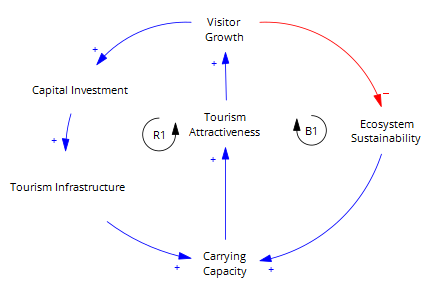
- Baseline CLD: Developed to represent the current state of tourism on the islands based on the initial data synthesis. This model highlights critical challenges, including ecosystem sustainability and infrastructural bottlenecks, reflecting the constraints imposed by the island’s carrying capacity (Figure 3).
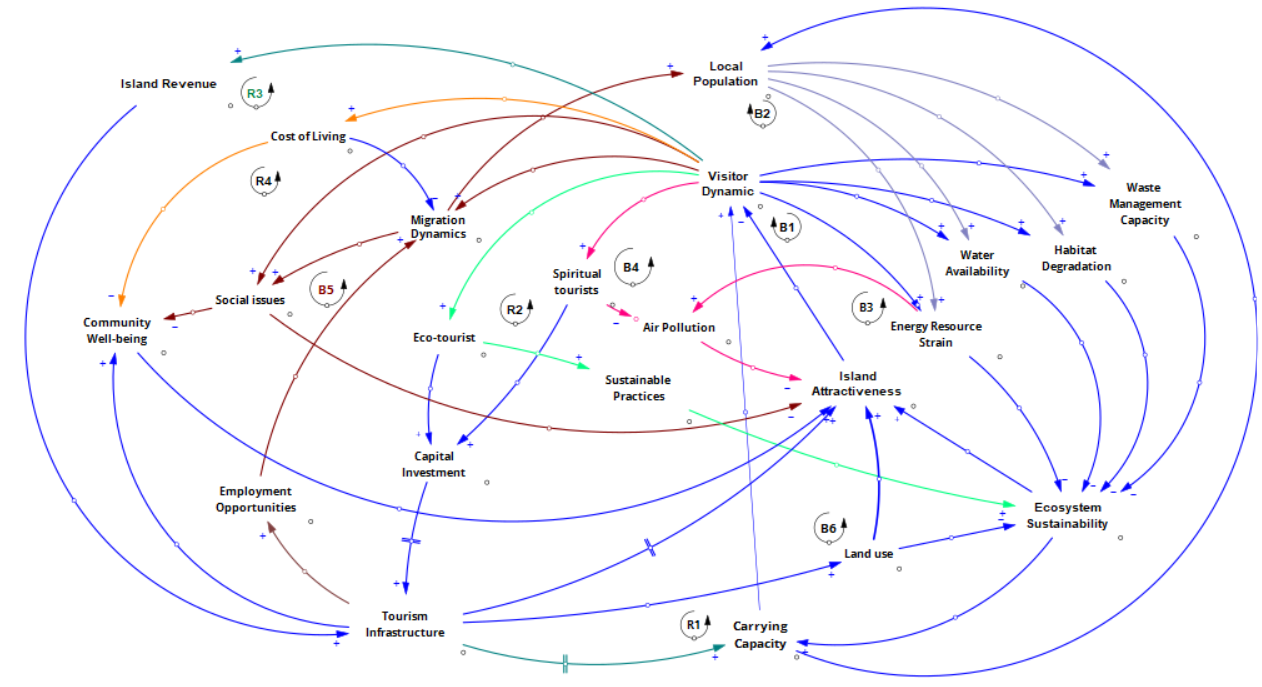
- Expanded CLD: Refined through the integration of stakeholder input, including additional variables and causal links. This model was further validated through expert consultations to ensure the accuracy of the system’s structural representation (Figure 4).
Furthermore, to understand the system behavior for policy evaluation, core structures known as system archetypes were identified (Sterman, 2000; Senge, 2006). These archetypes represent recurring patterns of behavior that aid in diagnosing complex systemic problems. Common archetypes were applied to explain the emergent behaviors observed in the expanded CLD and to evaluate the potential consequences of current management policies on economic growth through the 2030 and 2045 planning horizons, specifically regarding sustainability and carrying capacity limits.
2.4. Data collection
Data were collected from both primary and secondary sources.
Primary data were gathered through field surveys, in-depth semi-structured interviews (IDIs), focus group discussions (FGDs), and short structured interviews (SSIs). In total, 226 participants were engaged across stakeholder groups (Table 1). Participants were selected using purposive and snowball sampling to ensure that individuals with relevant knowledge and experience were included across the identified stakeholder profiles. The sample size is appropriate for qualitative systems research, where the objective is not statistical representativeness but the attainment of thematic saturation and the identification of key feedback structures shaping tourism development.
| Stakeholder category | Stakeholder groups | Information collection |
|---|---|---|
| Tourism business (n=25) | 1- Hotels (9) | IIN |
| 2- Restaurants (9) | IIN | |
| 3- Transport suppliers (5) | IIN | |
| 4- Tours and museum services (2) | IIN | |
| Local communities (n=30) | 5- Con Dao town resident | FGD |
| Policymakers and public service authorities (n=20) | 6- People Committee of Con Dao Island (2) | IDI and reports |
| 7- District Economic Office (8) | IDI and reports | |
| 8- Con Dao National park (5) | IDI and reports | |
| 9- Urban Public Services (water supply, wastewater treatment, and solid waste management services) (5) | IDI and reports | |
| External researchers (n=3) | 10- Researchers | IDI and reports |
| NGOs (n=3) | 11- WWF, IUCN | IDI and reports |
| Tourists (145) | 12- Visitors (domestic and foreigners) | SSI |
Participants were recruited through formal invitation letters/emails (for public authorities), direct contact with tourism enterprises, community referrals (snowball sampling), and on-site recruitment for tourists. Interviews were conducted in person, by phone, or via online meetings depending on participant availability.
Different engagement formats were used according to stakeholder characteristics:
- In-depth semi-structured interviews (IDI) were conducted with policymakers, public authorities, and experts, while individual interviews (IIN) were conducted with tourism business operators and NGO representatives (Table 1). This method was selected because these participants possess specialized knowledge of tourism planning, infrastructure management, environmental governance, and policy implementation. The interviews explored institutional perspectives on tourism growth, infrastructure capacity and resource constraints, policy priorities and long-term development plans, as well as perceived trade-offs between economic growth and environmental sustainability.
- Focus group discussions (FGDs) were conducted with local residents and community representatives. FGDs were chosen to facilitate interactive discussion and capture shared and divergent perceptions regarding tourism impacts. The group setting enabled participants to: reflect collectively on economic and environmental changes, discuss community-level impacts of tourism, identify locally perceived cause–effect relationships and debate proposed solutions and policy measures.
- Short Structured Interviews (SSIs) were conducted with tourists during their visits. Given time constraints and accessibility considerations, a brief structured format was used. These interviews focused on: travel motivations, length of stay, perceptions of infrastructure and environmental quality, awareness of sustainability issues, and overall satisfaction. In addition, tourists were asked about their expectations of Con Dao as a destination, perceived gaps between expectations and experience, intentions to revisit or recommend the island, and suggestions for future improvements.
Secondary data were obtained through official government requests and public digital archives. To ensure data trustworthiness and validity, the research team cross-referenced (triangulated) figures from three distinct levels: the central government (Prime Minister’s Decisions), provincial records such as Ba Ria – Vung Tau Statistical Office (2021; 2022; 2023), annual reports of Con Dao People’s Committee – CDPC (local level) and of Ba Ria - Vung Tau People’s Committee – BRVTPC and Government (central level) (CDPC, 2019; 2020; BRVTPC, 2021; 2023; Minister of Planning and Investment, 2011; Prime Minister of Vietnam, 2022; 2024), documents from Con Dao National Park and other relevant departments of Con Dao District (Con Dao Tourism Portal, 2024; Con Dao National Park (CDNP), 2024). Additional data sources included statistical yearbooks, reports from NGOs and international organizations related to the island (e.g., IUCN, WWF (Chu et al., 2020) Ramsar Sites Information Service. (2013), tourism service providers (Con Dao Tourism Portal, 2024), reputable online newspapers, and academic studies (Vo et al., 2020; ICED, 2022; Chu et al., 2021). Online searches in both English and Vietnamese were conducted using Google Search and Google Scholar.
2.5. Data analysis
2.5.1. For TALC model application
The evolutionary stages of tourism on the Con Dao Islands were determined through a longitudinal analysis (1975–2024) using Microsoft Excel. The analysis followed a streamlined two-step process:
- Trend Visualization: Quantitative data, including visitor arrivals, revenue, and hotel numbers, were plotted on a chronological axis (X) against tourism metrics (Y). These growth curves were used to identify inflection points where significant shifts in development occurred.
- Indicator-Based Classification: The final life-cycle stages were identified by benchmarking these observed trends and local developmental milestones against the qualitative indicators defined by Butler (2006). The classification was based on six dimensions: visitor numbers, infrastructure, local involvement, marketing, and environmental/social impacts (Table S1).
2.5.2. For system thinking and model construction
The analysis of qualitative data and the construction of the Causal Loop Diagrams (CLDs) were conducted through an iterative process involving both desk-based synthesis and stakeholder engagement.
Data from interviews and focus group discussions were organized and managed using Microsoft Excel. Key variables and systemic challenges were identified based on the consensus of stakeholders during these sessions. Instead of isolated coding, a collaborative identification approach was employed, where participants directly highlighted the causal linkages between tourism growth, infrastructure demand, and environmental impacts based on their operational experience and local knowledge.
The construction of the CLDs followed a two-stage verification process:
- Variable consolidation: Frequently recurring concepts mentioned during stakeholder meetings were consolidated into a set of core system variables, categorized into economic, social, environmental, and institutional dimensions.
- Mapping and validation: These variables and their perceived causal links were transferred into Vensim PLE (Academic version). The initial structures were then presented back to stakeholders and tourism experts for review. This iterative feedback loop ensured that the polarities, time delays, and feedback structures accurately reflected the real-world dynamics of the Con Dao Islands.
Two distinct models were finalized through this consultative process: a Baseline CLD representing the current system structure and an Expanded CLD incorporating more complex stakeholder insights and expert-validated links to provide a comprehensive representation of the system’s behavior.
3. Results
3.1. The position of the island’s tourism growth
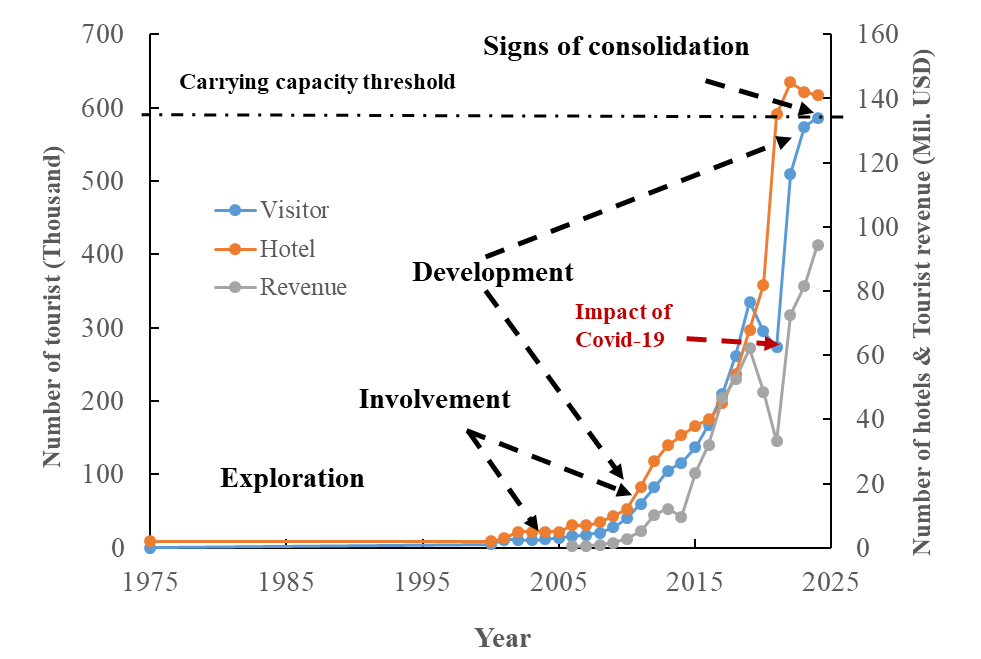
Con Dao’s tourism development has moved beyond the involvement stage and is in late development, transitioning toward consolidation based on TALC indicators (Table 2, Figure 2).
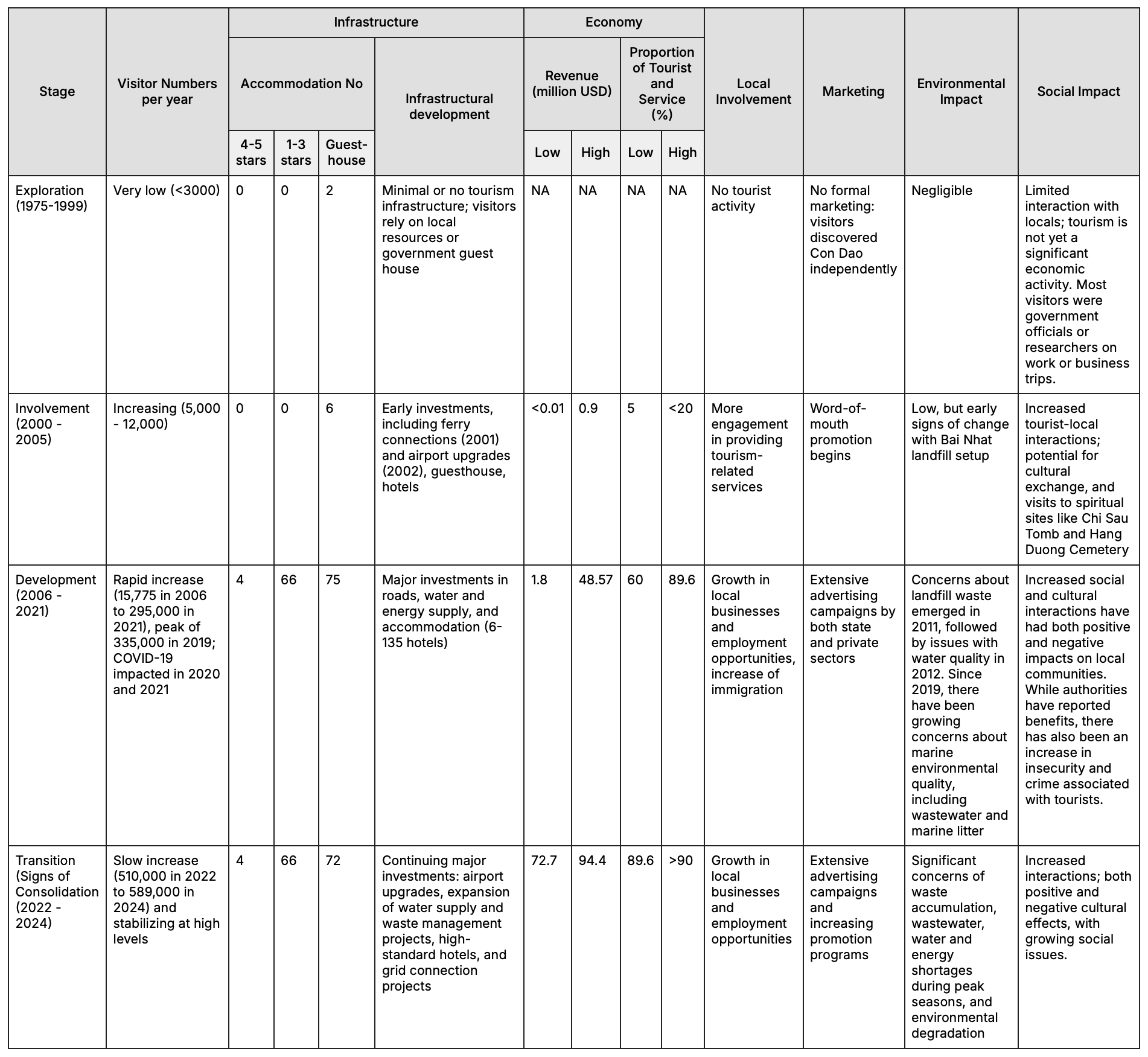 |
The exploration stage (1975–1999)
Tourism activity was minimal, with very low visitor numbers. Small‑scale tourism began in the early 1980s, marked by the opening of the Phi Yen Hotel in 1980 (Hayward and Tran, 2014). Infrastructure was limited, local participation was low, and no formal marketing existed. Environmental impacts were negligible. The first tourism policy appeared in 1979 (Government Council, 1979), but without concrete plans or targets.
The involvement stage (2000–2005)
Visitors increased to 4,000–14,000 per year. Early infrastructure improvements included new ferry services (2001) and airport upgrades (2002). Local participation grew, and word‑of‑mouth marketing emerged. Environmental pressure began, especially waste accumulation at Bai Nhat landfill. In 2005, the first tourism master plan (Prime Minister of Vietnam, 2005) aimed to transform Con Dao into a modern economic‑tourism zone by 2020.
The development stage (2006–2021)
Tourism expanded rapidly, from 15,775 visitors in 2006 to 295,000 in 2021, peaking at 335,000 in 2019 before COVID‑19 (Department of Internal Affairs, 2012; ICED, 2022). Infrastructure investment accelerated, and local businesses grew. Major promotion campaigns began in 2009 (Hayward and Tran, 2014). The opening of the Six Senses resort in 2010 marked a turning point. Environmental issues emerged, including waste management problems reported from 2011 onward (Con Dao People’s Committee, 2021). The 2015 master plan (Prime Minister of Vietnam, 2015) positioned Con Dao as a high‑quality marine, cultural, and ecological tourism destination. By 2017, tourism exceeded carrying capacity, causing water and energy shortages during peak seasons.
The transition to consolidation stage (2022–2024)
Visitor numbers stabilized (510,000 in 2022; 589,000 in 2024). Marketing continued, and external investors expanded, including Six Senses. Environmental pressures intensified, with over 100,000 tons of accumulated waste, coral degradation, and worsening water and energy shortages.
In 2022, the third master plan (Prime Minister of Vietnam, 2022) set a vision to 2045, prioritizing high‑quality eco‑tourism, modern infrastructure, increased investment, and ecosystem conservation. Ongoing projects include airport upgrades, national‑grid energy connections, improved water supply, waste‑management facilities, and new high‑end accommodations. These developments signal Con Dao’s shift toward the consolidation stage.
3.2. Dynamic hypothesis
The environmental, economic, and social challenges identified by different stakeholder groups are presented in Table 3. These issues were derived from interviews and discussions with tourism businesses, local communities, public authorities, researchers, NGOs, and tourists. The identified challenges were used to determine the key variables and relationships shaping tourism development in Con Dao, providing the empirical basis for constructing the background and expanded causal loop diagrams (CLDs).
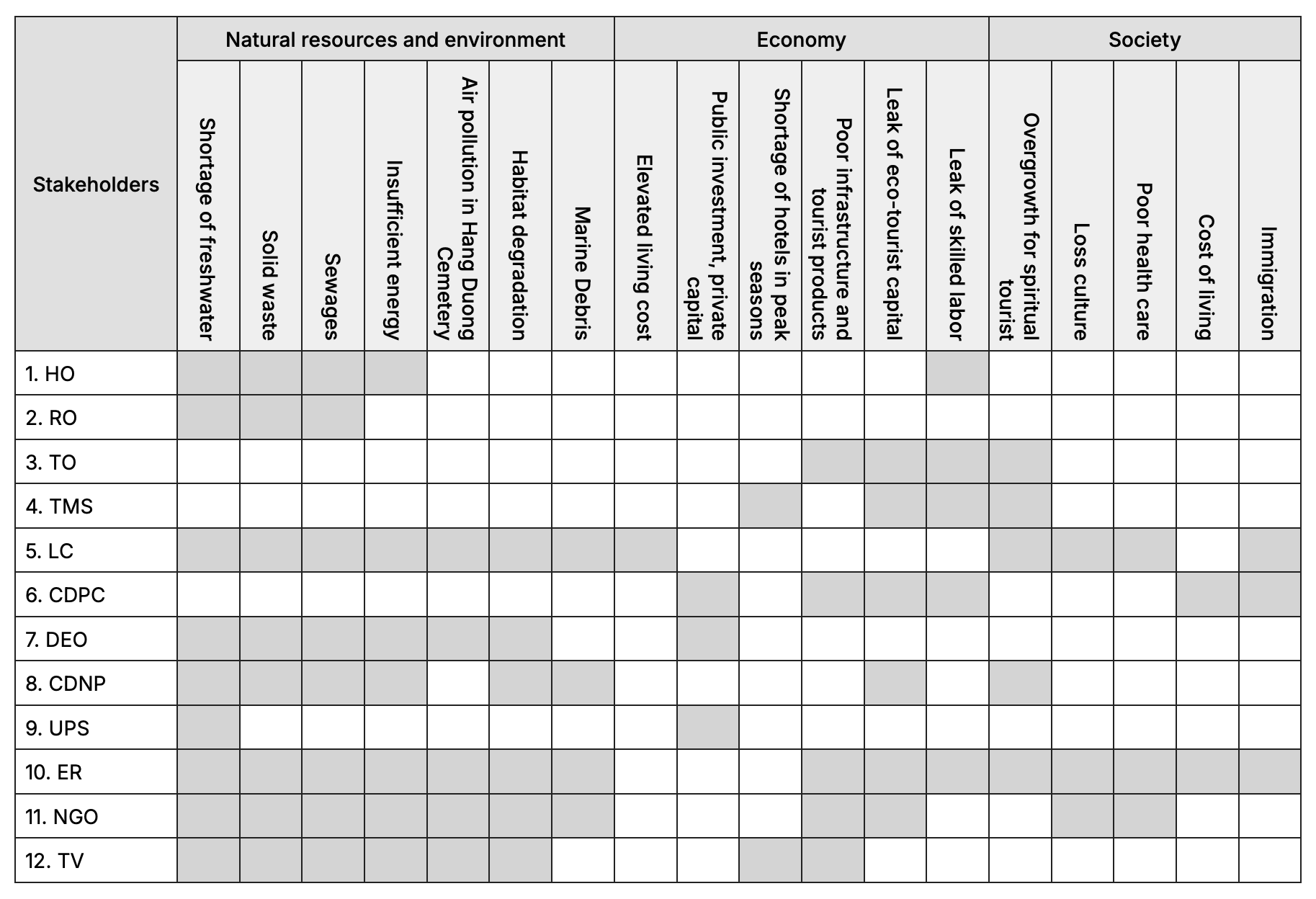 |
- HO: hotel operator;
- RO: Restaurant operator;
- TO: Transport operators;
- TMS: Tours and museum services;
- LC: Local communities;
- PCCD: People Committee of Con Dao;
- DEO: District’s Economic Office;
- CDNP: Con Dao National Park;
- UPS: Urban Public Services;
- ER: Researchers;
- NGOs: Non-governmental organizations;
- TV: Tourist and visitors.
Background CLD
The background CLD (Figure 3) represents the primary mechanisms driving tourism expansion on the island. The reinforcing loop (R1) illustrates how visitor growth stimulates capital investment in both public infrastructure (e.g., airport upgrades, ports, energy, treatment system and water supply) and private facilities (e.g., hotels and restaurants), which increases physical carrying capacity and further enhances tourism attractiveness. This positive feedback loop is consistent with provincial master plans, which aim to scale arrivals to 1–1.2 million by 2030 and up to 2 million by 2045. The balancing loop (B1) captures the emerging resistance from ecosystem pressures, including waste accumulation, untreated sewage, habitat degradation, and resource depletion, which can slow growth and potentially lead to stagnation as predicted by the TALC model.
The expanded CLD
Using the stakeholder insights summarized in Table 3, the expanded CLD (Figure 4) incorporates environmental, economic, and social variables across ten feedback loops: four reinforcing and six balancing.
Environmental Concerns: Freshwater scarcity, solid waste accumulation, sewage management, energy strain, air pollution at Hang Duong Cemetery, marine debris, and habitat degradation were mapped to variables involving CDNP, Urban Public Services (UPS), local communities (LC), Tourist and visitors (TV), and District’s Economic Office (DEO).
Economic Challenges: High living costs, limited investment, accommodation shortages during peak seasons, infrastructure delays, revenue leakage, and labor shortages were mapped to hotel operators (HO), restaurant operators (RO), tour and museum services (TMS), and DEO.
Social Issues: Rapid spiritual tourism, immigration, pressures on local services, healthcare limitations, and impacts on island cultural values and community well-being were represented through interactions involving LC and TMS. These relationships illustrate how tourism growth reshapes local communities while influencing the preservation of the island's cultural character.
By linking Table 3 to the CLDs, the diagrams capture the causal mechanisms behind observed pressures, making it possible to identify leverage points for interventions in water management, waste reduction, infrastructure planning, and community-based tourism.
Reinforcing Loop (R1): Tourism growth and carrying capacity.
As described in the background CLD, as tourism growth increases, it necessitates further investment in infrastructure and facilities (e.g., energy, waste management, water supply). This investment expands the technical carrying capacity of the island, thereby allowing for a higher influx of visitors.
Reinforcing Loop (R2): Eco-tourism growth.
Rising numbers of international visitors and eco-tourists stimulate investment in eco-tourism products. These travelers prioritize sustainability and conservation, contributing to improved environmental quality. This enhances the island’s appeal, attracting more eco-tourists and solidifying Con Dao’s reputation as a sustainable destination.
Reinforcing Loop (R3): Island’s revenue
Increased tourist arrivals generate greater island revenue, which facilitates further investment in critical technical infrastructure. This includes both utility systems, such as wastewater treatment plants and solid waste management systems, and connectivity upgrades, such as airport expansions and the connection to the national electricity grid. By improving resource management and service efficiency, these investments expand the island's technical carrying capacity, allowing it to support more visitors. However, this loop is characterized by significant system delays (//). In practice, these large-scale projects often remain non-operational for many years after their initial approvals seen with the delayed waste treatment facilities—due to the extensive time required for planning, funding, and complex construction phases before the increased capacity is realized.
Reinforcing Loop (R4): Population welfare
Tourism growth in Con Dao increases island revenue, leading to higher income for local communities and greater investment in infrastructure development. These improvements enhance living standards and make the island more attractive for both workers and tourists. As a result, more people are drawn to work in tourism and related industries, further expanding the workforce and strengthening the local economy. This cycle of economic benefits and improved infrastructure continues to reinforce tourism growth, creating a self-sustaining loop of prosperity through reinforcing loop (R4). These improvements may also strengthen the capacity of island communities to participate in and benefit from tourism development, thereby reinforcing the social foundations that support long-term destination resilience.
Balancing Loops (B1 and B2): Environmental degradation and resource strain
When tourist activities and population growth exceed the island’s carrying capacity, resource strain and environmental degradation occur. This leads to increased waste generation (notably at the Bai Nhat landfill), sewage discharge, and higher demand for water and energy. In practice, waste management projects have been delayed and remain non-operational despite construction approval in 2019. Consequently, waste continues to accumulate at Bai Nhat landfill, and untreated sewage is discharged, further degrading the environment and diminishing the island’s aesthetic appeal. Additionally, inadequate energy and water supplies reduce tourist satisfaction, ultimately decreasing the island’s attractiveness and limiting the growth of eco-tourism.
Balancing Loop (B3): Emissions and energy strain
Inadequate energy supplies and the use of fossil fuels result in increased CO₂ and PM2.5 emissions. This decline in air quality reduces the island's appeal, particularly among eco-tourists.
Balancing Loop (B4): Spiritual tourism overcrowding
Air pollution from incense burning and congestion at spiritual sites (e.g., Hang Duong Cemetery) worsen the tourist experience. This detracts from the peaceful environment and limits the growth of high-quality spiritual and cultural tourism.
Balancing Loop (B5): Social issues
The rapid growth of tourism has driven increased investment in infrastructure, leading to the construction of more facilities and job opportunities. This has attracted both permanent and temporary migrants to Con Dao, with low-skilled workers needed for infrastructure projects and skilled workers for tourism-related services such as hotels and restaurants. However, the rising number of residents and migrant workers places growing pressure on the island’s carrying capacity, particularly on healthcare services, which are already struggling to meet local demands. Beyond infrastructure pressures, the increasing resident and migrant population may place additional pressure on community cohesion and the island's social and cultural fabric. These factors diminish community well-being, ultimately reducing the island’s attractiveness through a balancing feedback loop (B5).
Balancing Loop (B6): Rising cost of living and environmental impact
Tourism drives up the cost of living for locals and migrants. Simultaneously, the expansion of hotels and infrastructure reduces forested land, leading to habitat loss. The shift from natural landscapes to man-made structures negatively impacts the island’s carrying capacity and scenic beauty, ultimately reducing tourist appeal.
System archetypes
Based on the expanded CLD, we identified specific system archetypes that reflect the structural dynamics of Con Dao. The following five archetypes, namely Capacity Saturation, Infrastructure Paradox, Water Depletion, Migration Strain, and Cannibalization Dilemma, diagnose the critical feedback loops and tensions that currently threaten the island's transition to a sustainable development model.
Capacity saturation (Limits to growth)
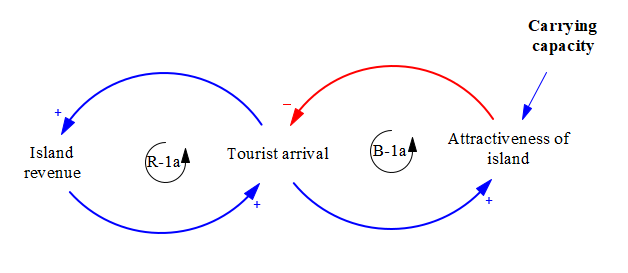
This dynamic mirrors the classic “Limits to Growth” archetype described by Senge (2006). The tourism master plan for Con Dao Islands prioritizes visitor growth, reflected in rising tourist arrivals and increasing island revenue as a reinforcing cycle R-a1 (Figure 5). This growth will drive infrastructure investments and increase land use from 2026 to 2030. However, growth has slowed in 2023 and 2024 due to unresolved constraints like freshwater shortages, unstable and insufficient energy supply, waste management issues, and ecological degradation. Despite increased advertising, these challenges hinder long-term sustainability. Waste management delays have led to over 100,000 tons of accumulated waste, reducing the island’s attractiveness and lowering tourist satisfaction as part of the balancing cycle B-a1 (Figure 5). If these challenges persist, Con Dao Islands may shift to the next stage of the TALC model, where environmental and infrastructure limitations further curb growth potential. To ensure sustainable tourism, leverage points lie in enhancing water resource management, accelerating waste treatment solutions, and strengthening visitor regulations. Improving these areas is crucial for maintaining Con Dao’s appeal while supporting long-term environmental and economic sustainability.
Infrastructure paradox (Fixes that fail)
The island faces a “Fixes that Fail” archetype regarding its waste crisis. The rising number of tourists in Con Dao has increased concerns about ecosystem sustainability. In response, the local government has prioritized infrastructure expansion, such as waste management systems and water reservoirs, to accommodate visitor demand and support longer tourist stays. These developments aim to reduce environmental pressures while positioning the island as a high-end destination, reinforcing the balancing loop (B-b1) (Figure 6). However, land-use expansion and infrastructure development may negatively impact terrestrial ecosystems and coastal habitats. Since ecosystem sustainability is essential for attracting eco-tourists and high-end travelers, it forms a key reinforcing loop (R-b1).
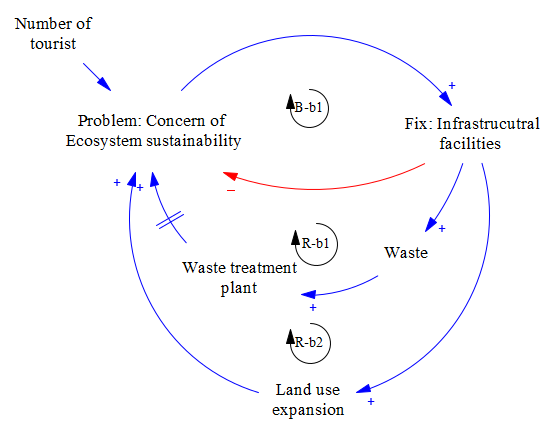
At the same time, rapid tourism growth has increased waste accumulation and environmental pollution, requiring urgent management solutions. The local government approved contractors with limited technical expertise, leading to technological failures and project delays. As a result, the waste treatment plant remains non-operational, worsening the waste crisis and further increasing concerns over ecosystem sustainability (loop R-b2).
Another issue is inaccurate forecasting of tourist growth and waste generation, which led the local government to approve a larger waste treatment plant. The new 1.9-hectare facility will replace forested land, reducing forest coverage. However, large waste treatment projects in Vietnam often face delays, and land-use expansion may further degrade natural ecosystems while the current plant remains inactive. This situation reflects the “Fixes That Fail” archetype, where short-term infrastructure solutions temporarily address issues such as waste management and land expansion but fail to resolve underlying systemic problems (Senge, 2006). Long-term sustainability therefore requires not only completing waste management projects but also ensuring effective project management, reducing waste at the source, and expanding community-based waste initiatives.
Water depletion (Tragedy of the commons)
Con Dao Islands illustrates the “Tragedy of the Commons” archetype through increasing pressure on its limited freshwater resources (Figure 7). The island’s water supply is a shared resource used by multiple actors, including tourists, tourism businesses, and the island communities. As tourism expands and the resident population grows, each group increases water consumption to meet its own needs. While such behavior is individually rational, the combined effect intensifies pressure on the island’s finite water resources.
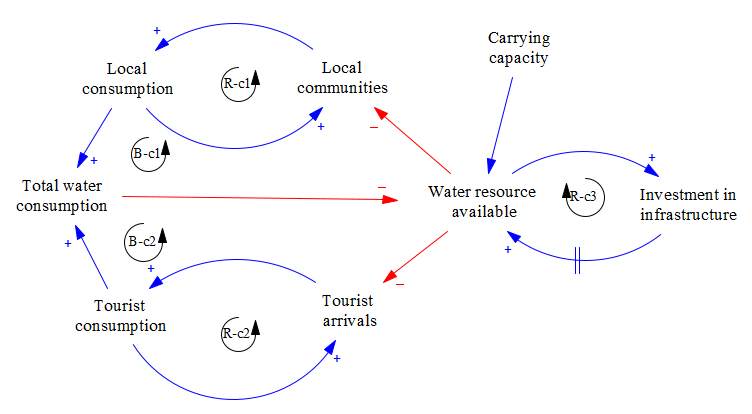
In the system, reinforcing loops capture the growth in water demand from different user groups. Rising tourist arrivals increase water consumption through accommodation services, recreational activities, and hospitality operations (loop R-c2). At the same time, population growth and local economic activities further increase domestic water use (loop R-c1). These reinforcing loops collectively accelerate total water extraction from the island’s reservoirs and groundwater sources.
As water consumption increases, available freshwater resources gradually decline, triggering balancing feedback loops (B-c1 and B-c2) that reflect the physical limits of the island’s water system. Declining water availability places pressure on the island’s environmental carrying capacity and increases the risk of water shortages, particularly during the dry season when tourism demand often peaks (loop B-c3). Under such conditions, excessive extraction threatens the long-term sustainability of freshwater reserves and increases the vulnerability of local communities to future water scarcity.
In response to growing water stress, the local government has invested in infrastructure expansion, including reservoirs and water supply systems, in an attempt to increase water availability. However, these supply-oriented interventions often lag behind rapidly increasing demand (loop R-c3), limiting their effectiveness in addressing the underlying drivers of resource depletion. In addition, expanding water infrastructure may require additional land for reservoirs and pipelines, potentially affecting the island’s terrestrial ecosystems.
Despite the visible impacts of declining water availability, individual users continue prioritizing short-term water consumption to support tourism activities and daily livelihoods. This dynamic reinforces the overexploitation of the shared resource, illustrating the core mechanism of the Tragedy of the Commons, where individually rational decisions collectively undermine long-term system sustainability. Addressing this challenge therefore requires identifying key leverage points, including the implementation of water conservation policies, demand-side management strategies, and the promotion of sustainable practices such as rainwater harvesting. Strengthening these measures can help rebalance the system and enhance the island’s resilience to seasonal water shortages.
Migration strain
The interaction between tourism development and social stability in Con Dao reflects the “Limits to Growth” archetype (Senge, 2006), particularly in relation to the island’s social carrying capacity (Figure 8). Initially, tourism expansion is driven by reinforcing feedback loops. Loop R_d1 represents the primary growth engine, where increasing tourist arrivals generate revenue that supports further infrastructure development, enhancing the island’s attractiveness. Loop R_d2 links infrastructure expansion to employment opportunities, which aim to improve local livelihoods.
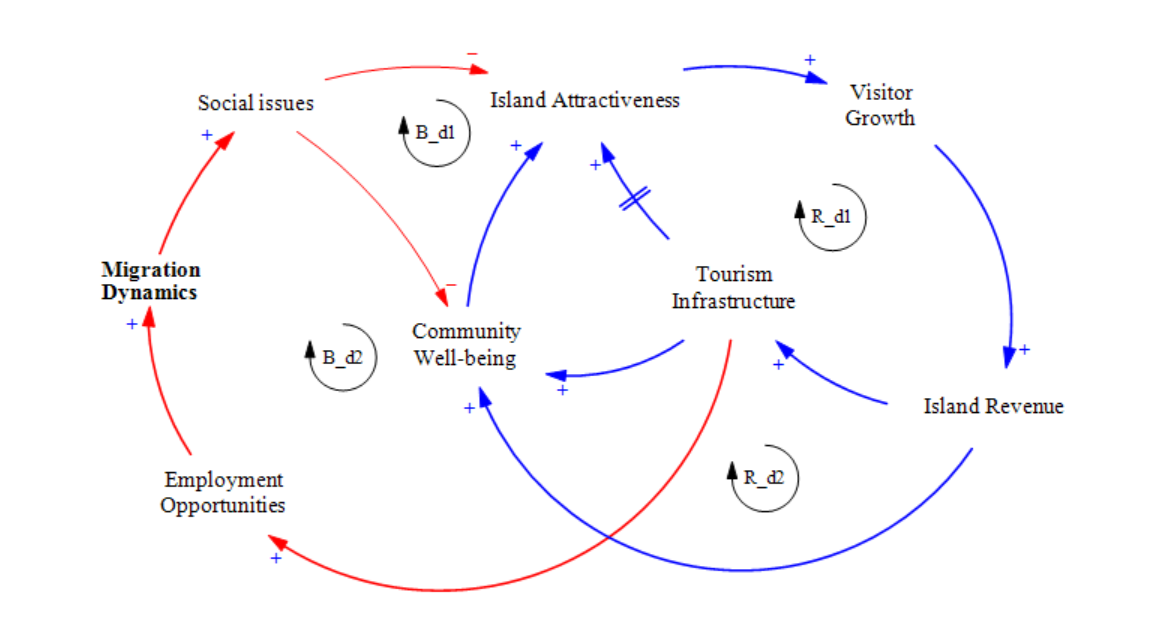
However, this growth dynamic encounters a constraint. The expansion of tourism infrastructure requires a workforce that exceeds the local labor supply, triggering labor migration to the island. As the migrant population increases, social pressures such as congestion, crime, and potential cultural tensions may emerge.
These pressures form balancing feedback loops (B_d1 and B_d2), where rising social issues gradually reduce both the island’s attractiveness and community well-being, slowing tourism growth. These dynamics highlight that sustainable tourism development depends not only on physical infrastructure but also on maintaining community well-being and the social cohesion of island communities.
The model also highlights the role of time delays. Current delays in tourism infrastructure development due to slow capital investment provide a window for intervention, allowing policymakers to implement workforce planning, migration management, and social integration policies before infrastructure expansion accelerates migration pressures.
Cannibalization dilemma
The structural conflict between tourism typologies in Con Dao reflects the “Success to the Successful” archetype (Senge, 2006) (Figure 9). Visitor growth drives both spiritual tourism (loop R_e1) and eco-tourism (loop R_e2), each attracting capital for infrastructure development, which enhances the island’s attractiveness. Additionally, eco-tourism forms a virtuous reinforcing loop (R_e3), where increasing eco-tourists promote sustainable practices, improving ecosystem health and further reinforcing the island’s appeal.
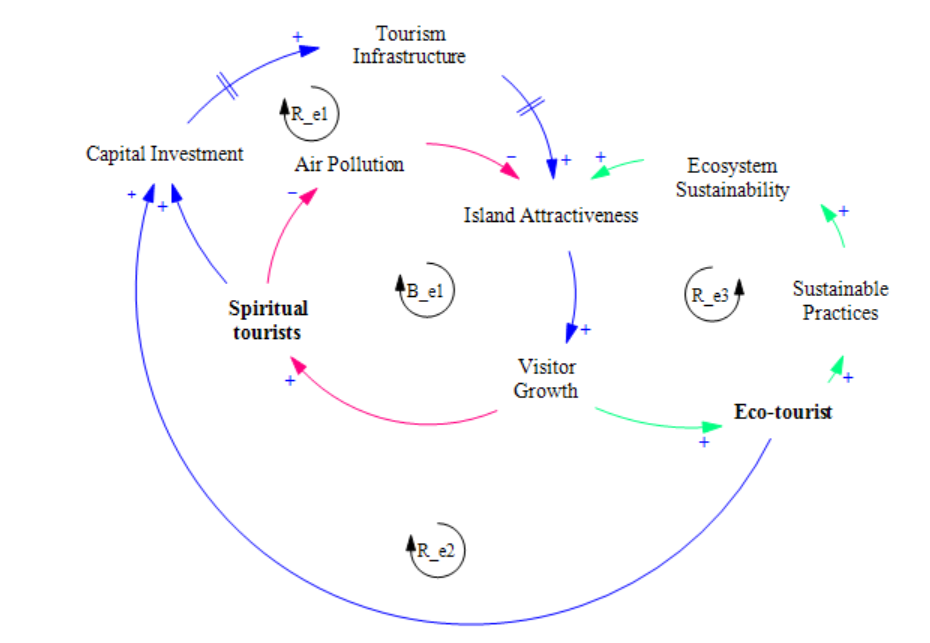
However, this synergy is constrained by balancing loop B_e1. The expansion of spiritual tourism generates environmental externalities, notably air pollution from burning incense at sacred sites, which reduces environmental quality. While spiritual tourists may tolerate these conditions, the decline in ecosystem health undermines the eco-tourism sector. Consequently, the success of spiritual tourism can inadvertently suppress eco-tourism, cannibalizing the very ecosystem that supports the island’s sustainable tourism transition. Beyond ecosystem degradation, these interactions may also influence the cultural experience of the island and shape how local communities perceive future tourism development.
4. Discussion
Sustainable tourism research increasingly recognizes that linear models of growth and static policy frameworks fail to capture the complex, dynamic realities of contemporary destinations (Becken and Kaur, 2022; Croes et al., 2021). While the Tourism Area Life Cycle (TALC) has been widely used to describe stages of destination evolution, it has also been critiqued for its descriptive nature and limited causal explanatory power (Butlter, 2006). Specifically, TALC can indicate when a destination enters stagnation or decline, but it does not explain why these transitions occur or what structural processes drive them. This limitation has been highlighted in recent studies calling for frameworks that integrate life‑cycle theories with systemic causal mechanisms (Ma and Hassink, 2013; Sainaghi and Baggio, 2017).
Systems Thinking and causal loop analysis, rooted in socio‑ecological and system dynamics theory, offer a way to fill this gap by identifying reinforcing and balancing feedback mechanisms, time delays, and non‑linear interactions that shape destination behavior over time (Sterman, 2000; Nguyen and Bosch, 2013; Roxas et al., 2018). Recent tourism literature underscores the value of such dynamic systems approaches for interpreting how environmental limits, community dynamics, cultural values, social pressures, and economic interactions interact across multiple scales in island destinations (Farrell and Twining-Ward, 2004; Mai and Smith, 2018). These approaches have been shown to enhance the understanding of complex adaptive systems, such as tourism destinations experiencing rapid environmental and social transformation (Butler, 2006; Sainaghi and Baggio, 2017).
By combining TALC with Systems Thinking, this study bridges two complementary but previously isolated streams of literature. TALC positions Con Dao at the consolidation stage, marking a temporal window where growth begins to plateau (Omar et al., 2014; Báez‑García et al., 2018), while Systems Thinking explains the structural drivers behind this plateau. This integration addresses a known theoretical gap: transforming TALC from a descriptive classification tool into a diagnostic, causal framework capable of explaining destination dynamics. Such integration aligns with recent calls for process‑oriented life cycle research that can identify mechanisms of stagnation and leverage points for strategic intervention (Butler, 2025; Sainaghi and Baggio, 2017).
The causal loop analysis in this study reveals five interacting system structures that collectively explain why Con Dao’s growth has slowed and why a transition to rejuvenation is constrained. These mechanisms, including waste accumulation feedback, resource limitations, labor and migration pressures, and internal sector tensions, demonstrate that consolidation is not a passive phase but an actively mediated outcome of dynamic feedback interactions within the destination system. This moves beyond TALC’s traditional framework, where consolidation is often treated as a static plateau, by offering a mechanistic explanation of how feedback generates and reinforces that plateau (Sainaghi and Baggio, 2017). Importantly, the feedback indicate that tourism consolidation is shaped not only by environmental and economic constraints but also by pressures affecting local communities, reinforcing the need to consider social dimensions alongside ecological processes in island tourism development.
Moreover, the integrated framework highlights asymmetries and hidden loads — such as the uncounted resource demands of labor migration — that conventional TALC metrics overlook. Such insights align with recent research emphasizing that destination life cycles are shaped not merely by visitor numbers but by multi‑scalar socio‑ecological feedback (Ruhanen et al., 2019). This systems perspective also underscores why infrastructure‑centric policies alone have limited effectiveness; they fail to address the causal structures driving stagnation, a point emphasized in recent destination governance research (Bramwell and Lane, 2012).
In summary, the unique contribution of this study lies in its methodological synthesis. By embedding TALC within a systems causal framework, it provides a diagnostic model capable of explaining why consolidation occurs and how structural constraints emerge. This represents a meaningful advance in both life cycle theory and systems‑based tourism research. While this study does not yet provide quantitative policy simulations, it lays a robust foundation for future system dynamics modeling that can evaluate alternative policy pathways, a direction supported in the broader systems tourism literature (Nguyen and Bosch, 2013; Mai and Smith, 2018).
Island cultural dimensions and community perspectives
The systems analysis also foregrounds the cultural dimensions of Con Dao’s tourism transition, which conventional TALC applications tend to underplay. Spiritual and memorial tourism centred on Hang Duong Cemetery and the former prison complex constitutes the island’s dominant visitor segment, yet the cannibalization dilemma (loop B_e1) shows how its externalities, including incense smoke, congestion, and the erosion of the sites’ contemplative atmosphere, degrade both the visitor experience and the ecological quality on which eco-tourism depends (Mai, 2024). This tension is cultural as much as environmental: the commemorative landscape is sacred to many Vietnamese visitors and residents alike, and its overuse risks turning a place of remembrance into a mass-tourism commodity, echoing earlier critiques of heritage commodification on the archipelago (Hayward and Tran, 2014; Dang, 2021).
Community perspectives gathered through the focus group discussions equally show that residents experience tourism growth through social and cultural registers, including rising living costs, strained healthcare, in-migration, and a perceived loss of local culture (Table 3), rather than through visitor statistics alone. The migration strain archetype suggests that a workforce drawn largely from the mainland may dilute the island’s tightly knit identity, which is rooted in a shared post-1975 settlement history (Khuyen, 2012), echoing findings on residents’ perceptions in other intensively visited island communities (García-Buades et al., 2022; Nazneen et al., 2021). Embedding these community voices in the causal loop diagrams treats residents as co-producers of the destination system rather than passive recipients of impacts. It also indicates that community-based tourism initiatives, visitor management at cultural and spiritual sites, and resident participation in planning are leverage points as critical as infrastructure investment for steering Con Dao toward a culturally grounded rejuvenation.
Leverage points and policy implications
The synthesis of these system archetypes reveals a fundamental structural weakness in Con Dao’s tourism system: the absence of proactive regulatory feedback mechanisms. At present, system regulation occurs primarily through reactive balancing loops, where tourism growth slows only after environmental degradation, infrastructure overload, or resource depletion becomes severe. In practice, this means that visitor numbers are likely to decline only when the island becomes too polluted, congested, or ecologically degraded to maintain its attractiveness. Such a reactive structure increases the risk of overshooting the destination’s ecological and social carrying capacity, placing increasing pressure not only on environmental resources but also on the well-being of local communities, a pattern frequently observed in destinations approaching the consolidation stage of the TALC model.
By identifying these structural feedback, systems thinking helps reveal strategic leverage points where targeted interventions can alter system behavior before critical thresholds are reached. Several leverage points emerge from the archetypes identified in this study.
First, addressing the infrastructure paradox (Fixes that Fail) requires a shift toward eco-sensitive infrastructure planning. Rather than expanding infrastructure reactively in response to growing demand, development strategies should integrate environmental impact thresholds and spatial planning mechanisms to ensure that new infrastructure does not further degrade critical ecosystems.
Second, the capacity saturation (Limits to Growth) archetype highlights the need for decentralized waste management. Instead of relying solely on large-scale waste treatment facilities—which often face delays and implementation challenges—policy interventions should prioritize community-level waste reduction, sorting, and circular economy initiatives to reduce waste generation at the source and relieve pressure on centralized systems.
Third, the migration strain archetype indicates that tourism-driven labor demand creates hidden social and infrastructural pressures. A key leverage point lies in workforce management and local integration policies, including skills training for local residents, incentives for local employment, and social support systems to reduce the strain associated with rapid population inflows.
Finally, the water depletion (Tragedy of the commons) archetype underscores the importance of proactive resource management. Supply-side solutions alone are insufficient to address long-term water scarcity. Instead, integrated strategies such as rainwater harvesting, demand management, and carrying capacity assessments are necessary to maintain sustainable water use as tourism demand grows.
Together, these leverage points demonstrate how integrating TALC with systems thinking moves beyond simply identifying the stage of destination development. It enables a causal understanding of the structural mechanisms driving consolidation, while simultaneously identifying targeted interventions capable of steering the system toward a more sustainable trajectory for island destinations.
5. Conclusion
This study advances sustainable tourism research by integrating TALC and Systems Thinking, offering both temporal positioning and causal diagnosis of Con Dao’s tourism system. TALC identifies the consolidation stage, signaling vulnerability, while Systems Thinking reveals the feedback mechanisms — including waste accumulation, infrastructure pressures, water depletion, labor migration, and tourism typology conflicts — that drive system stagnation. By explicitly linking these structural archetypes to leverage points, the study provides actionable insights for governance and policy design, highlighting interventions that can steer Con Dao toward sustainable rejuvenation while supporting environmental integrity, community well-being, and the long-term resilience of island tourism.
This combined methodology provides destinations with a framework to understand not only where they are in their life cycle but also why systemic pressures emerge and how they can be addressed through more integrated and adaptive governance. By considering environmental, social, and community dimensions alongside tourism growth, the framework offers a more holistic basis for sustainable decision-making in island destinations. The study also provides a foundation for future quantitative system dynamics modeling, enabling scenario simulation, carrying capacity estimation, and evidence-based policy evaluation to support more sustainable, resilient, and community-responsive tourism development in island destinations.
Acknowledgement
We would like to extend our sincere thanks to the authorities, local communities, and colleagues who supported data collection and contributed to the work during the study. Additionally, we express our appreciation to the Department of Science and Technology of Ba Ria – Vung Tau Province for granting the project ‘Assessment of Environmental Carrying Capacity and Proposals for Sustainable Tourism Development in Con Dao District, Ba Ria – Vung Tau Province’ which was made possible through Decision No. 235/QD-SKHCN.
Appendix
 |
References
- Báez-García, A.J., Flores-Muñoz, F., Gutiérrez-Barroso, J., 2018. Tourism policy in the Canary Islands – past experiences, current trends and future plans. Occasional Papers on Islands and Small States, Islands and Small States Institute, University of Malta, Msida, 8 pages.
- Baggio, R., Scott, N., Cooper, C., 2010. Network science: A review focused on tourism. Annals of Tourism Research 37(3): 802–827.
- Ba Ria – Vung Tau Statistical Office, 2021. Ba Ria – Vung Tau Statistical Yearbook 2020. Statistical Publishing House, Hanoi. (In Vietnamese).
- Ba Ria – Vung Tau Statistical Office, 2022. Ba Ria – Vung Tau Statistical Yearbook 2021. Statistical Publishing House, Hanoi. (In Vietnamese).
- Ba Ria – Vung Tau Statistical Office, 2023. Ba Ria – Vung Tau Statistical Yearbook 2022. Statistical Publishing House, Hanoi. (In Vietnamese).
- Becken, S., Kaur, J., 2022. Anchoring “tourism value” within a regenerative tourism paradigm – a government perspective. Journal of Sustainable Tourism 30(1): 52–68. https://doi.org/10.1080/09669582.2021.1990305.
- Bramwell, B., Lane, B. (Eds.), 2012. Tourism Governance: Critical Perspectives on Governance and Sustainability. Routledge, London.
- Butler, R.W., 1980. The concept of a tourist area cycle of evolution: Implications for management of resources. Canadian Geographer 24(1): 5–12.
- Butler, R.W., 2006. The concept of a tourist area cycle of evolution: Implications for management of resources, in: Butler, R.W. (Ed.), The Tourism Area Life Cycle, Vol. 1: Applications and Modifications. Channel View Publications, Clevedon, pp. 3–12.
- Butler, R.W., 2024. Tourism and Destination Evolution: 40 Years of the TALC Model. Routledge, London.
- Butler, R.W., 2025. Tourism destination development: the tourism area life cycle model. Tourism Geographies 27(3–4): 599–607. https://doi.org/10.1080/14616688.2024.2325932.
- Chu, T.C., Bui, T.T.H., Nguyen, T.T.T., Nguyen, M.Q., 2021. Vietnam Coastal Plastic Waste Monitoring and Evaluation Program – 2020 Report. IUCN Viet Nam National Office, Hanoi, 42 pages. (In Vietnamese). https://iucn.org/sites/default/files/content/documents/2021/beach_debris_mornitoring_2020_report_vietnamese_-_1_july_2021.pdf, accessed 2 August 2026.
- Con Dao National Park (CDNP), 2024. Con Dao – The first marine island Ramsar site in Vietnam. https://bqlvqgcd.baria-vungtau.gov.vn/en/-1719502632.html, accessed 21 December 2024.
- Con Dao People’s Committee, 2019. Environmental Impact Assessment Report for the Wastewater Collection and Treatment System Project in Con Dao District, Ba Ria – Vung Tau Province (Phase 1). (In Vietnamese).
- Con Dao People’s Committee, 2020. Report on the 2020 status of integrated management of marine and island resources and environmental protection in Con Dao District (Report No. 413/BC-UBND). (In Vietnamese).
- Con Dao People’s Committee, 2021. Summary report on 10 years of implementing Resolution No. 09-NQ/TU dated 21 October 2009 of the Ba Ria – Vung Tau Provincial Party Committee on the construction and development of Con Dao to 2015, with a view to 2020. 18 pages. (In Vietnamese).
- Con Dao People’s Committee, 2024a. Situation of implementing the socio-economic development plan, national defence and security in November and key tasks for December 2024 (Report No. 611/BC-UBND). (In Vietnamese).
- Con Dao People’s Committee, 2024b. Plan to organize the conference for the implementation of the project “Research and Application of the Circular Economy Model to Serve Sustainable Socio-Economic Development in Con Dao District, Ba Ria – Vung Tau Province for the Period 2022–2025, with Orientation to 2030” (No. 289/TT-UBND). (In Vietnamese).
- Con Dao People’s Committee, 2024c. Official Letter No. 4558/UBND-TNMT on the public announcement of the adjusted general construction planning for Con Dao District, Ba Ria – Vung Tau Province to 2045. (In Vietnamese).
- Con Dao Tourism Portal, 2024. Con Dao official tourism information. https://condao.com.vn/en.html, accessed 20 May 2025.
- Croes, R., Ridderstaat, J., Bąk, M., Zientara, P., 2021. Tourism specialization, economic growth, human development and transition economies: The case of Poland. Tourism Management 82: 104181. https://doi.org/10.1016/j.tourman.2020.104181.
- Cruz, R.G., Legaspi, G.F.A., 2019. Boracay beach closure: the role of the government and the private sector, in: Dodds, R., Butler, R.W. (Eds.), Overtourism: Issues, Realities and Solutions. De Gruyter, Berlin, pp. 95–110.
- Dang, T.K.P., 2021. Tourism imaginaries and the selective perception of visitors: Postcolonial heritage in Con Dao Islands, Vietnam. Island Studies Journal 16(1): 249–270. https://doi.org/10.24043/isj.132.
- Department of Internal Affairs, 2012. Report on the implementation of tasks in the first 6 months and the work plan for the last 6 months of 2012. Department of Internal Affairs – Labor, Invalids and Social Affairs, People’s Committee of Con Dao District. (In Vietnamese).
- ECLAC, 2008. Tourism Life Cycle, Tourism Competitiveness and Upgrading Strategies in the Caribbean. United Nations Economic Commission for Latin America and the Caribbean, Port of Spain. https://www.cepal.org/en/publications/38717-tourism-life-cycle-tourism-competitiveness-and-upgrading-strategies-caribbean, accessed 2 August 2026.
- Eli, M.B., Léon, C.J., Bassi, A.M., Giraldo, N., Guzzetti, M., Hernández, J.M., González, M.M., Valerón, H.J.B., González, Y.E.L., Beckmann, A.G., 2023. Whole system modeling of the relationship between tourism activity and carrying capacity in the Canary Islands. The Sustainability Laboratory. https://doi.org/10.5281/zenodo.10214451.
- Farrell, B.H., Twining-Ward, L., 2004. Reconceptualizing tourism. Annals of Tourism Research 31(2): 274–295.
- García-Buades, M.E., García-Sastre, M.A., Alemany-Hormaeche, M., 2022. Effects of overtourism, local government, and tourist behavior on residents’ perceptions in Alcúdia (Majorca, Spain). Journal of Outdoor Recreation and Tourism 39: 100499. https://doi.org/10.1016/j.jort.2022.100499.
- Gössling, S., 2003. Tourism and Development in Tropical Islands: Political Ecology Perspectives. Edward Elgar Publishing, Cheltenham.
- Gössling, S., Hall, C.M., 2006. Tourism and Global Environmental Change: Ecological, Social, Economic and Political Interrelationships. Routledge, London.
- Government Council, 1979. Decision on the Organization of State Administrative Management Agencies of Vung Tau – Con Dao Special Zone (No. 438-CP). Socialist Republic of Vietnam, Hanoi.
- Hall, C.M., 2011. Policy learning and policy failure in sustainable tourism governance: From first- and second-order to third-order change? Journal of Sustainable Tourism 19(4–5): 649–671.
- Hall, C.M., Butler, R.W., 2006. Foreword, in: Butler, R.W. (Ed.), The Tourism Area Life Cycle: Applications and Modifications. Channel View Publications, Clevedon, pp. xv–xviii.
- Hayward, P., Tran, G.T.H., 2014. At the edge: Heritage and tourism development in Vietnam’s Con Dao archipelago. Journal of Marine and Island Cultures 3(2): 113–124.
- ICED, 2022. Research and Application of the Circular Economy Model for Sustainable Socio-Economic Development in Con Dao District, Ba Ria – Vung Tau Province, Period 2022–2025, with Orientation to 2030. Final report. Institute for Circular Economy Development, Ho Chi Minh City, 184 pages. (In Vietnamese).
- Jurado, E.N., Tejada, M.T., García, F.A., González, J.C., Macías, R.C., Peña, J.D., Gutiérrez, F.F., Fernández, G.G., Gallego, L.M., García, G.M., Gutiérrez, O.M., Navas Concha, F., Ruiz de la Rúa, F., Sinoga, J.R., Becerra, F.S., 2012. Carrying capacity assessment for tourist destinations: Methodology for the creation of synthetic indicators applied in a coastal area. Tourism Management 33(6): 1337–1346. https://doi.org/10.1016/j.tourman.2011.12.017.
- Keller, C.P., 2024. Instability and shifting control during stages in destination development revisited, in: Butler, R. (Ed.), The Tourism Area Life Cycle: Review, Relevance and Revision. Channel View Publications, Bristol, pp. 123–137. https://doi.org/10.2307/jj.21995538.17.
- Kerstetter, D.L., Bricker, K.S., 2012. Relationship between carrying capacity of small island tourism destinations and quality-of-life, in: Uysal, M., Perdue, R., Sirgy, M.J. (Eds.), Handbook of Tourism and Quality-of-Life Research. Springer, Dordrecht, pp. 445–452. https://doi.org/10.1007/978-94-007-2288-0.
- Khuyen, D., 2012. The identity of Con Dao residents. University of Social Sciences and Humanities, Vietnam National University, Ho Chi Minh City. https://vetaucondao.vn/danh-phan-cu-dan-con-dao/, accessed 2 August 2026. (In Vietnamese).
- Lagiewski, R.M., 2006. The application of the TALC model: A literature survey, in: Butler, R.W. (Ed.), The Tourism Area Life Cycle: Applications and Modifications. Channel View Publications, Clevedon, pp. 27–50.
- Ma, M., Hassink, R., 2013. An evolutionary perspective on tourism area development. Annals of Tourism Research 41: 89–109. https://doi.org/10.1016/j.annals.2012.12.004.
- Mai, A., 2024. Con Dao steers spiritual tourism towards sustainability. Vietnam Investment Review. https://vir.com.vn/con-dao-steers-spiritual-tourism-towards-sustainability-112466.html, accessed 2 August 2026.
- Mai, T., Smith, C., 2018. Scenario-based planning for tourism development using system dynamic modelling: A case study of Cat Ba Island, Vietnam. Tourism Management 68: 336–354.
- McKercher, B., Wong, I.A., 2024. Can destinations have multiple life cycles?, in: Butler, R. (Ed.), The Tourism Area Life Cycle: Review, Relevance and Revision. Channel View Publications, Bristol, pp. 303–319. https://doi.org/10.2307/jj.21995538.29.
- Mexa, A., Collovini, A., 2004. Managing the impacts of tourism in European destinations: Using carrying capacity, in: Coccossis, H., Mexa, A. (Eds.), The Challenges of Tourism Carrying Capacity Assessment: Theory and Practice, first ed. Routledge, London, pp. 245–276. https://doi.org/10.4324/9781315240817.
- Minister of Planning and Investment, 2011. Decision No. 1742/QD-BKHDT on Approving the Master Plan on Socio-Economic Development of Con Dao District, Ba Ria – Vung Tau Province, up to 2020, with a Vision toward 2030. Ministry of Planning and Investment, Hanoi.
- Nazneen, S., Xu, H., Ud Din, N., 2021. Assessment of residents’ destination image and their pro-tourism development behavior: perspectives on the China–Pakistan economic corridor. Tourism Review 76(1): 184–197. https://doi.org/10.1108/TR-08-2019-0352.
- Nguyen, N.C., Bosch, O.J.H., 2013. A systems thinking approach to identify leverage points for sustainability: A case study in the Cat Ba Biosphere Reserve, Vietnam. Systems Research and Behavioral Science 30(2): 104–115.
- Omar, S.I., Othman, A.G., Mohamed, B., 2014. The tourism life cycle: an overview of Langkawi Island, Malaysia. International Journal of Culture, Tourism and Hospitality Research 8(3): 272–289.
- People’s Committee of Ba Ria – Vung Tau Province, 2021. Decision No. 3779/QD-UBND on the approval of the Ecotourism, Resort, and Recreation Project for Con Dao National Park, Ba Ria – Vung Tau Province, for the period up to 2030. Ba Ria – Vung Tau. (In Vietnamese).
- People’s Council of Ba Ria – Vung Tau Province, 2023. Decision No. 495/QD-UBND on approving the project “Research and application of circular economy model for sustainable socio-economic development in Con Dao District, Ba Ria – Vung Tau Province for the period 2022–2025, with orientation to 2030”. (In Vietnamese).
- Prime Minister of Vietnam, 2005. Decision No. 264/2005/QD-TTg on the Scheme on Socio-Economic Development in Con Dao District, Ba Ria – Vung Tau Province until 2020. (In Vietnamese).
- Prime Minister of Vietnam, 2011. Decision No. 1518/QD-TTg on Approval of the adjustment to the general construction master plan for Con Dao, Ba Ria – Vung Tau province to 2030. (In Vietnamese).
- Prime Minister of Vietnam, 2015. Decision No. 870/QD-TTg on Approval of the 'Master Plan for the Development of Con Dao National Tourist Area, Ba Ria - Vung Tau Province to 2030. (In Vietnamese).
- Prime Minister of Vietnam, 2022. Decision No. 417/QD-TTg on Approval of the the task of adjusting the General Construction Master Plan for Con Dao District, Ba Ria - Vung Tau Province through 2045. (In Vietnamese).
- Prime Minister of Vietnam, 2024. Decision No. 566/QD-TTg on Approval of the Comprehensive Adjustment of the General Planning for Con Dao Town, Ba Ria – Vung Tau Province until 2045. (In Vietnamese).
- Ramsar Sites Information Service, 2013. Con Dao National Park. https://rsis.ramsar.org/ris/2203, accessed 7 February 2025.
- Rodrigo, M., Ajala, I., Irhanida, A.K., 2023. Qualitative analysis of a tourism area life cycle model for interacting tourism destinations. Annals of Tourism Research Empirical Insights 4(1): 100093. https://doi.org/10.1016/j.annale.2023.100093.
- Rodríguez, J.R.O., Parra-López, E., Yanes-Estévez, V., 2008. The sustainability of island destinations: Tourism area life cycle and teleological perspectives. The case of Tenerife. Tourism Management 29(1): 53–65. https://doi.org/10.1016/j.tourman.2007.04.007.
- Roxas, F.M.Y., Rivera, J.P.R., Gutierrez, E.L.M., 2018. Framework for creating sustainable tourism using systems thinking. Current Issues in Tourism 23(3): 280–296. https://doi.org/10.1080/13683500.2018.1534805.
- Ruhanen, L., Moyle, C., Moyle, B., 2019. New directions in sustainable tourism research. Tourism Review 74(2): 138–149. https://doi.org/10.1108/TR-12-2017-0196.
- Sainaghi, R., Baggio, R., 2017. Complexity traits and dynamics of tourism destinations. Tourism Management 63: 368–382. https://doi.org/10.1016/j.tourman.2017.07.004.
- Saveriades, A., 2000. Establishing the social tourism carrying capacity for the tourist resorts of the east coast of the Republic of Cyprus. Tourism Management 21(2): 147–156.
- Senge, P.M., 2006. The Fifth Discipline: The Art and Practice of the Learning Organization. Random House, New York.
- Sterman, J.D., 2000. Business Dynamics: Systems Thinking and Modeling for a Complex World. McGraw-Hill, Boston.
- Tuoi Tre, 2025. Con Dao garbage ‘piled up like a mountain’, request to terminate violating contractor. https://tuoitre.vn/rac-con-dao-chat-cao-nhu-nui-de-nghi-cham-dut-nha-thau-vi-pham-20250305154605268.htm, accessed 2 August 2026. (In Vietnamese).
- UNWTO, 2013. Sustainable Tourism for Development Guidebook: Enhancing Capacities for Sustainable Tourism for Development in Developing Countries, first ed. World Tourism Organization, Madrid, 229 pages.
- UNWTO, 2022. World Tourism Barometer and Statistical Annex, January 2022. World Tourism Organization, Madrid.
- Vo, S.T., Phan, K.H., Hua, T.T., Thai, M.Q., Hoang, X.B., 2020. Genus-specific bleaching at Con Dao Islands, Southern Vietnam. Galaxea, Journal of Coral Reef Studies 22: 27–28.
- Zelenka, J., Kacetl, J., 2014. The concept of carrying capacity in tourism. Amfiteatru Economic Journal 16(36): 641–654.