
Anthropocene Era, Comparative Studies on Island Biocultural Diversity and Island Biocultural Landscape
 10.21463/jmic.2026.15.1.24
Abstract
This study explores the link between island biocultural diversity and biocultural landscapes within the context of the Anthropocene. It offers a conceptual framework for understanding sustainability transitions in island regions. Moving beyond traditional island studies that view islands mainly as peripheral and vulnerable, this paper suggests that islands should be seen as strategic social–ecological spaces where changes in human–nature relationships are most evident. Through a comparative and critical review, the study combines interdisciplinary discussions on biocultural diversity, landscapes, resilience, and sustainability, with a focus on East Asian islands. The findings indicate that biocultural diversity is more than just the coexistence of biological and cultural elements; it is a historically developed adaptive system where species, knowledge, livelihoods, social norms, and institutions are closely connected. This diversity is expressed in landscapes, and biocultural landscapes serve not as static heritage but as dynamic systems that sustain ecological functions, community identity, and cultural practices. The paper further emphasizes that the multifunctionality and diversity of these landscapes enhance social–ecological resilience, while the loss of biocultural diversity causes landscape simplification, lowers adaptive capacity, and increases vulnerability. The study concludes that island biocultural landscapes should be viewed not as relics of the past but as vital assets for advancing sustainability during the Anthropocene.
Keywords
Anthropocene transition, island biocultural diversity, biocultural landscape, social–ecological resilience, sustainability transition, East Asian islands
1. Introduction
The Anthropocene is a concept describing a new epoch where human activities have started to produce geological-level impacts on Earth's physical and ecological systems (Crutzen, 2002; Steffen et al., 2007). However, it is more than just a term used to mark the acceleration of environmental changes. Instead, it represents an epistemological and ontological shift that demands a fundamental rethinking of the modern framework through which we understand the relationship between humans and nature (Crutzen and Stoermer, 2000). Humans are no longer external observers or managers of nature but are now deeply embedded within the Earth system, with human activities intertwined with large-scale ecological processes such as climate dynamics, the biosphere, and ocean circulation (Rockström et al., 2009). This shift calls for the reconfiguration of the long-standing dualisms that separate nature from culture and ecology from society. A major concern in Anthropocene discussions is the decline of biodiversity and the worsening climate crisis. Yet, this crisis cannot be viewed simply as a loss within the natural world. The extinction of species also results in the erosion of traditional knowledge, weakening of language and rituals, changes in livelihoods, and the breakdown of landscapes. This compound collapse can be seen as a biocultural crisis, showing that ecological and social systems are destabilizing simultaneously. In this light, the Anthropocene is not only a period marked by biodiversity loss but also one that requires a fundamental restructuring of human–nature relationships.
These Anthropocene dynamics are especially prominent and visible in island regions (IPBES, 2019). Islands are areas defined by geographic isolation, limited size, and vulnerable ecological structures, making them relatively weak buffers against external environmental changes. Simultaneously, islands are places where long-term interactions between humans and nature have built up, representing highly condensed social–ecological systems where traditional knowledge and ecological adaptation are deeply integrated (Larjosto, 2018). Because of these features, islands are not only vulnerable spaces but also key units for analyzing social–ecological interdependence, which is most clearly revealed there (Pugh, 2013; Baldacchino, 2018). Traditional island studies often focus on themes of isolation, peripherality, development limits, and tourism exploitation, but these approaches do not fully capture the relational and processual complexity of islands (Hong, 2013; Hong et al., 2018). From the perspective of the Anthropocene transition, islands should be seen not merely as natural resources or development sites but as social–ecological assemblages where ecology, culture, economy, and institutions are deeply interconnected (Hong et al., 2011; Kelman, 2018). Within this framework, biocultural diversity has become a crucial concept for understanding the Anthropocene crisis holistically (Bridgewater et al., 2021). Biocultural diversity includes not only species composition but also traditional ecological knowledge, language, customs, livelihoods, social norms, institutions, and value systems (Maffi, 2005, 2007; Pretty et al., 2009; Maffi and Woodley, 2010; Pungetti et al., 2012). It is not a static condition but a continual process of renewal, expanding ecological conservation beyond protecting species alone to maintaining relational networks. Particularly in island regions, where humans have interacted intimately with nature under constrained environmental conditions, biocultural diversity has accumulated at a high density (Tsai, 2003). This indicates that island biocultural diversity results not merely from coexistence but from long histories of adaptation and management (Hong, 2023).
Biocultural diversity does not remain at the level of an abstract concept. It shapes landscapes and is materialized in them as concrete spatial structures (Gavin et al., 2015). A biocultural landscape or seascape is a social–ecological spatial system formed through the long-term interaction of species, knowledge, technology, social institutions, and practices (Hong et al., 2014; Abdullah et al., 2022). Landscape is not merely an aesthetic object or cultural heritage; it is a materialized form of human–nature relations and a structural foundation that simultaneously sustains ecological functions and community livelihoods. In this sense, biocultural landscapes should be understood not as static objects of preservation, but as living systems maintained through continuous practice and management. Put differently, biocultural diversity forms landscapes, and those landscapes in turn reproduce biocultural diversity in a cyclical process. To connect these relationships to the Anthropocene transition, the concepts of resilience and sustainability transitions are essential (Berkes and Folke, 1998). Resilience refers to the capacity of a system to maintain or reorganize its core functions and structures despite external shocks. Landscapes with high biocultural diversity tend to possess relatively strong resilience because they embody both functional diversity and plurality of knowledge. Yet resilience alone is not sufficient. Sustainability transition extends beyond technical adjustment or policy reform to include the structural reorganization of social–ecological systems and a transformation in ways of knowing and understanding (Grydehoj and Kelman, 2016; Fukamachi, 2020).
This study seeks to theoretically reformulate the conceptual chain linking biocultural diversity, biocultural landscape, landscape multifunctionality, resilience, and sustainability transition. Rather than providing an empirical analysis of a specific case, this article is a comparative and critical review that integratively reconstructs how the concepts of biocultural diversity and biocultural landscape have been discussed in island studies in the era of Anthropocene transition. By taking East Asian island regions as the unit of analysis and synthesizing and interpreting existing research findings and policy discourses, this study aims to redefine the theoretical significance of islands in the age of Anthropocene transition. It further seeks to conceptually refine the relationship between biocultural diversity and biocultural landscape and to connect that relationship to discussions of landscape sustainability, resilience, and sustainability transition. In doing so, this study repositions islands not simply as vulnerable spaces, but as key sites where eco-transformative ways of thinking and strategies for sustainability transition are experimented with and learned.
2. Theoretical Background
In the era of Anthropocene transition, it is no longer sufficient to understand the biodiversity crisis simply as a decline in species or a disturbance of ecosystems. The extinction of species is accompanied simultaneously by the disruption of traditional knowledge, the weakening of language, changes in livelihood practices, and the breakdown of spatial order. The concept that emerged to explain this complex phenomenon is biocultural diversity. Biocultural diversity is premised on the idea that biological diversity and cultural diversity are not independent domains, but rather a relational system that has co-evolved over long periods of time (Pretty et al., 2009; Hong, 2013). This perspective emphasizes that ecosystems and human societies are not merely externally connected, but are structurally intertwined as a social–ecological system. Early discussions of biocultural diversity began from empirical observations that the traditional ecological knowledge of Indigenous peoples and local communities has contributed to the maintenance of biodiversity (Maffi and Woodley, 2010). Knowledge and practices accumulated in particular places have restrained the overuse of resources and have formed management systems that respect ecological cycles. This line of thought moved beyond understanding biodiversity as a fixed natural condition confined within protected areas, and instead expanded it into a processual system reproduced through human practices and institutions. In other words, biocultural diversity is not a fixed state but a process that is continuously maintained, transformed, and reconfigured.
This process does not remain at an abstract level. Through the accumulation of time, interactions between humans and nature become stabilized in spatial form, and the result is what appears as a biocultural landscape or seascape (Pungetti, 2022). A biocultural landscape is not a simple “nature + culture” composite in which human activity is merely superimposed on natural terrain; rather, it is a historical product formed through the inseparable entanglement of ecological processes and cultural practices (Yumoto, 2011). Traditional agricultural landscapes, fishing structures, tidal-flat use practices, terraced rice paddies, and salt pans are all examples of outcomes produced through the interaction of the physical conditions of the natural environment with human knowledge, technology, and social norms (Takeuchi, 2010; Kim and Jongman, 2022). Such landscapes not only perform functions that sustain biodiversity but also serve as the structural foundation supporting community identity and livelihoods. Therefore, biocultural landscapes should be understood not as static heritage or objects of conservation, but as living systems maintained through continuous management and practice (Hong and Nakagoshi, 2017). Landscape is both the product of biocultural diversity and the medium through which it is reproduced. Biocultural diversity shapes the landscape; the landscape thus formed in turn structures human practice; and those practices then either sustain or weaken biocultural diversity. This cyclical relationship becomes even more important in the era of the Anthropocene transition.
Landscape sustainability is a key concept for understanding this relationship. The sustainability of a landscape does not simply mean the ability to preserve its physical form. Rather, it concerns whether the biocultural relationships that have produced the landscape can continue to be reproduced even under external shocks (Bridgewater et al., 2021). In areas rich in biocultural diversity, multiple species, multiple knowledge systems, and multiple modes of resource use coexist, increasing both the heterogeneity and multifunctionality of the landscape (IPBES, 2019). Such multifunctional landscapes tend to show relatively high resilience in the face of external disturbances such as climate change, shifts in economic structures, and policy change (Walker et al., 2004; Folke, 2006). Conversely, when biocultural diversity is weakened, landscapes become simplified and overly dependent on particular functions, thereby intensifying vulnerability. Landscape sustainability has become especially important in the age of Anthropocene transition because human activity has become a primary driver of landscape change (Geels, 2002, 2011). In this period, not only natural factors but also policy decisions, market logic, technological innovation, and tourism development directly intervene in landscape formation (Plieninger et al., 2013). Under these conditions, biocultural landscapes need to be reinterpreted not as relics of the past, but as adaptive systems that contain capacities for responding to the future (Holling, 2001). In other words, landscape is both an accumulation of the past and a structure that carries the potential for transition.
The space in which these theoretical discussions can be observed most clearly is the island. Because islands have clear boundaries and compressed scales, the outcomes of social–ecological interactions become visible very quickly (Hong et al., 2018; Kim, 2019). Changes in biocultural diversity tend to lead directly to changes in landscape structure, which means that islands function as laboratories of transition where both the collapse and the reconstruction of biocultural landscapes can be observed simultaneously. Island biocultural landscapes in the era of Anthropocene transition contain two contrasting pathways (Table 1). One is a pathway of vulnerability, leading to the disappearance of traditional knowledge and the simplification of landscapes. The other is a pathway of transition, in which biocultural diversity is revalued and used as the basis for constructing new management strategies and governance systems. Which pathway is chosen depends on policy, institutions, and social awareness, suggesting that islands can serve as testing grounds for Anthropocene response strategies.
Ultimately, understanding the relationship between biocultural diversity and biocultural landscapes is directly connected to the fundamental question of what kind of relationship human societies will establish with nature in the era of Anthropocene transition. Biocultural diversity reveals the quality of that relationship, while biocultural landscape is the spatial form in which that relationship is embodied (Hong, 2013). The sustainability of the landscape, in turn, depends on how reproducible that relationship is (Scoones et al., 2020). As spaces in which this chain of relationships is expressed in the most compressed and visible way, islands provide a crucial unit of analysis for theoretically exploring sustainability transitions.
The final proposition (Table 1) was adopted at the IUCN General Assembly held in Jeju, Korea, in 2012. It presents a comprehensive framework for addressing global-scale challenges affecting islands and coastal systems while promoting biocultural diversity through the preservation and transmission of ecological knowledge. Adopted as IUCN Resolution 5.115, it was communicated to relevant institutions and governments worldwide and implemented through various IUCN-linked international programs during 2013–2016. In the context of this paper, the proposition serves as an important normative and policy reference for examining the relationship between island biocultural diversity and biocultural landscapes. It also supports the central argument of this study that island landscapes should be understood not merely as conservation targets, but as strategic socio-ecological spaces for resilience and sustainability transition in the Anthropocene. (Source: Reproduced from Hong, 2013).
Strengthening Biocultural Diversity and Traditional Ecological Knowledge in Asia-Pacific Island Regions.
Recognizing that the rapid change seen in island ecosystems of the Asia-Pacific region, occasioned by the change in fishing grounds due to climate change and natural disasters such as mega-earthquakes and tsunamis, as well as due to excessive fishing activities and marine pollution, is leading to the decline of biocultural diversity;
RECALLING that Article 8j of the CBD highlights the importance of traditional knowledge concerning the sustainable use and conservation of biodiversity and that IUCN has implemented related actions based on the idea that biodiversity and cultural diversity are interlinked;
CONSIDERING the need to advance discussions and actions about conservation models based on traditional ecological knowledge relevant to the wise use of biodiversity in island-coastal areas whose ecosystems are weakened by climate change and over-exploitation of resources, and where associated traditional cultures are affected by such changes in ecosystems;
CONVINCED that the establishment of specialist groups in IUCN Commissions would be a very useful step to advance the conservation of biocultural diversity in island-coastal areas of the Asia-Pacific regions;
The IUCN World Conservation Congress at its 5th session in Jeju, Republic of Korea, 6–15 September 2012:
1. CALLS ON members of the United Nations, including IUCN members in Asia-Pacific countries, to support activities of conservation of biocultural diversity and traditional ecological knowledge in island-coastal regions based on their uniqueness and scarcity;
2. ENCOURAGES IUCN members, local governments, and NGOs that have perceived the importance of traditional ecological knowledge in the wise use of biological resources in island and coastal areas to engage in supporting the preservation of traditional knowledge and biocultural diversity;
3. REQUESTS the Director General to:
(a) promote the creation of a consultative body responsible for preparing a proposal for a convention or other international instruments to State members within the United Nations for the conservation of biocultural diversity and traditional ecological knowledge in island-coastal regions, and to invite IUCN member countries to engage in its promotion and support;
(b) work with IUCN Commissions in the creation of an Islands Specialist Group within IUCN Commissions that will be responsible for advancing the conservation of biocultural diversity and traditional ecological knowledge in island-coastal regions and provide support for the activities of related research institutes and NGOs;
In addition, the World Conservation Congress, at its 5th Session in Jeju, Republic of Korea, 6–13 September 2012, provides the following guidance concerning implementation of the IUCN Program 2013–2016:
URGES IUCN Members, Commissions and the Director General to work together for the establishment of an “Asia-Pacific Island Biocultural Diversity Initiative” which, led by specialists on the policy and practice of the conservation of island-coastal biocultural diversity, including scientists specializing in the humanities, operates in conjunction with related organizations such as the CBD and UNESCO.
Sponsors: The Ecological Society of Korea
Co-Sponsors:
Nature Policy Division, Ministry of Environment, Korea
Korea Association for Conservation of Nature (RK)
Terralingua (Canada)
Tonga Community Development Trust (Tonga)
Small Fishers Federation (Sri Lanka)Endorsement:
Korean Society of Environment and Ecology (RK)
Korea Environmental Education Network (RK)
Korea National Park Service (RK)
The Christensen Fund (USA)
3. Research Method
This study is not an empirical investigation that collects and analyzes field-based data from a particular region. Rather, it is a comparative and critical review that integratively examines how the concepts of biocultural diversity and biocultural landscape have been discussed and reconfigured within island studies under the theoretical horizon of the Anthropocene transition. The purpose of this study is not to evaluate the outcomes of individual cases or to quantitatively analyze policy effects. Instead, it seeks to conceptually refine the relationship between biocultural diversity and biocultural landscape and to theoretically reconstruct how this relationship operates within the social–ecological spatial context of islands (Abdullah et al., 2022; Hong, 2023). Whereas a conventional systematic review tends to focus on the quantitative synthesis of research findings and the statistical analysis of research trends, this study is closer to an interpretive review. In other words, by synthesizing and critically examining discussions accumulated across a range of academic fields, it aims to rearrange the relationships among concepts and to derive causal and processual structures. In particular, this study adopts an approach close to review-driven conceptual reconstruction, in that it reinterprets the literature around a theoretical chain linking biocultural diversity, biocultural landscape, landscape multifunctionality, resilience, and sustainability transition.
The literature review was organized around three broad categories. First, it included domestic and international academic studies addressing biocultural diversity, biocultural landscape, island studies, landscape sustainability, resilience, and the Anthropocene transition. These works span a wide range of disciplines, including ecology, human geography, environmental anthropology, environmental sociology, landscape studies, and sustainability studies, and were selected primarily for their theoretical contribution in order to reflect interdisciplinary discussions as comprehensively as possible. Second, it examined documents produced by international organizations and policy institutions. Reports and declarations from organizations such as UNESCO, IPBES, and IUCN were used to understand how the concepts of biocultural diversity and landscape management are being institutionalized within policy discourse. This made it possible to trace the interactions between academic discourse and policy practice. Third, the review included long-term studies and case-based literature on East Asian island regions (Hong, 2022). In particular, it focused on studies from island regions in Korea, Japan, and Taiwan that address traditional knowledge, local communities, landscape change, and management systems. Literature selection was based not simply on recency or citation frequency, but on conceptual significance, representativeness of the case, depth of long-term observation, and the potential for connection to Anthropocene-transition discourse.
The comparative analysis was not intended as a simple cross-national comparison. Rather, by selecting three regions within the broader East Asian cultural sphere that share a common background but differ in ecological conditions, colonial and modernization experiences, governance systems, and the institutionalization of traditional knowledge, this study seeks to interpretively reveal the conditions under which the relationship between biocultural diversity and biocultural landscape is maintained or weakened. For this purpose, five analytical axes were established (Figure 1).
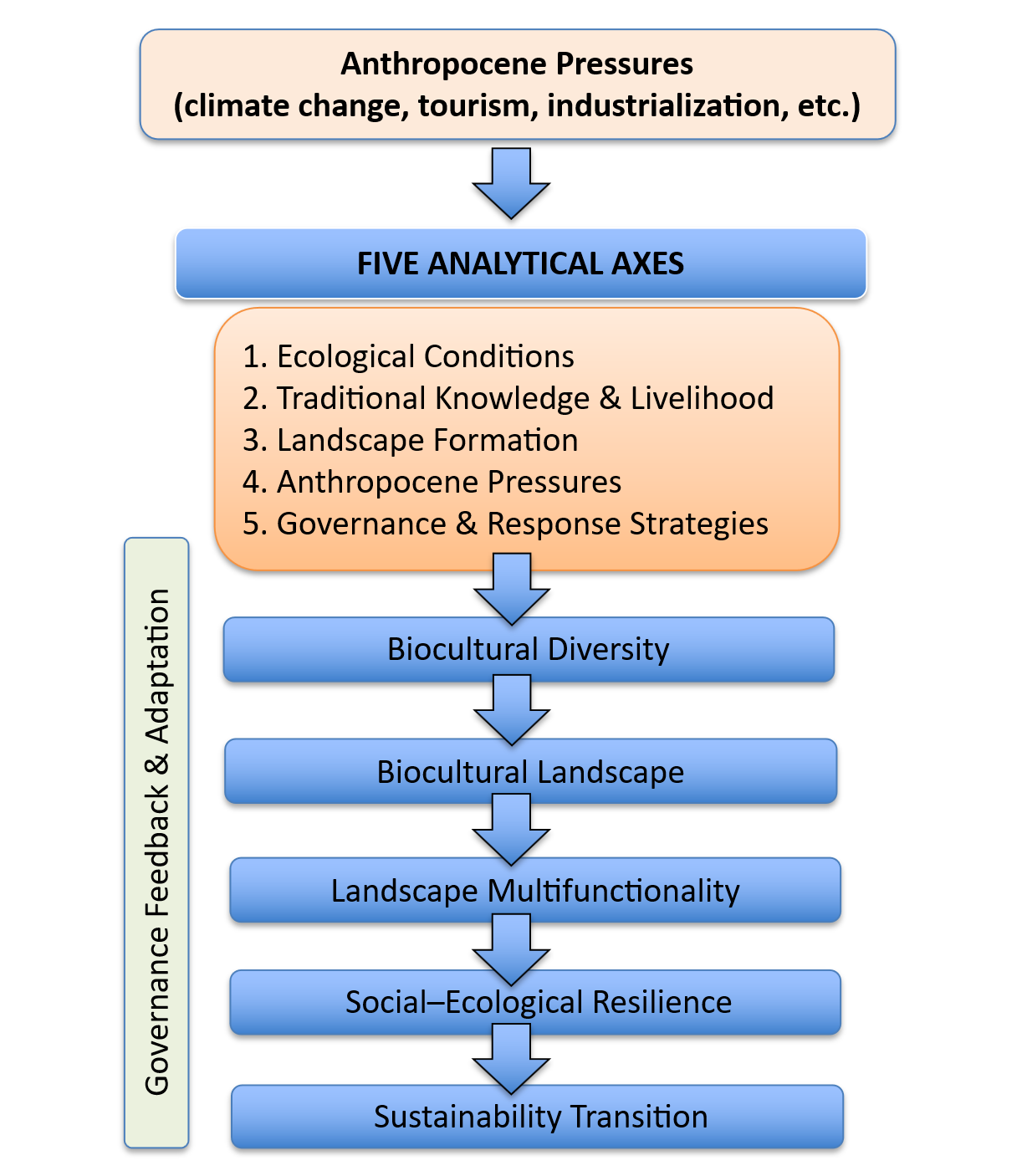
The first concerns the island’s ecological conditions and environmental context, including such basic structures as island size, climate, and coastal ecosystem type. The second addresses traditional knowledge and livelihood practices, including agriculture, fisheries, gathering activities, and resource management practices as the practical foundations of biocultural diversity. The third examines modes of landscape formation, that is, how these elements are spatially structured to produce biocultural landscapes. The fourth concerns Anthropocene pressures, including climate change, industrialization, tourism development, population decline, and policy change. The fifth addresses governance and response strategies, including such institutional conditions as community participation, formal protection, and rights-based approaches. This analytical framework was not designed to score each case according to the same criteria or to rank them comparatively. Rather, it functions as an interpretive device for explaining the social–ecological conditions under which the relationship between biocultural diversity and landscape is linked to resilience and sustainability.
The analytical process proceeded by first identifying and organizing the major discussions concerning biocultural diversity and biocultural landscapes in each region, and then repositioning them within a conceptual chain structure. Rather than defining particular cases as successes or failures, the analysis focused on how biocultural relationships are stabilized or disrupted through landscape. In addition, this study understands biocultural landscape not as a static outcome, but as a processual system that changes over time. Accordingly, the analysis explores the direction of landscape change and the possibilities for transition within the continuity of past, present, and future. This reflects an effort to interpret the Anthropocene transition not as a discontinuous event, but as a process of reconfiguring accumulated relationships. Of course, this study has the limitation of being a literature-based review and therefore does not directly conduct field research or quantitative analysis. At the same time, however, this methodological limitation also creates room for theoretical expansion. By integrating discussions across diverse academic fields, this study reformulates the relationship between biocultural diversity and biocultural landscape within the integrated framework of Anthropocene transition and proposes islands as a strategic unit of analysis for sustainability transition. In that sense, the study carries methodological significance by providing a conceptual foundation for future empirical research and policy design.
4. Biocultural Landscapes in East Asian Island Regions
East Asian island regions are representative spaces in which the relationship between biocultural diversity and biocultural landscapes is revealed in a highly compressed and visible form. The islands of this region developed under natural-geographical conditions characterized by large tidal ranges, complex coastlines, gently sloping seafloors, and abundant sediment supply, and they constitute social–ecological systems in which tidal flats, coasts, forests, and settlements are continuously interconnected (Koh and Khim, 2014; Kim and Jongman, 2022). This spatial continuity has produced a cyclical structure in which land and sea, nature and human activity, are not separated but mutually linked, providing the environmental basis for the dense accumulation of biocultural diversity (Hong et al., 2010; Lee et al., 2023a). In these island regions, biocultural diversity has been formed primarily around tidal flats and coastal ecosystems. Tidal flats are highly productive ecosystems in which benthic organisms and microorganisms decompose organic matter and circulate nutrients, and they have long served as a foundation of local livelihoods (MacKinnon et al., 2012). Bare-handed fishing, small-scale gathering, seasonal use, and harvesting practices timed to tidal cycles were not merely labor techniques, but practices grounded in highly refined traditional ecological knowledge (Hong et al., 2018). Such activities would not be possible without an understanding of tidal currents, seafloor topography, and the ecological characteristics of marine species. These modes of use created management systems based not on short-term resource exhaustion but on a certain level of ecological recovery, and in doing so contributed to the maintenance of biodiversity (Hong, 2012).
In particular, stone-built fishing structures that make use of tidal differences (e.g., doksal, or stone weirs), traditional fishing-ground structures, and coastal management practices are representative biocultural landscapes in which natural conditions are combined with human technology, knowledge, and community norms (Luo et al., 2015; Jeffery, 2024). These structures function not by maximizing fishing efficiency, but by operating in ways that respect the rhythms of nature, and they are effective only under specific times and conditions. In this sense, they can be understood as fishing systems that structurally embody ecological restraint (Johannes, 2002). The maintenance and repair of such structures also require cooperation at the community level, thereby reinforcing social relationships and norms. In this way, systems combining species, knowledge, technology, and community relations illustrate a typical pathway through which biocultural diversity is materialized as landscape (Lee et al., 2023b).
Agricultural and fishing landscapes also reflect these relationships. Landscapes in which forests, farmland, and settlements are interconnected, as well as spatial structures in which coasts, fishing villages, and underwater ecosystems interact, provide examples of how human activity and ecological function operate in complementary ways (Nakagoshi and Hong, 2001; Fukamachi, 2020). These landscapes are closely connected to the concept of biocultural landscape in that they do not regard nature as a protected object separated from humans, but as a shared management space whose health is maintained through continuous use and care (Fukamachi, 2020). Food systems have also functioned as a key mechanism for reproducing these biocultural landscapes. Seaweed food cultures, fermented foods, salt production in solar salterns, and the seasonal consumption of fish and shellfish are not simply dietary habits, but cultural practices based on particular ecological conditions and resource-use patterns (Hong, 2025). Food integrates species selection, techniques of preparation and preservation, ritual, and community norms, and motivates maintaining the landscape. Thus, food is not merely an outcome of biocultural diversity, but a reproductive mechanism that sustains it in everyday life. Along with this, traditional religion and ritual have formed the invisible foundations of biocultural landscapes (Pungetti et al., 2012). Particular forests, rivers, coastal zones, and island spaces were understood not simply as sites of resource use, but as places inhabited by ancestral spirits or natural beings, and such perceptions functioned as social norms that set limits on resource use (Nakagoshi and Hong, 2001). Seasonal prohibitions on gathering, the designation of taboo areas, and the maintenance of relationships with the sea through ritual all made ecological restraint possible even in periods when no explicit policy framework existed (Pungetti and Cinquepalmi, 2012). This shows that the sustainability of biocultural landscapes is supported not only by visible management techniques but also by invisible cultural worldviews and norms. However, in the era of the Anthropocene transition, these biocultural landscapes are facing multiple pressures. Such transformations are not limited to traditional ecological practices, but also include external interventions such as military use and infrastructure development, which leave lasting imprints on island landscapes (Figure 2).
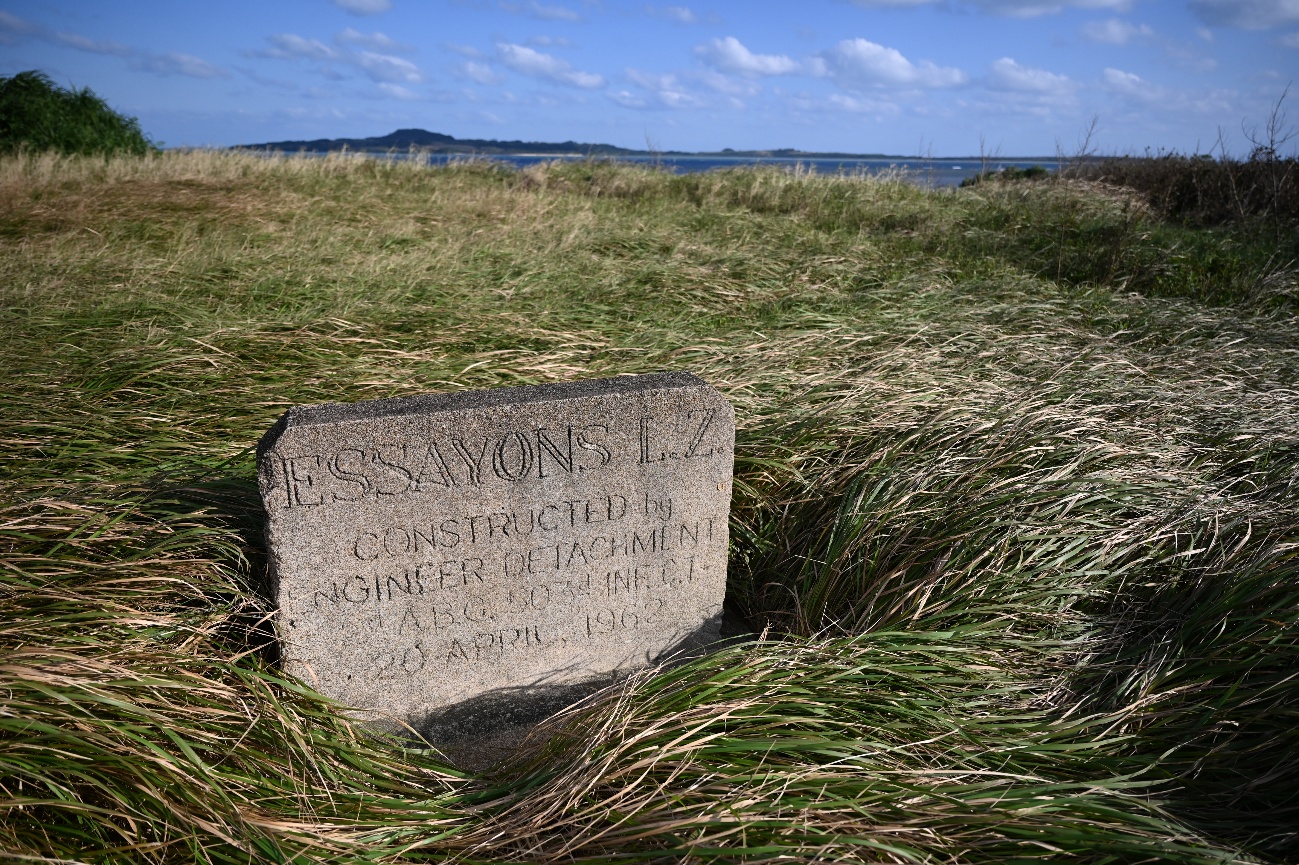
Land reclamation and infilling, tourism development, industrialization, and bridge connections to the mainland have expanded accessibility and economic activity while at the same time weakening traditional systems of use (Kim and Hong, 2011). Rising sea temperatures, sea-level rise, and coastal erosion associated with climate change threaten the stability of coastal and tidal-flat landscapes (Grydehoj and Kelman, 2016). Population decline and aging make the transmission of traditional knowledge increasingly difficult, leading in turn to the weakening of biocultural diversity. These changes constitute not merely environmental degradation, but a structural problem in which ecological, cultural, and social crises overlap (Kim and Hong, 2026).
At the same time, in some areas, there have been efforts to institutionalize biocultural landscapes through policy and governance. Biocultural landscapes are being rerecognized as key resources for ecological conservation, regional revitalization, and environmental education, and models of community participation and collaborative management are being introduced. Yet the process of institutionalization also generates new tensions. When landscape conservation becomes tied to tourism commodification, there is a risk that traditional practices may be formalized or symbolized in superficial ways. Moreover, even where institutional frameworks exist, landscape sustainability cannot be guaranteed if the everyday foundations that actually reproduce biocultural diversity are weakening. These East Asian island cases show that the relationship between biocultural diversity and biocultural landscape extends beyond a simple logic of conservation and is directly connected to strategies for sustainability transition in the era of Anthropocene transition. When biocultural diversity is maintained, landscapes retain multifunctionality and heterogeneity, which strengthens the resilience of social–ecological systems (Folke, 2006; Geels, 2011). Conversely, when biocultural diversity is weakened, landscapes become simplified and dependent on specific functions, thereby limiting their capacity for transition.
5. The Sequential Structure of Biocultural Diversity, Landscape, and Sustainability Transition
5.1 The Structural Linkage Among Biocultural Diversity, Landscape, and Resilience
As shown in Figure 3, the structural linkage among biocultural diversity, biocultural landscape, resilience, and sustainability transition can be understood as a sequential and mutually reinforcing process.
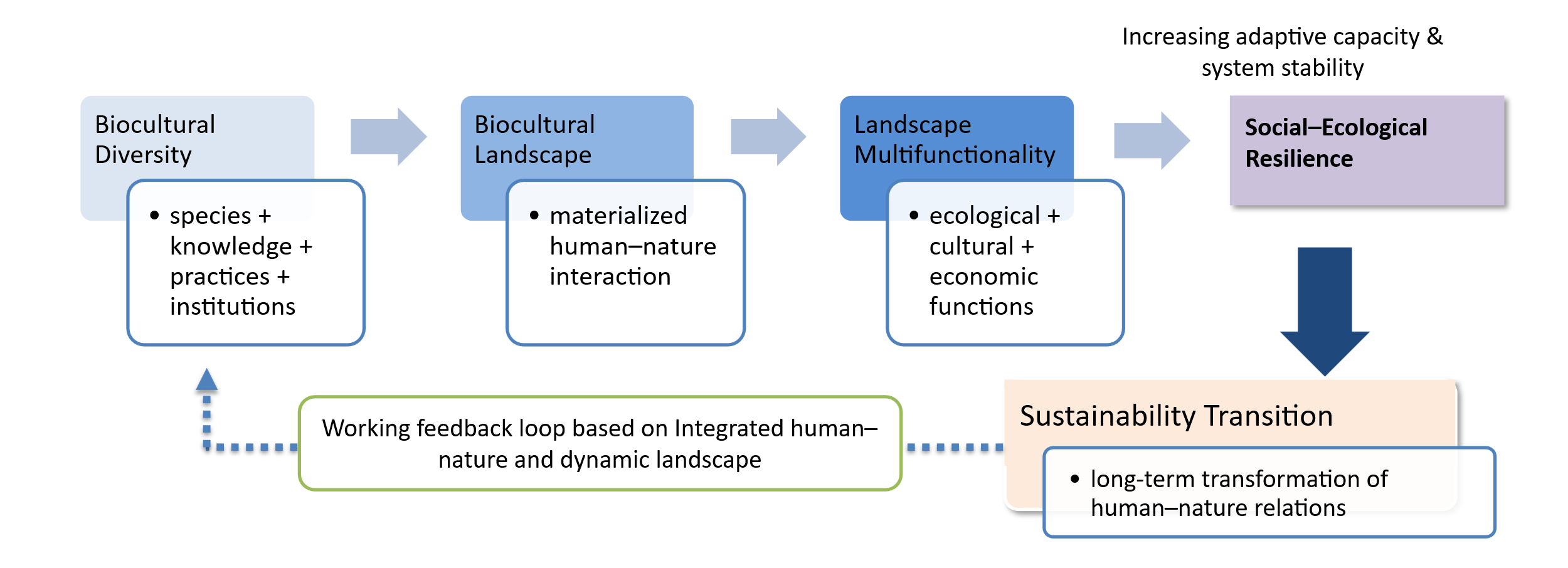
An integrated review of East Asian island regions shows that there is a close structural relationship among biocultural diversity, biocultural landscape, and social–ecological resilience (Tsai, 2003). This relationship goes beyond simple empirical observation and can be interpreted as a theoretical framework for understanding social–ecological systems in the era of Anthropocene transition (Hong et al., 2014; Abdullah et al., 2022). Biocultural diversity does not refer to a condition in which biological diversity and cultural elements merely coexist side by side. Rather, it is a history of adaptation formed through long-term interactions between humans and nature, as well as a relational network in which knowledge, technology, norms, beliefs, and livelihood practices are intricately intertwined (Berkes and Folke, 1998). In island spaces in particular, such relational networks operate in a more compressed manner under conditions of limited resources and environmental constraints, and human choices and practices have direct effects on ecological structures. Therefore, biocultural diversity should be understood not as a simple response to the environment, but as a collective adaptive strategy accumulated by communities over time.
Such adaptive strategies do not remain at an abstract level; they are ultimately embodied in spatial form. Biocultural diversity becomes materialized through landscape, and what is formed in this process is the biocultural landscape itself (Bridgewater et al., 2021). Landscape is not merely the result of human activity superimposed upon natural terrain, but a historical product in which ecological processes and cultural practices are inseparably entangled. Traditional fishing structures, coastal use practices, agro-settlement configurations, and resource management systems linked to seasonal rituals can all be understood as the spatial fixing of repeatedly practiced human–nature relationships (Lin and Tsai, 2021). Such landscapes are not merely backgrounds or decorative elements; they function as mediating structures through which the relationship between humans and nature is continually reproduced.
A key characteristic of biocultural landscapes lies in their multifunctionality and heterogeneity. Production, ecological conservation, cultural transmission, and community organization overlap within a single space, and this complexity generates the resilience of social–ecological systems. Whereas landscapes specialized for a single function are vulnerable to external shocks, biocultural landscapes contain multiple modes of resource use and systems of knowledge, thereby securing multiple pathways for adaptation to change. This suggests that resilience is not limited to ecological recovery alone, but also includes the capacity for cultural and social reorganization. By contrast, when biocultural diversity weakens, landscapes gradually become simplified. The erosion of traditional knowledge and the weakening of community norms standardize resource-use practices, which in turn leads to the contraction of landscape functions. Such simplification reduces the range of options available to social–ecological systems and weakens their ability to respond to external disturbances. Ultimately, the vulnerability of landscape is not merely a matter of physical damage, but is directly tied to the collapse of biocultural relational networks (Tsai, 2003).
This analysis clarifies more explicitly the causal relationship among biocultural diversity, landscape formation, resilience, and sustainability. Biocultural diversity provides the foundation for landscape formation; landscape becomes the space in which that diversity is spatially fixed and reproduced; and such spatial complexity strengthens social–ecological resilience (Abdullah and Leksono, 2022). Resilience, in turn, functions as a condition that makes long-term sustainability possible. Accordingly, biocultural diversity should be understood not merely as a value to be protected, but as a structural driver that produces sustainability. This structural linkage becomes even more important in the era of Anthropocene transition because human activity has become a primary force shaping landscape change. If biocultural diversity is not maintained, landscapes are rapidly simplified, resilience is weakened, and the foundations of sustainability begin to collapse (Takeuchi, 2010; Walker et al., 2004). Conversely, when biocultural diversity is sustained as a living system, landscapes are capable of adaptive adjustment even amid change (Holling, 2001). In this sense, island biocultural landscapes offer a highly compressed illustration of the operating principles of sustainability in the Anthropocene.
5.2 Anthropocene Transition and Biocultural Landscape-Based Sustainability Transition
The era of Anthropocene transition is one in which human activity fundamentally restructures the form and function of the Earth system, while at the same time demanding a redefinition of the relationship between humans and nature (Rockström et al., 2009). In this context, sustainability extends beyond a matter of environmental management and becomes a question of reconfiguring social–ecological relations. Against this backdrop, biocultural landscapes must be reinterpreted not simply as past cultural heritage or objects of conservation, but as spatial foundations that make transition possible. Biocultural landscapes are accumulations of relationships formed through long-term interactions between humans and nature (Pretty et al., 2009). They are spaces in which biological diversity, traditional knowledge, community norms, food culture, and ritual overlap, and they function in themselves as social–ecological systems of learning. Under Anthropocene conditions, such landscapes should be understood not merely as things to be preserved, but as systems containing adaptive capacities for responding to change (IPBES, 2019).
Sustainability transition cannot be achieved through technological innovation or policy adjustment alone. It involves a deeper process of transformation that includes changes in modes of production and consumption, structures of resource use, principles of community organization, and values concerning the relationship between humans and nature. In this context, biocultural landscapes function as spaces in which the abstract goals of transition are concretely realized in place and practice. Traditional resource management practices and community-based norms have long embodied ecological restraint in everyday life, even without being formally institutionalized, and in this respect, they are closely connected to the values pursued by contemporary sustainability discourse. However, for biocultural landscapes to function as a foundation for sustainability transition, several conditions must be met. Above all, landscapes should not be treated as merely institutional objects of protection or as tourism resources detached from the lifeworld. Institutionalization is necessary, but when it becomes disconnected from the continuity of lived practice, landscapes risk becoming formalized or symbolic. The essential point of biocultural landscape is that it is a living landscape, and this is possible only when everyday community practices and the transmission of knowledge are maintained. In addition, sustainability transition requires a reconfiguration of rights and responsibilities. Biocultural landscapes are spaces deeply rooted in the historical experiences and identities of particular communities, and they cannot be restructured unilaterally by external policy or market logic. Biocultural diversity can be reproduced only when communities are recognized as the primary agents of landscape management and when rights-based approaches are guaranteed. Conservation policies implemented without rights and autonomy may produce short-term preservation effects, but they are unlikely to secure long-term sustainability.
Another defining feature of the Anthropocene transition is the intensification of uncertainty and compound risk. Climate change, marine environmental change, demographic transformation, and the restructuring of economic systems are interconnected and cannot be effectively addressed through a single policy instrument. Under such conditions, biocultural landscapes can serve as buffers against complex crises through their multifunctional and adaptive structures. As long as biocultural diversity is maintained, landscapes retain internal pathways for responding to change, thereby keeping open the possibility of social–ecological transition. Ultimately, biocultural landscapes may be understood as spatial foundations through which sustainability in the Anthropocene can be practically realized. They are not traces of the past, but conditions for future transition, and spaces in which the process of reconfiguring human–nature relations becomes concretely visible (Kim, 2019). In island spaces, these structures of transition become even more apparent. Limited area and clear boundaries accelerate the effects of change, but they also provide conditions in which the reorganization of relational networks can be tested more rapidly. Therefore, sustainability transition centered on biocultural landscapes is not simply a strategy for preserving tradition, but a process of reinterpreting and reconstructing traditional relational structures under contemporary conditions (Kim and Jongman, 2022). This is a process of transforming biocultural diversity into a future-oriented asset and of indicating the direction that human societies should take in the era of Anthropocene transition.
6. Discussion
The crisis of the Anthropocene transition is not simply a collection of individual environmental problems, but the result of a fundamental transformation in the structure of the relationship between humans and nature. Global warming, marine pollution, and biodiversity loss are not independent phenomena; rather, they operate in interconnected ways, and their effects are especially compressed and visible in islands and coastal regions. The climate crisis directly destabilizes the physical foundations of island biocultural landscapes. Sea-level rise, changes in seawater temperature, and the increasing frequency of extreme weather events weaken the stability of coastal landforms and ecosystems, affecting both species composition and human livelihood systems at the same time. Because islands are limited in area and resources, their capacity to buffer external shocks is constrained, and the consequences of change accumulate rapidly. Yet this physical vulnerability quickly expands into cultural vulnerability. Changes in fishing grounds and declining resources lead to the disruption of traditional knowledge and livelihood practices, which in turn weaken biocultural diversity and simplify landscapes. Thus, the climate crisis is not only an ecological problem, but also a biocultural crisis.
Marine pollution, including marine debris, can be understood within the same structural framework. The accumulation of plastics and waste along coastlines not only damages ecosystems, but also reveals the outcome of a modern mentality that has regarded the sea not as a space of relationship, but as the endpoint of disposal. In traditional island communities, the sea functioned as a living space and as a place governed by ethical order, where taboos, norms, and communal responsibility regulated its use. However, as this relational structure has weakened, the ocean has been transformed into an externalized space for consumption and discharge. Marine pollution is therefore not simply a matter of technical management, but a visible manifestation of the rupture in the human–ocean relationship (Pungetti, 2022). In this way, the Anthropocene crisis both renders island biocultural landscapes more vulnerable and compels a reevaluation of the adaptive capacities accumulated within them. Island biocultural landscapes contain mechanisms of adjustment and norms of restraint that were formed under extreme environmental conditions, and these can function as potential assets for responding to change. Islands thus possess a dual character: they are spaces of crisis, but also spaces in which adaptive strategies are highly condensed.
The era of Anthropocene transition calls for a spatial reconfiguration of the development paradigm. Land-centered models of industrialization have long treated the ocean and islands as peripheral resource spaces. Today, however, the ocean has emerged as a core component of the climate system, a reservoir of biodiversity, and at the same time, the domain most sensitive to the impacts of human activity. In this context, the perspective of “returning to the age of the ocean and islands” does not signify a romantic retreat, but rather a strategic shift toward sustainability. Islands are points of intersection where the ocean and human society meet, and they are spaces in which ecology, culture, and economy are tightly interwoven. Biocultural landscapes reveal this structure of interconnection most clearly and encourage us to reconceptualize marine resources not simply as economic assets, but as relational assets. This offers a transformative perspective that goes beyond viewing the ocean only as an object of control and management, and instead reimagines it as a space of interdependence and coexistence. Biocultural diversity should therefore be understood not as a legacy of the past, but as a future-oriented asset. Traditional fisheries, coastal use practices, and landscape-based community organization can be expanded beyond ecological functions to serve as spaces of education, healing, and cultural learning. However, such uses must be distinguished from short-term tourism consumption and should be designed in ways that respect the rhythms and structures of the landscape (Kim and Jongman, 2022). Places where biocultural landscapes are maintained are repositories of accumulated knowledge and experience, and they can become practical foundations for sustainability transition when connected with environmental education, civic participation, and community-based management programs.
Ultimately, responding to the Anthropocene crisis requires that technical solutions be accompanied by strategies for restoring relationships. Island biocultural landscapes are records of adaptation formed through long-term interactions between humans and nature, and they are structural assets for future transition. They are not traces of the past, but living systems capable of generating sustainability. For this reason, island biocultural landscapes in the Anthropocene should be repositioned not as peripheral or exceptional cases, but as strategic spaces that vividly demonstrate the principles of sustainability transition. As spaces of crisis that simultaneously contain the potential for transition, islands can function as laboratories and learning sites for redefining the human–nature relationship.
7. Conclusion
Against the backdrop of the Anthropocene transition, this study has sought to theoretically reconstruct the relationship between island biocultural diversity and biocultural landscape, and through this effort to propose a new horizon for understanding sustainability transition. Whereas conventional island studies have tended to define islands as peripheral spaces vulnerable to climate crisis and biodiversity loss, this article repositions islands as strategic spaces in which the possibilities for transforming human–nature relations are most intensively revealed (Larjosto, 2018). The central contribution of this study lies in its theoretical formulation of the structural linkage among biocultural diversity, landscape formation, resilience, and sustainability. Biocultural diversity is not simply a list of species or an aggregation of cultural elements, but a system of adaptation accumulated through long-term interactions between humans and nature (Maffi, 2007). This process becomes materialized in space as a biocultural landscape, and the landscape in turn functions as a medium through which those relationships are repeated, stabilized, and reproduced. The multifunctionality and heterogeneity of the landscape strengthen social–ecological resilience (Takeuchi, 2010), and that resilience becomes a condition enabling long-term sustainability.
From this perspective, the sustainability of a landscape is not determined by whether its physical form is preserved. Rather, it depends on whether the biocultural relational networks that have formed the landscape can continue to be reproduced. As long as traditional knowledge, community norms, food culture, ritual, and modes of resource use remain alive within the lifeworld, landscapes can continue to make adaptive adjustments even amid change (Lin and Tsai, 2021). Conversely, when these relational networks are disrupted, landscapes may retain their outward form while losing their function and meaning. The environmental crisis of the Anthropocene transition makes the collapse of these relational structures starkly visible. Global warming and marine pollution are not merely technical failures, but consequences of modern ways of thinking that have separated humans from nature (Grydehoj and Kelman, 2016). When seas and islands are recognized only as spaces of resource extraction and waste disposal, ecological crises inevitably recur. By reinterpreting these crises through the perspective of biocultural landscape, this study emphasizes the need to understand environmental problems more broadly as crises of relationship. In this context, the perspective of “returning to the age of the ocean and islands” does not imply a return to the past. Rather, it is a transformative proposal that seeks to move beyond land-centered, development-centered, and efficiency-centered paradigms, and to reconfigure the ocean and islands as spaces of relationship, adaptation, and coexistence. Island biocultural landscapes can function as mediating structures that transform marine resources from mere economic assets into foundations for learning, reflection, and community formation.
Ultimately, this study argues that sustainability transition should not be reduced to a matter of technological innovation or policy adjustment, but should instead be understood as a process of forming an eco-transformative consciousness. Such consciousness means recognizing that humans are not managers external to nature, but interdependent beings within it, and seeking to reconstruct that relationship through institutions and everyday practice (Hong and Nakagoshi, 2017). Island biocultural landscapes demonstrate that this understanding need not remain at the level of abstract declaration, but can be embodied in concrete spaces and ways of life. Islands, therefore, are no longer merely peripheral or exceptional cases. They are key spaces for experimenting with and learning sustainability in the era of Anthropocene transition, and living sites that show how transition strategies grounded in biocultural diversity can actually work (Hong et al., 2018; Kim, 2019; Hong, 2023). By redefining island biocultural landscapes as structural assets for sustainability transition, this study seeks to expand the theoretical horizon of island studies, biocultural diversity studies, and sustainability discourse. Future research should build on this conceptual framework by accumulating a wider range of regional cases and empirical studies in order to identify more precisely the conditions and limits of biocultural landscape-based transition strategies. In particular, there is a need for integrated analysis of the reproductive structures of biocultural diversity, the adaptive cycles of landscape, and the role of rights-based governance. Through such work, sustainability transition in the Anthropocene may be understood not as a matter of technical adjustment, but at the more fundamental level of reconfiguring relationships.
Acknowlegements
This Research was supported by the Research Fund of Mokpo National University in 2023. The authors are grateful to Emer. Professor Yuji Ankei for his support in the field survey and for providing valuable insights regarding Figure 2.
References
- Abdullah, S.A., Leksono, A.S. 2022. Conserving Biocultural Landscapes: The Need for Sustainable Development. In: Abdullah, S.A., Leksono, A.S., Hong, SK. (Eds.) Conserving Biocultural Landscapes in Malaysia and Indonesia for Sustainable Development. Springer, Singapore. https://doi.org/10.1007/978-981-16-7243-9_15
- Abdullah, S. A., Leksono, A. S., Hong, S.-K., 2022. Conserving Biocultural Landscapes in Malaysia and Indonesia for Sustainable Development. Springer Singapore, 232p. https://doi.org/10.1007/978-981-16-7243-9
- Baldacchino, G. 2018. The Routledge International Handbook of Island Studies: A World of Islands (1st ed.). Routledge. https://doi.org/10.4324/9781315556642
- Berkes, F., Folke, C. 1998. Linking Social and Ecological Systems for Resilience and Sustainability. In: Berkes, F., Folke, C. and Colding, J., (Eds.), Linking Social and Ecological Systems: Management Practices and Social Mechanisms for Building Resilience, Cambridge University Press, New York, 27 p.
- Bridgewater, P., Rotherham, I.D., Xu, J., 2021. Biocultural diversity and landscape: Linking nature and culture. Sustainability Science 16: 111–123.
- Crutzen, P. J. 2002. Geology of mankind. Nature, 415(6867): 23. https://doi.org/10.1038/415023a
- Crutzen, P.J., Stoermer, E.F. 2000. The “Anthropocene”. Global Change Newsletter, 41: 17-18
- Folke, C. 2006. Resilience: The emergence of a perspective for social–ecological systems analyses. Global Environmental Change, 16(3): 253–267. https://doi.org/10.1016/j.gloenvcha.2006.04.002
- Fukamachi, K. 2020. Building resilient socio-ecological systems in Japan: Satoyama examples from Shiga Prefecture. Ecosystem Service 46: 101187. https://doi.org/10.1016/j.ecoser.2020.101187
- Gavin, M. C., McCarter, J., Mead, A., Berkes, F., Stepp, J.R., Peterson, D., Tanf, R., 2015. Defining biocultural approaches to conservation. Trends in Ecology & Evolution, 30(3): 140–145. https://doi.org/10.1016/j.tree.2014.12.005
- Geels, F. W. 2011. The multi-level perspective on sustainability transitions: Responses to seven criticisms. Environmental Innovation and Societal Transitions, 1(1): 24–40. https://doi.org/10.1016/j.eist.2011.02.002
- Geels, F. W. 2002. Technological transitions as evolutionary reconfiguration processes: A multi-level perspective and a Case-Study. Research Policy, 31: 1257–1274. https://doi.org/10.1016/S0048-7333(02)00062-8
- Grydehoj, A., Kelman, I. 2016. The eco-island trap: Climate change mitigation and conspicuous sustainability. Area. 49: 106-113, 10.1111/area.12300.
- Holling, C. S. 2001. Understanding the complexity of economic, ecological, and social systems. Ecosystems, 4(5): 390–405. https://doi.org/10.1007/s10021-001-0101-5
- Hong, S.-K., 2025. The future of biocultural traditions and new challenges: island cuisine in Korea. in: Francesc, F.-F., Erik, W. (Eds.), Food and Beverage Tourism on Islands. Edward Elgar Publishing, pp. 189-204. https://doi.org/10.4337/9781035337019.00024
- Hong, S.-K. 2023. Biocultural Diversity and Islandness: On human-geographical and typological approaches. Journal of Marine and Island Cultures, 12(3): 1-13. https://doi.org/10.21463/jmic.2023.12.3.01
- Hong, S.-K. 2022. Spreading a Concept of Biocultural Diversity: From the Perspective of Island and Seascape. In: Abdullah, S.A., Leksono, A.S., Hong, SK. (Eds.) Conserving Biocultural Landscapes in Malaysia and Indonesia for Sustainable Development. Springer, Singapore. https://doi.org/10.1007/978-981-16-7243-9_2
- Hong, S.-K., 2013. Biocultural diversity conservation for island and islanders: Necessity, goal and activity. Journal of Marine and Island Cultures, 2(2): 102–106. https://doi.org/10.1016/j.imic.2013.11.004
- Hong, S.-K. 2012. Tidal-flat islands in Korea: Exploring biocultural diversity. Journal of Marine and Island Cultures, 1: 11-20. 10.1016/j.imic.2012.04.001.
- Hong, S.-K., Won, Y.-T., Lee, G.-A., Han, E.-S., Cho, M.-R., Park, H.-Y., Kim, J.-E., Chisholm Hatfield, S. 2018. Interdisciplinary Convergence Research Design on Island Biocultural Diversity - Case Study in Wando-gun (County) Island Region, South Korea. Journal of Marine and Island Cultures, 7: 12-37. 10.21463/jmic.2018.07.1.02.
- Hong, S.-K., Bogaert, J., Min, Q. (Eds.) 2014. Biocultural landscapes. Diversity, functions and values. Dordrecht, Springer. 218p. https://doi.org/10.1007/978-94-017-8941-7
- Hong, S.-K., Kim, J.-E., Wu, J., Nakagoshi, N. (Eds.) 2011. Landscape Ecology in Asian Cultures. Springer Tokyo, 331p. https://doi.org/10.1007/978-4-431-87799-8
- Hong, S.-K., Koh, C.-H., Harris, R., Kim, J.-E., Lee, J.-S., Ihm, B.-S. 2010. Land Use in Korean Tidal Wetlands: Impacts and Management Strategies. Environmental management. 45: 1014-26. 10.1007/s00267-006-0164-3.
- Hong, S.-K., Nakagoshi, N. 2017. Landscape Ecology for Sustainable Society. Springer Cham, 383p. https://doi.org/10.1007/978-3-319-74328-8
- IPBES, 2019. Summary for policymakers of the global assessment report on biodiversity and ecosystem services of the Intergovernmental Science-Policy Platform on Biodiversity and Ecosystem Services. S. Díaz, J. Settele, E. S. Brondízio E.S., H. T. Ngo, M. Guèze, J. Agard, A. Arneth, P. Balvanera, K. A. Brauman, S. H. M. Butchart, K. M. A. Chan, L. A. Garibaldi, K. Ichii, J. Liu, S. M. Subramanian, G. F. Midgley, P. Miloslavich, Z. Molnár, D. Obura, A. Pfaff, S. Polasky, A. Purvis, J. Razzaque, B. Reyers, R. Roy Chowdhury, Y. J. Shin, I. J. Visseren-Hamakers, K. J. Willis, and C. N. Zayas (eds.). IPBES secretariat, Bonn, Germany. 56 p.
- Jeffery, B., 2024. Tidal Stone-Walled Fish Weirs across Asia-Pacific: An Austronesian Cultural Identity and Its Relevance in Marine Ecology Conservation, In: Scott M. Fitzpatrick, Jon M. Erlandson, Kristina M. Gill (eds), Sustainability in Ancient Island Societies: An Archaeology of Human Resilience (Gainesville, F.L., 2024; online edn, Florida Scholarship Online, 19 Sept. 2024), https://doi.org/10.5744/florida/9780813069975.003.0007,accessed 8 Mar. 2026.
- Johannes, R. E., 2002. The Renaissance of Community-Based Marine Resource Management in Oceania. Annual Review of Ecology and Systematics, 33: 317–340. http://www.jstor.org/stable/3069265
- Kelman, I. 2018. Islandness within climate change narratives of small island developing states (SIDS). Island Studies Journal. 13: 149-166. 10.24043/isj.52.
- Kim, J.-E., 2019. Traditional ecological knowledge and sustainability of ecosystem services on islands: A case study of Shinan County, Jeollanamdo, Republic of Korea. Journal of Marine and Island Cultures 8(1): 28–35.
- Kim, J.-E., Hong, S.-K., 2026. Land use and nature-based climate adaptation in coastal and island regions: A case study of Muan and Shinan, South Korea. Sustainability 18(1): 380. https://doi.org/10.3390/su18010380
- Kim, J.-E., Hong, S.-K., 2011. Pattern and process in MAEUL, a traditional Korean rural landscape. Journal of Ecology and Field Biology 34(2): 237–249.
- Kim, J.-E., Jongman, R., 2022. Seascape ecology in an Asian geographical context. In: Routledge Handbook of Seascapes. https://doi.org/10.4324/9780429273452
- Koh, C.-H., Khim, J.-S., 2014. The Korean tidal flat of the Yellow Sea: Physical setting, ecosystem and management. Ocean & Coastal Management, 102(B): 398-414.
- Larjosto, V. 2018. Islands of the Anthropocene. Area. 52: 38-46. 10.1111/area.12515.
- Lee, G.-A., Kim, J.-E., Hong, S.-K., 2023a. Historical, Geographical, and Biocultural Values of ‘Doksal’, Korean Stone Tidal Weirs. Journal of Marine and Island Culture 12: 111-121. 10.21463/jmic.2023.12.3.08.
- Lee, J.-H., I.-C. Kim, S.-W. Lee, J.-J. Son, J.-U. Jang, H.-C. Sung, 2023b. International importance of tidal flats in the Republic of Korea as shorebird stopover sites in the East Asian–Australasian flyway. Avian Conservation and Ecology 18(1):23. https://doi.org/10.5751/ACE-02449-180123
- Lin, C.-N., Tsai, B.-W. 2021. Implementation of Indigenous Knowledge on Local Spatial Management: A Case Study in Orchid Island (Lanyu), Taiwan. Sustainability, 13(19), 10940. https://doi.org/10.3390/su131910940
- Luo, L., Wang, X., Liu, J., Guo, H., 2015. Ancient Stone Tidal Weirs in Penghu Archipelago: Distribution, Category, Structure and Function, a Google Earth and GIS Approach. The International Archives of the Photogrammetry, Remote Sensing and Spatial Information Sciences. XL-5/W7. 311-314. 10.5194/isprsarchives-XL-5-W7-311-2015.
- MacKinnon, J., Verkuil, Y., Murray, N. 2012. IUCN situation analysis on East and Southeast Asian intertidal habitats, with particular reference to the Yellow Sea (including the Bohai Sea).
- Maffi, L., 2007. Biocultural diversity and sustainability. Annual Review of Environment and Resources 32: 547–574.
- Maffi, L. 2005. Linguistic, cultural, and biological diversity. Annual Review of Anthropology, 34: 599–617. https://doi.org/10.1146/annurev.anthro.34.081804.120437
- Maffi, L., Woodley, E. 2010. Biocultural diversity conservation: A global sourcebook. London: Earthscan.
- Nakagoshi, N. and Hong, S.-K. 2001. Vegetation and landscape ecology of East Asian 'Satoyama'. Global Environmental Research. 5: 171-181.
- Plieninger, T., Dijks, S., Oteros-Rozas, E., Bieling, C. 2013. Assessing, mapping, and quantifying cultural ecosystem services at community level. Land Use Policy, 33: 118–129. https://doi.org/10.1016/j.landusepol.2012.12.013
- Pretty, J., Adams, B., Berkes, F., de Athayde, S. F., Dudley, N., Hunn, E., Maffi, L., Milton, K., Rapport, D., Robbins, P., Sterling, E., Stolton, S., Tsing, A., Vintinner, E., Pilgrim, S. 2009. The intersections of biological diversity and cultural diversity: Towards Integration. Conservation and Society, 7(2): 1-6. https://doi.org/10.4103/0972-4923.58642
- Pugh, J. 2013. Island Movements: Thinking with the Archipelago. Island Studies Journal. 8: 9-24. 10.24043/isj.273.
- Pungetti, G. 2022. Routledge Handbook of Seascapes (1st ed.). Routledge. 556p., https://doi.org/10.4324/9780429273452
- Pungetti, G., Cinquepalmi, F. 2012. Sacred sites, sacred landscapes and biocultural diversity: applying the principles. In: Pungetti G., Oviedo G., Hooke D. (eds.). Sacred Species and Sites: Advances in Biocultural Conservation. Cambridge University Press; pp. 407-441.
- Pungetti, G., Oviedo, G., Hooke, D. (eds.). 2012. Sacred Species and Sites: Advances in Biocultural Conservation. Cambridge University Press. https://doi.org/10.1017/CBO9781139030717
- Rockström, J., Steffen, W., Noone, K., et al., 2009. A safe operating space for humanity. Nature, 461(7263): 472–475. https://doi.org/10.1038/461472a
- Scoones, I., Stirling, A., Abrol, D., Atela, J., Charli-Joseph, L., Eakin, H., Ely, A., Olsson, P., Pereira, L., Priya, R., van Zwanenberg, P., Yang, L. 2020. Transformations to sustainability: Combining structural, systemic and enabling approaches. Current Opinion in Environmental Sustainability, 42: 65–75. https://doi.org/10.1016/j.cosust.2019.12.004
- Steffen, W., Crutzen, P. J., McNeill, J. R. 2007. The Anthropocene: Are humans now overwhelming the great forces of nature? Ambio, 36(8): 614–621. https://doi.org/10.1579/0044-7447(2007)36[614:TAAHNO]2.0.CO;2
- Takeuchi, K. 2010. Rebuilding the relationship between people and nature: The Satoyama Initiative. Ecological Research, 25(5): 891–897. https://doi.org/10.1007/s11284-010-0745-8
- Tsai, H. 2003. Island biocultural assemblages — the case of Kinmen Island. Geografiska Annaler: Series B, Human Geography, 85(4): 209–218. https://doi.org/10.1111/j.0435-3684.2003.00143.x
- Walker, B., Holling, C. S., Carpenter, S., Kinzig, A. 2004. Resilience, adaptability and transformability in social–ecological systems. Ecology and Society, 9(2): 5. http://www.ecologyandsociety.org/vol9/iss2/art5/
- Yumoto, T. 2011. Historical Perspectives on the Relationships between Humanity and Nature in Japan. In: Hong, S.-K., Kim, J.-E., Wu, J., Nakagoshi, N. (Eds.). Landscape Ecology in Asian Cultures. Ecological Research Monographs. Springer, Tokyo. https://doi.org/10.1007/978-4-431-87799-8_1