
Local reuse of damaged fishing nets as a preventive strategy against ghost gear formation and cetacean entanglement in central Ecuador
 10.21463/jmic.2026.15.1.23
Abstract
Entanglement in abandoned, lost, or discarded fishing gear represents a significant threat to cetaceans worldwide, particularly in coastal regions dominated by artisanal fisheries. Preventive strategies that reduce the availability of damaged fishing gear before it enters the marine environment remain limited, especially in small-scale coastal communities. This study documents and analyzes a locally developed practice in Puerto Cayo, central Ecuador, consisting of the direct reuse of damaged nylon fishing nets as reinforcement material in cement-based plastering for bamboo wall structures. The nets, primarily monofilament nylon commonly used in artisanal fisheries, retain sufficient structural integrity to substitute conventional metallic mesh used in bamboo-based construction. Based on direct field observations, this practice is described as a low-cost, accessible, and context-specific solution that extends the functional lifespan of fishing nets on land. From a marine conservation perspective, this reuse reduces the likelihood that damaged nets become ghost gear, thereby indirectly lowering the risk of cetacean entanglement in adjacent coastal waters used seasonally by multiple species, including humpback whales (Megaptera novaeangliae). This practice is further interpreted within a biocultural framework, where local ecological knowledge, material reuse, and livelihood strategies intersect to produce adaptive, community-based responses to environmental challenges. Although no quantitative assessment of mechanical performance was conducted, this study highlights the potential of locally grounded preventive approaches to contribute to marine conservation, circular economy practices, and the recognition of community knowledge in data-poor contexts.
Keywords
Artisanal fisheries, bamboo construction, cetacean entanglement, biocultural systems, community-based conservation, fishing net reuse
Introduction
Entanglement in abandoned, lost, or discarded fishing gear represents one of the most significant anthropogenic threats to cetaceans worldwide (Brown and Niedzwecki, 2020; Mghili et al., 2023; Tulloch et al., 2020b). So-called ghost nets can remain active in the marine environment for prolonged periods, continuing to capture and entangle marine fauna, particularly large-bodied and highly mobile species such as cetaceans (Basran, 2021; Baulch and Perry, 2014; Dolman and Moore, 2017). Globally, entanglement has been documented as a major cause of injury and mortality across multiple cetacean taxa, posing serious challenges for conservation and management efforts (Dolman and Brakes, 2018; Tulloch et al., 2020b; Ulloa et al., 2024).
The central coast of Ecuador, particularly the area around Machalilla National Park and the Cantagallo Marine Reserve, constitutes an important seasonal habitat for cetaceans (Scheidat et al., 2004; Stafford et al., 2016). This region is especially known for the annual presence of humpback whales (Megaptera novaeangliae, stock G) (Denkinger et al., 2023; Félix and Haase, 2005; O’Hern et al., 2009), which migrate to these coastal waters for breeding and calving and represent a key species for marine tourism through whale-watching activities (Castro et al., 2022). In addition to humpback whales, several other coastal and oceanic cetacean species regularly use these waters (Félix et al., 2007; Félix et al., 2025; Orellana‐Vásquez et al., 2025), increasing the overall exposure of cetaceans to the risk of entanglement associated with fishing activities (Castro and Van Waerebeek, 2019).
In response to entanglement events, the region has seen the development of rescue operations, disentanglement efforts, and environmental education initiatives aimed at reducing interactions between fishing gear and cetaceans (Alava et al., 2019; Villalba-Briones et al., 2021). While these actions are essential, they are often reactive in nature, require specialized training, involve considerable economic and human resources, and face operational limitations due to the unpredictable timing and location of entanglement events (Moore et al., 2001; Tulloch et al., 2020a). Consequently, there is growing recognition of the need to complement response-based approaches with preventive strategies that reduce the likelihood of damaged fishing gear entering or re-entering the marine environment (Hamilton and Baker, 2019; Tulloch et al., 2020a).
Some studies have explored the recycling of recovered fishing nets through industrial processes, such as shredding and incorporation into construction materials, fiber-reinforced composites, or eco-panels, contributing to circular economy frameworks and waste reduction (Bertelsen et al., 2016; Bertelsen and Ottosen, 2017; Zhou et al., 2017). However, these approaches typically require specialized infrastructure, technological processing, and financial investment, limiting their applicability in small-scale coastal communities. Moreover, such initiatives remain largely undocumented in Latin America, despite the region’s extensive fishing activity and high biodiversity (Alava et al., 2019).
In coastal communities of central Ecuador, particularly those associated with artisanal fisheries, bamboo-based construction represents a widely used and economically accessible building practice (Bredenoord, 2024; Carpio et al., 2024; De Araujo et al., 2023; Martínes et al., 2025; Witte, 2019). These constructions commonly combine locally sourced bamboo with cement-based finishes to enhance durability and resistance, traditionally using metallic mesh as structural reinforcement (Di et al., 2025; Iuorio et al., 2025; Mite-Anastacio et al., 2022; Zea Escamilla et al., 2019; Zhao et al., 2012). Within this socio-environmental context, coastal communities develop adaptive practices that integrate ecological knowledge, resource availability, and socio-economic constraints (Gavin et al., 2018; Lloyd et al., 2013). Such practices can be understood as part of biocultural systems, where material reuse and resource efficiency are not only economic responses but also culturally embedded strategies shaped by long-standing interactions between human livelihoods and marine environments (Díaz et al., 2015; Maffi, 2007; Morante et al., 2025). In artisanal fishing contexts, these locally grounded solutions often emerge from experiential knowledge and reflect context-specific approaches to sustainability (Dei, 2024; Pelage et al., 2023; Prawira et al., 2025; Silva-Ávila et al., 2025).
Accordingly, the direct reuse of damaged fishing nets as a substitute for metallic mesh has been locally observed as an informal and undocumented practice based on material availability and practical knowledge. Documenting and systematizing such practices represents a critical step in recognizing and valuing community-based knowledge (Dei, 2024), transforming localized empirical solutions into transferable information with potential for adaptation and replication in other coastal settings facing similar socio-environmental challenges (Prawira et al., 2025).
This note documents and contextualizes this localized practice within a biocultural and conservation framework, presenting it as a potential primary prevention strategy against cetacean entanglement and as an example of how community-based innovations can contribute to marine conservation in data-limited coastal regions.
Importantly, within this context, the fishing nets considered in this study do not constitute ghost fishing gear sensu stricto, as they have not been lost or abandoned at sea. Instead, they represent damaged nets that, in the absence of alternative uses, would likely be discarded and could potentially become ghost gear.
Methodology
Study Area
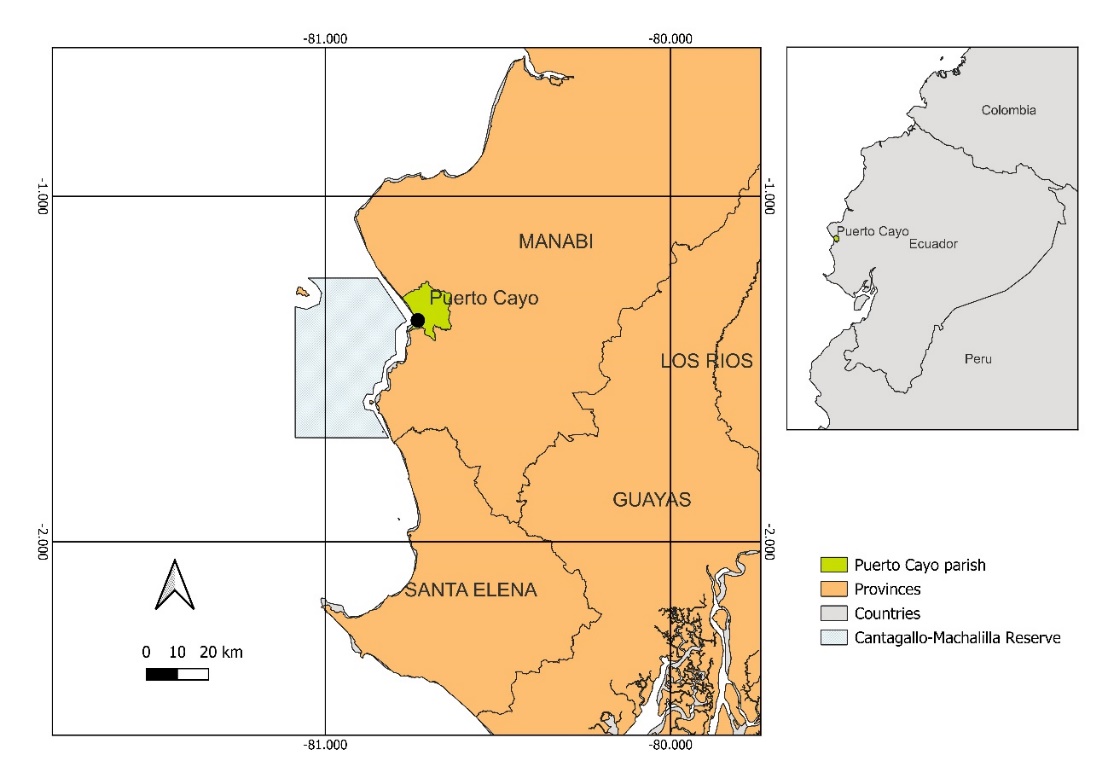
The report was conducted in the marine-coastal line in Puerto Cayo parish, within the Jipijapa canton, Manabí Province, Ecuador, located in the central coastal region of the country, in the vicinity of Machalilla National Park and the Cantagallo Marine Reserve (Fig. 1) with a strong dependence on artisanal fisheries as a primary livelihood (GAD Puerto Cayo, 2026), as well as by the seasonal presence of multiple cetacean species, particularly humpback whales (Megaptera novaeangliae, stock G) (Castro et al., 2022; Félix and Haase, 2005).
Methods
This report followed an exploratory, qualitative, and observational approach (Doresha et al., 2024; Hollstein, 2011; Roque et al., 2024; Sigfridsson and Sheehan, 2011) aimed at documenting a locally observed practice of damaged fishing net reuse within coastal construction activities. Information was collected through direct, informal conversations (Swain and King, 2022) with a local master builder “maestro constructor” experienced in masonry work and material reuse. The informant was not specialized in bamboo construction itself; however, they were directly responsible for the plastering and cement finishing of bamboo-based structures, where reinforcement materials are required. This positional role provided practical knowledge of alternative reinforcement techniques applied during the construction process.
Data collection was complemented by direct, non-participant observation (Denny and Weckesser, 2022) of the construction process during an on-site visit to a bamboo house under construction. The observation focused on the preparation, placement, and integration of damaged nylon fishing nets within the structure as reinforcement for cement-based plastering. Visual documentation was obtained through photographic records of the materials and application stages to support qualitative and methodological description. No experimental manipulation or intervention was conducted. The observation was limited to documenting the technique as applied under real working conditions.
Additional contextual information regarding similar practices reportedly used by other local builders was obtained indirectly through the informant’s accounts (Denny and Weckesser, 2022; Swain and King, 2022). No structured interviews, surveys, or systematic community-level assessments were conducted, and such accounts were not independently verified. Consequently, this information is treated as contextual background rather than representative or quantitative data.
The methodological scope of this study is intentionally descriptive and exploratory (Caggiano and Weber, 2023; Pownall, 2025), aiming to document a practice that has not been previously reported in the scientific literature.
Results and discussion
The documented practice consists of the direct reuse of damaged nylon fishing net fragments as reinforcement material for cement-based plastering in bamboo wall structures within local construction activities. Although these nets are no longer functional for fishing purposes, they retain apparent tensile strength and structural integrity sufficient to be repurposed as construction reinforcement, replacing metallic mesh traditionally used in bamboo-based buildings (Chen et al., 2024). The nets observed were primarily monofilament nylon fishing nets with an approximate diameter of 0.30 mm and a mesh size of 3 inches, commonly used in artisanal fisheries targeting medium-sized fish for local consumption. In some cases, thicker nets associated with other fishing practices, including shrimp fisheries, were also reportedly reused, providing an apparently stronger structural support.
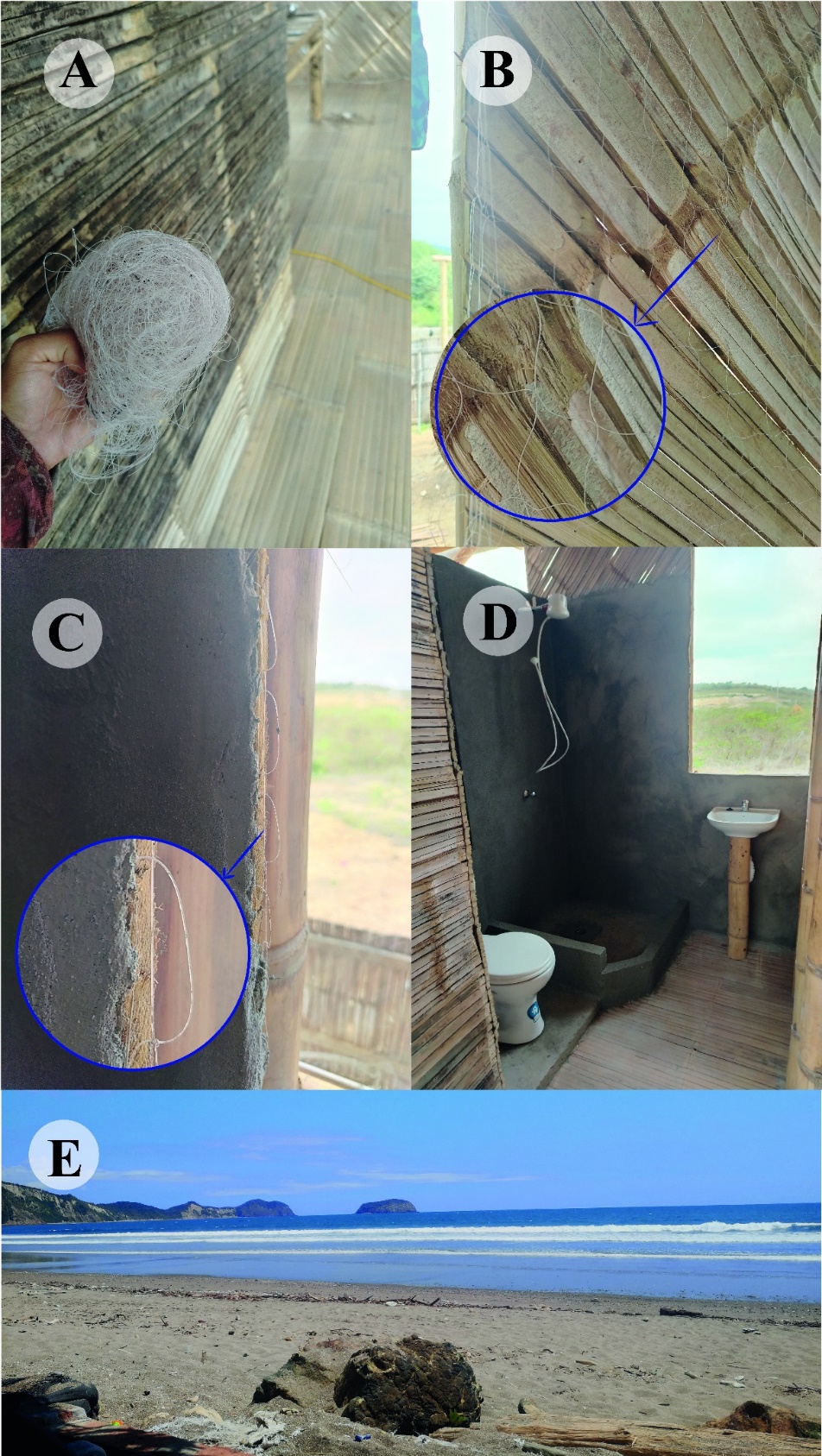
The observed application process is illustrated in Figure 2. Initially, damaged nylon fishing net fragments discarded from fishing activities were selected and prepared for reuse (Fig. 2A). Although damaged nets are commonly repaired or repurposed for secondary uses such as fences or poultry enclosures, the use of these materials as construction reinforcement represents a less documented application and constitutes the primary focus of this study. The net sections were then cut according to the dimensions of the wall surface and fixed to the bamboo structure using nails or clips at the edges and central points to ensure adequate tension and stability prior to plastering (Fig. 2B). Following the application of cement plaster, portions of the net remained visible along structural edges, such as window frames, clearly evidencing its incorporation as an internal reinforcement element (Fig. 2C). The final result consisted of a continuous and stable plastered surface comparable to outcomes achieved using conventional metallic mesh (Fig. 2D). A panoramic view of Puerto Cayo beach provides spatial context for the proximity between coastal construction practices, artisanal fishing activities, and marine environments used by cetaceans (Fig. 2E).
Local practitioners reported positive functional outcomes associated with this technique, including ease of application, rapid execution, and satisfactory performance under local environmental conditions (Cañadas-López et al., 2020). According to local perceptions, bamboo-based construction was more widespread in previous decades; however, its use has declined in favor of cement, block, or brick structures due to concerns about durability (Sánchez et al., 2018). Despite this trend, a limited number of practitioners continue to apply traditional bamboo techniques when opportunities arise, drawing on accumulated practical knowledge. Unlike metallic mesh, which is prone to corrosion and degradation in humid and saline coastal environments (Ebenezer et al., 2021; Martínes et al., 2025), nylon fishing nets showed resistance to these factors.
These observations reflect the persistence of locally grounded knowledge systems within coastal communities, where construction practices, material reuse, and resource management are shaped by accumulated experience and cultural transmission associated with artisanal livelihoods (Díaz et al., 2015; Maffi, 2007). In this context, the reuse of fishing nets can be understood not only as a technical solution but also as part of a broader set of adaptive strategies embedded in local coastal culture, linking everyday practices with resource use and environmental management (Dei, 2024).
Additionally, the use of damaged nets represents a low-cost alternative (Guest, 2003), as the material is locally available and would otherwise be discarded. Although no quantitative assessment of mechanical performance was conducted, the continued use of this technique by local builders suggests its practical viability within this context.
From a marine conservation perspective, the reuse of damaged fishing nets contributes to reducing the availability of materials that could otherwise become abandoned, lost, or discarded fishing gear in coastal and marine environments (Alava et al., 2019). By extending the functional lifespan of nylon nets on land, this practice indirectly decreases the potential for ghost net formation, thereby reducing the risk of entanglement for marine fauna. In the coastal waters adjacent to Puerto Cayo, which are seasonally used by multiple cetacean species, including humpback whales (Megaptera novaeangliae, stock G) (Alava et al., 2019; Castro and Van Waerebeek, 2019; Félix and Haase, 2005), such preventive measures may be particularly relevant.
Conservation actions in areas surrounding Machalilla National Park and the Cantagallo Marine Reserve have historically emphasized reactive responses to entanglement events, such as disentanglement operations and environmental education initiatives (Alava et al., 2005; Félix, 2021; Ortega-Pacheco et al., 2018; Villalba-Briones et al., 2021). While these efforts are essential, they often involve high economic and human costs and are constrained by the unpredictable timing and location of entanglement events (Moore et al., 2001). The practice documented here does not seek to replace these response-based strategies but rather to complement them through a primary prevention approach that addresses one of the structural drivers of the problem: the inappropriate disposal of damaged nylon fishing gear (Daniel and Thomas, 2023; Kozioł et al., 2022; Li et al., 2023; Weißbach et al., 2022).
Importantly, this practice relies on the direct reuse of fishing nets without industrial processing, specialized infrastructure, or technological transformation, in contrast to other recycling experiences that rely on attainable or semi-industrial technologies (Bertelsen and Ottosen, 2017; Celauro et al., 2025; Movilla-Quesada et al., 2025). This characteristic is especially relevant in small coastal communities such as Puerto Cayo, where facilities for recycling or material processing are not available (Gutiérrez and Rodríguez, 2023). The application of locally accessible materials reflects an adaptive and context-specific solution aligned with principles of circular economy, waste reduction, and community-based conservation (Becker and Ghimire, 2003; Fiallo and Jacobson, 1995; Mestanza-Ramón et al., 2023).
Although humpback whales represent an emblematic species due to their visibility and tourism value (Castro et al., 2022), the potential benefits of reducing ghost net availability extend to other coastal and oceanic cetacean species present in the region (Alava et al., 2005). From a cost-effectiveness perspective, preventive strategies grounded in locally driven practices may reduce the long-term economic and logistical burden associated with entanglement response, while simultaneously supporting sustainable construction practices and local livelihoods (Rodriguez et al., 2018; Rodríguez Gómez et al., 2024). This localized experience should be regarded as an initial reference within a broader biocultural framework, where locally developed practices reflect the interaction between cultural knowledge, resource availability, and environmental challenges (Prawira et al., 2025). In this sense, the reuse of damaged fishing nets illustrates how community-based solutions can contribute to preventive marine conservation strategies by addressing the pathways through which fishing gear may become marine debris and, ultimately, a risk factor for cetacean entanglement.
Further research is required to assess the mechanical properties of reused fishing nets in construction, evaluate the prevalence of similar practices across coastal communities, and quantify potential reductions in ghost net occurrence (Brown and Macfadyen, 2007), particularly in data-poor contexts where formal waste management systems are absent.
Acknowledgments
The authors sincerely thank Steven Baque for his participation in construction activities and for facilitating access to information relevant to this study. They also acknowledge La Cabaña Dolce Perla and its friendly staff for their hospitality and logistical support during field visits. Special thanks are extended to La Cabaña Dianita with Enrique Santana and his family for their openness, collaboration, and willingness to share experiences and perspectives rooted in their fishing background. The authors are grateful to Architect Guy Platt for his openness and valuable comments regarding bamboo structural techniques, which contributed to the contextual understanding of local construction practices. Finally, the authors express deep gratitude to the fishing community of Puerto Cayo, whose local practices, ingenuity, and lived experiences laid the foundation for this contribution and highlight the importance of community-based knowledge in marine conservation efforts.
Conflicts of interest
The authors have no conflicts of interest.
Role of each author
Hernán Orellana-Vásquez conceived the study, conducted the fieldwork, and led the writing of the manuscript. Tirone Baque contributed to the development of the idea and compiled community-based information. Luna Barragán contributed to manuscript preparation and revision.
References
- Alava, J.J., Barragan, M.J., Castro, C., Carvajal, R., 2005. A note on strandings and entanglements of humpback whales (Megaptera novaeangliae) in Ecuador. J. Cetacean Res. Manage. 7: 163–168.
- Alava, J.J., Tatar, B., Barragán, M.J., Castro, C., Rosero, P., Denkinger, J., Jiménez, P.J., Carvajal, R., Samaniego, J., 2019. Mitigating cetacean bycatch in coastal Ecuador: Governance challenges for small-scale fisheries. Mar. Policy 110: 102769.
- Basran, C., 2021. Monitoring and mitigating cetacean bycatch and entanglement in fishing gear, with a focus on humpback whales (Megaptera novaeangliae) in Iceland. PhD thesis. University of Iceland.
- Baulch, S., Perry, C., 2014. Evaluating the impacts of marine debris on cetaceans. Mar. Pollut. Bull. 80: 210–221.
- Becker, C.D., Ghimire, K., 2003. Synergy between traditional ecological knowledge and conservation science supports forest preservation in Ecuador. Conserv. Ecol. 8: 1.
- Bertelsen, I.M.G., Ottosen, L.M., 2017. Reuse of polyethylene fibres from discarded fishing nets as reinforcement in gypsum-based materials. Acad. J. Civ. Eng. 35: 545–548.
- Bertelsen, I.M.G., Sigvardsen, N.M., Bonnerup, A., Schmidt, J.W., Ottosen, L.M., 2016. Recycled fishing nets as reinforcement of existing concrete structures, in: ARTEK Event 2016 – International Conference: Sanitation in Cold Climate Regions. DTU, pp. 76–77.
- Bredenoord, J., 2024. Bamboo as a sustainable building material for innovative, low-cost housing construction. Sustainability 16: 2347.
- Brown, A.H., Niedzwecki, J.M., 2020. Assessing the risk of whale entanglement with fishing gear debris. Mar. Pollut. Bull. 161: 111720.
- Brown, J., Macfadyen, G., 2007. Ghost fishing in European waters: Impacts and management responses. Mar. Policy 31: 488–504.
- Caggiano, H., Weber, E.U., 2023. Advances in qualitative methods in environmental research. Annu. Rev. Environ. Resour. 48: 793–811.
- Cañadas-López, Á., Rade-Loor, D., Molina-Hidrovo, C., 2020. In situ assessment of Jatropha curcas germplasm under tropical dry forest conditions in Manabí-Ecuador. Rev. Fac. Nac. Agron. Medellín 73: 9273–9281.
- Carpio, R., Valarezo, F., Aguirre-Maldonado, E., Balcázar-Arciniega, C., 2024. Influence of the rustic bamboo envelope construction technique on the thermal performance of vernacular housing in the Ecuadorian coastal region. Buildings 14: 3368.
- Castro, C., Castrillón, J., Gómez, W., 2022. Whale-watching tourism as a driving force for socioeconomic development in Puerto López, Ecuador. Mamm. Aequat. 4: 67–80.
- Castro, C., Van Waerebeek, K., 2019. Strandings and mortality of cetaceans due to interactions with fishing nets in Ecuador, 2001–2017. Int. Whal. Comm.
- Celauro, C., Graziano, F., Garofalo, S., Teresi, R., 2025. Use of fibres from waste fishing nets in porous asphalt mixtures for road pavement. Constr. Build. Mater. 462: 140004.
- Chen, J., Wang, L., Zhou, H., 2024. Novel bamboo-based metal composites prepared with a high-efficiency thermal spraying method. Wood Sci. Technol. 58: 487–502.
- Daniel, D.B., Thomas, S.N., 2023. Derelict fishing gear abundance, causes and debris management practices. Mar. Policy 148: 105429.
- De Araujo, V.A., Colauto, L.R., Abel, L.G.C., do Rosário, F.S., Vasconcelos, J.S., Morales, E.A.M., Barbosa, J.C., Gava, M., Christoforo, A.L., 2023. Bamboo construction: main building techniques and their resources, in: Bamboo and Sustainable Construction. Springer, pp. 25–60.
- Dei, D.-G.J., 2024. Strategies for capturing, managing, and sharing indigenous knowledge. Inf. Dev.
- Denkinger, J., Eguiguren, A., Rubianes, F., Muñoz-Abril, L., Oña, J., 2023. Humpback whale (Megaptera novaeangliae) winter distribution and core habitats in Ecuador. Mar. Mamm. Sci. 39: 876–892.
- Denny, E., Weckesser, A., 2022. How to do qualitative research? BJOG 129: 1166–1167.
- Di, J., Liao, X., Huang, X., Wu, M., Zhao, Y., Guo, N., 2025. Experimental study and numerical simulation of bamboo structural behaviour. Structures 81: 110321.
- Díaz, S., Demissew, S., Joly, C., Lonsdale, W.M., Larigauderie, A., 2015. A Rosetta Stone for nature’s benefits to people. PLoS Biol. 13: e1002040.
- Dolman, S.J., Brakes, P., 2018. Sustainable fisheries management and the welfare of bycaught and entangled cetaceans. Front. Vet. Sci. 5: 287.
- Dolman, S.J., Moore, M.J., 2017. Welfare implications of cetacean bycatch and entanglements, in: Marine Mammal Welfare. Springer, pp. 41–65.
- Doresha, L.-M., Williams, M., 2024. Community health workers in non-communicable diseases. BMC Prim. Care 25: 176.
- Ebenezer, N.S., Vinod, B., Jagadesh, H.S., 2021. Corrosion behaviour of bamboo composites. J. Bio Tribo Corros. 7: 72.
- Félix, F., 2021. Impacts of fishing entanglement on bottlenose dolphins in Ecuador. Aquat. Mamm. 47: 127–134.
- Félix, F., Botero, N., Falconí, J., 2007. Observation of a blue whale feeding in Ecuador. Lat. Am. J. Aquat. Mamm. 6: 193–197.
- Félix, F., Castro, C., Barragán-Tabares, L., Orellana-Vásquez, H., Platt, M., 2025. Bryde’s whales off the central coast of Ecuador. J. Cetacean Res. Manage. 26: 87–100.
- Félix, F., Haase, B., 2005. Distribution of humpback whales along the coast of Ecuador. J. Cetacean Res. Manage. 7: 21–31.
- Fiallo, E.A., Jacobson, S.K., 1995. Local communities and protected areas in Ecuador. Environ. Conserv. 22: 241–249.
- GAD Puerto Cayo, 2026. Datos generales. Available at: https://gadpuertocayo.gob.ec/page/datos-generales/ (accessed 01 Jan 2026).
- Gavin, M.C., McCarter, J., Berkes, F., Mead, A.T.P., Sterling, E.J., Tang, R., Turner, N.J., 2018. Effective biodiversity conservation requires pluralistic approaches. Sustainability 10: 1846.
- Guest, G., 2003. Fishing behavior and decision-making in an Ecuadorian community. Hum. Ecol. 31: 611–644.
- Gutiérrez, C.A.S., Rodríguez, R.G., 2023. Educación ambiental para manejo de residuos sólidos. Cienc. Lat. Rev. Cient. Multidiscip. 7: 7942–7953.
- Hamilton, S., Baker, G.B., 2019. Technical mitigation to reduce marine mammal bycatch. Rev. Fish Biol. Fish. 29: 223–247.
- Hollstein, B., 2011. Qualitative approaches, in: The SAGE Handbook of Social Network Analysis. pp. 404–416.
- Iuorio, O., Russo, M., Bernal, S.A., 2025. Bamboo for climate resilient neighbourhoods. IOP Conf. Ser. Earth Environ. Sci. 1554: 012080.
- Kozioł, A., Paso, K.G., Kuciel, S., 2022. Properties and recyclability of fishing net plastic debris. Catalysts 12: 948.
- Li, F.G.N., Bataille, C., Vogt-Schilb, A., 2023. Net-zero industry options in Latin America. IDB Publ.
- Lloyd, M.G., Peel, D., Duck, R.W., 2013. Social–ecological resilience for coastal planning. Land Use Policy 30: 925–933.
- Maffi, L., 2007. Biocultural diversity and sustainability, in: The SAGE Handbook of Environment and Society. pp. 267–278.
- Martínez, J.S., Barros, E., Padrón, K., Aguirre, J., Matasci, C., Crenna, E., Gauch, M., Vanegas, P., Sucozhañay, D., 2025. Sustainability of local construction materials in Ecuador. Sustainability 17: 1775.
- Mestanza-Ramón, C., Monar-Nuñez, J., Guala-Alulema, P., Montenegro-Zambrano, Y., Herrera-Chávez, R., Milanes, C.B., Arguello-Guadalupe, C., Buñay-Guisñan, P., Toledo-Villacís, M., 2023. Protected areas in Ecuador. Environments 10: 79.
- Mghili, B., Keznine, M., Analla, M., Aksissou, M., 2023. Impacts of lost fishing gear on marine biodiversity. Ocean Coast. Manage. 239: 106593.
- Mite-Anastacio, F., Tello-Ayala, K., García-Troncoso, N., Silva, C.E., Malaga-Chuquitaype, C., Arévalo, K., Villao, D., 2022. Structural behavior of cemented bahareque. Front. Built Environ. 8.
- Moore, M., Reeb, D., Miller, C.A., Smith, D., 2001. Large whale disentanglement technology workshop.
- Morante, M.C.D., Casas, A.F., Rodríguez, C.M., 2025. Adaptive water management from socio-ecological perspective. Sustainability 17: 9597.
- Movilla-Quesada, D., Raposeiras, A.C., Ramos-Gavilán, A.B., Lagos-Varas, M., 2025. Transforming fishing nets into infrastructure solutions. J. Environ. Manage. 380: 124933.
- O’Hern, J.E., Mullin, K.D., Barry, K., Biggs, D.C., Uscocovich, E.P., 2009. Marine mammal habitat in Ecuador, in: OCEANS 2009. pp. 1–5.
- Orellana-Vásquez, H., Echeverría, G., Moscoso, J., Díaz-Pazmiño, S., Alarcón-Ruales, D., 2025. Killer whale predation events in the Eastern Tropical Pacific. Mar. Mamm. Sci.
- Ortega-Pacheco, D., Alava, J.J., Villalba, R., Calle, P., 2018. National cetacean conservation report. Int. Whal. Comm.
- Pelage, L., Bertrand, A., Siqueira, S.C.W., Araújo, A.C.A.P., Avelino, K.V.A., da Silva, C.L., Frédou, T., 2023. Fishers’ perceptions of global change. Mar. Policy 155: 105784.
- Pownall, M., 2025. Bridging qualitative methods and open research. Nat. Rev. Psychol. 4: 556–557.
- Prawira, W.T., Widyasari, V., Widyanto, A., 2025. Community-based fisheries and resilience. BIO Web Conf. 175: 04004.
- Rodríguez Gómez, P.J., Medina Pinoargote, G.E., García Yero, A.M., Cánovas Riverón, G., Gil Rebolledo, W.J., Rodríguez Gómez, J.A., 2024. Sustainable habitat management in Ecuador. Environ. Soc. Manag. J. 18: 1.
- Rodriguez, J., Limones, K., Villafuerte, J., Hormaza, S., 2018. Sustainable tourism experiences in Ecuador. J. Arts Humanit. 7: 32–47.
- Roque, A., Wutich, A., Brewis, A., Beresford, M., Landes, L., Morales-Pate, O., Lucero, R., Jepson, W., Tsai, Y., Hanemann, M., 2024. Community-based participant observation. Field Methods 36: 80–90.
- Sánchez, L.K.M., Hernández, E.H.O., Fernández, L.S.Q., Párraga, W.E.R., 2018. Mechanical properties of quarries for concrete. Int. Res. J. Eng. IT Sci. Res. 4: 33–40.
- Scheidat, M., Castro, C., Gonzalez, J., Williams, R., 2004. Behavioural responses of humpback whales to whalewatching boats. J. Cetacean Res. Manage. 6: 63–68.
- Sigfridsson, A., Sheehan, A., 2011. Qualitative methodologies and dispersed communities. Inf. Softw. Technol. 53: 981–993.
- Silva-Ávila, P., Rojas Hernández, J., Barra, R.O., 2025. Knowledge alliances for global change adaptation. Sustainability 17: 3653.
- Stafford, R., Clitherow, T.J., Howlett, S.J., Spiers, E.K.A., Williams, R.L., Yaselga, B., Valarezo, S.Z., Vera Izurieta, D.F., Cornejo, M., 2016. Marine reserves in Ecuador. Ocean Coast. Manage. 121: 60–69.
- Swain, J., King, B., 2022. Using informal conversations in qualitative research. Int. J. Qual. Methods 21.
- Tulloch, V., Grech, A., Jonsen, I., Pirotta, V., Harcourt, R., 2020a. Cost-effective mitigation strategies for cetaceans. Conserv. Biol. 34: 168–179.
- Tulloch, V., Pirotta, V., Grech, A., Crocetti, S., Double, M., How, J., Kemper, C., Meager, J., Peddemors, V., Waples, K., Watson, M., Harcourt, R., 2020b. Long-term trends in cetacean entanglements. Biodivers. Conserv. 29: 251–282.
- Ulloa, M., Rivero, M.A., Fernández, A., 2024. Cetacean strandings in Chile. Oceans 5: 1–20.
- Villalba-Briones, R., González-Narvaez, M.A., Vitvar, T., 2021. Dolphin watching and policy compliance. Aust. J. Environ. Educ. 37: 285–305.
- Weißbach, G., Gerke, G., Stolte, A., Schneider, F., 2022. Recycling of abandoned fishing gear. Waste Manag. Res. 40: 1039–1046.
- Witte, D., 2019. Structural bamboo building codes. Technol. Archit. Des. 3: 50–64.
- Zea Escamilla, E., Archilla, H., Nuramo, D.A., Trujillo, D., 2019. Bamboo as engineered material, in: Bioclimatic Architecture in Warm Climates. Springer, pp. 397–414.
- Zhao, W.F., Zhou, J., Bu, G.B., 2012. Bamboo reinforced concrete applications. Appl. Mech. Mater. 195–196: 297–302.
- Zhou, B., Sun, C., Yi, H., 2017. Solid waste disposal in Chinese cities. Sustainability 9: 2234.