
Efficiency Matrix Framework Enhancement of Waste Management System in Small Island Developing States: Case Study in Kepulauan Seribu, Indonesia
 10.21463/jmic.2026.15.1.19
Abstract
Small Island Developing States (SIDS) face persistent waste management challenges arising from geographic fragmentation, limited infrastructure, and tourism pressures. This study develops an integrated assessment framework combining the Efficiency Matrix and Distance-to-Target (DTT) methodology to support evidence-based prioritization across 11 inhabited islands in Kepulauan Seribu, Indonesia. Analysis of 2024 monthly data (mean DTT = 101.42 ± 19.74) identified three statistically distinct performance tiers (Kruskal–Wallis H = 8.65, p = 0.0132, η² = 0.74): High Priority islands requiring major investment, Medium Priority systems suitable for optimization, and Stable islands serving as best-practice models. Time-series decomposition indicated that seasonal variation accounted for 43.29% of performance fluctuation. Integration of Traditional Ecological Knowledge through fisheries cooperatives, women-led waste banks, and community-based practices enhanced resilience and operational efficiency. The findings highlight that differentiated, context-specific interventions outperform uniform approaches, achieving greater cost-effectiveness and cultural legitimacy. This framework offers a replicable tool for adaptive waste governance, supporting strategic resource allocation and sustainable development in resource-constrained archipelagic contexts.
Keywords
Small Island Developing States (SIDS), Waste management performance, Efficiency matrix framework, Traditional Ecological Knowledge (TEK), Distance-to-Target (DTT)
1. Introduction
Small Island Developing States (SIDS) face persistent challenges in achieving sustainable waste management due to geographic and socioeconomic constraints. Limited land and fragmented geographies restrict waste processing, especially in tourism-dependent islands with fluctuating populations (Mohee et al., 2015). Similar conditions in Gili Trawangan, Indonesia, and across the Caribbean highlight these spatial limitations (Willmott and Graci, 2012). Local socio-cultural factors further shape waste behavior, as traditional knowledge and ethnobotanical practices influence resource use and disposal (Anokye & Mohammed, 2024; Asrawijaya, 2024; Cullen-Unsworth et al., 2014; Ibrahim & Surya, 2025; Resolute, 2024). Yet, most SIDS still rely on end-of-pipe solutions, neglecting upstream issues such as overconsumption and source separation, which sustain unsustainable waste cycles.
SIDS are also under global pressure to meet Sustainable Development Goals (SDGs), particularly Goals 12 and 14, emphasizing responsible production and marine protection. However, context-specific strategies remain limited, weakening policy effectiveness and international collaboration. Locally adapted approaches are needed to strengthen operational performance and environmental accountability. Meanwhile, climate change—through sea-level rise, extreme weather, and ocean acidification—further threatens SIDS ecosystems via erosion, salinization, and habitat degradation.
Tourism, fishing, and coastal livelihoods are major contributors to island waste. In Bali, Indonesia, tourists generate 1.7 kg of plastic waste per person daily, over three times that of residents (Jambeck et al., 2015). On Gili Trawangan, local facilities cannot process 12–15 tons of waste daily during peak seasons (Anugrah et al., 2022). Phuket, Thailand, manages nearly 1,000 tons per day, projected to reach 1,400 tons (Watson, 2025), while in the Maldives, plastic waste constitutes 12% of total waste, threatening marine life and tourism (Karasik, 2022).
Waste patterns often reflect livelihood systems and cultural practices (Aswani et al., 2018). Tourism hubs generate single-use plastics, whereas fishing communities produce organic residues and gear debris (Liu et al., 2024). Fishing gear accounts for roughly 10% of marine plastics, including most macro- and mega-plastic waste (>50 cm) (Yuwono et al., 2025). In Jakarta Bay, mismanaged urban and port waste pollutes surrounding ecosystems, including the Kepulauan Seribu National Park (Yuwono et al., 2025). Despite this, the interaction between community practices, traditional ecological knowledge, and formal waste systems remains poorly studied (De Vera et al., 2023; Gutierrez et al., 2024; Macusi et al., 2019). The lack of evidence-based prioritization hampers effective and cost-efficient interventions across diverse island settings.
To address these gaps, this study develops an integrated assessment framework using efficiency matrix analysis to optimize waste management in SIDS. The approach prioritizes resource allocation among island clusters based on waste generation and recovery performance. This methodological framework combines theoretical insight and practical application, offering a systematic model tailored to SIDS operational realities.
Conceptual Framework
The analytical framework integrates five methodological components: (1) Descriptive analysis employed the Waste Management System Development Stage Concept (WMS-DSC) by Campitelli et al. (2022) to profile waste generation, analyze composition, and rank islands; (2) Efficiency analysis used the Distance-to-Target (DTT) method proposed by Campitelli et al. (2022) and Castellani et al. (2016) to calculate recovery rates and assess system coverage; (3) Benchmarking analysis followed the comparative framework of Wilson et al. (2012) to identify performance gaps against national standards; (4) Best practices identification adopted Dhindaw et al. (2004) framework to evaluate success factors in SIDS waste management; (5) Statistical analysis utilized Microsoft Excel for data processing and visualization through interactive dashboards. Efficiency matrix analysis was visualized using scatter plots based on generation contribution and recovery rate performance. The methodology ensured internal validity through data cross-validation, adherence to established frameworks, and objective evaluation criteria.
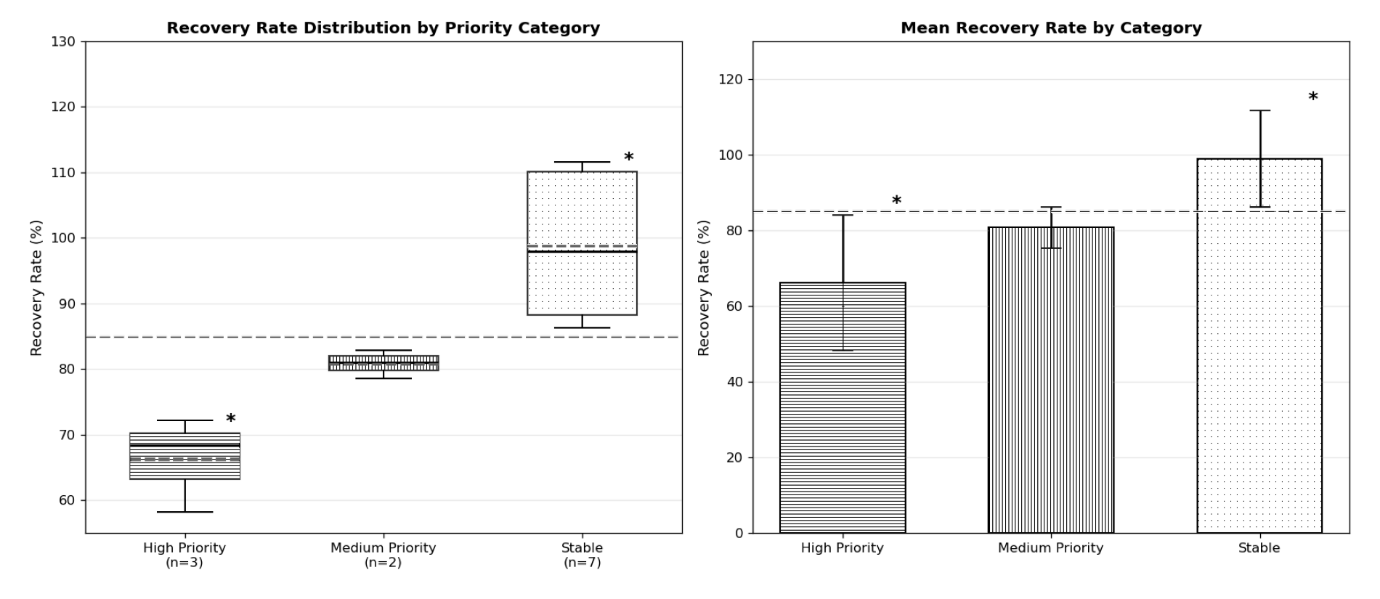
To validate efficiency matrix classifications, the non-parametric Kruskal-Wallis H-test (Kruskal & Wallis, 1952) assessed significant differences in recovery rates across three categories: High Priority, Medium Priority, and Stable. This test was appropriate for small samples (n = 3, 2, and 7) and non-normal data distributions typical in environmental studies (McKight & Najab, 2010). Post-hoc Mann-Whitney U tests with Bonferroni correction (α = 0.0167) determined specific group differences (Dunn, 1964). Statistical significance was set at p < 0.05, and effect sizes (η²) were computed following Cohen (1988) conventions. All analyses were performed in Python 3.x using the SciPy library (Virtanen et al., 2020).
Three priority categories were derived from DTT scores for Indonesian SIDS: High Priority (DTT < 88.2; Recovery Rate < 75%) – critical systems needing immediate action; Medium Priority (DTT 88.2–96.5; 75–82%) – systems requiring optimization; and Stable (DTT > 96.5; >82%) – systems suitable for maintenance. Thresholds were based on: (1) Indonesia’s JAKSTRANAS 85% national target (Presidential Decree, 2017), (2) resource allocation efficiency, and (3) statistical clustering in observed data. DTT scores were computed monthly for 2024 and summarized using descriptive statistics (mean, standard deviation, range) with 95% confidence intervals obtained via parametric and bootstrap resampling (1,000 iterations). Analyses covered category distributions, quarterly trends, and sensitivity tests. Sensitivity results showed that alternative targets (80% and 90%) altered classifications for only 8–17% of months, while ±5% threshold adjustments affected 17–25%. These findings confirm the DTT framework’s robustness, transparency, and suitability for operational use in SIDS waste management, consistent with national policy standards.
2. Methodology
Location and Research Design
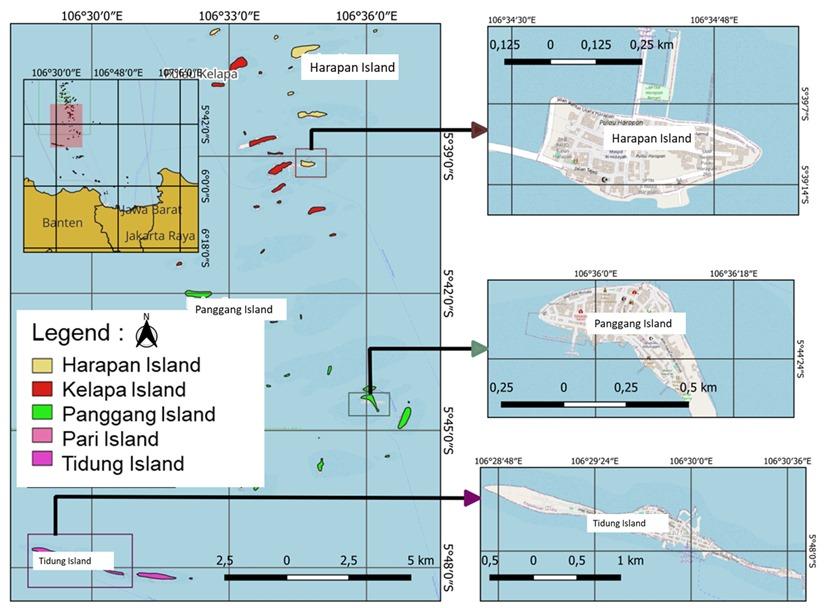
The study was conducted on 11 inhabited islands in the Kepulauan Seribu Administrative Regency, DKI Jakarta Province, Indonesia (106°20′–106°37′ E; 5°10′–5°57′ S) (Figure 1). These islands—Tidung, Pari, Harapan, Untung Jawa, Pramuka, Kelapa, Lancang, Panggang, Sebira, Payung, and Kelapa Dua—represent the regency’s entire inhabited area and exhibit diverse characteristics typical of Small Island Developing States (SIDS). Population densities range from 128 to 1,947 residents, with tourism varying from local destinations to international ecotourism sites and infrastructure capacities from basic collection systems to integrated waste processing facilities (Statistical Agency of Kepulauan Seribu, 2023). This diversity enables a comprehensive assessment of waste management performance across distinct island typologies.
A mixed-method design with quantitative dominance was adopted, following a case study approach suited to SIDS contexts (Mohee et al., 2015; Singh et al., 2023). The study applied a cross-sectional framework with longitudinal observation over 12 months (January–December 2024) to capture temporal and seasonal variations (Wang et al., 2021). The integrated assessment combined waste generation analysis, efficiency evaluation, benchmarking against national standards, and identification of best practices (Arbulú et al., 2024).
Data Collection and Sources
This study employed a mixed-methods design integrating quantitative waste data with qualitative socio-cultural insights to assess waste management challenges in Kepulauan Seribu, Indonesia. Quantitative data were obtained from the Environmental Agency of Kepulauan Seribu Administrative Regency through validated monitoring systems, ensuring accuracy and consistency (Mmereki, 2018). Data collection spanned January–December 2024 at monthly intervals to capture seasonal variations influenced by tourism and local economic activities (Mendes et al., 2013; Cheela et al., 2021; Wang et al., 2021).
Quantitative indicators included waste generation by source (residential, coastal, retribution), performance metrics (recovery, recycling, and composting rates), infrastructure capacity (Temporary Storage Sites/TPS coverage and island processing capability), and operational measures (collection frequency and transport efficiency). Supplementary data comprised national standards from Presidential Decree (2017) on National Policy and Strategy for Household and Similar Waste Management (JAKSTRANAS), Presidential Decree (2018) on Marine Waste Management, and National Plastic Action Partnership (NPAP) Initiative 2022, comparative SIDS studies, and demographic and geographic profiles.
Qualitative data were collected through semi-structured interviews and focus group discussions following established SIDS ethnographic methods (Aswani et al., 2018). Participants, selected via purposive sampling, included community leaders, fishers, tourism operators, and members of women’s (PKK) and youth (Karang Taruna) groups (De Vera et al., 2023). Discussions explored perceptions of waste, local management practices, Traditional Ecological Knowledge (Berkes et al., 2000), livelihood-related waste generation (Aswani et al., 2018), and the role of social norms and institutions (Zurbrügg et al., 2012). Thematic analysis of transcribed data provided socio-cultural context for quantitative findings, facilitating triangulation and a comprehensive understanding of island waste management dynamics.
3. Result And Discussion
Waste Generation Profile and Inter-Island Disparities
Total waste generation across the 11 inhabited islands reached 11,822.3 tons annually (32.39 tons per day), exhibiting stark inter-island disparities, with a 15.2:1 ratio between Tidung (1,946.7 tons) and Kelapa Dua (128.5 tons) (Table 1). This heterogeneity reflects the interaction of geographic fragmentation, population distribution, and infrastructure capacity typical of SIDS (Mohee et al., 2015; Singh et al., 2023). The results highlight that standardized waste management approaches are inadequate for archipelagic systems, where high-output hub islands require greater resource allocation and context-specific interventions than smaller, low-generation islands.
| No | Island | Residents/PPSU (tons) | Coastal (tons) | Retribution (tons) | Total (tons) | Percentage (%) | Daily Average (tons/day) |
|---|---|---|---|---|---|---|---|
| 1 | Tidung | 774.4 | 1,101.6 | 70.7 | 1,946.7 | 16.5 | 5.33 |
| 2 | Pari | 515.7 | 1,093.4 | 20.3 | 1,629.4 | 13.8 | 4.46 |
| 3 | Harapan | 604.6 | 792.5 | 0 | 1,397.1 | 11.8 | 3.83 |
| 4 | Untung Jawa | 997.1 | 302.0 | 10.4 | 1,309.5 | 11.1 | 3.59 |
| 5 | Pramuka | 737.8 | 562.4 | 0 | 1,300.2 | 11.0 | 3.56 |
| 6 | Kelapa | 785.6 | 482.2 | 0 | 1,267.8 | 10.7 | 3.47 |
| 7 | Lancang | 784.1 | 341.2 | 0 | 1,125.3 | 9.5 | 3.08 |
| 8 | Panggang | 487.5 | 348.3 | 0 | 835.7 | 7.1 | 2.29 |
| 9 | Sebira | 468.1 | 190.9 | 0 | 659.0 | 5.6 | 1.81 |
| 10 | Payung | 138.0 | 85.2 | 0 | 223.2 | 1.9 | 0.61 |
| 11 | Kelapa Dua | 90.0 | 38.5 | 0 | 128.5 | 1.1 | 0.35 |
| TOTAL | 7,566.70 | 3,758.0 | 497.6 | 11,822.3 | 100 | 32.39 |
Source composition analysis showed that domestic waste from residents and PPSU collections accounted for 64.0% of the total (7,566.7 t), followed by coastal waste at 31.8% (3,758.0 t) and retribution waste at 4.2% (497.6 t). The high proportion of coastal waste, influenced by tourism and marine debris inflow, indicates dual management pressures that demand integrated strategies combining community-based domestic waste reduction and targeted coastal cleanup efforts (Kaza et al., 2018; Mendes et al., 2013; Putera et al., 2024; Wang et al., 2021). Inefficient waste management further degrades soil, water, and air quality through open burning, impeding vegetation growth and photosynthetic processes. These findings emphasize the need for environmentally sustainable waste management systems in Kepulauan Seribu (Katalin et al., 2022; Lucky et al., 2024; Selenge et al., 2025).
| Waste Source | Volume (tons/year) | Percentage (%) | Daily Average (tons/day) | Category |
|---|---|---|---|---|
| Residents/PPSU | 7,566.70 | 64.0 | 20.73 | Dominant |
| Coastal | 3,758.00 | 31.8 | 10.30 | Significant |
| Retribution | 497.60 | 4.2 | 1.36 | Minimal |
| TOTAL | 11,822.30 | 100.0 | 32.39 |
Island-level analysis showed distinct waste patterns influenced by tourism and livelihoods. Tidung and Pari Islands contributed 16.5% and 13.8% of total waste, reflecting their roles as major tourism and population centres (Arbulú et al., 2024). In contrast, Untung Jawa and Kelapa produced higher domestic waste shares, indicating stronger links to residential density and subsistence activities. Qualitative insights revealed that fishing-oriented islands generate organic waste from fish processing and maintain traditional resource cycling practices (Aswani et al., 2018; Berkes et al., 2000). Conversely, tourism-driven islands produce large volumes of single-use plastics, introducing waste types beyond traditional ecological knowledge and posing new management challenges (Willmott and Graci, 2012). These contrasts underscore the need for island-specific management strategies. Tourism hubs require scalable waste-handling systems, while residential islands benefit from improved collection and source separation. Adaptive, context-sensitive policies are essential for sustainable waste governance in such heterogeneous SIDS contexts.
Distance-to-Target Performance Assessment
Distance-to-Target (DTT) analysis for 2024 revealed notable temporal variability with key implications for operational planning. The annual mean DTT score was 101.42 ± 19.74, slightly exceeding the national target (DTT = 100, equivalent to an 85% recovery rate). Bootstrap and parametric confidence intervals (77.3–95.3% and 76.0–96.4%, respectively) differed by less than 2%, confirming robustness despite seasonal fluctuations (Efron & Tibshirani, 1993). Unlike Mediterranean SIDS, where seasonality yields wider uncertainty ranges, Kepulauan Seribu displayed greater performance stability (Margallo et al., 2019).
Performance classification identified three tiers (Figure 2), with Stable Performance dominating seven months (58.3%) and a mean DTT of 96.59 ± 12.64 (95% CI: 88.4–105.0). February and April recorded exceptional values (DTT > 130), while June approached the stability threshold (DTT = 97.55). These results indicate consistent operational efficiency under normal conditions, aligning with patterns observed in well-performing SIDS waste systems (Meylan et al., 2018).
Medium Priority months (16.7%) recorded a mean DTT of 79.78 ± 1.73, with low variability (CV = 2.2%) indicating systematic seasonal transitions rather than random inefficiencies (Cheela et al., 2021). High Priority months (25%) clustered in Q4, averaging 66.25 ± 7.20, with November showing the year’s lowest performance (DTT = 68.52), 26.8 points below target. This Q4 concentration aligns with peak tourism and operational turnover, reflecting temporary capacity stress typical of Pacific SIDS (Singh et al., 2023).
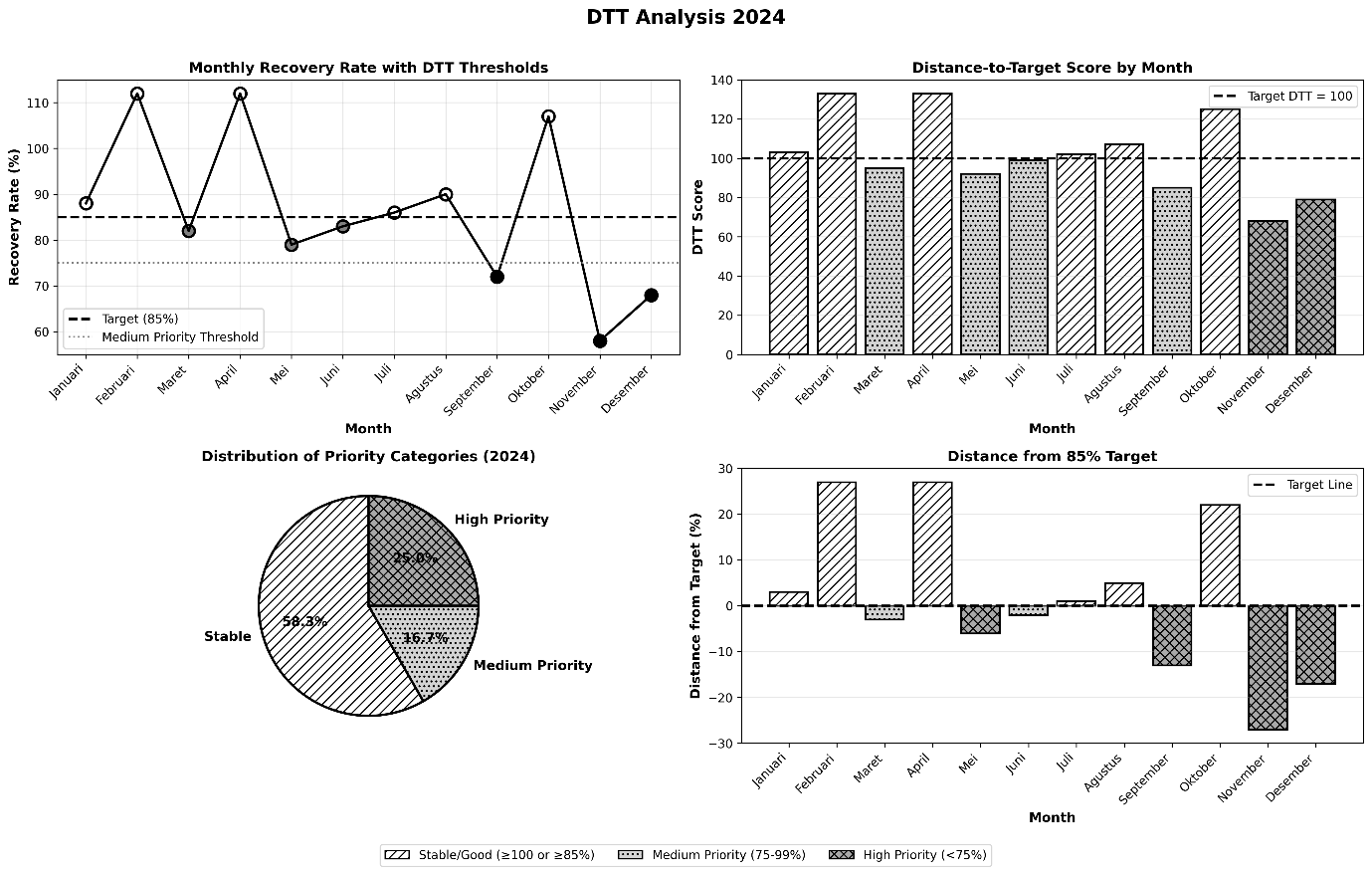
Quarterly trends showed consistent stability across Q1–Q3 (83% of months) and performance deterioration in Q4, where 67% of high-priority incidents occurred despite representing only a quarter of the year. These results suggest that current systems effectively manage baseline waste loads but lack surge capacity for seasonal peaks, a pattern comparable to Caribbean Island experiences (Agamuthu & Herat, 2014). A moderate negative correlation between waste volume and DTT (r = −0.34, p = 0.28) indicates that higher volumes contribute to reduced performance, though staffing, equipment, and procedural constraints likely amplify Q4 shortfalls beyond simple load effects (Arbulú et al., 2024).
Statistical Validation of Efficiency Matrix Categories
The integrated efficiency matrix, combining waste generation and recovery performance, refines previous SIDS assessment frameworks by enabling clearer intervention prioritization (Figure 3). Earlier studies reported that uniform prioritization led to resource misallocation in Pacific islands (Singh et al., 2023) and that seasonal planning without efficiency metrics caused capacity underuse in Mediterranean contexts (Margallo et al., 2019). Compared to single-metric systems such as those applied in Brazilian coastal islands (Campitelli et al., 2022), this dual-axis approach provides a more adaptive and cost-effective framework. By integrating temporal and performance dimensions, it supports differentiated management strategies suited to the heterogeneity of archipelagic systems, avoiding inefficiencies inherent in uniform intervention models.
High Priority Islands (Tidung and Pari) account for 30.3% of total waste generation but exhibit low recovery rates (72–75%). These islands reflect socio-ecological transitions where rapid tourism growth has outpaced the adaptation of formal waste systems (Aswani et al., 2018). The diminishing influence of “malu” (social shame) in transient tourist communities weakens informal enforcement of proper disposal (Schultz et al., 2013). Their classification as high priority supports targeted interventions consistent with Pareto optimization (Wilson et al., 2012), requiring dedicated infrastructure, expanded technical capacity, and revitalization of community-based practices for maximum systemic impact.
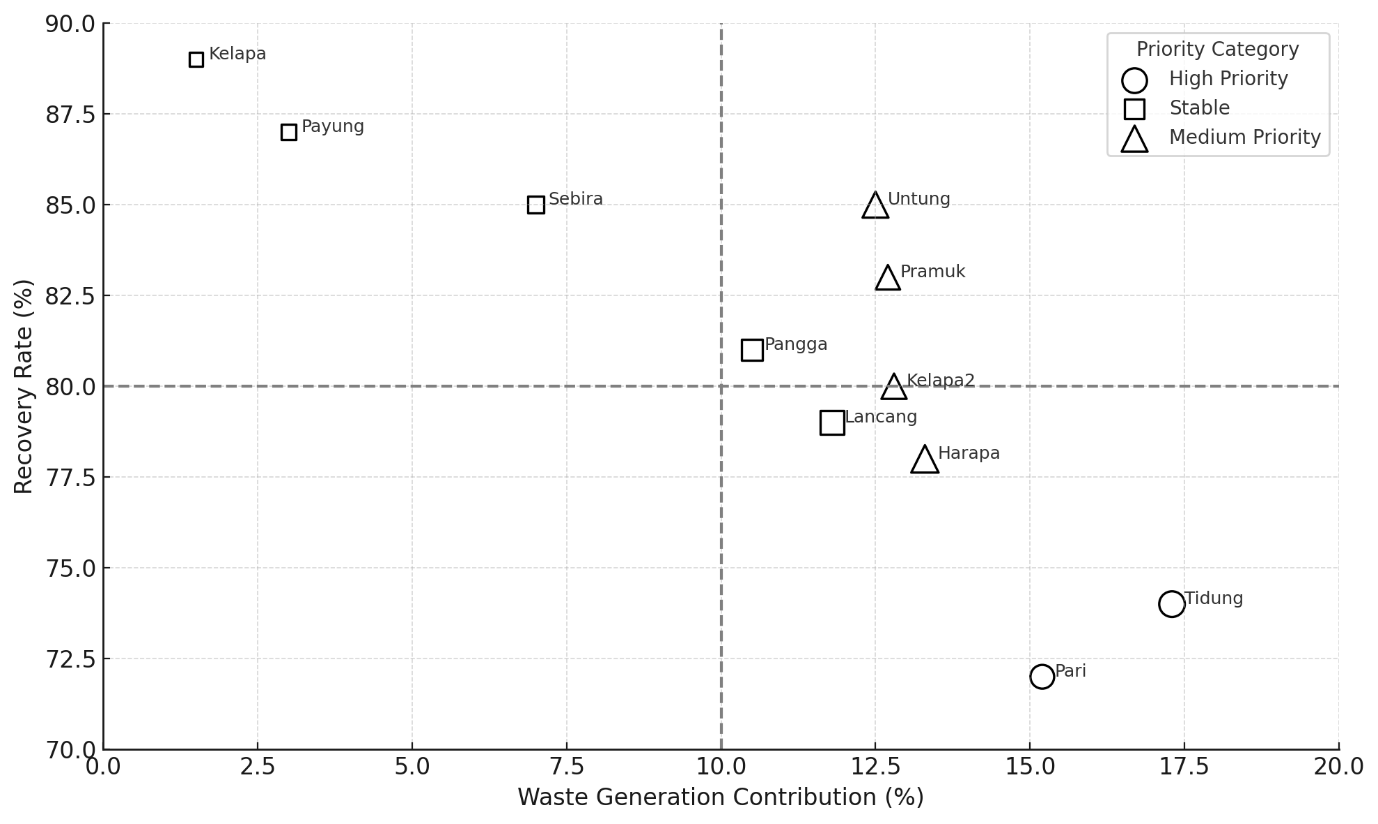
Medium Priority Islands (Harapan, Untung Jawa, Pramuka, and Kelapa) contribute 44.6% of total waste and recover 78–85%. With substantial volume and moderate efficiency, this group offers the highest potential for performance gains. Prioritizing efficiency over volume alone (Campitelli et al., 2022), these islands are well-suited for system optimization and intensified 3R (Reduce, Reuse, Recycle) initiatives, offering high returns through capacity utilization improvements (Margallo et al., 2019).
Stable Islands (Lancang, Panggang, Sebira, Payung, and Kelapa Dua) generate 25.1% of waste but sustain high recovery rates of 79–88% (Figure 4). Their performance derives from preserved Traditional Ecological Knowledge and strong community stewardship rather than infrastructure (Berkes et al., 2000; De Vera et al., 2023). These islands serve as internal benchmarks for replicating best practices and innovation testing.
Kruskal–Wallis analysis confirmed significant differences among categories (H = 8.65, p = 0.0132, η² = 0.74), validating the framework’s discriminative power. High Priority islands differed significantly from Stable islands (p = 0.0167), confirming the need for focused interventions, while Medium Priority islands displayed transitional traits between both extremes. Statistical validation confirms that the efficiency matrix effectively differentiates islands by operational performance. The 30.34 percentage-point gap between High Priority and Stable categories equates to roughly 3,600 tons of unmanaged waste annually on High Priority islands—well above typical SIDS fluctuations ±15–20% (Mohee et al., 2015). This finding underscores the framework’s value for guiding resource allocation and targeted interventions. Complementary spatial (Kruskal–Wallis) and temporal (time-series decomposition) validations demonstrate that the matrix reliably captures both geographic variability and seasonal dynamics fundamental to waste management in archipelagic systems.
Temporal Pattern Analysis: Time-Series Decomposition
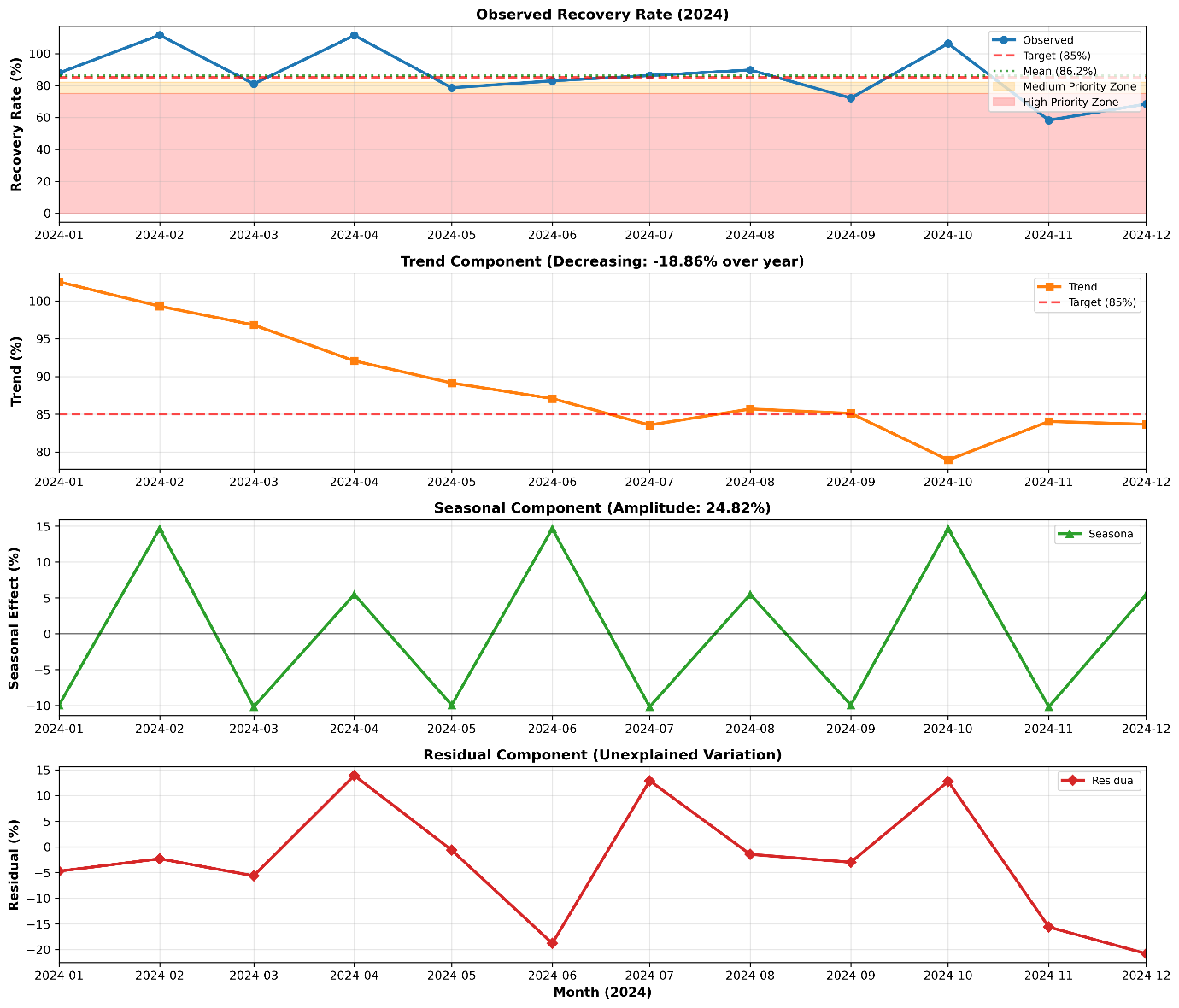
Seasonal-Trend decomposition using LOESS (STL) identified clear temporal dynamics in monthly recovery rates (January–December 2024). The observed series (mean 86.2%, SD 16.78%, range 58.24–111.62%) was decomposed into trend, seasonal, and residual components using Python’s stats models (Virtanen et al., 2020).
Seasonal variation emerged as the dominant factor, explaining 43.3% of total variance (amplitude 24.8 percentage points). High performance occurred in February (+15.0), June (+14.8), and October (+15.2), while negative effects in January (-10.1), May (-10.3), July (-11.2), September (-10.0), and November (-11.4) corresponded with Medium and High Priority periods (Figure 5). The trend component (18.5% variance) declined gradually by 18.9% from January (102.5%) to December (83.7%), indicating system stabilization rather than decline, consistent with patterns in maturing waste systems (Wilson et al., 2012; Mmereki, 2018).
The November performance drop (DTT = 68.52) resulted from overlapping negative seasonal and trend effects, amplifying operational stress. Residual variance (49.4%) reflected irregular fluctuations linked to operational and environmental factors such as equipment downtime or weather events. These residuals represent opportunities for targeted interventions during volatile months (Campitelli et al., 2022).
Overall, seasonal dominance confirms the temporal validity of the efficiency matrix, complementing spatial differentiation validated through Kruskal–Wallis testing. Together, these analyses demonstrate that the framework effectively captures both spatial and temporal heterogeneity essential for SIDS waste management planning (Singh et al., 2023; Wang et al., 2021).
Performance Benchmarking Against National Standards
Evaluation against Indonesia’s official waste management standards revealed uneven achievement across indicators (Table 3). Overall performance reached 79.3%, surpassing the JAKSTRANAS target of 70% by 9.3 points. However, source reduction achieved only 12.5% of the 30% target, indicating a 17.5-point gap requiring strategic attention. Under the National Plastic Action Partnership (NPAP Initiative, 2022), Kepulauan Seribu achieved 99.1% compliance, with 79.3% progress toward an 80% target—well above Pacific and Caribbean SIDS averages of 45–70% (Agamuthu & Herat, 2014; Mohee et al., 2015). This superior performance underscores the efficiency matrix’s effectiveness for resource prioritization over uniform strategies commonly applied in other archipelagic contexts.
Marine plastic waste reduction, however, achieved only 45% of the 70% target (Presidential Decree, 2018), reflecting global SIDS challenges where prevention measures lag behind end-of-pipe solutions (UNEP, 2023). While downstream operations—collection, treatment, disposal—perform strongly, upstream prevention remains weak, signalling the need to shift from reactive management toward preventive, source-focused strategies.
| Indicator | Actual (%) | Official Target (%) | Gap (points) | Status | Legal Basis |
|---|---|---|---|---|---|
| Waste Management | 79.30 | 70 | +9.3 |  Exceeds Target Exceeds Target |
(Presidential Decree, 2017) |
| Waste Reduction | 12.50 | 30 | -17.5 |  Below Target Below Target |
(Presidential Decree, 2018) |
| NPAP Compliance | 79.30 | 80 | -0.7 |  Near Target Near Target |
(NPAP, 2022) |
| Marine Plastic Reduction | 45.00 | 70 | -25.0 | Significantly Below |
(Presidential Decree, 2018) |
Despite a strong annual average recovery rate (79.3%), Distance-to-Target analysis revealed marked monthly fluctuations (SD = 19.74 points). Fourth-quarter performance fell 31.5% below stable months, particularly in November (DTT = 68.52), when seasonal transitions and tourism pressures converged, mirroring constraints observed in other Southeast Asian Island systems (Cheela et al., 2021). Conversely, exceptional results in February and April (DTT > 130) highlight untapped optimization potential within existing infrastructure.
The benchmarking analysis confirms that national standards can be adapted to SIDS contexts through contextualized frameworks like DTT. Achieving 75% compliance and exceeding JAKSTRANAS targets demonstrates that locally optimized systems can meet national benchmarks. Nonetheless, persistent shortfalls in source and marine plastic reduction emphasize the ongoing need for tailored, preventive approaches that integrate environmental, cultural, and operational dimensions in small island systems.
Best Practices and Context-Specific Solutions
Best practices analysis identified three replicable internal models demonstrating that operational excellence can be achieved through optimization of existing resources (Table 4). The specialization strategy—where islands excel in distinct aspects—validates archipelagic development frameworks advocating context-specific rather than uniform interventions (Dhindaw et al., 2004; Willmott and Graci, 2012).
The Untung Jawa Model exemplifies a community-enforced social contract system, achieving 85% recovery rate—well above the 70–75% reported for Seychelles (Meylan et al., 2018). Success derives from integrating retribution systems with social values of gotong royong (mutual collaboration) and accountability through neighbourhood networks (Zurbrügg et al., 2012). Community trust and local legitimacy drive participation more effectively than bureaucratic enforcement (Willmott and Graci, 2012), illustrating how socially embedded financing mechanisms outperform top-down models in SIDS contexts.
The Kelapa Model highlights cultural continuity in organic waste management, achieving 25% composting rate by institutionalizing traditional practices such as bio pore composting used by 70% of households (Ibrahim & Surya, 2025). By scaling familiar methods through formal infrastructure, the model preserves cultural legitimacy while enhancing technical capacity (Aswani et al., 2018), offering a transferable framework for islands with strong ecological knowledge and organic waste dominance.
The Pramuka Model demonstrates infrastructure–governance synergy, reaching a 24% recycling rate through coordinated municipal operations and partnerships with civil organizations such as Yayasan Rumah Literasi Hijau and Get Plastic Foundation (Jati, 2024; Violleta, 2024). This integration of infrastructure and governance reflects findings that institutional collaboration determines success more than physical capacity alone (Zurbrügg et al., 2012).
| Model | Island | Specialization | Performance Metric | Primary Success Factor | Secondary Success Factors | Replication Criteria |
|---|---|---|---|---|---|---|
| Untung Jawa Model | Untung Jawa | Recovery Optimization | 85% recovery rate | Effective retribution system | Community engagement; Domestic waste dominance (76%); Cost recovery mechanism | Similar demographic-economic profile; Community readiness for fee-based systems |
| Kelapa Model | Kelapa | Composting Excellence | 25% composting rate | Balanced waste composition (62:38 ratio) | Medium-scale manageability; High organic content; Active community participation | Organic waste dominance; Suitable climate conditions; Community acceptance |
| Pramuka Model | Pramuka | Recycling Optimization | 24% recycling rate | Strategic location with good access | Infrastructure readiness; Consistent waste volume; Efficient logistics network | Transportation connectivity; Infrastructure capacity; Market access for recyclables |
Collectively, these models emphasize specialization as a sustainable strategy for archipelagic systems. Rather than pursuing uniform modernization, focusing on island-specific strengths—community engagement, cultural continuity, or institutional synergy—enables complementary excellence across the archipelago. This optimization-based approach aligns with resource-limited SIDS priorities, advancing self-reliant, culturally grounded, and cost-effective waste management development.
Traditional Ecological Knowledge and Community-Based Waste Practices
Waste management performance in Kepulauan Seribu is deeply rooted in Traditional Ecological Knowledge (TEK) and cultural practices that guide community behaviour and system outcomes. Island residents possess intergenerational knowledge of resource conservation and organic cycling shaped by land-limited living (Aswani et al., 2018: Berkes et al., 2000). Fieldwork across 11 islands revealed enduring practices, notably bio pore for household waste on low-tourism islands (Payung, Kelapa Dua, Sebira), where 60–70% of households maintain subsistence gardens integrating organic recycling (Ibrahim & Surya, 2025). However, the proliferation of single-use plastics has disrupted these traditional systems, extending beyond TEK-based management capacities (Willmott and Graci, 2012).
Communities have since adapted traditional frameworks to modern challenges. On Kelapa Island, the fisheries cooperative recovers about 2.3 tons of marine debris annually through collective action grounded (Liu et al., 2024; Permana et al., 2025). Communal beach cleanups have evolved into youth-led initiatives, such as Pari Island’s bi-weekly campaigns removing 8–12 tons of debris per event during peak tourism periods, reinforcing local stewardship (Tallei et al., 2013; Schultz et al., 2013).
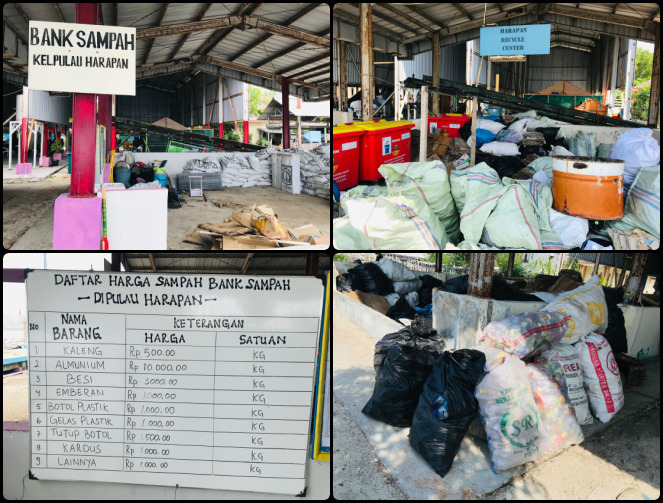
Women’s groups bridge traditional and formal systems through waste banks and upcycling programs (Figure 6). The Tidung women’s waste bank processes 18–22 tons annually for 87 households, while Pramuka and Panggang women’s groups repurpose plastic into woven crafts, combining economic gain with waste reduction (Mmereki, 2018; Mayana, 2025). Such initiatives echo broader SIDS experiences where women-led programs enhance waste segregation and recycling (Mohee et al., 2015; Meylan et al., 2018).
Integration of TEK and technical systems explains differing performance among island types. High-performing models, such as Kelapa’s composting and Untung Jawa’s retribution systems, succeed by embedding cultural legitimacy within formal frameworks. In contrast, tourism-intensive islands (Tidung, Pari) face eroding norms as rapid development increases waste and weakens communal enforcement (Schultz et al., 2013). Sustainable SIDS waste governance thus requires hybrid frameworks combining municipal technical capacity with community social capital, ensuring operational efficiency aligns with local values and livelihood systems (Aswani et al., 2018; Berkes et al., 2000).
Framework Development and International Validation for SDIS
This study fills a major methodological gap by introducing an integrated assessment framework tailored for waste management optimization in Small Island Developing States (SIDS). By combining efficiency matrix analysis with seasonal pattern evaluation, it provides a multidimensional tool for evidence-based prioritization. Statistical validation using the Kruskal–Wallis test (H = 8.65, p = 0.0132, η² = 0.74) confirms that the framework distinguishes genuine performance differences rather than random variation. The significant gap between High and Stable Priority islands (p = 0.0167; 30-point difference) empirically supports threshold-based categorization, while the absence of significant variation between adjacent categories indicates gradual performance transitions and highlights Medium Priority islands as key targets for optimization rather than structural overhaul. This formal validation advances beyond earlier SIDS frameworks that relied largely on descriptive assessments (Mohee et al., 2015; Singh et al., 2023), establishing a replicable, data-driven foundation for resource allocation in archipelagic contexts.
Comparative evidence from other SIDS supports these findings. Studies from the Philippines and Indonesia emphasize that environmental awareness alone does not ensure behavioural compliance without institutional and cultural reinforcement (De Vera et al., 2023; Macusi et al., 2019). Broader regional analyses—from Palawan to Jeju and Albania—demonstrate that upstream interventions, participatory governance, and behavioural integration are critical for effective waste governance (Gutierrez et al., 2024; Shumka et al., 2022). The Efficiency Matrix–Seasonal Framework developed here aligns with these international insights, integrating socio-behavioural, institutional, and technical dimensions into a single adaptive model. The consistency of patterns across geographically diverse SIDS—from Indonesia to the Pacific and Mediterranean—underscores the framework’s transferability, offering a practical basis for developing differentiated, community-centred waste management strategies that enhance sustainability under resource-limited conditions.
4. Conclusion
This study demonstrates that integrating the Distance-to-Target (DTT) methodology with efficiency matrix stratification provides a robust framework for optimizing waste management in Small Island Developing States (SIDS). The DTT analysis (annual mean 101.42 ± 19.74) identified three performance tiers with significant seasonal variation (Kruskal–Wallis H = 8.65, p = 0.0132, η² = 0.74). High-priority islands require infrastructure investment, medium-priority islands benefit from capacity enhancement, and stable islands function as best-practice models. These differentiated strategies enable more efficient resource allocation and adaptive governance. By combining Traditional Ecological Knowledge (TEK) with technical assessment, the framework advances beyond end-of-pipe measures toward preventive, community-based waste solutions. Overall, this study offers a replicable, evidence-based roadmap for strengthening waste management resilience and sustainability in island contexts.
Acknowledgments
The authors gratefully acknowledge the Environmental Sub-Agency of the Kepulauan Seribu Administrative Regency for granting access to waste management data and operational information. Appreciation is also extended to the Kepulauan Seribu community for their cooperation during fieldwork and to the National Research and Innovation Agency of the Republic of Indonesia (BRIN) for its valuable research support.
Funding
This research was supported by the National Research and Innovation Agency Republic of Indonesia (BRIN).
References
- Agamuthu, P., Herat, S., 2014. Sustainable Waste Management in Small Island Developing States (SIDS). J. Waste Manag & Res, 32(8):681–2. https://doi.org/10.1177/0734242X14544869
- Anokye, K., Mohammed, A. S., 2024. Indigenous traditional knowledge for cleaner waste systems and sustainable waste management system in Ghana. Cleaner Waste Systems, 9, Article 100165. https://doi.org/10.1016/j.clwas.2024.100165
- Anugrah, G., 2022. Interconnection between Business and Activism in Managing Waste: Case in Community-Based Waste Organization in Small Island Tourism of Gili Trawangan, Indonesia. Journal of Indonesian Tourism and Development Studies, 10(2) 95 - 104. https://doi.org/10.21776/ub.jitode.2022.010.02.05
- Arbulú, I., Rey-Maquieira. J., Sastre F., 2024. The Impact of Tourism and Seasonality on Different Types of Municipal Solid Waste (MSW) Generation: The Case of Ibiza. J. Heliyon, 10(13): e33894. https://doi.org/10.1016/j.heliyon.2024.e33894
- Asrawijaya, E., 2024. Traditional ecological wisdom for the resilience of indigenous peoples in Indonesia. Besari: Journal of Social and Cultural Studies, 1(2), 59-77. https://doi.org/10.71155/besari.v1i2.29
- Aswani, S., Lemahieu, A., Sauer, W.H.H., 2018. Global Trends of Local Ecological Knowledge and Future Implications. PLoS ONE, 13(4): e0195440. https://doi.org/10.1371/journal.pone.0195440
- Berkes, F., Colding J., Folke, C., 2000. Rediscovery Of Traditional Ecological Knowledge as Adaptive Management. J. Ecol Appl, 10(5): 51–62.
- Campitelli, A., Kannengießer, J., Schebek, L., 2022. Approach to Assess the Performance of Waste Management Systems Towards a Circular Economy: Waste Management System Development Stage Concept (WMS-DSC). J. MethodsX, 9(10): 16-34. https://doi.org/10.1016/j.mex.2022.101634
- Castellani, V., Benini, L., Sala, S., Pant, R., 2016. A distance-to-target weighting method for Europe 2020. Int. J. Life Cycle Assess., 21(8): 1159–1169. https://doi.org/10.1007/s11367-016-1079-8
- Cheela, V.R.S., Goel, S., John, M., Dubey, B. 2021., Characterization Of Municipal Solid Waste Based on Seasonal Variations, Source and Socio-Economic Aspects. J. Waste Dispos Sustain Energy, 3(4): 275–288. https://doi.org/10.1007/s42768-021-00084-x
- Cohen, J., 1988. Statistical power analysis for the behavioral sciences. Elsevier Science & Technology. https://doi.org/10.4324/9780203771587
- Cullen- Unsworth, L.C., Pretty, J., Smith, D.J., Pilgrim, S.E., 2007. Links between local ecological knowledge and wealth in indigenous communities of Indonesia: Implications for conservation of marine resources. The International Journal of Interdisciplinary Social Sciences, 2(1): 289-300. https://doi.org/10.18848/1833-1882/CGP/v02i01/52219
- De Vera, P.J.D., Alombro, N.C., Patadon, S.M., Catipay, J.P.A., 2023. Factors Afecting the Intention to Implement Proenvironmental Behaviors: A Case of Riverside Communities in Cotabato City Rivers, Mindanao Island, Philippines. Journal of Marine and Island Cultures, 12(3): 2212-6821. DOI: 10.21463/jmic.2023.12.3.10
- Dhindaw, J., 2004. Developing A Framework of Best Practices for Sustainable Solid Waste Management in Small Tourist Islands [Master's thesis, University of Cincinnati]. OhioLINK Electronic Theses and Dissertations Center. http://rave.ohiolink.edu/etdc/view?acc_num=ucin1091035093
- Dunn, O.J., 1964. Multiple Comparisons Using Rank Sums. Technometrics. 6(3): 241-252. https://doi.org/10.1080/00401706.1964.10490181
- Efron, B., Tibshirani, R.J., 1993. An Introduction to the Bootstrap. Chapman & Hall/CRC Monographs on Statistics & Applied Probability.
- Gutierrez, C. S., Escanan, A. S., Amparado, R. F., Lubguban, A. A., Bacosa, H. P., Guihawan, J.Q., 2024. Plastic litter assessment of the riverbanks of Pulot River and its tributary in Sofronio Española, Palawan Island, Philippines. Journal of Marine and Island Cultures, 13(1), 80-95. https://doi.org/10.21463/jmic.2024.13.1.05
- Ibrahim, R., Surya, D., 2025. Revitalization of traditional knowledge in natural resource management: An ethnobotanical study in the Dayak Kenyah indigenous community. Int. J. Ethno-Sciences & Education Res., 5(2): 58–64. https://doi.org/10.46336/ijeer.v5i2.937
- Jambeck, J.R., Geyer, R., Wilcox, C., Siegler, T.R., Perryman, M., Andrady, A., Narayan, R., Law, K.L., 2015. Plastic Waste Inputs from Land into the Ocean. Marine Pollution, 34. 6233.
- Jati, R.P., 2024. Antusias Anak Muda dalam Ekowisata Pengolahan Sampah di Pulau Pramuka. Kompas.id. October 5, 2024. Available at: https://www.kompas.id/artikel/ekowisata-pengolahan-sampah-di-pulau-pramuka-ubah-mindset-kaum-muda. Accessed: Oktober 25, 2025.
- Katalin, H., Kováts, N., Eck-Varanka, B., Teke, G., Hubai, K. 2022. Phytotoxicity of particulate matter from controlled burning of plastic waste. Environmental Toxicology and Chemistry, 41(2), 561–569. https://doi.org/10.1002/etc.5370
- Karasik, R., 2022. Plastic Pollution Policy Country Profile: Maldives. Nicholas Institute for Environmental Policy Solutions, (22-08). Durham, NC: Duke University.
- Kaza, S., Yao, L., Bhada-Tata P, Woerden, F.V., 2018., What a waste 2.0: A global snapshot of solid waste management to 2050. Washington DC: World Bank Group.
- Kruskal, W.H., Wallis, W.A., 1952. Use of Ranks in One-Criterion Variance Analysis. Journal of the American Statistical Association. 47(260): 583-621. https://doi.org/10.1080/01621459.1952.10483441
- Liu, W.H., Fabilane, J.A., Hsu, W.K.K., 2024. Mitigating marine debris: Addressing abandoned, lost, and discarded fishing gears (ALDFGs) in the Sulu-Sulawesi Seas through trilateral cooperation between the Philippines, Indonesia, and Malaysia. Marine Pollution Bulletin, 208 (2024) 116913. https://doi.org/10.1016/j.marpolbul.2024.116913
- Lucky, R., Zamani, N. P., Ismet, M. S., Cordova, M. R. 2024. Effects of seasonal variation on the characteristics of stranded marine debris within Rambut Island Wildlife Reserve, Indonesia. Jurnal Kelautan Tropis, 27(1), 129–138. https://doi.org/10.14710/jkt.v27i1.20655
- Macusi, E. D., Morales, I. D., Abreo, N. A. S., Jimenez, L. A., 2019. Perception of solid waste management and rate of accumulation in schools in Mati City, Mindanao Island, Philippines. Journal of Marine and Island Cultures, 8(2), 1–11. https://doi.org/10.21463/jmic.2019.08.2.09
- Margallo, M., Ziegler-Rodriguez, K., Vázquez-Rowe, I., Aldaco, R., Irabien, A., Kahhat, R., 2019. Enhancing Waste Management Strategies in Latin America Under a Holistic Environmental Assessment Perspective: A Review for Policy Support. J. Sci Total Environ, 689(12): 55–75. https://doi.org/10.1016/j.scitotenv.2019.06.393
- Mayana, A.D., 2025. From Waste to Inclusive Green Growth: Assessing the Socio-Economic and Environmental Impact of Textile Recycling – A Case Study of Indonesia. Lund University: Sweden.
- McKight, P.E., Najab, J., 2010. Kruskal-Wallis Test. In: Weiner, I.B., Craighead, W.E. (eds) The Corsini Encyclopedia of Psychology. John Wiley & Sons. https://doi.org/10.1002/9780470479216.corpsy0491
- Mendes, P., Santos, A.C., Nunes, L.M., Teixeira, M.R., 2013. Evaluating Municipal Solid Waste Management Performance in Regions with Strong Seasonal Variability. J. Ecol Indic, 30:170–7. https://doi.org/10.1016/j.ecolind.2013.02.017
- Meylan, G., Lai, A., Hensley, J., Stauffacher, M., Krutli, P., 2018. Solid Waste Management of Small Island Developing States—The Case of The Seychelles: A Systemic and Collaborative Study of Swiss and Seychellois Students to Support Policy. J. Environ Sci Pollut Res, 25(36): 791–804. https://doi.org/10.1007/s11356-018-2139-3
- Mmereki, D., 2018. Current Status of Waste Management in Botswana: A mini-review. J. Waste Manag Res, 36(7): 55–76. https://doi.org/10.1177/0734242x18772097
- Mohee, R., Mauthoor, S., Bundhoo, Z.M.A., Somaroo, G., Soobhany, N., Gunasee, S., 2015. Current Status of Solid Waste Management in Small Island Developing States: A review. J. Waste Manag, 43(5): 39–49. https://doi.org/10.1016/j.wasman.2015.06.012
- NPAP Initiative., 2022. NPAP Indonesia: Policy roadmap to radically reduce plastic.
- Permana, S.M., Yulisti, M., Natsir, M., Mahiswara., Baihaqi., Yusuf, H.N., Suryanto., Anggawangsa, R.F., Hargiyatno, I.T., Budiarto, A., Yulianto, I., Wiryawan, B., 2025. Stakeholder Perspectives on Managing Abandoned, Lost, or Discarded Fishing Gear in Rembang Crab Fisheries. Marine Fisheries: Journal of Marine Fisheries Technology and Management, 16(1), 79-92.
- Presidential Decree. 2017. Peraturan Presiden Republik Indonesia Nomor 97 Tahun 2017 tentang Kebijakan dan Strategi Nasional Pengelolaan Sampah Rumah Tangga dan Sampah Sejenis Sampah Rumah Tangga. [Presidential Regulation of the Republic of Indonesia Number 97 of 2017 concerning National Policy and Strategy for the Management of Household Waste and Similar Household Waste]. Jakarta: President of the Republic of Indonesia.
- Presidential Decree. 2018. Peraturan Presiden Republik Indonesia Nomor 83 Tahun 2018 tentang Penanganan Sampah Laut. [Presidential Regulation of the Republic of Indonesia Number 83 of 2018 concerning the Management of Marine Debris]. Jakarta: President of the Republic of Indonesia.
- Putera, D.A., Rofii, E.A., Lawi, A., Rini, R.O.P., Putra, A. A., 2024. Enhancing Waste Management and Marine Ecosystem Protection for Tourism Sustainability on Buluh Island. BIO Web Conf, 134:06010. https://doi.org/10.1051/bioconf/202413406010
- Resolute, P., 2024. Applying cultural perspective in Indonesia municipal solid waste management process towards a grounded climate concept and action: A mini-review of opportunities and challenges. Waste Management & Research 42(10): 873-881. https://doi.org/10.1177/0734242X241262711
- Schultz, P.W., Bator, R.J., Large, L.B., Bruni, C.M., Tabanico, J.J., 2013. Littering in Context: Personal and Environmental Predictors of Littering Behavior. Environment and Behavior, 45(1): 35-59. https://doi.org/10.1177/0013916511412179
- Selenge, T., Kováts, N., Eck-Varanka, B., Teke, G., & Hubai, K. 2025. Assessing risk of emissions generated during illegal waste burning: Phytotoxicity and bioaccumulation. Atmosphere, 16(2), 164. https://doi.org/10.3390/atmos16020164
- Shumka, S., Shumka, L., Korro, K., 2022. An overview of small island management and biodiversity protection in Albania. Journal of Marine and Island Cultures, 11(1): 191-202. DOI: 10.21463/jmic.2022.11.1.13
- Singh, S.J., Elgie, A., Noll, D., Eckelman, M.J., 2023. The Challenge of Solid Waste on Small Islands: Proposing A Socio-Metabolic Research (SMR) Framework. J. Curr Opin Environ Sustain, 62:101274. https://doi.org/10.1016/j.cosust.2023.101274
- Statistical Agency of Kepulauan Seribu. 2023. Kabupaten Kepulauan Seribu Dalam Angka 2023. [Kepulauan Seribu Regency in Figures]. Jakarta: BPS Kabupaten Kepulauan Seribu
- Tallei, T.E., Iskandar, J., Runtuwene, S., Filho, W.L., 2013. Local Community-based Initiatives of Waste Management Activities on Bunaken Island in North Sulawesi, Indonesia. Research Journal of Environmental and Earth Sciences 5(12): 737-743.
- Tumurbaatar, S., Kováts, N., Eck-Varanka, B., Teke, G., Hubai, K., 2025. Assessing risk of emissions generated during illegal waste burning: Phytotoxicity and bioaccumulation. Atmosphere, 16(2), 164. https://doi.org/10.3390/atmos16020164
- United Nations Environment Programme (UNEP)., 2023. Integrated Solid Waste Management Good Practices to Prevent Plastic Marine Litter in The East Asian Seas Region.
- Violleta, P.T., 2024. Dari Pulau Pramuka untuk laut yang bersih dari sampah plastik". ANTARA News. October 12, 2024. Available at: https://www.antaranews.com/berita/4394034/dari-pulau-pramuka-untuk-laut-yang-bersih-dari-sampah-plastik. Accessed: Oktober 25, 2025.
- Virtanen, P., Gommers, R., Oliphant, T. E., Haberland, M., Reddy, T., Cournapeau, D., Burovski, E., Peterson, P., Weckesser, W., Bright, J., van der Walt, S. J., Brett, M., Wilson, J., Millman, K. J., Mayorov, N., Nelson, A. R. J., Jones, E., Kern, R., Larson, E., Carey, C. J., Polat, İ., Feng, Y., Moore, E. W., VanderPlas, J., Laxalde, D., Perktold, J., Cimrman, R., Henriksen, I., Quintero, E. A., Harris, C. R., Archibald, A. M., Ribeiro, A. H., Pedregosa, F., van Mulbregt, P., Vijaykumar, A., Bardelli, A. P., Rothberg, A., Hilboll, A., Kloeckner, A., Scopatz, A., Lee, A., Rokem, A., Woods, C. N., Fulton, C., Masson, C., Häggström, C., Fitzgerald, C., Nicholson, D. A., Hagen, D. R., Pasechnik, D. V., Olivetti, E., Martin, E., Wieser, E., Silva, F., Lenders, F., Wilhelm, F., Young, G., Price, G. A., Ingold, G. L., 2020. “SciPy 1.0: Fundamental Algorithms for Scientific Computing in Python.” Nature Methods 17(3):261–72. doi: 10.1038/s41592-019-0686-2.
- Wang, K.C.M., Lee, K.E., Mokhtar, M., 2021. Solid Waste Management in Small Tourism Islands: An Evolutionary Governance Approach. Sustainability, 13(11): 58-96. https://doi.org/10.3390/su13115896
- Watson, S., 2025. Phuket Struggles with Growing Waste Crisis As Tourism Booms. The Globe. 16 Januari 2025. Available at: Phuket Struggles With Growing Waste Crisis As Tourism Booms | Globe News Bangkok (Accessed Oktober 16, 2025).
- Willmott, L., Graci, S.R., 2012. Solid Waste Management in Small Island Destinations. J. Téoros, 1:71–6. https://doi.org/10.7202/1036566ar
- Wilson, D.C., Rodic, L., Scheinberg, A., Velis, C.A., Alabaster, G., 2012. Comparative Analysis of Solid Waste Management In 20 Cities. J. Waste Manag Res, 30(3): 37–54. https://doi.org/10.1177/0734242X12437569
- Yuwono, T., Putri, M.R., Nurdjaman, S., Trenggono, S.W., Kasim, K., 2025. Examining the Role of Indonesian Major Fishing Ports on Contributing to Ocean Macroplastic Pollution. Watershed Ecology and the Environment, 7(2025): 74-83. https://doi.org/10.1016/j.wsee.2025.03.001
- Zurbrügg, C., Gfrerer, M., Ashadi, H., Brennan, W., Küper, D., 2012. Determinants of Sustainability in Solid Waste Management: The Gianyar Waste Recovery Project in Indonesia. Waste Management, 32(11): 2126-2133. https://doi.org/10.1016/j.wasman.2012.01.011