
Citizen Science for Marine Mammal Conservation: A Case Study of Finless Porpoise (Neophocaena asiaeorientalis sunameri) Monitoring in Hallyeo Marine National Park
 10.21463/jmic.2026.15.1.17
Abstract
This study is an examination of the multifaceted role of citizen science in endangered marine mammal conservation and environmental education, focusing on monitoring activities for the finless porpoise (Neophocaena asiaeorientalis sunameri) in Hallyeo Marine National Park, South Korea. Drawing on in-depth interviews, participant observation, and media content analysis, the experiences of three citizen scientists and one program coordinator were explored. The findings indicate that participation was initially motivated by personal curiosity, nature-based experiences, and emotional ties to the local community but evolved into sustained conservation practices and educational outreach. Citizen scientists systematically documented individual porpoises, behavioral patterns, and environmental conditions, generating scientifically valuable data that bridged the gap between expert and public knowledge. Their engagement also fostered heightened environmental awareness and an emotional connection to marine life, prompting tangible actions such as marine debris removal and pollution reporting. Moreover, citizen-led initiatives have expanded into public exhibitions, ecotourism programs, and community-led ecological monitoring, exemplifying how grassroots participation can inform local ecological governance. Overall, this study highlights citizen science as a dynamic platform for experiential and social learning with significant implications for marine conservation and environmental education.
Keywords
Citizen Science, Community Engagement, Environmental Education, Finless Porpoise (Neophocaena asiaeorientalis sunameri), Marine Conservation
1. Introduction
Citizen science refers to the active involvement of nonprofessional individuals in the collection, analysis, and interpretation of scientific data. Originating in ecological and environmental monitoring (Pocock et al., 2017), its scope has significantly expanded to include climate change, biodiversity, and air and water pollution, with the growth of digital technologies further accelerating its adoption and reach (Sá et al., 2022). Based on the level of participation, citizen science can be categorized into collaborative, open, and co-creative models, each offering distinct contributions to addressing environmental and social challenges (Hadjichambis et al., 2023). Critically, citizen science enhances public scientific literacy and fosters environmental awareness by encouraging community engagement and science education (Dunkley, 2017).
Within the field of environmental education, citizen science has become an integral pedagogical tool, with studies showing that it promotes scientific inquiry skills and strengthens the understanding of environmental issues (Yoho and Vanmali, 2016). Through direct data collection and engagement with the natural environment, learners can perceive ecosystem changes in real time (Bopardikar et al., 2023), while also collaborating with communities to achieve practical solutions (Daskolia et al., 2022). The emergence of mobile applications and online platforms has further enhanced the accessibility and impact of citizen science initiatives (Sá et al., 2022).
Cetaceans such as whales and dolphins play vital ecological roles in marine ecosystems. Baleen whales contribute to nutrient cycling and primary productivity through feeding and excretion (Lavery et al., 2010), whereas top predators such as killer whales (Orcinus orca) and sperm whales (Physeter macrocephalus) help regulate marine food webs. The decomposition of whale carcasses on the seafloor acts as a long-term carbon sink, an ecological function referred to as the "whale pump" (Smith and Baco, 2003; Roman et al., 2014). However, cetacean populations continue to face threats from overfishing, pollution, climate change, and marine noise, which severely disrupts their communication and navigation (Clapham et al., 1999; Tyack, 2008).
Porpoises (Neophocaena) are toothed whales that inhabit shallow coastal regions and estuaries, and as mid-level predators, play a key role in maintaining the ecosystem balance (Curry, 2002). The Yangtze finless porpoise (Neophocaena asiaeorientalis asiaeorientalis) is the only known freshwater dolphin and is critically endangered (Wang, 2009). Their survival is impaired by habitat loss due to dam construction and industrialization, water pollution, bycatch, and climate-related ecological disruptions (Nabi et al., 2018). Conservation efforts in China include establishing protected areas, captive breeding, and strict fishery regulations (Zhao et al., 2008; Mei et al., 2020).
In Korea, the finless porpoise (N. asiaeorientalis sunameri) has a long-standing cultural presence, with regional names such as ‘Sanggwang-eo,’ ‘Mulgachi,’ and ‘Suwuk’ in historical texts. Nicknamed the “smiling dolphin,” the species is perceived positively in the public imagination; however, it is currently listed as “vulnerable” by the IUCN (The International Union for Conservation of Nature) and is included in the CITES (Convention on International Trade in Endangered Species of Wild Fauna and Flora) appendices.
Beyond their ecological roles, cetaceans have long inspired human cultural and emotional connections (Comerlato, 2023), with their intelligence and complex social structures enabling interactions with humans that often evoke emotional and psychological responses (DeMares, 2000; Yerbury and Boyd, 2019). Hence, whale and dolphin tourism has emerged as a popular educational activity that enhances the public understanding of marine ecosystems and fosters conservation awareness (Orams, 1997; Barney et al., 2005). Cetaceans also serve as cultural symbols of wisdom and freedom (Whitehead, 2013), and their abilities in social learning and cultural transmission have drawn scholarly interest as mechanisms inspiring the empathy of humans for nature (Cantor and Whitehead, 2013).
Marine mammal conservation entered a new phase with the enactment of the Marine Mammal Protection Act in the United States in 1972, which prohibited mammal capture and introduced scientific benchmarks for population management (Reynolds et al., 2005). However, emerging threats such as climate change and ocean noise demand more flexible and inclusive governance models, particularly those that incorporate citizen participation.
In this context, citizen science programs have been implemented by the Korea National Park Service across its national parks to support biodiversity conservation and ecosystem monitoring (Lim, 2019; Lee et al., 2023). In particular, Hallyeo Marine National Park has become a focal site for community-based marine pollution monitoring and species observation (Kim et al., 2022). Citizen science related to endangered species, such as the finless porpoise, increasingly transcends biological monitoring to become a cultural practice that allows community members to re-establish their identity, memory, and emotional connection to the sea (Stithou et al., 2025). Such efforts align with the growing discourse on “adaptive governance,” which emphasizes local participation, relational values, and flexible policy mechanisms in environmental management (Uchiyama et al., 2023).
This study builds on citizen science and environmental education while also exploring the cultural dimensions of human–sea relationships in island and harbor communities. By situating the finless porpoise within these socio-ecological and symbolic contexts, the study seeks to uncover how citizen-led marine monitoring can become both a scientific and cultural practice. Accordingly, the lived experiences of citizen scientists engaged in monitoring finless porpoises at Hallyeo Marine National Park is investigated with the aim of uncovering the broader implications of citizen science for marine biodiversity conservation, environmental education, and community-driven governance.
2. Research Methods
2.1. Participants
Three citizen scientists participating in a finless porpoise monitoring activity at Hallyeo Marine National Park were included as research subjects. Seong-rae is a citizen scientist at Hallyeo Marine National Park who has consistently engaged in migratory bird and marine life observation activities since retirement. Building on his deep curiosity about nature and animals, he has accumulated diverse observational experience, and currently actively participates in the individual identification of finless porpoises, recording their behavioral patterns and monitoring changes in the marine environment.
Dal-ho, a biology major, currently serves as a spotter for finless porpoises in the Hallyeo Marine National Park after developing interest in the species while working as a national park interpreter. He has consistently contributed to scientific data collection by photographing and videotaping individuals, analyzing behavioral patterns, and exploring the potential for underwater acoustic observation.
Seung-gyu serves as the representative of the Turtle Ship Experience Village and is the chairman of the Hallyeo Marine National Park Citizen Scientist Group. He became involved in the citizen science investigation of finless porpoises through national park volunteer activities, and is expanding his activities by promoting and educating local residents and tourists about the finless porpoise, while also managing the citizen scientist group and serving as a crucial liaison in establishing cooperative governance between the national park, local governments, and research institutions.
Thus, while the three research subjects have different personal motivations and backgrounds, they all proactively lead citizen science activities for the finless porpoise in Hallyeo Marine National Park, and thus provide important case studies illustrating the motivations, experiences, roles, and processes of social expansion among the citizen scientists explored in this study.
2.2. Research Procedure
This study is a qualitative research project targeting citizen scientists in the Hallyeo Marine National Park and aims to gain an in-depth understanding of the experiences, motivations, environmental awareness, and behavioral changes of those participating in citizen science activities. The research was conducted according to the procedures outlined below.
2.2.1. Preliminary Survey
This aim of the study was to qualitatively explore whether citizen science activities have environmental educational effects by conducting in-depth interviews with citizen scientists at Hallyeo Marine National Park. To ensure the validity of the research during the design phase, several preliminary investigations were conducted:
- A literature review of the existing research on citizen science and environmental education (Lee et al., 2023).
- An analysis of the Citizen Science program status identifying the purpose, activity methods, and participant characteristics of the citizen science programs operating in Hallyeo Marine National Park (Kim et al., 2022).
- Establishment of the selection criteria used in obtaining interviewees, which were set to ensure a diversity of experience by including citizen scientists with a variety of backgrounds (e.g., participation duration, motivation, occupation, and age).
2.2.2. Selection and Recruitment of Research Participants
The subjects of this study had continuously participated in citizen science programs operated by Hallyeo Marine National Park. Subject selection was based on three criteria. First, they must have consistently participated in finless porpoise monitoring and marine environment survey programs at Hallyeo Marine National Park for at least six months. Second, they must represent diverse backgrounds in terms of age, occupation, and participation motivation to reflect the multilayered perspective of citizen science activities. Third, they had to fully understand the research objectives, voluntarily agree to participate, and be available for interview. Recruitment was conducted in collaboration with officials from the Korea National Park Service, and interviews were performed only with participants who received prior explanations of the study's purpose and procedures and provided written consent. The staff responsible for planning and operating the citizen scientist program were also interviewed to gather supplementary information on the activity processes, participation outcomes, and program operation methods of the citizen scientists.
| Interview Participants | Description | Date | Format | Time |
|---|---|---|---|---|
| Seong-rae Jang | Seong-rae, Citizen Scientist at Hallyeo Marine National Park | March 27 | Phone call | 65 min |
| April 17 | Face-to-face | 45 min | ||
| Dal-ho Shin | Dal-ho, Discovered the finless porpoise in Hallyeo Marine National Park | April 1 | Communication | 25 min |
| April 17 | Face-to-face | 59 min | ||
| April 18 | Phone call | 25 min | ||
| May 15 | Participant observation and interviews | 169 min | ||
| July 27 | Face-to-face | 250 min | ||
| Seung-gyu Kang | Chairperson, Hallyeo Marine National Park Citizen Scientist Group | July 24 | In-person | 119 min |
| Hye-ri Hwang | Citizen Science Coordinator, Hallyeo Marine National Park | March 7 | In-person | 20 min |
| August 19 | Phone call | 15 min | ||
| August 21 | Face-to-face | 20 min |
2.2.3. Data Collection: In-depth Interviews and Participatory Observation
In-depth Interviews
Interview questions were designed to explore the experiences, motivations for participation, and changes in environmental awareness of the citizen scientists. The key questions were structured based on research by Phillips (2019) but were conducted in line with the interview context and performed individually through face-to-face meetings and phone calls. All interviews were recorded, transcribed, and analyzed. The following questions were asked:
- What prompted you to join the finless porpoise observation project? What did you expect the experience of participating in this program to be like? (investigation)
- What did you hope to gain from this project? (motivation).
- What has the project meant to you since you started? (emotional).
- Please describe all activities you have performed as part of this project (behavioral).
- Describe the activities you undertook to learn the protocols (cognitive).
- Do you consider yourself part of the finless porpoise observation project? For example, do you feel connected to the people and organizations running this project? (inquiry)
- Why do you say that? (social)
- Has your awareness of marine environmental protection changed through citizen science activities? (environmental awareness change)
- Did the citizen science activity influence your environmental protection practices in daily life? (behavioral change)
- Program direction: What aspects should be improved for the citizen science program to become a more effective environmental education tool?
Participatory observations and media coverage
In addition to these interviews, the citizen scientists were directly observed and documented when participating in the monitoring and marine environment surveys. Participant observation was essential for this study because observing marine environments and finless porpoises requires contextual immersion. Many ecological and emotional dimensions, such as animal behavior, atmospheric conditions, and the subtle interactions between humans and nature cannot be fully understood without physical presence in the field. This immersive approach enabled a richer understanding of how participants formed relationships with the species and environment beyond that which could be captured via interview alone, allowing for a deeper analysis of the challenges faced, learning processes, and collaboration methods utilized by the volunteers during their activities. Data detailing how images and footage of finless porpoises observed and captured by citizen scientists were publicly shared through media outlets to become a community issue were also collected. This served as material for understanding the impact that the activities of citizen scientists has on local communities.
2.2.4. Data Analysis and Analytical Framework
The collected data were analyzed using grounded theory and thematic analysis within the framework of qualitative research methodology. Interview transcripts and field observation records were first examined through open coding, with key ideas and repeated expressions inductively identified, before grouping and refining similar codes through iterative comparisons and memo writing, allowing for the emergence of patterns that reflected shared meanings across the experiences of the participants.
Themes were then derived based on the recurring narratives observed in the data. For instance, a theme of emotional transformation emerged from the repeated use of words such as “healing,” “joy,” and “a sense of connection” when describing the encounters of the participants with finless porpoises. These emotional expressions were later integrated into broader thematic categories, such as the motivation for participation, experiential learning, and behavioral change in terms of environmental practices, following the thematic analysis procedures outlined by Braun and Clarke (2006).
To ensure analytic rigor and reliability, member checking was conducted by sharing preliminary interpretations with selected participants to confirm the accuracy of the meaning and thematic representation. In addition, peer debriefing sessions were held among the research team to review coding decisions, discuss interpretive consistency, and minimize potential researcher bias. The final themes were interpreted in relation to existing theoretical frameworks within environmental education and citizen science, particularly through the lens of experiential learning theory and ecological citizenship (Veeckman and Temmerman, 2021), allowing exploration of the broader significance of citizen science as both a pedagogical and participatory tool.
The analytical framework of this study was built upon several key elements, including the motivation for participation, experiential learning processes, changes to the environmental awareness and behavior of participants, the broader social impact of the activities, and the educational significance of the program to the citizen scientists. Guided by this framework, the means by which citizen science activities extend beyond simple participation to foster meaningful environmental education and promote lasting behavioral change was explored.
3. Research Findings and Discussion
3.1. The Citizen Scientists
The citizen scientist Seong-rae is an experienced nature observer with a long history of observing marine and avian ecosystems and marine experience as a deep-sea fishing vessel captain, who cultivated an interest in various cetaceans during his voyages across the Pacific Ocean. After retiring, he continued his bird photography activities in the South Sea region; however, his curiosity about the Korean porpoise and ecological questions led him to participate in citizen science activities. Through prolonged observation and photography, he has captured and documented rare images including fetal folds, fully pregnant individuals, and injured finless porpoises, and hopes that these records, when shared with the public, will raise awareness regarding the protection of finless porpoises. Before Seong-rae photographed wild finless porpoises, most photographs in Korea were of carcasses caught as bycatch. Seong-rae has now gathered enough photographs for a finless porpoise photo exhibition that is drawing public attention. He emphasizes the social value of natural records and strongly believes that citizen observations should serve as a link influencing local communities and policies.
The citizen scientist Dal-ho works as a national park ranger at Hallyeo Marine National Park, where he conducts finless porpoise monitoring and marine ecosystem education activities. After majoring in biology at college, he lived in a city and worked in an unrelated field before moving to the countryside to start beekeeping, which he believed could be done without harming living creatures. However, beekeeping involved harming wasps, so he eventually became a ranger at the local national park. He combines his identity as a citizen scientist with his expertise as a ranger, practicing scientifically grounded monitoring through observation records, photography, and the analysis of sighting times and locations. In particular, through persistent observation of the finless porpoises that are occasionally observed in Choyang island, he has identified patterns linking tidal phases with porpoise visibility, providing foundational data for the development of a finless porpoise interpretation program. He has consistently raised awareness about issues such as marine debris, ocean noise, and bycatch, which he has persistently brought to the attention of the local community. These activities served as the starting point for the Memorandum of Understanding (MOU) that was signed in July 2025 between the National Park, Sacheon City, and the Cetacean Research Institute for the protection of the finless porpoise, demonstrating a practical approach that drives tangible change. His work goes beyond simple natural observation, exemplifying the role of citizen science in driving civic participation and change in local environmental issues. Furthermore, through continuous observation and photography, he has created individual recognition data based on barnacle locations and scar positions and has identified changes in newborn finless porpoises and their hunting methods.
Citizen scientist Kang Seung-gyu, who was previously active locally as the chairman of the Turtle Ship Experience Village and a volunteer at the national park, became involved in a finless porpoise-monitoring citizen science project out of his interest in marine environmental protection. Drawing on his experience in leading ecological education and experiential activities in the local community, he believes that the finless porpoise citizen science initiative contributes not only to marine biodiversity conservation, but also to raising the awareness of local residents. Through close observation and documentation of the finless porpoise, he has developed a keen awareness of the various factors threatening its survival. He deeply appreciates the significance of this activity and recognizes the role that citizen science can have in finless porpoise protection and sustainable marine management.
3.2. Motivation for Participation
While the reasons for the three citizen scientists joining the finless porpoise monitoring program vary, all stemmed from a shared love for nature and wildlife rooted in personal experience. Seong-rae developed an interest in animals as a child watching sparrows build nests under thatched roofs. Later, as the captain of a distant-water fishing vessel, his efforts to reduce marine debris cultivated his sensitivity to marine ecology. Even after retirement, his affection and curiosity for migratory birds and finless porpoises led him to begin his observations. Dal-ho, although a biology major, worked in trade without utilizing his degree. Returning to his hometown to work as a national park interpreter reignited his biological interests, which then led to his observation of finless porpoises. While running a turtle ship experience village and telling children stories about the sea and its creatures, Seung-gyu naturally developed an interest in, and educational curiosity about, finless porpoises, leading him to participate in citizen science activities. When asked about the origins of their interest in wildlife, the citizen scientists replied with the following answers:
Seong-rae: It was back in the days when we tied strings to sparrow legs and played with them. That's when I first became interested in birds and animals.
Dal-ho: I started just thinking, “Let's try taking a picture.” But as I did, my curiosity kept growing, and questions piled up.
Seung-gyu: I started wanting to tell the kids fun stories about the sea, but observing the finless porpoises made me learn so much myself.
Hye-ri: (Citizen scientists) don't receive any compensation. They do it completely voluntarily. However, they genuinely love the surveys. Some observe from 9 AM to 6 PM without eating. There are those who come almost every day. Self-fulfillment appears to be a major motivating factor. It is not just simple satisfaction; they feel a meaningful sense of accomplishment. By observing the finless porpoises from this location, I am contributing to their conservation.
3.3. Observation and Data Collection: Barnacles as Barcodes for Finless Porpoise Identification
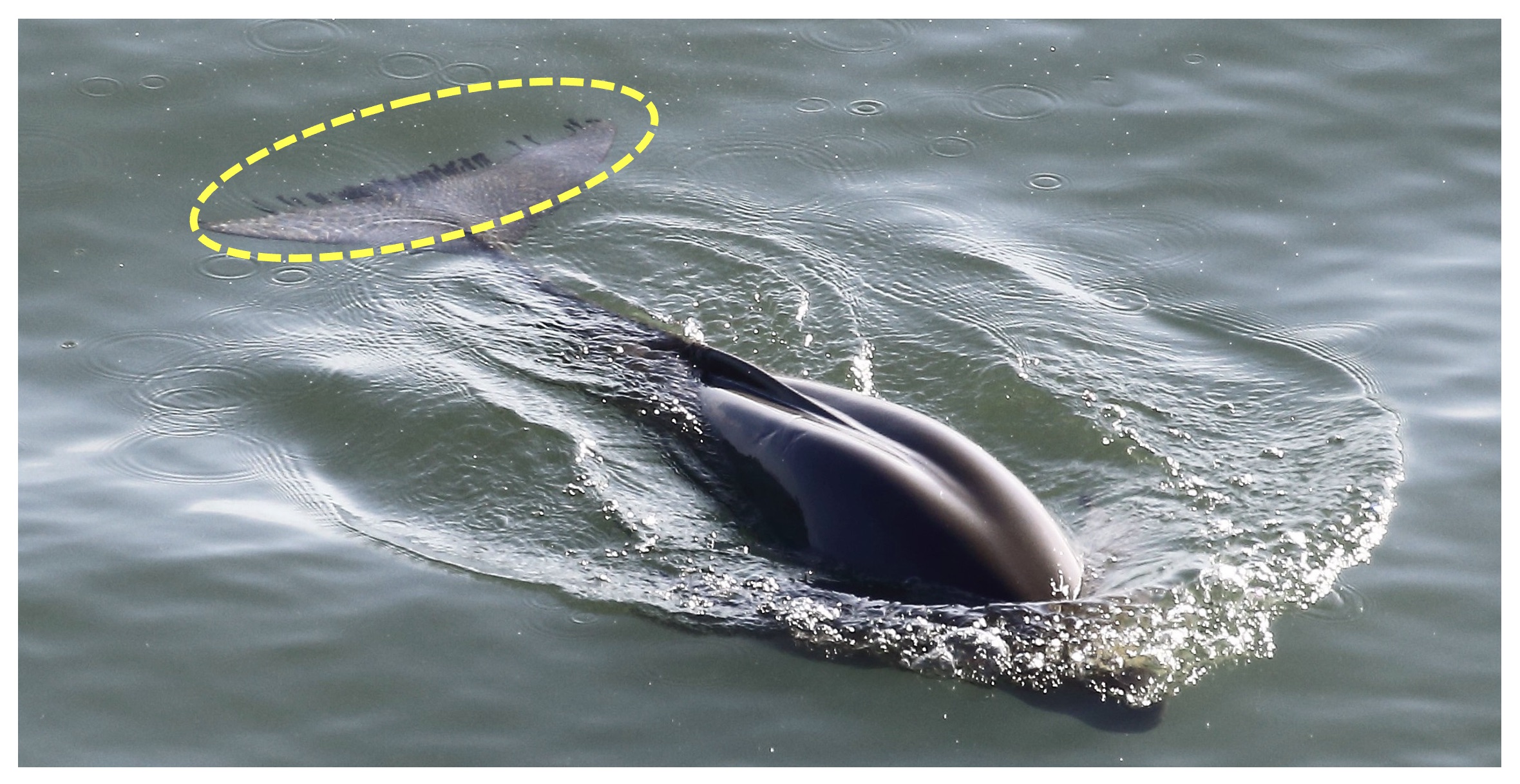
Beyond simply observing wildlife, citizen scientists have been building knowledge about finless porpoise ecology by collecting data in a repetitive and systematic manner. Seong-rae documented the "weather, time, and location" to compile the best conditions for finless porpoise sighting, accumulating empirical knowledge such as their frequent appearance near Changseon Bridge or Choyang island on quiet, overcast days. Dal-ho continuously records photos and videos to understand the behavioral patterns of the porpoises and plan future precision observations using AI or underwater acoustic equipment (hydrophones). He uses the barnacles (Xenobalanus globicipitis) that attach to the porpoise's fins as clues for individual identification, with the hope that future technology will be able to analyze this data. Seung-gyu also observes the correlation between tidal currents and the appearance of finless porpoises. When questions arise during observations, he consults experts at the Cetacean Research Institute to refine his observations and records.
Seong-rae: They are often seen around Choyang island or the Changseon Bridge on cloudy and quiet mornings.
Dal-ho: We identify individuals by the barnacles (Figure 1) attached to their fins. It's like a barcode.
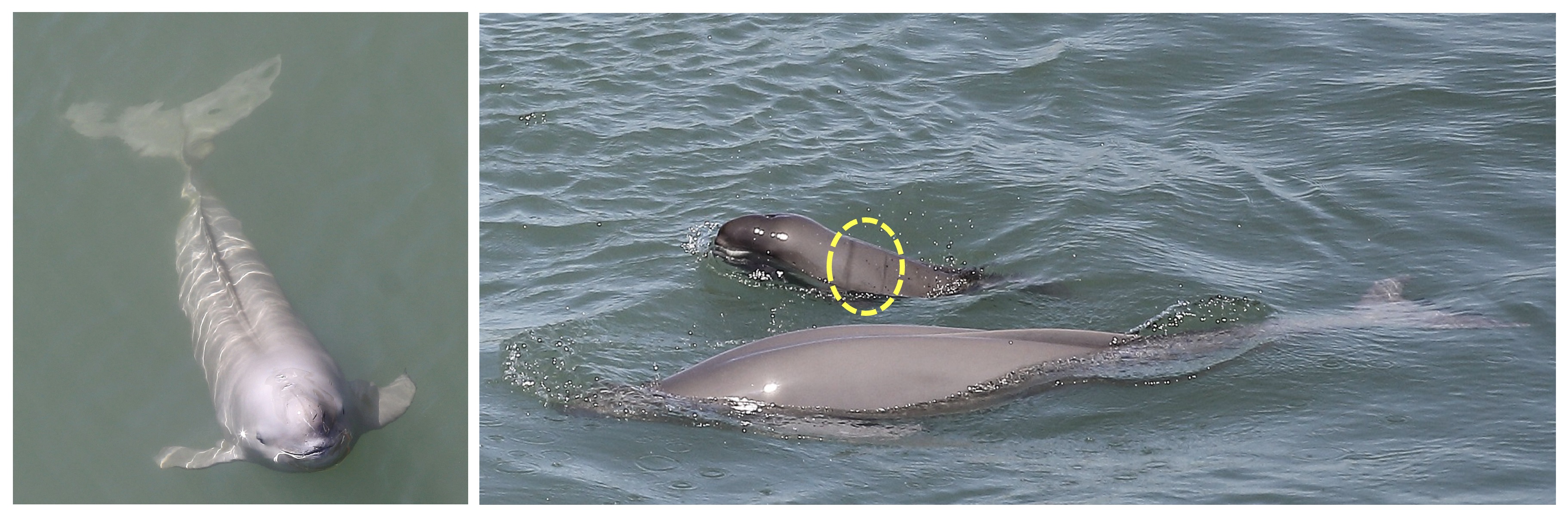
Dal-ho: I saw stripes on a small finless porpoise and wondered what they were, so I asked the Cetacean Research Institute. They reported that it is a fetal fold (Figure 2), where the calf was folded in the mother's womb. They stated that the presence of porpoises with fetal folds is evidence that the waters off Sacheon are a birthing ground for the porpoises.
Seung-gyu: When citizens collect data, such as appearance times and locations, they increase the value of the information.
Hye-ri: One person's view differs from that of multiple people. By observing at different times and angles, we can record porpoise sighting data without omissions. Without the participation of the citizen scientists in this survey, we would not have achieved such meaningful results.
3.4. Changes in awareness, emotions, and actions
Through sustained observations of the finless porpoise, the citizen scientists have developed an emotional connection and cultivated a practical attitude toward marine life conservation. Seong-rae was deeply moved by seeing a baby porpoise following its mother, describing it as "pure healing." He has also demonstrated practical actions, such as immediately reporting oil slicks to the Coast Guard or personally visiting restaurants that serve illegally caught birds to demand corrective measures. By observing their ecology, Dal-ho has not only strengthened his emotional attachment, but also his sense of responsibility for protecting the species. He stated, "People knowing about the finless porpoise is itself the start of protection," and has sought to use observation footage for educational and campaign materials. Seung-gyu became aware of his connection with the local environment through his citizen science activities. He remarked, "Now, whenever I see trash washed ashore, I pick it all up," demonstrating how his participation has evolved beyond passive involvement into daily practice.
Seong-rae: Seeing a baby finless porpoise following its mother, moving as one body, is truly moving. It's pure healing.
Dal-ho: Raising awareness about the finless porpoise is the first step toward its protection.
Seung-gyu: Now, whenever trash washes ashore, I bring it all back. That's the change.
Hye-ri: Someone might actually see the (finless porpoise observation) data and use them for conservation policy, or it could be featured in the media. People want to make that kind of contribution.
3.5. Social Expansion and Identity Formation
Citizen science activities have transcended personal hobbies to form new identities and a sense of belonging within community networks. Seong-rae has enhanced his observation skills through information exchange with Dal-ho and has raised awareness of environmental issues by serializing stories about migratory birds in the Namhae Newspaper. He has gained a tangible sense of the value of environmental education through the experience of drawing public attention to his photographs. Dal-ho feels like "part of the national park" through his experience observing the Korean harbor porpoise, building his identity through collaboration with fellow citizen scientists. Seung-gyu was inspired by the activities of citizen scientists in other regions and is planning to expand local conservation efforts by linking other villages with citizen science. All three perceive citizen science not merely as monitoring, but as a communal practice through which they strengthen their identity and pride.
Seong-rae: Dal-ho taught me how to photograph fetal folds and now we share information with each other.
Dal-ho: Doing it alone is different from doing it together. It feels like I have become a part of the national park.
Seung-gyu: Seeing presentations by citizen scientists from other regions made us think, 'We should do this too.'
3.6. Expansion into the Local Community
The ongoing observation activities of the citizen scientists have expanded beyond simple recording to form a framework for local environmental education and collaboration. Citizen scientists, including Seong-rae, Dal-ho, and Seung-gyu, go out to sea daily to observe the finless porpoises, documenting their individual appearances, movements, mating seasons, and hunting behaviors through photos and video. They consistently note conditions such as the tidal range, wind, waves, and weather to identify the times and locations in which finless porpoises are most likely to appear. Dal-ho specifically mentioned, "They are most visible around the spring tides, especially at low tide," demonstrating how precise ecological information can accumulate based on empirical experience.
The obtained data transcend mere personal records and have been transformed into visualized environmental content for the public (MBN, 2024). Photographs of the finless porpoise taken by citizen scientists have led to a local exhibition, the “Finless Porpoise Photo Exhibition” (2024, News Gyeongnam), which served as an opportunity to stimulate local residents to be interested in the species. The exhibition documented and displayed various individual characteristics, including pregnant specimens, those with propeller injuries, and fins covered with barnacles. Additionally, images of pregnant finless porpoises, those raising their young, and individuals hunting were made public (Dong-A Ilbo, 2025; E2 News 2025; Hankook Ilbo, 2025), visually conveying the need to protect the porpoises (Jemin Ilbo, 2025). Simultaneously, the accumulated data on sighting times and observation points were materialized into a local ecotourism program.
As a result, the Hallyeo Marine National Park Office launched a 'finless porpoise observation program' based on information from citizen scientists (Newsis, 2024; KBS, 2024). This program was designed to consider the times and locations with high observation potential and included explanations about the ecology of the finless porpoise and the role of citizen science. The observation program received positive responses not only from local residents, but also from external visitors, which increased interest in the local community and nature conservation (Newsis, 2024).
These achievements have led to the formalization of regional cooperation. The Korea National Park Service, Sacheon City Hall, and National Institute of Fisheries Science took note of the citizen scientists' activities and signed a MOU to develop ecological conservation and educational programs (Ilbo, 2025), which includes continuous data sharing, joint research, and the use of educational programs to protect finless porpoises and revitalize local ecotourism. This is a representative case in which the activities of citizen scientists have become institutionally embedded within a region.
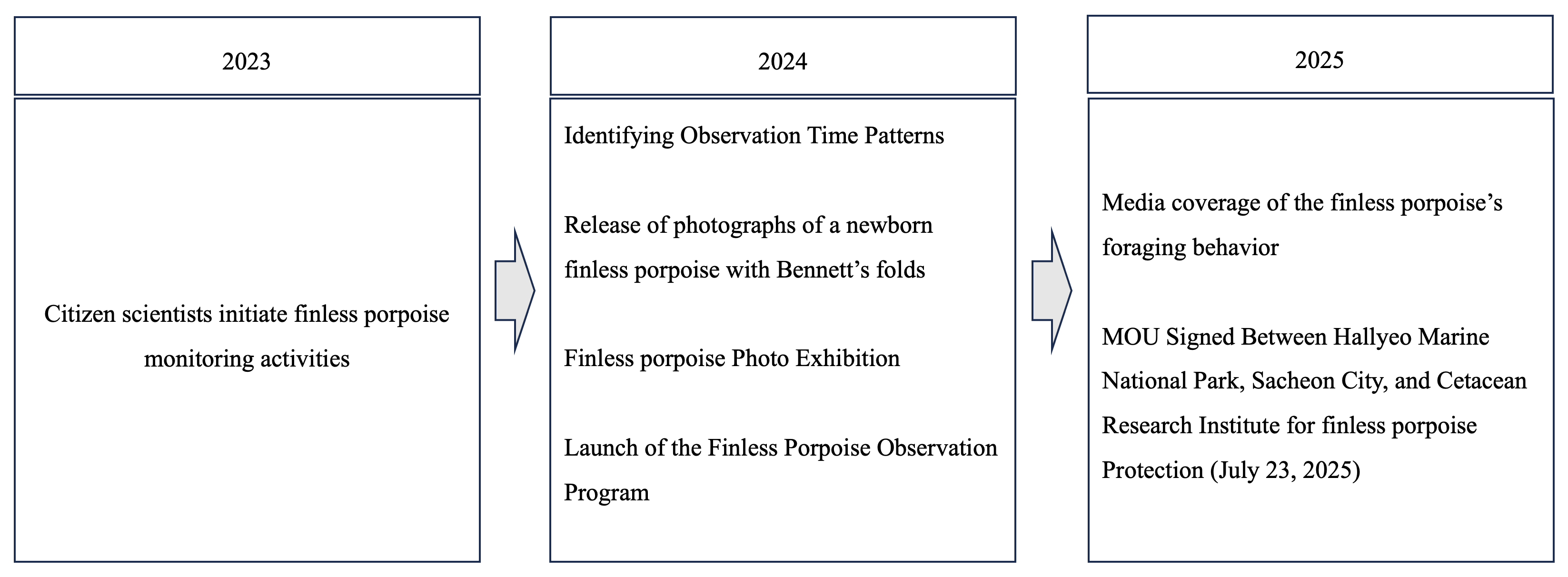
Thus, the voluntary participation of citizen scientists has led to a series of processes: observation, recording, exhibition, education, and institutional agreements (Figure 3), contributing to the spread of ecological awareness throughout the entire community. This is an important case demonstrating that citizen science can transcend from a simple personal hobby to possess public value and social scalability.
Hye-ri: The citizen scientist program truly began after I joined in 2023, after which documents and plans related to the citizen scientists started emerging, and we began recruiting such individuals directly to conduct surveys together. Initially, these roles were mostly supportive. For example, when climbing mountains to survey plants, they'd be beside us saying things like, "Oh, there's this here." However, the finless porpoise surveys were different. The citizen scientists began writing field notes and spotting the finless porpoises directly. Consequently, we can use the collected data as real results. The MOU for finless porpoise protection signed between Sacheon City, the Cetacean Research Institute, and Hallyeo Marine National Park, and the workshops held, were made possible by the citizen scientists. Before these individuals were actively observing and photographing the porpoises, images of finless porpoises in our country were limited to photographs of carcasses caught as bycatch or washed ashore. Because of these efforts, we can now see photographs of living finless porpoises.
4. Discussion: Multidimensional effects of Citizen Science and its Expansion into Marine Conservation Governance
This study focused on an endangered marine mammal, the finless porpoise, illuminating how citizen science activities extend beyond simple scientific data collection to form emotional bonds, drive environmental behavioral changes, and ultimately contribute to building local ecological governance. Compared with international citizen science cases and theories, this trend offers meaningful insights at multiple levels.
First, participants in the Korean harbor porpoise citizen science project did not remain merely assistants or passive participants. Through observation and recording, they grew into active learners who proactively accumulated knowledge and sensitivity regarding the local ecosystem. This clearly demonstrates the process of deepening reflection and learning through actual experience, as emphasized in Kolb's Experiential Learning Theory. Similarly, cases have been reported in which youths participating in citizen science projects simultaneously developed scientific inquiry skills and environmental awareness through their data collection experiences (Ballard et al., 2017).
The data collected are noteworthy for their scientific significance beyond simple natural observation. For instance, Dal-ho's individual recognition or Seong-rae's behavioral pattern records not only accumulate ecological information on the finless porpoise but also form a structure that is mutually complementary to expert-based monitoring. This demonstrates that the data obtained by citizen scientists, when meeting appropriate quality standards, can contribute to precise ecological research such as endangered species surveillance (Kosmala et al., 2016), and the case in this study clearly validates this potential.
The words describing the finless porpoises that are used by the Citizen scientists, such as "healing," "joy," and "a sense of responsibility" go beyond a mere shift in ecological awareness, and reveal the formation of an emotional bond between humans and nature, resulting in psychological changes and affective transformation. This aligns with prior research showing that encounters with marine mammals, such as whales, induce emotional stability and ecological empathy (DeMares 2000). Such emotional connections lead to practices that protect nature and can be meaningfully interpreted within the discourse of emotional ecology and relational values, emphasizing the importance of relationships between humans and non-human beings (Chan et al., 2016). Beyond their ecological role, finless porpoises have become symbolic representations of the southern coastal identity. Often referred to as “the smiling dolphin,” their presence evokes affection among residents. Importantly, finless porpoises are not regarded as animals to be consumed by local communities but rather as sentient beings worthy of protection. This cultural symbolism is reflected in local narratives, ecotourism imagery, and marine conservation campaigns, in which the porpoise serves as an approachable and endearing flagship species for ocean stewardship.
Furthermore, the activities of the citizen scientists have yielded institutional outcomes such as the development of finless porpoise interpretation programs, photo exhibitions, and the establishment of interregional MOUs, which act as a driving force in forming participatory ecological governance. This trend aligns with discussions emphasizing the necessity of citizen participation in environmental policy (Reed et al., 2010), demonstrating that citizens play an essential role, particularly in addressing complex and uncertain marine environmental issues. Indeed, this study empirically demonstrates that the quality of participation can be linked to policy effectiveness by connecting the ecological knowledge accumulated through the daily observations of the participants to local policy (Newig and Fritsch, 2009).
Furthermore, the emotions and attitudes of the citizen scientists, who recognize the finless porpoise not merely as a research subject but also as a symbol of the region, suggest that marine biodiversity conservation can be deeply intertwined with the formation of local culture and identity. In island and harbor societies, the sea is not only an ecological space, but is also a cultural and emotional landscape. The relationship between local communities and the finless porpoise reflects a deeply embedded marine culture in which conservation practices are often intertwined with collective memory, identity, and daily life. Given that finless porpoise conservation activities can strengthen the attachment to and pride in the ocean of local residents, ultimately contributing to the formation of long-term conservation awareness beyond tourism, citizen science can be seen as a practical bridge that links ecology with culture (Stithou et al., 2025).
Despite its various positive effects, citizen science still faces several structural limitations. Most importantly, the issues of observation accuracy and data consistency can hinder the use of citizen science data in scientific research. Particularly for marine life observations, constraints in terms of field accessibility and observation biases due to seasonal and climatic factors are common. Ackland and Richardson (2024), analyzing marine data cases based on iNaturalist, pointed out that without a parallel system to quantitatively verify the reliability of citizen science data, errors could be introduced into biodiversity research.
Furthermore, if the activities of citizen scientists remain one-off engagements or are confined to a simple 'observer role,' the potential for long-term learning effects or expansion into ecological governance participation is inevitably limited. Otero et al. (2025) identified structural disconnect as a problem in which marine citizen science projects fail to progress from merely collecting information to analysis, interpretation, and policy proposals, emphasizing the need for more in-depth participation structures and role design.
To overcome these limitations, developmental approaches that could enhance the reliability and sustainability of citizen science are required. First, a covalidation system with experts must be institutionally established to guarantee data quality. Klunzinger et al. (2025) emphasized that for citizen science data to be practically utilized in marine protected area design, a dual review process by experts must be internalized. The records and analyses of the citizen scientists described in this study were reviewed and advised upon by experts from the Korea Research Institute of Marine Science and Technology, under the Ministry of Oceans and Fisheries.
Second, educational programs that enhance data literacy and scientific analysis skills should be implemented concurrently to enable citizen scientists to contribute proactively to data interpretation and utilization beyond mere participation. Kumar et al. (2025) demonstrated that such an educational design could simultaneously increase the accuracy of data utilization while enhancing the autonomy of citizen scientists, leading to the potential for sustained participation.
Third, solutions to overcome the spatiotemporal limitations of citizen science activities by introducing digital technology should also be considered. For instance, integrating technologies such as drones, AI-based recognition technology, and remote sensors in citizen science enables not only more precise data collection, but also efficient observation activities in marine environments that are difficult for the general public to access directly. In this case study, based on the observations of citizen scientists, AI cameras were installed beneath bridges (key migration routes for the Korean finless porpoise) to enable continuous data collection (Korea Economic Daily, 2025).
5. Conclusion
This study examined how citizen science contributes to marine biodiversity conservation and environmental education through finless porpoise monitoring in Hallyeo Marine National Park. The findings highlight that citizen science generates multidimensional outcomes, extending beyond mere data collection to foster emotional engagement, behavioral change, community participation, and policy impacts. The sustained involvement of the described participants evolved into a holistic form of ecological stewardship that bridges the scientific, cultural, and institutional dimensions.
Importantly, this research reveals how citizen science activities can catalyze community-based solutions and help form practical governance structures grounded in local practice. These collaborations were not limited to symbolic agreements but resulted in concrete environmental interventions and programs. Real-time cooperation among citizens, experts, and park authorities has generated tangible conservation outcomes rooted in place. For example, the citizen scientist Kang Seung-gyu, who also serves as a village leader and ecotourism facilitator, has delivered environmental education to residents and visitors while integrating species protection into ecotourism and school programming. His actions demonstrate how ecological knowledge is embedded in the cultural and economic fabric of everyday life.
Similarly, the observational records compiled by Shin Dal-ho, particularly regarding porpoise appearances aligned with tidal cycles, became the basis for an interpretation program offered by the national park. The photograph of a newborn finless porpoise taken by Jang Seong-rae attracted public attention, and the field data, initially personal, of the citizen scientists has evolved into an institutionalized educational program, demonstrating how grassroots knowledge can inform applied conservation tools and shape public environmental literacy.
The installation of AI-assisted monitoring cameras was similarly driven by the long-term citizen observations. The strategic placement of cameras under specific bridges, which were identified by the citizen scientists as migratory routes, reflects accumulated field knowledge rather than external prescription. Moreover, the timing and location of the porpoise-watching programs were structured based on empirical data shared within the citizen science community. These developments represent a form of governance grounded in field practice, in which local insight and participatory monitoring contribute to adaptive management, technological design, and public engagement.
These initiatives also laid the groundwork for formal administrative collaborations, including MOUs, among the National Park Service, Sacheon City, and the Cetacean Research Institute. However, beyond the institutional frameworks, they have activated a more dynamic and community-driven governance system powered by data sharing, trust, and local capacity.
The case of the finless porpoise along the southern coast of Korea illustrates how marine species can hold both ecological and cultural meaning. By fostering emotional connections and local pride, the porpoises have emerged as both a biological indicator and a cultural emblem, reinforcing the human-sea relationship in island and harbor societies.
In this sense, citizen science in marine and island settings should be recognized not only as an educational activity but also as a cultural and governance strategy that supports community resilience, strengthens local knowledge systems, and enables residents to participate actively in ecological decision-making.
Ultimately, this study suggests that citizen science, when situated in island and coastal settings, is not just an educational or participatory tool but a culturally embedded practice that reflects and reinforces the marine way of life. Overall, this study affirms that citizen science can serve as an engine for community-based governance rooted in field experience.
Acknowledgments
We gratefully acknowledge the support of Hallyeo Marine National Park for facilitating this marine citizen science research. We sincerely thank all interview participants for generously sharing their time, experiences, and insights. We are especially grateful to Mr. Seong-rae Jang for granting permission to use the photographs included in Figures 1 and 2 documenting the finless porpoise.
References
- Ackland, S.J., Richardson, D.M., Robinson, T.B., 2024. A method for conveying confidence in iNaturalist observations: A case study using non‐native marine species. Ecol. Evol. 14, e70376. https://doi.org/10.1002/ece3.70376.
- Ballard, H.L., Dixon, C.G.H., Harris, E.M., 2017. Youth-focused citizen science: Examining the role of environmental science learning and agency for conservation. Biol. Conserv. 208, 65–75. https://doi.org/10.1016/j.biocon.2016.05.024.
- Barney, E.C., Mintzes, J.J., Yen, C.F., 2005. Assessing knowledge, attitudes, and behavior toward charismatic megafauna: The case of dolphins. J. Environ. Educ. 36, 41–55. https://doi.org/10.3200/JOEE.36.2.41-55.
- Bopardikar, A., Bernstein, D., McKenney, S., 2023. Designer considerations and processes in developing school-based citizen-science curricula for environmental education. J. Biol. Educ. 57, 592–617. https://doi.org/10.1080/00219266.2021.1933134.
- Braun, V., Clarke, V., 2006. Using thematic analysis in psychology. Qual. Res. Psychol. 3, 77–101. https://doi.org/10.1191/1478088706qp063oa.
- Cantor, M., Whitehead, H., 2013. The interplay between social networks and culture: Theoretically and among whales and dolphins. Philos. Trans. R. Soc. Lond. B Biol. Sci. 368, 20120340. https://doi.org/10.1098/rstb.2012.0340.
- Chan, K.M.A., Balvanera, P., Benessaiah, K., Chapman, M., Díaz, S., Gómez-Baggethun, E., Gould, R., Hannahs, N., Jax, K., Klain, S., Luck, G.W., Martín-López, B., Muraca, B., Norton, B., Ott, K., Pascual, U., Satterfield, T., Tadaki, M., Taggart, J., Turner, N., 2016. Opinion: Why protect nature? Rethinking values and the environment. Proc. Natl Acad. Sci. U. S. A. 113, 1462–1465. https://doi.org/10.1073/pnas.1525002113.
- Clapham, P.J., Young, S.B., Brownell Jr, R.L., 1999. Baleen whales: Conservation issues and the status of the most endangered populations. Mamm. Rev. 29, 37–62. https://doi.org/10.1046/j.1365-2907.1999.00035.x.
- Comerlato, F., 2023. Whaling in Brazil and its historical iconography. J. Mar. Isl. Cult. 12. https://doi.org/10.21463/jmic.2023.12.2.03.
- Curry, B.E., 2002. Mortality and morbidity of Hong Kong finless porpoises, with emphasis on the role of environmental contaminants. Raffles Bull. Zool. 50, 161–171.
- DeMares, R., 2000. Human peak experience triggered by encounters with cetaceans. Anthrozoös. 13, 89–103. https://doi.org/10.2752/089279300786999914.
- Dunkley, R.A., 2017. The role of citizen science in environmental education: A critical exploration of the environmental citizen science experience, in: Ceccaroni, L., Piera, J. (Eds.). The Role of Citizen Science in Modern Research. IGI Global, pp. 213–230. https://doi.org/10.4018/978-1-5225-0962-2.ch010.
- E2 News, 2025. Endangered Korean dolphin breeding and parenting scenes captured. E2 News. https://www.e2news.com/news/articleView.html?idxno=319535.
- Hadjichambis, D., Hadjichambis, A.C., Adamou, A., et al., 2023. Literature review of K-12 environmental citizen science initiatives: Unveiling the CS pedagogical and participatory aspects contributing to students’ environmental literacy. Educ. Res. Rev. 18, 23–39. https://www.sciencedirect.com/science/article/pii/S1747938X23000180.
- Huang, J., Mei, Z., Chen, M., Han, Y., Zhang, X., Moore, J.E., Zhao, X., Hao, Y., Wang, K., Wang, D., 2020. Population survey showing hope for population recovery of the critically endangered Yangtze finless porpoise. Biol. Conserv. 241, 108315. https://doi.org/10.1016/j.biocon.2019.108315.
- Ilbo, D.A., 2025a. ‘Smiling whale’ finless porpoise captured pregnant for the first time... hunting for food with calf. Dong-a Ilbo. https://www.donga.com/news/It/article/all/20250502/131534681/2.
- Ilbo, J., 2025b. Video of Korean dolphin released in Hallyeo marine national park. Jemin Ilbo. https://www.jemin.com/news/articleView.html?idxno=798739.
- KBS, 2024. Endangered finless porpoise gives birth to pup in Hallyeo marine national park. KBS. https://news.kbs.co.kr/news/pc/view/view.do?ncd=7978254&ref=A.
- Kim, H., Lim, C.C., Vilcassim, M.J.R., Thurston, G.D., 2022. Mapping urban air quality using mobile sampling with low-cost sensors and machine learning in Seoul, South Korea. Environ. Int. 146, 106285. https://doi.org/10.1016/j.envint.2019.105022.
- Klunzinger, M.W., Salloum, P.M., Kenny, N.J., 2025. Standardized land-based protocols and data validation for marine conservation: A citizen science case study. Molluscan Res. 45, 213–225. https://doi.org/10.1080/13235818.2025.2459372.
- Korea economic daily, 2025. Protecting Spotted Seals with AI... POSCO DX Develops Marine Monitoring System. Korea Economic Daily. https://www.hankyung.com/article/202504293462i.
- Kosmala, M., Wiggins, A., Swanson, A., Simmons, B., 2016. Assessing data quality in citizen science. Front. Ecol. Environ. 14, 551–560. https://doi.org/10.1002/fee.1436.
- Kumar, D., Shekhar, S., Tewary, T., 2025. AI and data analytics for climate data management: Opportunities and limits of citizen engagement. Front. Environ. Sci. 13, 1679608. https://doi.org/10.3389/fenvs.2025.1679608.
- Lavery, T.J., Roudnew, B., Gill, P., Seymour, J., Seuront, L., Johnson, G., Mitchell, J.G., Smetacek, V., 2010. Iron defecation by sperm whales stimulates carbon export in the Southern Ocean. Proc. Biol. Sci. 277, 3527–3531. https://doi.org/10.1098/rspb.2010.0863.
- Lee, J., Koo, K.A., 2023. An analysis on needs for national parks by age group using semantic network analysis. J. People Plants Environ. 26, 295–304. https://doi.org/10.11628/ksppe.2023.26.4.295.
- Lee, S., Park, H., Jeong, A., Lee, Y., Koo, S., Kim, M., 2023. Management plans for Korean national parks to conserve the habitat of the Korean fir (Abies koreana). Biol. Conserv. 287, 110285. https://doi.org/10.1016/j.biocon.2023.110285.
- Lim, E.M., 2019. Preferences for management strategies aimed at conserving biodiversity in South Korea’s national parks: A case of Seoraksan National Park. Sustain. 11, 526. https://hdl.handle.net/10371/137597.
- MBN, 2024. Two-week-old baby finless porpoise spotted in the wild for the first time... reducing bycatch is key to preventing extinction. MBN. https://www.mbn.co.kr/news/society/5029828.
- Moore, S.E., Huntington, H.P., 2008. Arctic marine mammals and climate change: Impacts and resilience. Ecol. Appl. 18(2) (Supplement), s157–s165. https://doi.org/10.1890/06-0571.1.
- Nabi, G., Hao, Y., Robeck, T.R., Jinsong, Z., Wang, D., 2018. Physiological consequences of biologic state and habitat dynamics on the critically endangered Yangtze finless porpoises (Neophocaena asiaeorientalis ssp. asiaeorientalis) dwelling in the wild and semi-natural environment. Conserv. Physiol. 6, coy072. https://doi.org/10.1093/conphys/coy072.
- Newig, J., Fritsch, O., 2009. Environmental governance: Participatory, multi-level–and effective? Environ. Policy Gov. 19, 197–214. https://doi.org/10.1002/eet.509.
- News Gyeongnam, 2024. Hallyeo Marine National Park Office Holds Photo Exhibition on Native Dolphin, the Common Dolphin. News Gyeongnam. https://www.newsgn.com/news/articleView.html?idxno=432814.
- Newsis, 2024. Hallyeo marine national park “please protect the common dolphins of Sacheon Choyangdo”. Newsis. https://www.newsis.com/view/NISX20240705_0002799954.
- Newsis, 2025. Hallyeo marine national park’s “Sacheon Choyangdo common dolphin story” ecological education. Newsis. https://www.newsis.com/view/NISX20250901_0003310778.
- Orams, M.B., 1997. Historical accounts of human-dolphin interaction and recent developments in wild dolphin-based tourism in Australasia. Tourism Manage. 18, 317–326. https://doi.org/10.1016/S0261-5177(96)00022-2.
- Otero, P., Menéndez-Blázquez, J., March, D., 2025. Challenges of passive citizen science in ecology within a shifting social media landscape. Ecol. Inform. 80, 102087. https://doi.org/10.1016/j.ecoinf.2025.102087.
- Pocock, M.J.O., Tweddle, J.C., Savage, J., Robinson, L.D., Roy, H.E., 2017. The diversity and evolution of ecological and environmental citizen science. PLOS One. 12, e0172579. https://doi.org/10.1371/journal.pone.0172579.
- Reed, M.S., Evely, A.C., Cundill, G., Fazey, I., Glass, J., Laing, A., Newig, J., Parrish, B., Prell, C., Raymond, C., Stringer, L.C., 2010. What is social learning? Ecol. Soc. 15, r1. https://doi.org/10.5751/ES-03564-1504r01.
- Roman, J., Estes, J.A., Morissette, L., Smith, C., Costa, D., McCarthy, J., Nation, J., Nicol, S., Pershing, A., Smetacek, V., 2014. Whales as marine ecosystem engineers. Front. Ecol. Environ. 12, 377–385. https://doi.org/10.1890/130220.
- Sá, M.J., Serpa, S., Ferreira, C.M., 2022. Citizen science in the promotion of sustainability: The importance of smart education for smart societies. Sustainability. 14, 9356. https://doi.org/10.3390/su14159356.
- Shinmun, G., 2025. Sacheon launches conservation and promotion efforts for endangered finless porpoise. Gyeongnam Shinmun. https://www.knnews.co.kr/news/articleView.php?idxno=1466298.
- Smith, C.R., Baco, A.R., 2003. Ecology of whale falls at the deep-sea floor, in: Oceanogr. Mar. Biol. CRC Press, 319–333.
- Stithou, M., Theodorakopoulou, I., Illiopoulos, C., 2025. ‘Much more than a tourism product!’ Insights into the people–sea relationship using photovoice. J. Mar. Isl. Cult. 14. https://doi.org/10.21463/jmic.2025.14.1.01.
- Uchiyama, C., Ohno, T., Kubo, Y., 2023. Review of adaptive governance (AG) research in small islands: Critical dimensions and future directions. J. Mar. Isl. Cult. 12. https://doi.org/10.21463/jmic.2023.12.3.05.
- Veeckman, C., Temmerman, L., 2021. Urban living labs and citizen science: From innovation and science towards policy impacts. Sustainability. 13, 526. https://doi.org/10.3390/su13020526.
- Whitehead, H., 2013. The cultures of whales and dolphins, in: Whales and Dolphins. Routledge, pp. 149–165.
- Yerbury, R.M., Boyd, W.E., 2019. Human–dolphin interactions: Relationships, connections, and the reinforcement of an ongoing nature relationship. Ecopsychol. 11, 103–114. https://doi.org/10.1080/08927936.2018.1482116.
- Yoho, R.A., Vanmali, B.H., 2016. Controversy in biology classrooms—Citizen science approaches to evolution and applications to climate change discussions. J. Microbiol. Biol. Educ. 17, 110–114. https://doi.org/10.1128/jmbe.v17i1.1026.
- Zhao, X., Barlow, J., Taylor, B.L., Pitman, R.L., Wang, K., Wei, Z., Stewart, B.S., Turvey, S.T., Akamatsu, T., Reeves, R.R., Wang, D., 2008. Abundance and conservation status of the Yangtze finless porpoise in the Yangtze River, China. Biol. Conserv. 141, 3006–3018. https://doi.org/10.1016/j.biocon.2008.09.005.