
Navigating Livelihoods through Traditional Entrepreneurship: Survival Strategies of the Bajo Migrant Community in the Wuring Settlement, Flores, Indonesia
 10.21463/jmic.2026.15.1.13
Abstract
This study examines traditional entrepreneurship among the Bajo migrant community in the coastal settlement of Wuring, Flores, conceptualizing it as an economic practice generated and shaped by a distinct maritime cultural environment. Rather than being understood solely as market-oriented activity, Bajo entrepreneurship emerges from historically embedded relations between people, the sea, and socio-spiritual values. Employing a qualitative ethnographic approach, data were collected through semi-structured interviews with 25 purposively selected key informants, three months of participatory observation, and visual documentation of coastal livelihoods. Thematic analysis reveals that entrepreneurial practices are structured by local ecological knowledge, seasonally adaptive livelihood strategies, and family-based divisions of labor rooted in maritime life. These practices are further sustained by communal norms emphasizing solidarity, moral responsibility, and ecological stewardship in the use of marine resources. Livelihood resilience is achieved through diversified maritime enterprises, inter-ethnic social networks, and the intergenerational transmission of seafaring and ecological knowledge. This study contributes to community-based entrepreneurship scholarship by demonstrating how culturally grounded maritime economies provide alternative models for sustainable and equitable coastal development.
Keywords
traditional entrepreneurship, Bajo community, livelihood resilience, local ecological knowledge, community-based economy, coastal adaptation
Introduction
Within the dynamic coastal landscape of Eastern Indonesia, the migrant Bajo community in Wuring, Flores, represents a significant maritime society that has developed distinctive forms of traditional entrepreneurship amid ongoing social and ecological change. As a historically nomadic maritime group, the Bajo have sustained their livelihoods under socio-economic pressures and environmental uncertainty through the management of marine resources grounded in intergenerational experience and local ecological knowledge. These entrepreneurial practices function not merely as economic strategies, but as culturally embedded systems that regulate social relations and livelihood organization. In this study, Traditional Ecological Knowledge (TEK) is understood as collectively transmitted knowledge and practices through which the Bajo conceptualize the sea as a living space that must be respected and maintained, shaping both spiritual worldviews and everyday economic decisions (Dove, 2006; Moniaga, 2004; Marschke & Berkes, 2006).
Entrepreneurship within the Bajo community emerges as an adaptive process shaped by the maritime cultural environment in which they live. Traditional marine-processing practices, fish-trading systems embedded in social networks, and distribution mechanisms governed by customary norms form the structural foundation of localized entrepreneurial activities (Yunus, 2010; Adger, 2000; Altman & Hinkson, 2007). Rather than an individualistic pursuit, entrepreneurship operates as part of a broader livelihood resilience strategy sustained through shared moral values, social solidarity, and reciprocal relationships with the marine ecosystem (Ostrom, 1990; Folke et al., 2002; Berkes et al., 2000). These principles position the Bajo as economic actors whose practices are inherently oriented toward sustainability (Schumacher, 1973; McGoodwin, 2001).
The formation of Bajo entrepreneurship is inseparable from maritime culture, which functions as collective social capital in everyday life (Putnam, 2000; Pretty & Ward, 2001; Woolcock & Narayan, 2000). This social capital structures economic relations based on trust, reciprocity, and mutual cooperation, manifested in inter-household collaboration, collective fishing activities, and shared systems of marine production and distribution. Such practices illustrate that entrepreneurship is constructed through relational systems embedded in maritime culture and reinforced by collective rituals that link economic activity with spiritual meaning (Uphoff, 2000; Adhuri, 2013; Pelras, 2000). Over time, the integration of economic practice, ecological knowledge, and social values facilitates the intergenerational transmission of entrepreneurial skills, forming a community-based economic model that is both adaptive and enduring (Bebbington, 1999; Vel, 2008; Lowe, 2006).
The distinctive stilt-settlement architecture of the Bajo community further exemplifies their adaptive response to ecological and social conditions (Dove, 2006; Berkes, 2012; Folke et al., 2002). Houses constructed above the sea function simultaneously as domestic spaces, sites of production, storage areas for marine products, and communal arenas connected by wooden walkways (Pelras, 2000; Adhuri, 2013; Moniaga, 2004). This spatial configuration reflects a functional and symbolic relationship with the marine environment, revealing how settlement design embodies localized ecological logic and supports the mobility required in coastal livelihoods (McGoodwin, 2001; Lowe, 2006).
For the Bajo, the sea is not merely a site of economic activity, but a sacred living entity embedded within a broader cosmological framework (Berkes, 2012; Dove, 2006). This worldview frames economic decision-making within ethical boundaries that emphasize balance, restraint, and ecological continuity (Folke et al., 2002; Berkes et al., 2000; Marschke & Berkes, 2006). Consequently, maritime entrepreneurship is evaluated not solely by economic returns, but by its capacity to maintain ecological sustainability and social cohesion (Ostrom, 1990; Schumacher, 1973; Yunus, 2010). This orientation contrasts sharply with extractive capitalist models that often detach economic growth from ecological responsibility (Altman & Hinkson, 2007; Adger, 2000; Bebbington, 1999).
The fundamental distinction between traditional and modern entrepreneurship lies in the core values that underpin them (Schumacher, 1973; Yunus, 2010; Pretty & Ward, 2001). While modern entrepreneurship prioritizes growth, efficiency, and capital accumulation, Bajo entrepreneurship emphasizes household subsistence, environmental stewardship, and social solidarity as guiding principles (Ostrom, 1990; Berkes et al., 2000; Woolcock & Narayan, 2000). This divergence illustrates how culturally grounded economic systems offer viable alternatives within the contemporary context of climate change and global ecological crisis (Adger, 2000; Marschke & Berkes, 2006; Bebbington, 1999).
Although scholarship on coastal communities and maritime societies has expanded, limited attention has been given to how traditional entrepreneurship is formed and reproduced within island and archipelagic cultural systems. Existing studies often emphasize ecological vulnerability or social dynamics, while insufficiently examining the interconnections among maritime cultural values, ecological knowledge, and social networks in shaping entrepreneurial practices (Berkes, 2012; Folke et al., 2002; Marschke & Berkes, 2006). By foregrounding these interrelations, this study addresses that gap and contributes a more integrated understanding of traditional entrepreneurship within the social–ecological systems of the archipelago.
Literature Review
Theories of Traditional Entrepreneurship in Local Communities
Traditional entrepreneurship within local communities constitutes a form of economic activity born from the community’s embeddedness within its own values, norms, and cultural practices (Johannisson & Nilsson, 1989). Among indigenous or coastal communities such as the Bajo, entrepreneurial activity is not constructed upon capitalistic principles that prioritize profit accumulation, but is instead founded on mechanisms of subsistence and the sustainable management of resources (Dana, 2015). Such activities are frequently conducted within the extended family unit, utilizing local technologies, and contextually leveraging available resources (Hindle & Lansdowne, 2002). This model is further underpinned by structures of belief, local mythologies, and spiritual practices that are deeply ingrained in the quotidian life of the community.
Community-based entrepreneurship theory posits that economic activity cannot be dis-embedded from the social and ecological functions of the context in which it occurs (Peredo & Chrisman, 2006; Anderson et al., 2006). Within this framework, entrepreneurship serves as an instrument for achieving collective societal goals – such as food security, the distribution of economic justice, and the regeneration of local knowledge – rather than functioning merely as a vehicle for individual mobility (Johnstone & Lionais, 2004). Entrepreneurial activities within these communities, such as the traditional processing of marine products or community network-based fish trading as practiced by the Bajo, exemplify a circular economic model grounded in local values that has demonstrably endured across generations (Altinay & Wang, 2011). It is therefore imperative to situate the analysis of traditional entrepreneurship within an integrated framework that synthesizes economic, sociological, and local ecological approaches.
Furthermore, the literature on indigenous entrepreneurship demonstrates that entrepreneurial practices within such communities reflect a harmonious integration of human activity, nature, and spirituality (Anderson et al., 2006; Dana, 2015). Such forms of entrepreneurship evolve not solely from economic necessity, but is propelled by an imperative to preserve cultural identity and ensure the holistic survival of the community (Morrison, 2008). Within the context of the Bajo society, entrepreneurship emerges from a combination of inherited maritime skills, a deep symbiosis with the marine ecosystem, and the social solidarity inherent within family and village structures (Tapsell & Woods, 2010). Understanding this entrepreneurial form is of increasing importance within sustainable development studies, as it illustrates that alternative economies rooted in local values can present resilient models for confronting economic and environmental crises (Hinch & Butler, 2007; Teasdale, 2010).
Cultural Capital and Migrant Identity in Economic Innovation
The concept of cultural capital, as introduced by Bourdieu (1986), proves highly relevant in explicating how migrant communities, such as the Bajo, transport and deploy a repertoire of traditional values, practices, and knowledge into the new spaces they inhabit. This cultural capital encompasses not only technical skills in seafaring or trade, but also includes value systems, work ethics, and collective identities that fundamentally shape their engagement in economic activity (Levitt, 1998). In the context of migration, cultural capital functions as a critical resource that enables individuals and communities to access economic opportunities and forge unique, contextually-specific forms of entrepreneurship (Cassarino, 2004). Consequently, migrant identity operates not as a barrier, but rather as a prime mover for innovation grounded in the values transported from their place of origin (Faist, 2000; Ryan & Mulholland, 2015).
Within the theoretical framework of ethnic entrepreneurship, migrants frequently leverage ethnically-based social networks to establish adaptive micro-enterprises that demonstrate resilience against external economic pressures (Zhou, 2004; Light & Gold, 2000). These networks generate horizontal social capital, connecting individuals through ties of kinship, mutual trust, and shared cultural origins. Among the Bajo, inter-family and inter-village relationships form the foundation of systems for distributing marine products and facilitating local trade, thereby creating a complex, multi-layered, and inclusive economic ecosystem (Dana & Morris, 2007). Within this context, migration is not interpreted as a rupture from an economic system, but rather as a process of active adaptation that gives rise to a distinctive pattern of community-based and highly localized entrepreneurship (Portes & Rumbaut, 2006; Ram et al., 2008).
Furthermore, migration can instigate a dynamic process of identity transformation, wherein a community does not merely reproduce old customs, but actively engages in economic creativity and hybridization (Vertovec, 2004). This process involves the negotiation and alignment of origin-based cultural values with the economic demands of the new environment, resulting in innovative entrepreneurial models that nonetheless remain rooted in tradition (Kloosterman & Rath, 2001). In Wuring, the Bajo have developed localized economic practices – such as family-based marine product processing, small-boat fish delivery services, and trade collaborations with other local communities – that emerge from the interaction between their migrant identity and market demands (Erel, 2010; Ndofor & Priem, 2011). This demonstrates that the economic endeavors of migrant communities are not solely the product of passive adaptation, but rather the outcome of a creative and contextually reflective cultural agency (Anthias, 2007).
Social Ecology and Systems of Local Knowledge
The theory of social ecology, as advanced by Murray Bookchin (1990), posits that ecological crises are not solely the result of environmental mismanagement, but are fundamentally rooted in hierarchical and exploitative social structures. In societies such as the Bajo community in Wuring, social and ecological relations are not discrete; rather, they are fused within the daily practices of life, which are predicated on principles of balance and interdependence (Escobar, 1998). This perspective contends that local knowledge is not merely a system of practical information, but also a representation of how a society comprehends, nurtures, and equilibrates its relationship with nature (Brosius, 1997). Consequently, social ecology directs attention to how forms of community organization, belief systems, and customary values can contribute substantively to ecosystem sustainability.
Within coastal societies, local knowledge systems play a fundamental role in the adaptive management of natural resources. Research by Gadgil, Berkes, and Folke (1993) demonstrates that indigenous communities develop sophisticated systems of ecological observation grounded in intergenerational experience – such as knowledge of seasonal patterns, ocean currents, fish behavior, and weather conditions – which form the basis for both economic and ecological decision-making. This knowledge is transmitted orally, embedded in daily practices and social interactions, reflecting a profoundly intimate relationship between the community and its environment (Davis & Ruddle, 2010). Within the Bajo community, traditional navigation systems, environmentally-sound fishing practices, and customary prohibitions against overexploitation constitute integral components of a living ecological knowledge system (McCarter et al., 2014). Such systems function not only to conserve resources, but also to reinforce a collective identity as stewards of the sea.
Furthermore, social ecology reinforces the argument that effective environmental management necessitates the integration of local knowledge and scientific approaches within a co-management framework (Lövbrand et al., 2009; Berkes, 2009). Within this paradigm, local communities are no longer positioned merely as objects of development, but as subjects possessing significant epistemic capacity and ecological ethics. A collaborative process between communities and formal institutions can create mechanisms for socio-ecological adaptation that are flexible, contextually-grounded, and sustainable (Reid et al., 2006). Consequently, the traditional entrepreneurial practices of the Bajo are not merely a matter of economic survival; they constitute a manifestation of value-based ecological governance and a reciprocal relationship between humans and nature (Ingold, 2011; Tengö et al., 2014). Through this approach, local knowledge forms the foundation for constructing economic strategies that are not only ecologically sustainable but also socially just.
Research Method
This study employs a qualitative approach with an ethnographic design to provide an in-depth account of the traditional entrepreneurial practices of the migrant Bajo community in the coastal settlement of Wuring, Flores. The ethnographic approach was chosen because it allows the researcher to capture the complexity of economic, cultural, and ecological relations that cannot be accessed through quantitative methods (Hammersley & Atkinson, 2007). Moreover, ethnography is indispensable for research on maritime communities, whose life dynamics are shaped by tidal rhythms, high spatial mobility, and temporal patterns that follow the logic of the sea—all of which can only be understood through long-term observation and direct immersion in the field. Ethnography also enables the interpretation of the symbolic meanings embedded in everyday economic actions and reveals tacit dimensions of traditional entrepreneurial practices transmitted across generations (Spradley, 1980). Thus, the community’s economic practices are not viewed merely as instrumental activities but as integral components of interrelated social, ecological, and epistemological systems (Pink, 2009).
Data collection employed three primary techniques: semi-structured interviews, participatory observation, and visual documentation. Semi-structured interviews were conducted with 25 purposively selected key informants, including fishers, fishers’ spouses, fish traders, customary leaders, religious figures, and Bajo youth, to explore local meanings of economic practices, intergenerational transmission of maritime knowledge, and perceptions of the sea as an ecological and spiritual entity. This approach allowed conversational flexibility and the emergence of personal narratives (Kvale & Brinkmann, 2009), while attention to nonverbal cues, emotional expressions, and social contexts enriched interpretive depth (Seidman, 2013). In parallel, intensive participatory observation was carried out over a three-month period through immersion in daily fishing activities, post-harvest processing, social interactions, and customary and religious rituals, enabling an emic understanding of entrepreneurship as embedded within an integrated socio-cultural lifeworld (DeWalt & DeWalt, 2011; Emerson et al., 2011).
To complement and validate the findings, visual documentation in the form of photographs and videos was collected with participants’ informed consent to capture spatial dynamics, economic practices, and social interactions beyond verbal accounts (Banks, 2007; Rose, 2012). Data were analyzed using thematic analysis, involving open coding, categorization, and theme development through triangulation of interviews, observations, and visual materials (Braun & Clarke, 2006). Analytical rigor and validity were strengthened through methodological triangulation and member checking with key informants to ensure interpretive accuracy and faithful representation of participants’ meanings (Lincoln & Guba, 1985; Tracy, 2010).
Research Findings
The Socio-Historical Context of Wuring Settlement
The coastal settlement of Wuring, located in the district of West Alok, lies approximately two kilometers west of Maumere City, the administrative center of Sikka Regency in the Province of East Nusa Tenggara. The settlement is accessed via a northern turn at a junction leading to the coastal village areas. The majority of its inhabitants are engaged in fishing, with stilt houses erected over the water, signifying a profound dependence on the sea as a living space, a source of livelihood, and a symbolic realm. Within its socio-cultural context, Wuring constitutes a multiethnic space inhabited by the Bajo, Bugis, Buton, Sumbawa, Makassar communities, alongside a segment of the local Flores ethnic group, all coexisting dynamically within a complex social fabric (De Porres, 2021).
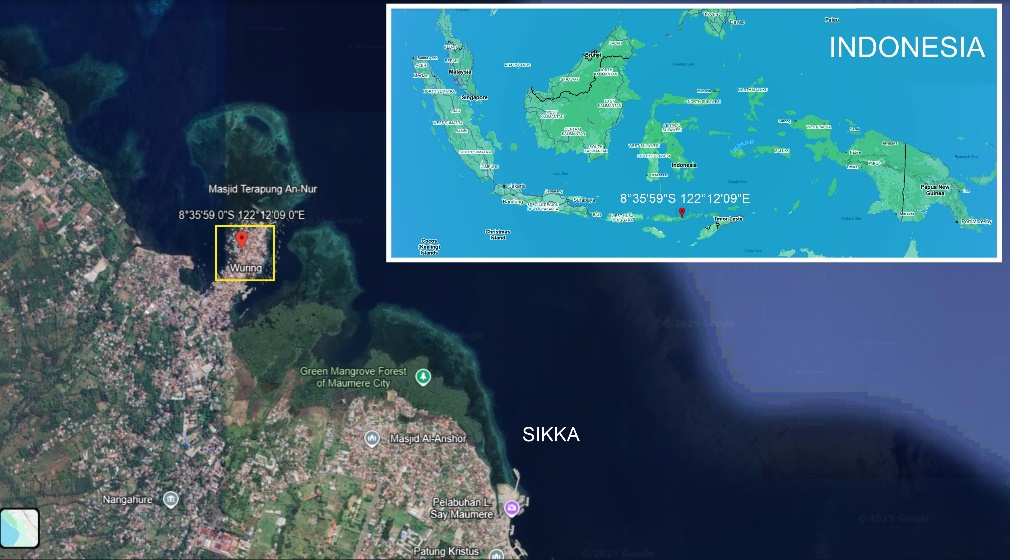
Historically, Wuring originated as a waypoint or temporary stopover for Bajo sailors undertaking long-distance migrations from the Malay Peninsula and Sulawesi via traditional maritime routes since the 18th century. Initially serving merely as a resting place and a site for repairing boats, Wuring gradually evolved into a hub for the exchange of marine products and inland commodities, such as cassava, timber, and salt, between seafarers and the coastal communities of Flores. These trade relations served as the gateway to the formation of a permanent settlement. The initial founding community comprised 17 households who migrated from Kota Baru and Tou in the northern Ende region, led by Pijung Juma, who subsequently established diplomatic relations with the King of Sikka, Mo’ang Bako Kikir Hiwa. The influence of royal policy further intensified during the reign of King Thomas Ximenes da Silva (1922-1954), who officially granted the Bajo community permission to settle in Wuring village. Cultural assimilation and demographic growth were accompanied by migration from Sumbawa, Selayar, and South Sulawesi, including an exodus resulting from the DI/TII rebellion and the Kahar Muzakkar uprising in the 1950s, which contributed to the expansion of the fishing population in Wuring. From that period onward, the Bajo began constructing stilt houses over the sea to establish their lives in the Wuring settlement (Gobang et al., 2017; Boer, 2020).
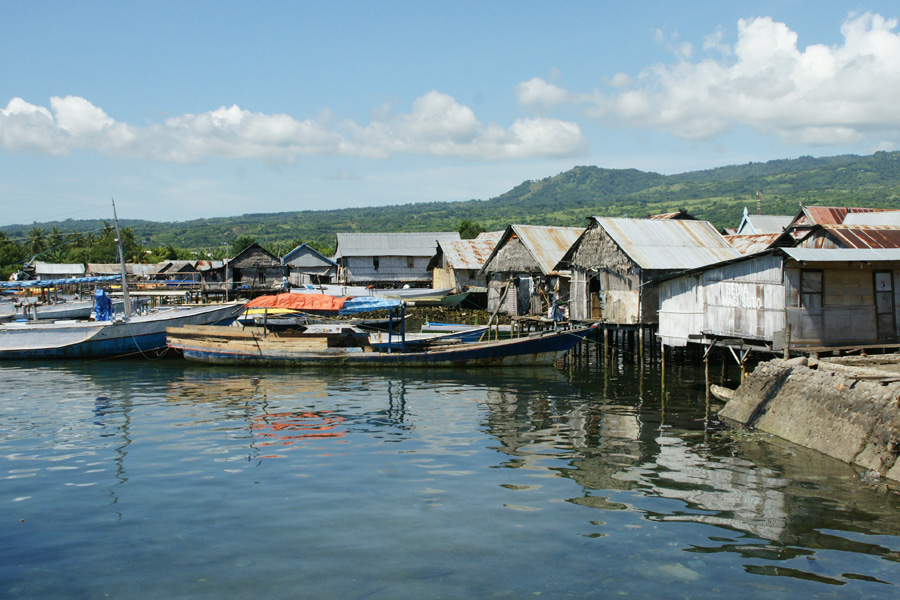
Following the 1992 earthquake and tsunami disaster, when the government relocated Wuring residents to Hangahure and several inland areas around Maumere, many returned to the coastline. As one resident recounted, “During the big earthquake of 1992, we were all moved upland, but not for long. We are sea people; we cannot be far from the water, from the fish, from the boats. In the end, we came back to rebuild our houses in Wuring again” (Informant 11). This stands in contrast to migrant communities such as the Bugis and Makassar, who adapted more readily to land-based tenure systems and agricultural livelihoods in inland areas like Magepanda, where they subsequently became landowners employing farmers from Nita and Lio (Ibrahim, 2024).
Wuring is not merely a fishing village but a coastal living space shaped through a long history of maritime migration. This settlement evolved from a temporary anchorage for Bajo seafarers into a permanent community that depends on the sea as its primary source of livelihood, while simultaneously serving as the foundation for the formation of social and economic structures within the fishing community. Over time, Wuring has also functioned as a site of cultural accommodation, where the Bajo community coexists with other ethnic groups such as the Bugis, Buton, and Flores populations through continuously negotiated social, economic, and cultural relations. However, these local dynamics have not unfolded without tension, particularly when state-led integration projects—implemented through relocation policies, coastal spatial planning, and formal development approaches—frequently come into conflict with the lived logic of coastal communities that rely on mobility, proximity to the sea, and autonomy in managing their living spaces.
The Reinforcement of Coastal Traditional Entrepreneurship
Bajo community entrepreneurship operates within a family-based economic framework that is closely integrated with gender-based divisions of labor. Men primarily engage in fishing activities, while women manage post-harvest processing and distribution. As one informant stated, “My husband goes fishing with our sons, while I prepare the provisions and weave the nets. If the catch is abundant, I am also the one who sells the fish around the village” (Informant 2). This pattern indicates that Bajo entrepreneurial activities do not separate domestic and productive spheres but instead integrate them into a single family labor system, in which women’s involvement in processing and marketing functions as a mechanism for stabilizing household income and as an adaptive strategy for coping with fluctuations in catch volume and income uncertainty.
The sustainability of coastal livelihoods is further supported by business diversification and flexibility within informal marketing systems. In addition to fish, Bajo households utilize seasonal commodities such as octopus, lobster, and sea cucumber, which are marketed through multiple channels. One informant explained, “If the catch is abundant, I sell it directly to the markets. But if it is small, I sell it from house to house. Some is also sold to fellow Bajo people in neighboring villages” (Informant 1). These varied distribution choices reflect the adaptive capacity of Bajo entrepreneurship to adjust economic strategies according to production scale and daily conditions, thereby enabling income continuity, reducing dependence on middlemen, and mobilizing community social networks as sources of efficiency and economic resilience.
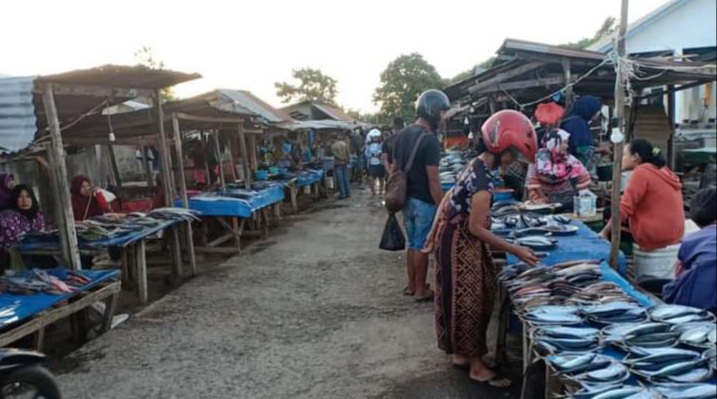
Beyond the household level, Bajo entrepreneurship is strengthened by collective labor mechanisms and trust-based inter-community social relations. Profit-sharing arrangements and mutual cooperation constitute integral components of the fishermen’s economic governance. As one fisherman noted, “If we have a big catch, we split it equally with those who helped pull the net. If someone helped set the net, they also get their share” (Informant 7). Here, principles of moral economy are operationalized through labor relations that emphasize distributive justice and social solidarity as key forms of social capital sustaining collective enterprises. These practices are further extended into cross-ethnic economic relations in Wuring, as reflected by another informant: “We often exchange fish for rice, or help neighbors when they are in difficulty. Through cooperation, life becomes easier and lighter” (Informant 5). Thus, traditional Bajo entrepreneurship functions not merely as an economic activity but as a mechanism of social cohesion within a coastal socio-ecological system oriented toward sustainability rather than purely toward market logic and profit accumulation.
The Cosmology of the Sea in Bajo Culture
Ecological knowledge among the Bajo community in Wuring is rooted in sustained engagement with the maritime environment. This knowledge is derived from close observation of natural indicators such as wind direction, sea coloration, and seasonal patterns. A fisher explained, “We know the season of high waves from the wind direction and the color of the water. When the west wind arrives, we do not go to sea. The sea must also rest” (Informant 4). This articulation reveals a cosmological framework in which the sea is understood as a living entity governed by cyclical rhythms that require respect and restraint. The notion that “the sea must also rest” signifies an ethical orientation toward self-limitation, where economic activity is subordinated to ecological balance and the long-term sustainability of marine resources.
The transmission of this ecological knowledge occurs primarily through embodied learning within the family. Children are introduced to fishing practices at an early age and acquire knowledge through direct participation rather than formal schooling. As one informant noted, “When a child is 6 or 7 years old, we take them out to sea. So, they learn how to read the currents and fish behavior, not from school, but from the sea itself” (Informant 9). This mode of knowledge transfer reflects an experiential and relational form of ecological education, in which understanding emerges from repeated interaction with the marine environment. Such learning processes embed ecological awareness within everyday life and ensure the continuity of maritime knowledge alongside the cultivation of moral responsibility toward the sea.
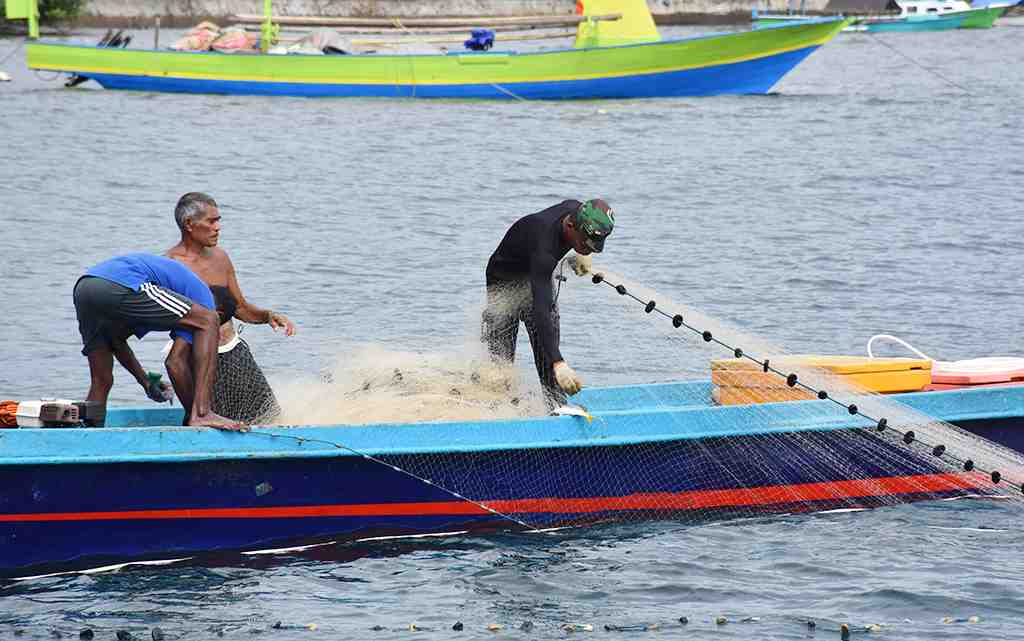
The cosmological understanding of the sea is further institutionalized through collective norms and ethical prohibitions that regulate human conduct. These include restrictions against polluting the sea, using destructive fishing technologies, and exploiting certain maritime zones considered sacred. A religious leader explained, “When people work the land, they regard the earth as mother. The Bajo holds a belief that the sea is like a mother to them. Thus, the sea must not be polluted or harmed arbitrarily” (Informant 12). This statement situates ecological regulation within a spiritually grounded moral order, in which the sea is positioned as a maternal entity whose well-being is inseparable from human existence. Consequently, ecological norms are socially binding not because of external enforcement, but because they are deeply internalized as moral obligations.
These cosmological values are also expressed in everyday practices of resource use that emphasize restraint and intergenerational responsibility. An informant conveyed, “The sea does not belong to us alone. We only take as much fish as we need… our elders always told us: ‘do not be greedy with the sea’” (Informant 8). This principle of “not being greedy” articulates an indigenous ethic of sustainability, in which present livelihoods are balanced against the rights and needs of future generations. It reflects an understanding of ecological solidarity that extends beyond human communities to encompass the marine ecosystem as a whole, reinforcing the role of cosmology as a guiding framework for sustainable maritime life.
Survival Strategies: Resilience and Social Solidarity
Survival strategies among the Bajo community in Wuring represent adaptive responses to economic uncertainty, environmental variability, and limited access to formal support systems. These strategies are embedded in collective practices shaped by cultural values and social relations, with resilience and social solidarity functioning as their central pillars.
Resilience is expressed through the community’s capacity to adapt flexibly when marine conditions constrain fishing activities. A local government figure affirmed, “When the sea conditions are poor, they do not go fishing. Instead, they repair fishing gear such as nets, and sometimes their wives bake cakes to sell at the market. Meanwhile, the husbands assist in repairing neighbors’ houses around Wuring while waiting for the weather to improve” (Informant 6). This account illustrates an active and anticipatory form of resilience, in which households reallocate labor across productive and social activities rather than remaining economically idle. The ability to shift temporarily from fishing to alternative income-generating and reciprocal labor practices demonstrates how resilience is enacted not as individual endurance, but as a socially embedded capacity that preserves livelihoods while sustaining community cohesion during periods of ecological uncertainty.
When household-level adaptation alone is insufficient, survival is reinforced through social solidarity as a collective safety mechanism. This solidarity is manifested through mutual assistance, shared catches, and collective marketing arrangements. An informant stated, “Here, we still strongly uphold the custom of mutual cooperation. We do not allow fellow residents to face hardship alone. If someone fails to catch fish, we share our own and sell it collectively. The proceeds are then distributed according to a fair and agreed-upon arrangement” (Informant 19). This practice reflects an informal redistribution system rooted in local norms of fairness and reciprocity, which functions to buffer economic shocks and prevent extreme vulnerability. Such arrangements not only ensure short-term subsistence, but also reinforce collective identity and moral obligation, thereby strengthening the social fabric that underpins long-term community resilience.
Survival strategies are further sustained through kinship-based networks operating both within and beyond Wuring. These networks facilitate information exchange, market access, and cooperative distribution of marine products. A youth from the Bajo community explained, “We maintain close relations with one another. If a catch does not sell in the local market, we typically contact our relatives elsewhere not to sell it there. We also have regular customers we can reach out to, who will take the marine products and sell them outside” (Informant 10). This statement demonstrates that kinship networks function as an informal economic infrastructure, extending the spatial reach of local livelihoods beyond the village. By enabling alternative marketing channels and reducing dependence on a single market, these networks enhance economic resilience while preserving trust-based social relations across communities.
In addition to collective mechanisms, occupational diversification within households constitutes an important adaptive strategy. When fishing yields decline or seasons are unfavorable, families engage in supplementary economic activities to stabilize income. An informant stated, “When the fishing season is poor, I process fish into dried fish and sell it at the market. This way, I can help my husband generate additional income” (Informant 21). This practice highlights the role of intra-household labor diversification, particularly the economic agency of women in transforming raw marine resources into value-added products. Such diversification reduces livelihood risk, strengthens household economic autonomy, and illustrates how resilience is produced through the intersection of gender roles, skills, and adaptive decision-making within the family unit.
Ecological Challenges and the Risk of Cultural Erosion
The Bajo community in coastal Wuring is increasingly confronted with environmental degradation caused by marine pollution. Household waste, particularly plastic debris, has contaminated coastal waters and fishing grounds, reducing both the quality and availability of marine resources. An informant recounted, “There is too much trash now; fish do not like to live in such dirty places. It worries us because we have to search for fish farther from our village” (Informant 13). This account reveals that pollution is experienced not only as an ecological disturbance but also as a direct economic threat, forcing fishers to expend greater time, energy, and cost to secure livelihoods. The deterioration of nearby fishing grounds disrupts the long-standing spatial relationship between the Bajo community and the sea, undermining the viability of subsistence-based maritime life.
Environmental degradation is further intensified by external and illegal fishing practices conducted by actors outside the Bajo community. The use of trawl nets and fish bombs by large-scale fishers devastates coral reefs and marine habitats essential for local fisheries. As one informant lamented, “We have always protected this sea for generations, but now large vessels enter, using big trawls and sometimes bombs. All the fish are destroyed, and we are the ones who suffer” (Informant 24). This statement highlights a structural asymmetry in power and access, where industrial fishing actors extract marine resources without accountability while local fishers bear the ecological and economic consequences. Such practices erode the moral and cosmological foundations of Bajo environmental stewardship, generating a sense of injustice and powerlessness in the face of external economic forces that prioritize extraction over sustainability.
Alongside ecological pressures, cultural tensions are emerging within intergenerational relations. Bajo parents express growing concern over changing perceptions among younger generations, who are increasingly exposed to modern technologies and industrial fishing models. A fisher expressed, “Our children ask: why can’t we be like those big ships? Why do we keep using old methods? But as parents, we continue to emphasize the importance of preserving our ancestral fishing traditions so that the sea remains well-protected” (Informant 16). This reflection illustrates a generational dilemma in which modern aspirations risk displacing indigenous ecological ethics. Admiration for industrial-scale fishing, if detached from ecological consciousness, threatens to weaken the values of restraint, balance, and respect for the sea that have historically guided Bajo maritime practices.
Despite these challenges, Bajo parents do not reject modernity outright, but seek to reconcile progress with cultural continuity. A mother emphasized, “Let them learn modern ways, but may their hearts continue to safeguard the sea. They must not damage the sea like the big ships do” (Informant 18). This perspective underscores an aspiration for culturally grounded adaptation, where technological advancement is accompanied by ethical responsibility. It affirms that the sea is not merely an economic asset, but a foundational element of Bajo identity, social continuity, and survival. Without educational efforts that reinforce ecological values alongside modern knowledge, the community risks not only environmental degradation but also the erosion of cultural principles that have sustained Bajo maritime life across generations.
Discussion
Traditional Entrepreneurship as Moral Economy and Community Social Resilience
Traditional entrepreneurship within the Bajo community is not merely a pragmatic economic activity, but a representation of a collective value system that underpins social and cultural sustainability. Economic practices are conducted within a framework of cooperative labor, rather than an individualistic capitalist model. As elucidated by Peredo & Chrisman (2006), community-based entrepreneurship emphasizes collective participation, equitable distribution of benefits, and local resilience as core values. In the Bajo context, the family-based enterprise model, involving a gender- and age-based division of labor, constitutes an adaptive response to resource constraints and the fluctuating conditions of the coastal environment. This model demonstrates that traditional entrepreneurship aligns with the logic of the moral economy emphasized by Scott (1976), wherein principles of justice, trust, and solidarity take precedence over capital accumulation.
Within the global context, practices of this nature are increasingly garnering attention as alternatives to modern, exploitative economic systems. Dana (2015) and Gibson-Graham (2006) advocate for the recognition of localized economic forms that prioritize social and ecological regeneration. Amidst climate crisis and global inequality, community-based economies such as that in Wuring present a relevant alternative economic model. The economic strategies of the Bajo community demonstrate that cultural values and spirituality can serve as central and primary forces in sustaining local economic systems. This reinforces the perspective that local wisdom is not only vital for indigenous communities, but also pertinent to the global search for more just and sustainable economic models (Escobar, 1998; Anderson et al., 2006).
Survival Strategies and the Socio-Ecological Resilience of Maritime Communities
The Bajo community has developed survival strategies characterized by high flexibility, decentralized decision-making, and a household-oriented mode of production. In contrast to land-based economic systems, which typically rely on fixed land ownership, occupational specialization, and integration into formal markets, Bajo entrepreneurship is shaped by spatial mobility, dependence on dynamic marine resources, and adaptive livelihood diversification. Practices such as traditional marine processing, informal trade based on personal relationships, seasonal labor, and the mobilization of local social networks function as mechanisms for responding to ecological and economic uncertainty. Such livelihood diversification, as noted by Ellis (2000), constitutes a key indicator of household resilience in coastal communities with limited access to capital and formal economic institutions. These strategies are further reinforced by flexible divisions of labor across gender and generations, positioning the household not only as an economic unit but also as a primary site for the reproduction of entrepreneurial knowledge and social adaptation.
The social–ecological resilience of the Bajo community is constructed not only through internal cohesion but also through cross-ethnic and intergroup relations—particularly with Bugis, Buton, and Flores communities—that form informal exchange networks based on trust, solidarity, and mutual dependence. This pattern differs from land-based economies that tend to be more institutionalized and competitive, as Bajo entrepreneurship operates within a framework of relational resilience, in which economic stability is generated through inter-community cooperation and fluid socio-economic networks (Adger, 2003; Béné et al., 2016). In the context of climate change and global economic uncertainty, these practices represent locally grounded survival strategies that are not only context-specific but also offer relevant adaptive models for coastal societies in developing countries. The survival capacity of maritime communities thus does not depend solely on external interventions but is rooted in internally organized social empowerment embedded within local social–ecological systems (Folke et al., 2005).
The trading flows of the Bajo community in the Wuring settlement constitute a strategic and sustainable maritime network across Flores and its surrounding areas. Through small-scale sea routes, marine catches and processed seafood from Wuring are distributed to nearby islands such as Palue and Pemana, as well as to major coastal towns including Larantuka, Ende, Manggarai, Labuan Bajo, and Mbay–Nagekeo. This trading pattern reflects the distinctive character of Bajo maritime entrepreneurship, which operates through informal, cross-regional networks in which the sea functions as the primary corridor for economic and social exchange (Subekti, 2018). These networks are organized according to the logic of maritime mobility shaped by seasonal cycles, prevailing winds, and sea conditions, thereby producing a form of archipelagic connectivity that is both dynamic and adaptive. In this context, Bajo trading flows not only enhance the economic resilience of coastal communities but also reaffirm the historical and contemporary role of the Bajo as key intermediaries within the maritime economic system of Eastern Indonesia (Kusuma et al., 2017).
TEK-Based Maritime Practices and Sustainable Livelihoods
The Bajo community’s local ecological knowledge, hereafter understood as part of their TEK-based maritime practices, is closely embedded in patterns of coastal mobility across Eastern Indonesia. This knowledge system informs a practical understanding of tidal rhythms, seasonal winds, stellar navigation, ocean currents, and the spatial distribution of fish habitats, which collectively guide everyday economic decisions. Rather than functioning solely as a cognitive repertoire, this ecological knowledge directly shapes livelihood strategies, including the timing of fishing activities, the selection of gear adapted to specific environmental conditions, the seasonal relocation of fishing grounds, and the recognition of customary zones subject to restraint or temporary exclusion (Gadgil et al., 1993; Berkes, 2009). Maritime mobility, therefore, follows an ecological logic transmitted through intergenerational practice, aligning economic activity with the regenerative capacity of marine ecosystems.
Within the Bajo value system, the sea is not treated merely as an extractive resource but as a relational and morally governed space. Ethical restraints embedded in customary prohibitions—such as the rejection of blast fishing or potassium use—reflect a cosmologically grounded ecological ethic that regulates economic behavior and reinforces long-term sustainability. However, this knowledge-based system is increasingly challenged by technological modernization, environmental degradation, and climate-induced disruptions of wind and seasonal patterns, which obscure the ecological indicators that have long structured decision-making. As argued by Tengö et al. (2014), the viability of such knowledge systems depends not only on ecological continuity but also on institutional recognition. Across the Global South, including Indigenous coastal societies in Southeast Asia and the Pacific, context-specific maritime logics are frequently marginalized by technocratic development frameworks (McCarter et al., 2014). The Bajo case demonstrates that integrating TEK-informed practices into community-based resource governance is not merely symbolic but constitutes an operational foundation for economic and ecological sustainability enacted in everyday life (Folke et al., 2003; Lövbrand et al., 2009).
Conclusion
This study demonstrates that traditional entrepreneurship within the migrant Bajo community in Wuring, Eastern Indonesia, constitutes a form of maritime economy deeply rooted in cultural values, social solidarity, and locally embedded ecological knowledge that has been institutionalized across generations. In contrast to modern entrepreneurial paradigms oriented toward capital accumulation and formal market integration, Bajo entrepreneurship functions primarily as a mechanism for sustaining household livelihoods and collective community well-being. These findings offer a distinctive contribution to maritime and archipelagic studies by showing that maritime economic practices cannot be disentangled from value systems, ecological ethics, and social relations that shape how coastal communities manage risk, ecological uncertainty, and structural constraints. Accordingly, traditional Bajo entrepreneurship should be understood not merely as a subsistence economy, but as a resilient and adaptive social–ecological system operating within an archipelagic context.
The study further reveals that the resilience of the Bajo maritime community is built through flexible, context-specific, and relational survival strategies that integrate household-based production, inter-community networks, and the diversification of economic activities in accordance with seasonal rhythms and marine dynamics. In the absence of substantial formal institutional support, internal social cohesion, kinship networks, and cross-ethnic solidarity constitute the primary foundations for maintaining economic and social sustainability. The theoretical contribution of this study lies in strengthening a community-based maritime economy perspective, which conceptualizes resilience not as the outcome of external interventions alone, but as a capacity emerging from locally grounded practices that have been historically tested within contexts of archipelagic living and maritime mobility.
Within the framework of coastal and small-island development policy, these findings carry significant implications. State institutions and development actors need to recognize and integrate traditional entrepreneurship, local ecological knowledge, and community-based governance into coastal and marine management policies. Approaches that disregard the logic of maritime mobility, informal networks, and local ethical frameworks risk undermining the resilience of sea-oriented communities and the sustainability of small islands. Therefore, this study recommends strengthening inclusive, adaptive, and social–ecological approaches to coastal governance that position maritime communities as key actors rather than mere objects of development. An interdisciplinary approach that bridges scientific knowledge and local wisdom is a critical prerequisite for designing empowerment strategies, enhancing marine community resilience, and advancing archipelagic sustainability in Indonesia and across other regions of the Global South.
Funding and Acknowledgments
This research was supported by the Research and Community Service Institute (LPPM) of the Ledalero Institute of Philosophy and Creative Technology. The funding encompassed all stages of the research, from preparation and field data collection to data analysis and the writing of this article. This financial support reflects the institution’s commitment to promoting collaborative research and the development of knowledge grounded in local contexts. The successful completion of this research was made possible through close collaboration with students from the Entrepreneurship Study Program at the Ledalero Institute of Philosophy and Creative Technology, who actively participated in every phase of the research. We extend our sincere gratitude to Maximilianus Bere for his facilitation and support during data collection, field observation, and in-depth documentation. We also express our heartfelt thanks to all informants who openly welcomed us and generously shared their experiences and insights with honesty and transparency. Special acknowledgment is due to Mr. Charles Lamaberaf for his invaluable assistance in translating this article from Indonesian to English, ensuring it meets the standards and requirements for publication in an international journal.
References
- Adger, W.N., 2000. Social and ecological resilience: are they related? Progress in Human Geography 24(3): 347-364. https://doi.org/10.1191/030913200701540465
- Adhuri, D.S., 2013. Selling the Sea, Fishing for Power: A Study of Conflict Over Marine Tenure in Kei Islands, Eastern Indonesia. Canberra: ANU Press. http://doi.org/10.22459/SSFP.02.2013
- Altinay, L., Wang, C.L., 2011. The influence of an entrepreneur’s socio-cultural characteristics on the entrepreneurial orientation of small firms. Journal of Small Business and Enterprise Development 18(4): 673-694. https://doi.org/10.1108/14626001111179749
- Altman, J., Hinkson, M., 2007. Coercive Reconciliation: Stabilise, Normalise, Exit Aboriginal Australia. North Carlton: Arena Publications.
- Anderson, R.B., Dana, L.P., Dana, T.E., 2006. Indigenous land rights, entrepreneurship, and economic development in Canada: “Opting-in” to the global economy. Journal of World Business 41(1): 45-55. https://doi.org/10.1016/j.jwb.2005.10.005
- Anthias, F., 2007. Ethnic ties: social capital and the question of mobilisability. Sociological Review 55(4): 788-805. https://doi.org/10.1111/j.1467-954X.2007.00752.x
- Banks, M., 2007. Using Visual Data in Qualitative Research. London: Sage Publication Ltd. https://doi.org/10.4135/9780857020260
- Bebbington, A., 1999. Capitals and capabilities: A framework for analyzing peasant viability, rural livelihoods and poverty. World Development 27(12): 2021-2044. https://doi.org/10.1016/S0305-750X(99)00104-7
- Béné, C., Godfrey Wood, R., Newsham, A., Davies, M., 2012. Resilience: New utopia or new tyranny? Reflection about the potentials and limits of the concept of resilience in relation to vulnerability reduction programmes. IDS Working Papers (405): 1-61. https://doi.org/10.1111/j.2040-0209.2012.00405.x
- Berkes, F., 2009. Evolution of co-management: Role of knowledge generation, bridging organizations and social learning. Journal of Environmental Management 90(5): 1692-1702. https://doi.org/10.1016/j.jenvman.2008.12.001
- Berkes, F., 2012. Sacred Ecology. 3rd ed. New York: Routledge. https://doi.org/10.4324/9780203123843
- Berkes, F., Colding, J., Folke, C., 2000. Rediscovery of traditional ecological knowledge as adaptive management. Ecological Applications 10(5): 1251-1262. https://doi.org/10.1890/1051-0761(2000)010[1251:ROTEKA]2.0.CO;2
- Boer, A., 2020. Kajian Karakteristik Kawasan Pemukiman Perkotaan: Studi Kasus Permukiman Kampung Wuring, Kecamatan Alok, Kabupaten Sikka. Jurnal Arsitektur Komposisi 14(1). https://doi.org/10.24002/jars.v14i1.3592
- Bookchin, M., 1990. The Philosophy of Social Ecology: Essays on Dialectical Naturalism. Montreal: Black Rose Books.
- Bourdieu, P., 1986. The forms of capital. In: J.G. Richardson, ed. Handbook of Theory and Research for the Sociology of Education. New York: Greenwood Press: 241-258.
- Braun, V., Clarke, V., 2006. Using thematic analysis in psychology. Qualitative Research in Psychology 3(2): 77-101. https://doi.org/10.1191/1478088706qp063oa
- Brosius, J.P., 1997. Endangered forest, endangered people: Environmentalist representations of indigenous knowledge. Human Ecology 25(1): 47-69. https://www.jstor.org/stable/4603225
- Cassarino, J.P., 2004 Theorising Return Migration: The Conceptual Approach to Return Migrants Revisited. International Journal on Multicultural Societies 6(2): 253-279, https://ssrn.com/abstract=1730637
- Dana, L.P., Morris, M.H., 2007. Towards a synthesis: A model of immigrant and ethnic entrepreneurship. In: Dana, L.P. (ed.) Handbook of Research on Ethnic Minority Entrepreneurship. Cheltenham: Edward Elgar: 803-811.
- Dana, L.P., 2015. Indigenous entrepreneurship: an emerging field of research. International Journal of Business and Globalisation 14(2): 158-169. https://www.datocms-assets.com/4974/1529092966-indigenous-entrepreneurship-an-emerging-field-of-research-leo-dana-montpellier-business-school.pdf
- Davis, A., Ruddle, K., 2010. Constructing confidence: Rational skepticism and systematic enquiry in local ecological knowledge research. Ecological Applications 20(3): 880-894. https://doi.org/10.1890/09-0422.1
- De Porres, M.E., 2021. Dinamika sosial ekonomi nelayan Kampung Wuring di pesisir utara Flores. Jurnal Paradigma: Jurnal Multidisipliner Mahasiswa Pascasarjana Indonesia 2(1): 19-26.
- DeWalt, K.M. & DeWalt, B.R., 2011. Participant Observation: A Guide for Fieldworkers. 2nd ed. Lanham: Rowman & Littlefield.
- Dove, M.R., 2006. Indigenous people and environmental politics. Annual Review of Anthropology 35: 191-208. https://doi.org/10.1146/annurev.anthro.35.081705.123235
- Ellis, F., 2000. Rural Livelihoods and Diversity in Developing Countries. Oxford: Oxford University Press. https://doi.org/10.1093/oso/9780198296959.001.0001
- Emerson, R.M., Fretz, R.I., Shaw, L.L., 2011. Writing Ethnographic Fieldnotes. 2nd ed. Chicago: University of Chicago Press.
- Erel, U., 2010. Migrating cultural capital: Bourdieu in migration studies. Sociology 44(4): 642-660. https://doi.org/10.1177/0038038510369363
- Escobar, A., 1998. Whose knowledge, whose nature? Biodiversity, conservation, and the political ecology of social movements. Journal of Political Ecology 5(1): 53-82. https://doi.org/10.2458/v5i1.21397
- Faist, T., 2000. The Volume and Dynamics of International Migration and Transnational Social Spaces. Oxford: Oxford University Press.
- Folke, C., Colding, J., Berkes, F., 2002. Building resilience for adaptive capacity in social-ecological systems. In: Berkes, F., Colding, J. & Folke, C. (eds.) Navigating Social-Ecological Systems: Building Resilience for Complexity and Change. Cambridge: Cambridge University Press: 352-387. https://doi.org/10.1017/CBO9780511541957
- Folke, C., Hahn, T., Olsson, P., Norberg, J., 2005. Adaptive governance of social-ecological systems. Annual Review of Environment and Resources 30(1): 441-473. https://doi.org/10.1146/annurev.energy.30.050504.144511
- Gadgil, M., Berkes, F., Folke, C., 1993. Indigenous knowledge for biodiversity conservation. Ambio 22(2–3): 151-156. https://www.jstor.org/stable/4314060
- Gibson-Graham, J.K., 2006. A Postcapitalist Politics. Minneapolis: University of Minnesota Press.
- Gobang, A.A.K.S., Antariksa. & Nugroho, A.M., 2017. Perkembangan spasial hunian suku Bajo di Kampung Wuring Kota Maumere. Arteks: Jurnal Teknik Arsitektur, Vol. 2. No. 1. DOI: https://doi.org/10.30822/arteks.v2i1.37
- Hammersley, M., Atkinson, P., 2007. Ethnography: Principles in Practice. 4th ed. London: Routledge.
- Hinch, T., Butler, R., 2007. Tourism and Indigenous Peoples: Issues and Implications. Oxford: Butterworth-Heinemann.
- Hindle, K. & Lansdowne, M., 2012. Brave spirits on new paths: Toward a globally relevant paradigm of Indigenous entrepreneurship research. Journal of Small Business & Entrepreneurship 18(2): 131-141 https://doi.org/10.1080/08276331.2005.10593335
- Ibrahim, S., Sapanli, K., Suhana., 2024. Analisis Sustainable Livelihood Nelayan Suku Baji di Kampung Wuring Kecamatan Alok Barat Kabupaten Sikka. Albacore: Jurnal Penelitian Perikanan Laut 8(3). https://doi.org/10.29244/core.8.3.275-287
- Ingold, T., 2011. Being Alive: Essays on Movement, Knowledge and Description. London: Routledge.
- Johannisson, B., Nilsson, A., 1989. Community entrepreneurship: Networking for local development, Entrepreneurship & Regional Development 1(1): 3-19. https://doi.org/10.1080/08985628900000002
- Johnstone, H., Lionais, D., 2006. Depleted communities and community business entrepreneurship: Revaluing space through place, Entrepreneurship & Regional Development 16(3): 217-233. https://doi.org/10.1080/0898562042000197117
- Kloosterman, R., Rath, J., 2001. Immigrant entrepreneurs in advanced economies: Mixed embeddedness further explored, Journal of Ethnic and Migration Studies 27(2): 189-201. https://doi.org/10.1080/13691830020041561
- Kusuma, P., Brucato, N., Cox, M. P., Letellier, T., Manan, A., Nuraini, C., Grangé, P., Sudoyo, H., Ricaut, F. X., 2017. The last sea nomads of the Indonesian archipelago: Genomic origins and dispersal. European Journal of Human Genetics 25(8): 1004–1010. https://doi.org/10.1038/ejhg.2017.88
- Kvale, S., Brinkmann, S., 2009. InterViews: Learning the Craft of Qualitative Research Interviewing. 2nd ed. Thousand Oaks: Sage Publications Inc.
- Levitt, P., 1998. Social remittances: Migration driven local-level forms of cultural diffusion, International Migration Review 32(4): 926-948. https://doi.org/10.2307/2547666
- Light, I., Gold, S.J., 2000. Ethnic Economies. San Diego: Academic Press.
- Lincoln, Y.S., Guba, E.G., 2005. Naturalistic Inquiry. Beverly Hills: Sage Publications Inc.
- Lövbrand E, Stripple, J., Wiman, B., 2009. Earth System governmentality: Reflections on science in the Anthropocene. Global Environmental Change 19(1): 7-13. https://doi.org/10.1016/j.gloenvcha.2008.10.002.
- Lowe, C., 2006. Wild Profusion: Biodiversity Conservation in an Indonesian Archipelago. Princeton: Princeton University Press.
- Marschke, M., Berkes, F., 2006. Exploring strategies that build livelihood resilience: A case from Cambodia, Ecology and Society 11(1): 42. https://doi.org/10.5751/ES-01730-110142
- McCarter, J., Gavin, M.C., Baereleo, S., Love, M., 2014. The challenges of maintaining indigenous ecological knowledge, Ecology and Society 19(3): 39. https://www.jstor.org/stable/26269617
- McGoodwin, J.R., 2001. Understanding the Cultures of Fishing Communities: A Key to Fisheries Management and Food Security. FAO Fisheries Technical Paper No. 401. Rome: FAO.
- Moniaga, S., 2007. From Bumiputera to Masyarakat Adat: A Long and Confusing Journey. In: Davidson, J. & Henley, D. (eds.), The Revival of Tradition in Indonesian Politics: The Deployment of Adat from Colonialism to Indigenism, pp. 275-294. London & New York: Routledge/Taylor & Francis. https://doi.org/10.4324/9780203965498
- Morrison, A., 2006. A Contextualisation of Entrepreneurship, International Journal of Entrepreneurial Behavior & Research 12(4): 192-209. https://doi.org/10.1108/13552550610679159
- Ndofor, H.A., Priem, R.L., 2011. Immigrant entrepreneurs, the ethnic enclave strategy, and venture performance, Journal of Management 37(3): 790-818. https://doi.org/10.1177/0149206309345020
- Ostrom, E., 1990. Governing the Commons: The Evolution of Institutions for Collective Action. Cambridge: Cambridge University Press. https://doi.org/10.2307/3146384
- Pelras, C., 2000. The Bugis. Oxford: Blackwell Publisher Inc.
- Peredo, A.M., Chrisman, J.J., 2006. Toward a theory of community-based enterprise, Academy of Management Review 31(2): 309-328. https://doi.org/10.5465/amr.2006.20208683
- Pink, S., 2009. Doing Sensory Ethnography. London: Sage College Publishing.
- Portes, A., Rumbaut, R.G., 2006. Immigrant America: A Portrait. 3rd ed. Berkeley: University of California Press. https://www.jstor.org/stable/10.1525/j.ctt7zw0nw
- Pretty, J., Ward, H., 2001. Social capital and the environment, World Development 29(2): 209-227. https://doi.org/10.1016/S0305-750X(00)00098-X
- Putnam, R.D., 2000. Bowling Alone: The Collapse and Revival of American Community. New York: Simon and Schuster Paperbacks.
- Ram, M., Jones, T., 2008. Ethnic minority businesses in the UK: a review of research and policy developments. Environment and Planning C: Government and Policy 26(2): 352-374. https://doi.org/10.1068/c0722
- Reid, W.V., Berkes, F., Wilbanks, T., Capistrano, D., 2006. Bridging Scales and Knowledge Systems: Concepts and Applications in Ecosystem Assessment. Washington, DC: Island Press.
- Rose, G., 2012. Visual Methodologies: An Introduction to Researching with Visual Materials. 3rd ed. London: Sage Publishing.
- Ryan, L., Mulholland, J., 2015. Embedding in motion: Analysing relational, spatial and temporal dynamics among highly skilled migrants. In: Ryan, L., Erel, U. & D’Angelo, A. (eds.) Migrant Capital: Networks, Identities and Strategies. Basingstoke, Hampshire & New York: Palgrave Macmillan: 135-153. https://link.springer.com/chapter/10.1057/97811373488079
- Satria, A.B., Matsuda, Y., 2004., Decentralization of fisheries management in Indonesia. Marine Policy 28(5): 437-450. https://doi.org/10.1016/j.marpol.2003.11.001
- Schumacher, E.F., 1973. Small Is Beautiful: Economics as If People Mattered. London: Blond & Briggs.
- Scott, J.C., 1976. The Moral Economy of the Peasant: Rebellion and Subsistence in Southeast Asia. New Haven: Yale University Press.
- Seidman, I., 2013. Interviewing as Qualitative Research: A Guide for Researchers in Education and the Social Sciences. 4th ed. New York: Teachers College Press.
- Spradley, J.P., 2016. Participant Observation. Reissue ed. Waveland Press, Long Grove, IL.
- Subekti, S., 2018. A Bajau Tradeswoman: Between Trade Networks and Marine Conservation Issues (Review of Amphibious Anthropology: Engaging with Maritime Worlds in Indonesia by Annet P. Pauwelessen), Journal of Maritime Studies and National Integration 2 (2): 108-114, https://doi.org/10.14710/jmsni.v2i2.4219
- Tapsell, P., Woods, C., 2010. Social entrepreneurship and innovation: Self-organization in an indigenous context. Entrepreneurship & Regional Development 22(6): 535-556. https://doi.org/10.1080/08985626.2010.488403
- Teasdale, S., 2012. What’s in a name? Making sense of social enterprise discourses. Public Policy and Administration 27(2): 99-119. https://doi.org/10.1177/0952076711401466
- Tengo, M., Brondizio, E. S., Elmqvist, T., Malmer, P., Spierenburg, M., 2014. Connecting diverse knowledge systems for enhanced ecosystem governance: The multiple evidence base approach, Ambio 43(5): 579-591. https://link.springer.com/article/10.1007/s13280-014-0501-3
- Tracy, S.J., 2010. Qualitative quality: Eight “big-tent” criteria for excellent qualitative research. Qualitative Inquiry 16(10): 837-851. https://doi.org/10.1177/1077800410383121
- Uphoff, N., 2000. Understanding social capital: Learning from the analysis and experience of participation. In: P. Dasgupta and I. Serageldin, eds. Social Capital: A Multifaceted Perspective. Washington, DC: The World Bank: 215-249. https://www.ircwash.org/sites/default/files/Uphoff-2000-Understanding.pdf
- Vel, J.A.C., 2008. An Ethnography of Democratization in West Sumba, Indonesia, 1986-2006. Leiden: Brill. https://www.jstor.org/stable/10.1163/j.ctt1w76wwq
- Vertovec, S., 2004. Migrant transnationalism and modes of transformation. International Migration Review 38(3): 970-1001. https://doi.org/10.1111/j.1747-7379.2004.tb00226.x
- Woolcock, M., Narayan, D., 2000. Social capital: Implications for development theory, research, and policy. The World Bank Research Observer 15(2): 225-249. https://doi.org/10.1093/wbro/15.2.225.
- Yunus, M., 2010. Building Social Business: The New Kind of Capitalism That Serves Humanity’s Most Pressing Needs. New York: Public Affairs.
- Zhou, M., 2004. Revisiting ethnic entrepreneurship: Convergencies, controversies, and conceptual advancements. International Migration Review 38(3): 1040-1074. https://doi.org/10.1111/j.1747-7379.2004.tb00228.x