
Livelihood Capital Configurations and the Limits of Climate Adaptation among Elder Sama-Bajau Fishers in Wakatobi Island, Indonesia
 10.21463/jmic.2026.15.1.11
Abstract
Climate change intensifies livelihood vulnerability in small-island fishing communities, where environmental uncertainty intersects with economic marginality and demographic aging. This study examines how different configurations of livelihood capital shape climate adaptation among elder Sama-Bajau fishers in Wakatobi, Indonesia. Drawing on qualitative interviews and field observations and guided by the Sustainable Livelihood Approach, the analysis explores how human, social, financial, physical, and natural capital interact to influence adaptive capacity. The findings reveal that adaptation is organized around a portfolio of incremental, risk-management practices spanning household resource management, fishing diversification, asset maintenance, and operational preparedness. Human capital, particularly Traditional Ecological Knowledge, serves as the central coordinating resource, while strong social networks support collective risk-sharing. However, limited financial capital, aging-related physical constraints, and restricted institutional access constrain the convertibility of assets and prevent movement toward transformative adaptation. Adaptation thus remains continuity-oriented and bounded within a narrow adaptive space. By analyzing how livelihood capitals interact under conditions of aging, the study contributes to climate adaptation scholarship by demonstrating that resilience can coexist with structural limitations in small-island maritime contexts.
Keywords
climate change adaptation, elder fishers, Sama-Bajau, small island communities, traditional ecological knowledge, Wakatobi
1. Introduction
Climate change continues to pose a growing threat to small islands and coastal communities, especially those whose economies depend heavily on marine ecosystems, rendering them highly vulnerable to its impacts (IPCC, 2022). Changes in rainfall patterns, rising sea levels, ocean acidification, saltwater intrusion, and shifting fish distributions are increasing risks to livelihoods in small-scale fisheries around the world (Kantamaneni et al., 2022; Nurdjaman et al., 2023; Setiawati et al., 2023; Fitriawati and Suroso, 2017; Rahman et al., 2021). In archipelagic countries such as Indonesia, these environmental shifts manifest as everyday disruptions to fishing schedules, maritime safety, and household food security (Rahmadi et al., 2022; Safitri et al., 2023).
Among those particularly exposed are the Sama-Bajau, an Indigenous maritime people whose historical mobility, seafaring knowledge, and cultural identity are deeply intertwined with the coastal and reef ecosystems (Stacey et al., 2017). On Wangi-Wangi Island in Wakatobi National Park, Indonesia, elder Sama Bajau fishers face compounded vulnerabilities shaped not only by environmental change but also by age-related physical decline, restricted mobility, and limited access to formal economic and institutional support (Samah et al., 2025). In this context, climate stressors interact with geographic isolation, limited infrastructure, fragile marine ecosystems, and demographic vulnerability, further amplifying the risks faced by fishing-dependent communities (DAI, 2018; Samah et al., 2024).
Recent research has highlighted adaptation as a necessary response to climate stress among elder Sama-Bajau fishers. Documented strategies include adjustments in fishing practices, household resource management, and reliance on social networks (Samah et al., 2025). These responses are grounded in extensive Traditional Ecological Knowledge (TEK), accumulated through decades of experience navigating local marine environments (Samah et al., 2025). While such studies shed light on elders' responses to environmental changes, they offer only a limited understanding of the structural conditions that shape the scope and trajectory of those responses.
Climate adaptation in small-scale fisheries is increasingly conceptualized as a continuum, ranging from short-term coping and incremental adjustments to more transformative changes in livelihood systems and institutional arrangements (Green et al., 2021; Galappaththi et al., 2019; de Carvalho et al., 2023; Mulyasari et al., 2025; Kamsi et al., 2025). Scholarship further emphasizes that adaptive capacity is shaped by socio-cultural context, governance structures, and access to multiple forms of capital (Petzold and Magnan, 2019; Shaffril et al., 2022). Human, social, financial, and natural capital are widely recognized as key factors that support adjustment, diversification, and risk management in communities affected by climate change (Aderinola et al., 2021; Frawley et al., 2020; Pambudi et al., 2023). However, most research analyzes these types of capitals separately or at the community level (Salgueiro-Otero and Ojea, 2020; Mulyasari et al., 2025; Kamsi et al., 2025), overlooking how age, embodiment, and life-course position shape access to and the convertibility among marginalized groups such as elderly fishers. Although extensive knowledge enables flexible adjustment within familiar fishing grounds, it often confines adaptation to incremental rather than transformative change under intensifying climate pressures.
To address this gap, this study adopts the Sustainable Livelihood Approach (SLA), also referred to as the Sustainable Livelihood Framework (SLF), as an interpretive lens. The SLA defines a livelihood as the skills, resources, and activities needed to make a living. A sustainable livelihood can withstand stress and shocks, maintain or improve its skills and resources, and give future generations more opportunities (Natarajan et al., 2022). The framework enables analysis of how livelihood assets operate relationally within institutional and policy environments that structure access, opportunity, and constraint (Natarajan et al., 2022; Morse, 2025). Instead of simply cataloguing assets, it helps examine how specific capital combinations support certain adaptive strategies while restricting others. SLA also reveals disparities in resource access and institutional barriers that restrict adaptation options for aging and socially marginalized elderly groups (Molosi-France and Dipholo, 2020; Morse, 2025).
This study examines how different forms of livelihood capital interact to shape climate adaptation among elder Sama-Bajau fishers on Wangi-Wangi Island, Indonesia. It investigates why adaptation remains largely incremental despite extensive TEK. By applying a livelihood capital perspective, the study analyzes how capitals are mobilized, substituted, and converted in response to perceived climate risks. Rather than treating assets as static resources, it demonstrates how particular capital configurations simultaneously enable adaptive flexibility and delimit the scale of transformation. Specifically, it asks how different forms of livelihood capital interact to influence adaptive capacity and why adaptation remains predominantly incremental among elder fishers. This paper argues that although elder Sama-Bajau fishers mobilize multiple forms of livelihood capital in response to climate stress, these efforts do not necessarily translate into transformative adaptation. Instead, declining physical capacity, constrained mobility, limited financial accumulation, and structural governance barriers shape adaptive responses that are largely absorptive and incremental. By highlighting age and life-course position within the livelihood capital framework, this study demonstrates how specific capital configurations simultaneously enable coping flexibility while delimiting pathways toward transformation.
2. Methodology
This study employed a qualitative case study design to examine how livelihood capitals shape climate adaptation among elder Sama-Bajau fishers on Wangi-Wangi Island. A qualitative approach was selected to capture lived experiences, perceptions of environmental change, and the relational dynamics of livelihood capitals within a culturally specific maritime context. The SLA guided both data collection and analysis, enabling systematic examination of how different forms of capital interact to influence adaptive capacity.
2.1 Study Area
This research was carried out on Wangi-Wangi Island, situated in Wakatobi Regency, Southeast Sulawesi, Indonesia, within Wakatobi National Park (WNP), covering an area of roughly 1.39 million hectares, of which roughly 97% is marine area (ASEAN ENMAPS, 2025; Budiyanto et al., 2025). The region exhibits distinct seasonal variations, with a peak dry season from August to October, characterized by low rainfall intensity, in contrast to the rainy season (Surni et al., 2024). In the last 10 to 20 years, however, there have been big changes in the characteristics of the seasons (Sofyan et al., 2023). These changes include unpredictable weather patterns, varied start times, and more extreme events such as floods, thunderstorms, and strong winds (Sofyan et al., 2023; Suyitno et al., 2024). These weather patterns affect how the ocean moves. The mixed layer's surface temperatures remain about the same, but they rise by about 3°C during the west monsoon and fall during the east monsoon upwelling (Chandra et al., 2017). Dissolved oxygen levels also change, for example, during the west monsoon, when rainfall is higher, the silt mixes, and the water becomes hypoxic at a depth of 25 m (Chandra et al., 2017). This kind of change in the weather and ocean makes it harder for the large Sama-Bajau population to organize their lives, since their fishing activities are still affected by these changing conditions.
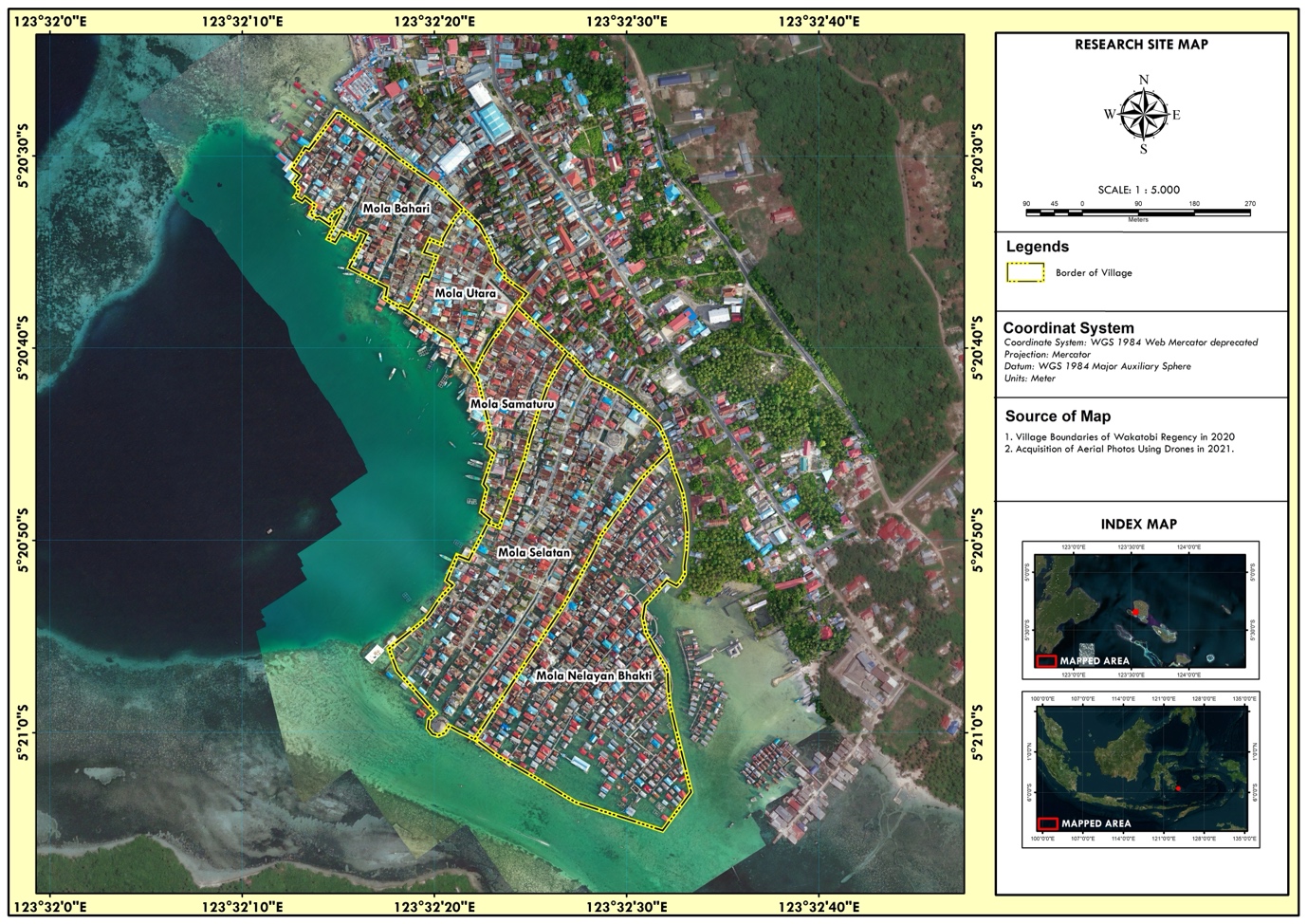
As of 2021, fishers from the Sama-Bajau communities of Wangi-Wangi, Kaledupa, and Tomia Islands comprised approximately 46% of the total 6,264 fishers in Wakatobi (BPS Wakatobi, 2022). Within Wangi-Wangi, the Sama-Bajau community resides in five key villages: Mola Bahari, Mola Utara, Mola Selatan, Mola Nelayan Bakti, and Mola Samaturu (see Table 1). These villages have substantial populations and a significant number of elder fishers, which constitute the study's primary focus. Figure 1 illustrates the spatial distribution of these communities. The demographic concentration of elder fishers makes Wangi-Wangi an appropriate site for examining climate perceptions and adaptive strategies among aging maritime populations.
| No | Village | Total Population | Number of Households | Number of Full Fishers | Number of Elder Fishers |
|---|---|---|---|---|---|
| 1 | Mola Bahari | 3079 | 389 | 289 | 173 |
| 2 | Mola Utara | 1586 | 322 | 237 | 67 |
| 3 | Mola Selatan | 1924 | 577 | 482 | 62 |
| 4 | Mola Nelayan Bakti | 2508 | 637 | 538 | 158 |
| 5 | Mola Samaturu | 1750 | 328 | 245 | 150 |
| Total | 10847 | 2253 | 1791 | 610 |
2.2 Respondents and Data Collection
The study focused on elder Sama-Bajau fishers, defined as individuals aged 60 or older who remain actively engaged in fishing-related livelihoods. Concentrating on elderly fishers enables examination of how aging intersects with climate vulnerability, livelihood dependence, and differential access to capital resources.
Participants were selected through a purposive sampling method, selecting cases that best help understand the phenomenon (Stake, 1995), based on three criteria: age (60+), continued engagement and dependence on fishing, and residence within the designated Sama-Bajau settlements. Snowball sampling was subsequently used to expand the participant pool, beginning with informants recommended by local contacts (Biernacki and Waldorf, 1981). Although a preliminary list of potential participants was available, referrals from initial interviews helped identify individuals with extensive fishing experience and long-term environmental knowledge. Consistent with qualitative inquiry, in which exact participant numbers are not initially determined (Charmaz, 2014), recruitment continued until data saturation was achieved (Gentles et al., 2015; Yin, 2018), ultimately yielding 19 informants.
Fieldwork was conducted in two phases, from August 2021 to February 2022 and from November to December 2024. The temporal gap between these periods was attributable to mobility limitations imposed by the Indonesian government's Community Activity Restrictions Enforcement regime during the pandemic (2021–2022), as well as research funding constraints that prevented immediate completion within the 2022 timeframe. Fieldwork resumed in 2024 following the alleviation of these restrictions and the securing of necessary logistical support, allowing the second phase to deepen earlier findings and confirm emerging themes. A total of 19 in-depth, semi-structured interviews were conducted, with data saturation reached when no substantially new themes emerged. Interviews explored perceptions of climate variability, observed environmental change, livelihood impacts, and adaptation strategies. Open-ended prompts encouraged participants to describe adjustments in fishing practices, household management strategies, and the mobilization of knowledge, social networks, and material assets in response to changing marine conditions.
To enhance contextual understanding, interviews were supplemented with informal conversations and field observations that documented environmental changes, fishing routines, and asset conditions. Interviews were conducted in Bahasa Indonesia and Sama-Bajau, with translation support to minimize misinterpretation. All participants provided informed consent, and confidentiality was maintained throughout the study. Interviews were audio-recorded, and detailed field notes and photographs were taken to support contextual analysis. Recordings were transcribed and translated into English for systematic coding and analysis.
2.3 Data Analysis
Data were analyzed using the SLA as an analytical framework. Analysis proceeded in several stages.
First, interview transcripts were reviewed to identify perceived climate-related risks and reported adaptive measures. Second, adaptation practices were organized into primary strategies and sub-strategies based on thematic similarities. Third, each adaptation practice was systematically coded according to the form(s) of livelihood capital mobilized, namely, human, social, natural, physical, and financial capital.
Coding was iterative and involved comparing cases to identify patterns in how different capital combinations were mobilized under specific risk conditions. The analysis examined whether adaptive responses relied on single or multiple forms of capital and how capital configurations influenced the scale of adaptation. The coded data were then structured into an analytical matrix linking perceived risks, adaptation strategies, and forms of livelihood capital. This process enabled examination of why adaptive responses remained predominantly incremental despite extensive Traditional Ecological Knowledge.
3. Results
The elder Sama-Bajau fishers are referred here as “informants” or “fishers (#).” Informants consistently described increasingly unpredictable weather, stronger winds, higher waves, shifting fish availability, and rising environmental uncertainty over the past three decades. Their responses form a portfolio of incremental, risk-management practices operating across domestic and maritime spheres.
Table 2 synthesizes the adaptation strategies employed by elder Sama-Bajau fishers in response to perceived climate-related impacts and risks. The table organizes findings by (1) perceived environmental disruptions, (2) corresponding main adaptation strategies, (3) specific practices implemented, and (4) the forms of livelihood capital mobilized in each case. This structure allows adaptation to be examined not merely as a set of actions, but as resource-dependent responses shaped by capital availability.
The discussion that follows is organized around the main adaptation strategies identified in the table. Drawing on interview narratives, it analyzes how fishers operationalize these strategies in practice and how different combinations of capital enable or constrain their responses.
| Perceived Climate Impacts and Risks | Main Adaptation Strategies | Sub-strategies and Related Actions | Livelihood Capitals Mobilized |
|---|---|---|---|
| Unpredictable weather and wind patterns; increased fear on land | Household Resource Management | Financial planning for staple food; stockpiling rice; use of wood and coconut shells for cooking | Human, Financial, Natural |
| Shifting weather patterns and increased risks at sea | Diversification of Fishing Practices | Using varied baits; employing multiple fishing techniques; adjusting fishing grounds and target species (within Wakatobi waters) | Human, Natural |
| Shifting weather patterns and increased risks at sea | Maintenance of Fishing Assets | Repairing boats and engines; regular maintenance and inspection routines | Human, Physical, Financial |
| Shifting weather patterns and increased risks at sea | Operational Risk Management | Group fishing; bringing additional fuel, food, water, and spare resources | Human, Social |
3.1 Household Resource Management
Under conditions of unpredictable weather and intensified wind patterns, elder Sama-Bajau fishers reported heightened uncertainty about fishing schedules and income stability. Household-level adaptation centers on securing staple foods, particularly rice, which underpins domestic resilience.
Rice is consistently prioritized within household financial planning. As Fisher #6 stated:
“Regardless, there must always be funds allocated for purchasing rice, as it is of utmost importance due to being the essential item for my household compared to other fishing-related expenses.”
This statement illustrates the mobilization of financial capital, guided by experiential judgment (human capital), toward immediate food security. Financial planning is not oriented toward expanding investment but toward stabilizing consumption, reinforcing the incremental character of adaptation.
Preparedness is further reflected in deliberate stockpiling practices. Fisher #13 explained:
“Occasionally, when I make a profit, I request my wife to buy approximately 10 kilograms of rice. I consider the future, knowing that I cannot go to sea during poor weather. Having rice reserves at home means that when bad weather strikes, we need not worry, as we can still eat.”
Here, adaptive action emerges from anticipatory reasoning rooted in long-term environmental experience. However, the strategy remains coping-oriented. It buffers short-term shocks but does not expand livelihood options beyond fishing.
Economic constraints also prompt substitution strategies linking natural and human capital. Fisher #1 noted:
“If we run low on kerosene and cannot purchase it because we prioritize rice, we depend on firewood or coconut shells for cooking.”
The use of locally available organic material reduces financial costs while protecting access to staple foods. This substitution reflects flexible capital interactions but also underscores limited financial elasticity. Adaptation thus operates through reallocation and substitution rather than diversification or transformation.
Taken together, these findings demonstrate that household resource management among elder fishers is structured around safeguarding consumption rather than restructuring livelihoods. Human capital (experiential foresight) enables strategic financial prioritization, while natural capital serves as a substitute for constrained cash flow. However, the dominance of subsistence-oriented responses among elder Sama-Bajau on Wangi-Wangi Island indicates a narrow adaptive space, consistent with incremental rather than transformative adaptation. This contrasts with the existing small-island adaptation literature, which predominantly highlights externally visible or legible responses such as livelihood diversification (Rayhan et al., 2023), migration (Silga et al., 2021), planned infrastructure measures like seawalls (Kantamaneni et al., 2022), and technology adoption and skill upgrading among other Southeast Asian neighbors, such as Malaysian fishers (Ahmad et al., 2020; Abu Samah et al., 2021).
3.2 Diversification of Fishing Practices
Climate variability has directly altered fishing conditions in Wakatobi waters, compelling elder Sama-Bajau fishers to modify long-established practices. Informants reported declining and unpredictable catch, stronger winds, and rougher seas, requiring ongoing adjustments in bait selection, fishing methods, and target species. These changes reflect the mobilization of human capital, particularly experiential knowledge and ecological familiarity accumulated over decades.
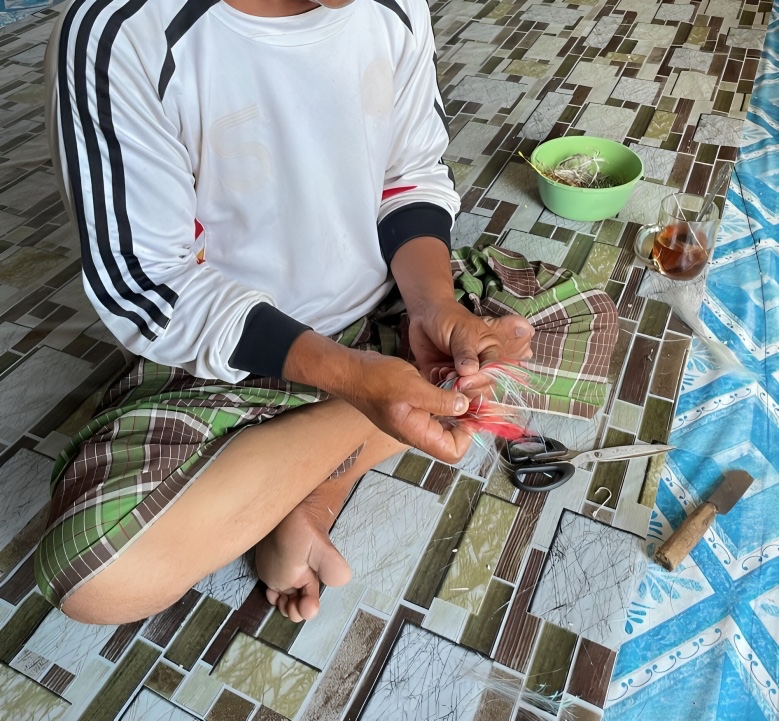
One recurrent strategy involved adjusting bait color based on water clarity. Fishers reported using brighter colors such as yellow and red in murky waters to improve visibility and attract fish (Figure 2). This practice reflects finely tuned environmental awareness rather than random experimentation. Their decisions are grounded in long-term observation of how turbidity, wind strength, and wave conditions influence fish behavior (Moraga et al., 2015; Nieman et al., 2020). Such adjustments illustrate how traditional ecological knowledge remains central to adaptive practice.
Adaptation also involved tactical decisions about when and how to fish in unstable weather. As Fisher #9 explained:
“If the waves are big and the wind is strong, I stop and moor the boat first... Once the weather calms, I restart the engine and continue with handlines or trolling.”
This statement illustrates adaptive flexibility and risk management. Instead of leaving the fishery completely, fishers pause their activities temporarily and restart when conditions improve. Adaptation occurs through timing adjustments, switching methods, and strategic engine use. These are small changes that maintain livelihoods and reduce exposure to risk. Diversification also extended to target species. As fish distribution shifted, some fishers adjusted their focus. Fisher #1 noted:
“I used to target reef fish… since the fishing spots have shifted, I sometimes go for pelagic fish like bubara or mackerel.”
This shift reflects an adaptive reorientation within ecological limits. However, unlike in their youth, elder fishers reported restricting their spatial mobility. Due to age and declining physical strength or vision, they no longer travel to distant fishing grounds but instead operate within the accessible waters of Wakatobi. This highlights an important tension: while human capital (knowledge) enables strategic diversification, limitations in physical capital (boat capacity, navigation technology) and embodied capacity constrain the scale of adaptation.
Thus, diversification is an incremental form of adaptation. Fishers adjust techniques, timing, and species, yet these adjustments remain bounded by aging bodies, limited assets, and infrastructural constraints. Adaptation is therefore dynamic but not transformative. It reflects resilience within structural limits rather than expansion into new economic or spatial domains.
3.3. Maintenance of Fishing Assets
In response to intensifying wave activity and increasingly volatile sea conditions, elder Sama-Bajau fishers reported heightened attention to boat maintenance as a core adaptive strategy. Unlike structural vessel upgrades or expansion, adaptation in this context primarily manifests through routine inspections and repairs to ensure operational safety and reliability. As Fisher #4 explained:
“It has been over a decade since I got this boat. Now, I keep it in good condition, checking the engine every time before heading out. I can safely return home if the sea turns rough with strong winds or big waves.”
This statement reflects a preventive risk-management orientation. Boat maintenance is not merely technical upkeep; it serves as a safety buffer against abrupt climatic shifts. By routinely checking engines, reinforcing vulnerable joints, inspecting cracks caused by wave impact, and monitoring propeller pipes prone to bending, fishers attempt to reduce the probability of mechanical failure under hazardous conditions.
Importantly, this form of adaptation differs from commonly documented strategies such as enlarging vessel size, upgrading hull strength, or investing in advanced navigation equipment (Mulyasari et al., 2023; Ngoc et al., 2022). Instead, physical capital adaptation in this case operates through what may be conceptualized as maintenance-intensive reliability work. Fishers preserve speed, steering control, and safe return capacity not through expansion, but through meticulous care of existing assets.
This pattern illustrates adaptation within constraints. Major vessel modifications demand financial resources beyond the means of many elderly fishers. At the same time, aging bodies and declining physical endurance heighten risk sensitivity, as mechanical failures at sea carry more serious consequences than in earlier life stages. Consequently, maintenance emerges as the most practical and affordable way to sustain livelihood activities.
This strategy illustrates the interaction of multiple livelihood capitals: physical capital, in the form of vessel condition; human capital, expressed through diagnostic skill and routine inspection knowledge; and financial capital constraints that limit access to large-scale upgrades or new boats. While such practices demonstrate resilience and adaptive capacity, they also reveal structural limits. Gaps between "desired" and "achievable" options are shaped by institutional and resource limitations, particularly in small-island environments where infrastructure and investment often depend on external support (Huynh et al., 2021; Satumanatpan et al., 2022; Bossier et al., 2025). Maintenance safeguards continuity but does not fundamentally reduce exposure to climatic risk. Without broader institutional support, access to financing, or infrastructure improvements, these adaptations remain incremental coping strategies rather than steps toward long-term structural resilience.
3.4 Operational Risk Management
To ensure safety amid climate change impacts, elder Sama-Bajau fishers have adopted preparedness strategies centered on collective navigation and material redundancy. These practices represent proactive operational risk management rather than simple voyage avoidance. A notable shift involves moving from solo fishing to group-based departures. As Fisher #5 explained:
“I never go to sea alone anymore, at least two people in one boat.”
This transition reflects growing recognition that mutual support at sea reduces the vulnerability to accidents. Group fishing serves as a form of informal risk-sharing. Companions provide emergency assistance, share navigational judgment, and enhance collective vigilance during abrupt weather shifts. Rather than relying primarily on formal early warning systems, safety is embedded in interpersonal coordination. Preparedness also involves carrying supplementary provisions. As Fisher #11 emphasized:
“I always bring additional fuel, kasuami (local meal made from cassava), and clean water.”
Fishers reported routinely bringing extra fuel, ice, food, water, bait, and spare parts. These provisions ensure operational continuity if weather delays the return or if mechanical issues arise offshore. Preparedness, therefore, extends beyond deciding whether to depart; it becomes a strategy of redundancy that anticipates uncertainty. From a livelihood capital perspective, these practices demonstrate the mobilization of social capital (solidarity, reciprocity, collective vigilance) to compensate for constraints in physical and financial capital. Limited access to advanced safety equipment, communication technology, or larger vessels narrows formal risk mitigation options. In this context, group fishing and supplementary provisioning serve as accessible safety technologies.
However, operational risk management in this case also reflects adaptation shaped by constraint. While collaborative fishing reduces individual exposure, it redistributes responsibility within the collective and remains dependent on others' capacities. Similarly, carrying extra provisions increases security but does not eliminate structural vulnerability to extreme events. These strategies, therefore, exemplify incremental adaptation. These are effective at reducing immediate risk but are constrained by limited institutional and infrastructural support.
While many studies emphasize information-based risk avoidance, such as postponing voyages when storm intensity increases or relying on accurate weather forecasts (Pfeiffer, 2020; Finnis et al., 2019), the present findings demonstrate that preparedness among elderly Sama-Bajau fishers extends beyond the binary decision of "whether to depart," instead being operationalized through redundancy and mutual aid while at sea. This distinction holds conceptual significance. For elderly fishers who have less tolerance for uncertainty and limited margins for error, preparedness serves as a practical safety technology that compensates for deficiencies in formal early warning, constrained access to forecast information, or limited capacity to act on that information. The elder Sama-Bajau case also illustrates a more informal, social-capital-based safety collaboration, considered a "risk-sharing micro-institution," influenced by age-related limitations and practical operational considerations rather than by formal or government-driven structures. They leverage social capital in the form of solidarity, reciprocity, and collective vigilance to offset limitations in financial and physical capital, including the inability to invest in safer vessels, communication technology, or navigation equipment, and to rely on human capital, specifically, experience-informed judgment regarding probable emergency scenarios, to optimize the functionality of scarce resources (Kriegl et al., 2022; Huynh et al., 2021). Preparedness among elderly Sama-Bajau fishers represents adaptive ingenuity, but also reveals the narrow adaptive space within which these fishers operate.
4. Discussion
This study explores how different forms of livelihood capital interact to shape climate adaptation among elder Sama-Bajau fishers. Across adaptation practices, a consistent capital configuration becomes evident in which human and social capital sustain flexibility, while financial and physical capital remain structurally constrained. This configuration explains why responses stabilize livelihoods but do not enable structural transformation.
Human capital, especially Traditional Ecological Knowledge accumulated over many years, serves as the key coordinating resource. These findings suggest that TEK functions as a coordinating asset, enabling fine-scale adjustments within existing livelihood structures rather than facilitating expansion beyond them. Social capital mitigates exposure through reciprocity and collective navigation, but remains embedded within the same small-scale fishing economy, limiting its transformative potential. These types of capital provide both flexibility and stability amid environmental uncertainty, positioning elder fishers as resilient actors rather than passive victims of climate change.
However, limited financial capital constrains investment in larger vessels, advanced navigation equipment, diversified income streams, or structural livelihood transitions. Physical capital remains modest and oriented toward maintenance rather than expansion. Natural capital, central to livelihoods, is increasingly uncertain due to ecological change and conservation governance within Wakatobi National Park. Together, this capital configuration stabilizes incremental adaptation but limits the conditions necessary for structural transformation. In adaptation scholarship, transformative adaptation requires structural shifts in livelihood systems and institutional arrangements. In the Wakatobi context, transformative adaptation would involve intergenerational exit from small-scale fishing, diversification into non-marine income streams, and institutional integration into formal credit and maritime safety systems that enable investment in safer vessels and navigation technologies. However, these pathways remain structurally constrained. These constraints do not render transformation impossible, but they make it improbable under current capital configurations and governance conditions. These constraints are further shaped by Wakatobi’s small-island geography, where remoteness, transport dependence, limited infrastructure, and conservation zoning structure access to markets, credit, and maritime safety services.
The findings demonstrate that adaptive capacity depends not only on the presence of assets but on their convertibility across domains. This reveals that capital is not inherently empowering. Its adaptive value depends on bodily capacity, institutional access, and spatial mobility. Elder fishers possess substantial human capital, yet aging bodies, declining endurance, and reduced risk tolerance limit the extent to which knowledge can be translated into capital-intensive or spatially expansive strategies. Social capital compensates for some constraints but cannot substitute for large-scale financial investment or institutional support. Aging mediates capital convertibility, structurally orienting elder fishers toward incremental adaptation. This persistence reflects not resistance to change, but constrained convertibility within an aging livelihood system.
This analysis contributes to climate adaptation scholarship by showing that resilience can coexist with structural limitations. The elder Sama-Bajau fishers demonstrate ingenuity, foresight, and flexibility, yet operate within a narrow adaptive space shaped by demographic, institutional, and economic constraints. Adaptation is not absent. It is bounded. Recognizing these boundaries shifts attention from romanticizing coping strategies to addressing structural capital disparities in small-island contexts. In this sense, the case of elder Sama-Bajau fishers illustrates how aging, geography, and governance intersect to shape the limits of livelihood-based adaptation in climate-vulnerable maritime communities.
5. Conclusion
This study explored how elder Sama-Bajau fishers in Wakatobi respond to intensifying climate stressors, how different forms of livelihood capital interact to shape their adaptive capacity, and why these adaptations remain predominantly incremental. The findings show that adaptation is not organized around a single intervention but around a portfolio of interlinked practices spanning household resource management, diversification of fishing techniques and target species, routine maintenance of fishing assets, and operational risk preparedness. These strategies are grounded in subsistence priorities and culturally embedded maritime knowledge rather than in technology-driven transformation. Adaptation, therefore, is experience-based, continuity-oriented, and structured around sustaining existing livelihood systems.
Viewed through the SLA, adaptation arises from dynamic interactions among capitals. Human capital, embodied skills, experiential judgment, and TEK, serves as the primary coordinating mechanism that makes other capitals actionable. Decisions about fishing locations, bait selection, maintenance timing, fuel allocation, group navigation, and staple-food budgeting depend fundamentally on accumulated ecological knowledge and interpretive capacity. Human capital mobilizes financial resources to ensure subsistence stability, leverages natural capital through ecological interpretation, and strengthens social capital through collaborative risk-sharing practices. Adaptive capacity, therefore, rests on coordinated capital conversion under constraint.
At the same time, the predominance of human capital clarifies why adaptation remains largely incremental, reflecting competence and resilience while also revealing a structurally narrow adaptive space. Elder fishers operate within limited financial access, aging-related physical constraints, and insufficient institutional support. Strategies such as routine repairs, supplementary provisioning, staple-food prioritization, and informal group fishing redistribute risk but do not fundamentally restructure livelihood systems. Institutional arrangements have not sufficiently expanded access to financial instruments, maritime safety infrastructure, climate information systems, or diversified economic opportunities. As a result, adaptation remains survival-oriented and bounded by limited structural support.
By highlighting inter-capital dynamics and aging, this study advances climate adaptation scholarship in small-island contexts. It shows that resilience can coexist with structural limitations and that strong local knowledge does not automatically translate into transformative adaptation. Recognizing these constraints shifts analytical and policy attention from celebrating coping capacity toward expanding institutional support and improving access to capital. Strengthening adaptation among aging maritime communities requires not only valuing embodied knowledge but also creating enabling conditions that broaden the range of viable livelihood pathways.
6. Implications and Recommendations
The findings suggest that climate adaptation among elderly Sama-Bajau fishers is largely structured around low-cost, self-managed risk mitigation. While these practices demonstrate competence and local ingenuity, they also reveal that elders operate within constrained institutional environments where safeguarding food security and personal safety takes precedence over capital-intensive transformation. Expanding adaptive capacity, therefore, requires strengthening the structural conditions that shape access to capital and its convertibility.
First, maritime safety and climate risk communication require greater institutional support. The shift toward group-based fishing and material redundancy signals heightened perceptions of risk at sea. Localized weather forecasting and early warning systems should be designed to align with elders’ decision-making routines, clear, timely, and disseminated through trusted community channels. Formal safety services should complement rather than replace existing informal collaboration networks. Improving access to reliable climate information would reduce reliance on risk redistribution strategies alone.
Second, strengthening maintenance systems for physical capital is critical, given that routine boat and engine repairs currently serve as the primary adaptation mechanism. However, when spare parts are costly, irregularly available, or dependent on distant suppliers, maintenance becomes fragile. Improving access to affordable inputs, localized repair services, and preventive inspection programs would enhance the effectiveness of existing human capital and reduce exposure to mechanical risk. In livelihood terms, this would improve the convertibility of technical knowledge into safer operational outcomes.
Third, food security should be recognized as a central adaptation priority. Staple-food planning and rice stockpiling support livelihood continuity and reduce pressure to engage in high-risk fishing during adverse conditions. Age-responsive financial instruments, simplified access to social protection, or community-based reserve systems could help secure household consumption without restrictive eligibility barriers. Strengthening financial capital at the household level would widen adaptive margins and reduce survival-oriented decision-making.
Fourth, adaptation policy must explicitly incorporate age-sensitive considerations. Access to credit, maritime services, mobility support, and climate information often assumes physical capacity and financial collateral that elders may lack. Without addressing these structural barriers, adaptation interventions risk reinforcing existing inequalities and maintaining the narrow adaptive space identified in this study.
Finally, future research should further investigate how different configurations of livelihood capital shape adaptive trajectories in small-island communities. Comparative studies across age groups, vessel ownership categories, household structures, and patron–client arrangements could illuminate which capital combinations enable more secure and sustainable pathways. Longitudinal research is also needed to assess whether current incremental strategies remain viable as climate variability intensifies. Moving beyond the celebration of local resilience to analyze institutional support systems will be essential for designing adaptation frameworks that are safer, more equitable, and structurally enabling for aging maritime populations. These findings call for adaptation policies that move beyond capital enhancement alone and address structural inequalities, generational vulnerability, and mobility constraints in aging coastal communities across Southeast Asia.
Acknowledgements
The first author expresses sincere gratitude to the Southeast Asian Regional Center for Graduate Study and Research in Agriculture (SEARCA) for their partial financial support, which facilitated the completion of this study.
References
- Abu Samah, A., Shaffril, H.A.M., D’Silva, J.L. 2021. The Islanders' Small-scale Fishers' Adaptation to Climate Change Impacts in Malaysia. SEARCA Agriculture and Development Discussion Paper Series No. 2021-2. Southeast Asian Regional Center for Graduate Study and Research in Agriculture.
- Aderinola, O., Mekuleyi, G., Kusemiju, V., Adu, A., Babalola, O. 2021. Climate change and fisheries: perspectives from the small-scale fishing community in Badagry, Lagos, Nigeria. Journal of Agriculture and Ecology Research International, 58-69. https://doi.org/10.9734/jaeri/2021/v22i430197
- Ahmad, N., Shaffril, H.A.M., Abu Samah, A., Idris, K., Abu Samah, B., Hamdan, M.E. 2020. The Adaptation Towards Climate Change Impacts Among Islanders in Malaysia. Science of the Total Environment, 699, 134404. https://doi.org/10.1016/j.scitotenv.2019.134404
- Albert, C., Isife, B. 2014. Indigenous Technologies Fishing Settlement Response to Climate Change Variabilities in Southern Nigeria. Asian journal of agriculture and rural development, 4, 220-224.
- ASEAN ENMAPS. 2025. Wakatobi National Park. Retrieved March 28, 2025, from https://enmaps.aseanbiodiversity.org/wakatobi-national-park-wnp/
- Budiyanto, Riani, I., Rosmawati. 2025. Impact of managing Wakatobi National Park as a marine conservation area. AACL Bioflux, 18(2), 1046–1055.
- Bossier, S., Ota, Y., Pozas-Franco, A.L., Cisneros-Montemayor, A.M. 2025. How much time and who will do it? Organizing the toolbox of climate adaptations for small-scale fisheries. Frontiers in Marine Science, 12. https://doi.org/10.3389/fmars.2025.105000939957
- BPS Wakatobi. 2022. Kecamatan Wangi-Wangi Selatan, Kaledupa dan Tomia dalam angka 2022 (South Wangi-Wangi, Kaledupa and Tomia in Figures 2022). Wakatobi. 465 p
- Chandra, H., Simbolon, D., Wiryawan, B., Iskandar, B.H., Taurusman, A.A. 2017. Development of coastal water-monitoring technology in Wakatobi Regency, Indonesia. AES Bioflux, 9(2), 148-–57.
- DAI. 2018. Laporan kerentanan dan risiko iklim Provinsi Sulawesi Tenggara (Report on climate vulnerability and risk of Southeast Sulawesi Province). APIK USAID.
- de Carvalho, D.A., Amaral, S., Alves, L.M. 2023. Climate Change Adaptation Frameworks in Fishing Communities: A Systematic Review. Ocean & Coastal Management, 242, 106698. https://doi.org/10.1016/j.ocecoaman.2023.106698
- Finnis, J., Shewmake, J.W., Neis, B., Telford, D. 2019. Marine Forecasting and Fishing Safety: Improving the Fit between Forecasts and Harvester Needs. Journal of Agromedicine, 24(4), 1–9. https://doi.org/10.1080/1059924x.2019.1639576
- Fitriawati, F., Suroso, D.S.A. 2017. Identification of Fisher’s Household's Adaptive Capacity in Responding to Climate Change Impacts (A Case Study Of Muncar District, Banyuwangi Regency, Indonesia). The Indonesian Journal of Planning and Development, 2(1), 19. https://doi.org/10.14710/ijpd.2.1.19-26
- Frawley, T., Muhling, B., Brodie, S., Fisher, M., Tommasi, D., Fol, G., Jacox, M. 2020. Changes to the Structure and Function of an Albacore Fishery Reveal Shifting Social‐Ecological Realities for Pacific Northwest Fishers. Fish and Fisheries, 22(2), 280–297. https://doi.org/10.1111/faf.12519
- Galappaththi, E.K., Ford, J.D., Bennett, E.M. 2019. A Framework for Assessing Community Adaptation to Climate Change in a Fisheries Context. Environmental Science & Policy, 92, 17-26. https://doi.org/10.1016/j.envsci.2018.11.005
- Green, K.M., Selgrath, J.C., Frawley, T.H., Crowder, L.B. 2021. How Adaptive Capacity Shapes the Adapt, React, Cope Response to Climate Impacts: Insights from Small-Scale Fisheries. Climatic Change, 164(1-2), 15. https://doi.org/10.1007/s10584-021-02962-z
- Huynh, P.T.A., Le, N.D., Le, S.T.H., Tran, T.N. 2021. Adaptive Livelihood Strategies Among Small-Scale Fishing Households to Climate Change-Related Stressors in Central Coast Vietnam. International Journal of Climate Change Strategies and Management, 13(3), 339-357. https://doi.org/10.1108/IJCCSM-08-2020-0093
- IPCC. 2022. Summary for Policymakers. In H.-O. Pörtner, D.C. Roberts, E.S. Poloczanska, K. Mintenbeck, M. Tignor, A. Alegría, M. Craig, S. Langsdorf, S. Löschke, V. Möller, A. Okem (Eds.), Climate Change 2022: Impacts, Adaptation and Vulnerability. Contribution of Working Group II to the Sixth Assessment Report of the Intergovernmental Panel on Climate Change (pp. 3–33). Cambridge University Press. https://doi.org/10.1017/9781009325844.001
- Kamsi, N. S., Radin Firdaus, R. B., Sarker, M. N. I., Gunaratne, M. S. 2025. Assessing the Linkages of Livelihood Capitals of Small-Scale Fishers in Malaysia. SAGE Open, 15(1). https://doi.org/10.1177/21582440241255321
- Kantamaneni, K., Christie, D., Lyddon, C., Huang, P., Moujahed, N., Balasubramani, K., Panneer, S. 2022. A Comprehensive Assessment of Climate Change and Coastal Inundation through Satellite-Derived Datasets: A Sabang Island, Indonesia Case Study. Remote Sensing, 14(12), 2857. https://doi.org/10.3390/rs14122857
- Kriegl, M., Kluger, L. C., Gorris, P., Kochalski, S. 2022. Coastal Livelihood Resilience to Abrupt Environmental Change: The Role of Social Capital in a Peruvian Bay. Regional Environmental Change, 22(3), 90. https://doi.org/10.1007/s10113-022-01946-8
- Lee, H. (2015). General rainfall patterns in Indonesia and the potential impacts of local season rainfall intensity. Water, 7(4), 1751-1768. https://doi.org/10.3390/w7041751
- Molosi-France, K., Dipholo, K. 2020. Empowering Botswana’s Rural Communities Through the Sustainable Livelihood Approach: Opportunities and Constraints. ASEAN Journal of Community Engagement, 4(2), 342–359. https://doi.org/10.7454/ajce.v4i2.1101
- Moraga, A.D., Wilson, A.D.M., Cooke, S.J. 2015. Does Lure Color Influence Catch per Unit Effort, Fish Capture Size, and Hooking Injury in Angled Largemouth Bass? Fisheries Research, 172, 1–6. https://doi.org/10.1016/j.fishres.2015.06.010
- Mulyasari, G., Cahyadinata, I., Irham, Hadi, A. I. 2025. Modelling Adaptation to Climate Change Among Small-Scale Fishers in Bengkulu Province in Indonesia. Challenges in Sustainability, 13(1).
- Mulyasari, G., Trisusilo, A., Windirah, N. 2023. Resilience to Climate Change Among Small-Scale Fishery on the Northern Coast of Bengkulu Province, Indonesia. E3S Web of Conferences, 373, 02001. https://doi.org/10.1051/e3sconf/202337302001
- Mulyasari, G., Trisusilo, A., Windirah, N., Putra, A. S. 2023. Assessing Perceptions and Adaptation Responses to Climate Change Among Small-Scale Fishery on the Northern Coastal of Bengkulu, Indonesia. The Scientific World Journal, 2023, 5516265. https://doi.org/10.1155/2023/5516265
- Morse, S. 2025. Having Faith in the Sustainable Livelihood Approach: A Review. Sustainability, 17(2), 539. https://doi.org/10.3390/su17020539
- Natarajan, N., Newsham, A., Rigg, J., Sabour, F., Satiro, E. 2022. A Sustainable Livelihoods Framework for the 21st Century. World Development, 155, 105898.
- Nieman, C. L., Bruskotter, J. T., Braig, E. C., Gray, S. M. 2020. You Cannot Just Use Gold: Elevated Turbidity Alters Successful Lure Color for Recreational Walleye Fishing. Journal of Great Lakes Research, 46(3), 589–596. https://doi.org/10.1016/j.jglr.2020.03.002
- Ngoc, N. T., Binh, N. X., Ha, N. T. 2022. Impacts of Climate Change on Fishing Villages in North Vietnam. Environment and Urbanization Asia, 13(1), 188–189.
- Nurdjaman, S., Nasution, M. I., Johan, O., Napitupulu, G., Saleh, E. 2023. Impact of Climate Change on Coral Reefs Degradation at West Lombok, Indonesia. Jurnal Kelautan Tropis, 26(3), 451–463. https://doi.org/10.14710/jkt.v26i3.18540
- Pambudi, M., Koem, S., Lahay, R. 2023. Climate Vulnerability Literacy and Adaptive Capacity through the Climatepreneurship Strategy in Bilato Village. Lamahu Jurnal Pengabdian Masyarakat Terintegrasi, 2(1), 24–29. https://doi.org/10.34312/ljpmt.v2i1.17526
- Petzold, J., Magnan, A. 2019. Climate Change: Thinking Small Islands Beyond Small Island Developing States (SIDS). Climatic Change, 152(1), 145–165. https://doi.org/10.1007/s10584-018-2363-3
- Pemerintah Desa Mola Bahari. 2023. Profil Desa Mola Bahari. Unpublished Report, Wakatobi, Indonesia.
- Pemerintah Desa Mola Nelayan Bhakti. 2023. Profil Desa Mola Nelayan Bhakti. Unpublished report, Wakatobi, Indonesia.
- Pemerintah Desa Mola Samaturu. 2023. Profil Desa Mola Samaturu. Unpublished report, Wakatobi, Indonesia.
- Pemerintah Desa Mola Selatan. 2023. Profil Desa Mola Selatan. Unpublished report, Wakatobi, Indonesia.
- Pemerintah Desa Mola Utara. 2023. Profil Desa Mola Utara. Unpublished report, Wakatobi, Indonesia.
- Pfeiffer, L. 2020. How Storms Affect Fishers' Decisions About Going to Sea. ICES Journal of Marine Science.https://doi.org/10.1093/icesjms/fsaa145
- Rahman, A., Limi, M., Fyka, S. 2021. Analysis of Coping Strategy in Overcoming Lack of Food in Coastal Community Households in Lantangi Village, Kulisusu Sub District, North Buton District. Jurnal Agribisnis dan Ilmu Sosial Ekonomi Pertanian, 6(1), 1–10. https://doi.org/10.37149/jia.v6i1.15968
- Rahmadi, M. M., Liviawaty, E., Faizal, I., Purba, N. P., Ramadhan, R. A., Amrullah, R., Dianti, I. E. 2022. The Vulnerability of Small Islands From Coastlines Change in Indonesia. IOP Conference Series: Earth and Environmental Science, 1095(1), 012026. https://doi.org/10.1088/1755-1315/1095/1/012026
- Rayhan, S., Mou, A., Akter, B., Kabir, M., Hoque, M. 2023. Fishers' Livelihood Adaptation in Response to Climate Change: An Empirical Study on the Southwestern Coastal Zone Of Bangladesh. Research in Agriculture Livestock and Fisheries, 9(3), 337–351. https://doi.org/10.3329/ralf.v9i3.63970
- Safitri, D. P., Hakim, A., Muluk, M. K., Putra, F. 2023. Analyzing Climate Change in the Coastal Zone: The Case of Kepulauan Riau, Indonesia. IOP Conference Series: Earth and Environmental Science, 1186(1), 012002. https://doi.org/10.1088/1755-1315/1186/1/012002
- Salgueiro-Otero, D., Ojea, E. 2020. A Better Understanding of Social-Ecological Systems is Needed for Adapting Fisheries to Climate Change. Marine Policy, 121, 104155. https://doi.org/10.1016/j.marpol.2020.104155
- Samah, A. A., Maruf, A., Ahmad, N., Hamsan, H. 2024. Understanding Local Perceptions of Impacts of Climate Change Among Small-Scale Sama-Bajau Fishers and Their Patrons in Wakatobi National Park, Indonesia. Shima, 18(1), 161-180
- Samah, A. A., Maruf, A., Ganadillo, I. M., Azam, M. N. D., Hamsan, H. H. 2025. Coping Strategies of Elder Sama-Bajau Fishers in Response to Climate Change in Wangi-Wangi Island, Indonesia. Shima, 19(2), 27-44. https://doi.org/10.21463/shima.272
- Satumanatpan, S., Pollnac, R., Chuenpagdee, R. 2022. Incorporating Fishers’ Evaluation of Adaptive Capacity in Policy Making in Thailand. Fisheries Research, 254. https://doi.org/10.1016/j.fishres.2022.106407
- Surni, A., Widyasari, S. N., Saleh, M., Sabar, M. I., Hasan, I. 2024. Spatial-Based Assessment of Land Use and Land Cover Change and Its Ecological Landscape Pattern on Kapota Island, Wakatobi Regency. Ecological Engineering & Environmental Technology, 25(12), 117–131.
- Suyitno, A., Saediman, Zani, M. 2024. Fishermen's Adaptation Strategy to the Impact of Climate Change in Lamanggau Village, Tomia Sub-district, Wakatobi Regency. International Journal of Technology and Education Research, 02(04), 165–177.
- Setiawati, M. D., Chatterjee, U., Djamil, Y. S., Alifatri, L. O., Nandika, M. R., Rachman, H. A., Islam, M. K. 2023. Seribu Islands in the Megacities of Jakarta are on the Frontlines of the Climate Crisis. Frontiers in Environmental Science, 11. https://doi.org/10.3389/fenvs.2023.1280268
- Sofyan, F., Ramadyan, F., Sanggabuana, M. S., Arifuddin, L. O., Herman. 2023. Participatory climate vulnerability assessment of Wakatobi District: Waduri, Balasuna and South Balasuna Balasuna Sub-District; Kollosoha, Tomia Sub-District; Dete Village, East Tomia Sub-District. Yayasan Konversi Alam Nusantara (YKAN).
- Shaffril, H., Samah, A., Samsuddin, S. 2022. The Impacts of Fishers' Resilience Towards Climate Change on their Wellbeing. Sustainability, 14(6), 3203. https://doi.org/10.3390/su14063203
- Silga, R. P., Ouéda, A., Kpoda, W. N., Mano, K., Ouédraogo, I., Weesie, D. M. P., Kabre, B. G. 2021. Fishers Local Knowledge and Aquatic Environmental Change: Impacts on Fishing and Adaptation Strategies in Volta Basin. Open Journal of Ecology, 11(7), 507–526. https://doi.org/10.4236/oje.2021.117033
- Stacey, N., Acciaioli, G., Clifton, J., Steenbergen, D. J. 2017. Impacts on Marine Protected Areas on Livelihoods and Food Security of the Bajau as an Indigenous Migratory People in Maritime Southeast Asia. In L. Westlund, A. Charles, S. Garcia, J. Sanders (Eds.), Marine protected areas: Interactions with fishery livelihoods and food security (pp. 113–126). Food and Agriculture Organization of the United Nations. http://www.fao.org/policy-support/resources/resources-details/en/c/853709/