
Multidisciplinary methods on islands’ future imaginaries: The Islands 4 Future project in Ponza, Italy
 10.21463/jmic.2025.14.2.08
Abstract
Combining geography, anthropology and education studies, this contribution illustrates the multidisciplinary methodological aspects elaborated within the project “Islands 4 Future” while underscoring the necessity of engaging multiple disciplinary perspectives, languages, and interpretative frameworks to reconcile the descriptive-interpretative dimension of research with its potential for transformative action. The project is conceived as a multi-dimensional and participatory intervention on promoting cultural heritage, future opportunities and alternative tourism on small islands, starting from the proactive role of new generations, with an initial focus on Ponza. Like other small Mediterranean islands, Ponza faces social, infrastructural, and economic vulnerabilities, compounded by the challenges of tourism monoculture and the risks of seasonal overtourism. Young islanders form a fragile social group, facing limited opportunities, while also experiencing various forms of social and geographical marginalization. As a result, we aimed to strengthen the agency of young people in the territory through a 30-hour educational program involving participatory mapping and filmmaking. The intervention enabled young people to become active researchers, allowing them to express their own visions of the island’s heritage and future.
Keywords
Island Studies, Future, Youth, Small Islands, Interdisciplinarity, Participatory approach
1. Introduction
In the last decades, Island Studies has developed into an established research field within the landscape of social, human, and geographical sciences. This research field aims at the multidisciplinary study of island contexts (Stratford, 2015), stressing the importance of “studying islands in their own terms” (McCall, 1994), thereby critiquing the imposition of external or universal perspectives. Dealing with the complexity of insular contexts, where different phenomena and scales coexist, requires an approach capable of integrating different disciplinary positions. By adopting this perspective, the article presents the project Islands 4 Future, which built a multidisciplinary scientific partnership in order to understand and foster the enrichment of the social capital of Ponza, the largest of the Ponziane Islands in the Tyrrhenian Sea.
Scientific literature on this kind of partnerships suggests that their interactions take place and develop according to three-facets models. “In stage one, the group is preoccupied with the tasks of group formation, role and goal clarification, task allocation, and paradigm exploration” (Amey, Brown, 2005:25). In stage two, aspects of group norming take the lead and the group is preoccupied with coming to agreement and understanding of certain values, refining and coordinating work processes, accommodating the concepts and language of others in order to progress toward project goals. In stage three paradigms move from competing through coexisting to inter-playing as a result of the adaptation and integration of ideas and the development of collective cognition and shared understandings among team members.
Reflecting on the methodological contributions that different disciplinary lenses had brought to the fieldwork of Islands 4 Future, allows us to consider certain elements of Island Studies inquiry paradigms. As in the rest of the social sciences, methodological reflection in the field has progressively distanced itself from a research culture tied to the positivist paradigm. This paradigm has conceived physical and social reality as an aggregate of entities and phenomena that can be isolated from context and known objectively through mathematical-experimental processes of identifying, observing and analyzing the behavior of variables defined by researchers according to precise hypotheses.
Because of the difficulty of mathematically working out the sets of variables that characterize social phenomena and the recognition of the impossibility of separating subject and object of observation, the positivist paradigm has been replaced by a paradigm that we might call 'ecological' (Mortari, 2018). It considers physical and social reality as a structure in which everything is interconnected. A structure in which the identity of entities and phenomena is defined by the relationships which shape each of them.
From this point of view, assuming the methodological and procedural complexity arising from what it is called the 'relational turn' in human geography, Island Studies identifies insular territories as “mutually constitutive and reflective of dynamic social, economic and political situated actions” (Jones, 2009: 493). Consequently, researchers who investigate insular phenomena show a specific interest in the production of knowledge as an organized social practice and opt often for multiple epistemic approaches in order to understand not only insular dynamics, but also the meaning that insularity and its experience assumes for people who live it.
In that sense the project that we are about to present has meant to consider all those factors by engaging researchers from the field of anthropology, education and visual geography in a prolonged involvement in the context which led to continuous observation and diversification of techniques and sources for data collection. Incorporating deconstructive, educational and participatory epistemic practices which directly involve students and broader community of Ponza in the construction of negotiated outcomes (Guba, Lincoln, 1985: 211), it promotes a particular kind of field intervention. On the one hand, it helps participants to recognize and act upon inequitable power dynamics, social and cultural contradictions of their contexts, while producing academic knowledge. On the other hand, it represents an example of the way in which it is possible to enact inter and intragenerational equity principle by assigning the lead of some participatory actions to the youngest in creative, responsible and mutual contributing for a more sustainable development.
The contribution consists of four parts. The first one explains the choices related to the project in the context of Italian small islands studies. In the second part, the deconstructive contribution of anthropology is deepened in order to underline the need to embed those choices within lives and needs of communities and groups involved in insular research. In the third part, the approach of critical pedagogy is used to frame the terms of school's engagement. In the fourth, the contribution of visual geography highlights the potential of participatory filmmaking as a methodology able to catalyze the process of understanding and transformation of the territory within its social and cultural dynamics. Conclusions highlight the complexity of a collaborative fieldwork that has been committed to design a research tool with high transformative potential and also able to gain space for the interactions between different disciplinary perspectives.
2. Islands 4 Future, Italian small islands and the case study of Ponza
A concrete example of the approach outlined in the previous section is the multidisciplinary methodology developed within Islands 4 Future, an Italian project of national interest (PRIN) involving the University of Milano-Bicocca, Roma Tre University, and the European University of Rome[1]. This project is conceived as a multidimensional and participatory intervention aimed at safeguarding cultural heritage, fostering education in sustainability and stewardship, analyzing the perceptions and opportunities of younger generations regarding their future, and promoting alternative tourism on small islands, with a particular emphasis on the proactive role of the youth.
These objectives are articulated around two central research questions: How do the younger generations of Italy’s small islands perceive their future, and how can they contribute to shaping it? What tools can be shared to support them in designing frameworks for the enhancement and valorization of their own heritage?
An ambitious project that involved pedagogists and cultural geographers from diverse disciplinary backgrounds, including history, literature, visual studies, and anthropology. Methodologically, the project has been shaped by the diverse and complementary experiences of the research team members.
This study focuses primarily on the Italian micro-insular context,[2] with the aim of facilitating a comparative dialogue between its findings and those from other Mediterranean small islands, since they are often united by similar characteristics, issues, and trajectories. These include low population density, limited economic diversification, and relative remoteness. Factors that contribute to marginalization and challenges in trade and access to essential services (Rigas, 2012), largely due to their (ultra-)peripheral relationship with mainland centers (Turco, 1980). However, the association of islands with binary oppositions, such as island/mainland, centrality/marginality, or global/local, can lead to the uncritical use of geographical, economic, and cultural categories, which risks reinforcing stereotypical and reductive representations of insular spaces (Malatesta & Cavallo, 2019).
Mediterranean islands experience highly seasonal and concentrated tourist flows, largely driven by Sun, Sea, and Sand tourism during the summer months. As their economies rely heavily on this sector, they are particularly susceptible to territorial, environmental, and socio-economic challenges (Cardillo, et al., 2021). Tourism, in fact, is far from being a “universal panacea for island problems” (Royle, 2001: 188). While during the last century has been a driving force for economic growth, it also produces significant negative impacts, especially along coastal areas and during peak tourist seasons (Salustri & Appolloni, 2021). These include land consumption resulting from widespread tourist-residential development, the gradual abandonment of traditional activities such as agriculture and fishing, landscape degradation, deforestation and loss of Mediterranean scrubland, the transformation of coastal zones into marinas for recreational boating, and marine pollution (Cavallo, 2022). In light of these challenges, a shift towards ecotourism presents a promising alternative for some scholars (Agius et al., 2019). The islands’ unique biodiversity and rich cultural and natural heritage make them particularly well-suited to sustainable tourism development.
The impact of tourism and its seasonability also affects natural resources — already rare and often insufficient — disproportionately to the annual needs of the local population, resulting in dependence on the mainland or other islands within the same archipelago (Gallia, Malatesta, 2022). The consumption of drinking water and food is in fact multiplied even a hundredfold and concentrated in a very short period of time. Water is in fact the most vital resource, particularly on islands where it is “indispensable to domestic and economic life and fundamental to agriculture and tourism” (Brigand, 199: 49), yet it remains scarce and limited. In some contexts, traditional water collection methods are insufficient to meet the demand during the summer period, making it necessary to adopt alternative supply solutions such as desalination systems (Gallia, 2021)[3].
The distance from the mainland and the sharp population peaks caused by seasonal economies create additional challenges, such as energy supply. This has led to the exploration of alternatives to transporting gas from the mainland, including the development of renewable energy communities that employ resources such as wave energy, wind, and solar power (Manzo, 2023). However, development choices must accommodate a variety of often conflicting interests and, therefore, in most cases, require decentralized approaches, negotiations, and forms of compensation (Salustri, Appolloni 2021).
Waste management is also a challenge for Italian small islands, with islands like Ponza, Lampedusa and Linosa, and Isola del Giglio, in which selective waste collection is 13%, 21% and 31% respectively (Isole Sostenibili, 2024).
Finally, depopulation driven by migration — both toward larger islands within an archipelago and toward the mainland — is primarily caused by the lack of economic opportunities beyond tourism and the absence of essential services such as secondary and, of course, tertiary education. This has triggered a vicious cycle in which the lack of services leads to depopulation, which in turn results in the further abandonment of existing services.
A concrete example is the closure of schools and hospitals. In many cases, existing primary and secondary schools are at risk of shutting down due to a lack of students, discouraging families from settling on the islands and ultimately reducing the number of future children. Similarly, healthcare services have gradually been relocated to the mainland. A notable example is obstetric care: on many Italian small islands, births no longer take place.
This factor has made small islands a highly significant case study for investigating these dynamics, starting with the young people who inhabit them. In this context, young islanders’ situation is particularly critical. They form a fragile social group, facing limited employment and entrepreneurial opportunities, while also experiencing various forms of social and geographical marginalization (Salustri, 2022).
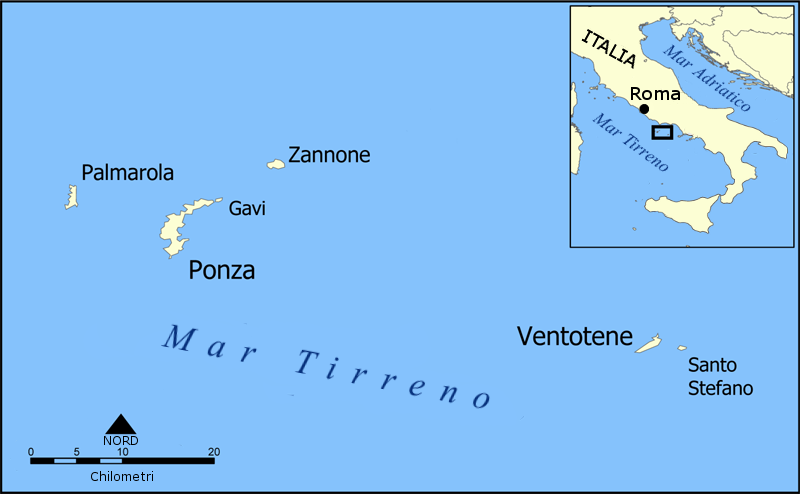
The project was first implemented on the island of Ponza, part of the Ponziane archipelago (Fig. 1), located in the Tyrrhenian Sea off the coast of the Gulf of Gaeta. Along with Ventotene, Ponza is one of the only inhabited islands in the archipelago and the most populated, with a resident population of 3,296 on a total area of 9.85 km² (Isole Sostenibili, 2024: 85). Although Ponza is well connected to the mainland during the summer, direct connections in winter are only guaranteed by routes departing from Formia (LT). There is a heliport on the island, but it is used almost exclusively in emergency situations.
Ponza was chosen as a case study because it not only embodies many challenges typical of small islands but also experiences them in an intensified form. Given the island’s heavy dependence on seasonal tourism and the limited efforts to safeguard its terrestrial and marine ecosystems,[4] extensive anthropisation and cementification have transformed the landscape through the development of tourist infrastructure. This has placed considerable strain on natural resources, biodiversity, and conservation initiatives (Gallia, 2021) — a completely different trajectory to the neighbouring island of Ventotene (Cardillo, 2021). During peak tourist season, the demand for electricity, drinking water, and food surges far beyond the annual needs of the local population, exacerbating waste management challenges (Gallia, 2019).
The significant impact of tourism on Ponza is given by the historical unpreparedness on the part of the local actors that caused a quantitative and qualitative “aggression” (Racheli, 1987: 44) of the territory, carried out in the absence of effective mechanisms to manage and guide tourist flows. This institutional weakness prevented the island and its inhabitants from adequately accommodating the large influx of visitors or addressing both external and internal needs. Over time, this lack of governance has made territorial management increasingly ineffective, allowing private and individual initiatives to first supplement, and eventually dominate, the island’s development (Gallia, 2021).
Ponza also struggles with youth outmigration driven by limited employment opportunities beyond tourism and restricted access to higher education. While the island offers basic schooling, students must travel to the mainland for tertiary or specialized secondary education, further accelerating this demographic decline, as observed in other island contexts (Cooke & Petersen, 2019).
The objectives of “Islands 4 Future” were implemented in Ponza through a multilayered approach and parallel sub-phases, including: an analysis of youth policies affecting the island, semi-structured interviews with young island residents, ethnographic research, and an action-research initiative at Ponza’s only secondary school, ITC Carlo Pisacane. This contribution examines the methodological aspects of the work conducted with the school through a multidisciplinary approach informed by field experience, and outlines the proposed methodology across geo-anthropological, pedagogical, and geographic-visual perspectives.
3. Reflexive sensitivity and fieldwork: exploring the lived experience of islandness toward the critical examination of representations, categories, and senses of place
Islands represent powerful “geographical metaphors” (Malatesta, 2021:41), “places available for utopias and dystopias projected from the outside” (Sedda and Sorrentino, 2020:10), onto which, over time, a series of culturally determined imaginaries — mythical, sentimental, literary, geographical, and increasingly, touristic — have been projected.
While we acknowledge both the extensive reflection on the foundational myths of insularity (Baldacchino, 2004, 2012) and the framework through which Island Studies has progressively elaborated its epistemological and methodological status (McCall, 1994; Baldacchino, 2008; Grydehøj, 2017), a detailed reconstruction of these debates falls outside the scope of this article.
What we aim to emphasize, however, is that the very definition of insularity is laden with ideological connotations that are far from neutral. Baldacchino (2004) himself has pointed out that the geographically determined notion of insularity is not an innocent term, as it often implies a (pre)condition of disadvantage in comparison to the mainland. In response, he advocates (2018 ed.) the use of islandness as a way to resist this objectifying, naturalizing, continental perspective, and to foreground the human dimension of islands and their inhabitants (Sedda and Sorrentino, 2021).
We believe it is essential to remain critically attentive to the deconstruction and abandonment of uncritical geographical, economic, and cultural categories — such as spatial remoteness, cultural uniqueness, and environmental fragility (Malatesta, 2021) — that have long contributed to reproducing a "hegemonic discourse of conquest" (Baldacchino, 2008: 49). This is precisely why the specificity of the anthropological knowledge — and stance — within the Islands 4 Future project has been more crucial than ever.
For several decades now, anthropology as a discipline has refined its theoretical and methodological tools to deconstruct representations of cultural difference, along with their hierarchical effects, abandoning essentialisms and focusing on the analysis of the mechanisms that enable their reproduction within specific contexts, as well as in formal, institutional, scientific, and professional discourses.
This ability is of fundamental value in a project that engages with a set of categories — such as island, but also heritage, future, and valorisation — that require careful handling and critical reconsideration. These concepts demand theoretical and methodological tools capable of fostering a reflection not only on scientific research practices — by questioning their objects and methods — but also on operational praxis, enabling the development of complex processes within applied contexts.
What does this mean? To subvert any stereotypical gaze and take seriously the “responsibility” (Biscaldi, 2016) of being in the field, any attempt to approach the topic must begin with an adequate knowledge of a specific territory, its histories, its ongoing transformations, engaging in the events that concern it, rather than merely representing it. In practical terms, this has meant conducting ethnographic research in Ponza, combining both knowledge-related and project-related needs, while capturing the density and complexity of the context. Interwoven with the work at school, fieldwork — with all the challenges, reconsiderations, and delicate or controversial positionalities that the field entails — has been essential to focus on those who inhabit concretely the island, and on their representations. The study has considered the stratification of the senses of place (Feld, Basso,1996), the local production of knowledge and skills, and the intricate weaving of symbolic, cultural, social, and economic systems that link humanity to territorial transformations. . Only an anthropologically grounded stance — one that remains anchored in the concrete localities of social interaction — can inhabit the margins from which it becomes possible to look beyond the realm of “cultural intimacy” (Herzfeld, 1997). From this position, it can enact the contextual shifts described by Strathern (1995), which are necessary to account for forms of conceptual diversity, resist illusions of transparency, and continually contextualize and recontextualize the layered social and symbolic meanings embedded in space, alternating “very distant and very close gazes” (Scarpelli and Romano, 2011:15).
This has to be done with the awareness of being implicated in the field of investigation: anthropology stresses the importance of maintaining a constant critical reflexivity in the practice, which is inherently relational, an “act of sociability in action” (Fava, 2017), in which one is involved; the relationship — the way one is implicated — becomes the central node of interpretation (ibid.).
This means rejecting the idea of applied anthropology as an operational, neutral, transparent knowledge. In applied contexts, anthropologists are often called upon as experts, trainers, or holders of knowledge that should provide operational foundations and certainties. Nothing could be more mistaken. The anthropological gesture can find a legitimate space within an applied sphere only by refusing to be treated as a simple, ready-to-use recipe. The specific weight of the anthropological and ethnographic contribution in interdisciplinary educational contexts — such as the one described here — can thus be understood as a resource. A resource capable of deconstructing and interrogating categories — both inside and outside the school — , fostering a sensitivity toward understanding alterity, confronting the discomfort that the encounter with the other produces, and ultimately relativizing “us and them”, both within and outside the educational field.
Anthropology does not smooth out, does not soften [...]. No, the study of cultural difference is an exercise that is often painful, always arduous, and never fully accomplished. It should not accustom us to tolerating difference but rather discipline us to endure the discomfort that difference inevitably brings. (Vereni, 2018:21)
The anthropological approach is as dialogical work that must be cultivated as a guide to listening — against the naivety of naive empiricism, against cultural monadism, and against the excessive culturalization of the other –, constantly questioning the ethical categories at play in an exercise of critical ethnocentrism in the Demartinian sense. This intrinsically dialogical stance, used in an educational field, can also foster a circular relationship between teaching and research in a process of mutual enrichment, where the educational process itself ultimately transforms into new knowledge, new perspectives, and new approaches to work.
An important aspect of this approach is its engaged dimension, as anthropology "does not just maintain a scientific or critical perspective on its object of study but also collaborates with communities" (Broccolini, 2023:1689). This is particularly relevant in the study of cultural heritage, which is central to the Islands 4 Futures project. For anthropology, studying intangible heritage means not only taking a critical-deconstructive approach but also embedding it within the lives of communities, fostering recognition, opening dialogue, and nurturing processes of care and valorization. Heritage education empowers individuals to recognize that objects and places gain significance not inherently, but through the meanings and values attributed to them and the ways these can be shared.
The focus, therefore, is not just on documentation and preservation, but also on the creative sharing and valorization of heritage, embracing experimentation, exchange, and innovation, and continuously redefining relationships among individual and collective actors. One must, in a sense, be like gardeners:
The anthropologist as gardener is thus engaged in caring for cultural contexts, fostering the vitality of local differences, embracing plurality, and accepting the cyclical nature of the processes that constitute it. [...] In our passionate work in favour of polyphony and cultural diversity, we are not lead voices; we may aspire to be directors at times, but at others, we may simply be those who provide the stage or announce the event, part of a new world in which we recognize ourselves, together with the protagonists of safeguarding. (Clemente, 2013–2014:24)
4. Bridging Schools, Research Institutions and Territories from a critical-pedagogical perspective
The critical and deconstructive instances described above find their theoretical and methodological counterpart in the educational perspective of critical pedagogy. This perspective has recently denounced a phenomenon that goes by the name of learnification of education (Biesta, 2010). This phenomenon consists in placing the focus of education on the ways in which individuals learn and by which the results of their learning can be measured, lacking an in-depth discussion of the contents, purposes and relational modes through which those outcomes are achieved. This focus on learning and assessment processes results in an increasing concern to provide children and young people with knowledge, skills, attitudes that equip them to act and adapt to the world, instead of encouraging them to transform it and cultivate their freedom and creative agency (Biesta, 2022).
In this regard, some authors have spoken of a consistent loss of future thinking among adolescents (Anderson, 2024). This trend, combined with the local effects of the global economy, has repeatedly highlighted the need to invest in the personal, social and transformative competences of young people for self-orientation and active and responsible citizenship. In particular, this has posed the problem of reconfiguring the relationship between places of learning and places of life through the lens of lifelong and lifewide education (UNESCO, 2021). Those perspectives suggest that school contexts become places where students can experiment themselves positively, discover their talents, reflect on the future starting from their encounter with the world (Amatori, Buccolo, Tomei, 2024).
From this perspective, curricula that place the world at the centre of the educational process become the instruments through which the school and the territory meet, providing students “with the time and forms to meet the world, meet themselves in relation to the world, and ‘work through’ the complexities of such encounters”, and offering them “the support and nourishment so that they can manage to stay in the often difficult ‘middle ground’ [of the present]” (Biesta 2022: 166).
In the European context, the ways in which school and territory can meet have often taken the form of educational actions linked to young people's transition from school to university or work (Batini, 2024). Recently, for Italian schools two actions are mandatory. To implement, in the daily activities of teachers and students, orientation actions inspired by the concept of orientative didactics. To plan — in partnership with local public and tertiary education institutions, labour market organisations, third sector entities, etc., — compulsory experiential training activities, called PCTO progams, which focus on autonomous learning in non-formal contexts and aim at students from 16 to 19 years old. (Giusti, 2024).
By combining orientative didactics — which represents “the distinctive element of a hypothetical Italian way to school orientation” (Giusti, 2024: 90) — and the requirement for PCTO programs’ implementation, Islands4 Future was able to bridge school and research institutions from a formal point of view. It has developed a research proposal that can be engaging also from institutional, scientific and educational point of view. Moreover, simultaneously aiming at learning goals envisaged by the school disciplines, at the basic orientation skills defined by a broad European literature (Batini 2024), it builds a 30-hour educational pathway for the students which is also a life pathway within and for the community.
This, on the one hand has rebalanced the relationship between the qualification, socialization and subjectification purposes of school education described as follows:
A major function of education — of schools and other educational institutions — lies in the qualification of children, young people and adults. It lies in providing them with the knowledge, skills and understandings and often also with the dispositions and forms of judgment that allow them to ‘do something’…[not only in the world of work]… A second major function of education to which I will refer as socialization […] has to do with the many ways in which through education, we become part of particular social, cultural and political ‘orders’ […] The subjectification function might perhaps best be understood as the opposite of the socialization function. It is precisely not about the insertion of ‘newcomers’ into existing orders, but about ways of being that hint at independence from such orders, ways of being in which the individual is not simply a ‘specimen’ of a more encompassing order.” (Biesta, 2010: 11-22)
On the other hand, it has provided students with conceptual and operational resources for personal orientation and local intervention and researchers with an investigative framework that combines methods from geography, anthropology, and critical pedagogy within a place-based education perspective.
As Guerra (2024) underlined, place-based educational actions should be highly experiential and connected to local, contextual and situated dimensions of environment, territory and community in which they take place. Moreover, they can also deepen important issues for a context by focusing on a huge theme around which multidisciplinary activities are designed and foster direct observations of physical and social environment or phenomenon in order to investigate, collectively reflect on, and share findings, thus revealing the unique features of a place and potential solutions to local problems. Finally, they can counteract territorial abandonment by promoting local internships, professional opportunities, and strategies for inclusive participation in transformative community processes.
Focusing local heritage and its valorization as the main theme around which develop highly experiential learning activities, such as participatory mapping and filmmaking, Islands 4 future has tried to enable young people to express their own visions of the island’s future and their “legitimate concerns” (Baldacchino, 2004: 277). It has also allowed them to explore meanings and perspectives of the wider island community through social shared narrative practices.
Understood as a “primary habitus of the mind and a constitutive paradigm of the human being” (Lepri, 2023, p. 120), those kinds of practices have been assumed as a vehicle for integrating past and present elements of the self, ultimately enabling future planning and meaning-making. They have been also acknowledged as a means for preserving and transforming the collective identity and core features of place and community and operationalized and combined with recent approaches of visual geography.
5. The use of participatory filmmaking with young students in micro-insular contexts. A geographical perspective
Adapting the objectives of Islands 4 Future to a specific micro-insular context presented the challenge of enhancing the island heritage while promoting youth engagement. From a geographical perspective, visual participatory methodologies, particularly participatory filmmaking, emerged as relevant and fitting approaches, as well as promising horizons to foster innovative and interdisciplinary research.
Geography has long been regarded as a visual discipline, as it generates knowledge through observation and communicates it through visual descriptions (Rose 2003). Since the early 2000s, the visual turn in geography has further emphasized the need to integrate visual tools into geographical research (Rose, 2001) and, as Bignante (2011:151) argues, participatory filmmaking serves as a powerful tool for facilitating collaborative action research. Particularly suited to micro-island contexts, this approach aligns with the aims of this study by allowing researchers to see “through the eyes of others” (Bignante, 2010) — in this case, young islanders.
Specifically, the use of audiovisual storytelling may spark curiosity, enthusiasm, reflection, and awareness among young students. Moreover, “the production of film can enhance students’ relational understanding of places” (Varró and Van Gorp 2021:80), making it a powerful methodology for the exploration of young islanders’ sense of place.
Unlike other forms of research output, a film has a significant impact on the local community, both during its production — for instance, through the process of conducting interviews — and in its dissemination through screenings and events. Participatory video is not only a form of visual research and communication but also helps bridge the gap between researchers and research participants. As Kindon (2003) highlights, it fosters social processes of change with its “transformative potential”.
Furthermore, audiovisual media function as both a creative and engaging tool that fosters intergenerational dialogue while drawing attention to aspects of the local territory that are often marginalized or overlooked. This is a crucial dimension, as MacDougall (1998) emphasizes that the significance of participatory video lies in its ability to facilitate processes of interaction and dialogue among the individuals involved.
From a methodological perspective, there are five key aspects to consider for the proper and informed execution of a participatory film research project with young students in the framework of island studies.
First, it is essential to provide a clear purpose for the use of audiovisual methods. The use of a video camera, recorder, or microphone should not be mere appendages: if students do not understand why audiovisual tools are being used, they may perceive the experience merely as a form of entertainment rather than a participatory activity.
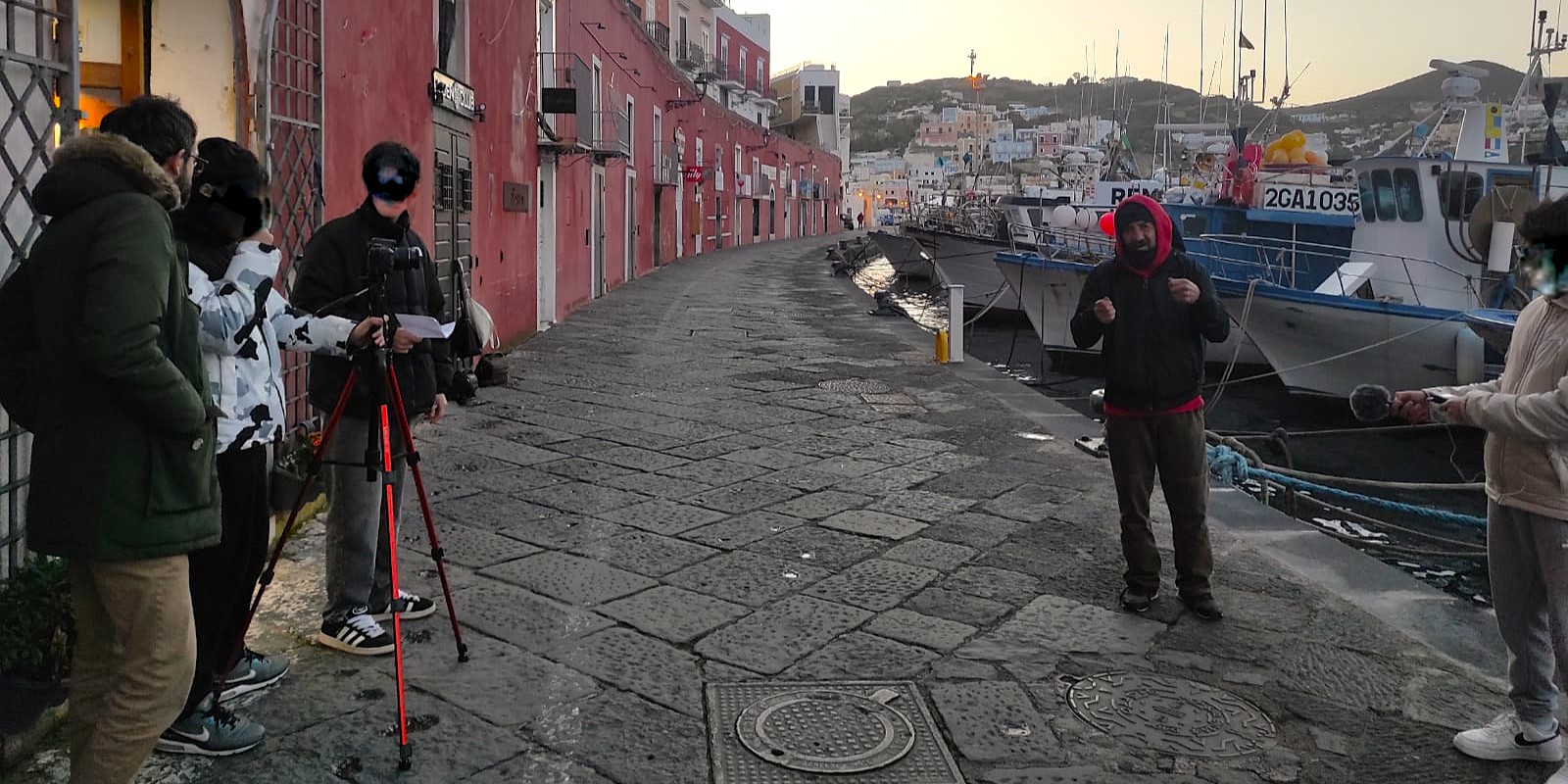
Second, the creative process holds significant power. Integrating audiovisual methods and research on insular heritage, for instance, within a creative framework — such as the production of a documentary film — can stimulate reflection, debate, and proactive engagement among students. This process can take place in four phases. The first is the selection of the film’s theme, during which group members must navigate different expectations, ideas for development, and preferences regarding which aspects to portray. The second phase involves writing and planning, where discussions may arise about whom to interview, which questions to ask, and the sequence of scenes. The third phase is film production, taking place during the actual shooting. Finally, post-production represents the most crucial stage for the creative process, as it is where the final film truly takes shape.
Third, acquiring familiarity with audiovisual language is hence crucial and a fundamental part of the creative process. As Ruby (2000) states, all participants must be trained from both a technical and artistic perspective and thus be capable of filming a video; otherwise, there is a risk that the researcher remains the sole true author. It is thus important not only to learn how to use technical tools but also to develop an understanding of the fundamentals of audiovisual language and scriptwriting: to “dwell on the medium” (Hay 2017).
Fourth, giving due importance to training and exchange processes as much as to processes that generate social pathways of change, create greater awareness, and amplify self-esteem and confidence in the participants. Already challenging — especially when working with young people — these aspects are fraught with difficulties, and the researcher must be aware of power dynamics within the participatory approach (Potter and Pugh 2017), avoiding the reinforcement of hierarchical structures and practices. For instance, it is essential to steer clear of paternalistic approaches or the assumption that power can always be transferred, that the researcher is capable of doing so, or that participants will necessarily accept this transfer of power (Pain 2004).
Fifth, given that participatory filmmaking is an inherently self-involving process (White 2003), it is crucial to maintain a critical reflexivity (Rose 1997). As Bignante et al. (2016:12) affirm, to reach effective empowerment requires ensuring that it is controlled by community researchers and sustained through “emotional reflexivity”. In addition, in the article it is underlined “how the attention to emotions is crucial to enable better reflection, learning, growth and transparent knowledge production” (ibid.). Critical reflexivity is thus important to acknowledge the role and knowledge of the researcher, who comes from a different context than that of the island, and to understand the research’s objectives of change and empowerment, since participatory video not only facilitates new levels of self-perception but also ways in which identity may be arbitrarily (trans)formed and reconstituted (Bloustien 2012).
This model was first implemented in the case of Ponza, with the aim to create a replicable methodological toolbox in other micro-insular contexts, not only in Italy but in the Mediterranean as well. In the specific case of Ponza, it was opted to realize a participative documentary film about the island heritage. The choice of the documentary as a learning tool is based on similar research in human geography tertiary education (Anderson 2013; Dando and Chadwick 2014; Mavroudi and Jöns 2011) and adapted to the context of insular high school.
The visual research was not limited to filmmaking activities with students but also included participatory initial and final phases since “a film assignment cannot help to foster relational thinking as a standalone exercise” (Varró and Van Gorp 2021:81). These phases enabled the collaborative creation of the films, starting with reflections on heritage and gradually focusing on the local territory[5].
Therefore, documentary filmmaking was used as a device to trigger reflections on the young students of the ICT Carlo Pisacane about their own island, its/their heritage, its/their future, and possibly about how to act to improve it. At the same time, the films were perceived by the students as a medium to narrate their own island, to enhance its heritage and promote it in their own way to the “continent”. In fact, as Baldacchino (2004:277) was observing twenty years ago, “many small islanders would wish to write, naturally and specifically, about their own small island”.
A recent study (Agnoletto, Di Quarto, and Nocente 2024) highlights how Italian visual culture — particularly tourism-focused television programs and nature documentaries — depicts small Italian islands through a romanticized, postcard-like lens. Top-down narratives reinforce an institutional gaze that intertwines nature and tourism, shaping an idealized image to attract specific visitors. This representational framework selectively presents exemplary cases while omitting critical perspectives.
These conclusions have further motivated the effort to equip young people from small islands with the tools, skills, and abilities to create their own counter-narratives about their homeland. This means giving them the opportunity to represent their island to the outside world using an accessible medium like audiovisual storytelling, while also deconstructing the top-down narratives that have shaped its external image.
A research approach that employs participatory video can thus challenge the portrayal of the island as an “elsewhere” (dell’Agnese 2018), as seen in tourism promotions, where it is often depicted through instantly recognizable visual tropes or iconemi (Turri 1998). Instead, it allows the island to be represented by those who were born there or who live there year-round.
6. Discussion and conclusion: Islands 4 Future towards an interdisciplinary and transformative research approach
Islands 4 Future has served as a platform where the theoretical and methodological approaches outlined above have converged, leading to the development of a research tool with transformative potential. This tool is conceived as a broad and complex cultural process, grounded in the interplay of diverse disciplinary perspectives and supported by a multidimensional methodological framework.
Interdisciplinarity does not imply flattening knowledge into a single language or unifying disciplines, but rather fosters a collective learning that remains open to different perspectives while recognizing the incompleteness of monolithic specializations (Morin, 2008). Interdisciplinarity amplifies and reconstructs complexity, building bridges between "archipelago[s] of knowledge traditions" (Stratford, 2015:145) through the exchange of diverse content and operational models. The “island-object” itself is complex, making it ideal for integrating different disciplinary approaches: smaller islands, as "outposts of globalization” (Ratter, 2018) encourage the coexistence of various disciplinary paths and a balance between theoretical and practical action.
The project carried out in Ponza provided a contextual framework for experimentation. In particular, the PCTO[6] program, established with the local school, served as a space for interaction among researchers from different backgrounds, carrying distinct frames of reference, languages, and social positions. From this research-intervention experience, an open, fluid, and processual device emerged, connecting practical action with analytical reflection through a plurality of conceptual tools and methods.
This approach is distinguished by its processual nature, with methodological tools continuously redefined and adapted to the specific territorial context. It also bridges theory and practice, fostering reflective engagement with experience that elevates research to systematic analysis, enabling it to act contextually in a transformative sense.
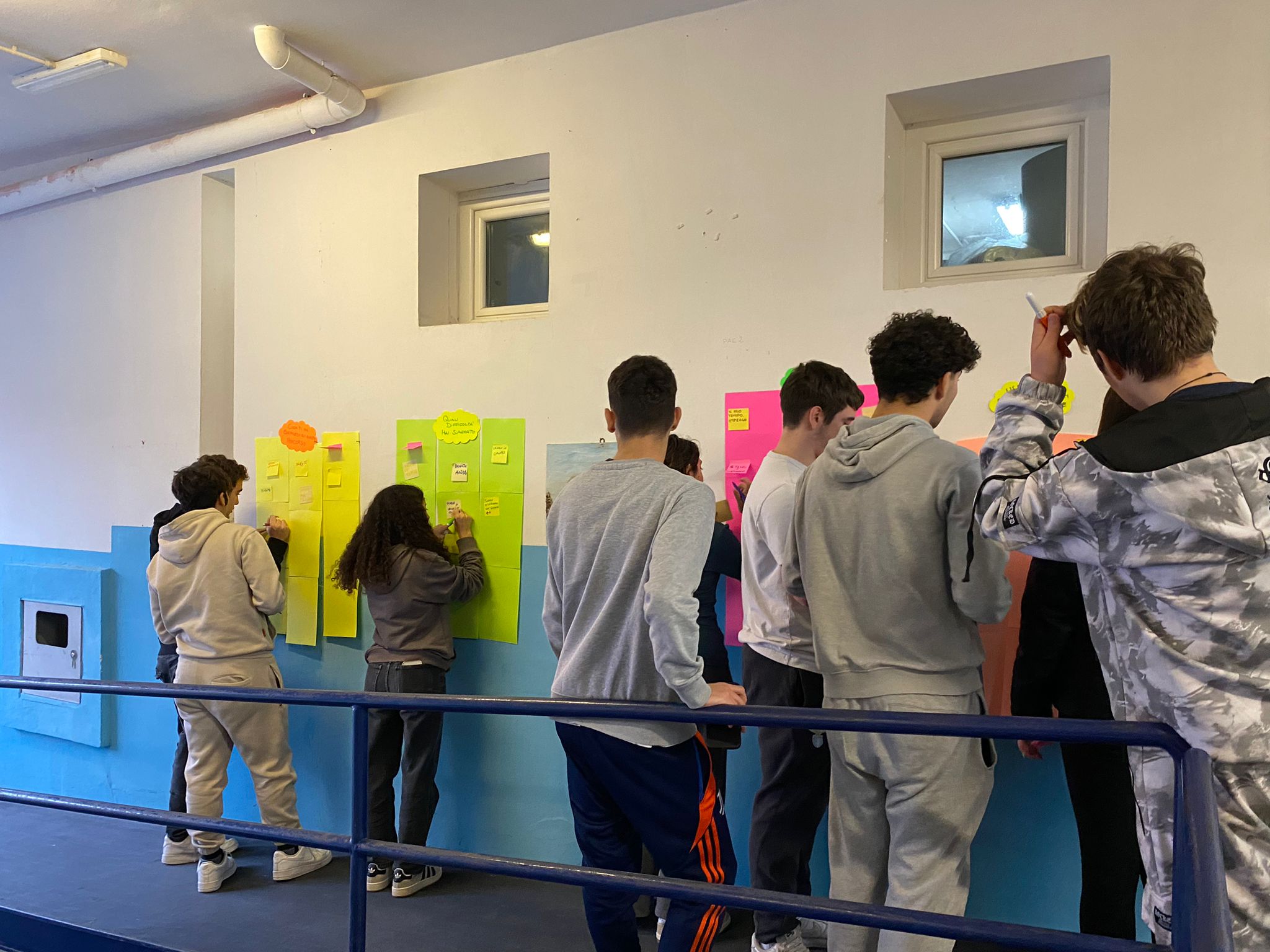
The design of the PCTO program focused on a place-based educational model, valuing territory as a resource for experiential learning. Critical pedagogy provided the framework, combining experiential learning, students’ engagement, an emphasis on subjectification, and future-oriented design. The PCTO program became an example of place-based education for self-orientation and active citizenship. Students, through various workshop activities and guided discussions, were encouraged to question the meaning of insularity, critically analyse challenges associated with their territorial condition, identify favourable and unfavourable elements for future projects, and reflect on factors shaping their sense of place. The issues raised during this process became conceptual research topics for the researchers.
Within this framework, the ethnographic-anthropological approach was crucial for grounding actions in the territory, connecting them with the socio-cultural and material aspects of the context, and developing them collaboratively. The geo-anthropological method helped understand the territory, its social and cultural dynamics, and informed the creation of educational interventions that combined theory and practice. Fieldwork beyond the school also involved local actors committed to territorial valorization, making the boundaries between school and territory more permeable and encouraging intergenerational dialogue. For example, students interacted meaningfully with a diverse group of island residents — varying in age and background — carefully selected through ethnographic fieldwork. These interlocutors, including young local entrepreneurs, senior artisans, and individuals engaged in social and cultural initiatives, shared and reflected on elements of local heritage that held personal, emotional, or professional significance. This process encouraged students to critically reflect on their own historical consciousness through a situated and reflexive lens.
In this sense, anthropology proves to be an invaluable resource, demanding reflexivity, which is vital in social and educational work, fostering awareness of the cultural meanings and behaviors embedded in the context.
Related to this, the project worked on cultural heritage — the central theme of the PCTO program — as a resource for constructing meanings in processes of territorial rootedness: "heritage is about sense of place” (Smith, 2006: 7). The work with students aimed to shift their perspective on the territory, promote place-making, and develop territorial storytelling. For example, students were asked to select and share objects they considered representative of the island’s heritage, justifying their choices. This activity facilitated a fertile reflection on the concept of heritage, moving from an abstract understanding to one connected with their experiences, personal memories, and concrete cultural practices. The exercise helped students recognize heritage as something deeply tied to their cultural legacy, strengthening — through a transition from the individual to the collective sphere — the relationship between identity, territory, and heritage.
The use of participatory filmmaking proved to be a particularly effective tool in facilitating this process of rediscovering and valuing the territory while reinforcing the sense of place. Audiovisual work enabled young participants to rediscover aspects of their heritage, shedding light on elements of their island that are often taken for granted. Engaging in narrating and representing these aspects allowed them to see their territory through new lenses. Moreover, the interviews conducted in the short films fostered intergenerational connections around the theme of heritage, generating not only bonds but also enthusiasm and satisfaction. They also allowed a form of public pedagogy that becomes a shared source of further experience, learning, and both individual and collective transformation (Biasin, 2020). This creative and technologically rich process finally served as a means for these often-overlooked young voices to be heard, representing a fundamental step in empowering them to play an active role in shaping the future of their territory.
Thus, students became protagonists in the process, not merely recipients of actions. The PCTO in Ponza engaged them, developed their potential, and involved them in analysing and describing local issues.
The project was built on the awareness that reversing current trends and counteracting marginalization and touristification dynamics requires integrating youth training with heritage promotion. A forward-looking approach is necessary, enhancing cultural heritage through active youth engagement. This positions young people as key agents in transformation processes: the aim was to engage youth to foster their agency within their territories, starting from their life trajectories.
In conclusion, the research was rooted in an "ethics of care," emphasizing the coexistence of theoretical and practical dimensions to mobilize local virtues and capabilities. This involves deconstructing rigid categories, amplifying local voices, and — most importantly — listening to them. This perspective aligns with the notion of "inhabiting a territory, conducting research patiently by living within it" (Cognetti, Fava, 2017: 15), through social practices that serve as both a vehicle and an opportunity for learning.
The reflection developed here points to an interdisciplinary and highly cooperative tool that, while not reducible to a rigid methodological procedure, can serve as a model of action in certain foundational aspects, particularly in the research-intervention framework built around the PCTO. These aspects include linking descriptive-interpretative approaches with project-oriented perspectives, maintaining decentred reflexivity, equipping oneself with critical and anthropological competencies, adopting a processual and transformative logic in educational practices, and integrating audiovisual languages to stimulate creativity and empower individuals collaboratively, especially in territorial storytelling.
The experiences observed throughout this process were not intended to passively absorb methodologies but to develop — through disciplinary crossover — an operational and conceptual rethinking that is meaningful both for young people and the island itself. This approach is grounded in an awareness of context, the criteria guiding decision-making, the effects of actions taken, the characteristics of the interlocutors involved, and the potential of research tools.
This rethinking extends to the conceptual frameworks of Island Studies and contributes to opening new cognitive frontiers for policymaking. In this sense, the project represents a "vision for the future," as its outcomes generate knowledge valuable for transformation, producing discourses and actions rooted in a culturally meaningful horizon, and fostering the development — both at the local level and on national and European scales — of projects and policies that respond to needs, desires, and interests as they emerge from the lived experience of island life.
In this regard, it is essential to move beyond viewing insularity as a generic disadvantage. While island territories face structural challenges that require policy attention, responses have largely relied on a socioeconomic lens, which, though partly valid, is insufficient on its own. A more comprehensive approach should integrate both quantitative and qualitative dimensions, focusing on the specificities of each territory. Public action should be guided not by abstract paradigms, but by a situated valorisation of territorial specificities. Islands 4 Future has demonstrated that one of the core priorities in island contexts is the fostering of community awareness and a grounded sense of place. Interventions should prioritize cultural and identity-building processes through participatory engagement. Rather than imposing predefined solutions, policies should enable and support locally driven initiatives, especially in their everyday implementation. Key to this are mediators, educators, and cultural facilitators who connect institutions with communities. In this context, the University's Third Mission can play a vital role by providing continuity and legitimacy.
Ultimately, effective action must align with the lived realities, values, and rhythms of local communities, which often diverge from abstract normative frameworks. It is precisely this gap, often implicit yet profound, that undermines the success of many external interventions. Hence the need to imagine futures that are compatible with local cultures, resisting universalist visions and “one-size-fits-all” models, which risk being more disruptive than constructive.
Acknowledgements
The research leading to this paper was funded by the European Union — Next Generation EU, Mission 4 Component 2, under the PRIN 2022 call, Islands 4 Future. Protecting next generations from marginalisation: a field-based, multi-dimensional and participatory intervention on promoting cultural heritage, future opportunities and tourism on small islands (2022T4P5WP).
It is the result of the combined and collaborative research efforts of the three authors. The writing of the paper is divided as follows: Pietro Agnoletto authored Chapters 2 and 5; Antonia De Michele 3 and 6; Nicoletta Tomei 1 and 4.
Endnotes
[2] Italy’s insular landscape is highly diverse and includes, in addition to large islands such as Sardinia and Sicily, archipelagos of small islands of varying origins and sizes, isolated small islands, such as Ustica, Pantelleria, and Pianosa, and lagoon archipelagos such as that of Venice. According to the last ‘Isole Sostenibili’ report (2024), Italy has 26 inhabited small islands, governed by 33 municipalities and home to over 188,000 permanent residents. However, during the summer season, the number of people staying on or passing through these islands increases by at least one order of magnitude.
[3] Another significant factor is water loss, which reaches alarming levels in some contexts: Ventotene, La Maddalena, and Pantelleria experience water dispersion rates of 91%, 63%, and 58%, respectively (Isole Sostenibili, 2024).
[4] An environmental degradation started already in the mid-1930s when the opening of the bentonite mine caused Ponza's first “environmental disaster”, which, in addition to the transformation of the land and landscape, caused the only freshwater source to dry up (ibid.)..
[5] Before the film production, workshops helped students identify and select their island’s intangible cultural heritage, forming the basis of the script; after completion, additional workshops reconnected the cinematic work to the local context. Activities included participatory mapping, proposing alternative tourist itineraries, and group reflections on the island’s future.
[6] The PCTO program at ITC Carlo Pisacane involved 30 students from three classes, aged 15 to 18, and took place between November 2024 and February 2025. The program consisted of approximately 30 hours of lectures and workshops and approximately 10 hours dedicated to the filming of short films. It focused on heritage as a tool for self-orientation, intergenerational connection, sustainable territorial development, and as a key to understanding the students' future visions.
In the first phase, students explored the concept of heritage through interactive activities, multimedia lessons, and guided reflections, considering it from theoretical, personal and territorial perspectives. In the second phase, they engaged in field activities and participatory mapping workshops, reflecting on heritage as a cultural and social resource for the community. In the third phase, starting from the conclusions from the previous steps, they wrote, filmmed, and authored five films about their island’s heritage. The production of short films, carried out by five groups with the support of researchers and in collaboration with some classes from the M. Guggenheim State Artistic High School in Venice, created an important opportunity for active participation, cultural creativity, and personal growth. This experience helped reinforce students' sense of place and social agency. Finally, in the last phase, students connected their learning to their own future plans through open discussions and interactive practices, imagining the territory as a collective space to be developed, valorised, and innovated.
Bibliography
- Agius, K., Theuma, N., Deidun, A., Camilleri, L., 2019. Small Islands as Ecotourism Destinations: A Central Mediterranean Perspective. Isl. Stud. J. 14 (2): 115–36.
- Agnoletto, P., Di Quarto, F., Nocente, M., 2024. Capraia Island and Its Representation in Audiovisual Media: Recounting a Carceral, Agro-Pastoral and Eco-Touristic Landscape. Shima J. 18 (2): 140–55.
- Amatori, G., Buccolo, M., Tomei, N., 2024. La costruzione di futuro per studenti, comunità locali e di ricerca in prospettiva interdisciplinare: prime riflessioni sul progetto Islands4Future. Rass. Pedagog. 2: in press.
- Amey, M.J., Brown, D.F., 2004. Breaking Out of the Box: Interdisciplinary Collaboration and Faculty Work. Information Age Publishing, Greenwich (CONN).
- Anderson, J., 2013. Active Learning through Student Film: A Case Study of Cultural Geography. J. of Geogr. Higher Educ. 37 (3): 385–98.
- Anderson, R.C., 2024. Creative development as an agentic process: five distinct trajectories of divergent thinking originality across early adolescence. Learn. individ. Differ. 112: 1-13.
- Baldacchino, G. (ed.), 2018. The Routldedge International Handbook of Island studies: A World of Islands, Routledge, London.
- Baldacchino, G., 2004. The Coming of Age of Island Studies. Tijdschr. Econ. Soc. Geogr. 95 (3): 272–83.
- Baldacchino, G., 2008. Studying Islands: On Whose Terms? Some Epistemological and Methodological Challenges to the Pursuit of Island Studies. Isl. Stud. J. 3 (1): 37–56.
- Baldacchino, G., 2012. The Lure of the Island: A Spatial Analysis of Power Relations. J. Mar. Isl. Cult. 1: 55-66.
- Batini, F., 2024. Storia, funzione e senso dell’orientamento. Dal paradigma formativo al curricolo in verticale, in: Guglielmini, G., Batini F. (Eds.), Orientarsi nell'orientamento. Il Mulino, Bologna, pp. 11-54
- Biasin, C., 2020. Serie TV come pedagogia pubblica degli adulti: rappresentazioni mediatiche in discussione. Me.Tis., 10 (1): 1–17.
- Biesta, G., 2010. Good Education in an Age of Measurement: ethics, politics, democracy. Paradigm, Boulder (CO).
- Biesta, G., 2022. Putting the world in the centre: a different future for Scotland’s education. Scott. Educ. Rev. 54: 149-159.
- Bignante, E., 2010. Guardare Attraverso Gli Occhi Degli Altri. Geotema 41:39–49.
- Bignante, E., 2011. Geografia e Ricerca Visuale: Strumenti e Metodi. first ed. GLF editori Laterza, Rome.
- Bignante, E., Mistry, J., Berardi, A., Tschirhart, C., 2016. Feeling and Acting ‘Different’ Emotions and Shifting Self-Perceptions Whilst Facilitating a Participatory Video Process. Emot. Space Soc. 21:5–12.
- Biscaldi, A., 2016. La responsabilità di esser-ci. I dilemmi etici della ricerca in antropologia applicata, Antropol. pubblica. 2 (2): 27-40.
- Bloustien, G., 2012. Play, Affect, and Participatory Video as a Reflexive Research Strategy, in: Milne, E-J., Mitchell,C., de Lange, N. (eds.), The Handbook of Participatory Video, Altamira Press, Lanham, pp. 115–30.
- Brigand, L., 1991. Les îles en Méditerranée. Enjeux et perspectives. Economica, Paris.
- Broccolini, A., 2023. Il patrimonio culturale immateriale e l’antropologia. Evoluzioni, intersezioni, mondi locali. DPCE Online. 2: 1667-1690.
- Cardillo, M. C., 2021. L’area marina protetta e la riserva naturale statale delle isole di Ventotene e Santo Stefano tra salvaguardia ambientale e sostenibilità turistica. Geotema. 67: 29-37.
- Cardillo, M. C., Cavallo F. L., Gallia, A., Malatesta, S., 2021. Isole, turismo e ambiente: tra conflitti, modelli e opportunità. Geotema. 67: 3-7.
- Cavallo, F. L., 2007. Isole al bivio. Minorca tra balearizzazione a valore territoriale. Unicopli, Milan.
- Clemente, P., 2013-2014. Antropologo giardiniere. Antropol. Museale. 12 (34-36): 24-25.
- Cognetti, F., Fava, F., 2019. La città interdisciplinare. Per itinerari non tracciati tra saperi urbani. Tracce Urbane. 6: 6-21.
- Cooke, G.B., Petersen, B.K., 2019. A Typology of the Employment-Education-Location Challenges Facing Rural Island Youth. Isl. Stud. J. 14 (1): 101–24.
- Dando, C.E., Chadwick, J.J., 2014. Enhancing Geographic Learning and Literacy Through Filmmaking. J. Geogr. 113 (2): 78–84.
- dell’Agnese, E., 2018. Bon voyage: per una geografia critica del turismo. first ed., UTET università, Turin.
- Fava, F., 2017. In campo aperto. L’antropologo nei legami del mondo, Meltemi, Milano.
- Feld, S., Basso, K., 1996. Senses of place, School of American Research Press, Santa Fe.
- Gallia, A., 2019. Le Risorse Idriche Nell’isola Di Ponza, Carocci Editore, Rome.
- Gallia, A. 2021. L’approvvigionamento idrico nelle isole minori italiane come nodo conflittuale tra attività turistiche e insiders. Il caso dell’Isola di Ponza. Geotema. 67: 19-28.
- Gallia, A., Malatesta, S., 2022. Le isole minori Italiane nelle missioni del PNRR. Una visione sul futuro. Doc. geogr. 1 (July): 161–74.
- Giusti, S. (2024). L’orientamento nella scuola italiana dagli anni Novanta a oggi, in: Guglielmini, G., Batini F. (Eds.), Orientarsi nell'orientamento. Bologna, Il Mulino pp.81-98
- Grydehøj, A., 2017. A future of island studies, Isl. Stud. J. 12 (1): 3-16.
- Guba, E., Lincoln, Y., 1985. Naturalistic Inquiry. Sage, Newbury Park (CA),
- Guerra, M., 2024. Teorie e pratiche place-based. Temi e questioni per un’educazione ecologia e biodiversa, in: Persico, G., Guerra, M., Galimberti, A. (Eds.), Educare per la biodiversità. Approcci, ricerche e proposte. Franco Angeli, Milano, pp.25-40.
- Hay, I., 2017. Moving Pictures: From Ethnographic to Autoethnographic Documentary in the Internationalization of the Geography Curriculum. J. Geogr. High. Educ. 41 (4): 562–73.
- Herzfeld, M., 1997. Cultural intimacy. Social poetics in the Nation-State, Routledge, New York, London.
- Isole Sostenibili. Osservatorio sulle isole minori., 2024. La Transizione Ecologica Nelle Isole Minori, Legambiente; Consiglio Nazionale delle Ricerche (CNR-IIA), Terna.
- Jones, M., 2009. Phase space: geography, relational thinking, and beyond. Prog. Hum. Geogr. 33 (4): 487-506.
- Kindon, S., 2003. Participatory Video in Geographic Research: A Feminist Practice of Looking?. Area. 35 (2): 142–53.
- Lepri, C., 2023. Le parole e le immagini per dirlo. Albo illustrato e cura. MH. MN. 7 (1): 119-132.
- MacDougall, D., 1998. Transcultural Cinema. Princeton University Press, Princeton.
- Malatesta, S., 2021. Uniche, remote e vulnerabili: il ‘bisogno di natura’ nella geo-grafia delle regioni insulari. Riv. Geogr. Ital. CXXVIII (2): 37-52.
- Malatesta, S., Cavallo, F. L., Introduzione, in: Salvatori, F. (ed.), L’apporto della Geografia tra rivoluzioni e riforme. Atti del XXXII Congresso Geografico Italiano. A.Ge.I, Rome, pp. 2893-2895.
- Manzo, E. 2023. Energia e Territorio: le Isole Minori fra transizione e nuove soluzioni per un cambio di paradigma in ambito energetico. Tracce urbane, Riv. ital. transdiscipl. studi urbani. 10 (14): 161–90.
- Mavroudi, E.,Jöns, H., 2011. Video Documentaries in the Assessment of Human Geography Field Courses. J. Geogr. High. Educ. 35 (4): 579–98.
- McCall, G., 1994. Nissology: A Proposal for Consideration, J. Pac. Soc. 17(2-3): 1-8.
- Morin, E., 2008. La Méthode, Le seuil, Paris.
- Mortari, L., 2016. Cultura della Ricerca e pedagogia. Prospettive epistemologiche. Carocci, Roma.
- Pain, R., 2004. Social Geography: Participatory Research. Prog. Hum. Geogr. 28 (5): 652–63.
- Potter, R., Pugh, J., 2017. Participatory Planning in the Caribbean, Routledge, Milton.
- Racheli, G., 1987. Le Isole Ponziane. Rose dei venti. Natura, storia, arte. Mursia, Milan.
- Ratter, B. M. W., 2018. Geography of Small Islands. Outposts of Globalisation, Springer, Charm.
- Rigas, K.,. 2012. Connecting Island Regions — A Qualitative Approach to the European Experience. SPOUD. J. Econ. Bus. 62 (3–4): 30–53.
- Rose, G., 1997. Situating Knowledges: Positionality, Reflexivities and Other Tactics. Prog. Hum. Geogr. 21 (3): 305–20.
- Rose, G., 2001. Visual Methodologies: An Introduction to the Interpretation of Visual Materials, SAGE Publications, London.
- Rose, G., 2003. On the Need to Ask How, Exactly, Is Geography ‘Visual’?. Antipode. 35 (2): 212–21.
- Royle, S.A., 2001. A Geography of Islands: Small Island Insularity, Routledge, London.
- Ruby, J., 2000. Picturing Culture: Explorations of Film and Anthropology. University of Chicago Press, Chicago.
- Salustri, A., 2022. Il PNRR i giovani delle aree interne. Doc. geogr., 1 (July): 143-159.
- Salustri, A., Appolloni, A., 2021. Brevi riflessioni sullo sviluppo locale sostenibile nelle isole minori italiane. Public Finance Res. Pap. 46: 3–20.
- Scarpelli, F., Romano, A., 2011. Premessa, in: Id. (eds.), Voci della città. L’interpretazione dei territori urbani, Carocci, Rome, pp. 11-18.
- Sedda, F., Sorrentino, P., 2020. Prefazione/Preface, in: Id. (eds.), Lexia, XXXV-XXXVI, Isolanità.Per una semiotica culturale delle isole/ Islandness. Toward a cultural semiotics of islands, pp. 9 -18.
- Smith, L., 2006. Uses of Heritage, Routledge, London.
- Stratford E., 2015. Critical Analysis of the Impact of Island Studies Journal: Retrospect and Prospect. Isl. Stud. J. 10 (2): 139-162.
- Strathern, M., 1995. Foreword. Shifting Context, in: Id. (ed.) Shifting Context. Transformations in Anthropological knowledge, Routledge, New York, London, pp. 1-11.
- Turco, A., 1980. Insularità e modello centro-periferia: l’isola di Creta nelle sue relazioni con l’esterno. Unicopli, Milan.
- Turri, E., 1998. Il Paesaggio Come Teatro: Dal Territorio Vissuto al Territorio Rappresentato, Marsilio, Venice.
- UNESCO., 2021. Reimagining our future together. A new social contract for education. UNESCO, Paris.
- Varró, K., Van Gorp, B., 2021. Fostering a Relational Sense of Place through Video Documentary Assignments. J. Geogr. High. Educ. 45 (1): 63–86.
- Vereni, P., 2018. La ninfa e lo scoglio. Riflessioni sul senso dell'antropologia culturale, Universitalia, Rome.
- White, S.A., 2003. Participatory Video: Images That Transform and Empower, Sage Publications, New Delhi, Thousand Oaks, London.