
‘Islandness’ and Risk Perception: Climate Change and Marine Diversity Loss in the Campanian Archipelago
 10.21463/jmic.2025.14.2.05
Abstract
This study investigates how individuals’ perceptions of: socio-environmental risks, loss of marine biodiversity, and climate change impacts, are influenced by personal, collective, geographical, historical, and socio-cultural factors within island contexts. While existing research on the socio-environmental risks faced by islands focuses on Pacific islands or ‘small island developing states’, this study offers a new perspective by examining the case of the Campanian Archipelago in Italy. It aims to explore if and how unique island characteristics shape local perceptions of environmental risks and climate change adaptation strategies. By focusing on the specific context of ‘islandness’, and using a qualitative approach (interviews and questionnaires) the research seeks to understand how island communities perceive environmental degradation, climate change risks, and the challenges they face in managing resources.
Keywords
Risk perception, Climate Change, Marine Biodiversity loss, Campanian Archipelago, Institutional barriers
1. Introduction[1]
Raising community awareness of socio-environmental risks is a crucial component of risk management, a complex process that not only challenges scientists, but also engages communities, authorities, and key stakeholders in collaborative effects. Research indicates that higher levels of risk awareness are influenced by risk perception, which is closely tied to individuals’ conceptual understanding of the threat and shaped by personal interpretations rooted in their cultural backgrounds (Lechowska, 2018; Cisternas et al., 2023). These interpretations are shaped by cognitive factors such as risk awareness and understanding, which are further influenced by familiarity with climate change phenomena and the availability of relevant information (van Valkengoed & Steg, 2019; Bianca et al., 2022), such as media (Paradiso, 2012).
The literature suggests that precautionary risk behaviour is influenced by both awareness and perception. Awareness can improve public support for management policies and encourage proactive actions for disaster risk reduction. Several seminal works have contributed to our understanding of these dynamics, including Slovic et al. (1982); Slovic (1987); and Burton, Kates and White’s 1978 book, The Environment as Hazard. This book marked a shift in how people viewed natural hazards—such as earthquakes, floods, and hurricanes—reframing them from ‘Acts of God’ to ‘Acts or neglect of people’. This change in perspective recognises that natural hazards and their impacts result from the interaction between the environment and society, with humans shaping these hazards (Kates, 1975; Marincioni, 2007; Alexander et al., 2021). Despite an increased understanding of the processes and consequences associated with natural hazards, efforts to address these challenges remain limited due to various individual and social factors.
The geographical literature on disaster risk reduction examines how individuals’ risk perceptions influence disaster planning at both the local and national levels (Wachinger et al., 2013). These perceptions are often shaped by the available information on natural hazards, such as estimated damage, event probability, and hazard locations (Dhar et al., 2023). Additionally, individual characteristics such as age, sex, occupation, education, and personal beliefs play significant roles in shaping how individuals perceive the severity of risks. Beyond individual factors, social and contextual factors, including historical experiences, local traditions, and social pressures, profoundly influence community preparedness and resilience. Furthermore, the level of institutional trust in governmental and private entities is a critical determinant of adaptive behaviours (Boholm, 1998; Wachinger et al., 2013; Raška, et al., 2020). Communities are increasingly developing adaptation measures based on local knowledge; however, institutions often struggle to integrate the diverse ontologies that shape this knowledge (Eisenack et al., 2014; Yeh, 2016; Gioia and Guadagno, 2024).
For this paper, we adopt the definition of ‘community’ in the context of risk perception proposed by Räsänen et al. (2020). Here, ‘community’ is as a group of individuals with shared interests and practices within a specific geographical area (e.g., an island), including inhabitants, organisations, institutions, and authorities.
The concept of an island, historically defined as a small landmass surrounded by water, has been used for millennia (Doumenge, 1987; Hache, 1987; Jędrusik, 2011), although it remains imprecise (Nunn, 1994; Maciej, 2011). The continent-island dichotomy often carries also an unequal distribution of power— islands are frequently portrayed as isolated or remote and facing unique challenges (Baldacchino, 2020)—islands can also be critical hotspots for understanding the core elements of environmental degradation (La Spina, 2008; Lazoglou et al., 2024). Given that islands are particularly sensitive to climate change, they are crucial sites for studying the impacts of environmental shifts. As such, islands serve as litmus tests for understanding the impacts of climate change and environmental degradation.
A warming climate disrupts ecosystems with profound effects on the water supply, protection against natural hazards, and marine biodiversity, and this change is particularly evident on islands. These effects span multiple levels, from individual organisms to marine ecosystems, and are influenced by both natural and human-induced environmental pressures. For instance, changes in temperature and precipitation patterns can alter hydrological cycles, thereby affecting freshwater availability and irrigation systems. Moreover, shifts in the frequency and intensity of natural hazards along with biodiversity loss and marine diversity degradation further underscore the vulnerability of the islands to environmental challenges (Mannino et al., 2017; Tonin and Lucaroli, 2017; De Pippo et al., 2022; Ferrigno et al., 2021; Aurelle et al., 2022).
As suggested by the constant news events, the Italian islands, in particular, are highly vulnerable from both socio-environmental, climatic, and marine biodiversity perspectives, which potentially exacerbates the risks they face (Bianchi et al., 2000; Coll et al., 2010). Among these, the Campanian Archipelago presents a particularly interesting case for analysis. Therefore, this study uses the Campanian Archipelago as a case study to critically explore the concept of ‘islandness’ (Gillis, 2014)—a sense of identity that is connected to, but not exclusively defined by, the physical characteristics of island life, such as water-boundedness, a contested concept, understood in multiple ways and, for this reason, kept in a creative tension (Foley et al., 2023). This ‘state of mind’ (Randall, 2021, p. 100) may significantly influence risk perceptions, especially regarding marine biodiversity loss (Hong et al., 2022). In summary, this research aims to explore the role of ‘islandness’ in shaping perceptions of climate change and marine biodiversity loss. It examines the level of awareness on these issues, the actions and measures considered necessary by local communities in the Campanian Archipelago to mitigate these risks, and identifies key stakeholders who could contribute to reversing these negative trends. Furthermore, it highlights the solutions proposed by the population living in this context. These elements will be analyzed through the findings of a qualitative study (see above, section 3).
2. The context
To investigate the perceptions of climate change and the depletion of marine biodiversity among local communities, primarily through the complex lens of ‘islandness’, we focus on the Campanian Archipelago. This decision was driven by our interest in understanding the dimensions of risk perception in relation to climate change and the loss of marine biodiversity in a geographical area that is often underrepresented in global studies of the effects of environmental degradation in insular contexts (Avvisati et al., 2019; Rendina et al., 2020) (Fig. 1).
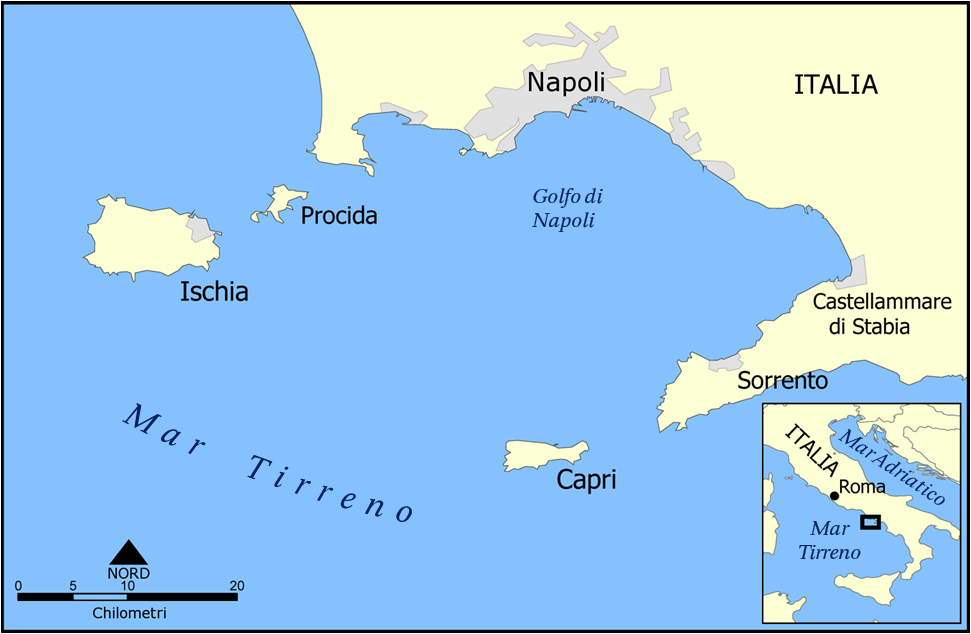
The Gulf of Naples, located in southern Italy, hosts an archipelago that includes three main islands— Ischia, Capri, and Procida—each of which is characterised by unique geographic, natural, economic, and demographic features. The smaller islands and notable formations in the archipelago include Vivara, Faraglioni, Li Galli, and Vetara. Geologically, the islands belong to two distinct regions. Ischia and Procida are recognised as emerging portions of a volcano within the Phlegraean Volcanic District (De Alteriis & Violante, 2009). In contrast, Capri is not of volcanic origin; it represents the continuation of the Sorrento Peninsula and has a tectonic geological origin with rocks older than those of the Phlegraean region (Barattolo et al., 1993).
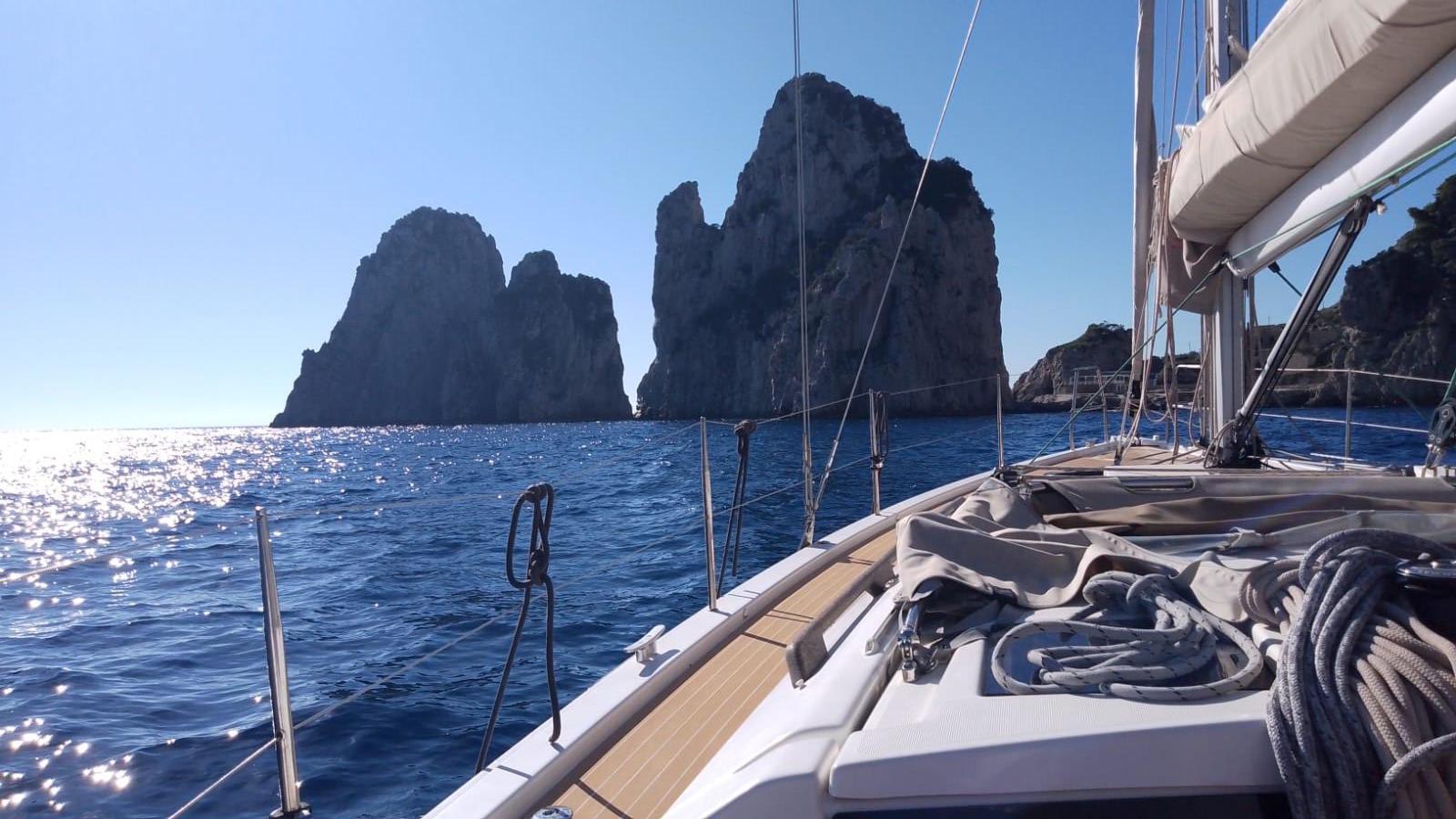
Each of the three islands is renowned for a different aspect of its geography. Ischia, the largest island at 46.3 km², is of volcanic origin and is renowned for its thermal springs and lush vegetation, earning it the nickname ‘Green Island’ due to its characteristic green tuff. It is also a significant centre of biodiversity in the Mediterranean, hosting a variety of microhabitats that support numerous rare and endemic species, some of which are critically endangered (Monti et al., 2008; Sibilio et al., 2015). Capri, which is less than 10 km², is celebrated for its dramatic limestone cliffs, iconic Faraglioni rock formations, and the Blue Grotto Sea cave (Pennetta & Lo Russo, 2011b; Vitale et al., 2016). Finally, Procida, the smallest island at 3.7 km², is entirely bordered by cliffs, which in some areas are connected to narrow shore platforms that slope gently toward the sea. These platforms are often characterised by alternating headlands and coves, occasionally featuring shallow sandy beaches at their base, known as pocket beaches (Aucelli et al., 2022a; Aucelli et al., 2022b).
Demographically, Ischia is home to approximately 70,000 residents across six municipalities, whereas Capri accommodates approximately 14,000 inhabitants across two municipalities, and Procida has a population of approximately 10,000. However, these numbers increase significantly during the summer because of tourism. Economically, Ischia’s thermal tourism attracts wellness seekers (Monti, 2006); however, in the past, the island was primarily characterised by an agricultural vocation. Capri thrives as a luxury destination, offering high-end accommodations and designer boutiques (Russo Krauss, 2023). In contrast, Procida, the 2022 Italian Capital of Culture, has embraced a community-centred approach that promotes the arts and sustainable tourism development, albeit with some challenges (Palmentieri, 2021; D’Alessandro & Autiero, 2024). The three main islands are connected to the mainland by ferries and hydrofoils.
Despite its allure, the archipelago has also been the setting for tragic events tied to hydrogeological instability and arson, underscoring the ongoing assault on its territory. Anthropogenic pressures, land abandonment, and continued coastal urbanisation have exacerbated these hazards, emphasising the urgent need for sustainable management strategies (De Pippo et al, 2009; Pennetta and Lo Russo, 2011a; Caccavale et al., 2017; Selva et al., 2019; Tomasone et al., 2022). Coastal erosion, sea level rise, and overtourism pose additional threats to the fragile ecosystems of the archipelago, with high visitor numbers accelerating environmental degradation. These challenges are compounded by the growing prevalence of unauthorised construction that exploits the islands’ natural beauty and associated cultural narratives (Bonati et al., in press).
Furthermore, the process of coastalisation (Lagarias and Stratigea, 2023)—characterized by the increasing utilisation of the coast for purposes such as thermal bath complexes, fishing, shipping, and tourism—has driven the development of protective infrastructure to shield structures from wave action. Over time, these measures have expanded, due to the critical rate of coastal erosion and the growing occupation of coastal zones by residential and industrial activities. As a result, many urbanised coastal stretches have lost their natural character, which has been replaced by engineered structures—commonly referred to as a ‘technocoast’ (De Pippo et al., 2008). According to data from the Italian Institute for Environmental Protection and Research (ISPRA), the consumption of land on Capri Island has been significant, largely because of past decisions. However, a positive trend in limiting land use has been observed in recent years, with total land consumption increasing by only +0.87% between 2006 and 2022. This trend must be reinforced by actions focused on de-impermeabilizing the territory, prioritizing high-risk hydrogeological areas that have been occupied and urbanised and urgently require restoration to their natural state. The situation is more concerning in Ischia, where land consumption affects approximately one-third of the island's surface, with over 15% of the land consumption occurring in areas at hydrogeological risk. Procida also faces challenges, with nearly 45% of its territory affected by land consumption, of which 7% falls within landslide-prone areas. Hence, there is an urgent need for policies focused on prevention, adaptation, and relocation to restore permeability, ensure safety, and promote sustainability of the islands.[2]
Aiming at promoting environmental protection, the archipelago was partially included within the Marine Protected Area of Regno di Nettuno, a marine reserve established by the Italian Ministry of the Environment on 27 December 2007. Located within the Metropolitan City of Naples, this reserve encompasses the islands of Ischia, Procida, and Vivara and safeguards critical habitats such as red coral (Corallium rubrum) and Posidonia oceanica meadows, which are essential for carbon sequestration and the protection of marine biodiversity (Ferrigno et al., 2020; Gravili et al., 2021). Regarding Capri, the ISPRA, in collaboration with the municipalities of Capri and Anacapri, proposed a zoning plan for future marine protected areas to preserve its significant species (Ferrigno et al., 2021). However, the legislative process of its formal establishment remains incomplete.
3. Research design and methodology
This study was designed to gather insights into residents’ perceptions, knowledge, and concerns regarding climate change and marine biodiversity loss within island communities on the Campanian Archipelago, examined through the lens of ‘islandness’. It also aims to explore potential community-driven solutions and strategies for climate adaptation by drawing on the community’s knowledge, concerns, and trust in institutions and science. Proposed solutions at the community level are examined to address these environmental challenges and identify the key barriers to overcoming them. A central objective is to identify the actors that communities perceive as capable of effectively addressing governance issues, while also considering the institutional, social, and cultural factors that influence adaptive capacities and resilience.
To achieve these objectives, a survey consisting of 58 questions (40 of which employed a Likert scale, 16 closed answers, and two open comments) was developed.[3] The survey, firstly tested with some resident, covered the following areas.
- Knowledge and awareness about climate change;
- Knowledge and awareness about marine biodiversity;
- Perception of climate change and marine biodiversity in relationship to ‘islandness’;
- Specific challenges in other island contexts;
- Confidence in institutions to address these challenges;
- Confidence in science to address these challenges;
- Potential solutions.
The survey was administered using snowball sampling via an online questionnaire and four site visits (two to Ischia, one to Procida, and one to Capri) conducted between November 2024 and January 2025. The site visits were deliberately scheduled during the off-season tourist period. The sample was based on the total island population of 94,000 residents, with an additional 10% added to account for tourists or workers (for a total of about 103,000 people). The target sample size was calculated with a 5% margin of error, a 90% confidence interval, and a standard deviation of 50% (expected total=270).
In addition to the individual channels mobilised by the researchers, including students in ‘Human Geography’ courses, key actors were identified to assist with the distribution of the questionnaire. Specifically, the nine municipalities involved in the study were contacted via mail; 13 environmentally friendly local associations from these municipalities across the three islands were contacted via Facebook; and 12 Pro Loco associations, 47 hotels (through online telephone directory), 12 maritime consortia, three fishing consortia, and six travel agencies were contacted by telephone. Additionally, 21 agricultural enterprises, 2 campsites, and 16 beach managers were contacted, including 6 researchers who agreed to share the survey link within their networks. This choice likely influenced the audience targeted by the survey, particularly with regard to their age and sociocultural background.
Additionally, the methodologies employed revealed a notable bias due to the underrepresentation of migrant communities residing in these areas, albeit to varying extents. Nevertheless, this approach enabled broad distribution across all municipalities. Online surveys, in particular, are widely acknowledged as an effective means of increasing the sample size in various research domains and are gaining popularity in academic studies (Lefever et al., 2007; Baltar and Brunet, 2012). Furthermore, during the four field visits, direct interviews were conducted with residents (for a total of 27).
The analysis of the dataset was conducted through descriptive statistics using the ‘Data Analysis → Correlation’ function in Excel and ChatGPT Pro to obtain specific insights on the various topics of the survey. Additionally, we analysed the ‘open answers’, such as the exchanges recorded during the fieldwork. Although the dataset is relatively small, it represents a valuable resource for addressing a gap in similar studies within the region and offers a perspective centred on the perception on biodiversity as an ecosystem service. This enables researchers and policymakers to estimate the economic value individuals place on preserving marine biodiversity. By examining these valuations, stakeholders can gain insights into the public’s willingness to pay for conservation efforts and their priorities regarding various aspects of marine ecosystem preservation. The dataset we present (footnote 4) ensures transparency, and facilitate replication and further research. Additionally, the output contains detailed demographic and socioeconomic information about the participants, which can help better understand the factors influencing public perceptions and preferences.
4. Evidence and findings
A total of 268 responses were collected, 78% of which were from residents. The distribution among the different islands was as follows: Respondents (residents, workers, or tourists) from the six municipalities of Ischia accounted for 35% of the total, 38% were from Procida, and 27% were from the two municipalities of Capri. Analyses of age distribution, level of education, and sex (self-declared) revealed several trends.[4] Women were over-represented, accounting for 67% of the sample. Additionally, there was an over-representation of individuals aged > 65 years (13% of the total) and an under-representation of those aged < 20 years (3.3%). The main occupations mentioned in the survey and the percentages of all responses were as follows: ‘Insegnante’ (Teacher): 26.77%; ‘Lavoratore/lavoratrice in ente pubblico’ (Public Sector Worker): 13.01%; ‘Studente(ssa)’ (Student): 8.92%; ‘Ricercatore/ricercatrice’ (Researcher): 7.06%; ‘Pensionata’ (Retired - female) and ‘Pensionato’ (Retired - male) (6.02%). Approximately 4.11% of respondents selected ‘Preferisco non rispondere’ (I prefer not to answer). It is important to note that these results may be influenced by biases, as previously explained.
4.1 Knowledge and awareness about climate change
A moderate correlation was identified between sex and climate change awareness. Both male and female respondents reported an average awareness score of 3.5 on a scale of 1 to 5. However, gender differences emerged in perceptions of community awareness. Among male respondents, 18.4% perceived their local community as ‘not at all aware’ of climate change issues, while 31.6% believed their community was ‘moderately aware’. In contrast, 11.3% of female respondents felt their community was ‘not at all aware’, and a slightly higher proportion (32.9%) perceived ‘moderate’ community awareness. Furthermore, 39% of women believed their communities were ‘slightly aware’ of climate change, compared to 31% of men. Notably, 26% of men and 31% of women reported that their communities were ‘moderately aware’. Both genders demonstrated similar views regarding their communities being ‘not at all aware’, with 18% of men and 11% of women sharing this perception.
Age also influenced climate change awareness. Respondents aged 65 years and older had the highest average awareness score of 4.2, suggesting greater exposure to or engagement with climate-related issues. Younger respondents, particularly those under 20 years of age, recorded an average awareness score of 3.2, indicating comparatively low familiarity or engagement with the topic. Participants aged 41–65 years reported consistent awareness levels that averaged approximately 3.8, reflecting moderate familiarity and concern.
A stronger correlation was observed between climate change awareness and educational level. Respondents with higher levels of education consistently reported feeling better informed and more supportive of scientific efforts aimed at addressing environmental challenges. Specifically, respondents with doctoral degrees reported the highest average awareness score of 4.5, whereas those with secondary school diplomas recorded a lower average score of 3.4. Interestingly, individuals who received vocational or technical training demonstrated a moderate level of awareness with an average score of 3.7.
Although less pronounced, the influence of occupation on climate change awareness remained significant. Respondents in educational professions, such as teachers and researchers, exhibited the highest awareness scores, averaging 4.4, which likely reflects their access to information and professional engagement with climate-related topics. In contrast, tourism workers and manual labourers reported an average awareness score of 3.4, indicating moderate awareness. Respondents in public service roles such as government employees reported an average score of 4.0.
Among the residents in Ischia, the average climate change awareness score was 3.8, which was slightly higher than for those in Procida (3.7) and Capri (3.6). Residents of Ischia exhibited the highest level of familiarity with climate change, with 88% reporting they were ‘well-informed’ about potential effects such as rising sea levels, biodiversity loss, and extreme weather events. Additionally, 40% of Ischia respondents rated their community’s awareness as ‘high’ or ‘very high’, reflecting robust local engagement. A substantial 90% of the respondents from Ischia were aware of specific climate-related issues, particularly coastal erosion and water salinisation, identifying these as primary concerns. In Procida, 85% of the respondents reported familiarity with climate change, with a strong emphasis on impacts such as water scarcity and ecosystem health. Biodiversity loss and extreme weather events were also highlighted as significant concerns. Community awareness was rated as ‘moderate’ by 35% of participants, while 25% perceived it as ‘low’. In Capri, familiarity with climate change was slightly lower, with 82% of respondents identifying themselves as informed. Key areas of concern include the impact of climate change on tourism and public health. Only 30% rated their community awareness as ‘moderate’ or higher, slightly trailing behind both Ischia and Procida in terms of perceived local engagement.
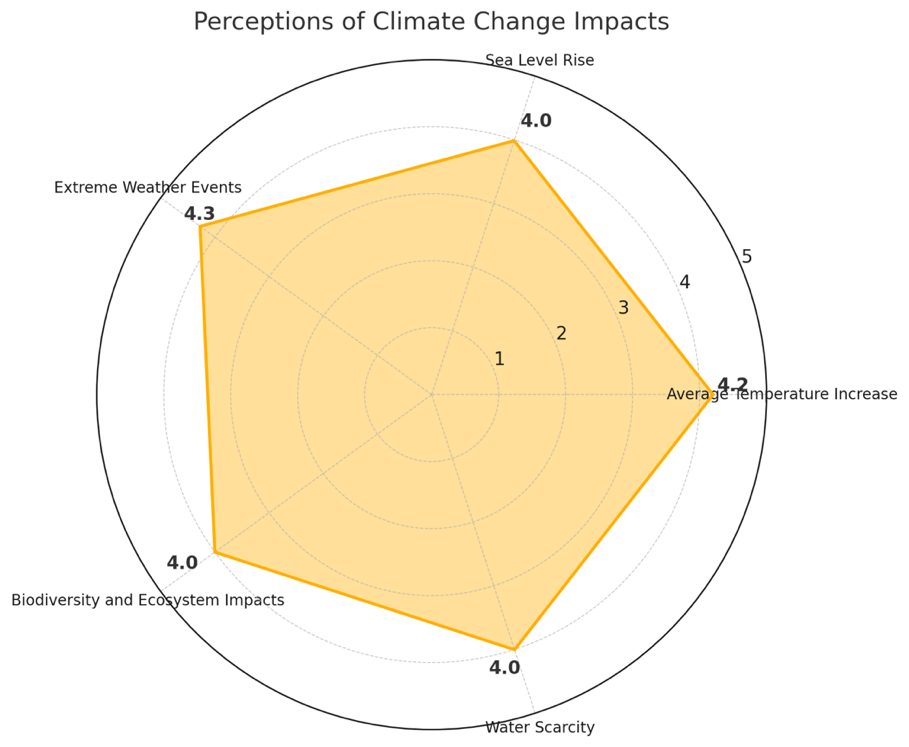
The results highlighted the overall perceived impacts of climate change, as illustrated on a 1-to-5 scale (shown in Fig. 2). These impacts included temperature increases, sea level rise, extreme weather events, biodiversity loss, and water scarcity. Among these, extreme weather events and rising temperatures received the highest risk perception scores, reflecting a heightened concern about their immediate and tangible effects.
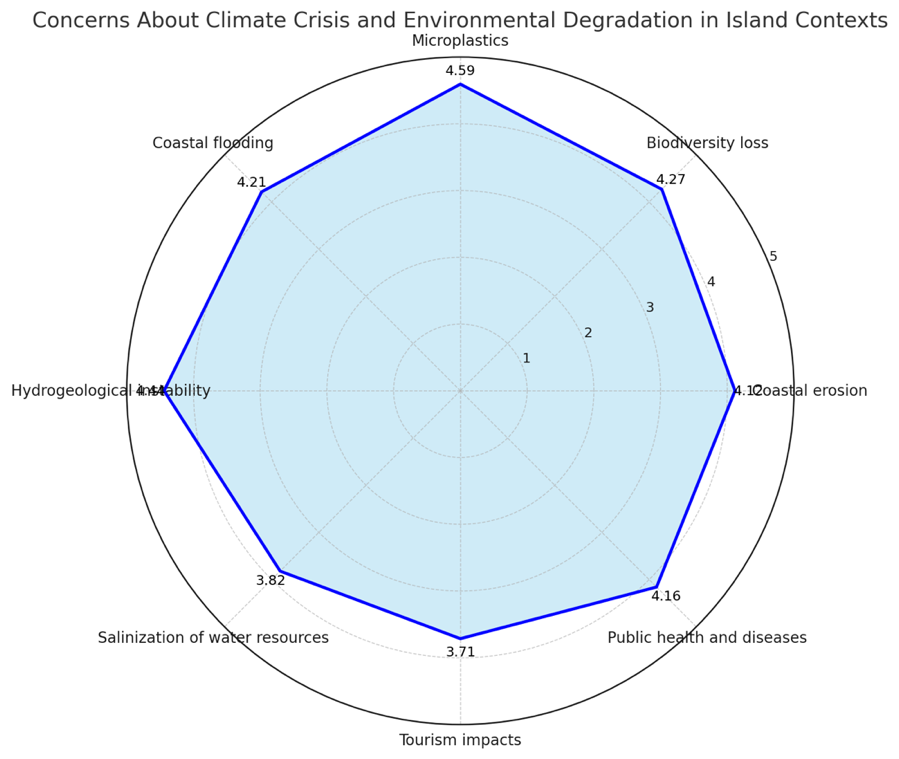
Regarding the main concerns related to climate change and environmental degradation, respondents indicated that these issues directly impact health, livelihoods, and infrastructure (for example, microplastics, 4.6; hydrological instability, 4.4.; biodiversity loss: 4.3; coastal flooding: 4.2) were prioritised in the three island contexts. Surprisingly, the impacts of truism scored the lowest average of 3.7 (Fig. 3).
4.2 Knowledge and awareness of marine biodiversity loss
Analysis of the awareness of marine biodiversity loss revealed significant differences across age groups, while no significant differences in sex were recorded. Generally speaking, the cross-sectional analysis revealed a greater concern about pollution, climate change, and overfishing as topics connected to marine biodiversity degradation, such as major threats to daily life, even with different average score rates (Fig. 4).
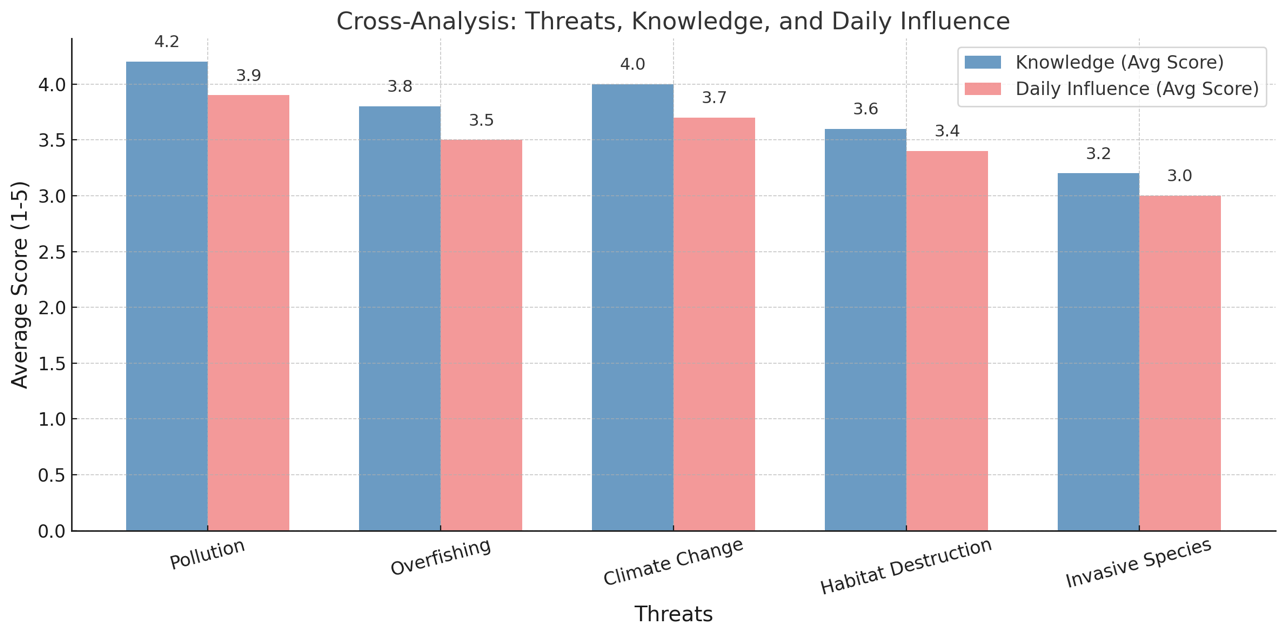
Younger respondents, particularly those aged 21–25 years and those enrolled in higher education programs, demonstrated moderate to high levels of knowledge about marine biodiversity, with average scores ranging from 3 to 4 on a 1-to-5 scale. These individuals may have had greater exposure to topics related to marine ecosystems. In contrast, older respondents and those with lower educational levels exhibited lower awareness, with average scores closer to 2. Similar trends were observed with respect to understanding key threats to marine biodiversity.
Younger and more educated individuals were more familiar with primary challenges to marine biodiversity, such as pollution, overfishing, and climate change, consistently scoring above 3, with average scores ranging from 3.3 to 4. Conversely, respondents working in sectors unrelated to environmental issues or those with lower education levels displayed limited awareness of these threats, with scores ranging from 2 to 2.5.
When respondents were asked about the influence of marine biodiversity on their daily lives, responses varied by demographic and occupational contexts. Younger respondents, particularly students and those with university-level education, recognised the strong relevance of marine biodiversity, with average scores of 4. In contrast, individuals working in the public service or hospitality sectors scored lower, with averages ranging from 1 to 2, reflecting a weaker perceived link between marine biodiversity and their daily activities.
The residents of Ischia demonstrated moderate levels of awareness of marine biodiversity. Their knowledge of threats, such as pollution and overfishing, was average, with scores typically ranging from 3 to 3.5. However, the residents of Ischia had slightly lower scores for the influence of marine biodiversity on their daily lives.
Capri residents exhibited similar levels of knowledge about marine biodiversity as Ischia residents, with scores ranging from 3 to 3.3. However, the perceived influence of marine biodiversity on daily life was slightly higher, with an average of approximately 3.6. Educational initiatives that connect biodiversity preservation to tourism sustainability may have had a particularly significant impact on raising awareness among Capri residents, whose scores in this area were high (approximately 3.8).
Procida stands out for its relatively high levels of awareness and understanding of marine biodiversity. Residents scored above 4 on questions regarding their knowledge of biodiversity threats and the relevance of marine biodiversity to their daily lives, reflecting a strong connection between the community and marine ecosystem health.
4.3 Perception of climate change and marine biodiversity in relationship to ‘islandness’
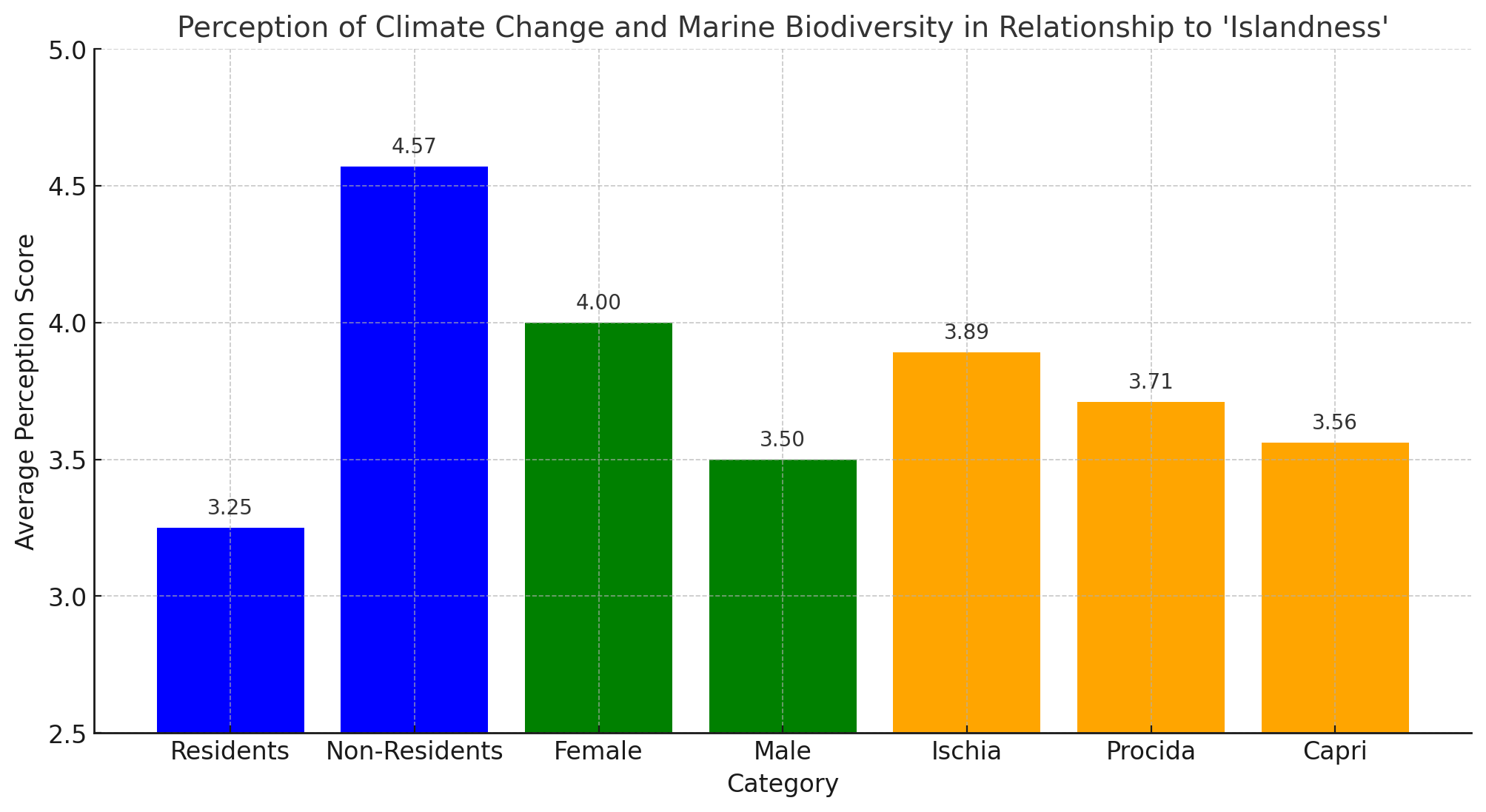
The data revealed that non-residents perceived island life as having a slightly greater impact on climate-change concerns than residents (average perception score of 4.57 vs. 3.25, respectively). Female respondents consistently showed heightened awareness, with an average perception score of 4.0, particularly among those aged 21–30 years who were employed in public services, tourism, or education. Male respondents displayed greater variability in their perception scores, which ranged from 2.5 to 4.5. Younger men (21–30 years) scored an average of 3.5, while older men in education or research-related fields reported higher scores, often exceeding 4.0. Education continued to play a significant role with regard to the results, with individuals holding a master’s or doctorate averaging 4.5, while those with secondary or vocational education report lower averages (3.0–3.5). Occupation was also a key differentiator: public sector workers average around 4.0, while tourism and hospitality workers, due to their direct exposure to climate-sensitive industries, report higher scores (4.0–4.5). Private sector workers and non-environmentally focused occupations demonstrated more moderate perceptions, averaging between 3.0 and 3.5. Geographically, perceptions varied significantly by island: Ischia residents showed the highest average perception score (3.89), followed by Procida (3.71) and Capri residents, who had the lowest average perception score (3.56). These variations underscore the differing levels of awareness and engagement among the residents of specific islands.
4.4 Specific challenges in other island contexts
In consideration of the ‘other’ context considered vulnerable to climate change and marine biodiversity loss, women showed a slightly stronger belief in the presence of similar issues in contexts than men (average score: 3.66 vs. 3.33, respectively). Younger adults aged 26–30 and older adults aged 56–60 exhibited higher belief levels (3.74 and 3.88, respectively). Conversely, individuals under 20 or between 46–50 displayed lower belief scores (3.00 and 3.22, respectively). Those with higher education levels, such as doctoral degrees (3.82) and traditional pre-reform university degrees (4.00) demonstrated higher belief levels. Respondents with less education, such as those with a high school diploma, had slightly lower average scores (3.43). Furthermore, respondents familiar with climate change had significantly higher belief levels (3.59) than those unfamiliar with it (2.63).
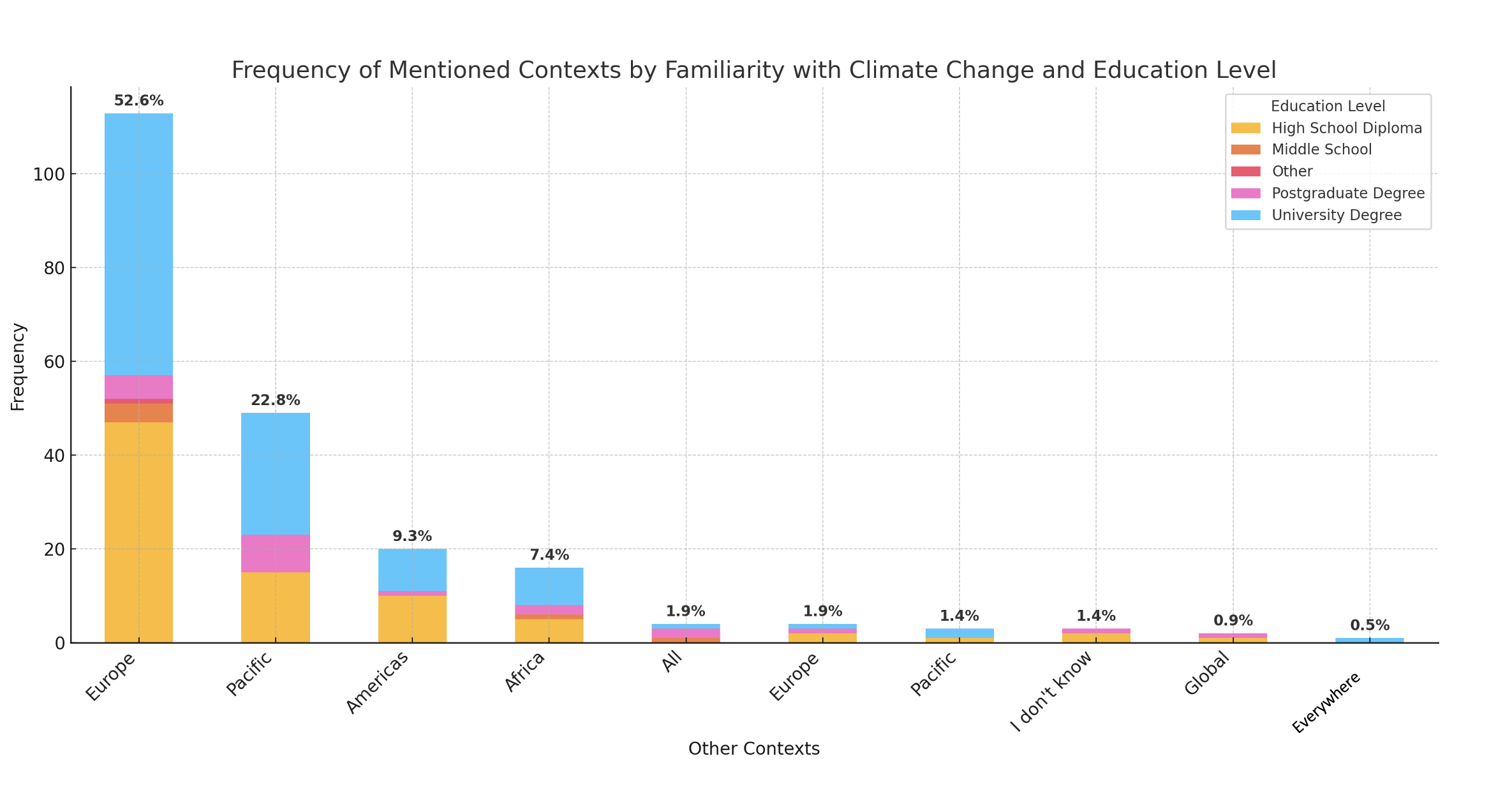
When considering the effects of climate change and biodiversity loss, most respondents identified Europe as a particularly vulnerable region, with over 100 mentions. The Pacific was the second most frequently mentioned region, followed by the Americas and Africa. Many respondents also highlighted the global nature of climate change, using terms such as ‘Globo’ (globe), ‘In tutto il mondo’ (the entire world), and ‘Tutti i continenti’ (all continents). Certain responses included specific contexts, such as ‘in all island contexts with high salinity levels and elevated humidity compared to inner archipelagos’.
Cross-analysing the mentioned contexts by familiarity with climate change and education level revealed that participants with higher familiarity with climate change mentioned the various contexts more frequently. The bar chart in Figure 6 highlights the top contexts and their distribution across different educational levels, illustrating the relationship between awareness and regional perceptions of vulnerability (Fig. 6).
4.5 Trust in institutions
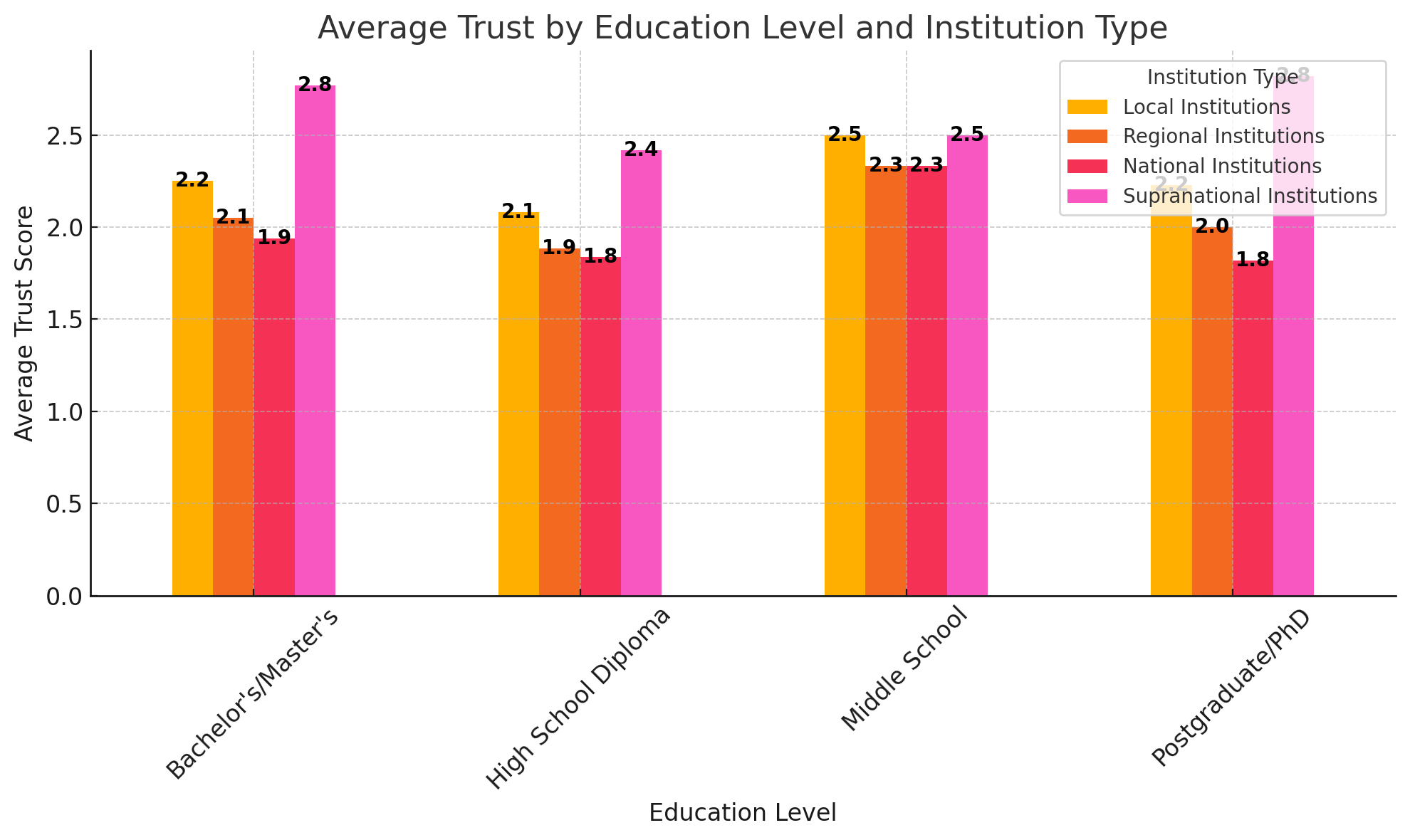
Analysis of institutional trust across demographic groups revealed significant trends. Women, particularly those in the 21–30 age group, tended to place greater trust in supranational institutions such as the EU and the UN, with average ratings ranging from 3.5 to 4.0. In contrast, men generally showed relatively higher trust in regional institutions, with ratings averaging between 3.0 and 3.5, whereas their trust in supranational institutions was lower, and the scores ranged from 2.0 to 2.5.
Individuals holding higher degrees report higher trust in supranational institutions, with averages of approximately 3.5, compared to those with a high school diploma, who had average scores of 2.5–3.0 (Fig. 7).
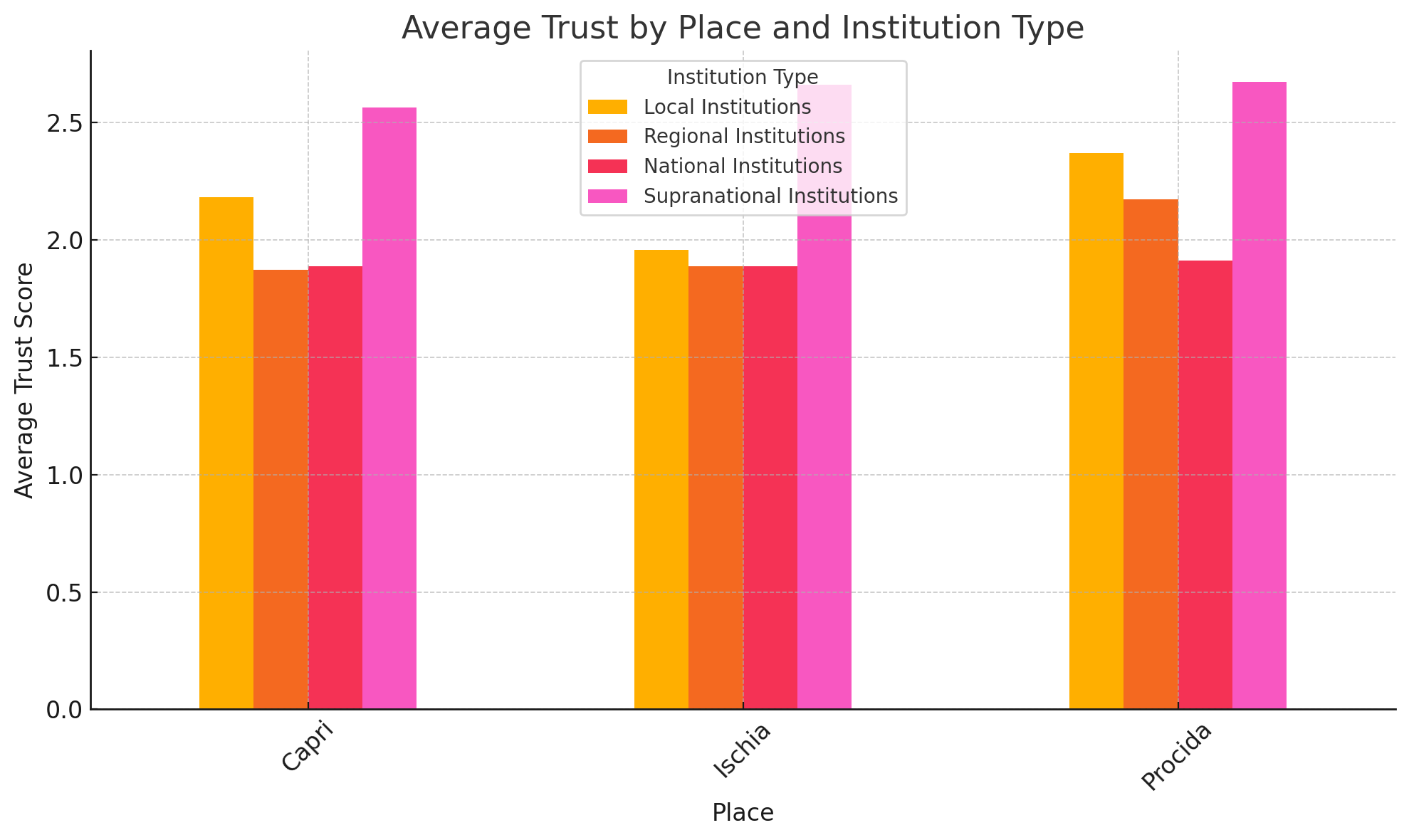
Age played a significant role in shaping individual perceptions of institutions. Younger individuals, particularly those aged 21–30, tended to demonstrate higher levels of trust in supranational institutions, with ratings as high as 4.0 in Procida. By contrast, older age groups (65+ years) exhibited a more sceptical perspective, with trust in national institutions falling to as low as 1.5 in Ischia.
Trust in local institutions varied significantly among countries. Ischia showed the lowest level of trust in local governance, reflecting widespread dissatisfaction with local management and crisis responses, especially in the aftermath of natural disasters. In comparison, Procida exhibited higher trust across all institutional levels, with local institutions averaging scores between 2.5 and 4.0. Conversely, Capri residents showed moderate levels of trust in local governance, with scores ranging from 3.0 to 3.5.
Overall, Procida displayed a higher average trust across all institution types, especially in supranational institutions, when compared to Capri and Ischia (Fig. 8).
4.6 Trust in science
In terms of gender, males tend to express higher trust in science, with approximately 60% reporting they are ‘Very Confident’, compared to 40% of females. Age-wise, trust peaked among individuals aged 26–30: 70% were ‘Very Confident’, followed by 60% in the 31–40 group, and 50% among 18–25-year-olds (Fig. 9).
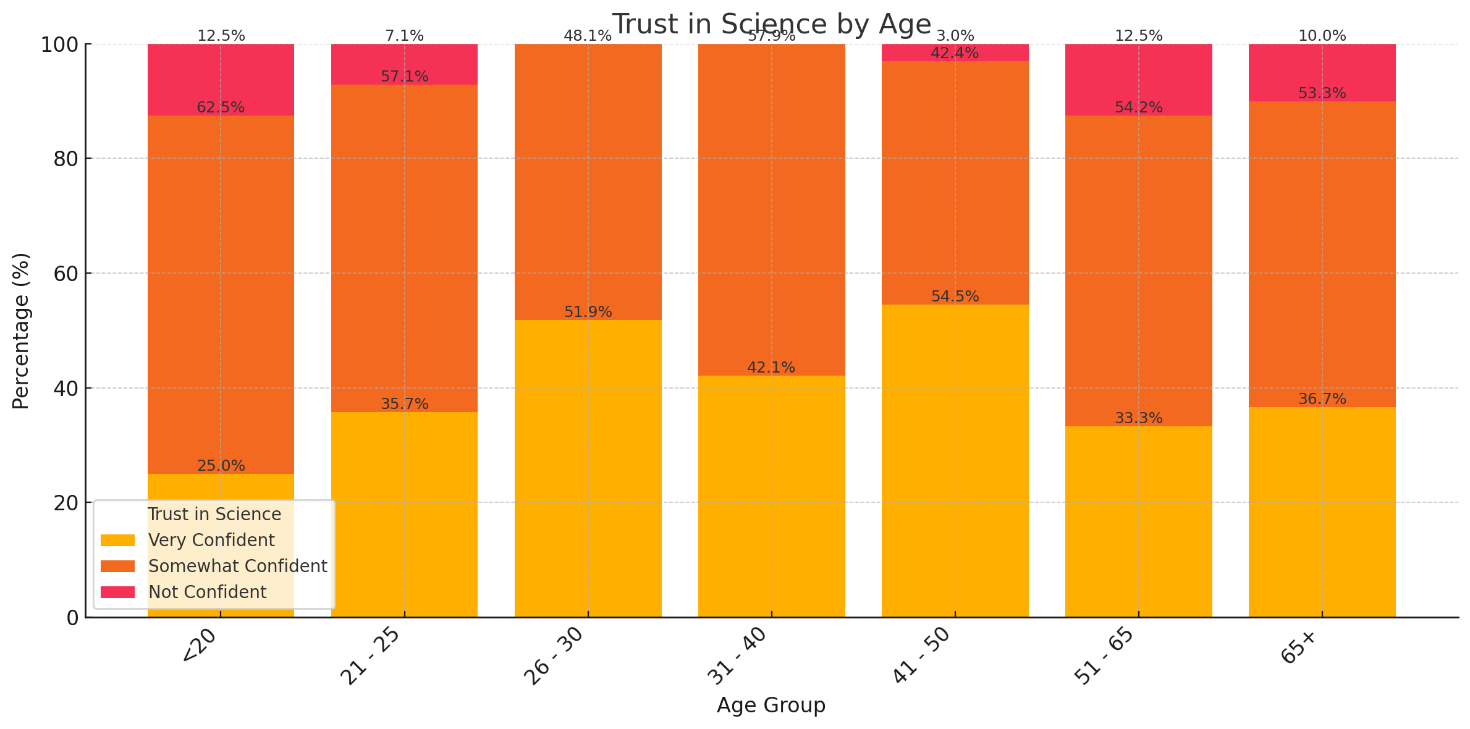
Geographically, respondents from Capri exhibit higher trust in science, with 60% being ‘Very Confident’, compared to 50% in Ischia.
When looking at occupation, public employees display the greatest confidence, with 70% reporting they are ‘Very Confident’, in contrast to freelancers, for whom only 40% report the same level of trust. Education also played a pivotal role, as 80% of individuals with a master’s degree indicated that they were ‘Very Confident’ in their trust in science, compared to 50% of high school graduates. These findings underscore the importance of demographic factors in shaping trust in scientific information, particularly regarding climate change.
4.7 Potential solutions
The general trend in addressing marine biodiversity loss and climate change revealed a diverse set of priorities shaped by demographics, place, and socioeconomic contexts. Education and community engagement consistently stood out, with solutions such as ‘School Programs on Climate Change’ (average score: 4.8) and ‘Workshops for Adults’ (average score: 4.7), which highlighted the importance of raising awareness and empowering communities. Practical measures like ‘Coastal Protection’ (average score: 4.7) and ‘Resilient Infrastructure’ (average score: 4.5) were widely endorsed, particularly in island contexts vulnerable to climate impacts. Nature-based solutions, such as ‘Reforestation Projects’ (average score: 4.6) and ‘Local Biodiversity Conservation’ (average score: 4.5), resonated strongly, underscoring the importance of restoring ecosystems. Collaboration emerged as a key theme, with high support for ‘Partnerships with NGOs’ (average score: 4.5) and ‘Support for Climate Research’ (average score: 4.8), reflecting recognition of science and international cooperation’s pivotal role.
Place-based differences were notable: respondents from Ischia perceived local challenges as more severe, emphasising community engagement and shared responsibility for addressing environmental and infrastructural issues. Capri residents prioritised waste management and tourism strain but exhibited less inclination toward community-driven discussions compared to other islands. In contrast, Procida demonstrated the highest engagement in community discussions and displayed heightened environmental awareness, actively pursuing sustainability. These localised trends highlighted the need for tailored solutions that reflect unique geographical contexts (Fig. 10).
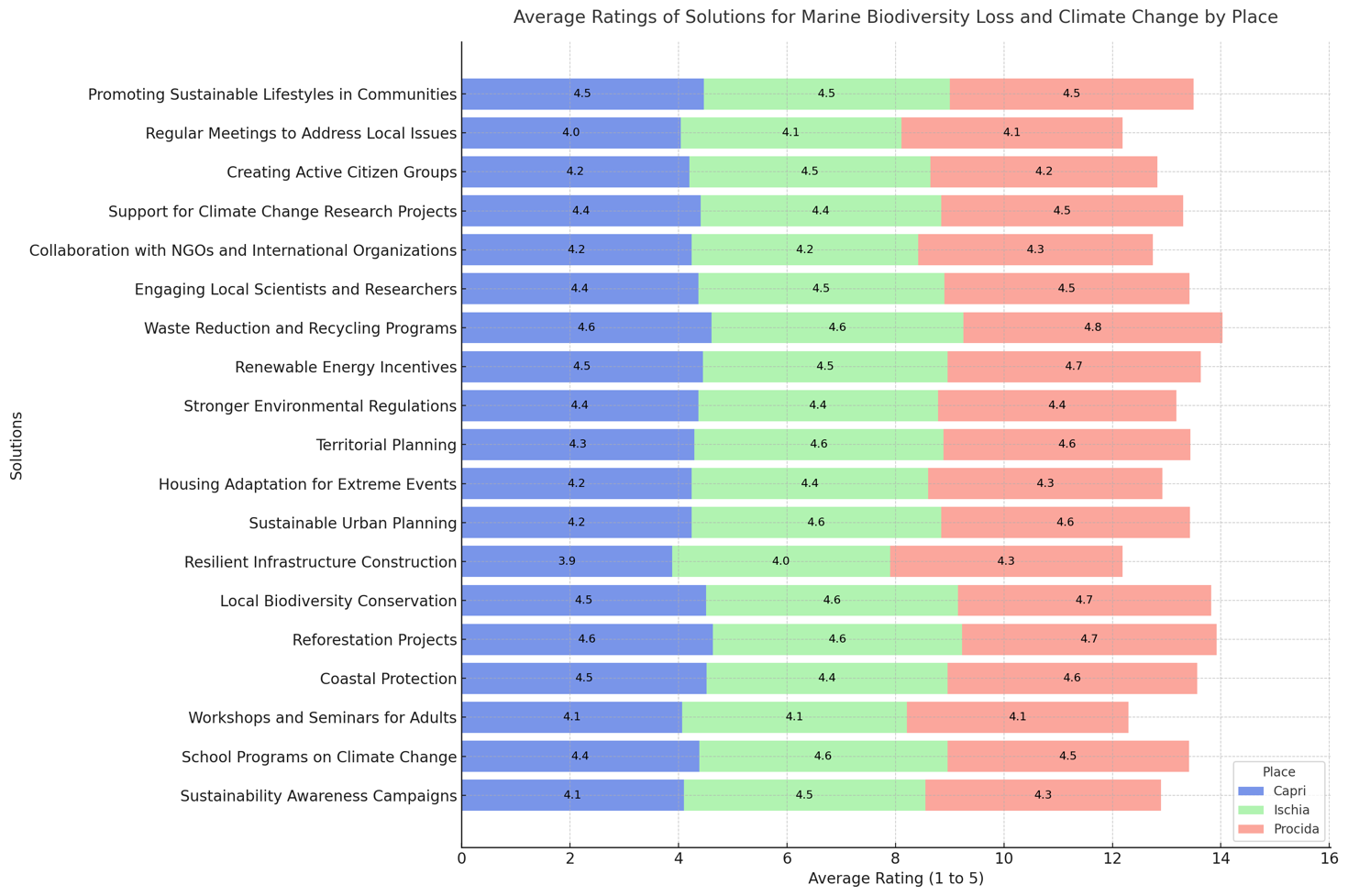
Demographics further shape the solution preferences. Women strongly favoured community-driven solutions, such as active citizen groups and sustainable lifestyles, reflecting a focus on grassroots actions. Meanwhile, men leaned toward technical solutions, such as resilient infrastructure, emphasising structural interventions. Younger respondents (21–25 years) consistently prioritised educational initiatives, such as school programs, while older groups (31–40 years and above) favoured policy-driven solutions, such as stricter regulations and renewable energy incentives, to address economic and policy concerns.
A positive correlation existed between education level and solution preferences: higher education aligned with evidence-based approaches, including collaborations with scientists and NGOs, whereas lower education levels favoured practical initiatives, such as waste reduction programs. Occupational influences were also evident, with professionals and public sector workers prioritising policies and infrastructure, students favouring educational initiatives, and tourism entrepreneurs emphasising conservation efforts.
5. Discussion
Based on the current findings, we identified key questions for further analysis of the topic, as well as some solutions proposed by the respondents that underscore the need for downsizing studies concerning the perception of climate change to avoid stigmatisation and adopt targeted solutions.
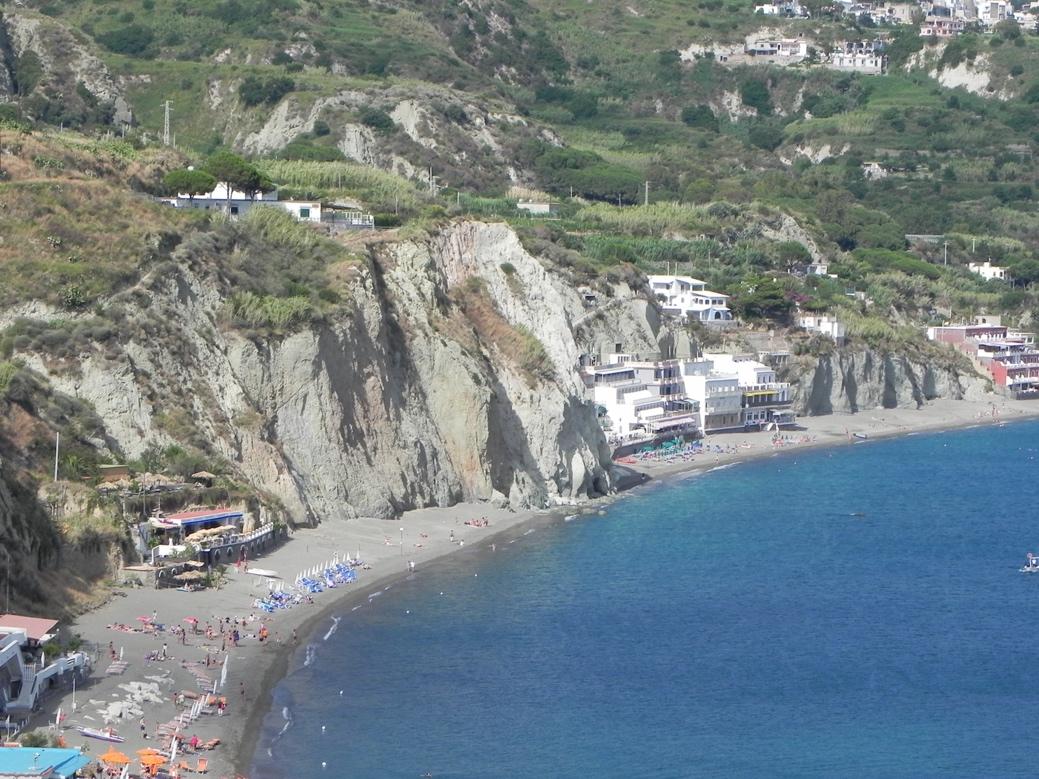
The data provided significant insights into the factors influencing climate change awareness, demonstrating a moderate correlation with gender, a stronger relationship with age and education level, and notable variation across occupations and geographic locations. The results were similar to those of other structured studies on the subject (Bostrom, 1994; Bord et al., 1998; Leiserowitz, 2004, 2005, 2006, 2007). Overall, the findings highlighted a rather generalised understanding of climate change without any recognition of its local effects. Respondents’ views on the local effects of climate change seemed to be mediated by external views, often those of the media, and indicated a lack of specific knowledge (e.g. marine biodiversity) (Weber, 2006). Both men and women had similar average awareness scores, although sex differences emerged regarding their perceptions of community awareness. While these differences do not indicate substantial disparities based solely on sex, they may reflect underlying intersectional vulnerabilities. This finding is consistent with previous studies on this subject (e.g., Sultana, 2014; Demir et al., 2023; Alonso-Epelde et al., 2024). Age was a significant determinant, with older respondents demonstrating the highest awareness levels, potentially due to accumulated life experiences or greater exposure to environmental issues, particularly the present and devastating in the Ischian context (such as the numerous landslides and other instability phenomena or firebushes which occur on the island; Figure 11).
Conversely, younger respondents, particularly those under the age of 20, exhibited lower levels of awareness, highlighting the need for targeted educational initiatives. Education was identified as the strongest predictor of climate change awareness, with higher educational attainment correlating with greater familiarity with, and support for, climate action. Respondents with doctoral degrees reported the highest levels of awareness, underscoring the role of advanced education in shaping their perceptions. As observed in other contexts (Hoekstra, 2024), individuals with higher education consistently report higher levels of knowledge and support for scientific efforts to address environmental challenges. This pattern extended to occupations with educators and researchers, who demonstrated the highest levels of awareness, likely due to their access to information and engagement in critical discourse. In contrast, those working in tourism and manual labour exhibited moderate awareness, suggesting gaps in their access to climate-related knowledge. Geographically, residents of Ischia exhibited the highest levels of awareness and engagement, likely driven by their direct experiences with climate challenges such as coastal erosion and water salinisation. Procida followed, with residents prioritising concerns such as water scarcity and ecosystem health, while Capri lagged with lower perceived community engagement.
Across all locations, heightened concerns about weather events and rising temperatures reflected their immediate and tangible impacts, which may serve as a catalyst for increased public awareness and action. As suggested in the ‘open comments’, tailored strategies are needed to address gaps in local governance, particularly among younger populations, less-educated groups, and regions with lower perceived community engagement. Bridging these divisions could shape a more unified and effective response to the escalating challenges posed by climate change. As one respondent noted, ‘It is necessary to create a stronger sensitivity to the environment in the very young than in the older generations’. Another suggestion was, ‘I think it is useful to inform and explain to young people and adults the critical issues and consequences of climate change, but I think it is even more important for local institutions to decide what actions to take for their areas and ensure that established rules are followed by everyone’.
Regarding other research on the topic (see e.g., Sabatella et al., 2024), the results presented a compelling case for examining the socio-demographic drivers of awareness regarding marine biodiversity loss, emphasising the interplay of age, education, and geographic context. A striking pattern emerges when the current results are combined with those from previous researches (Hnatyuk et al., 2024): awareness is highest among younger, more educated respondents, which raises critical questions about the mechanisms through which knowledge of marine ecosystems is disseminated and internalised. This finding suggests that formal education and academic engagement play pivotal roles in shaping environmental consciousness, but also points to a potential disconnect between older generations and individuals outside academic contexts. One notable aspect is the apparent lack of gender-based differences, which could reflect shared baseline information between male and female respondents. However, the absence of gender variation does not negate the influence of other intersectional factors, such as occupation or regional context, which may shape nuanced perceptions (Key et al., 2022).
This finding reinforces the importance of moving beyond binary categorisations to understand broader human geographical aspects influences on climate change awareness. The gap between younger and educated respondents and their older and less educated counterparts have critical implications. If awareness of climate change is disproportionately concentrated in certain demographic groups, it creates vulnerabilities in public discourse and policymaking. For example, lower awareness scores among older respondents and individuals in non-environmental professions suggest that these groups may be less engaged in conservation advocacy or less supportive of policies aimed at mitigating biodiversity loss. Bridging this divide will require innovative strategies such as informal educational campaigns or community-driven initiatives that resonate with diverse age groups and professional sectors. Geographic variations further complicate the picture; while Procida demonstrates comparatively high awareness and engagement, Ischia and Capri reveal more moderate levels, with specific gaps in perceiving the relevance of marine biodiversity to daily life. This raises critical questions about the role of local socioeconomic and cultural factors in shaping environmental awareness. For instance, Capri’s relatively high scores in linking biodiversity to daily activities suggest that economic dependencies, such as tourism, may create a tangible sense of connection. However, this reliance could also risk framing biodiversity conservation solely as an economic issue, potentially sidelining broader ecological and ethical considerations. This finding could be attributed to Procida’s recent designation as Italy’s Cultural Capital, which likely brought increased focus on sustainability and environmental conservation (D’Alessandro & Autiero, 2024).
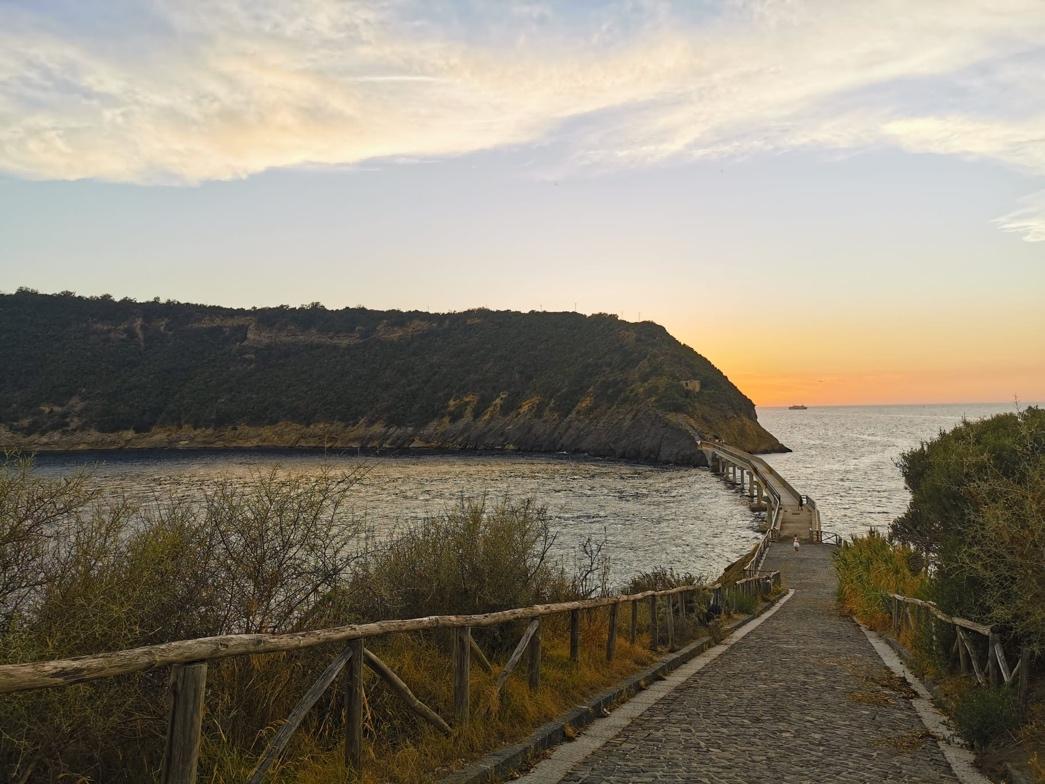
Procida residents also demonstrated strong recognition of the practical importance of biodiversity, emphasising their proactive stance on ecological preservation, probably due to the presence of the Marine Protected Area of Regno di Nettuno (Fig. 12).
The emphasis on the heightened awareness of younger respondents highlights the potential opportunity to leverage this demographic in advocacy and educational roles. However, overreliance on this group risks alienating others who may feel excluded from these conversations. Therefore, strategies should be inclusive, aiming to engage underrepresented groups, such as older individuals and those in non-environmental professions, through tailored messaging that connects biodiversity loss to lived experiences. Finally, the findings highlight the necessity for multi-scalar approaches to environmental education and policies. While localised initiatives, such as those suggested for Capri, may yield immediate benefits, they must be integrated into broader frameworks that address systemic barriers to awareness, such as access to education and information. By fostering cross-generational and cross-sectoral dialogue, these initiatives can build a cohesive and inclusive foundation for marine biodiversity conservation.
The differences between islands again highlight the importance of place-based strategies in climate awareness that, as underlined by Stern et al. (2023, p. 1) must fit ‘the local context; adequately preparing the participants; clarifying the objectives; facilitation strategies; promoting local leadership, efficacy and accountability; and providing post-workshop support’. These variations may stem from differences in local environmental challenges, economic dependencies, or community dynamics. For instance, Ischia’s slightly higher scores may reflect a stronger cultural or economic connection to climate-related issues such as coastal erosion. Despite its reliance on tourism, Capri’s lower scores raise questions about whether its focus on economic narratives overshadows broader environmental engagement (Fig. 13).
This suggests that although tourism can be a lever for raising awareness, it should not be the sole focus, as it risks framing biodiversity and climate issues in purely economic terms. For example, campaigns targeting non-residents could focus on mobilising external support for island adaptation initiatives, whereas efforts aimed at residents might seek to deepen the perceived relevance of climate challenges through localised community-driven projects.
The disparities between resident and non-resident perceptions reveal a compelling paradox: non-residents often express a greater sense of urgency about the climate challenges facing island communities than those who live on islands. This discrepancy reinforces the skewed perception of ‘islandness’ (Coulthard et al., 2017; Foley, 2018; Hong et al., 2022), which may stem from a broader narrative that frames islands as exceptionally vulnerable to climate change—a portrayal frequently amplified in global media and policy discussions, similar to other ‘narrated’ vulnerable contexts (Bankoff, 2001; Bankoff and Hilhorst, 2022). This narrative oscillates between two contrasting notions: the inherent vulnerability of islands, where residents are perceived as being ‘trapped’ on isolated, ‘cut-off’ lands, and the inherent resilience of islanders, who are seen as drawing upon localised resources and strategies to overcome these vulnerabilities (Lewis, 2009). For residents, living with these risks daily may lead to desensitisation or a more pragmatic focus on immediate, tangible challenges rather than abstract, long-term concerns.
This dissonance raises critical questions: Are external perceptions inflating the urgency of island vulnerability or are residents underestimating the risks they face? The answer lies somewhere in between, highlighting the need for nuanced strategies that bridge these perspectives without patronising local communities. An insightful comment from a non-resident further illustrates this dynamic: ‘Islanders are historically resistant to cooperation and change. Education makes broader political change possible.’ Geographer Greg Bankoff recalls (2001, p. 19):
‘Disasters seem to be major issues in academic enquiry in the new century if, for no other reason, they are inseparably linked to questions of environmental conservation, resource depletion, and migration patterns in an increasingly globalised world. Unfortunately, inadequate attention has been directed at considering the historical roots of the discursive framework within which hazard is generally presented and how that might reflect particular cultural values related to the way in which certain regions or zones of the world are usually imagined.’
Similarly, the focus on Europe as a vulnerable region, alongside references to the Pacific and other global contexts, highlights the influence of proximity and media coverage on public perceptions (Ortiz et al., 2023), not necessary focusing on ‘small island states’, which are instead the most studied areas in consideration of vulnerability and climate change.
While the recognition of Europe reflects respondents’ familiarity, it also risks reinforcing a Eurocentric narrative that may overshadow the more critical vulnerabilities of less-developed regions such as the Pacific Islands or parts of Africa. The frequent mentions of ‘all continents’ and ‘the globe’ indicate a positive shift toward recognising climate change as a universal issue. However, balancing global awareness with a localised understanding remains challenging. Overly abstract messaging may dilute the sense of urgency, while excessively localised narratives could produce a ‘not my problem’ mentality. Effective communication should emphasise interconnected vulnerabilities and illustrate how global challenges manifest locally, and vice versa. The dominance of ‘Europe’ in responses to vulnerable areas may suggest a regional bias, where respondents prioritise issues closer to home. Simultaneously, the frequent mentions of global contexts and distant regions such as the Pacific demonstrate a significant level of global environmental awareness. Given the survey’s island-centric focus, respondents may have highlighted island regions due to their perceived shared vulnerability. Women, particularly younger ones (aged 21–30 years), demonstrated significantly higher trust in supranational institutions such as the EU and the UN, compared to men. This pattern may reflect differing priorities or levels of engagement with issues often addressed by organisations, including human rights, global cooperation, and climate change. One female respondent noted,’ I am usually optimistic, but the LOCAL POWERFUL will not allow the Earth to be saved. Since I am a Christian, all of this has already been predicted in the Gospel.’ By contrast, men tended to favour regional institutions, suggesting a preference for governance closer to home or scepticism toward larger, less directly accessible entities. Education emerged as a critical factor shaping trust in institutions. Those with higher educational attainment, such as a master’s degree, displayed markedly greater trust in supranational organisations. Conversely, individuals with a high school diploma rated these institutions significantly lower, suggesting that education fosters greater awareness and confidence in the efficacy of global organisations. This trend underscores the role of education in cultivating informed perspectives on governance structure (Kuli and Sevä, 2021).
The insights also suggest a shift away from generalised approaches toward more tailored strategies that consider the complex interplay of social, economic, and geographic factors. These strategies reveal how, beyond general discourses, local governance still plays a preponderant role in structuring risk perception, awareness, and prevention. Local institutions are pivotal in advancing climate mitigation efforts and reducing marine biodiversity loss. On the one hand, institutional design influences the provision of public goods such as environmental protection (Bättig and Bernauer, 2009), such as the ability of institutions to regulate and enforce environmental policies is key to the effectiveness of climate mitigation (Hughes and Urpelainen, 2015). By contrast, institutions play a leading role by signalling pro-environmental values, thereby encouraging pro-environmental attitudes and behaviours (Hogg, 2010; Carmichael and Brulle, 2017; Huber et al., 2018)
Age-related differences were also observed. Younger individuals, particularly those in Procida, generally exhibited higher trust in supranational institutions. This optimism may stem from their exposure to globalised perspectives and alignment with the priorities of such organisations. However, older age groups tended to be more sceptical, particularly regarding national institutions. For instance, trust levels in Ischia and Procida were notably low among older individuals, potentially reflecting disillusionment rooted in experiences of governance failure or unmet expectations.
Geography significantly influenced trust in local institutions. Ischia’s low trust ratings highlight widespread dissatisfaction, which is likely driven by ineffective local governance and inadequate crisis response to natural disasters. This finding underscores the critical role of local management in shaping public confidence. Conversely, Procida had higher trust across all institutional levels, suggesting more effective governance and stronger connections between residents and their institutions. Capri exhibited moderate trust levels, reflecting neither extreme dissatisfaction nor exceptional confidence, placing it in a relatively stable position. Procida’s consistently high trust across institutional types may indicate successful policy implementation or better alignment of governance with residents’ needs. The disparity in trust levels between Ischia and Capri highlights the necessity for tailored strategies to address localised challenges, particularly in disaster management and community engagement: these findings align with those of previous research that, even focusing on other context, underline the need od place-based actions for adaptation and resilience (Kulin & Sevä, 2021; Ansari et al., 2023).
Trust in scientific information also shows notable demographic variations. Men generally expressed greater confidence than women, while young adults aged 26–30 years exhibited the highest trust levels, with a slight decline in both younger and older age groups (see also Ojala, 2020). Geographically, individuals from Capri reported greater trust in scientific information than those from Ischia. Among occupational groups, public employees demonstrated the highest levels of trust, in contrast to freelancers, who expressed lower levels of confidence. Education remained a pivotal factor, with individuals holding advanced degrees reporting significantly higher confidence in scientific information than high-school graduates. These differences may reflect varying environmental orientations (Skogen et al., 2018; Sparks et al., 2021).
Addressing the loss of marine biodiversity and climate change requires a multifaceted approach that integrates education, practical solutions, and collaboration. Education plays a pivotal role in enhancing awareness and empowering communities, as reflected in the respondents’ observation: ‘On the island [Procida], middle schools often organise workshops and theoretical activities about climate change. Students are informed, but their parents should be too.’ Practical measures such as coastal protection, resilient infrastructure, and nature-based solutions such as reforestation and biodiversity conservation are critical for enhancing ecosystem resilience and mitigating climate impacts, especially in vulnerable island regions. As one participant noted, ‘Solutions should be implemented as soon as possible’. Collaboration amplifies these efforts through partnerships between communities, NGOs, and scientific institutions that provide expertise and resources. ‘We need to foster a spirit of cooperation for the common good, not only by legislating but also by providing examples and models to follow’, stressed another respondent. Trust in governance, an essential element of public support for climate policy, varies across demographic and geographic lines, underscoring the need for tailored strategies. These include gender-sensitive policies, civic education to enhance understanding of governance, and targeted local governance improvements in areas such as Ischia, where trust deficits often arise from ineffective disaster responses. Bold societal action, informed by expert judgments and grassroots efforts, must also consider the sentiment expressed by one participant: ‘Change must start from the grassroots, meaning from ordinary people’. By prioritising education, collaboration, and localised solutions, this comprehensive strategy can effectively address the interconnected crises of biodiversity loss and climate change.
6. Conclusion
This study aimed to assess the level of knowledge, awareness, and broader perception regarding climate change and marine biodiversity loss within the insular context of the Southern Tyrrhenian Sea, Campanian Archipelago. Despite its inherent fragility, this area has been largely overlooked in sectoral studies. Additionally, the research was enriched by the general consideration that while islands are often regarded as hotspots of risk, this does not necessarily imply that their inhabitants are more vulnerable or perceive themselves as such compared to mainland populations.
In summary, the findings align with and reinforce those of several previous studies on the factors that influence climate risk perception among island communities. The key determinants identified included the number of perceived climate change indicators, age, experience with extreme weather events both at sea and on the island, duration of residence, place of birth, education level, and trade relations, each exerting varying degrees of influence on shaping risk perception. Nonetheless, this study demonstrates that heightened climate risk perception does not necessarily translate into adaptive behaviours among island residents. This finding underscores the critical need to develop and support transformative bottom-up approaches that effectively address the barriers and constraints to adaptive action. Collaborative engagement involving diverse stakeholders such as policymakers, local governments, non-governmental organisations (NGOs), and academic institutions is indispensable. These stakeholders must utilise their capacity to shape development policies, allocate resources, advance data collection and research, and engage in policy advocacy to support island resilience. This approach is particularly pertinent in island contexts, where disasters are frequently misrepresented as isolated, extraordinary events rather than as symptoms of the intrinsic vulnerabilities associated with ‘islandness’ as a social construct—a concept articulated by Lewis as early as 1999. Addressing these complex challenges requires both systemic and context-specific solutions to foster sustainable resilience. Furthermore, as Bankoff (2018) posits, it is valuable to critically examine how such discourses may reflect the ideological frameworks of their time, which seek to interpret societies and their environments through competing conceptual lenses.
Acknowledgements
This work was supported by National Biodiversity Future Center. Funder: Project funded under the National Recovery and Resilience Plan (NRRP), Mission 4 Component 2 Investment 1.4 - Call for tender No. 3138 of 16 December 2021, rectified by Decree n.3175 of 18 December 2021 of Italian Ministry of University and Research funded by the European Union – NextGenerationEU; Award Number: Project code CN_00000033, Concession Decree No. 1034 of 17 June 2022 adopted by the Italian Ministry of University and Research, CUP Unina: E63C22000990007, Project title “National Biodiversity Future Center - NBFC”.
Funding resources
This work was supported by National Biodiversity Future Center in the collection and analysis of data. Funder: Project funded under the National Recovery and Resilience Plan (NRRP), Mission 4 Component 2 Investment 1.4 - Call for tender No. 3138 of 16 December 2021, rectified by Decree n.3175 of 18 December 2021 of Italian Ministry of University and Research funded by the European Union – NextGenerationEU; Award Number: Project code CN_00000033, Concession Decree No. 1034 of 17 June 2022 adopted by the Italian Ministry of University and Research, CUP Unina: E63C22000990007, Project title “National Biodiversity Future Center - NBFC”.
Endnotes
Bibliography
- Alexander, D., Gaillard, J.C., Kelman, I., Marincioni, F., Penning-Rowsell, E., van Niekerk, D., Vinnell, L.J., 2021. Academic publishing in disaster risk reduction: Past, present, and future. Disasters 45(1): 5–18. https://doi.org/10.1111/disa.12432.
- Alonso-Epelde, E., García-Muros, X., González-Eguino, M., 2024. Climate action from a gender perspective: A systematic review of the impact of climate policies on inequality. Energy Res. Soc. Sci. 112: 103511. https://doi.org/10.1016/j.erss.2024.103511.
- Ansari, D., Schönenberg, R., Abud, M., Becerra, L., Brahim, W., Castiblanco, J., de la Vega-Leinert, A., Dudley, N., Dunlop, M., Figueroa, C., Guevara, O., Hauser, P., Hobbie, H., Hossain, M., Hugé, J., Janssens de Bisthoven, L., Keunen, H., Munera-Roldan, C., Petzold, J., Rochette, A., Schmidt, M., Schumann, C., Sengupta, S., Stoll-Kleemann, S., Kerkhoff, L., Vanhove, M., Wyborn, C., 2023. Communicating climate change and biodiversity loss with local populations: Exploring communicative utopias in eight transdisciplinary case studies. UCL Open: Environ. 5: 11. https://doi.org/10.14324/111.444/ucloe.000064.
- Aucelli, P., Gagliardi, E., Mattei, G., Napolitano, F., Pappone, G., Pennetta, M., Tursi, M., 2022a. Morphological responses to relative sea-level changes along Procida coast (Gulf of Naples, Italy) during the last 6.5 Ky. Marine Geol. 448: 106814. https://doi.org/10.1016/j.margeo.2022.106814.
- Aucelli, P., Gagliardi, E., Mattei, G., Napolitano, F., Pappone, G., Pennetta, M., Tursi, M., 2022b. Morphological responses to relative sea-level changes along Procida coast (Gulf of Naples, Italy) during the last 6.5 Ky. Marine Geol. 106814. https://doi.org/10.1016/j.margeo.2022.106814.
- Aurelle, D., Thomas, S., Albert, C., Bally, M., Bondeau, A., Boudouresque, C.-F., Cahill, A.E., et al., 2022. Biodiversity, climate change, and adaptation in the Mediterranean. Ecosphere 13(4): e3915. https://doi.org/10.1002/ecs2.3915.
- Avvisati, G., Bellucci Sessa, E., Colucci, O., Marfè, B., Marotta, E., Nave, R., Peluso, R., Ricci, T., Tomasone, M., 2019. Perception of risk for natural hazards in Campania Region (Southern Italy). Int. J. Disaster Risk Reduction 40: 101164. https://doi.org/10.1016/j.ijdrr.2019.101164.
- Baldacchino, G., 2020. A psychology of islanders?, in: Pine, R., Konidari, V. (Eds.), Islands of the Mind: Psychology, Literature and Biodiversity, pp. 115–130. Cambridge Scholars Press.
- Baltar, F., Brunet, I., 2012. Social research 2.0: Virtual snowball sampling method using Facebook. Internet Res. 22: 57–74. https://doi.org/10.1108/10662241211199960.
- Bankoff, G., 2001. Rendering the world unsafe: ‘Vulnerability’ as Western discourse. Disasters 25: 19–35. https://doi.org/10.1111/1467-7717.00159.
- Bankoff, G., 2018. Remaking the world in our own image: Vulnerability, resilience and adaptation as historical discourses. Disasters 43. https://doi.org/10.1111/disa.12312.
- Bankoff, G., Frerks, G., Hilhorst, D.J.M., 2004. Mapping vulnerability, disasters, development and people. in: Bankoff, G., Frerks, G., Hilhorst, D.J.M. (Eds.), Mapping Vulnerability: Disasters, Development and People, pp. 1–10. https://doi.org/10.4324/9781849771924.
- Bankoff, G., Hilhorst, D., 2022. (Eds.), Why Vulnerability Still Matters. Routledge, London. https://doi.org/10.4324/9781003219453.
- Barattolo, F., Cinue, D., D’Alessandro, M., Guia, M., Oano, F., Russo, G., 1993. Geomorfologia ed evoluzione tettonica quaternaria dell’isola di Capri. in: Studi Geologici Camerti, Special Vol., pp. 221–229.
- Bättig, M.B. and Bernauer, T., 2009. National institutions and global public goods: are democracies more cooperative in climate change policy? International Organization, 63 (2), 281–308. doi:10.1017/S0020818309090092.
- Bianca, P., Preetha, S., Lavanya, P., 2022. Awareness on recent trends of global climate change. J. Educ. Teach. Train. 13(6): 153–163.
- Bianchi, C., Morri, C., 2000. Marine biodiversity of the Mediterranean Sea: Situation, problems, and prospects for future research. Mar. Pollut. Bull. 40: 367–376. https://doi.org/10.1016/S0025-326X(00)00027-8.
- Boholm, A., 1998. Comparative studies of risk perception: A review of twenty years of research. J. Risk Res. 1(2): 135–163. https://doi.org/10.1080/136698798377231.
- Bonati, S., Gioia, E., Guadagno, E., 2024. The co(a)sts for beauty, in: Bonati, S., Cisani, M., Tononi, M., Zanolin, G. (Eds.), Critical Perspectives on Social Constructions of Nature: Italy and the Bel Paese (in press). Routledge.
- Bord, R.J., Fisher, A., O’Connor, R.E., 1998. Public perceptions of global warming: United States and international perspectives. Clim. Res. 11: 75–84.
- Bostrom, A., Morgan, M.G., Fischhoff, B., Read, D., 1994. What do people know about global climate change? Risk Anal. 14(6): 959–970. https://doi.org/10.1111/j.1539-6924.1994.tb00065.x.
- Burton, I., Kates, R.W., White, G.F., 1978. The Environment as Hazard. Oxford University Press.
- Caccavale, M., Matano, F., Sacchi, M., 2017. An integrated approach to earthquake-induced landslide hazard zoning based on probabilistic seismic scenario for Phlegrean Islands (Ischia, Procida, and Vivara), Italy. Geomorphology 295: 10–22. https://doi.org/10.1016/j.geomorph.2017.07.010.
- Carmichael, J.T. and Brulle, R.J., 2017. ‘Elite cues, media coverage, and public concern: an integrated path analysis of public opinion on climate change, 2001–2013ʹ. Environmental Politics, 26 (2), 232–252.
- Cisternas, P., Cifuentes, L., Bronfman, N., Repetto, P., 2023. The influence of risk awareness and government trust on risk perception and preparedness for natural hazards. Risk Anal. 44: 10–1111. https://doi.org/10.1111/risa.14151.
- Coll, M., Piroddi, C., Steenbeek, J., Kaschner, K., Ben Rais Lasram, F., et al., 2010. The biodiversity of the Mediterranean Sea: Estimates, patterns, and threats. PLoS ONE 5(8): e11842. https://doi.org/10.1371/journal.pone.0011842.
- Coulthard, S., Evans, L., Turner, R., et al., 2017. Exploring ‘islandness’ and the impacts of nature conservation through the lens of wellbeing. Environ. Conserv. 44(3): 298–309. https://doi.org/10.1017/S0376892917000273.
- D’Alessandro, L., Autiero, A., 2014. Dalla Capitale Europea alla Capitale Italiana della Cultura. Doc. Geogr. 2: 215–234.
- De Alteriis, G., Violante, C., 2009. Catastrophic landslides of Ischia volcanic island (Italy). Geol. Soc. Lond. Spec. Publ. 322: 73–104.
- De Pippo, T., Donadio, C., Pennetta, M., Petrosino, C., Terlizzi, F., Valente, A., 2008. Coastal hazard assessment and mapping in Northern Campania, Italy. Geomorphology 97: 451–466. https://doi.org/10.1016/j.geomorph.2007.08.015.
- De Pippo, T., Donadio, C., Pennetta, M., Terlizzi, F., Valente, A., 2009. Application of a method to assess coastal hazard: The cliffs of the Sorrento Peninsula and Capri (southern Italy). Geol. Soc. Lond. Spec. Publ. 322: 189–204. https://doi.org/10.1144/SP322.9.
- De Pippo, T., Donadio, C., Pennetta, M., Terlizzi, F., Valente, A., 2022. Application of a method to assess coastal hazard: The cliffs of the Sorrento Peninsula and Capri (southern Italy). Geomorphology 322: 189–204. https://doi.org/10.1144/SP322.9.
- Demir, R., Yalazı, R., Dinc, A., 2023. The relationship between women’s climate change awareness and concerns about climate change in Turkey. Public Health Nurs. 41(6): 555–563. https://doi.org/10.1111/phn.13269.
- Dhar, T., Bornstein, L., Lizarralde, G., Nazimuddin, S.M., 2023. Risk perception—A lens for understanding adaptive behaviour in the age of climate change? Narratives from the Global South. Int. J. Disaster Risk Reduction 95: 103886. https://doi.org/10.1016/j.ijdrr.2023.103886.
- Doumenge, F., 1987. Quelques contraintes du milieu insulaire. in: Iles tropicales: insulairité, ‘insularisme’, CRET, Université de Bordeaux, Bordeaux, pp. 9–16.
- Eisenack, K., Moser, S., Hoffmann, E., Klein, R., Oberlack, C., Pechan, A., Rotter, M., Termeer, K., 2014. Explaining and overcoming barriers to climate change adaptation. Nature Clim. Change 4: 867–872. https://doi.org/10.1038/nclimate2350.
- Ferrigno, F., Appolloni, L., Donnarumma, L., Di Stefano, F., Rendina, F., Sandulli, R., Russo, G., 2021. Diversity loss in coralligenous structuring species impacted by fishing gear and marine litter. Diversity 13: 331. https://doi.org/10.3390/d13070331.
- Ferrigno, F., Appolloni, L., Rendina, F., Donnarumma, L., Russo, G., Sandulli, R., 2020. Red coral (Corallium rubrum) populations and coralligenous characterization within ‘Regno di Nettuno MPA’ (Tyrrhenian Sea, Italy). Eur. Zool. J. 87(1): 203–213. https://doi.org/10.1080/24750263.2020.1742808.
- Foley, A.M., 2018. Climate impact assessment and ‘islandness’: Challenges and opportunities of knowledge production and decision-making for Small Island Developing States. Int. J. Clim. Change Strat. Manag. 10(2): 289–302. https://doi.org/10.1108/IJCCSM-03-2017-0063.
- Foley, A., Brinklow, L., Corbett, J., Kelman, I., Klöck, C., Moncada, S., Walshe, R., 2023. Understanding ‘Islandness.’ Ann. Am. Assoc. Geogr. 113(8): 1800–1817. https://doi.org/10.1080/24694452.2023.2193249.
- Gillis, J., 2014. Not continents in miniature: Islands as ecotones. Island Stud. J. 9: 155–166. https://doi.org/10.24043/isj.299.
- Gioia, E., Guadagno, E., 2024. Perception of climate change impacts, urbanization, and coastal planning in the Gaeta Gulf (central Tyrrhenian Sea): A multidimensional approach. AIMS Geosci. 10: 80–106. https://doi.org/10.3934/geosci.2024006.
- Gravili, C., Cozzoli, F., Gambi, M.C., 2021. Epiphytic hydroids on Posidonia oceanica seagrass meadows are winner organisms under future ocean acidification conditions: Evidence from a CO2 vent system (Ischia Island, Italy). Eur. Zool. J. 88(1): 472–486. https://doi.org/10.1080/24750263.2021.1899317.
- Hnatyuk, V., Pshenychna, N., Kara, S., Kolodii, V., & Yaroshchuk, L., 2024. Education’s role in fostering environmental awareness and advancing sustainable development within a holistic framework. Multidisciplinary Reviews, 7, 2024. https://doi.org/10.31893/multirev.2024spe012.
- Hache, J.D., 1987. The Island Question: Problems and prospects. Ekistics 54(323/324): 88–92. http://www.jstor.org/stable/43620623.
- Hoekstra, A.G., Noordzij, K., de Koster, W., van der Waal, J., 2024. The educational divide in climate change attitudes: Understanding the role of scientific knowledge and subjective social status. Glob. Environ. Change 86: 102851. https://doi.org/10.1016/j.gloenvcha.2024.102851.
- Hogg, M.A., 2010. Influence and leadership. In: S.T. Fiske, D.T. Gilbert, and G. Lindzey, eds. Handbook of social psychology. Hoboken, NJ, USA: John Wiley & Sons, Inc., 1166–1207.
- Hong, S.K., Kim, J.E., Hong, S.J., 2022. Changes and chaos in islands and seascapes: In perspective of climate, ecosystem and islandness. J. Mar. Island Cult. 11: 1–11. https://doi.org/10.21463/jmic.2022.11.1.01.
- Huber, R.A., Anderson, B., and Bernauer, T., 2018. Can social norm interventions promote voluntary pro environmental action? Environmental Science & Policy, 89, 231–246. doi:10.1016/j.envsci.2018.07.016
- Hughes, L. and Urpelainen, J., 2015. Interests, institutions, and climate policy: explaining the choice of policy instruments for the energy sector. Environmental Science & Policy, 54, 52–63. doi:10.1016/j.envsci.2015.06.014
- Jędrusik, M., 2011. Island studies. Island geography. But what is an island? Miscellanea Geographica: Regional Stud. Dev. 15(1): 201–212.
- Kates, R.W., 1975. Planning for hazards in everyday landscapes. Landscape Archit. April: 165–168.
- Key, I.B., Smith, A.C., Turner, B., Chausson, A., Girardin, C.A.J., Macgillivray, M., Seddon, N., 2022. Biodiversity outcomes of nature-based solutions for climate change adaptation: Characterising the evidence base. Front. Environ. Sci. 10: 905767. https://doi.org/10.3389/fenvs.2022.905767.
- Kulin, J., Johansson Sevä, I., 2021. Who do you trust? How trust in partial and impartial government institutions influences climate policy attitudes. Clim. Policy 21(1): 33–46. https://doi.org/10.1080/14693062.2020.1792822.
- La Spina, R., 2008. La geografia della sostenibilità: Una riflessione sulle isole minori. Riv. Geogr. Ital. 115(1): 73–89.
- Lagarias, A., Stratigea, A., 2023. Coastalisation patterns in the Mediterranean: A spatiotemporal analysis of coastal urban sprawl in tourism destination areas. Geojournal 88: 2529–2552.
- Lazoglou, G., Papadopoulos-Zachos, A., Georgiades, P., Zittis, G., Velikou, K., Manios, E., Anagnostopoulou, C., 2024. Identification of climate change hotspots in the Mediterranean. Sci. Rep. 14: 10.1038/s41598-024-80139-1.
- Lechowska, E., 2018. What determines flood risk perception? A review of factors of flood risk perception and relations between its basic elements. Nat. Hazards 94: 1341–1366. https://doi.org/10.1007/s11069-018-3480-z.
- Lefever, S., Dal, M., Matthíasdóttir, Á., 2007. Online data collection in academic research: Advantages and limitations. Br. J. Educ. Technol. 38: 574–582. https://doi.org/10.1111/j.1467-8535.2006.00638.x.
- Leiserowitz, A., 2004. Before and after The Day After Tomorrow: A U.S. study of climate change risk perception. Environ. 46(9): 22–37. https://doi.org/10.1080/00139150409605699.
- Leiserowitz, A., 2005. American risk perceptions: Is climate change dangerous? Risk Anal. 25(6): 1433–1442. https://doi.org/10.1111/j.1539-6924.2005.00782.x.
- Leiserowitz, A., 2006. Climate change risk perception and policy preferences: The role of affect, imagery, and values. Clim. Change 77: 45–72. https://doi.org/10.1007/s10584-006-9059-9.
- Leiserowitz, A., 2007. Communicating the risks of global warming: American risk perceptions, affective images, and interpretive communities, in: Moser, S.C., Dilling, L. (Eds.), Creating a Climate for Change: Communicating Climate Change and Facilitating Social Change (pp. 44–63). Cambridge: Cambridge University Press.
- Leiserowitz, A., Kates, R.W., Parris, T.M., 2005. Do global attitudes and behaviors support sustainable development? Environ. 47(9): 22–38. https://doi.org/10.1080/00139157.2005.10524447.
- Lewis, J., 1999. Development in disaster-prone places: Studies of vulnerability. London: Intermediate Technology Publications.
- Lewis, J., 2009. An island characteristic: Derivative vulnerabilities to indigenous and exogenous hazards. Shima 3(1): 3–15. https://www.shimajournal.org/issues/v3n1/d.-Lewis-Shima-v3n1-3-15.pdf.
- Maciej, J., 2011. Island studies. Island geography. But what is an island? Miscellanea Geographica: Regional Stud. Dev. 15(1): 201–212. https://doi.org/10.2478/v10288-012-0032-3.
- Mannino, A., Balistreri, P., Deidun, A., 2017. The marine biodiversity of the Mediterranean Sea in a changing climate: The impact of biological invasions, in: Marine Biodiversity and Conservation in the Mediterranean Sea (pp. 1–22). IntechOpen. https://doi.org/10.5772/intechopen.69214.
- Marincioni, F., 2007. Information technologies and the sharing of disaster knowledge: The critical role of professional culture. Disasters 31(4): 459–476. https://doi.org/10.1111/j.1467-7717.2007.01019.x.
- Monti, L., Giulivo, I., Marianelli, P., Mazzarella, A., Esposito, A.C., Di Iorio, P.P., Donadio, C., Putignano, M.L., Toccaceli, R.M., Gambi, M.C., 2008. Guida Geologico-Ambientale dell’Isola d’Ischia. Florence: Litografia Artistica Cartografica.
- Monti, S., 2006. Geografia e termalismo. Naples: Loffredo.
- Nunn, P.D., 1994. Oceanic Islands. Oxford: Blackwell.
- Ojala, M., 2020. To trust or not to trust? Young people’s trust in climate change science and implications for climate change engagement. Child. Geogr. 19(3): 284–290. https://doi.org/10.1080/14733285.2020.1822516.
- Ortiz, A.M.D., Jamero, M.L., Crespin, S.J., et al., 2023. The land and sea routes to 2030: A call for greater attention on all small islands in global environmental policy. npj Biodivers. 2: 18. https://doi.org/10.1038/s44185-023-00023-5.
- Palmentieri, S., 2021. Nuove prospettive dell’insularità. Procida Capitale Italiana della Cultura 2022. Sem. Studi Ricerche Geogr. XXXIII(2): 99–115. https://doi.org/10.13133/2784-9643/17540.
- Paradiso, M., 2012. Information and Communication Technologies and Environmental Safety: The Case of Naples-Vesuvius, Italy. Journal of Urban Technology. 19(4): 45–58. https://doi.org/10.1080/10630732.2012.715480.
- Pennetta, M., Lo Russo, E., 2011a. Fattori di pericolosità nelle coste alte ad elevato valore paesaggistico dell’isola di Capri. Geol. Amb. 2: 125–141.
- Pennetta, M., Lo Russo, E., 2011b. Hazard factors in high rocky coasts of Capri Island (Gulf of Naples, Italy). J. Coast. Res. 10061: 428–434. https://doi.org/10.2112/JCOASTRES-D-11-00039.1.
- Randall, J., 2021. An Introduction to Island Studies. Island Studies Press, Charlottetown, PEI, Canada.
- Räsänen, A., Lein, H., Bird, D., Setten, G., 2020. Conceptualizing community in disaster risk management. Int. J. Disaster Risk Reduct. 45: 101485. https://doi.org/10.1016/j.ijdrr.2020.101485.
- Raška, P., Warachowska, W., Slavikova, L., Aubrechtova, T., 2020. Expectations, disappointments, and individual responses: Imbalances in multilevel flood risk governance revealed by public survey. J. Flood Risk Manag. 13: e12615. https://doi.org/10.1111/jfr3.12615.
- Rendina, F., Ferrigno, F., Appolloni, L., Donnarumma, L., Sandulli, R., Russo, G., 2020. Anthropic pressure due to lost fishing gears and marine litter on different rhodolith beds off the Campania Coast (Tyrrhenian Sea, Italy). Ecol. Questions 31: 1. https://doi.org/10.12775/EQ.2020.027.
- Russo Krauss, D., 2023. L’evoluzione del turismo a Capri: Storia di una trasfigurazione che minaccia mito e identità. Sem. Studi Ricerche Geogr. XXXV(2): 153–167. https://doi.org/10.13133/2784-9643/18309.
- Sabatella, E.C., Fiorentino, F., Grande, U., Lauria, V., Scannella, D., Garofalo, G., 2024. Survey data on public awareness on the value of marine biodiversity conservation in the Strait of Sicily (Central Mediterranean Sea). Data Brief 57: 111081. https://doi.org/10.1016/j.dib.2024.111081.
- Selva, J., Acocella, V., Bisson, M., et al., 2019. Multiple natural hazards at volcanic islands: A review for the Ischia volcano (Italy). J. Appl. Volcanol. 8: 5. https://doi.org/10.1186/s13617-019-0086-4.
- Sibilio, G., Russo, A., Vallariello, R., Menale, B., De Luca, P., De Castro, O., 2015. The past, present and future of thermophilous Cyperus polystachyos Rottb. (Cyperaceae) on the island of Ischia (southern Italy). Plant Biosyst. 149(5): 933–942. https://doi.org/10.1080/11263504.2014.951713.
- Skogen, K., Helland, H., Kaltenborn, B., 2018. Concern about climate change, biodiversity loss, habitat degradation, and landscape change: Embedded in different packages of environmental concern? J. Nat. Conserv. 44: 10–20. https://doi.org/10.1016/j.jnc.2018.06.001.
- Slovic, P., 1987. Perception of risk. Science 236(4799): 280–285. http://www.jstor.org/stable/1698637.
- Slovic, P., Fischhoff, B., Lichtenstein, S., 1982. Facts versus fears: Understanding perceived risk, in: Weber, R.L. (Ed.), The Perception of Risk. Cambridge University Press.
- Sparks, A.C., Hodges, H., Oliver, S., Smith, E.R.A.N., 2021. Confidence in local, national, and international scientists on climate change. Sustainability 13: 272. https://doi.org/10.3390/su13010272.
- Stern, Marc & Hurst, Kristin & Brousseau, Jennifer & O’Brien, Caleb & Hansen, Lara. (2023). Ten Lessons for Effective Place-Based Climate Adaptation Planning Workshops. Climate. 11: 43. 10.3390/cli11020043.
- Sultana, F., 2014. Gendering climate change: Geographical insights. Prof. Geogr. 66: 372–381. https://doi.org/10.1080/00330124.2013.877892.
- Tomasone, M., Avvisati, G., Cirillo, F., Colucci, O., Marotta, E., Fiorenza, E., Vertechi, E., Simonetti, B., 2022. Risk management planning on a volcanic island: Fear and loathing in Ischia (Italy). Geol. Soc. Lond., Spec. Publ. 519: 183–198. https://doi.org/10.1144/SP519-2021-183.
- Tonin, S., Lucaroni, G., 2017. Understanding social knowledge, attitudes, and perceptions towards marine biodiversity: The case of tegnùe in Italy. Ocean Coast. Manag. 140: 68–78. https://doi.org/10.1016/j.ocecoaman.2017.02.019.
- van Valkengoed, A.M., Steg, L., 2019. Meta-analyses of factors motivating climate change adaptation behaviour. Nat. Clim. Change 9: 158–163. https://doi.org/10.1038/s41558-018-0371-y.
- Vitale, S., Tramparulo, F., Ciarcia, S., Amore, O., Prinzi, E., Laiena, F., 2016. The northward tectonic transport in the southern Apennines: Examples from the Capri Island and western Sorrento Peninsula (Italy). Int. J. Earth Sci. 106: 10. https://doi.org/10.1007/s00531-016-1300-9.
- Wachinger, G., Renn, O., Begg, C., & Kuhlicke, C., 2013. The risk perception paradox: Implications for governance and communication of natural hazards. Risk Anal. 33(6): 1049–1065. https://doi.org/10.1111/j.1539-6924.2012.01942.x.
- Weber, E.U., 2006. Experience-based and description-based perceptions of long-term risk: why global warming does not scare us (yet). Clim. Change 77: 103–120.
- Yeh, E.T., 2016. How can experience of local residents be ‘knowledge’? Challenges in interdisciplinary climate change research. Area 48: 34–40. https://doi.org/10.1111/area.12189.