
Socio-Economic and Demographic Implications of Population Aging on Croatian islands: The Case Study of Hvar Island
 10.21463/jmic.2025.14.2.04
Abstract
Population aging is a significant demographic issue affecting regions worldwide, particularly in developed countries. Croatia is no exception to that, and the region that has been particularly affected by aging are the Croatian islands. This trend, marked by a growing proportion of older individuals, poses unique challenges to these communities. On the Croatian islands, several factors have contributed to population aging, such as migration patterns, long-term population decline, and the departure of younger generations in search of better economic opportunities on the mainland or abroad.
This paper examines the demographic trends and implications of population aging on the Croatian islands, with particular emphasis on population aging on Hvar Island, which is the fourth largest Croatian island in terms of population size. Through the analysis of statistical data and structured interviews, the research highlights the distinctive characteristics of aging on Hvar Island. Key issues identified include the impact of an aging population on healthcare and social services, changes in family dynamics, and the potential effects on the island’s future economic development.
The empirical research also found that elderly residents are generally satisfied with their living conditions and lead active, productive lives. However, they highlighted a need for more organized activities and long-term care facilities. Many also expressed financial concerns, as their pensions are often insufficient to cover the cost of living.
Keywords
population aging, depopulation, Croatian islands, Hvar Island, Croatia
1. Introduction
Population aging is a global phenomenon resulting from demographic transitions to lower fertility and mortality rates (Mirkin & Weinberger, 2001) and it has significant economic and social implications (Harper, 2014). By the mid-21st century, the number of people aged 65 or over is expected to reach 1.5 billion, accounting for 16.3% of the world's population (UN, 2025). This demographic shift should be addressed as it poses challenges for healthcare systems, pension provisions, government services, economic prospects, including workforce availability, and social support networks (Khan, 2018; Matos-Moreno et al., 2022). The aging population will experience increased health problems and require more care, thus straining familial resources and healthcare systems (Bourne, 2018; Khan, 2018).
The research indicates that social connectedness plays a crucial role in the well-being of older adults, with family and friends providing distinct emotional experiences and support (Moosa, 2019). As societies modernize, traditional social structures may be affected, impacting the social connectedness of older population (Moosa, 2019). Increasing life expectancies present significant public health challenges that include a rising burden of chronic diseases, increased risk of preventable multi-morbidities, mental health issues, and disabilities. Additionally, aging populations face caregiving gaps, long-term care system deficiencies, health inequities, and barriers to healthcare access. Other concerns are related to end-of-life care needs, financial instability, ageism, elder abuse, and social isolation (Khan et al., 2024). Therefore, it is highly important to address these challenges, which require careful planning and policy implementation to ensure the well-being of aging populations worldwide (Khan, 2018).
The study of aging populations and their implications has become increasingly important across various disciplines. Island studies, an emerging interdisciplinary field, examine islands "on their own terms," providing valuable insights into unique societal dynamics (Baldacchino, 2004). These studies collectively underscore the need for tailored policies and research approaches to address the complex issues associated with aging populations in diverse contexts.
Population aging is a significant demographic trend affecting islands worldwide. The world's islands are largely heterogeneous in terms of their economic and demographic developments. However, the studies show that the small and remote islands are, to a great extent, affected by depopulation and population aging. Some even attract population from other countries, but mostly retirees, who use their properties as seasonal second homes rather than for permanent relocation. These studies collectively emphasize the diverse experiences of older migrants and the challenges faced by aging populations in different European regions, including issues of integration, social participation, and healthcare needs (Breuer, 2005; Troisi, 2013; Formosa, 2013)
In Croatia, the islands face severe aging due to long-term depopulation and retirement return migration (Klempić Bogadi & Podgorelec, 2014). Croatian islands started aging much earlier than the total population of Croatia (Nejašmić, 2013). Similar trends were recorded on Greek islands, too (Kanaroglou, Balourdos, 2001; Dimelli, 2016). Malta has also been affected by population aging, and it is expected that the old age dependency ratio will increase significantly by the mid-21st century. The accelerated rate of population aging raises concerns about economic growth, the sustainability of healthcare and pension systems, and the overall well-being of older adults. Therefore, the Government put a significant effort into strengthening the position of older workers and adults in the labor market (Formosa, 2013; Formosa, Scerri, 2020). In Italy, aging has intensified in the 21st century, and is a widespread phenomenon throughout the state territory, that spread from the North to South and the Islands. However, the latter are economically and socially disadvantaged in comparison to the Centre and North (Basile et al., 2023; Reynaud, Miccoli, 2023).
As the result of long-term depopulation many Croatian island settlements are at risk of becoming extinct villages, particularly on small islands and in the interiors of larger ones (Nejašmić, 2013). Despite these challenges, older residents on Croatian islands often remain active contributors to their communities, engaging in agriculture and various social activities (Klempić Bogadi & Podgorelec, 2014). Addressing population aging on islands requires tailored strategies that consider local particularities and involve community and institutional collaboration (Nejašmić, 2013). The main aim of this research is to investigate the level of aging on Hvar Island and its socio-economic implications, with particular focus on the level of satisfaction of the elderly population with the quality of life on the island. The findings offer a comprehensive understanding of the degree of aging and the self-reported quality of life among the elderly population on Hvar Island, thereby informing policy recommendations that could enhance the quality of life in aging island communities.
2. Literature review and theoretical framework
The Croatian islands have long been a focal point of demographic research due to the distinctive challenges posed by depopulation and population aging. These demographic shifts have had far-reaching consequences for the islands' socio-economic development, cultural heritage preservation, and environmental sustainability. Reflecting this long-term depopulation trend, Croatian islands have been the subject of extensive research throughout the second half of the 20th century and into the 21st century. While some studies have examined the islands as a whole or focused on specific island groups, many have concentrated on individual islands or even particular settlements. Given the extensive literature on Croatian islands, this review highlights only recent papers that are strictly focused on depopulation and population aging on Croatian islands in general and on Hvar Island.
Nejašmić (1991) analyzed population trends on Croatian islands from the late 19th century until 1991, concluding that depopulation is an irreversible process that will ultimately lead to the extinction of certain settlements and, in some cases, entire, predominantly smaller, islands. At the beginning of the 21st century, population aging was particularly pronounced on smallest islands (Lajić & Mišetić, 2006; Nejašmić, 2013), whose residential role has been diminishing, and they are increasingly becoming leisure areas under the influence of tourism development (Faričić et al., 2010). After decades of population decline, the Croatian islands recorded population increase in the first decade of the 21st century. However, Lajić & Mišetić (2013) argue that the increase was not the result of positive demographic trends, but rather the result of "fictional or administrative immigration" (population from the mainland often registered their residence on the islands to exercise certain benefits, but continued to live on the mainland for most part of the year). Furthermore, islands which are technically not considered islands because they are connected to the mainland by a bridge largely contribute to favorable population trends.
The existing research regarding the quality of life of older population on Croatian islands was mostly focused on selected case studies, predominantly conducted on Šibenik and Zadar Islands. The most elaborate research on the quality of life of older population on Croatian islands was conducted by Podgorelec (2008). She conducted a survey that focused on several aspects of the quality of life on Zadar Islands including the socio-economic status of the older population, their social integration and intergenerational relations, leisure time, health care, as well as formal and informal care.
Research conducted in the Šibenik archipelago in 2011 revealed that older islanders typically live independently, managing their own households with modest pensions, often supplemented by agricultural activities. Despite their age, these individuals remain active contributors to their families and communities, frequently providing financial support to their children living in mainland cities. The necessity for self-reliance, driven by the absence of younger generations, compels older island residents to maintain an active lifestyle well into their later years (Klempić Bogadi & Podgorelec, 2014).
Retirement is one of the main transitional periods in late adulthood that affects patterns of daily activities, social networks, and economic resources, requiring adaptation from both retirees and their family members. In addition to the reorganization of activities, retirement also necessitates the reorganization of leisure time (Bara & Podgorelec, 2015). One of the concepts that is frequently mentioned in regard to aging is productive aging. It refers to engaging in various activities in older age, including work, lifelong learning, volunteering, and caregiving. It promotes well-being by optimizing opportunities for employment, health, community participation, and caregiving. Engaging in these activities helps slow functional decline, though participation varies by country due to cultural norms, social systems, and available opportunities (Dommaraju & Wong, 2021).
Robert Butler’s concept of productive aging highlights that productivity extends beyond financial or material gain, such as participation in the labor market, to include unpaid contributions. These include volunteer work benefiting others — particularly family (e.g., caring for grandchildren) and the community — as well as activities that enhance quality of life (Bass & Caro, 2001). Although the sense of community on the islands has been gradually fading and individualism has become more prominent, the situation remains relatively better compared to urban areas in Croatia. Many activities in which older adults engage can be considered productive, including gardening (especially in rural areas), household tasks, caregiving, and sharing knowledge and skills. Studies also show that many older individuals support their adult children, relatives, or friends — not only through financial assistance but also by providing care for children, spouses, and those in poor health, as well as engaging in activities like gardening, painting, and cooking (Podgorelec, 2008). An increase of the elderly population, particularly in isolated, island communities, often leads to a greater demand for health and community services tailored to their specific needs, particularly related to productive aging. However, the literature identifies several critical challenges that should be carefully considered to prevent misinterpretations when developing and implementing policies of productive aging, including top-down approach, one-fits-all approach, limited equal opportunities for older people, and age-segregation approach (Foster & Walker, 2015; Zaidi & Howse, 2017; Schmitt et al., 2015; Falanga et al., 2021; Lucantoni et al., 2022).
Depopulation and population aging of Hvar Island have not been investigated lately in scientific literature, which makes this research necessary, particularly since it is one of the largest and most developed Croatian islands. Additionally, the study incorporates empirical findings from structured interviews, which shed light on the specific challenges and needs of the elderly population on Hvar Island. Based on these insights, the research offers policy recommendations grounded in a bottom-up, context-specific approach — effectively addressing key implementation challenges highlighted in the existing literature.
3. Research methods
This study examines population aging on Croatian islands over the past two decades, with a specific focus on Hvar Island as a case study. Given the diversity of Croatian islands in terms of their size, proximity to the mainland, and specific socio-economic developments, it was necessary to select a case study. Since previous studies have extensively focused on smaller and/or remote islands that had been faced with severe aging, this research focused on Hvar Island, which is one of the largest and economically most developed islands in Croatia. As such, it can provide its older residents with opportunities for quality and productive aging.
To provide a comprehensive understanding of the aging process, the research relies on official demographic data from the Croatian Bureau of Statistics (CBS). The focus of the research is on demographic changes in the last intercensal period, 2011–2021. In addition to quantitative analysis, the study incorporates a qualitative component through structured interviews with 24 residents of Hvar Island aged 65 and older (12 male and 12 female respondents). We decided to use structured interviews because of consistency and comparability across participants, which enhances the reliability of the data and facilitates the analysis and interpretation of the results. The interviews also provided deeper insight into the specific challenges faced by the elderly population. The aim was to investigate the key challenges faced by the elderly population in order to inform policy recommendations and generate ideas for further research on aging in island communities. The intention was to first gather insights directly from the elderly population and, based on their perspectives, to continue the research by interviewing other relevant groups and stakeholders.
The interview framework covered key themes, including migration history, living arrangements, leisure activities, social interactions, income, health status, quality of life, and the benefits and challenges of island living. Interviews were conducted in person between June and August 2024, either in respondents’ homes or public spaces. Participation was voluntary, and all respondents were informed that their answers would be used solely for scientific purposes, with anonymity and confidentiality ensured. The participants were drawn from all four administrative units on the island.
4. Population aging on Croatian Islands
Croatia has 1,244 islands, islets, and rocks, and only 48 islands and islets are permanently inhabited. According to the last population census from 2021, there were 120,434 inhabitants living on the islands, which is 3.1% of the total population of Croatia. The Croatian islands reached their population peak in 1921 with approximately 167,000 inhabitants. However, the subsequent decades witnessed a steady decline in population. Depopulation has been one of the defining characteristics of the Croatian islands for more than a century, resulting from long-term emigration and natural decline, which became a constant on the Croatian islands since the second half of the 20th century (Nejašmić, 2000). Emigration from the islands was driven by economic difficulties, limited employment opportunities, and the socio-economic opportunities offered by the mainland urban centers (Nejašmić, 2013).
In the late 20th and early 21st century, the Croatian islands recorded a population increase, but research reveals that most of the increase can be attributed to "administrative immigration" (Lajić & Mišetić, 2013) and retirement immigration (Klempić Bogadi & Podgorelec, 2014). These conclusions can be supported by the analysis of the age composition of the population. In the last intercensal period, population aging intensified further, as the share of the older population increased from 22.1% to 29.2% (Table 1) as a result of baby boomers reaching retirement age. Simultaneously, the share of the adult population decreased, while the young population almost stagnated.
| Year | Age group | ||
|---|---|---|---|
| 0-14 | 15-64 | 65+ | |
| 2011 | 12.8 | 65.2 | 22.1 |
| 2021 | 12.5 | 58.3 | 29.2 |
Source: Census of Population, Households and Dwellings 2011, Croatian Bureau of Statistics, https://web.dzs.hr/eng/censuses/census2011/results/censustabsxls.htm; Census of Population, Households and Dwellings 2021, Croatian Bureau of Statistics, https://podaci.dzs.hr/en/statistics/population/census/
The mean age of the population in 2021 was 47.7 years, which was 3.4 years above the national average, and 2.6 years more than in 2011. The most unfavorable situation is recorded on small and remote islands where more than 70% of the population is over 60 years of age (e.g. Molat, Rivanj, Rava). The situation is somewhat more favorable on larger and bridged islands.
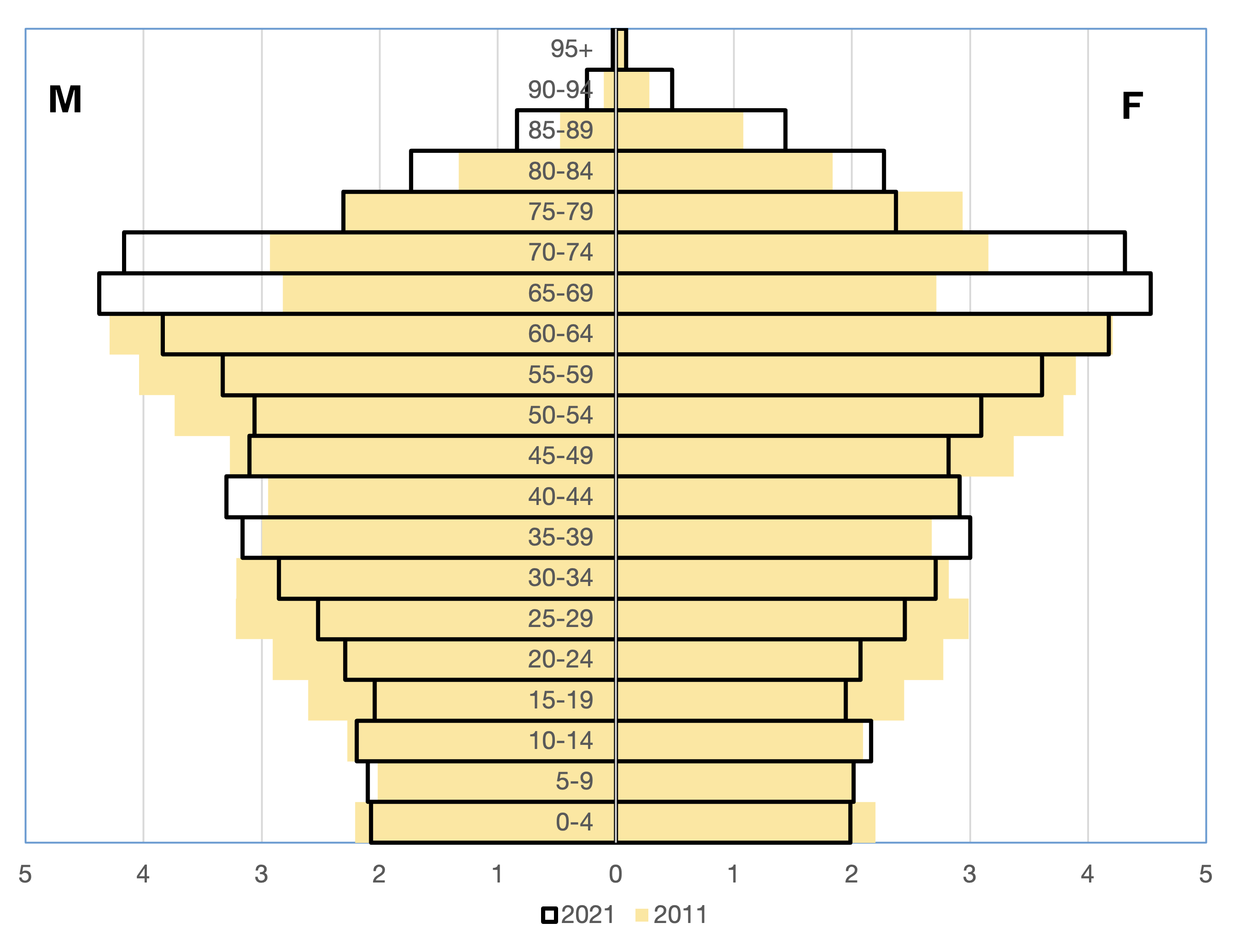
Source: Census of Population, Households and Dwellings 2011, Croatian Bureau of Statistics, https://web.dzs.hr/eng/censuses/census2011/results/censustabsxls.htm; Census of Population, Households and Dwellings 2021, Croatian Bureau of Statistics, https://podaci.dzs.hr/en/statistics/population/census/
Age and sex composition of the population reveals that the share of men and women is almost equal on Croatian islands, and that the most numerous age groups are baby boomers, born between 1947 and 1961. In comparison to 2011, in 2021 most of the young and adult age groups recorded decrease as the result of natural decrease and emigration.
Population aging is closely related to the aging of the working age population, and it has long-term economic and social consequences that have become a burden for national and local economies. Aging of the population imposes a variety of demands related to organization of the society in order to meet the specific needs of older population, particularly in social and healthcare services (Obadić & Smolić, 2008). The population aging on Croatian small islands has been so intense that their further sustainability is questionable. Namely, some of the services are no longer present (shops, bakeries, post offices, primary care service, etc.), which prevents revitalization of the islands and causes further depopulation. The analysis reveals that the general population trends and aging process on Croatian islands is similar to those observed on many islands and island groups across the Mediterranean (e.g. Malta, Greek islands, etc.).
5. Population aging on Hvar Island
5.1. Demographic indicators of aging
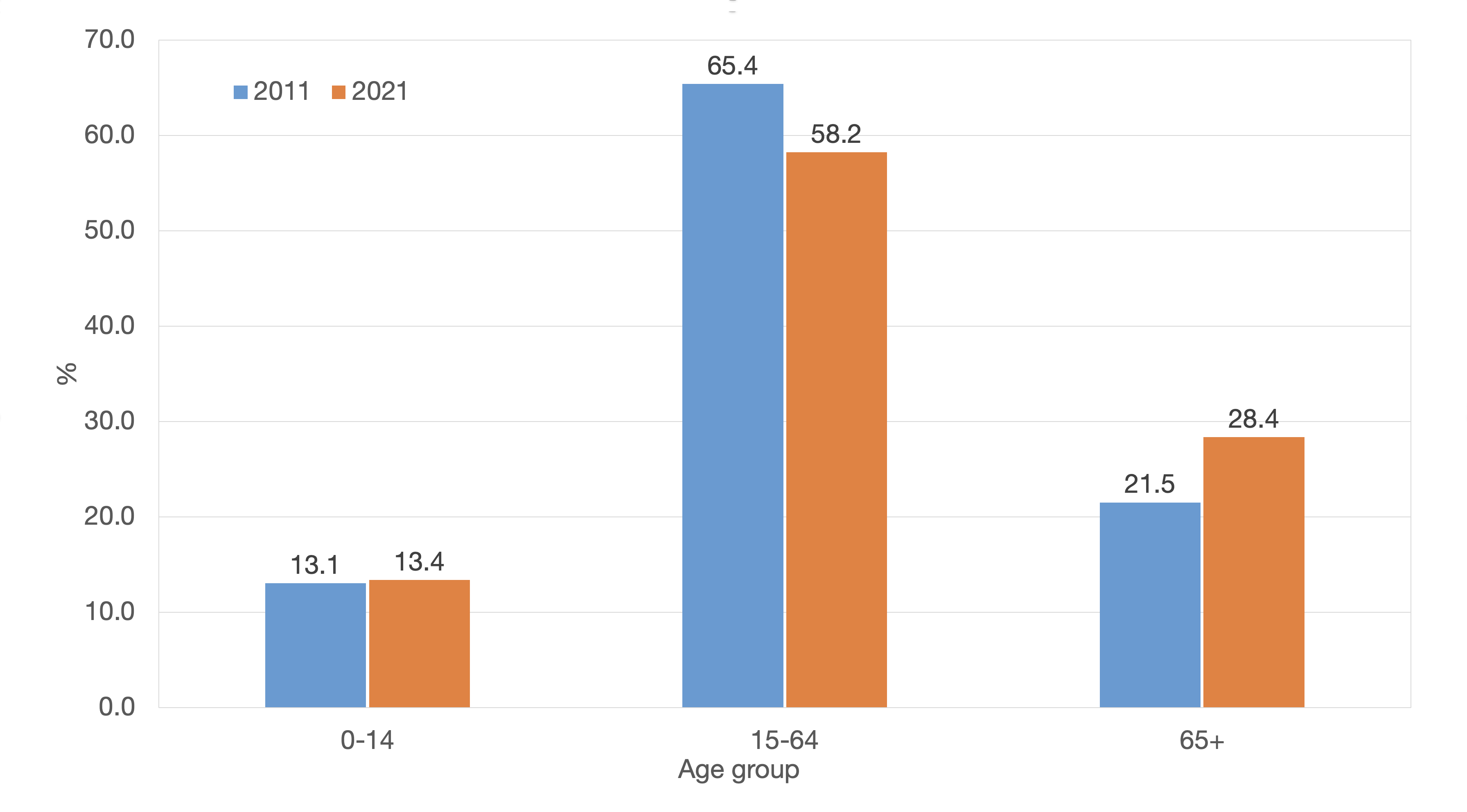
Hvar Island is the fourth largest Croatian island both in terms of size and population. It is also one of the economically most developed Croatian islands, largely dependent on tourism. In 2021, it had 10,678 inhabitants living in four local administrative units (Hvar, Jelsa, Stari Grad and Sućuraj). The island’s population peaked in 1900 with 18,091 inhabitants, and has been gradually declining since, though at a slower rate than many other Croatian islands. Between the mid-20th century and 2021, Hvar’s population decreased by 15.3%, compared to a 20.7% decline across Croatian islands overall.
Source: Census of Population, Households and Dwellings 2011, Croatian Bureau of Statistics, https://web.dzs.hr/eng/censuses/census2011/results/censustabsxls.htm; Census of Population, Households and Dwellings 2021, Croatian Bureau of Statistics, https://podaci.dzs.hr/en/statistics/population/census/
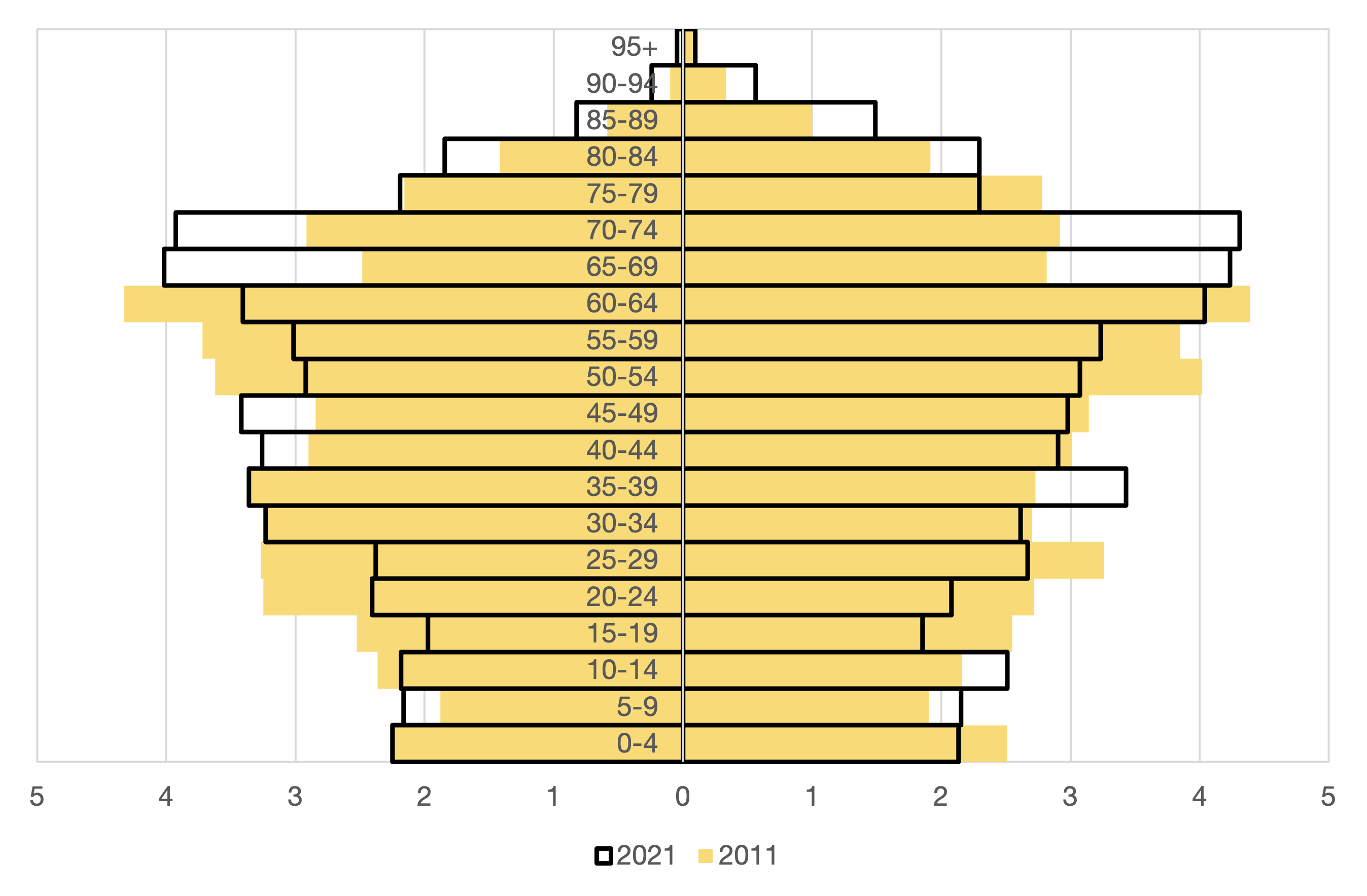
In the last intercensal period, the population of Hvar Island declined by 3.6%, mirroring the average decrease of 3.6% observed across Croatian islands. The effects of depopulation are clearly visible in the age structure of the population, i.e. further population aging. The total number of young and working-age residents declined due to both natural decrease and emigration, while the 65+ age group increased by 27.1%, increasing its share of the total population by 6.9 percentage points. This aging trend is largely driven by the transition of baby boomers into old age.
Source: Census of Population, Households and Dwellings 2011, Croatian Bureau of Statistics, https://web.dzs.hr/eng/censuses/census2011/results/censustabsxls.htm; Census of Population, Households and Dwellings 2021, Croatian Bureau of Statistics, https://podaci.dzs.hr/en/statistics/population/census/
The comparison of population pyramids for 2011 and 2021 provides a more detailed insight into the aging process on the island. Most of the age groups of young adults have been shrinking. A particularly significant decline was in the age groups 15–29, which was the result of the emigration of young adults in the previous period. Migration patterns in Croatia changed after the country's accession to the EU in 2013. Many Croatian citizens emigrated to other EU countries, particularly to Germany, while simultaneously Croatia became attractive for immigrants from third countries. Many industries (such as tourism and construction) have been faced with labor shortage and became dependent on immigrant labor force (Graovac Matassi, 2024). Hvar is no exception to that. Young adults leave the island in search of better working opportunities on the mainland and abroad, but simultaneously the island attracts both domestic and foreign labor force that are employed in the tourism industry. The increase of male population aged 40–49 and female population aged 35–39 can also be attributed to immigrant work force that remained living on the island. The age groups from 65 years recorded a significant increase, particularly baby boom generations, but also the oldest old population (80+ years), which constituted 7.4% of the total population.
Population aging did not impact all parts of Hvar Island equally. The local administrative unit (LAU) with the most favorable demographic indicators is the Town of Hvar, which recorded the highest proportion of adult, working-age residents and the lowest share of old population (Table 2). This is primarily due to its status as the most developed local administrative unit on the island and one of the most developed among Croatian islands overall (Registar otoka, 2025). Tourism is the dominant economic activity, attracting the labor force and contributing to the local population's economic prosperity. Additionally, the Town of Hvar stands out as one of Croatia's oldest tourist destinations, with a tradition spanning more than 150 years. However, overtourism has brought challenges, notably higher living costs and real estate prices (Čapo, 2023).
| Local administrative unit | Age group | ||
|---|---|---|---|
| 0-14 | 15-64 | 65+ | |
| Hvar | 14.0 | 63.1 | 22.9 |
| Jelsa | 13.6 | 56.0 | 30.4 |
| Stari Grad | 13.2 | 55.8 | 31.0 |
| Sućuraj | 7.7 | 46.9 | 45.3 |
| Hvar Island | 13.4 | 58.2 | 28.4 |
Source: Census of Population, Households and Dwellings 2011, Croatian Bureau of Statistics, https://web.dzs.hr/eng/censuses/census2011/results/censustabsxls.htm; Census of Population, Households and Dwellings 2021, Croatian Bureau of Statistics, https://podaci.dzs.hr/en/statistics/population/census/
In contrast, Sućuraj, located in the eastern part of Hvar Island, exhibits the most unfavorable aging indicators. The municipality had only 7.7% of young residents and more than 45.0% of elderly people. The mean age in Sućuraj was 56 years, significantly higher than the 45 years recorded in the Town of Hvar. As the least populated and least developed LAU on Hvar Island — and among all Croatian islands (Registar otoka, 2025) — Sućuraj has experienced substantial emigration to other LAUs on the island and the mainland.
Population aging on Hvar Island during the last intercensal period has had multiple adverse effects on the island’s socio-economic and demographic development. In 2021, just over half of the island’s total population was economically inactive. This inactivity rate varied significantly between the most developed LAU, Hvar (44.6%), and the least developed, Sućuraj (66.4%). Notably, nearly 70.0% of the economically inactive population were retirees, highlighting a significant shortage of labor on the island. Nevertheless, a portion of the older population remains economically active. The latest census revealed that approximately 10.0% of residents aged 60 and over were still participating in the workforce.
Another negative consequence of population aging on the island is the decline in the number of women of reproductive age. In the last intercensal period the total number of women decreased by 3.3%, but the number of women in their reproductive age lowered more notably, by 11.1%. In 2021, the share of women in the reproductive age on the island was 36.4%, but it varied between only 26.0% in Sućuraj and 39.9% in Hvar. Conversely, more than half of all women on the island were aged 50 and over, with the proportion varying from 45.5% in Hvar to a striking 65.9% in Sućuraj.
5.2. Results of the empirical research
Interviews conducted with 24 local residents aged 65 and over reveal valuable insights into the everyday lives, challenges, and quality of life of the island’s elderly population. Out of 24 respondents, 15 have lived their entire lives on the island, five of them immigrated to the island, and four of them were born on the island, but spent some time on the mainland or abroad, and then returned to the island. The respondents who moved to the island believe they were well accepted by the local community.
Most respondents live with their spouses or other family members, emphasizing the importance of family support in later life. Only four of the respondents live alone, and two of them express loneliness. Only one respondent does not have children, while the others have children that live on the island (13 of them) or on the mainland/abroad (10 of them).
The respondents lead active everyday lives. They usually spend their days working in the fields, gardening, fishing, walking, engaging in various hobbies and sports, and spending time with friends. Both men and women are engaged in gardening and working in the fields. Women also do household chores and take care of their grandchildren. Despite their age, they prefer to be active and productive:
"I have my own workshop, and the day seems too short to me, I need 10 more hours in a day." (M, 72)
"Regardless of my age, I spend my time doing small tasks related to agriculture." (M, 78)
"I go fishing and play cards with my friends." (M, 69)
Most of them spend time socializing with their peers, but there are no organized activities for senior citizens on the island. All the respondents, except for one, are homeowners. However, 15 of them consider that their income is insufficient or barely sufficient to cover the rising costs of living, pointing to economic vulnerability among the older population on the island.
Since tourism is one of the main drivers of the economy on the island, as well as a generator of higher living costs, we wanted to investigate the residents' perspective on tourism development on the island — whether tourism has had a positive or negative impact on life on the island. Ten respondents believe that tourism has had only a positive impact on life on the island, while five think it has had solely negative effects. In contrast, eight respondents view tourism as having both positive and negative impacts, and two chose not to express an opinion on the matter.
"Tourism is good in some places (e.g., in Jelsa), but not in others (in Hvar). What is happening in Hvar is not well-envisaged tourism." (M, 74)
"Tourism is both good and bad for the island. We’ve lost something, but we’ve gained something as well. It’s the only means of survival we have left." (M, 68)
"I am not satisfied with the development of tourism on the island. The quality of life has improved, but the environment has been destroyed. The cost of living is too high." (F, 67)
"Everything essential for the development of tourism (hotels, campsites) has been sold to foreigners. Agricultural land is neglected, except for the olive groves, which were restored during the Homeland War." (F, 66)
Considering the growing healthcare needs of the elderly population, it was essential to gather their perspectives on the quality of health services available on the island. The island is almost 70 km long and health services are not evenly distributed across the island. There are four health centers on the island, one in each LAU. Family medicine and home care are relatively well represented, but essential services for the elderly population, such as physical therapy, exist only in one place — Jelsa. Lack of dentists is a problem in the eastern part of the island (Sućuraj), where in case of toothache one must travel over 50 km to the nearest dentist. Some of the respondents are not satisfied with their health, but they are largely satisfied with the health services available on the island. A few respondents feel that the island lacks specialists in certain medical fields, forcing them to travel to Split for their medical examinations.
When discussing the advantages of island life, the respondents highlighted factors such as safety, peace and quiet, a healthy lifestyle, favorable climate, and an overall easygoing pace of life. However, they also acknowledged several challenges. Key shortcomings include the aging population, continuous emigration of younger residents, lack of cultural events, lack of essential infrastructure, high living costs, and the island’s distance from the mainland and specialized health services.
"The winter is long. Too long. The sun sets at 4 pm and rises at 7 am the next day." (M, 74)
Although the island's population is aging rapidly, there is only one long-term care facility on the island, with a capacity to accommodate 83 residents. For example, the nearby Brač Island has approximately 30.0% more inhabitants than Hvar Island but has six long-term care facilities for the elderly population. Interestingly, almost half of the interviewees expressed that they are not considering moving to a long-term care facility, but there are the same number of those who are thinking of going to such a facility in the future. Only a few of them are not sure about it. Many of them agree that care for the elderly should be improved and that there is a strong need for another long-term care facility.
"I haven't thought about going to a retirement home yet." (M, 88)
"No, I’m not considering moving to a retirement home. My sister, brother-in-law, and I plan to hire someone to care for us in our own home." (F, 70)
To enhance their quality of life, the respondents identified several priorities: increased opportunities for socialization, higher pensions, new retirement homes, and organized activities tailored for the elderly, such as sports programs. Additionally, they emphasized the need for a community center, greater involvement from local self-government, and improved access to healthcare services through more community nurses. Particularly dissatisfied are the interviewees from Sućuraj due to the poor traffic connection and distance from other LAUs on the island, and lack of certain services.
"Older people need to socialize more. They should be given the opportunity to pass on their knowledge to the younger generations." (M, 68)
"There are too many old people on the island. People used to have 5-6 children. Now the streets are empty." (M, 74)
"There is a lack of young people and jobs for them." (M, 78)
Overall, the respondents expressed a high level of satisfaction with their lives on the island, giving an average satisfaction score of 4 out of 5. Interestingly, although most respondents reported that their income was insufficient or just enough to cover basic living expenses, they expressed a high level of satisfaction with life on the island. This pattern extends to healthcare services as well, which were similarly perceived as a significant challenge. This suggests that factors beyond financial security and access to healthcare — such as social ties, the natural environment, climate, ownership of agricultural land or gardens, and lifestyle — play a significant role in their overall well-being. Furthermore, none of the participants expressed a desire to leave the island, indicating a strong attachment to the island. This sentiment may be closely linked to the high rate of home ownership and the close ties with other family members (predominantly children and grandchildren), both of which contribute to a sense of stability and belonging.
6. Conclusion
The demographic trends on Hvar Island reflect the ongoing challenges of population aging, depopulation, and economic restructuring. While tourism remains a key driver of the island's economy, it has also contributed to increasing living costs and demographic imbalances, with a growing proportion of elderly residents and a declining number of younger populations. The aging of the population, combined with limited labor force participation, especially in less developed areas like Sućuraj, poses significant challenges to the sustainability of local economy and services.
The shift towards a more elderly population, particularly in the context of declining birth rates and emigration, suggests that long-term sustainability will require well-envisaged investments in healthcare, infrastructure, and the social needs of older residents. While the elderly residents are generally content with living conditions on the island, financial concerns remain prominent. A majority believe their pensions are insufficient to cover the rising costs of living, highlighting the economic vulnerability among the older population.
Although the island is divided into four LAUs with varying degrees of population aging, there is a clear need for a coordinated approach to promote productive aging. Strategic investment in preventive healthcare is essential, with an emphasis on public health programs aimed at chronic disease prevention, healthy aging, and overall well-being. Key areas of focus should include promoting physical activity, mental health support, and the promotion of healthy diets.
Given the financial concerns frequently expressed by the elderly, greater efforts should be made to include them in local economic activities, such as by offering part-time employment opportunities. Since many grandparents already provide childcare for their grandchildren, policies could include financial incentives to support and recognize this contribution. Such measures would not only encourage older adults to remain active but also help supplement their household income. Additionally, organized social activities, especially in winter time — such as senior-friendly sports and physical activities, various workshops (especially related to gardening), card games, or chess tournaments — could play a key role in promoting active aging and reducing loneliness.
Small island communities are usually recognized as more close-knit, with strong social cohesion and mutual support. However, given the extent of population aging on Hvar Island, policy efforts should also prioritize the construction of an additional long-term care facility and the funding of in-home elderly care assistants. Since a portion of the elderly population — particularly those in good health — are reluctant to move into retirement homes, the introduction of in-home care services would allow them to receive support with daily tasks while remaining in their own homes. This approach would not only improve quality of life for the elderly but also stimulate local economic activity, addressing one of the key challenges to the island’s economic development: reduced workforce participation.
This research contributes to the literature by presenting an in-depth case study of population aging on Hvar Island. It integrates demographic analysis with qualitative data gathered through structured interviews with elderly residents, offering valuable insights into the specific challenges faced by older adults in a unique insular context. In doing so, it addresses some recognized limitations in the existing literature on productive aging, particularly the prevalence of top-down and one-size-fits-all approaches.
The findings also have practical implications for regional planning and social policy, highlighting the need for targeted support services and infrastructure development tailored to the needs of island communities. As such, this study not only advances academic understanding of aging in geographically specific contexts but also supports evidence-based policymaking for aging populations in insular areas.
Nevertheless, the research has certain limitations and points to directions for future studies. The interviews, conducted with 24 individuals, offered a more detailed understanding of the challenges experienced by the elderly on Hvar Island. However, future research should build on these insights by conducting a more extensive, targeted survey involving a larger sample of elderly respondents, as well as interviews with key stakeholders — particularly local government representatives — regarding their strategies and capacities to support the aging population.
References
- Baldacchino, G. 2004. The coming of age of island studies. Tijdschrift voor economische en sociale geografie. 95: 272–283. https://doi.org/10.1111/j.1467-9663.2004.00307.x
- Bara, M., Podgorelec, S. 2015. Društvene teorije umirovljenja i produktivnog starenja. Etnološka tribina. 45 (38): 58–71. https://doi.org/10.15378/1848-9540.2015.38.02
- Basile, R., Basso, S., Miccoli, S., Reynaud, C. 2023. Aging population in Italy: a space-time analysis. Rivista Italiana di Economia Demografia e Statistica, 77–88.
- Bass, S., Caro., F. 2001. Productive Aging. A Conceptual Framework, in: Morrow-Howell, J. Hinterlong, Sherraden, M. (Eds.), Productive Aging. Concepts and Challenges. The Johns Hopkins University Press, pp. 37–78.
- Bourne. P. A. 2018. Population aging and the state of the elderly, with emphasis on aged Jamaicans. MOJ Gerontology & Geriatrics. 3(1):89–102. https://doi.org/10.15406/mojgg.2018.03.00093
- Breuer, T. 2005. Retirement Migration or Rather Second Home Tourism? German Senior Citizens on the Canary Islands. DIE ERDE—Journal of the Geographical Society of Berlin. 136: 313-333.
- Čapo, J. 2023. Issues and Challenges of Overtourism in the City of Hvar. Etnološka tribina: Godišnjak Hrvatskog etnološkog društva. 53(46): 162–185. https://doi.org/10.15378/1848-9540.2023.46.06
- Dimelli, D. P. 2016. Planning settlements in the Greek islands. Regional Science Inquiry, 8(1): 23–38.
- Dommaraju, P., Wong, S. 2021. The concept of productive aging, in: Martin, C. R., Preedy, V. R., Rajendram, R. (Eds.), Assessments, Treatments and Modeling in Aging and Neurological Disease, Academic Press, pp. 3–11.
- Falanga, R., Cebulla, A., Principi, A., & Socci, M. (2021). The participation of senior citizens in policy-making: Patterning initiatives in Europe. International Journal of Environmental Research and Public Health. 18(1): 34. https://doi.org/10.3390/ijerph18010034
- Faričić, J., Graovac, V., Čuka, A. (2010). Small Croatian Islands — Residential and/or Leisure Area. Geoadria. 15(1): 145–185. https://doi.org/10.15291/geoadria.548
- Formosa, M. 2013. Population Trends and Aging Policy in Malta. Social Sciences. 2(2): 90–96. https://doi.org/10.11648/j.ss.20130202.19
- Formosa, M., Scerri, C. 2020. Punching Above its Weight: Current and Future Aging Policy in Malta. The Gerontologist. 60(8): 1384–1391, https://doi.org/10.1093/geront/gnaa120
- Foster, L., Walker, A. 2015. Active and successful aging: A European policy perspective. The Gerontologist. 55(1): 83–90. https://doi.org/10.1093/geront/gnu038
- Graovac Matassi, V. 2024. The impact of emigration on population decline in Croatia. Journal of the Geographical Institute “Jovan Cvijić” SASA. 74(2): 257–272. https://doi.org/10.2298/IJGI240212008G
- Harper, S. 2014. Economic and social implications of aging societies. Science. 346:587–591. https://doi.org/10.1126/science.1254405
- Kanaroglou, P. S., Balourdos, D. 2001. Geographical Inequalities of Aging in Greece. In 97th Meeting of the Association of American Geographers. New York.
- Khan, H. T. A. 2019. Population aging in a globalized world: Risks and dilemmas?. Journal of evaluation in clinical practice. 25(5): 754–760. https://doi.org/10.1111/jep.13071
- Khan, H. T. A., Addo, K. M., Findlay, H. (2024), Public Health Challenges and Responses to the Growing Aging Populations. Public Health Challenges. 3: e213. https://doi.org/10.1002/puh2.213
- Klempić Bogadi, S., Podgorelec, S. 2014. Active Aging as Lifestyle on Croatian Islands. Zbornik Matice srpske za društvene nauke. 65 (3): 715–725. https://doi.org/10.2298/ZMSDN1448715K
- Lajić, I., Mišetić, R. 2006. Otočni logaritam — aktualno stanje i suvremeni demografski procesi na jadranskim otocima. Institut za migracije i narodnosti — Ministarstvo mora, turizma, prometa i razvitka.
- Lajić, I., Mišetić, R. 2013. Demografske promjene na hrvatskim otocima na početku 21. stoljeća. Migracijske i etničke teme. 29(2): 169–199. https://doi.org/10.11567/met.29.2.3
- Lucantoni, D., Principi, A., Socci, M., Zannella, M., & Barbabella, F. 2022. Active Aging in Italy: An Evidence-Based Model to Provide Recommendations for Policy Making and Policy Implementation. International Journal of Environmental Research and Public Health. 19(5): 2746. https://doi.org/10.3390/ijerph19052746
- Matos-Moreno, A., Verdery, A. M., Mendes de Leon, C. F., De Jesús-Monge, V. M., Santos-Lozada, A. R. 2022. Aging and the Left Behind: Puerto Rico and Its Unconventional Rapid Aging. The Gerontologist. 62(7): 964–973. https://doi.org/10.1093/geront/gnac082
- Mirkin, B., Weinberger, Mb. 2001. The demography of population aging. Population bulletin of the United Nations.
- Moosa, S. 2020. Social Connectedness and Wellbeing of Aging Populations in Small Islands, in: Morese, R., Palermo S., Fiorella, R. (Eds.), Social Isolation — An Interdisciplinary View. IntechOpen, pp. 1–14.
- Nejašmić, I. 1991. Depopulacija istočnojadranskih otoka i izumiranje kao moguća demografska perspektiva. Migracijske i etničke teme, 7(1): 77–99. Retrieved from: https://hrcak.srce.hr/127450
- Nejašmić, I. 2000. Prirodno kretanje stanovništva hrvatskog otočja (1991-1997), in: Pejnović, D. (Ed.), 2. hrvatski geografski kongres — zbornik radova, Hrvatsko geografsko društvo, pp. 263−272.
- Nejašmić, I. 2013. Demografsko starenje na hrvatskim otocima. Migracijske i etničke teme. 29(2): 141–168. https://doi.org/10.11567/met.29.2.2
- Obadić, A., Smolić, Š. 2008. Ekonomske i socijalne posljedice procesa starenja stanovništva. Economic research-Ekonomska istraživanja, 21(2): 86–98.
- Registar otoka. 2025. https://registar-otoka.gov.hr/site/index?filter=indeks, accessed: 4th January 2025.
- Reynaud, C., Miccoli, S. 2023. Demographic sustainability in Italian territories: The link between depopulation and population aging. Vienna Yearbook of Population Research, 21.
- Schmitt, E., Hinner, J., Kruse, A. 2015. Potentials of survivors, intergenerational dialogue, active aging and social change. Procedia — Social and Behavioral Sciences. 171: 7–16. https://doi.org/10.1016/j.sbspro.2015.01.085
- Troisi, J. 2013. ‘Aging in place’ in the Maltese islands, in Troisi, J., von Kondratowitz, H.-J. (Eds.), Aging in the Mediterranean, Chapter, Bristol University Press, pp. 273–294.
- UN (2025). Data portal. Population Division. https://population.un.org/dataportal/data/indicators/71/locations/900/start/2030/end/2050/table/pivotbylocation?df=c9f1e5d1-e169-45ef-be6a-717639ac7f6b
- Zaidi, A., Howse, K. 2017. The policy discourse of active aging: Some reflections. Journal of Population Aging. 10(1): 1–10. https://doi.org/10.1007/s12062-017-9181-9