
Geographic and Social Marginalization: Healthcare Disparities and Challenges on Croatian Islands
 10.21463/jmic.2025.14.2.03
Abstract
The healthcare system on the Croatian islands faces major challenges due to geographical isolation and social marginalisation. The Croatian archipelago consists of over 1,200 islands, islets and rocks, of which only 50 are permanently inhabited. These islands differ in size, proximity to the mainland and accessibility, which leads to differences in infrastructure and the provision of health services. This study examines how geographical factors, such as island size, remoteness and transport links, affect the accessibility of healthcare. The hypothesis is that peripheral location in relation to regional centres on the mainland exacerbates inequalities in healthcare, with smaller and more remote islands facing the greatest challenges. Despite strong social cohesion, informal support systems cannot fully compensate for the lack of basic healthcare services. A geographical survey will analyse the health infrastructure on the islands and identify gaps in service provision. In addition, a qualitative study, including surveys and interviews with islanders, will capture personal experiences and coping strategies. The findings show that smaller and remote islands often lack even basic health services, forcing residents to travel to the mainland for medical care. Seasonal tourism puts an additional strain on limited resources. Social marginalisation caused by demographic decline, shortage of physicians and limited political influence deepens health inequalities. This research aims to find policy solutions to improve access to healthcare, especially for the most vulnerable island communities.
Keywords
healthcare, marginalisation, remoteness, islands, Croatia
Introduction
One of the United Nations Sustainable Development Goals (SDGs), adopted as part of the 2030 Agenda for Sustainable Development, is to "Ensure healthy lives and promote well-being for all at all ages" (UN, 2015). Achieving this goal requires the implementation of Universal Health Coverage (UHC), ensuring that all individuals have access to adequate healthcare infrastructure and services without experiencing financial hardship (WHO, 2023). Certain areas, such as islands or remote mainland peripheral regions, face persistent challenges in organizing access to all aspects of healthcare, regardless of their level of development. Many small island nations, due to their geographic isolation and socio-economic characteristics, struggle with inadequate healthcare services. Key issues include a shortage of healthcare workers and facilities, weak governance, and difficulties in maintaining a reliable supply chain (Suzana et al., 2018, Craig et al., 2022). Another key factor is the lack of financial resources, which can further fuel forms of peripherality and exclusion, as seen in the case of small Italian islands despite the fact that Italy is one of the most developed countries in the world (Salustri and Appolloni, 2021). Financial constraints particularly impact the healthcare system, given the high costs associated with establishing and maintaining an adequate healthcare network on small, sparsely populated, and isolated islands (Royle, 1995). In this context, there is a significant difference between small island nations that rely on their own funding and islands that depend on financial support from their larger mainland countries. In some cases, remote island territories are better equipped with healthcare infrastructure than smaller islands located just a few kilometers from the mainland. A notable example is the Falkland Islands, which, even at the turn of the twenty-first century, had a well-equipped hospital serving just a few thousand residents (Diggle, 2003). However, this is an exceptionally remote British Overseas Territory, where maintaining the island population and ensuring access to high-quality medical care is of strategic importance.
This research focuses on near islands—islands located close to the mainland that are an integral part of a mainland state and influenced by its island policies (Turner, 2020). These islands are found across Europe, and those forming complex archipelagos, where transport connections are challenging and ensuring equal development across all islands is difficult, are particularly relevant in the context of sustainable development. It should be noted, however, that this nearness, if determined only by the distances expressed in Euclidean geometry, need not correspond to the functional proximity defined by the number and regularity of shipping and ferry lines and the travelling time between the mainland and the islands and between the islands. For this reason, among the near islands, there are those that are close to the mainland and have good transport links with it, and those that have few transport links and take a long time to reach by ship or ferry. If the weather conditions are unfavourable (e.g. strong winds and high waves), physical proximity to the mainland means nothing, as all transport links to the mainland are interrupted due to the impossibility of navigation. All islands are then isolated, which is the best confirmation of the etymology of the term (isolation from the Latin insula through Italian isola, meaning island).
Numerous researchers studying island infrastructure, socio-economic development, and island policies, particularly in relation to small Italian, Swedish, Croatian, Scottish, Finnish, and Greek islands, agree that these are highly sensitive areas requiring careful planning to ensure the survival of small island communities (Emerson et al., 2017; Faričić, Čuka, 2020; Gallia and Malatesta, 2022; Kefala et al., 2024; Rytkönen et al., 2024; Väisänen et al., 2025). Due to their peripheral location and remoteness, these communities lack equal access to essential public services compared to mainland populations. Furthermore, the speed and quality of services are often lower than on the mainland, which negatively impacts their sustainable development.
The importance of healthcare access and equal availability of medical services in remote areas, including islands, has been recognized for quite some time. For instance, as early as 1913, Scotland introduced The Highlands and Islands Medical Service (HIMS)—the first state-funded medical service in the UK. This initiative significantly improved the transportation system and telecommunications infrastructure to support healthcare development on Scottish islands (Quinn, 2021). Despite these advancements, residents of smaller Scottish islands still face healthcare disparities, as they often lack access to critical care services within 45 minutes which has been one of the most pressing challenges for remote island areas (Emerson et al., 2017). Similarly, in Finland, municipalities with poor availability and accessibility of primary healthcare (so-called medical deserts) are partially concentrated in coastal regions that include islands, where travel times to healthcare facilities are significantly longer (Väisänen et al., 2025). On Swedish islands, the lack of healthcare services and social justice is often referred to as a democracy gap. It is not uncommon for elderly island residents to leave their homes and relocate to the mainland due to insufficient healthcare infrastructure. In this regard, Swedish islands also face marginalization, as they lack equal opportunities compared to the mainland population (Rytkönen et al., 2024).
The above-mentioned time limit of 45 minutes is in line with the most common understanding of the so-called golden hour in medicine, which does not necessarily correspond to the sundial, but to the optimal time for adequate medical care of the patient. The actual duration depends on the nature of the health situation and differs from heart attack and stroke, injury or a crisis related to the exacerbation of a chronic disease. Although the concept of the golden hour is not generally recognised in medicine, it can be assumed that treatment will be more successful and ultimately reduce mortality if medical assistance is provided as quickly as possible (Lerner and Moscati, 2008; Roger et al., 2015).
Social marginalization exacerbates healthcare disparities on Croatian islands. A combination of factors, including a small and aging population, a shortage of medical professionals, limited economic opportunities, reduced political influence, and social isolation, deepens the vulnerability of island communities, restricting their access to adequate healthcare. At the same time, pressure from tourism during the summer months places additional strain on healthcare services, further highlighting the urgent need for investment in medical infrastructure (Čuka et al., 2024; Faričić et al., 2010). This research aims to explore potential policy solutions to enhance healthcare provision across Croatian islands, with a particular focus on the most vulnerable and remote communities.
Study area
This study focuses on 50 inhabited Croatian islands, out of a total of 1,244, according to the National Island Register (Registar otoka/Island Register, 2024). In terms of size and population, the largest island is Cres, covering 405.71 km² (Duplančić Leder et al., 2004), while Krk has the highest population, with just under 20,000 residents (Figure 1). Therefore, when some generally accepted typologies of islands by size are applied (Taglioni, 2011), all Croatian islands are classified as small islands. Most island settlements are rural, which is a crucial factor in the development of medical infrastructure, and only 12 of them hold administrative city status (Faričić and Čuka, 2020). Larger islands function as independent local government units (cities or municipalities). The majority, 32 small islands, have up to three settlements and are administratively part of mainland cities or municipalities, or are part of cities or municipalities on larger neighbouring islands. Five inhabited islands are connected to the mainland by bridges, and are therefore functionally part of the mainland.
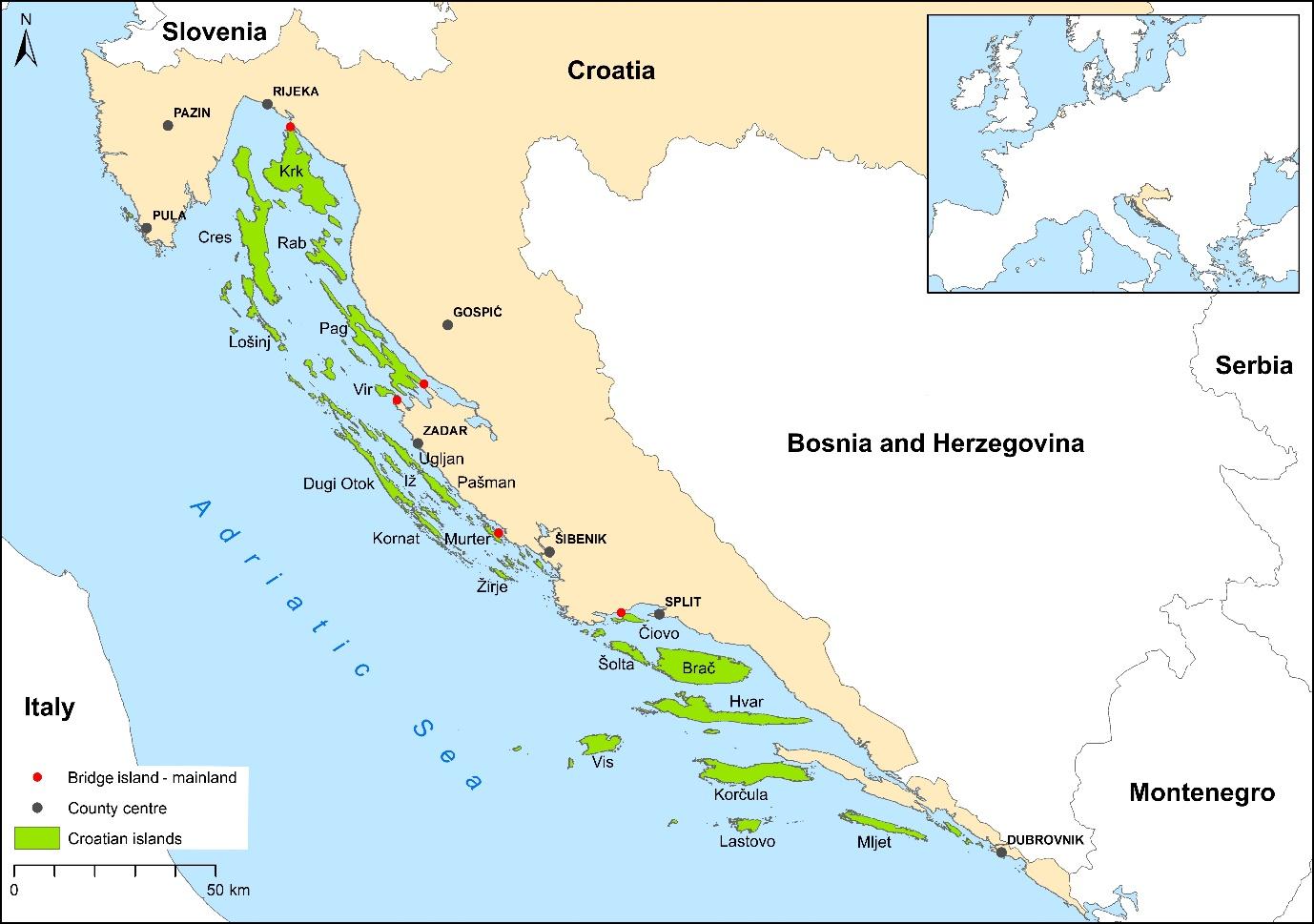
The administrative division of Croatian islands is highly complex, making island governance and development planning even more challenging. Inhabited islands are spread across six counties and further fragmented into multiple municipalities and cities. For example, Pag Island is divided between two counties, while Čiovo Island represents an extreme case of administrative fragmentation. One part of Čiovo is integrated into the area of Trogir, an urban settlement which is primarily located on the mainland. Another part falls under the jurisdiction of the City of Split, also on the mainland. Additionally, two settlements belong to the City of Trogir, while the remaining part of the island forms a separate municipality Okrug. As a result, even strategic documents that guide island governance do not treat the Croatian archipelago as a single, unified geographical region, further complicating policy implementation and sustainable development efforts.
In 2021, around 120,000 islanders lived on the Croatian islands (Croatian Bureau of Statistics, Census 2021). However, the islands have long been exposed to processes of depopulation and aging. Only the larger, bridge-connected islands show some degree of economic and demographic vitality, while the majority of the smaller islands are facing negative trends to such an extent that some are transitioning from being permanently inhabited to seasonally inhabited spaces, i.e. essentially areas for leisure and recreation (Faričić et al., 2010). Although the age structure of larger, non-connected islands is somewhat less favourable than the national average—28.5% of the population is elderly (compared to 22.5% in Croatia)—the situation on smaller islands is significantly worse. On these islands, as much as 48% of the population is aged 65 or older, which is particularly concerning given the specific medical needs of an aging population (Croatian Bureau of Statistics, Census 2021). This includes the shortage of specialist doctors and a lack of essential infrastructure, such as nursing homes and palliative care services, which are chronically deficient on the islands. Access to healthcare is one of the fundamental factors for the development of islands, making it crucial to identify the specific healthcare infrastructure needs on different types of islands.
A key challenge is the seasonal pressure on island infrastructure, both communal and healthcare-related. Namely, Croatian islands receive approximately 3.5 million tourist arrivals annually, equating to about 30 tourists per resident, with the majority of tourist traffic concentrated during the hottest months of the year. Half of the tourist traffic is concentrated on the five bridge-connected islands, which together account for 34.2% of the population, where mass tourism has already surpassed sustainable limits (Čuka et al., 2024). The remaining tourist activity is spread across the other islands. Since tourism is one of the main economic sectors, most of the islands experience some form of tourist traffic. During the peak period, the demand for healthcare services increases significantly compared to the off-season.
Methodology
The first part of the research focused on gathering and comparing data about other small islands, particularly in Europe, in order to place the findings in a broader context regarding the development of healthcare infrastructure on the most vulnerable island units. The next phase involved collecting official statistical indicators reflecting the current healthcare infrastructure on the Croatian islands. The final part of the research consisted of comprehensive quantitative and qualitative studies aimed at understanding the perceptions of island residents regarding the accessibility and quality of various healthcare services. Additionally, this phase sought to explore the specific needs of the local population, considering the unique demographic composition of residents and the varying sizes of the islands. From December 20, 2024, to January 20, 2025, a survey study was conducted utilizing a comprehensive questionnaire that featured a diverse range of question types. The first section focused on gathering demographic information from respondents, including their age, gender, and the island where they reside or own property for occasional use. This section primarily consisted of closed-ended questions to ensure clarity and ease of response. The second section delved into respondents' assessments of various healthcare services, employing a Likert scale to capture their satisfaction levels and opinions on different aspects of the services provided. The final section of the questionnaire included open-ended questions, which were part of the qualitative research, where respondents were asked to share their opinions and suggestions for improving healthcare services on the islands. The survey was previously approved by the Ethics Committee of the University of Zadar. It was completely anonymous, and only adult citizens participated.
Given the islands' geographical dispersion and limited accessibility, the study was conducted online. The survey questionnaire was initially distributed in thematic social media groups (e.g., Facebook) where members were island residents from various islands. It was then shared in groups focused on Croatian island communities, as well as through media outlets dedicated to maritime and island-related topics.
The limitations and shortcomings of this distribution method lie in the difficulty of obtaining an ideal sample, given the distribution and age-gender composition of the island population. Additionally, this type of research predominantly engages those who are active on social media and use modern technology. However, we believe that, considering the response rate and the final structure of respondents, the sample was sufficiently representative. Given that the topic is of significant interest to island residents, the response rate was high, with a total of 479 responses collected from 33 of the 50 inhabited islands. Although not all islands were included in the study, we believe the sample is representative of the entire Croatian archipelago, as data were collected from geographically, demographically, and economically diverse islands (including larger, smaller, coastal, and remote islands). Furthermore, the islands included in the research are home to 93.5% of the island residents. Given that many islands also host a significant number of vacation homes and recreational properties, where owners and their families spend time throughout the year and are considered key factors in island development, the study encompassed two categories of respondents: permanent island residents (58.7% of participants) and property owners or their family members (41.3% of participants).
The goal was to explore different perspectives and identify the dominant types of users of island spaces regarding the quality and accessibility of existing infrastructure, as well as their views on measures needed to further improve the quality of medical services. The final part of the study focuses on interpreting the results, contextualizing them in relation to findings from similar studies on other islands, and ultimately providing insights into potential policy solutions that could enhance healthcare delivery across Croatian islands, particularly for the most vulnerable and remote communities.
Available medical/social infrastructure on Croatian islands
The availability of healthcare services on Croatian islands varies significantly depending on island size, population, distance from the mainland, and economic development. While larger and more populated islands have structured healthcare systems through health centers (Cro. domovi zdravlja) and branches of mainland health centers, smaller and more remote islands face considerable challenges in accessing medical services. Similar healthcare disparities have been documented in other island settings, such as Greece and Indonesia, where limited accessibility exacerbates existing healthcare inequities (Kefala et al., 2024; Mangoma and Sulistiadi, 2024).
According to the National Island Development Plan 2021–2027 (2020), various healthcare infrastructures are in place. The Public Health Network (Cro. Mreža javne zdravstvene službe) ensures the provision of primary healthcare across 27 islands, where 107 teams deliver general and family medicine services. Additional specialized primary care services include paediatric care, which is available only on six islands with six dedicated teams, women’s healthcare with nine teams operating across eight islands, and dental care provided on 20 islands by 64 dental teams. Community nursing, through patronage services, is conducted on 25 islands with the support of 40 patronage nurses, while home healthcare is available on 15 islands where 28 nurses provide in-home medical care. Laboratory diagnostics are conducted on nine islands through 10 medical biochemistry laboratories. Public health services have also been established on some islands, with hygiene and epidemiology services provided on seven islands by seven teams, and school medicine services available on four islands with four dedicated teams. Despite these efforts, maternity wards do not exist on the islands, requiring pregnant women to travel to the mainland for childbirth. This challenge mirrors findings in the Asia-Pacific regions, where the absence of obstetric facilities forces mothers to leave the island before birth (Binns et al., 2010). That places additional burdens on emergency medical transport systems. Transport schemes like Royal Flying Doctor in Australia or similar in Japan are very expensive and often beyond all but the richest countries (Binns et al., 2010; O’Connor, 2001). A report from the Indonesian Health Department (2022) found that maternal mortality rates on remote islands are nearly twice the national average, largely due to a shortage of skilled birth attendants and inadequate emergency obstetric services.
Secondary healthcare and specialist services remain limited, often necessitating travel to mainland facilities. While some form of specialist-consultant healthcare is available on eight islands, many specialized services remain inaccessible, imposing logistical and financial burdens on island residents who require frequent or urgent specialist consultations. Transport to mainland medical centers is particularly challenging, as ferry schedules do not always allow same-day return trips, especially for residents of remote or sparsely populated islands. Seasonal fluctuations further impact healthcare access, with increased port congestion and tourism-related demand complicating access during the summer, while adverse weather conditions in winter frequently disrupt maritime transport, isolating island communities from urgent medical care.
Pharmaceutical services are available on 18 islands, with a total of 47 licensed pharmacy units. Emergency medical services, EMS (Cro. Hitna medicinska služba) operate only on nine islands, covering 13 municipalities. In addition, eight islands have EMS standby points, and 70 emergency medical teams provide urgent care in island emergency units, with 14 standby emergency teams available for backup. There are also 10 air medical evacuation teams for critical patient transfers. However, not all islands are equipped with heliports.
The absence of adequate specialist healthcare facilities on islands necessitates urgent patient evacuation to the mainland through various emergency transport methods, including helicopters operated by the Ministry of Defence and the Ministry of the Interior, ferries and contracted boats for patient transfers, and Coast Guard and police patrol boats, although these are not specifically designed for medical transport. A pilot project for Helicopter Emergency Medical Services (HHMS) was conducted from September 2015 to January 2016, with bases on Brač and Krk islands. Over 200 emergency air evacuations demonstrated a high demand for helicopter medical transport. As a result, permanent year-round helicopter emergency services now operate from Divulje (city of Split on the mainland) and Rijeka Airport (Krk island). Since 2016, an additional summer-season helicopter EMS unit has been deployed in Dubrovnik. Further improvements in emergency transport are planned through EU-funded projects, including the introduction of six specialized high-speed medical boats equipped with biochemical analyzers to improve diagnostics during patient transfers. Similar air and sea emergency response programs have been suggested, in Indonesia and Greece, to overcome geographical barriers in remote island communities (Kefala et al., 2024; Mangoma and Sulistiadi, 2024).
The geographical challenges, physician shortages, and socio-economic isolation of islands have made telemedicine a crucial solution for improving healthcare accessibility. Telemedicine services are already integrated at the primary, secondary, and tertiary healthcare levels, with ongoing expansion in various medical fields. Current applications include radiology, where remote interpretation of imaging studies is conducted, and 24-hour ECG Holter monitoring, which allows for continuous cardiac assessment.
Croatia’s telemedicine network currently consists of 29 active telemedicine centers within seven healthcare institutions. However, significant gaps remain, particularly in Šibenik-Knin and Zadar counties, which lack telemedicine coverage (National Island Development Plan 2021–2027, 2020). To ensure further expansion and improved access to telemedicine services, investment is required in several key areas. This includes the procurement of medical equipment and diagnostic tools, the training of healthcare professionals, and the establishment of a reliable broadband internet infrastructure that would facilitate real-time medical consultations. Strengthening these aspects would enhance the effectiveness of telemedicine and bridge the healthcare gap between island communities and mainland medical facilities. These efforts align with findings from research on island healthcare networks in the Pacific, where telemedicine has improved patient outcomes but requires strategic investments in digital infrastructure (Mangoma and Sulistiadi, 2024).
Results and discussion
The survey results provide a comprehensive overview of healthcare accessibility and infrastructure on Croatian islands, revealing complex challenges influenced by geographic isolation, population distribution, and systemic limitations. Croatian islands represent a unique healthcare environment, where accessibility is dictated not only by the availability of medical facilities but also by transportation networks, emergency response capabilities, and seasonal fluctuations due to tourism. The results underscore significant disparities between larger, well-connected islands and smaller, more remote ones, where the absence of healthcare infrastructure can lead to critical gaps in medical services. Furthermore, the survey highlights the role of demographic factors, economic constraints, and community support in shaping healthcare experiences for island residents. Understanding these disparities is crucial for developing sustainable, long-term healthcare solutions tailored to the needs of island populations.
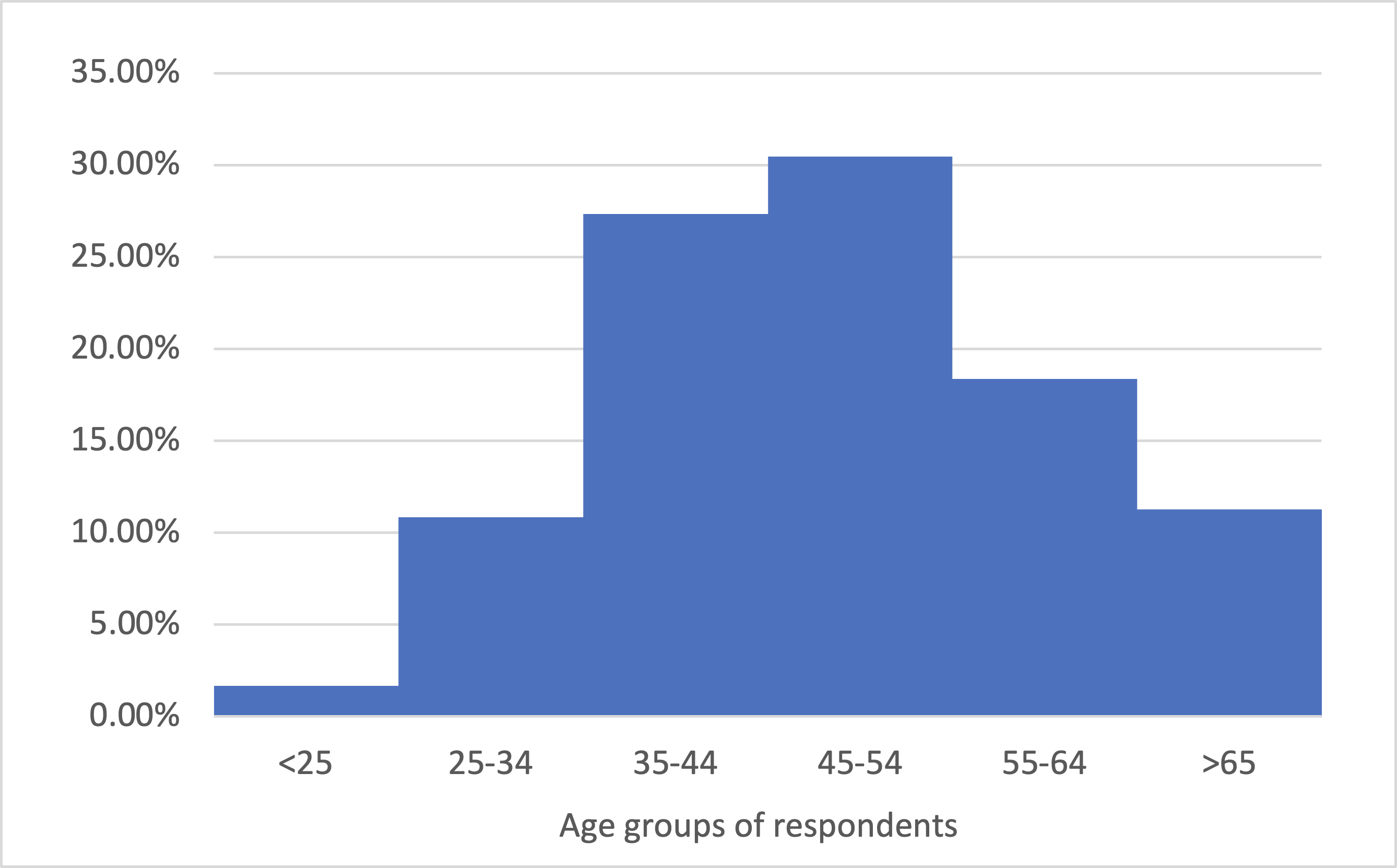
To provide a better overview of the geographical distribution of the data, the islands were grouped into three categories, bridged, large, and small, based on their connection to the mainland, size and administrative function (Table 1). According to the commonly used categorization of Croatian islands, small islands are defined as those with up to three settlements, no bridge connection to the mainland, and no administrative (municipal) center located on the island. In contrast, large islands are characterized by having more than three settlements and hosting at least one municipal center (Magaš, 1993, 2008). The distribution of respondents across island groups does not reflect the actual population distribution within those groups. For example, while 34.2% of the island population resides on bridged islands, only 22 responses were collected from those areas. This is because the study focuses on islands that rely on maritime transport, where access to medical services is significantly more limited. In contrast, residents of bridged islands have access to mainland healthcare infrastructure. It was therefore essential to include as many respondents as possible from the smallest and most remote islands, as they face the greatest challenges in accessing healthcare services.The demographics of the respondents include their age, gender, and residency patterns, with a total of 479 individuals participating in the survey from 33 (out of 50) inhabited islands, with the largest proportion being between 35-54 years old (Figure 1).
| Island Category | Number of Islands | Number of responses | % of total island population (2021) |
|---|---|---|---|
| Bridged | 4 | 22 | 34.2 |
| Large | 12 | 284 | 62.0 |
| Small | 17 | 173 | 3.8 |
The gender distribution consisted of more females, then males. This may reflect gender differences in survey participation, where women often demonstrate higher participation than men (Becker, 2022). A majority reside permanently on the islands, while other occasionally reside in their own or family estates (Table 2). Of those who are permanently residents, 83.70% have been living on the island for more than 10 years or their whole life.
| Category | Percentage |
|---|---|
| Gender | |
| Male | 32.36 |
| Female | 66.81 |
| Undisclosed | 0.84 |
| Status of residing on the island | |
| Permanently inhabited | 58.66 |
| Occasionally residing | 41.34 |
The most widely available healthcare facilities on Croatian islands are general practitioners' offices (86.64% of respondents confirmed availability), followed by pharmacies and dental clinics. However, other medical services such as elderly care homes, field nurses, and emergency medical centres are significantly less common. Even less common is the availability of a specialist such as a paediatrician, psychologist, gynaecologist, urologist, or other (all under 15%). This underscores the limitations in healthcare infrastructure, which is more common on smaller and remote islands. Additionally, 12.94% of respondents confirmed that there is no medical or social infrastructure on their island (Table 3). This perception aligns with documented infrastructure gaps, as described in the section “Available medical/social infrastructure on Croatian islands.”
| Infrastructure type | % |
|---|---|
| General Practitioner | 86.64 |
| Pharmacy | 62.42 |
| Dental Clinic | 56.16 |
| Elderly Care Home | 45.93 |
| Field nurse | 38.20 |
| Emergency Medical Center | 37.58 |
| Physiatry Clinic (Physiatrists) | 20.88 |
| Medical Laboratory (blood tests) | 20.25 |
| Paediatric clinic (Paediatrician) | 13.99 |
| There is no medical or social infrastructure on the island | 12.94 |
| Mental Health Clinic (Psychologist, Psychotherapist) | 5.01 |
| Some other specialist | 4.80 |
| Gynecology/Urology Clinic | 3.97 |
| Palliative care | 3.13 |
| I cannot name them all | 1.67 |
Regular access to general practitioner (GP) services varies significantly across islands. While 48.85% of respondents reported daily access to a GP, others face more limited service availability, with 26.72% indicating that GP services are available only 2-4 days per week, and 4.6% stating that a nurse is the only medical staff present on the island. Additionally, 4.6% reported that a doctor visits their island only once per week. The limited availability of GP services creates potential barriers to timely medical care, particularly in emergencies or for individuals requiring continuous medical supervision. The disparities in GP access highlight systemic healthcare challenges faced by island residents. Islands with fewer medical professionals may experience delayed diagnoses, longer wait times, and increased pressure on the existing healthcare workforce. This also contributes to a higher reliance on emergency services and the need for frequent travel to the mainland for medical assistance. Furthermore, the lack of consistent GP availability can discourage preventive healthcare practices, potentially leading to the worsening of chronic conditions. These constraints create potential barriers to timely medical care, particularly for individuals requiring continuous medical supervision. Islands with fewer medical professionals may experience delayed diagnoses, longer wait times, and increased pressure on the existing healthcare workforce (Clowes, 2010). This also contributes to a higher reliance on emergency services and frequent travel to the mainland for medical assistance, a trend observed in other island healthcare systems (Kassas et al., 2023). Medical services are frequently sought outside the islands. Among those permanently residing on the island, 73.55% use GP services on their island, while specialist medical care is predominantly accessed on the mainland, with 98.86% of respondents traveling to the mainland for specialized treatment. Similarly, 64.06% acquire medicines from island pharmacies, whereas almost the same percentage, 64.72%, use dental services on the mainland. The fact that more than 35% of respondents need to travel to the mainland to acquire medicine highlights the inadequate pharmaceutical supply on some islands.
Many island residents must frequently travel to the mainland for medical reasons. While 5.90% travel weekly, 26.23% make the trip monthly, 57.38% do so only a few times per year, and 10.49% rarely or never travel for healthcare. This highlights the ongoing dependency of island residents on mainland medical services.
These findings underscore the heavy dependence of island populations on mainland healthcare services, emphasizing gaps in medical infrastructure and specialist availability. The need to travel for basic healthcare services places additional financial and logistical burdens on residents, particularly elderly individuals and those with mobility limitations. Inadequate pharmaceutical supply further compounds accessibility issues, leaving some island residents vulnerable to delays in obtaining necessary medications.
Emergency transportation from the islands remains a significant issue. While 5 islands are connected by bridges, the majority depend on scheduled ship or ferry services or emergency evacuation measures that may be inadequate in urgent medical situations. Respondents report that the most common form of emergency transportation is by a speed boat (52.61%) or by a helicopter (18.37%), using a regular everyday ferry boat with an ambulance vehicle is reported by 15.45%. The results indicate that island residents do not have adequate access to emergency medical services, despite the National Island Development Plan (2020) suggesting otherwise. Furthermore, responses from the qualitative part of the study reveal that islanders are often dissatisfied with both the quality and speed of these services. Unfortunately, many island residents cannot be guaranteed emergency care within “golden hour” (Žanić et al., 2023). Similar challenges have been observed on other European islands. For instance, while 94% of Scotland's population lives within a 45-minute drive of a definitive critical care service, residents of the Orkney, Shetland, and Western Isles health boards lack access to such services within this timeframe (Emerson et al., 2017).
Given the limited availability of specialized medical services on the islands, connectivity to the mainland plays a crucial role in healthcare accessibility. The survey indicates that 33% of respondents believe their island is well connected to the mainland, while the others stated that the connection is only partial or poor. Most respondents who reported good connectivity live on large islands (Brač, Cres, Dugi Otok, Hvar and Vis islands). The perception of limited connectivity aligns with the reported difficulties in accessing healthcare, particularly in emergency situations.
Perceived importance of medical and social infrastructure
Understanding the perceived importance of medical and social infrastructure is essential for assessing the healthcare priorities of island residents. Given the geographical challenges of Croatian islands, access to healthcare services varies significantly, influencing residents' reliance on local versus mainland facilities. To evaluate the importance of various healthcare and social services, respondents were asked to rate their significance on a Likert scale ranging from 1 (Not Important) to 5 (Very Important).
General Practitioner’s Clinic (92.48% Very Important) was overwhelmingly rated as the most important element, reflecting the fundamental need for accessible primary healthcare on Croatian islands. Emergency Medical Clinic was the second-highest rating, emphasizing the necessity for immediate and reliable emergency medical care. Pharmacy was also highly rated, indicating the importance of access to medication, especially for managing chronic conditions and emergencies in isolated communities. This emphasizes the dependency on primary care services for maintaining community health and highlights the critical role of emergency medical infrastructure in ensuring the safety and wellbeing of island residents. Primary healthcare is particularly important in geographically isolated areas, where delays in care could have severe consequences.
High Importance of Elderly and Home Care Services reflects the aging population on many Croatian islands and emphasizes the demand for specialized social infrastructure for long-term care. Home Nursing Services highlights the need for continued medical care for elderly and chronically ill patients who prefer or are still able to stay in their homes. These findings point to a pressing need for integrated healthcare and social support systems on the islands, aligning with the findings that community support and home care play a crucial role in healthcare accessibility (Table 4).
Dental Clinic and Paediatric Clinic were considered moderately important, reflecting the need for routine but essential healthcare services. Laboratory for Blood Analysis indicates the necessity for diagnostic services but with slightly lower priority compared to general medical care. Palliative Care Facility and Physical Therapy Clinic were recognized as important but with less urgency compared to primary and emergency healthcare. Gynecology/Urology Clinic was perceived as less critical, possibly due to the low frequency of need or the expectation of accessing such services on the mainland. Mental Health Clinic and Addiction Prevention Center received the lowest importance ratings, suggesting a lack of awareness or stigma associated with mental health issues. This indicates potential gaps in mental health literacy and underscores the need for mental health education and destigmatization programs. The issue of mental health care on the islands is one of the less-researched areas. A study conducted on the Scottish islands (Heaton, 2023) suggests that island residents experience fewer mental health issues compared to their counterparts in urban areas of Scotland. This can be attributed to a calmer lifestyle, as well as stronger connections with both the community and nature. However, islanders who struggle with mental health problems are less likely to seek help, citing reasons such as stigma and stoic attitudes within communities (Heaton, 2023), a phenomenon more prevalent in isolated rural areas. It is interesting to note that Croatian islands do not have clinical hospital centers that provide all the necessary healthcare services for island residents. However, two Croatian islands, Rab and Ugljan, are home to psychiatric hospitals. Even in other parts of the world, remote locations, such as islands, were often deliberately chosen to isolate individuals with mental illnesses from the general population, driven by societal stigma and a desire to keep these institutions out of public view (Giannakopoulos and Anagnostopoulos, 2016). In this context, the psychiatric hospitals on the islands of Rab and Ugljan should also be considered, as they were not primarily established for the medical care of psychiatric patients from the islands. However, it should be noted that with the increasing effectiveness of pharmacotherapy in combination with psychotherapy in the treatment of many mental illnesses, the number of patients in these hospitals is decreasing. For example, the psychiatric hospital on the island of Ugljan is gradually opening up to palliative care, thus compensating for the lack of adequate care for patients in the final stages of various illnesses with a certain fatal outcome.
The findings underscore the necessity for: Strengthening primary healthcare infrastructure to ensure accessibility to essential medical services, developing elderly and home care systems to support the aging population, expanding mental health and preventive care initiatives to address emerging health challenges and enhance overall community wellbeing. These findings emphasize the need for comprehensive healthcare reforms tailored to the unique needs of island communities.
| Not important | Slightly important | Neutral | Important | Very important | |
|---|---|---|---|---|---|
| General Practitioner | 1.67% | 0.84% | 1.88% | 3.13% | 92.48% |
| Emergency Medical Clinic | 6.05% | 2.92% | 6.89% | 9.19% | 74.95% |
| Pharmacy | 5.43% | 4.80% | 9.19% | 7.93% | 72.65% |
| Elderly Care Home | 10.23% | 3.34% | 7.52% | 12.32% | 66.60% |
| Home Nursing Services | 8.77% | 3.97% | 8.56% | 13.57% | 65.14% |
| Dental Clinic | 9.39% | 6.47% | 13.78% | 12.32% | 58.04% |
| Paediatric Clinic | 10.44% | 7.72% | 12.11% | 15.24% | 54.49% |
| Laboratory for Blood Analysis | 15.87% | 10.44% | 12.32% | 11.06% | 50.31% |
| Palliative Care Facility | 13.99% | 8.35% | 13.99% | 16.08% | 47.60% |
| Physical Therapy Clinic (Physiotherapist) | 17.33% | 8.98% | 14.61% | 14.82% | 44.26% |
| Gynecology/Urology Clinic | 17.54% | 11.69% | 19.62% | 16.28% | 34.86% |
| Mental Health Clinic (Psychologist/Psychiatrist) | 20.04% | 13.36% | 23.38% | 13.78% | 29.44% |
| Addiction Prevention Center | 28.18% | 13.78% | 16.91% | 14.41% | 26.72% |
Perceptions of Healthcare Infrastructure and Services
Healthcare infrastructure on Croatian islands is shaped by multiple structural, geographical, and demographic factors, leading to significant disparities in service availability. This section explores key perceptions of healthcare infrastructure and services, emphasizing areas of dissatisfaction, existing service gaps, and the reliance on both formal and informal healthcare mechanisms. The findings provide valuable insights into the systemic weaknesses of island healthcare, underscoring the need for policy interventions, improved resource distribution, and alternative solutions such as telemedicine to enhance accessibility and healthcare equity.
The highest levels of Strongly disagree responses indicate substantial dissatisfaction or mistrust in several critical areas. Over half of the respondents strongly disagree that in a life-threatening situation, their chances of survival are the same as those of people on the mainland (Table 5). This suggests significant concerns about emergency medical response and perceived survival outcomes on the islands. Similarly, most respondents strongly disagree that healthcare on their island has improved since Croatia joined the EU, indicating a perceived lack of progress in healthcare development post-EU accession. Additionally, 37.96% strongly disagree that their general practitioner is satisfied with their work, reflecting a fear of medical professionals leaving the island due to poor working conditions. One of the growing challenges increasingly mentioned in many island communities is the lack of motivation among healthcare staff to settle and work in remote island areas. This issue is widespread across European countries with dispersed archipelagos and small inhabited islands. Kefala et al. (2024) highlight several reasons why medical personnel are not motivated to work on small Greek islands. In addition to poorer working conditions, higher stress due to inadequate equipment, and the specific nature of the job, their respondents cited isolation from friends and family as one of the key drawbacks of such positions, a direct result of island life. This could also be a reason why medical staff often leave Croatian islands. Additionally, it is common for older medical practitioners to seek employment on islands before retirement, as they prefer quieter environments—a trend highlighted by participants in the qualitative research.
There is a notable level of dissatisfaction regarding the adequacy of healthcare facilities and services, such as disagreeing with the statements that the current healthcare infrastructure meets community needs or that the general practitioner's office is well-equipped, indicating a perceived inadequacy in medical facilities. Emergency transport and infrastructure are also seen as insufficient, with 31.59% strongly disagreeing that they meet their needs. Moreover, 29.69% strongly disagree that urgent interventions would be provided quickly, highlighting a perceived risk in emergency medical care.
Island communities are vulnerable, also due to the manmade factors which beyond their controls (Kelman, 2020). However, they are also particularly resilient because they act cooperatively to overcome the common threats (Ruehr, 2021). This is why it is very important for islanders to help each other and rely on each other when in need. Our respondents showed strong agreement in terms of community cohesion and mutual assistance. Such as agreeing that community support is crucial for meeting medical needs, and agreeing that local inhabitants are willing to help them meet medical needs. These findings highlight the importance of community networks as informal support systems in the absence of robust healthcare infrastructure. Even though strongly agreeing with community support being important they don’t use it very often. Island communities often rely on mutual assistance for healthcare needs. A total of 17.7% of respondents stated they frequently rely on neighbours or the local community for medical support, while 33% do so occasionally. However, 30.9% rarely seek such assistance, and 18.3% never do, indicating varying levels of social reliance across islands.
There is a pronounced lack of confidence in emergency medical services and survival outcomes for life-threatening conditions on Croatian islands. The perception that healthcare has not improved since joining the EU suggests a gap between policy and practice, potentially signalling unmet expectations for EU-driven healthcare reforms. The high level of agreement on community support underscores the reliance on informal social networks to bridge gaps in formal healthcare services. These challenges underscore the need for targeted policy interventions to improve emergency response systems, healthcare infrastructure, and community health initiatives on Croatian islands.
| Strongly disagree | Disagree | Neutral | Agree | Strongly agree | |
|---|---|---|---|---|---|
| In a life-threatening situation, I believe my chances of survival are the same as those of people on the mainland. | 55.01% | 17.91% | 13.65% | 7.25% | 6.18% |
| Healthcare on my island has improved since Croatia joined the EU. | 54.31% | 18.53% | 14.87% | 7.76% | 4.53% |
| My general practitioner on the island is satisfied with their work, and I am not afraid that they will leave the island. | 37.96% | 16.06% | 19.46% | 12.41% | 14.11% |
| The current healthcare infrastructure on the island where I live meets the needs of my community. | 36.07% | 19.01% | 25.70% | 12.74% | 6.48% |
| Traveling to the mainland for medical services is easy because of good connectivity with mainland settlements. | 35.63% | 20.04% | 19.82% | 14.92% | 9.58% |
| The general practitioner’s office on the island where I live or occasionally reside is well-equipped. | 33.92% | 17.52% | 26.83% | 12.64% | 9.09% |
| The working hours of medical offices on the island meet the needs of island residents. | 32.56% | 16.05% | 20.93% | 15.81% | 14.65% |
| Transport and infrastructure for emergencies are sufficient for my needs. | 31.59% | 19.17% | 24.18% | 13.73% | 11.33% |
| In case I need urgent intervention, I believe I will receive help quickly. | 29.69% | 24.02% | 18.56% | 16.16% | 11.57% |
| Due to the impact of the tourist season, I did not receive medical services in a timely manner. | 24.88% | 20.81% | 27.51% | 13.16% | 13.64% |
| The island where I live or occasionally reside has poor medical infrastructure. | 16.46% | 17.94% | 25.06% | 13.76% | 26.78% |
| I often travel to the mainland for medical services. | 9.86% | 13.80% | 25.92% | 19.15% | 31.27% |
| Local inhabitants are willing to help me in meeting medical needs. | 7.46% | 12.69% | 21.39% | 27.11% | 31.34% |
| Community support (local inhabitants) is important for meeting medical needs. | 6.91% | 10.22% | 23.76% | 24.59% | 34.53% |
Survey respondents highlighted several key shortcomings in the provision of medical and related services on their island. The most commonly cited challenges include a lack of medical infrastructure (293 respondents), difficulties with emergency interventions (234), and transportation issues (260). Additionally, the working hours of medical offices were flagged as problematic (159 respondents), alongside a lack of specialist services (237). These findings highlight critical gaps in both the availability and accessibility of healthcare services on Croatian islands. The results support the need for targeted policy interventions to enhance healthcare infrastructure, emergency response systems, specialist services, and transportation connectivity.
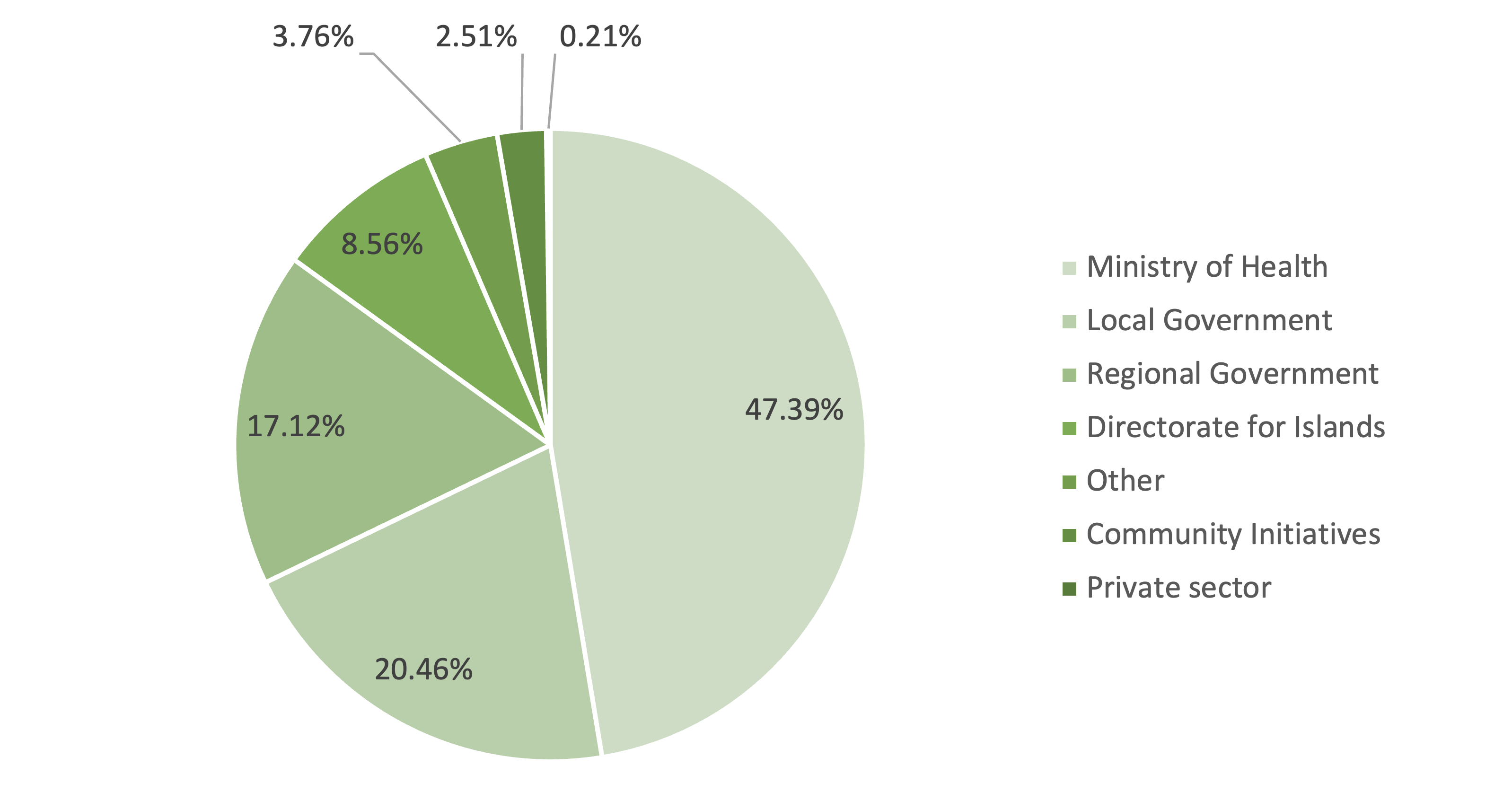
The overwhelming majority of the respondents identified the Ministry of Health as the primary authority responsible for addressing healthcare challenges (Figure 2). A significant proportion of respondents also attributed responsibility to Local Government (municipalities) and Regional Government (counties). Only 8.56% of respondents attributed responsibility to Directorate for Islands. While healthcare is not the primary focus of the Directorate, its role in infrastructure development, EU funding, local governance support, and quality of life improvement directly impacts healthcare accessibility and delivery (Government of the Republic of Croatia, 2020). Strengthening the healthcare system on Croatian islands aligns with the Directorate’s broader mission of sustainable island development and improving living conditions. Additionally, Community Initiatives received minimal attribution. An almost negligible 0.21% identified the Private Sector as responsible for healthcare improvements.
Tourism plays a role in seasonal variations in healthcare availability, with 40.3% respondents stating that tourism negatively impacted access to medical services, suggesting that seasonal demand strains existing healthcare resources.
Potential for Telemedicine
The rapid advancement of digital health technologies presents new opportunities for addressing healthcare challenges on Croatian islands. Given the geographical isolation and limited availability of specialized medical services, telemedicine has the potential to bridge critical gaps in healthcare access. By enabling remote consultations, diagnostics, and monitoring, telemedicine could reduce dependency on mainland healthcare services and offer timelier medical support to island residents. Despite its potential, the survey results indicate both challenges and opportunities for the implementation of telemedicine. Despite low awareness, there is a significant willingness to adopt telemedicine, indicating its potential to bridge healthcare accessibility gaps (Kovai et al., 2000; Carić et al., 2006; Zorica, 2017).
Only 37.16% of respondents are familiar with the term telemedicine, while most are not aware of it or are unsure about what it involves. This indicates a moderate level of awareness but a substantial knowledge gap regarding telemedicine among Croatian island residents. The low awareness may hinder the adoption and utilization of telemedicine if introduced. Therefore, effective educational campaigns are necessary to inform island residents about telemedicine's potential benefits, functionalities, and accessibility.
Despite the low awareness, nearly half of respondents are willing to use telemedicine services if they are available (Table 6). This suggests that once informed about its benefits and functionalities, a significant proportion of island residents may be open to utilizing telemedicine as a healthcare solution. However, a substantial 45.30% of respondents are unsure about using telemedicine services, indicating the need for targeted educational initiatives to explain how telemedicine works, its benefits, and the type of medical issues it can effectively address. Only a few stated that they would not use telemedicine services, suggesting that cultural or personal resistance to technology is not a significant barrier, and the hesitation is more likely due to unfamiliarity with the concept.
| Yes | No | Unsure | |
|---|---|---|---|
| Familiarity with the term Telemedicine | 37.16 | 42.17 | 20.67 |
| Willingness to use Telemedicine | 49.69 | 5.01 | 45.30 |
The findings highlight a considerable opportunity for the further introduction of telemedicine on Croatian islands to bridge healthcare accessibility gaps, particularly given the challenges associated with physical infrastructure and specialist services. Although awareness of telemedicine remains low, the high willingness to use it suggests that targeted educational campaigns are necessary. These campaigns should focus on explaining what telemedicine is and how it works, while also demonstrating its convenience and reliability for non-emergency consultations, follow-ups, and specialist access.
To support the adoption of telemedicine, investments in digital health infrastructure, including reliable internet access, are essential. Additionally, training programs for healthcare providers on telemedicine platforms could ensure effective implementation and usage. Given the strong willingness to use telemedicine services, strategic policy implementation could play a crucial role in enhancing healthcare accessibility and equity for island residents.
Conclusion
The findings of the study indicate that the healthcare system on Croatian islands is not structured in a manner that guarantees equitable access to adequate healthcare infrastructure and services for all residents. Consequently, the realization of the Sustainable Development Goal aimed at ensuring healthy lives and well-being for all remains unattainable in this context. The results highlight that the healthcare system on the islands is confronted with a complex interplay of challenges, predominantly arising from geographic isolation and socio-economic marginalization. Among the targets identified as key to achieving this Sustainable Development Goal, the most challenging for Croatian islands are those that call for a reduction in premature mortality from non-communicable diseases through prevention and treatment, the promotion of mental health and well-being, and the achievement of overall healthcare coverage. Therefore, we will highlight the most significant challenges identified and propose potential solutions, which was the primary objective of this study and would enable progress toward the sustainable development of the islands . Peripheral position of Croatian islands in relation to regional centers on the neighbouring mainland exacerbate healthcare disparities, with smaller and more remote islands facing greater challenges, increasing their vulnerability despite the resilience of their communities. While islanders often demonstrate resilience through social cohesion and informal support systems, these cannot fully mitigate the negative impacts of geographic periphery which negatively reflects on the healthcare.
Smaller and more remote islands still lack even basic healthcare services, such as primary care offices. Consequently, residents are frequently forced to travel to the mainland for medical consultations, prescriptions, and emergency care. Since one of the key challenges has been the departure of physicians from the islands, it is necessary to introduce substantial financial incentives to motivate doctors to remain on the islands. Additionally, addressing the provision of quality housing is essential, which is particularly difficult to secure in tourist areas. Mental healthcare, an essential component of overall well-being, is also severely lacking on almost all of these islands, further compounding the challenges for island residents. Larger islands tend to have better access to healthcare services, though they remain limited in scope and capacity. On near islands, healthcare may include primary care offices, yet these facilities often struggle to meet the needs of the growing elderly population. Seasonal tourism adds further pressure, stretching the already limited healthcare resources and increasing the demand for services.
Social marginalization deepens healthcare disparities on Croatian islands. Factors such as small number of islanders, most of whom are elderly, the shortage of physicians and other medical staff, or the unwillingness of physicians to work in small and remote rural areas, limited economic opportunities, reduced political influence, and social isolation contribute to the marginalization of island communities, leaving them more vulnerable to inadequate healthcare access.
Ensuring adequate healthcare for both permanent islanders and seasonal visitors is a multi-faceted challenge that cannot be fully resolved in all areas. This problem goes beyond financial sustainability and geographical distance from the mainland—measured in travelling time rather than physical distance-and encompasses a number of interdependent factors. A key issue is the growing gap between an ageing island population, which requires increasingly intensive medical and social care, and the ongoing shortage of physicians, nurses and other healthcare professionals.
On small and remote islands where there is no health infrastructure, not even a resident general practitioner, an optimal approach is the systematic introduction of telemedicine services to provide remote consultations and support, complemented by the deployment of mobile medical teams working on a fixed schedule. These teams should provide basic medical care and specialised consultations that include screening, diagnostics and, if hospitalisation is not necessary, therapeutic interventions. To ensure a comprehensive approach, the interdisciplinary teams should consist not only of physicians, but also pharmacists and psychologists. In addition, mobile laboratories and pharmacies should be integrated to facilitate routine diagnostic tests and dispense commonly prescribed medications.
Emergency medical care has already been significantly improved through the use of helicopters and high-speed vessels operated by state maritime authorities. However, during the peak summer months, when the island population increases dramatically, emergency care capacity remains inadequate, resulting in a higher incidence of trauma and acute illness. On larger islands with the highest seasonal influx, additional emergency medical teams should be provided. Given the nationwide shortage of doctors, well-trained nurses and medical technicians need to be integrated into these teams, which requires systematic support for coastal universities offering medical and nursing programmes. Moreover, significant investments are needed to equip general practice offices with modern medical devices, especially those used for diagnosing acute conditions (such as CRP or streptococcal tests), as well as essential emergency equipment (e.g., defibrillators).
Addressing these challenges requires a multi-sectoral approach that promotes synergies between national, regional and local health authorities and institutions. Such coordinated efforts can significantly reduce the burden on existing healthcare facilities while improving the accessibility and quality of healthcare for the island's population.
Bibliography
- Binns, C., Hokama, T., Low, W.Y., 2010. Island health: Hope and challenges for public health. Asia-Pac. J. Public Health 22(1): 19–24. https://doi.org/10.1177/1010539509357782.
- Becker, R. 2022. Gender and Survey Participation: An Event History Analysis of the Gender Effects of Survey Participation in a Probability-based Multi-wave Panel Study with a Sequential Mixed-mode Design. Methods Data Anal. 16(1): 3-32. https://doi.org/10.12758/mda.2021.08.
- Carić, T., Ðerek, O., Carić, D., 2006. Razvoj telemedicine u promicanju zdravstvene skrbi u udaljenim i izoliranim područjima. Acta Clin. Croat. 45(3): 213-217.
- Clowes, J.R., 2010. Primary care on small islands: a unique challenge. Br. J. Gen. Pract. 60(581): 938. https://doi.org/10.3399/bjgp10X544186.
- Craig, A.T., Beek, K., Gilbert, K., Soakai, T.S., Liaw, S.T., Hall, J.J., 2022. Universal Health Coverage and the Pacific Islands: An Overview of Senior Leaders' Discussions, Challenges, Priorities and Solutions, 2015–2020. Int. J. Environ. Res. Public Health 19(7), 4108: 1-15. https://doi.org/10.3390/ijerph19074108.
- Croatian Bureau of Statistics, Census 2021. Population by age and sex, by settlements, 2021 Census
- Čuka, A., Kordej-De Villa, Ž., Starc, N., 2024. Covid-19 and Post-Covid Times in the Croatian Archipelago, in: Baldacchino, G. (Ed.), Archipelago Tourism Revisited: Core–Periphery Dynamics After the Pandemic. Routledge; Taylor & Francis Group, New York, London, pp. 27-46. https://doi.org/10.4324/9781003451037-3.
- Diggle, R., 2003. Medicine in the Falkland Islands. Postgrad. Med. J. 79(927): 3–4. https://doi.org/10.1136/pmj.79.927.3.
- Duplančić Leder, T., Ujević, T., Čala, M., 2004. Coastline lengths and areas of islands in the Croatian part of the Adriatic Sea determined from the topographic maps at the scale of 1:25,000. Geoadria 9(1): 5–32. https://doi.org/10.15291/geoadria.127.
- Emerson, P., Dodds, N., Green, D.R., Jansen, J.O., 2018. Geographical access to critical care services in Scotland. J. Intensive Care Soc. 19(1): 6–14. https://doi.org/10.1177/1751143717714948.
- Faričić, J., Čuka, A., 2020. The Croatian Islands: An Introduction, in: Starc, N. (Ed.), The Notion of Near Islands: The Croatian Archipelago. Rowman & Littlefield International, Lanham, MD, pp. 55–88.
- Faričić, J., Graovac, V., Čuka, A., 2010. Mali hrvatski otoci – radno-rezidencijalni prostor i/ili prostor odmora i rekreacije. Geoadria 15(1): 145–185. https://doi.org/10.15291/geoadria.548.
- Gallia, A., Malatesta, S., 2022. Le isole minori Italiane nelle missioni del PNRR. Una visione sul futuro. Doc. Geogr. 5: 161–174. http://dx.doi.org/10.19246/DOCUGEO2281-7549/202201_11.
- Giannakopoulos G., Anagnostopoulos D., C. 2016. Psychiatric reform in Greece: an overview. BJPsych Bull. Dec 40(6): 326-328. https://doi.org/10.1192/pb.bp.116.053652.
- Heaton, J., 2023. Experiences of connectedness and mental wellbeing in the Scottish islands. Wellbeing, Space and Society 5, 100181: 1-8. https://doi.org/10.1016/j.wss.2023.100181.
- Indonesian Health Department. (2022). Profile of Mother and Child Health. Jakarta: Indonesian Health Department.
- Kassas P., Gogou E., Varsamas C., Vogiatzidis K., Psatha A., Pinaka M., Siachpazidou D., Sistou A., Papazoglou E.D., Kalousi D., Vatzia K., Astara K., Tsiouvakas N., Zarogiannis S.G., Gourgoulianis K.,2023. The Alonissos Study: Cross-Sectional Study of the Healthcare Access and User Satisfaction in the Community of a Non-Profit-Line Greek Island. Healthcare (Basel) 11(13), 1931: 1-8. https://doi.org/10.3390/healthcare11131931.
- Kefala, A. M., Triantafyllou, A., Symvoulakis, E. K., Tzouganatou, E.-M., Kapellas, N., Smyrnakis, E. 2024. Working as a healthcare professional at island primary care: An exploratory qualitative study on the Cyclades Islands, Greece. Healthcare, 12(9), 882, 1–12. https://doi.org/10.3390/healthcare12090882.
- Kelman, I., 2020. Islands of vulnerability and resilience: Manufactured stereotypes? Area 52(1): 6–13. https://doi.org/10.1111/area.12457.
- Kovai, L., Lonari, S., Paladino, J., Kern, J. 2000. The Croatian telemedicine, in: Hasman, A., Blobel, B., Dudeck, J., Engelbrecht, R., Gell, G., Prokosch, H.-U. (Eds.), Medical Infobahn for Europe. IOS Press, Amsterdam, pp. 1146-1150.
- Lerner, E.B., Moscati, R. M. 2001. The Golden Hour: Scientific Fact or Medical “Urban Legend”?. Academic Emergency Medicine 8(7): 758-760. https://doi.org/10.1111/j.1553-2712.2001.tb00201.x.
- Magaš, D. 1993. Cestovne prometnice malih jadranskih otoka. Hrv. Geogr. Glas. 55, 151-155.
- Magaš, D. 2008. Geografske posebnosti razvitka malih hrvatskih otoka, in: Faričić, J. (Ed.), Otok Rava. Sveučilište u Zadru, Zadar, pp. 19-42.
- Mangoma, J., Sulistiadi, W. 2024. Island Health Crisis: Bridging Gaps in Indonesia's Healthcare Deserts. J. of Indonesian Health Policy and Administration, 9(2), 75–85. https://doi.org/10.7454/ihpa.v9i2.1005.
- Ministarstvo regionalnog razvoja i fondova Europske unije/Ministry of Regional Development and EU Funds, Republic of Croatia (2021). Nacionalni plan razvoja otoka 2021.-2027./National Island Development Plan 2021-2027. https://vlada.gov.hr/UserDocsImages/2016/Sjednice/2021/Prosinac/92%20sjednica%20VRH/92%20-%208%20Nacionalni%20plan.pdf (accessed 21st January, 2025)
- Ministarstvo regionalnog razvoja i fondova Europske unije/Ministry of Regional Development and EU Funds, Republic of Croatia, 2024. Registar otoka/Island Register. https://registar-otoka.gov.hr/ (accessed 15th December, 2024)
- O’Connor J. 2001. The Royal Flying Doctor Service of Australia: the world’s first air medical organization. Air Med J. 20(2):10-12. DOI: 10.1016/s1067-991x(01)70089-2.
- Quinn, M., Marsden, B., Wilson, P., 2021. The role of transport and telecommunications technology in the development of the Scottish Highlands and Islands Medical Service: a historical perspective. Rural and Remote Health 21, 6560. https://doi.org/10.22605/RRH6560.
- Rogers, F. B., Rittenhouse, K. J., Gross, B. W. 2015. The golden hour in trauma: dogma or medical folklore?. Injury 46(4), 525-527. DOI: 10.1016/j.injury.2014.08.043.
- Royle, S.A., 1995. Health in small island communities: the UK's South Atlantic colonies. Health Place 1(4): 257–264. https://doi.org/10.1016/1353-8292(95)00035-6.
- Ruehr, S., 2022. Beyond the Vulnerability/resilience Dichotomy: Perceptions of and Responses to the Climate Crisis on Emau, Vanuatu. Island Studies J. 17(1): 151–176. https://doi.org/10.24043/isj.151.
- Rytkönen, P.I., Tunón, H., Bohlin, M., Box, M., Fogelström, S., Hjelm, L., Persson, S.-Å., Segerlind, T.L., Westerberg, U., 2024. A Roadmap for Swedish Island Research – Previous Knowledge, Current Debates, and Imminent Research Gaps. Rural Landscapes: Society, Environment, History 11(1): 1-5. https://doi.org/10.16993/rl.131.
- Salustri, A., Appolloni, A., 2021. Brevi riflessioni sullo sviluppo locale sostenibile nelle isole minori italiane. Public Finance Research Papers 46. Istituto di Economia e Finanza, DSGE, Sapienza University of Rome.
- Suzana, M., Walls, H., Smith, R., Hanefeld, J., 2018. Achieving universal health coverage in small island states: could importing health services provide a solution? BMJ Global Health 3;e000612: 1-12. https://doi.org/10.1136/bmjgh-2017-000612.
- Taglioni, F., 2011. Insularity, Political Status and Small Insular Spaces. Shima: The International Journal of Research into Island Cultures 5(2): 45-67.
- Turner, S., 2020. Near Islands of Europe, in: Starc, N. (Ed.), The Notion of Near Islands: The Croatian Archipelago. Rowman & Littlefield International, Lanham, MD, pp. 29–53.
- UN (2015). Transforming our world: the 2030 Agenda for Sustainable Development, https://sdgs.un.org/2030agenda (accessed 10th December 2024)
- Väisänen, V., Satokangas, M., Huhtakangas, M., Antikainen, H., Sinervo, T. 2025. Medical deserts in Finland: measuring the accessibility and availability of primary health care services. BMC Health Serv. Res. 25(281): 1-15. https://doi.org/10.1186/s12913-025-12409-1.
- Vlada Republike Hrvatske/Government of the Republic of Croatia, 2020. Uredba o unutarnjem ustrojstvu Ministarstva regionalnoga razvoja i fondova Europske unije NN 97/2020. https://narodne-novine.nn.hr/clanci/sluzbeni/2020_08_97_1821.html (accessed 21st January, 2025).
- WHO, World Health Organization, 2023. Universal Health Coverage (UHC), https://www.who.int/news-room/fact-sheets/detail/universal-health-coverage-(uhc) (accessed on 15th December 2024)
- Žanić, A., Kovačić, V., & Jukić, I. 2023. Emergency Air Transport of Patients with Acute Chest Pain in the Adriatic Islands of Croatia: A Four-Year Analysis. Int. J. Environ. Res. Public Health, 20(7), 5422. https://doi.org/10.3390/ijerph20075422.
- Zorica, Z., 2017. Telemedicine in Croatia, in Stone, C.S (Ed.), Benchmarking Telemedicine: Improving Health Security in the Balkans. IOS Press, Amsterdam, pp. 104-110.