
Conservation Potential and Management Strategies for Sea Turtles Along the West Coast of Banten Province, Indonesia
 10.21463/jmic.2025.14.2.22
Abstract
Damage to coastal habitats, natural disasters and the lack of data on sea turtle populations represent major challenges in managing sea turtles in the waters surrounding Banten province, Indonesia. This study aims to explore the potential of sea turtle populations on the west coast of Banten province to develop better management strategies. The present research involved a desktop study and a strengths, weaknesses, opportunities and threats (SWOT) analysis to assess effective management approaches. Results show opportunities for the improvement of sea turtle populations, nesting habitats, and hatching activities in the area. However, the absence of a comprehensive database and ongoing habitat degradation pose serious threats to sustainability. The SWOT analysis highlights the need for proactive measures, such as managing nesting habitats, establishing a detailed sea turtle database and promoting turtle conservation-based ecotourism. Effective management is expected to support the sustainability of sea turtle populations and improve habitat quality along the west coast of Banten province.
Keywords
potential, management, sea turtles, west coast of Banten
1. Introduction
Sea turtles are among the most widespread marine reptiles globally, capable of migrating long distances. They live in tropical and subtropical seas and lay their eggs on sandy beaches. They serve a crucial role in maintaining the balance of marine ecosystems (Madden et al., 2008). Of the seven extant sea turtle species, six are found in the waters of Indonesia: the leatherback turtle (Dermochelys coriacea), green turtle (Chelonia mydas), hawksbill turtle (Eretmochelys imbricata), loggerhead turtle (Caretta caretta), olive ridley turtle (Lepidochelys olivacea) and flatback turtle (Natator depressus). Internationally, all sea turtles are included in the International Union for Conservation of Nature (IUCN) Red List of Threatened Species. Furthermore, all sea turtles are included in Appendix I of the Convention on International Trade in Endangered Species of Wild Fauna and Flora (CITES, 2017), which implies that their existence in nature has become endangered and all forms of their use and circulation must receive serious attention (Pavón, 2023; Simantiris, 2024).
Female sea turtles have the unique characteristic of returning to their original beach habitat to carry out the nesting process (Zhang et al., 2024). Factors that influence female sea turtles to go ashore and nest include the characteristic conditions of the beach, which are suitable for turtle nesting. The composition of vegetation and the condition of the coastal ecosystem affect the presence of sea turtle nesting activity, while the presence of predators affects sea turtle hatching and emergence rates (Anshary et al., 2014; Damanhuri et al., 2019; Prakoso et al., 2019; Setiawan et al., 2021). The width of a nesting beach (i.e. from the high water mark to the vegetation line) significantly affects the ability of nesting turtles to reach a suitable nesting site (Hartono et al., 2023; Septiadi et al., 2018).
The beach slope represents an attractive habitat for sea turtles to lay eggs in since they can easily reach this nesting site (Elfidasari et al., 2022). Other factors that support sea turtle nesting include minimal to no light, a quiet atmosphere, and a lack of human and animal activity that can interfere with the nesting process (Robertson et al., 2016). In conditions where sea turtles must lay their eggs immediately for physiological reasons, they will move towards nesting locations regardless of the presence of light and human/animal activity (Silva et al., 2017; Yekwam & Pattiwael, 2022).
On the coast of Banten province, Indonesia, sea turtles can be found on Tanjung Lesung Beach. Additionally, Sangiang Island represents a potential location for turtle nesting. The southern (Karangranjang Beach) and western portions (Cirame) of Ujung Kulon are also habitats for green, leatherback and hawksbill turtles. However, data on sea turtle populations in the waters around Banten province remain minimal. During the development of this province, numerous coastal activities led to shifts in land function (e.g. resort development destroying coastal habitats), food waste, sea turtle deaths resulting from fishing activities, climate change and the spread of diseases (Rohmah et al., 2023). Additionally, in 2018, a tsunami in the Sunda Strait caused significant damage to the coastal environment (Mujiyanto et al., 2021), which naturally impacted aquatic ecosystems including sea turtle habitats. Existing problems in the coastal waters of Banten require a deeper study of the potential for sea turtle populations to inform more effective management strategies. This study aims to identify the internal and external factors influencing sea turtle population potential on the west coast of Banten province, with the expectation that its findings will serve as a reference for effective sea turtle conservation and management.
2. Research Methods
This study involved a desk study, with research conducted by collecting and analysing existing secondary data (Cheong et al., 2023). The secondary data collected originated from relevant scientific articles and journals, including data related to the abiotic and biotic factors of sea turtle habitats (e.g. coastal conditions, sea depth, temperature, vegetation, predators), as well as anthropic factors (Ario et al., 2016) that affect sea turtles (i.e. human activities and turtle habitat management) on the west coast of Banten province (Figure 1).
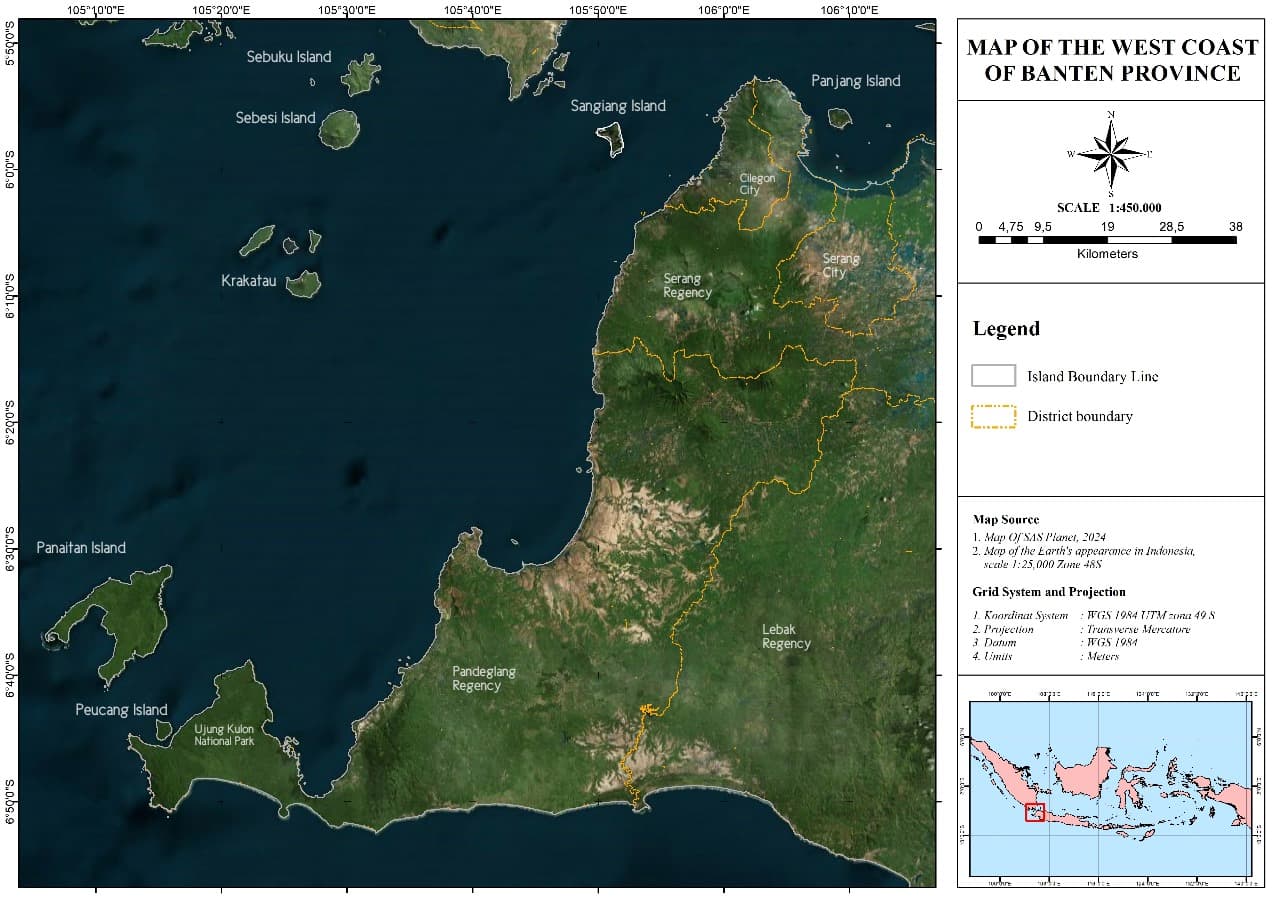
To assess the management potential for sea turtles on the west coast of Banten province, a strengths, weaknesses, opportunities and threats (SWOT) analysis was conducted. SWOT analysis is a classic strategic planning instrument that uses a framework of strengths and weaknesses, as well as external opportunities and threats, to formulate a strategy for an activity (Kamkankaew, 2023; Rauch et al., 2015). The steps involved in the SWOT analysis for the present research were as follows:
-
Identify strengths/weaknesses and opportunities/threats
At this stage, an assessment of the factual conditions in the field and potential trends was conducted to identify the strengths, weaknesses, opportunities and threats related to sea turtle populations.
-
SWOT analysis and alternative policies as a result of SWOT analysis
At this stage, an analysis of the attachment relationship was conducted to identify several policy alternatives (SO, ST, WO, WT). To prioritise the food policy, scores and weights were assigned to factor points based on their level of importance. Scores represent the level of importance, ranging from 1 (unimportant) to 5 (most important). For the calculation of weight, each factor point was carried out interdependently. This implies that the assessment of one factor point involves comparing its level of importance with that of other factor points.
Policy alternatives in the SWOT outcome matrix were generated from regional forces to identify the following: opportunities (SO); policies based on the use of existing forces to deal with future threats (ST); the reduction of existing vulnerabilities by leveraging opportunities (WO); and the reduction of existing vulnerabilities to deal with future threats (WT) (Table 1).
| Internal-External | Strengths (S) | Weaknesses (W) |
|---|---|---|
| Opportunities (O) | SO | WO |
| Threats (T) | ST | WT |
Alternative strategies obtained from the matrix presented in Table 1 include the following:
- SO Strategy:
- Using existing strengths to take advantage of existing opportunities.
- ST Strategy:
- Using existing strengths to overcome threats.
- WO Strategy:
- Attempting to gain an advantage and capitalise on opportunities by overcoming existing weaknesses.
- WT Strategy:
- Seeking to minimise weaknesses and address threats.
3. Results and Discussion
3.1. Distribution of Sea Turtle Nesting Habitats
Based on the results of several sea turtle studies conducted on the west coast of Banten province, confirmed sea turtle nesting habitats were identified in the Sangiang Island Nature Tourism Park, Oar Island and Umang Island (Ardhelia, 2020; Jannah et al., 2024; Rahayu et al., 2023). Sangiang Island is a small, inhabited island located near the islands of Java and Sumatra. It has a beach with adjacent coral and seagrass habitats that turtles prefer since these can serve as a foraging ground during the turtle mating period (Tapilatu et al., 2022). On Sangiang Island, confirmed sea turtle nesting habitat exists on three beaches: Sepanjang Beach, Batu Raden Beach, and Batu Mandi Beach (Figure 2).
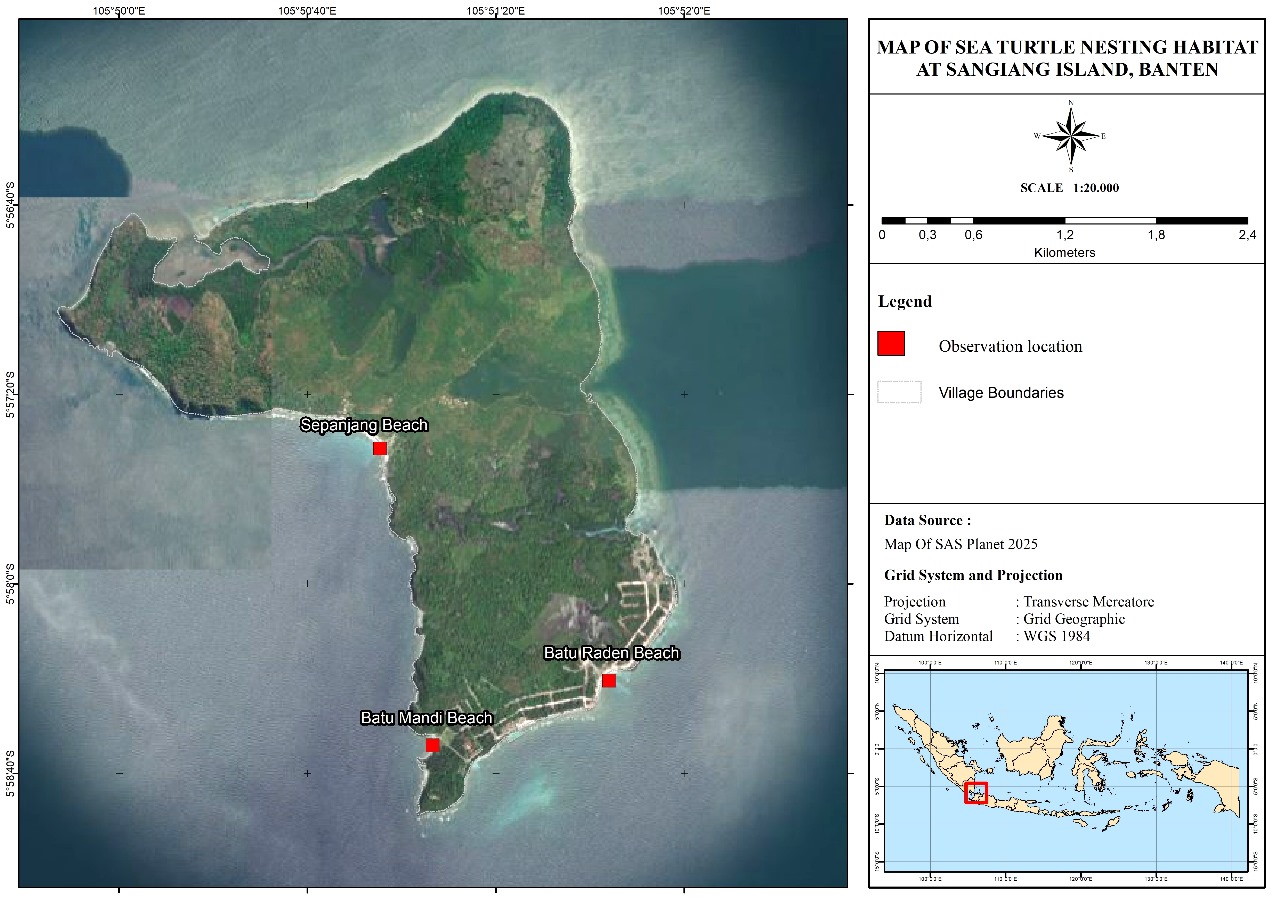
Source: Ardhelia, 2020; Jannah et al., 2024
Batu Mandi Beach has a length of 125.6 metres and a slope of ± 4 degrees. It is located far from human activities, with a calm atmosphere and adjacent coral reef and seagrass ecosystems (Ardhelia, 2020). The lack of human activity on this beach results in a lack of artificial light, which is a crucial factor for sea turtles to lay their eggs. During the sea turtle nesting process, several factors promote successful nesting activities, such as a quiet atmosphere, no irradiation and no activities that can interfere with sea turtles moving up the beach (Clabough et al., 2022; Simões et al., 2017). Approximately 20–30 sea turtle nests are recorded on Batu Mandi Beach annually (Figure 3).
Sepanjang Beach is situated near residential areas. This beach has a length of 3 kilometres, average width of 27.15 metres and a slope of ± 4 degrees. It is visited by many tourists because it is close to a pier and does not have a high tree density (Jannah et al., 2024). Moreover, it is a suitable nesting habitat for green turtles because the beach is sloping and spacious, with pandan plants (Pandanus tectorius) and waru trees being the dominant vegetation (Rumaida et al., 2021; Zhang et al., 2024). During the sea turtle nesting season, approximately 10-20 nests are laid per month at Sepanjang Beach predominantly by green turtles (Ardhelia, 2020).
Batu Raden Beach has a length of 908 metres and a slope of ± 3–4 degrees, with the predominant vegetation consisting of sea cypress and waru trees. Hawksbill turtles usually choose nests close to the shoreline and favour this vegetation. This is because hawksbill turtles are not strong enough to travel far from the shore to nest (Stokes et al., 2024). Typically, 0–10 sea turtle nests are found on this beach per month during the nesting season (Ardhelia, 2020). On this beach, many villas have been built close (~25 metres) to the coast.
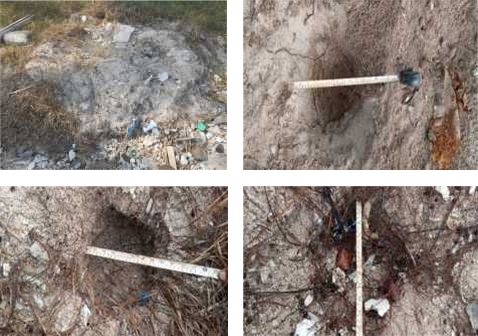
Source: Ardhelia, 2020
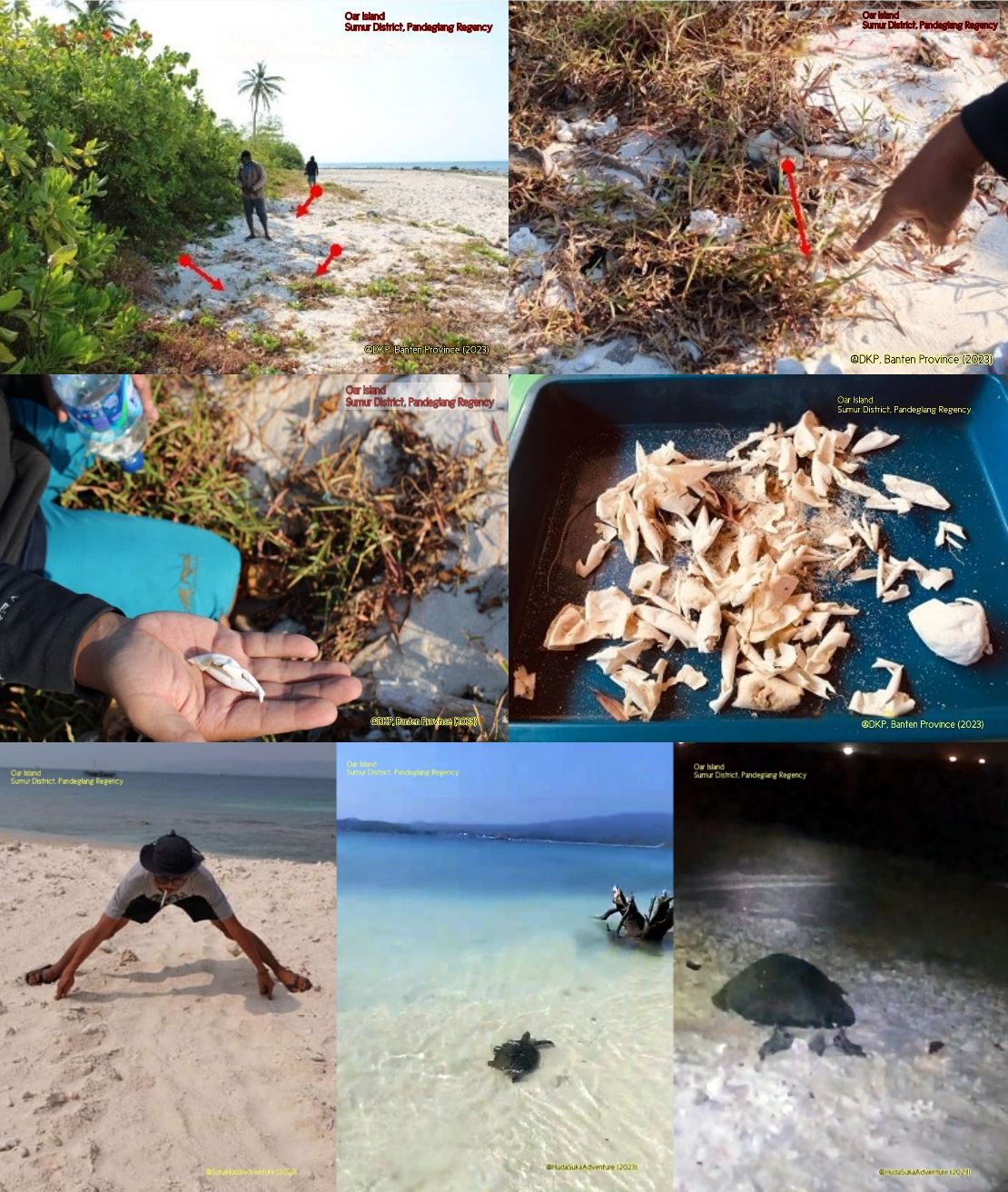
Oar Island is a tourist attraction island measuring approximately 100 metres in length and 60 metres in width. Evidence of sea turtle nesting has also been observed on this island (Figure 4), with hawksbill turtle tracks being found (Rahayu et al., 2023). Additionally, the presence of eggshells suggests that this island hosts sea turtle nesting. Based on this evidence, female sea turtles that hatch and emerge from this island nesting site should return to the same location upon reaching sexual maturity (Figure 5). Sea turtles are animals that have a habit of returning to their nesting sites to lay eggs as long as the characteristics of the beach remain suitable for them to make nests (Anshary et al., 2014). A dark beach at night is one of the characteristics of beaches that turtles like to lay their eggs on (Attum & Nagy, 2024).
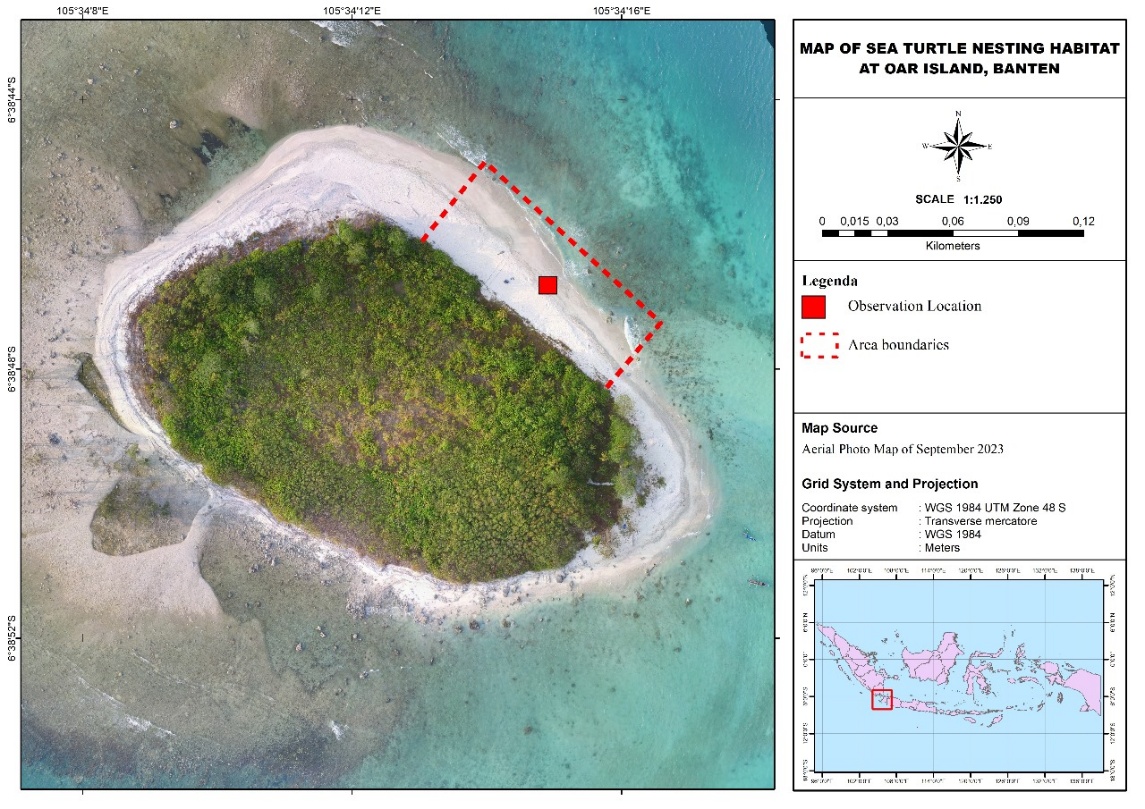
Source: Rahayu et al., 2023
Source: Rahayu et al., 2023
3.2. SWOT Analysis
3.2.1. Internal and External Environment Identification
Based on the identification of potential opportunities on sea turtle nesting beaches, several key factors were identified that form the basis for determining sea turtle management strategies (Table 2).
| No. | Internal Factors | External Factors |
|---|---|---|
| Strength (S) | Opportunity (O) | |
| 1. | (S1): Two sea turtle species are found on the west coast of Banten province: hawksbill turtles and green turtles | (O1): Strong support for the implementation of sea turtle-based ecotourism development |
| 2. | (S2): Sea turtle nesting habitats exist on the west coast of Banten province | (O2): Suitable sea turtle nesting habitat |
| 3. | (S3): A beautiful or pristine beach with an abundance of seagrasses for sea turtles to forage on | (O3): Cooperation and collaboration between managers, the community and the government can help improve the efficiency and effectiveness of sea turtle management |
| 4. | (S4): There are hatching enlargement activities | (O4): Development of technology to help improve the efficiency and effectiveness of sea turtle management |
| Weakness (W) | Threat (T) | |
| 5. | (W1): Lack of sea turtle-related databases on the west coast of Banten | (T1): No information related to sea turtle populations on the west coast of Banten province |
| 6. | (W2): Low capacity and ability of natural resource managers in managing sea turtles and their habitats | (T2): Predators that interfere with sea turtle nesting and nest success (i.e. hatching and emergence) |
| 7. | (W3): Lack of public awareness about the importance of sea turtle conservation can render sea turtle management ineffective | (T3): Climate change can affect the condition of turtle habitats and the sustainability of sea turtle populations |
| 8. | (W4): Limited resources (e.g. funds, manpower and infrastructure) can make sea turtle management inefficient | (T4): Destruction of sea turtle habitat due to human activities (e.g. hunting, trade and infrastructure development) |
The results of the analysis of external factors were processed into strengths and weaknesses, resulting in the external factor analysis summary (EFAS) matrix values (Table 3), while internal factors were processed into opportunities and threats to produce an internal factor analysis summary (IFAS) matrix values (Table 4). These matrices are used as a tool to illustrate how the internal strengths of turtle habitats and resources on the west coast of Banten province can be used to anticipate external opportunities and threats. This matrix facilitates the formulation of various strategies, whose core must focus on utilising strengths, addressing weaknesses, leveraging opportunities and managing threats.
| Strategic Factor | Significance Level | Weight | Score | |
|---|---|---|---|---|
| Strengths | Two sea turtle species are found on the west coast of Banten province: hawksbill turtles and green turtles | 3 | 0.14 | 0.71 |
| Sea turtle nesting habitats exist on the west coast of Banten province | 3 | 0.14 | 0.71 | |
| There are beautiful beaches | 1 | 0.05 | 0.14 | |
| There are hatchling enlargement activities | 2 | 0.10 | 0.38 | |
| Total S | 1.95 | |||
| Weaknesses | Lack of sea turtle-related databases on the west coast of Banten province | 3 | 0.14 | 0.36 |
| Low capacity and ability of natural resource managers in managing sea turtles and their habitats | 3 | 0.14 | 0.36 | |
| Lack of public awareness about the importance of sea turtle conservation can render turtle management ineffective | 3 | 0.14 | 0.29 | |
| Limited resources (e.g. funds, manpower and infrastructure) can make sea turtle management inefficient | 3 | 0.14 | 0.36 | |
| Total W | 1.36 | |||
| TOTAL | 21 | 1.00 | 3.31 | |
| Strategic Factor | Significance Level | Weight | Score | |
|---|---|---|---|---|
| Opportunities | Strong support for the implementation of turtle-based ecotourism development | 2 | 0.10 | 0.29 |
| Easy-to-reach beach locations | 3 | 0.14 | 0.57 | |
| Cooperation and collaboration between managers, the community and the government can help improve the efficiency and effectiveness of sea turtle management | 3 | 0.14 | 0.57 | |
| Development of technology to help improve the efficiency and effectiveness of sea turtle management | 3 | 0.14 | 0.57 | |
| Total O | 2.00 | |||
| Threats | No information related to sea turtle populations on the west coast of Banten | 3 | 0.14 | 0.36 |
| Predators that interfere with the nesting and hatching processes of sea turtles | 2 | 0.10 | 0.24 | |
| Climate change can affect the condition of turtle habitats and the sustainability of sea turtle populations | 2 | 0.10 | 0.24 | |
| Destruction of sea turtle habitat due to human activities (e.g. hunting, trade and infrastructure development) | 3 | 0.14 | 0.36 | |
| Total T | 1.19 | |||
| TOTAL | 21 | 1 | 3.19 | |
EFAS analysis reveals two main external factors as opportunities, with a score of 0.71. Two sea turtle species are found in the waters off the west coast of Banten province: hawksbill turtles and green turtles. Sea turtle nesting habitats have also been found on Sangiang Island, Oar Island and Umang Island. Furthermore, an opportunity (score: 0.38) lies in the hatchling enlargement activities at Sangiang Island and Tanjung Lesung Nature Tourism Parks. The existence of a beautiful beach is also an opportunity, earning a score of 0.14. In addition to opportunities, there are primary factors that pose threats (score: 0.36), namely the lack of information related to turtle populations on the west coast of Banten province and the destruction of turtle habitat due to human activities (e.g. hunting, trade and infrastructure development). This condition is due to the strategic location of Pandeglang Regency, which is situated near Merak Port, a key transportation link between the islands of Java and Sumatra. Currently, the Regional Government of Pandeglang Regency is proposing changes to the regional spatial plan (RTRW) for 2011–2031, aiming to transform Pandeglang Regency from an agricultural to an industrial area (Mutaqin et al., 2021). There are other threats with a score of 0.24, including predators that interfere with sea turtle nesting and hatching processes, as well as climate change, which can affect the condition of sea turtle habitats and the sustainability of their populations. Additionally, the monkeys located on Oar Island and Umang Island represent predators that potentially interfere with sea turtle nesting and hatching processes (Rahayu et al., 2023). The 2018 tsunami disaster, caused by the eruption of Anak Krakatau in the Sunda Strait (Putra et al., 2020), which impacted the coast of Banten province, significantly affected the aquatic ecosystem, including coral reefs that serve as habitats for reef fish (Mujiyanto et al., 2021). Based on reports from volunteer groups and nature conservation agencies in Serang, many sea turtles were stranded in areas that were not their natural habitat after the tsunami, resulting in mortality (Kompas.com).
3.2.2. Turtle Management Strategy
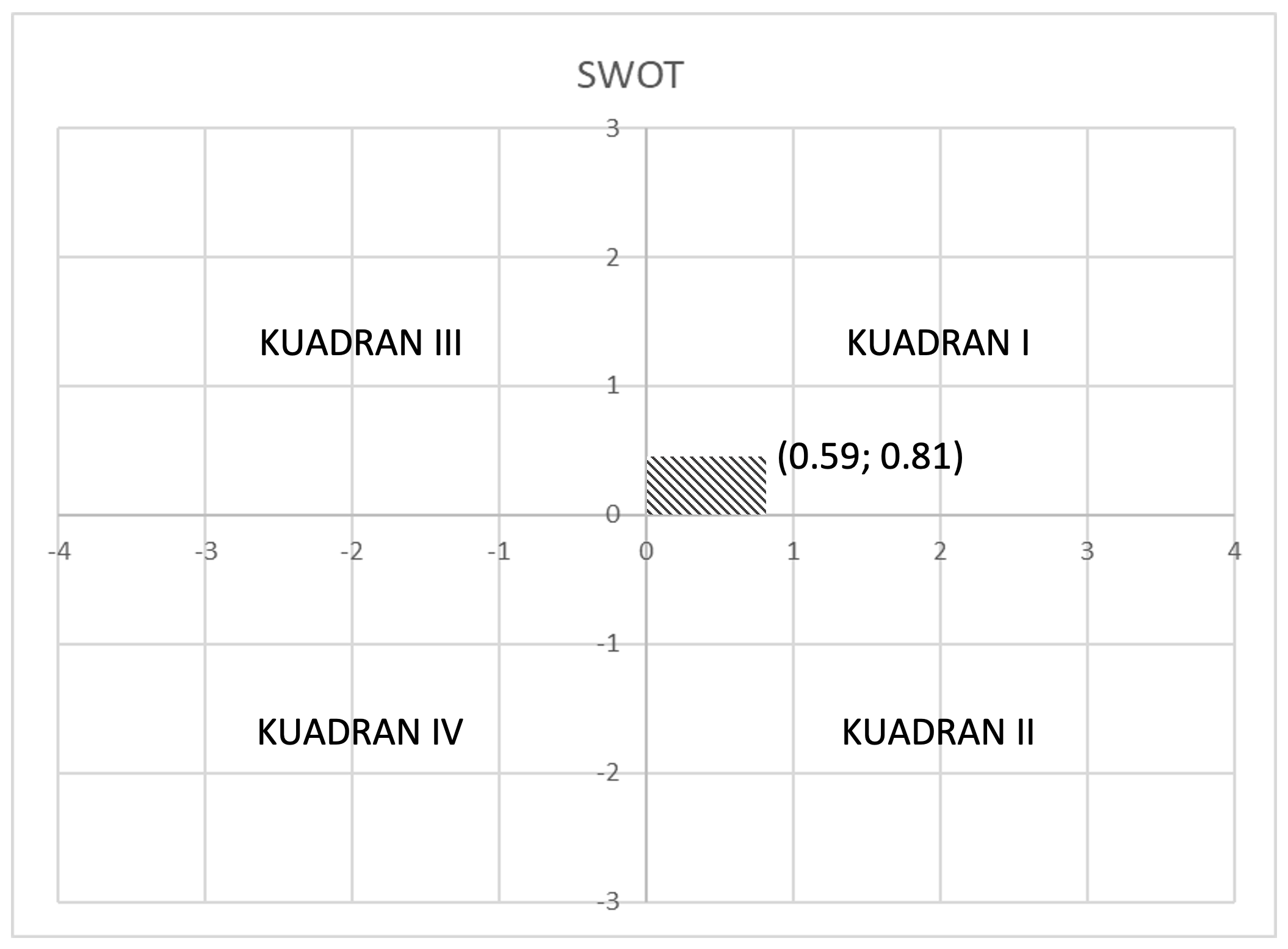
To determine the strategic quadrant, a calculation was performed by subtracting the EFAS value from the Y-axis and the difference in the IFAS value from the X-axis. The results of this SWOT calculation show that the condition of sea turtle populations based on the identification of the internal and external environment is in quadrant I (0.59; 0.81) (Figure 6). This indicates the need for proactive action in sea turtle management in waters surrounding the west coast of Banten province.
Upon considering the Strength-Opportunity factors, the proactive actions needed in managing sea turtle populations around the west coast of Banten province are listed as follows: 1) effective sea turtle habitat management to increase the sustainability of sea turtle populations; 2) management of sea turtle nesting habitat to increase nesting success rates; 3) creation of a comprehensive sea turtle database, including information on habitats, behaviours, populations and threats; 4) sea turtle conservation management to protect sea turtles from the threat of extinction; 5) conservation-based ecotourism management to increase public awareness and community income; 6) management of education and public awareness about the importance of sea turtle conservation; 7) management of cooperation between managers, the community and the government to improve the success of sea turtle management.
Considering several strategic factors, such as sea turtle populations, their nesting habitat on several beaches on the west coast of Banten province and the existence of hatchling breeding activities, one action that can be taken is conducting in situ and ex situ conservation, as performed at the Turtle Conservation and Education Center (TCEC) at Serangan, Denpasar, Bali (Harnino et al., 2021). The effectiveness of the TCEC in managing and preserving sea turtles in Indonesia (especially in the Bali region) lies in raising public awareness about the importance of not consuming turtle eggs and meat. Additionally, such activities also have the potential to become an educational tourist attraction, such as at Pangumbahan Ujung Genteng Beach, Sukabumi (Leonita et al., 2018). Sea turtle tourism activities at this site, namely film screenings about sea turtles, hatchling releases and watching sea turtle nesting activities, are provided by the Pangumbahan Sea Turtle Beach management and involve several parties, including the Sukabumi Regency Marine and Fisheries Service (DKP), the Pangumbahan Turtle Conservation Regional Technical Implementation Unit (UPTD) and the Pangumbahan Southern Region Marine Resources and Fisheries Monitoring Centre (BPKSDKPWS - Pangumbahan) (Ismane et al., 2018). Sea turtle-related public education activities, which integrate sea turtle conservation with tourism, have begun to be implemented on Sangiang Island. Several agencies and communities are involved in sea turtle conservation activities, including community empowerment initiatives linked to post-tsunami sea turtle conservation efforts, the installation of educational displays and socialisation efforts with residents. Additionally, tourists visiting the island are encouraged to learn about the importance of sea turtle conservation. There is also a sea turtle-watching community in Sumur district that serves a crucial role in sea turtle conservation, including nest monitoring, egg protection and beach patrols.
4. Conclusion
Based on the SWOT analysis results, managing sea turtle populations in the waters of Banten province's west coast requires a proactive and sustainable approach. Strategies that can be implemented include the integrated management of sea turtle nesting habitats, the development of a comprehensive sea turtle population database and the strengthening of conservation-based ecotourism initiatives. Since the focus of this study is turtle management on the west coast of Banten Province in relation to the regional spatial plan, it is important to emphasise the active role of the local government in synchronising conservation policies with coastal development planning. Additionally, central government support is required through strict regulations, conservation funding and institutional strengthening. Developing synergy between the local government, central government and communities is expected to create an effective, adaptive and sustainable sea turtle management system to prevent the extinction of sea turtle species.
Acknowledgements
The author would like to thank the Aquatic Resources Downstream Program House (Rumah Program Hilirisasi Sumber Daya Akuatik- in Bahasa), the Research Organization for Earth Sciences and Maritime, and the National Research and Innovation Agency for funding this research activity. The authors also thank the following entities for contributing data for the preparation of this manuscript: Faculty of Agriculture, Sultan Ageng Tirtayasa University; Marine and Fisheries Education Study Program, Indonesia University of Education; Marine and Fisheries Service, Banten Province.
Author Contributions
Yayuk Sugianti, Mujiyanto, Adriani Sri Nastiti, Muta Ali Khalifa and Afifah Nurazizatul Hasanah: draft writing, data analysis, data visualisation, finalisation; Ngurah Nyoman Wiadnyana: writing review, supervision.
References
- Anshary, M., Setyawati, T. R., Yanti, A. H. 2014. Karakteristik Pendaratan Penyu Hijau (Chelonia mydas, Linnaeus 1758) di Pesisir Pantai Tanjung Kemuning Tanjung Api dan Pantai Belacan Kecamatan Paloh Kabupaten Sambas. Jurnal Protobiont, 3(2), 232–239.
- Ardhelia, M. 2020. Karakteristik Habitat Peneluran Penyu di Taman Wisata Alam Pulau Sangiang, Banten. Universitas Sultan Ageng Tirtayasa.
- Ario, R., Wibowo, E., Pratikto, I., Fajar, S. 2016. Pelestarian Habitat Penyu Dari Ancaman Kepunahan Di Turtle Conservation And Education Center (TCEC), Bali. Jurnal Kelautan Tropis, 19(1), 60. https://doi.org/10.14710/jkt.v19i1.602
- Attum, O., Nagy, A. 2024. Patterns of light pollution on sea turtle nesting beaches in the Egyptian Red Sea. Marine Pollution Bulletin, 201 (116246). https://doi.org/10.1016/j.marpolbul.2024.116246
- Cheong, H. I., Lyons, A., Houghton, R., Majumdar, A. 2023. Secondary qualitative research methodology using online data within the context of social sciences. International Journal of Qualitative Methods, 22, 1–19. https://doi.org/10.1177/16094069231180160
- Clabough, E. B. D., Kaplan, E., Hermeyer, D., Zimmerman, T., Chamberlin, J., Wantman, S. 2022. The secret life of baby turtles: A novel system to predict hatchling emergence, detect infertile nests, and remotely monitor sea turtle nest events. PLoS One, 17(10): e0275088, 1–21. https://doi.org/10.1371/journal.pone.0275088
- Damanhuri, H., Putra, A., Troa, R. A. 2019. Karakteristik bio-fisik pantai peneluran penyu di Pulau Laut-Sekatung Kabupaten Natuna – Provinsi Kepulauan Riau. Prosiding Simposium Nasional Magister, 3(2), 1–15.
- Elfidasari, D., Sabil, M. Q. T., Sasaerilla, Y., Sugoro, I. 2022. Distribution and nesting habitat of green sea turtles (Chelonia mydas) in Pangumbahan Turtle Conservation Area, Sukabumi, Indonesia. AACL Bioflux, 15(5), 2329–2338.
- Harnino, T. Z. A.., Parawangsa, I. N. Y., Sari, L. A., Arsad, S. 2021. Effectiveness of sea turtle conservation management at conservation and education center of Serangan, Denpasar Bali. Journal Marine and Coastal Science, 10(1), 18–34.
- Hartono, D., Zamdial, Z., Nabiu, M., Anggoro, A., Novanda, R. R., Futri, D. B. D. J. 2023. Study of suitability and carriying capacity on ecotourism of turtle conservation in The Tikus Island Bengkulu City. Jurnal Enggano, 8(1), 51–58. https://ejournal.unib.ac.id/jurnalenggano/article/view/23882%0Ahttps://ejournal.unib.ac.id/jurnalenggano/article/download/23882/13403
- Ismane, M. A., Kusmana, C., Gunawan, A., Affandi, R., Suwardi, S. 2018. Keberlanjutan Pengelolaan Kawasan Konservasi Penyu Di Pantai Pangumbahan, Sukabumi, Jawa Barat. Jurnal Pengelolaan Sumberdaya Alam Dan Lingkungan (Journal of Natural Resources and Environmental Management), 8(1), 36–43. https://doi.org/10.29244/jpsl.8.1.36-43
- Jannah, N. R., Cahyadi, F., Sasongko, A., Handayani, D. 2024. Analysis of suitable habitat for nesting of hawksbill turtles (Eretmochelys imbricata) in Pulau Sangiang Natural Park, Banten. Barakuda 45: Jurnal Ilmu Perikanan dan Kelautan, 6(2), 211–219.
- Kamkankaew, P. 2023. Current trends in strategic management: A comparative analysis of SWOT and SOAR approaches. RMUTT Global Business Accounting and Finance Review, 7(2), 63-78.
- Leonita, G., Satjapradja, O., Meiganati, K. 2018. Green turtle (Chelonia mydas L.) potential as development of educational tourism strategy in Pangumbahan coastal area Ujung Genteng Sukabumi, West Java. Jurnal Nusa Sylva, 18(1), 38–45.
- Madden, D., Ballestero, J., Calvo, C., Carlson, R., Christians, E., Madden, E. 2008. Sea turtle nesting as a process influencing a sandy beach ecosystem. Biotropica, 40(6), 758–765. https://doi.org/10.1111/j.1744-7429.2008.00435.x
- Mujiyanto, Sugianti, Y., Afandy, Y. A., Rahayu, R., Budikusuma, R. A., Nastiti, A. S., Syam, A. R., Purnamaningtyas, S. E. 2021. Reef fish community structure in the islands of Paraja Bay, Pandeglang District, Banten, Indonesia. Biodiversitas, 22(10), 4402–4413. https://doi.org/10.13057/biodiv/d221033
- Mutaqin, B. W., Kurniawan, I. A., Airawati, M. N., Marfai, M. A. 2021. Kajian Perubahan Garis Pantai di Sebagian Wilayah Pesisir. Jurnal Kelautan, 14(3), 232–242.
- Pavón, R. G. S. 2023. Tourist use limits with turtles in Cozumel. Environmental Challenges, 10 (100669). https://doi.org/10.1016/j.envc.2022.100669
- Prakoso, Y.., Komala, R., Ginanjar, M. 2019. Characteristic of hawksbill turtle (Eretmochelys imbricata) nesting area in Kepulauan Seribu National Park, Jakarta. Prosiding Seminar Nasional Masyarakat Biodiversitas Indonesia, 5(1): 112-116.
- Putra, P. S., Aswan, A., Maryunani, K. A., Yulianto, E., Nugroho, S. H., Setiawan, V. 2020. Post-event field survey of the 22 December 2018 Anak Krakatau Tsunami. Pure and Applied Geophysics, 177(6), 2477–2492. https://doi.org/10.1007/s00024-020-02446-8
- Rahayu, R., Mujiyanto, M., Sugianti, Y., Rahman, A., Aristyaningsih, D., Sunarya, Y., Supriyadi, Sarbini, R. 2023. Identifikasi Calon Kawasan Konservasi Pesisir dan Pulau-pulau Kecil di Perairan Barat Kabupaten Pandeglang, Provinsi Banten. Dinas Kelautan dan Perikanan, Provinsi Banten.
- Rauch, P., Wolfsmayr, U. J., Borz, S. A., Triplat, M., Krajnc, N., Kolck, M., Oberwimmer, R., Ketikidis, C., Vasiljevic, A., Stauder, M., Mühlberg, C., Derczeni, R., Oravec, M., Krissakova, I., Handlos, M. 2015. SWOT analysis and strategy development for forest fuel supply chains in South East Europe. Forest Policy and Economics, 61(2015), 87–94. https://doi.org/10.1016/j.forpol.2015.09.003
- Robertson, K., Booth, D. T., Limpus, C. J. 2016. An assessment of “turtle-friendly” lights on the sea-finding behaviour of loggerhead turtle hatchlings (Caretta caretta). Wildlife Research, 43(1), 27–37. https://doi.org/10.1071/WR15138
- Rohmah, S., Rachmad, B., Syamsuddin, A., Setiawan, A. 2023. Identifikasi dan Studi Karakteristik Biofisik Habitat Peneluran Penyu (Cheloniidae) di Jawa Barat. Jurnal Marshela (Marine and Fisheries Tropical Applied Journal), 1(2), 73–87. https://doi.org/10.25181/marshela.v1i2.3269
- Rumaida, M. Y., Putra, S. A., Mulyadi, A., Nasution, S. 2021. Nesting habitat characteristics of green sea turtle (Chelonia mydas) in the Tambelan archipelago, Indonesia. Journal of Coastal Conservation, 25(1), 1–8. https://doi.org/10.1007/s11852-021-00798-4
- Septiadi, R., Bengen, D. G., Natih, N. M. N. 2018. Typology of olive ridley turtle (Lepidochelys olivacea, Linn 1958) nesting habitat in Kuta Beach, Serangan Beach and Saba Beach, Bali Province. IOP Conference Series: Earth and Environmental Science, 176(1), p 012024. https://doi.org/10.1088/1755-1315/176/1/012024
- Setiawan, E. B., Boli, P., Tapilatu, R. F. 2021. Studi Potensi Penyu dan Persepsi Masyarakat Dalam Upaya Pengembangan Ekowisata. Musamus Fisheries and Marine Journal, 4(1), 15–25. https://doi.org/10.35724/mfmj.v4i1.3420
- Silva, E., Marco, M., da Graca, J., Perez, H., Abella, E., Patino-Martinez, J., Martins, S., Almeida, C. 2017. Light pollution affects nesting behavior of loggerhead turtles and predation risk of nests and hatchlings. Journal of Photochemistry and Photobiology B: Biology, 173: 240-249.
- Simantiris, N. 2024. The impact of climate change on sea turtles: Current knowledge, scientometrics, and mitigation strategies. Science of the Total Environment, 171354. https://doi.org/10.1016/j.scitotenv.2024.171354
- Simões, T. N., Silva, A. C. D., Moura, C. C. D. M. 2017. Influence of artificial lights on the orientation of hatchlings of Eretmochelys imbricata in Pernambuco, Brazil. Zoologia (Curitiba), 34(e13727).
- Stokes, H. J., Esteban, N., Hays, G. C. 2024. Nest site selection in sea turtles shows consistencies across the globe in the face of climate change. Animal Behaviour, 208: 59-68. https://doi.org/10.1016/j.anbehav.2023.12.001
- Tapilatu, R. F., Wona, H., Mofu, B., Kolibongso, D., Alzair, N., Erdmann, M., Maruanaya, B. 2022. Foraging habitat characterization of green sea turtles, Chelonia mydas, in the Cenderawasih Bay, Papua, Indonesia: Insights from satellite tag tracking and seagrass survey. Biodiversitas, 23(6), 2783–2789. https://doi.org/10.13057/biodiv/d230601
- Yekwam, Y., Pattiwael, M. 2022. Perilaku Bertelur Penyu Belimbing (Dermochelys coriacea) Di Pantai Jeen Womom Distrik Abun Kabupaten Tambrauw. Median 14, 2.
- Zhang, T., Zhang, C., Liu, Y., Li, Y., Yu, Y., Wang, J., Lin, L., Shi, H. T. 2024. Selection characteristics and utilization of nesting grounds by green sea turtles on Xisha Islands, South China Sea. Global Ecology and Conservation, 54: e03091. https://doi.org/10.1016/j.gecco.2024.e03091