
Knowledge on Seaweed Utilization in Small Island Communities of Danajon Bank, Central Philippines: A Small-Scale Fisherfolk Perspective Amidst Covid-19 Pandemic
 10.21463/jmic.2025.14.2.21
Abstract
Danajon Bank, a unique double-barrier reef system in the Philippines, is a biodiversity hotspot and a critical resource for small-scale fisherfolks (SSF) in its small island communities (SICs). This study investigated the utilization of seaweed by SSF during the COVID-19 pandemic, focusing on its cultural, economic, and medicinal significance. Through mixed-method fieldwork, including interviews, focus group discussions, and ethnobotanical analyses, the study identified six seaweed species—Ulva lactuca, Caulerpa lentillifera, Eucheuma denticulatum, Kappaphycus alvarezii, Kappaphycus striatus, and Sargassum ilicifolium—used for food, medicine, rituals, and agriculture. Kappaphycus striatus emerged as the most significant species, with the highest Use Value (UV = 0.72) and Relative Importance (RI = 1.00), reflecting its dual role in therapeutic diets (e.g., treating goiter) and cultural practices. Other species, such as Kappaphycus alvarezii and Caulerpa lentillifera, also demonstrated substantial importance in local livelihoods, particularly in food preparation and traditional rituals. The findings highlighted the resilience of SSF communities in leveraging seaweed for economic stability, food security, and health during the pandemic. Seaweeds served as alternative food sources, natural remedies, and agricultural inputs, underscoring their multifaceted value. This study emphasizes the need for sustainable management of Danajon Bank’s marine resources to support community well-being and biodiversity conservation. It also provides insights for informed interventions in similar coastal ecosystems, advocating for the integration of traditional knowledge with modern conservation strategies to enhance the resilience of SSF communities.
Keywords
Biodiversity, Caulerpa lentillifera, Ethnobotany, Kappaphycus spp., Traditional Knowledge
Introduction
Danajon Bank is a unique and valuable coastal environment in the Philippines that features the only double-barrier reef in the country. The area comprises three large reefs and clusters of reefs, accounting for over one percent of the country’s 27,000 km2 coral reef coverage (Christie et al., 2006). Positioned in the heart of marine-shore fish biodiversity (Carpenter and Springer, 2005), Danajon Bank supports an array of marine life, including hard corals, sharks, fish, rays, seahorses, invertebrates, and mangroves (Seronay et al., 2014; Seronay et al., 2015; Samonte et al., 2016; Gillespie, 2021). In addition to its rich ecosystem, Danajon Bank provides vital habitats for over 20 bird species, including the Chinese egret Egretta eulophotes (Swinhoe, 1860), which is listed as a threatened species by the International Union for Conservation of Nature (IUCN) (Samonte et al., 2016). The region’s significance extends beyond its biodiversity; it is recognized as a priority area for conservation due to its substantial population and the heavy reliance on local sources (Green et al., 2004). Many small-scale fisherfolks (SSF) reside in small island communities (SICs) around the bank, where fishing is their primary source of livelihood. These fishers predominantly use small outrigger boats in the subtidal areas, from which they dive or deploy gear for fishing. In intertidal areas, they often walk and gather fish and invertebrates, but most of their efforts are centered on seaweed farming.
Seaweed farming in the SICs of Danajon Bank began in the 1960’s and has expanded significantly over the years due to its profitability (Trono, 1990). Factors such as improving market connectivity, favorable environmental conditions, and government support have all contributed to the growth of the entire industry (Hill, 2011). Today, Bohol, where a large portion of Danajon Bank is located, is one of the Philippines’ four central seaweed-producing regions (Mateo et al., 2021), boasting 6,215 hectares of seaweed farms primarily located in the Danajon Bank area. Although seaweed farming cannot entirely replace capture fishing due to social and economic constraints, it has become a significant economic activity, providing much-needed income and opportunities in SICs, with limited employment options.
However, recent years have presented significant challenges for the SSF in the SICs of the Danajon Bank, affecting public health, social cohesion, and economic stability. The COVID-19 pandemic has exacerbated existing issues, making connections between coastal communities and the mainland even more tenuous and limiting access to essential services. During this time, seaweed became a vital part of the SSFs’ economic activity and played a crucial role in the adaptability and resilience of the community. During the height of the crisis, many SSFs turned to seaweed farming as a reliable source of both livelihood and nutrition (Sathishkumar et al., 2021). In Hokkaido, Japan, seaweed's nutritional and potential immune-supportive properties may have contributed to reduced contagion rates during early pandemic stages (Pereira & Critchley, 2020). Furthermore, the sustained sale of seaweed despite market disruptions provided crucial income during lockdown periods (Sutcliffe et al., 2023). These cases collectively demonstrate how seaweed served as both a subsistence resource and a cash crop, significantly bolstering community resilience against socio-economic disruptions.
Ethnobotanical studies in the Philippines have documented over 30 seaweed species highly valued by local communities (Tito and Liao, 2000; Montaño et al., 2006; Dumilag and Javier, 2022; Dumilag et al., 2022). Modern research highlights that seaweed-derived bioactive compounds—such as sulfated polysaccharides (e.g., fucoidan, carrageenans), lectins, cyclic depsipeptides (e.g., kahalalide F), and halogenated furanones—exhibit antiviral, anticancer, antifouling, and immunomodulatory properties (Smit, 2004). Beyond their medicinal and economic value, seaweeds are also nutritional powerhouses, helping to address global deficiencies in fiber and iodine. As consumers increasingly recognize the link between diet and health, demand for functional foods fortified with seaweed has grown. Seaweeds are rich in soluble dietary fiber (e.g., alginates, carrageenans) and essential minerals (Gupta and Abu-Ghannam, 2011). Despite this, the specific use of seaweeds by SSFs in the SICs of Danajon Bank remains largely unexplored. Given this knowledge gap, this study aims to investigate and document the utilization of seaweed among SSFs in the SICs of Danajon Bank during the pandemic, focusing on knowledge-based perspectives, preparation methods, and practices employed.
Despite this, the specific use of seaweeds by the SSF in the SICs of Danajon Bank remains largely unexplored. Given this knowledge gap, this study aimed to investigate and document the utilization of seaweed among SSF in the SICs of Danajon Bank during the pandemic. The study focused on knowledge-based perspectives, preparation methods, and practices employed. This study will not only fill a critical knowledge gap but also offers practical insights into how these communities navigate socio-economic disruptions. The findings of this study will contribute to fostering resilience and sustainability among the SSF in the SICs of Danajon Bank. This study will serve as a step towards informed interventions that support both community well-being and the conservation of Danajon’s unique and valuable ecosystem.
Materials and Methods
Study Site
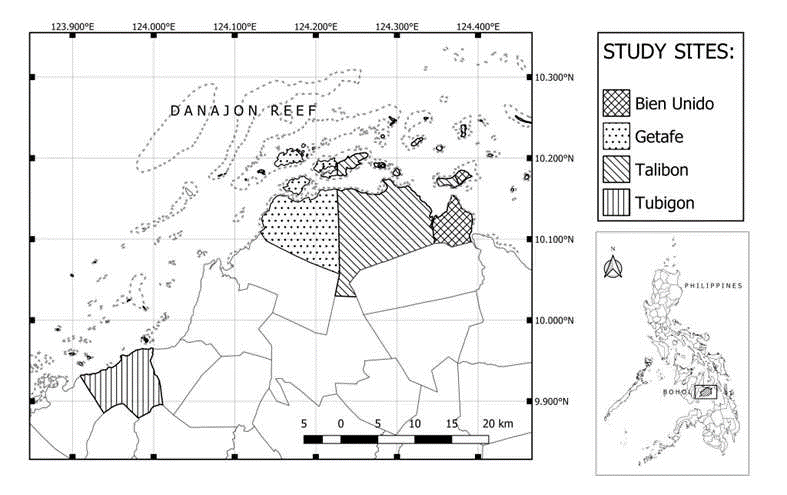
Danajon Bank spans the provinces of Bohol, Cebu, and Leyte. Within Bohol, Danajon Bank runs along the province’s northern coastline within the Visayan Sea, encompassing 10 municipalities. The area includes 41 small island communities (SICs) that face significant vulnerabilities to extreme weather events, climate change, and other hazards. These SICs are characterized by their geographic isolation from mainland-based services, delicate ecosystems, limited administrative capacity, and socio-economic challenges. For this study, a focus was placed on the 22 most densely populated SICs (Ubay, Mocaboc, Batasan, Pangapasan, Bilangbilangan, Bagongbanwa, Guindacpan, Calituban, Mahanay, Nocnocan, Sag, Cataban, Jao, Sagasa, Maomawan, Hingotanan East, Hingotanan West, Bilangbilangan West, Bilangbilangan East, Malingin, Jandayan, Alumar) within Danajon Bank to gain a deeper understanding of seaweed utilization. These specific communities are situated in the municipalities of Bien Unido, Getafe, Talibon, and Tubigon (Fig. 1).
Field Surveys and Data Collection
A reconnaissance survey was conducted to initially characterize the community. Data collection was done through interviews, focus group discussions (FGD), and key informant interviews (KII) using a structured questionnaire of six sections to conduct the interviews. The sections included informed consent, demographic profile, healing and medicinal uses, therapeutic diet, edible use, folk beliefs, and practical applications. A total of 103 locally registered SSF were identified and interviewed through a chain referral method. Questionnaires underwent a pilot and face validity to test its validity and reliability. In this study, healing and medicinal uses are defined as the practical application of seaweed by the SSF for treating ailments through oral or topical application. Therapeutic diet refers to the consumption of seaweed to support health or manage medical conditions. Edible uses encompass instances where seaweed is primarily utilized as food by the SSF.
Permits from the Local Government Units (LGUs) were acquired to comply with the regulations and guidelines set by the Inter-Agency Task Force for the Management of Emerging Infectious Disease (IATF) during the pandemic. Coordination with the Barangay Local Government Units (BLGUs) after the permits was obtained.
Identification of Seaweed Samples
A FGD was conducted to cross-check the seaweed species identified by the respondents during the interviews. This was done by showing them photos and seaweed samples, and also to gain a deeper understanding on the preparation process. The seaweed species verified by the SSF were brought to the laboratory and morphologically identified using the Field Guide and Atlas of Seaweed Resources of the Philippines by Trono (1997) and www.algaebase.org by Guiry and Guiry (2023). A key informant interview was also done with the oldest respondent in the SIC to gather insight regarding traditional practices and historical perspectives on seaweed utilization. This study was conducted for over five months, from October 2022 to February 2023.
Ethnobotany Index Analysis
Ethnobotanical indices, including Use Value (UV), Relative Frequency Citation (RFC), Relative Importance (RI), Informant Consensus Factor, and Fidelity Level. were determined using the 'ethnobotanyR' package in R and Microsoft Excel. These indices provide insights into the relative importance and frequency of seaweed utilization as perceived by the study's respondents.
Use Value (UV) was calculated to assess the relative importance of each seaweed species. The formula used was UVs = Ui/N, where Ui represents the number of use reports by each respondent for a particular seaweed, and N is the total number of respondents. High UV values indicate that a species was frequently cited by respondents, suggesting its significance, while low values indicate fewer citations or mentions. Each time a respondent cited or mentioned a species for any purpose, it was recorded as one citation.
Relative Frequency Citation (RFC) was used to measure how frequently each seaweed species was cited among the respondents. This was calculated using the formula RFCs = FCs/N, where FCs is the number of informants who cited a particular seaweed species, and N is the total number of respondents. Values close to 1 suggest that nearly all respondents cited the use of a specific seaweed, while lower values indicate that only a few, or sometimes only one, respondent mentioned its use or purpose.
Relative Importance (RI) was calculated to determine the overall significance of a seaweed species based on its reported uses. The formula used was RIs = [RFCs(max) + RNUs(max)]/2. Here, RFCs(max) is the maximum relative frequency citation, calculated as FCs/FCmax, where FCmax is the highest frequency citation observed among all species. RNUs(max) represents the relative number of use categories, calculated as NUs/NUmax, where NUmax is the number of use categories for the species with the highest reported uses. High RI values indicate that a particular seaweed species has numerous use reports, suggesting its broader importance, whereas low values suggest limited uses or purposes.
Informant consensus factor (ICF) was used to evaluate the consensus or homogeneity of the seaweed information from the informants using the following formula: ICF = (Nur − Nt)/(Nur − 1), where Nur is the number of use reports or citations for each category and Nt is the number of species used in that particular category.
Fidelity level (FL) was used to determine the percentage of the most preferred and valued seaweed for a particular use category using the following formula: FL = (Np/N) × 100, where Np is the number of informants who cited or mentioned the use of a seaweed for a particular disease category and N is the total number of informants who cited that species for any other use or purpose.
Statistical Analysis
Statistical analysis were used to measure and compare the seaweed utilization knowledge in terms of the number of seaweed species mentioned by the SSF when grouped according to gender, age, education, occupation, and location/community. Shapiro Wilk's test was used to test the normality of the data when grouped according to gender while Levene's was used to test the homogeneity of variances of the data when grouped according to age, education, occupation, and location/community. Based on the results of the normality and homogeneity tests, the non-parametric Mann–Whitney U and Kruskal-Wallis Tests were performed to test the differences at 0.05 level of significance using R Statistics.
Results and Discussion
SSF Knowledge on Seaweed Utilization
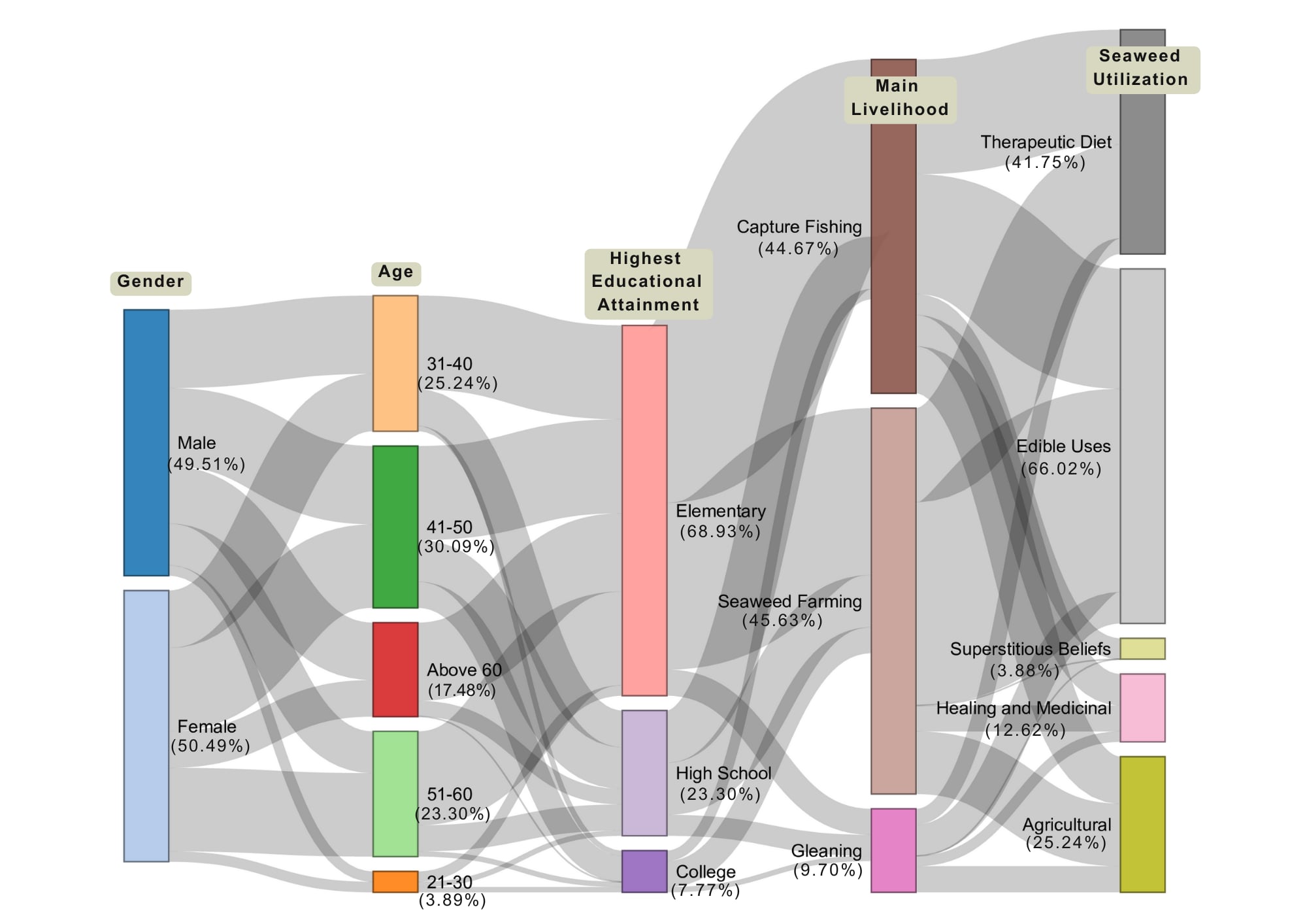
The analysis of seaweed utilization knowledge among small-scale fisherfolks (SSF) in the small island communities (SICs) of Danajon Bank revealed several key insights into the factors influencing their understanding and use of seaweeds. Gender did not significantly influence seaweed utilization knowledge, as indicated by the Mann-Whitney U Test (p = 0.28; Table 1), aligning with the nearly equal gender distribution among respondents (49.51% males and 50.48% females; Fig. 2). This equitable participation emphasizes the inclusive nature of seaweed utilization, where both men and women contribute to harvesting, processing, and value-added activities, consistent with findings from other seaweed-producing regions (Msuya & Hurtado, 2017; Mengo et al., 2023). Age also did not significantly affect knowledge (p = 0.58; Table 1), despite middle-aged individuals (41–50 years) predominating (Fig. 2). This suggests that while experience and long-term engagement with marine resources may play a role, age alone is not a decisive factor in shaping seaweed utilization knowledge. However, older individuals, as custodians of traditional knowledge, remain crucial in transmitting this knowledge to younger generations, ensuring its continuity (Berkes et al., 2000).
Educational attainment showed a potential trend in influencing knowledge (p = 0.06; Table 1), even though most respondents (68.93%) had only elementary education (Fig. 2). This highlights the predominance of traditional and practical knowledge over formal education in shaping seaweed utilization practices. The reliance on indigenous knowledge systems underscores the importance of cultural continuity in sustaining these practices, though limited formal education may hinder the adoption of new technologies (Gómez-Baggethun et al., 2013). Occupation emerged as a significant factor influencing seaweed utilization knowledge (p = 0.02; Table 1). Capture fishermen and seaweed farmers demonstrated greater familiarity with therapeutic diets and edible uses, reflecting their direct engagement with these resources, while gleaners possessed more knowledge of agricultural applications (Fig. 2). This occupational differentiation illustrates the diverse roles and expertise within SSF communities, where individuals specialize in different aspects of marine resource utilization, reinforcing the need for targeted capacity-building programs (Cinner et al., 2012). The lack of significant differences across communities (p = 0.27; Table 1) indicates a shared understanding and use of seaweeds, likely due to geographic proximity, cultural similarities, and widespread seaweed farming practices.
| Profile | Test Statistic | df | p-value |
|---|---|---|---|
| Gender | 1018.50 | na | 0.28 |
| Age | 2.86 | 4 | 0.58 |
| Education | 5.78 | 2 | 0.06 |
| Occupation | 11.34 | 4 | 0.02 |
| Location | 3.92 | 3 | 0.27 |
Seaweed Composition
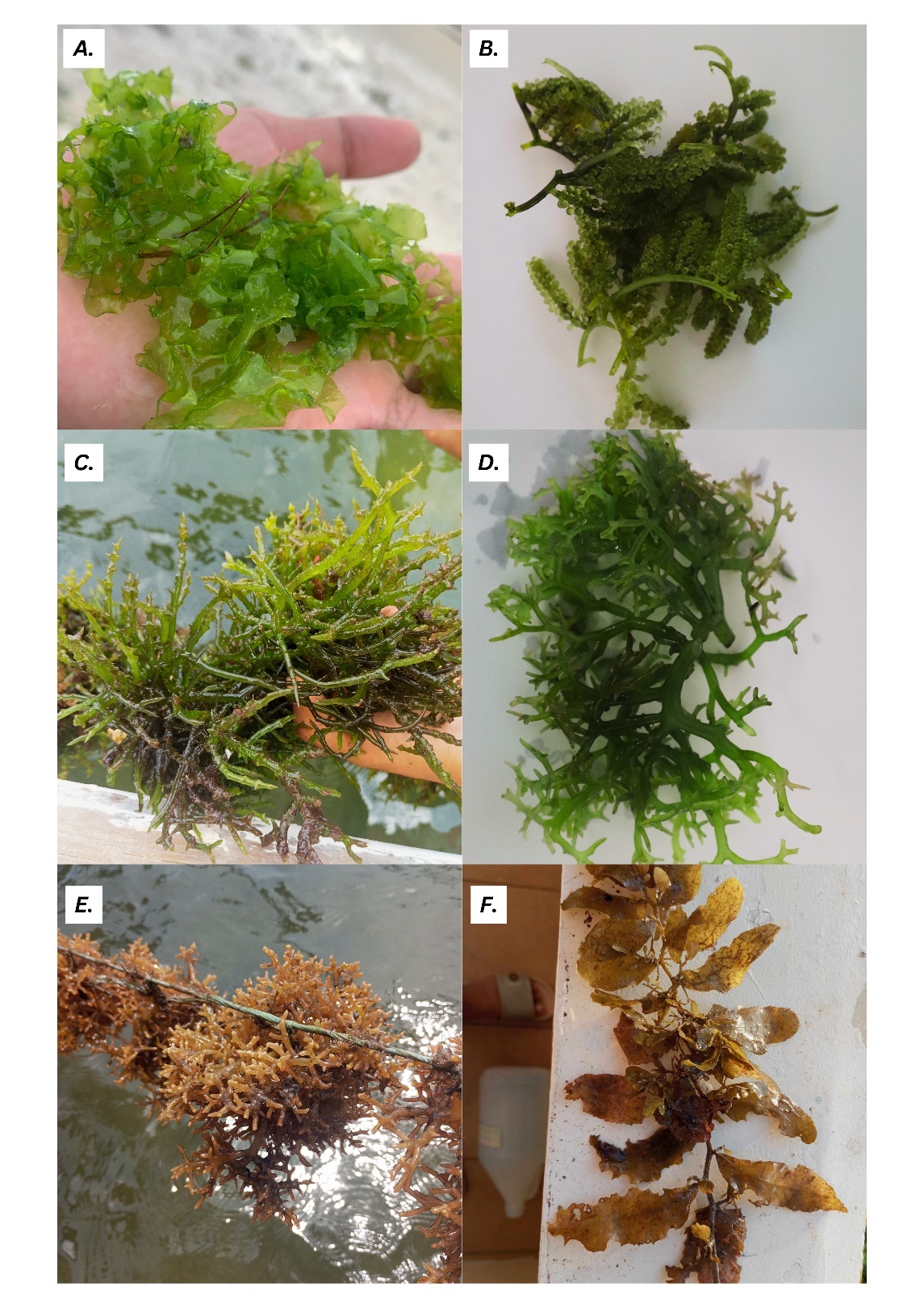
The study identified six species of seaweeds—Ulva lactuca, Caulerpa lentillifera, Eucheuma denticulatum, Kappaphycus alvarezii, Kappaphycus striatus, and Sargassum ilicifolium—as being utilized by small-scale fisherfolks (SSF) in Danajon Bank during the pandemic (Fig. 3, Table 2). These species belong to three phyla (Chlorophyta, Ochrophyta, and Rhodophyta) and four orders (Bryopsidales, Fucales, Gigartinales, and Ulvales), reflecting the taxonomic diversity of seaweeds in the area. This diversity aligns with global observations of seaweed biodiversity in tropical coastal ecosystems, where multiple phyla and orders coexist, supporting both ecological balance and local livelihoods (Lüning & Pang, 2003; Pereira, 2016).
The local names given to these seaweeds illustrate the cultural and linguistic diversity of the small island communities. For instance, Kappaphycus striatus is known by various names, including Bola-bola, Tuba-tuba, Sacol, Vanguard, Bisaya, Sparcle, and Salarium. These names often describe distinct characteristics of the seaweeds, such as their appearance, texture, or economic value. For example, 'Vanguard' suggests that this species is considered leading in seaweed farming, while 'Salarium' (related to salary) indicates its significant contribution to the income of SSF communities (Trono, 1997). Similarly, Kappaphycus alvarezii is referred to as Parang-parang, Cottonnii, Giant Cottonii, Guso, and Tambalang, reflecting regional and cultural influences on naming practices (Dumilag et al., 2022). Names like 'Bisaya' are used because this species is commonly found and used by people in the Bisaya region, highlighting the localized nature of traditional knowledge.
Preparation and Administration
The seaweed species cited in this study—Ulva lactuca, Caulerpa lentillifera, Eucheuma denticulatum, Kappaphycus alvarezii, Kappaphycus striatus, and Sargassum ilicifolium—were utilized by the small-scale fisherfolks (SSF) in Danajon Bank for a variety of purposes, including healing and medicinal uses, therapeutic diets, food, superstitious practices, and agricultural applications (Table 2). This multifaceted use of seaweeds highlights their ecological, cultural, and economic significance in supporting the livelihoods and resilience of SSF communities, particularly during the COVID-19 pandemic.
Five species—Ulva lactuca, Eucheuma denticulatum, Kappaphycus alvarezii, K. striatus, and Sargassum ilicifolium—were specifically noted for their medicinal and healing properties (Table 2). These seaweeds were used to treat various ailments through different preparations. For example, Ulva lactuca was employed for stomachaches and wounds using decoctions and cataplasms, while Eucheuma denticulatum served as a cataplasm for wounds and was made into ointments for quicker healing. Kappaphycus alvarezii and K. striatus were used for mouth ulcers and minor injuries, and Sargassum ilicifolium was utilized for hypertension, rashes, and jellyfish stings with decoctions, ointments, and cataplasms. These findings align with ethnobotanical studies in the Philippines, which have documented the therapeutic properties of seaweeds (Tito & Liao, 2000; Montaño et al., 2006). The bioactive compounds in these seaweeds, such as fucoidan, alginate, and carrageenan, are known for their anti-inflammatory, wound-healing, and antimicrobial properties (Karnjanapratum & You, 2011; Choi et al., 2020).
In addition to their medicinal uses, five species—Eucheuma denticulatum, Kappaphycus alvarezii, K. striatus, Sargassum ilicifolium, and Caulerpa lentillifera—were incorporated into therapeutic diets targeting ailments like goiter and ulcers (Table 2). These seaweeds were consumed raw, mixed with vinegar, or prepared into teas and salads to alleviate symptoms. The use of seaweeds in therapeutic diets demonstrates their nutritional value and role in addressing iodine deficiency disorders, particularly goiter (McHugh, 2003). The high iodine content of seaweeds like Kappaphycus striatus makes them an effective remedy for iodine deficiency, while their rich vitamin and mineral content supports overall health (Matanjun et al., 2009).
Seaweeds were also valued for their edible applications (Table 2). For example, Kappaphycus alvarezii was cleaned, dried, powdered, and mixed with flour and other ingredients to bake cakes. Eucheuma denticulatum, K. alvarezii, and K. striatus were dried, chopped, blended with seasonings, and deep-fried to make snacks. These seaweeds were also used to prepare jams, jellies, and noodles, showcasing their versatility as a food source. The preparation of traditional dishes like “kilaw” (vinegar-based salad) and pickled Caulerpa lentillifera reflects the cultural significance of seaweeds in Filipino cuisine (Montaño, 2002). During the pandemic, seaweeds served as an alternative to rice and other staples, demonstrating their role in food security (FAO, 2018).
Beyond their practical uses, seaweeds were integral to traditional and superstitious practices (Table 2). For example, Sargassum ilicifolium was ceremonially tossed into burning charcoal near fishing nets, believed to ensure good luck and a plentiful catch. Similarly, Kappaphycus alvarezii underwent a ritualistic drying and burning process with herbal plants, accompanied by prayers to dispel evil spirits and promote well-being. These practices highlight the deep cultural connection between SSF communities and their marine environment, as well as the role of seaweeds in local belief systems.
In agriculture, seaweeds were used as natural fertilizers and animal feed (Table 2). Species like Sargassum ilicifolium, K. striatus, and K. alvarezii were harvested, sun-dried, and pulverized for incorporation into commercial animal feeds for pigs and chickens. Ulva lactuca was directly fed to cultured fishes like milkfish in fish cages. Additionally, Eucheuma denticulatum, K. striatus, K. alvarezii, and S. ilicifolium were utilized as natural fertilizers, enriching soil nutrients and supporting plant growth. The application of seaweed extracts in agriculture has been widely studied, with evidence suggesting that they enhance soil fertility and plant growth due to their rich content of plant growth hormones, vitamins, and minerals (Silva et al., 2019; Kumar et al., 2012).
Ethnobotanical Indices
The ethnobotanical indices provide a clear picture of the utilization and cultural significance of seaweed species among small-scale fisherfolk in the Danajon Bank communities. Kappaphycus striatus stands out as the most critical species, with the highest Use Value (UV) of 0.72 and a perfect Relative Importance (RI) score of 1.00 (Table 3). Its extensive use is evident in its role as a staple side dish and its application in treating goiter, reflecting its dual importance in both dietary and therapeutic contexts. The high Relative Frequency Citation (RFC) of 0.40 further underscores its widespread recognition and frequent use. Trono (1997) highlights the nutritional and medicinal properties of Kappaphycus species, which aligns with its dominant role in local practices. Similarly, Aguilar-Santos and Doty (1968) emphasize the integration of seaweeds into traditional healing and dietary practices, reinforcing the significance of K. striatus in the community.
Kappaphycus alvarezii also holds substantial importance, with a UV of 0.53 and an RI of 0.90 (Table 3). Its cultural significance is particularly notable in rituals related to buyag and bountiful fishing, showcasing its value beyond practical applications. This dual role of K. alvarezii as both a resource and a cultural symbol reflects its deep-rooted presence in the community’s traditions. Rebours et al. (2014) discuss the broader cultural and economic roles of seaweeds in coastal communities, which resonates with the findings for K. alvarezii.
Caulerpa lentillifera exhibits moderate significance, with a UV of 0.41 and an RI of 0.49 (Table 3). While less prominent than the Kappaphycus species, it remains a meaningful component of local seaweed utilization, particularly as a food source. Hayashi et al. (2017) note the global importance of Caulerpa species as a nutritious food source, which supports its role in the dietary practices of the Danajon Bank communities.
In contrast, Ulva lactuca shows minimal use and significance, with the lowest values across all indices (Table 3). This suggests that while it is available, it is not widely integrated into local practices. McManus & Meñez (1997) observe that certain seaweed species, despite their ecological availability, may not be prioritized in local utilization due to cultural preferences or lack of traditional knowledge.
Eucheuma denticulatum demonstrates moderate importance with an RI of 0.64, though its lower UV and RFC indicate it is less frequently utilized (Table 3). Similarly, Sargassum ilicifolium shows moderate importance with an RI of 0.55, primarily used in healing applications and as fertilizer. Its lower UV and RFC suggest it is less frequently cited, possibly due to its specialized uses. Rebours et al. (2014) highlight the underutilization of certain seaweed species despite their potential benefits, which mirrors the findings for E. denticulatum and S. ilicifolium.
Overall, the findings emphasize the diverse roles of seaweed species in the Danajon Bank communities, ranging from dietary and therapeutic uses to cultural and spiritual practices. The dominance of Kappaphycus striatus and Kappaphycus alvarezii highlights their ecological and cultural importance, while the moderate to low indices of other species reflect varying levels of integration into local livelihoods. These insights emphasize the need for sustainable management practices to preserve these valuable resources, ensuring their continued availability for both practical and cultural purposes. Trono (1997) and Rebours et al. (2014) advocate for the sustainable use of seaweed resources, which is critical for supporting livelihoods and biodiversity conservation in coastal ecosystems.
| Taxonomic Group (Phylum, Order) | Scientific Name | Local Name | Disease or Purpose | Preparation and Administration | Use Value (UV) | Relative Frequency Citation (RFC) | Relative Importance (RI) |
|---|---|---|---|---|---|---|---|
| Chlorophyta, Ulvales | Ulva lactuca Linnaeus | Lumot | Wound | Ulva lactuca is crushed, pressed to remove excess juice and impurities, dried, and ground into powder. The powder is applied to wounds and left to dry, with applications repeated until a scab forms. | 0.02 | 0.04 | 0.20 |
| Stomachache | Freshly harvested U. lactuca is cleaned, boiled over medium-high heat to extract its beneficial juices, and the resulting solution is taken orally. | ||||||
| Animal Feed | Ulva lactuca is gathered from the sea, sorted by hand into small amounts, and thrown into fish cages where it is consumed by milkfish. | ||||||
| Fertilizer | Ulva lactuca t is freshly harvested from the sea and applied directly around plants, where it is allowed to dry and decompose. | ||||||
| Chlorophyta, Bryopsidales | Caulerpa lentillifera J. Agardh | Lato | Goiter | Caulerpa lentillifera is rinsed with seawater and eaten directly or mixed with vinegar for daily consumption. | 0.41 | 0.30 | 0.49 |
| Side Dish | Caulerpa lentillifera is cleaned, eaten directly or dipped in a mixture of vinegar, salt, onion, and ginger, and commonly served with rice and other dishes. | ||||||
| Pickle | Fresh C. lentillifera is rinsed, soaked in cold water for 10 minutes, drained, and placed in a sterilized jar with garlic, ginger, and chili pepper, then covered with a cooled pickling solution and refrigerated for at least 24 hours before serving. | ||||||
| Rhodophyta, Gigartinales | Eucheuma denticulatum (N.L.Burman) Collins & Hervey |
Butay, Milyon-Milyon, Espinosum |
Wound | Eucheuma denticulatum is chewed until mushy, mixed with a small amount of ointment, and applied to the affected area, then covered with a clean cloth until healed. | 0.26 | 0.17 | 0.64 |
| Goiter | Eucheuma denticulatum is boiled for 3 minutes, cooled, dipped in vinegar, and taken daily. | ||||||
| Side Dish | Eucheuma denticulatum, is washed, soaked in hot water for 1 minute, mixed with vinegar, salt, onion, ginger, and served with other dishes and rice. | ||||||
| Jelly | Eucheuma denticulatum is cleaned, cooked in a pot with water over low-medium heat until it melts, sweetened with sugar, and allowed to cool before serving. | ||||||
| Noodles | Eucheuma denticulatum is dried, rehydrated overnight, chopped, and cooked with water to form a smooth puree. Salt, egg, lye, and flour are mixed into the puree, and the dough is kneaded, rested, and rolled to the desired thickness before being cut into shapes, ready to be served as a viand or rice substitute. |
||||||
| Crackers | Eucheuma denticulatum is dried, chopped, blended with salt, pepper, sugar, onion, and garlic, mixed with flour to form dough, processed to the desired thickness, cut into chip-sized pieces, and deep-fried at low to medium heat to make snacks; E. denticulatum is dried, chopped, blended with water, sugar, onion, and garlic, mixed with flour to form dough, rolled out, shaped into circles, and deep-fried over low to medium heat. |
||||||
| Steamed Rice Cake | Dried E. denticulatum is blended and mixed with flour, condensed milk, fresh milk, melted butter, sugar, egg, and baking powder. The mixture is placed in molds and steamed over very low heat for 10 to 12 minutes, or until a toothpick comes out clean, then removed and served as snacks. | ||||||
| Pickle | Eucheuma denticulatum, is cleaned, chopped, mixed with chili pepper, garlic, onion, vinegar, salt, and sugar, and then marinated in a jar before eating. | ||||||
| Sweet Stew (Binignit) | Eucheuma denticulatum is cleaned, boiled for 2-3 minutes, chopped, and added to a sweet stew with banana, sticky rice, gabi, sago, coconut milk, and sugar, then eaten as a snack. | ||||||
| Jam | Dried Eucheuma denticulatum is boiled with garlic, soy sauce, rice vinegar, black pepper, and yeast, simmered for 45 minutes, blended, mixed with brown sugar, simmered for another 30 minutes to thicken, and then cooled and stored in an airtight container to be used as a bread spread. | ||||||
| Fertilizer | Eucheuma denticulatum is harvested, sun-dried for several days, then ground or chopped into small pieces and placed around plants. | ||||||
| Rhodophyta, Gigartinales | Kappaphycus alvarezii (Doty) L.M.Liao |
Parang-parang, Cottonnii, Giant, Cottonii, Guso, Tambalang |
Swollen Lymph Node | Fresh Kappaphycus alvarezii is finely chopped, mixed with oil, left to soak for a few days, and then applied. | 0.53 | 0.38 | 0.90 |
| Mouth Ulcer | Kappaphycus alvarezii is chewed into a paste and directly applied to the area, then reapplied as needed until it dries and healing occurs. | ||||||
| Goiter | Kappaphycus alvarezii is boiled, mixed with vinegar, onions, and tomato to make a salad, and eaten regularly. | ||||||
| Buyag | Kappaphycus alvarezii is harvested, sun-dried, chopped, and placed on burning charcoal with other herbs. Incantations are recited while the concoction is swiveled around the patient who is "gibuyagan," and the ritual ends when the fumes are gone and all incantations are finished. | ||||||
| Side Dish | Kappaphycus alvarezii is rinsed, briefly soaked in hot water, combined with vinegar, salt, onion, and ginger, and served with other dishes and rice. | ||||||
| Jelly | Kappaphycus alvarezii is cleaned, simmered in water over low to medium heat until it dissolves, sweetened with sugar, and then cooled before serving. | ||||||
| Noodle | Dried K. alvarezii is rehydrated overnight, chopped, and cooked with water into a smooth puree. Salt, egg, lye, and flour are mixed into the puree, then the dough is kneaded, rested, rolled to the desired thickness, and cut into shapes to be served as a viand or rice substitute. | ||||||
| Cracker | Kappaphycus alvarezii is dried, chopped, and blended with salt, pepper, sugar, onion, and garlic, then mixed with flour to form dough. The dough is processed to the desired thickness, cut into chip-sized pieces, and deep-fried at low to medium heat to make snacks. | ||||||
| Cake | Kappaphycus alvarezii is cleaned, dried, powdered, and mixed with flour and other cake ingredients, then blended and baked. | ||||||
| Animal Feed | Kappaphycus alvarezii is harvested from the sea, finely ground, and mixed into commercial feeds for pigs or chickens. | ||||||
| Fertilizer | Kappaphycus alvarezii is dried, ground into small pieces, and placed around plants to decompose and act as fertilizer. | ||||||
| Rhodophyta, Gigartinales | Kappaphycus striatus (F. Schmitz) L.M. Liao |
Bola-bola, Tuba-tuba, Sacol, Vanguard, Bisaya, Sparcle, Salarium |
Pricked Body Part | Kappaphycus striatus is chewed into a mushy mass and directly applied to the area, then reapplied as needed until it naturally dries and heals. | 0.72 | 0.40 | 1.00 |
| Mouth Ulcer | Kappaphycus striatus is chewed into a paste and applied to the affected area, with reapplication as needed until it dries and heals. | ||||||
| Goiter | Kappaphycus striatus is boiled and combined with vinegar, onions, and tomato to create a salad, which is consumed regularly. | ||||||
| Stomach Ulcer | Kappaphycus striatus is cleaned and eaten raw. | ||||||
| Side Dish | Kappaphycus striatus is rinsed, briefly soaked in hot water, then mixed with vinegar, salt, onion, and ginger, and served alongside other dishes and rice. | ||||||
| Jelly | Kappaphycus striatus is cleaned, simmered in water until it dissolves, sweetened with sugar, and cooled before serving. | ||||||
| Noodle | Kappaphycus striatus is rehydrated overnight, chopped, and cooked with water into a smooth puree. Salt, egg, lye, and flour are added to the puree, which is then kneaded, rested, rolled to the desired thickness, and cut into shapes to serve as a viand or rice substitute. | ||||||
| Cracker | Kappaphycus striatus is dried, chopped, and blended with salt, pepper, sugar, onion, and garlic, then mixed with flour to form dough. The dough is shaped into chip-sized pieces and deep-fried at low to medium heat to create snacks. | ||||||
| Steamed Rice Cake | Dried K. striatus is blended with flour, condensed milk, fresh milk, melted butter, sugar, egg, and baking powder. The mixture is poured into molds, steamed over very low heat for 10 to 12 minutes until a toothpick comes out clean, then removed and served as snacks. | ||||||
| Pickle | Kappaphycus striatus is cleaned, chopped, mixed with chili pepper, garlic, onion, vinegar, salt, and sugar, and then marinated in a jar before consumption. | ||||||
| Jam | Dried K. striatus is boiled with garlic, soy sauce, rice vinegar, black pepper, and yeast, simmered for 45 minutes, blended, mixed with brown sugar, and simmered for another 30 minutes to thicken. It is then cooled and stored in an airtight container as a bread spread. | ||||||
| Animal Feed | Kappaphycus striatus is harvested from the sea, finely ground, and mixed into commercial feeds for pigs or chickens. | ||||||
| Fertilizer | Kappaphycus striatus is harvested, sun-dried, slightly crushed into small pieces, and then placed around plants to decompose and provide nourishment. | ||||||
| Ochrophyta, Fucales | Sargassum ilicifolium (Turner) C. Agardh | Samo | Hypertension | Blades of Sargassum ilicifolium are cleaned, boiled until mushy, mixed with sugar, and consumed twice daily. | 0.25 | 0.22 | 0.55 |
| Jellyfish Sting | Fresh S. ilicifolium is applied directly to jellyfish stings as a first-aid treatment. | ||||||
| Rash | Fresh S. ilicifolium is finely chopped, mixed with oil, soaked for a few days, and then applied by rubbing. | ||||||
| Goiter | The whole thallus of S. ilicifolium is dried and brewed into tea. | ||||||
| Bountiful Fishing | Freshly harvested Sargassum ilicifolium is sun-dried for a few days, then tossed onto burning charcoal near a line of fishing nets. The smoke is directed toward the nets while incantations are recited to request good luck and a bountiful fishing harvest. | ||||||
| Animal Feed | Sargassum ilicifolium is harvested fresh, sun-dried until all water and salt evaporate, then pulverized by grinding or crushing. The resulting powder is mixed into commercial feeds for pigs and chickens. | ||||||
| Fertilizer | Sargassum ilicifolium is harvested from the sea, sun-dried for several days, and then swiveled around the plant to decompose and provide nourishment. |
| Use Category | Purpose Under Each Category | Number of Used Taxa | Use Report | Informant Consensus Factor (ICF) | Fidelity Level (FL) | Most Cited Taxa | Use or Purpose of the Most Cited Taxa |
|---|---|---|---|---|---|---|---|
| Healing and Medicinal | Wound (3), Swollen Lymph Node (1), Mouth Ulcer (2), Pricked Body Part (1), Hypertension (2), Jellyfish Sting (1), Rash (3), Stomachache (1) | 5 | 14 | 0.69 | 12.62 | Sargassum ilicifolium | Rash |
| Therapeutic Diet | Goiter (53), Stomach Ulcer (1) | 5 | 54 | 0.92 | 44.66 | Kappaphycus striatus | Goiter |
| Edible | Side Dish (88), Cake (1), Jelly (7), Noodle (4), Cracker (11), Steamed Rice Cake (9), Pickle (5), Sweet Stew (2), Jam (3) | 4 | 130 | 0.98 | 60.19 | Kappaphycus striatus | Side Dish |
| Superstitious Beliefs | Buyag (1), Bountiful Fishing (1) | 2 | 2 | 0.00 | 25.24 | Kappaphycus alvarezii Sargassum ilicifolium |
Buyag Bountiful Fishing |
| Agricultural | Animal Feed (9), Fertilizer (19) | 5 | 28 | 0.85 | 1.94 | Sargassum ilicifolium | Fertilizer |
Conclusion
This study sheds light on the multifaceted role of seaweed in the livelihoods of small-scale fisherfolks (SSF) in the small island communities (SICs) of Danajon Bank, particularly during the COVID-19 pandemic. The identification and documentation of six seaweed species utilized for food, medicine, rituals, and agriculture demonstrate the ecological and cultural richness of this coastal ecosystem. Kappaphycus striatus and Kappaphycus alvarezii emerged as the most culturally and economically significant species, reflecting their integration into local diets, healing practices, and traditional beliefs. The findings highlight the resilience of SSF communities in adapting to socio-economic disruptions by leveraging local marine resources. However, the study also reveals untapped potential in seaweed utilization, emphasizing the need for further research into their biochemical properties and commercial applications. Sustainable management practices are essential to preserve Danajon Bank’s unique ecosystem while supporting the well-being of its communities. This study provides a foundation for informed interventions that balance conservation goals with the socio-economic needs of SSF, ensuring the long-term sustainability of this valuable coastal environment.
Acknowledgements
We want to thank the Department of Science and Technology - Philippine Council for Agriculture, Aquatic and Natural Resources Research and Development (DOST-PCAARRD) for the research grant given to the project "Impact of Covid-19 Pandemic on Small-Scale Fisherfolk in Small Island Communities in Danajon Bank, Central Philippines". We also thank the Central Visayas Agriculture, Aquatic and Natural Resources Research and Development Consortium (CVAARRDEC) for the project team's assistance before and during the study. We are also grateful to Ms. Alma C. Mondigo, Ms. Kimcharlot M. Cagampang, Mr. Jonathan C. Bayron, Mr. John Kenneth G. Deloso and Joemar F. Galvadores for helping us gather the data needed in the field.
References
- Aguilar-Santos, G., Doty, M.S., 1968. Studies on the ecology and economic importance of seaweeds in the Philippines. Philipp. J. Sci. 97: 145-160.
- Berkes, F., Colding, J., Folke, C., 2000. Rediscovery of traditional ecological knowledge as adaptive management. Ecol. Appl. 10: 1251-1262.
- Carpenter, K.E., Springer, V.G., 2005. The center of the center of marine shore fish biodiversity: the Philippine Islands. Environ. Biol. Fish. 72: 467-480.
- Choi, J.S., Lee, J.H., Kim, H.J., 2020. Bioactive compounds from seaweeds and their potential applications in medicine and agriculture. Mar. Drugs. 18: 331.
- Christie, P., White, A.T., Deguit, E., 2006. Starting point or solution? Community-based marine protected areas in the Philippines. J. Environ. Manage. 80: 441-454.
- Cinner, J.E., Daw, T., McClanahan, T.R., 2012. Socioeconomic factors that affect artisanal fishers’ readiness to exit a declining fishery. Conserv. Biol. 23:124-130.
- Dumilag, R.V., Javier, J.C., 2022. Ethnobotanical studies on seaweeds in the Philippines: A review. Philipp. J. Sci.151: 45-60.
- Dumilag, R.V., Montaño, M.N.E., Liao, L.M., 2022. Seaweed diversity and utilization in the Philippines. J. Appl. Phycol. 34: 1-15.
- FAO, 2018. The global status of seaweed production, trade, and utilization. FAO Fish. Aquac. Circ.124: 1-120.
- Gillespie, K.M., 2021. Marine biodiversity and conservation in the Danajon Bank, Philippines. Mar. Policy. 123: 104321.
- Gómez-Baggethun, E., Reyes-García, V., Olsson, P., 2013. Traditional ecological knowledge and community resilience to environmental extremes: A case study in Doñana, Spain. Glob. Environ. Change. 23: 255-265.
- Green, S.J., White, A.T., Christie, P., 2004. Integrated coastal management in the Philippines: Testing new paradigms. Coast. Manage. 32: 219-233.
- Gupta, S., Abu-Ghannam, N., 2011. Recent developments in the application of seaweeds or seaweed extracts as a means for enhancing the safety and quality attributes of foods. Innov. Food Sci. Emerg. Technol. 12: 600-609.
- Hayashi, L., Hurtado, A.Q., Msuya, F.E., 2017. Seaweed cultivation in the Asia-Pacific region: Current trends and future challenges. J. Appl. Phycol. 29: 567-577.
- Hill, R., 2011. Seaweed farming in the Philippines: A review of its development and potential. Aquac. Res. 42: 1785-1796.
- Karnjanapratum, S., You, S.G., 2011. Antioxidant activities and functional properties of seaweed protein hydrolysates. Food Chem. 129: 1239-1246.
- Kumar, M., Gupta, V., Kumari, P., 2012. Seaweed as a biofertilizer: A review. J. Plant Nutr. 35: 873-892.
- Lüning, K., Pang, S., 2003. Mass cultivation of seaweeds: Current methods and future trends. J. Appl. Phycol. 15: 115-119.
- Matanjun, P., Mohamed, S., Mustapha, N.M., 2009. Nutritional properties of tropical seaweeds. J. Appl. Phycol. 21: 451-456.
- Mateo, J.P., Trono, G.C., Luhan, M.R.J., 2021. Seaweed farming in the Philippines: Challenges and opportunities. J. Appl. Phycol. 33: 1-12.
- McHugh, D.J., 2003. A guide to the seaweed industry. FAO Fish. Tech. Pap. 441: 1-105.
- McManus, J.W., Meñez, L.A.B., 1997. Coral reef ecosystems in the Philippines: Status and management. Mar. Pollut. Bull. 34: 1001-1008.
- Mengo, E., Hurtado, A.Q., Msuya, F.E., 2023. Gender roles in seaweed farming: A case study from Tanzania. J. Appl. Phycol. 35: 1-10.
- Montaño, M.N.E., 2002. Seaweed utilization in the Philippines: A review. Philipp. J. Sci. 131: 1-15.
- Montaño, M.N.E., Tito, O.D., Liao, L.M., 2006. Ethnobotanical studies on seaweeds in the Philippines. Philipp. J. Sci. 135: 1-10.
- Msuya, F.E. and Hurtado, A.Q., 2017. The role of women in seaweed farming in Tanzania. J. Appl. Phycol. 29: 567-577.
- Pereira, L., 2016. Seaweeds as source of bioactive compounds and their potential applications. Mar. Drugs. 14: 1-20.
- Rebours, C., Marinho-Soriano, E., Zertuche-González, J.A., 2014. Seaweed aquaculture: Cultivation technologies, challenges, and opportunities. J. Appl. Phycol. 26: 1-20.
- Sathishkumar, R., Kumar, K. R., Saravanakumar, N., 2021. COVID-19: Lives and Livelihoods of Seaweed Farming and its Impacts, in: Devi, K., Sivasubramanian, K., Raju, V., Jaheer, M.K.P. (Eds.), Virtual National Conference on the Changing Economic Models and Trends in the Post COVID-19 World. Excellent Publishing House., New Delhi, pp. 89-97.
- Seronay, R.A., Samonte, G.P.B., Gillespie, K.M., 2014. Biodiversity and conservation of marine life in Danajon Bank, Philippines. Mar. Biodivers. 44: 1-12.
- Seronay, R.A., Samonte, G.P.B., Gillespie, K.M., 2015. Ecological and economic importance of Danajon Bank, Philippines. Mar. Policy. 51: 1-10.
- Silva, P.C., Alves, R.J. and Pereira, L., 2019. Seaweed extracts as biostimulants in agriculture. J. Appl. Phycol. 31: 1-15.
- Smit, A. J., 2004. Medicinal and pharmaceutical uses of seaweed natural products: A review. J. Appl. Phycol. 16: 245-262.
- Sutcliffe, S., Lau, J. D., Barnes, M., Mbaru, E., Wade, E., Hungito, W., Muly, W., Wanyonyi, I.M., Muthiga, N.A., Cohen, P.J., Cinner, J., 2023. COVID-19 impacts on food systems in fisheries-dependent island communities. Ecol. Soc. 28: 1.
- Swinhoe, R., 1860. On the Chinese egret (Egretta eulophotes). Ibis. 2: 1-5.
- Tito, O.D., Liao, L.M., 2000. Ethnobotanical studies on seaweeds in the Philippines. Philipp. J. Sci. 129: 1-10.
- Trono, G.C., 1990. Seaweed resources of the Philippines. Philipp. J. Sci., 119: 1-15.
- Trono, G.C., 1997. Field guide and atlas of seaweed resources of the Philippines. Philipp. J. Sci. 126: 1-200.