
Fishers’ Perceptions of the Climate Change Impact on Fishing in Small Islands of Wakatobi
 10.21463/jmic.2025.14.2.20
Abstract
Local ecological knowledge regarding climate change in Wangi-Wangi Island, Wakatobi remains largely unexplored, creating an important research gap concerning how indigenous insights influence community responses to climate change impacts. This is particularly critical for small-scale fisheries communities whose limited resources heighten their vulnerability. Incorporating knowledge from local fishermen is essential for improving the sustainability of these fisheries, which form the foundation of long-term community livelihoods. This study employed methodological triangulation, combining secondary data analysis with primary data collected through in-depth interviews and focus group discussions involving small-scale fishers from five vulnerable villages in Wakatobi, Southeast Sulawesi, Indonesia. The research aimed to identify factors contributing to transformative behavior and adaptive capacities among small island communities facing climate change impacts on their livelihoods. Findings revealed significant anomalies in local weather and climate patterns over the past decade. Participants primarily recognized climate change through seasonal shifts (53%), most notably manifested in unusual wind patterns regarding both direction and speed (64%). The perceived impacts included coral reef ecosystem degradation (61%) and sea level rise (29%), with 55% of participants reporting these changes within the past two years. Additionally, 14% of participants indicated these phenomena had persisted for approximately ten years.
Keywords
climatic change, fisher knowledge, small-scale fisheries, Biosphere Reserve
1. Introduction
The harvesting of marine biodiversity has a substantial influence on small island coastal populations in tropical waters. This is primarily owing to the fact that these communities are dependent on marine resources for their means of subsistence, food security, and coastal protection (Fleming et al., 2024; Maharja et al., 2023b). This impact is further magnified by climate change, which exacerbates the consequences of overfishing and pollution on ecosystems that are already susceptible with regard to their vulnerability (Culhane et al., 2024). Small-scale fishers rely heavily on local ecological knowledge (LEK) of fishing activity to support their daily livelihoods (Stacey et al., 2021). However, the significant challenge of climate change forced them to respond and adapt in order to maintain their future livelihood. Climate change is a global issue that significantly impacts various aspects in human lives, particularly in those reliant on sectors such as agriculture and fisheries, which are vital to the well-being of rural communities in developing nations (Adger et al., 2003). We expect this trend to persist and escalate at rates previously unseen in the next century. Climate change has already altered terrestrial, freshwater, and ocean ecosystems globally, with multiple impacts evident at regional and local scales (Pörtner et al., 2023).
From a geographical perspective, Wangi-Wangi Island, as part of Wakatobi regency, is located in the southern region of the equator, covering a latitude range from 50°14’ to 60°03’ S (with a length of 160 km) and a longitude range from 123°40’ to 124°03’ E (spanning a width of 120 km). Its northern and eastern borders connect to the Banda Sea, while the southern and western boundaries are adjacent to the Flores Sea. The northwestern section includes Button Island within the Southeast Sulawesi Province. Wakatobi Regency comprises four main islands, Wangi-Wangi, Kaledupa, Tomia, and Binongko, which form the acronym Wakatobi. As part of the world’s coral triangle region, the Islands feature a rich array of ecosystems housing numerous marine and coastal species, including seagrasses, coral reefs, edible fish, seabirds, turtles, cetaceans, and mangroves.
In 1995, the Government of the Republic of Indonesia, under the authority of the Minister of Forestry, designated Wakatobi as a Marine Nature Park (WNP as per Decree Number 462/KPTS-II/1995). This decision recognized the Wakatobi Islands as one of the world's regions with the most comprehensive marine biodiversity. Subsequently, in 1996, its status was elevated to that of a conservation area, officially becoming a National Park (Decree Number 393/KPTS-VI/1996). The Minister of Forestry's Decree Number 7651/KPTS-II/2002, dated August 19, 2002 (BPS Wakatobi, 2022).
The sub-district of Wangi-Wangi is home to approximately 61,283 residents who reside in 41 villages. The diverse population comprises ethnic groups such as indigenous Wakatobi, Bugis, Buton, Java, and Bajau. Some of the inhabitants rely on marine resources for their livelihoods, with the fisheries sector being one of the sources of employment, mainly targeted to deep-sea, coral, and coastal fishes. Fishing activity plays a crucial role in sustaining the local economy. Meanwhile, the agricultural sector primarily provides for domestic and subsistence needs, cultivating crops like cassava, maize, tubers, and beans (BPS Wakatobi, 2022).
Fishers contribute a small number of 2,135 (<5%) of the Island community's livelihoods (BPS Wakatobi 2022) and are categorized as small-scale fisheries (SSF) and mostly own a fishing boat less than 10 gross tonnage (GT) (Law (UU) no. 7, 2016), operating on a daily scale which rely on harvesting the biodiversity of sedentary and migratory marine species. They play a role in contributing to food security, sustaining livelihoods, and providing and maintaining existing cultural characteristics, including a broad spectrum of traditional local knowledge. The coastal communities of small islands are primarily low-income, relies heavily on marine edible biodiversity and faces socio-economic vulnerability due to the effects of climate change (Macusi et al., 2021) (Maharja et al., 2023a). Many Indigenous communities depend on livelihoods rooted in the sustainable utilization and stewardship of natural resources within their local environments (Ford et al., 2020). These livelihoods encompass subsistence farming, swidden agriculture, animal husbandry, artisanal fishing, hunting, and gathering (UNESCO, 2014). They operate on a small fishing boat and require specialized skills acquired through hands-on experience (N’Souvi et al., 2024).
Traditional livelihoods are diverse and frequently linked to intricate social and land tenure systems (Murken and Gornott, 2022). These arrangements are crucial in resource management and enhance societal resilience during changing conditions (Nakashima et al., 2012). People across cultures, worldwide, are now experiencing the effects of changing climate. The impact of environmental change on culture is most evident at a local scale, particularly in the context of human-biota interactions occurring at various times in various places (Wolverton et al., 2014), which hinders them in performing traditional livelihood practices that are essential in preserving collective identities and strengthening social cohesion (Maharja et al., 2023a). Within this context, this study is aimed (1) to determine to what extent the Wangi-Wangi coastal community, as part of Wakatobi National Park, a small island surrounded by a marine ecosystem, will be affected by several indicators of climate change; (2) Gain knowledge about climate change and mitigation strategies for coastal communities to maintain daily life. Those factors are expected to help explain how they try to transform behavior and adapt when facing challenges with the impacts of climate change on their livelihood. We structured to elicit local knowledge, perceptions, and individual experiences on changing weather and climatic patterns.
2. Methodology
This study employs an ethnobiological methodology, considering both emic and ethical perspectives. We have tailored the examination data on communities dependent on marine and coastal ecosystems, adhering to the guidelines (Albuquerque et al., 2017). This research primarily relied on interviews and secondary data to understand how climate change affects marine living resources. Through semi-structured interviews, fishermen's understanding of weather patterns and their influence on fishing was studied. This knowledge, similar to the ecological insights of fishers serve to reduce uncertainties and improve the relevance and trustworthiness of situations involving poor data analysis. Fishers' knowledge (FK) encompasses a wealth of experiential knowledge, incorporating insights into ecology, resources, ecosystems, fishing practices, fishing communities, livelihoods, governance, and markets, along with the dynamic interconnections among these elements. A specific social, cultural, and geographical context cultivates this knowledge (Cowie et al., 2020).
2.1. Study area
The research was conducted out in the Wangi-Wangi subdistricts, situated in the administrative area of Wakatobi Regency, Southeast Sulawesi. Additionally, we determined that the majority of the ethnic population worked as fishers. This paper employed the data obtained by in-depth interviews and semi-structured questionnaires in focus group discussions with small-scale fishers of five vulnerable coastal villages of the western part of Wangi-Wangi Island: Mola Samaturu, Mola Bahari, Mandati I, Liya one Melangka and Onowe Korowa villages (Fig. 1). Observation was carried out during strong winds and high waves of the southeast monsoon in June and August 2023. The Wakatobi National Park (WNP) is in the heart of the “Coral Triangle”, a Southeast Asian region known for its rich marine biodiversity. Within the WNP, coral reefs thrive, and research indicates that the diversity and abundance of scleractinian corals in the park are comparable to other highly diverse areas (Bell et al., 2019).
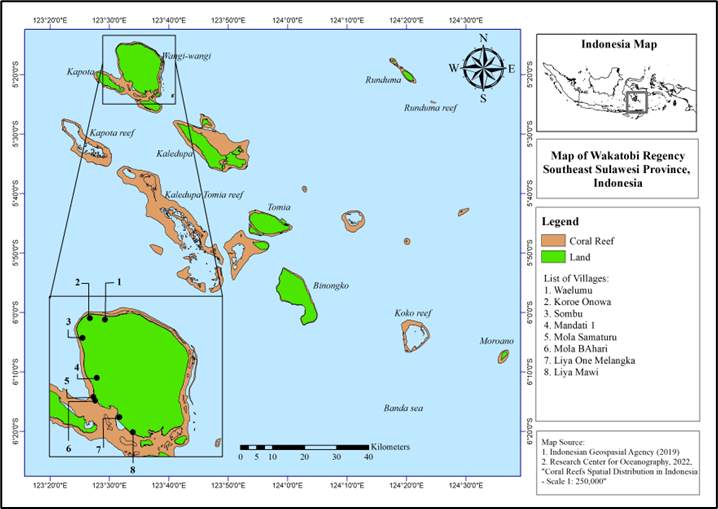
The island, surrounded by coral and deep-sea slope reefs (< 1 nmi from the shoreline), dominates coastal waters in the eastern part, while shallow reefs occur in the southwestern part. There are 31 coastal villages and nine non-coastal villages. Most of the population lives in the western and southwestern parts. The villagers in Bajo Mola village (southwestern part) had houses built on coral mined from local reefs (Nelson et al., 2018) (Ariando and Arunotai, 2022) (Ariando, 2023). The topography of the coastal area was a relatively narrow shelf fringed by a coralline island or coral bank, meaning the coastal morphology was dominated by a shelf-slope with a sharply steep coastline.
2.2. Data collection and analysis
We conducted face-to-face, semi-structured interviews with the fishers. We applied a simple random sampling technique to select respondents to participate in the five villages mentioned above. Respondents aged more than 15 years were considered adults in the community and had more than sufficient background experience harvesting marine living resources. We treated the individual respondents as informants, using interviews and Focus Group Discussions FGDs as the primary data sources. We conducted interviews with seven respondents using open questionnaires and 111 respondents using closed questionnaires. The respondents represented various activities to support their livelihoods, including deep-sea tuna fishers, mixed fishers in both deep and shallow coral waters, and seaweed farmers.
The questionnaire inquires about respondents' perceptions regarding the dynamic of climate elements in their daily activities and how they adapt to climate change. We conducted an FGD with 25 key informants, representing all government agencies in Wakatobi Regency, to discuss programs, problems, and government support for coastal communities that utilize natural resources, particularly marine living resources and fisheries. The protocols to conduct research activities involving human participants have received ethical approval from the Research Ethics Committee for Social Sciences and Humanities of the National Research and Innovation Agency (BRIN) Indonesia (No. 135/KE.01/SK/04/2023), approved on 10 April 2023. Informed consents were received from all participants before data collection activities.
In addition to primary qualitative data, the study also utilized secondary data sets to triangulate the findings. The district annual reports significantly illustrate demographics and livelihoods. The climatic data series, specifically temperature and rainfall, were obtained from the Meteorological, Climatological, and Geophysical Agency (BMKG) Beto Ambari weather station to observe the local variations in these parameters. The study used a data-limited, semi-quantitative approach and was shown through graphs and tables to describe the data and find trends, patterns, and relationships that would help summarize the large set of data and effectively share the results.
3. Results and Discussion
The results of our study revealed that the participants perceived that they were generally able to observe more frequent extreme events, such as large waves, intense storms, heavy rainfall, increasing air temperatures, and rising sea levels, are due to climate change phenomena. These changes will likely primarily impact the small-scale fishing communities along the coast (Kifani et al., 2018). People often describe small island systems as self-contained entities that require careful management of limited resources, such as water, plants, and animals. While this somewhat idealized interpretation overlooks the realities of inter-island trade and the seasonal presence of migratory species, numerous instances in small islands showcase sophisticated traditional resource management practices.
These regimes have historically played and continue to play a vital role in governing the social and ecological aspects of resource production, access, harvesting, storage, and distribution. This LEK aspect is evident, for instance, in the small islands of the Pacific, where many remote and geographically isolated communities persist in practicing agriculture and fisheries in adherence to traditional resource management and governance systems (Nakashima et al., 2012).
Communities residing in archipelagic regions and relying on natural resources for their livelihoods are typically susceptible to shifts in climatic conditions. Therefore, it is crucial to understand these communities' knowledge and adaptive capacities regarding climate changes affecting their surroundings (Munawaroh et al., 2018), which can also inform the formulation of strategies for communities’ adaptation to climate change.
3.1 Demographic characteristics
Fishers navigate a complex web of uncertainties that stem from both oceanic conditions and the social fabric of their communities. When they extend their harvesting activities to land-based resources, they encounter similar patterns of unpredictability that characterize their marine operations. The annual series of weather station data for Betoambari were analyzed to illustrate the climatic parameters of the area. Climate change is a global issue that has gained international attention and is one of the themes defined in the United Nations Sustainable Development Goals (SDGs), specifically SDG 13 (Climate Action). Additionally, SDG 14 includes the theme of maintaining marine ecosystems. Wangi-Wangi Island, with an area of 191 km2, is the largest among the four neighboring subdistrict islands and administratively under the Wakatobi Regency, which 3 has 8 smaller islands (17 of them were occupied). The population is approximately 61,283, with a growth rate of 1.82%. Of these, 66% of the population belongs to the productive group, defined as those aged 15–65 years old, 28% is potentially productive, and 5% is low in productivity level. There is no available data regarding educational background for communities residing in Wangi-Wangi Island. However, in Wakatobi's regency, the majority of the population (44%) had no formal education. Approximately 76,000 individuals within the community have an educational background, with 21% having completed high school or possessing academic/university-level education. The community earns its livelihood from a variety of fields. The majority of these jobs (49%) were in the services sector (both government and private), followed by agriculture (36%) and manufacturing (15%) (BPS Wakatobi, 2022).
There seemed to be positive growth in employment sector within the regency. For example, the ratio of dependence to productive population was relatively high (70%) ten years ago (BPS Wakatobi, 2014). In recent years, a decrease in this ratio to 50% occurred (BPS Wakatobi, 2024), particularly due to the significant development of tourist destinations that provide job opportunities for local residents then the recovery post pandemic were slow. The main livelihoods are agriculture, forestry, and fisheries (28.3%), construction (17%), trade (15%), mining and quarrying (14%), while other business fields contribute < 10%. Agricultural (vegetable, fruit, ornamental, and medical plants) and traditional plantation estates such as coconut, cashew, coffee, and cocoa contribute to their livelihood. A total planted area of 701 ha with 495 tons of crop production was harvested in 2021, with coconut (63%) and cashew (33%) being the primary crop production (BPS Wangi-Wangi, 2022).
The role of harvesting natural resources as a basis for land productivity livelihoods in terrestrial areas over the last ten years has diminished, with wildly fluctuating corn plantations from 18 kg/ha (2012) to 123 kg/ha (2017), then dropping to 27 kg/ha (2022); cassava from 217 kg/ha (2013) to 3,667 kg/ha (2017), then dropping to 204 kg/ha (2022); while sweet potatoes increased from 74 kg/ha to 191 kg/ha. The decline in the plantation area, from the most prominent 3,800 ha in 2017 to 262 ha in 2020, likely contributes to this fluctuation. Utilizing coastal and marine living resources is part of the livelihood of coastal communities. The number of people working in capture fisheries was about 6.2% of the total population in 2013, dropping to 3.2% in 2022. Still, the number of motorized and outboard motorized boats increased from 1,855 units (2013) to 3,633 (2022), with production volume increasing from 7,384 tons (2014) to 21,412 tons (2022). In addition, seaweed cultivation activities carried out by coastal communities have increased in the last five years, with a production volume of 2,800 to 3,900 tons/year.
3.2 Socio-demographic and characteristics of respondent
The majority (34%) of the interviewed fishers were aged between 41 and 50 years old. The range of age of all respondents was betweeb 17 to 70 years, and averaging 42.4 ± 10.8 years. Their average length of stay of the communities in the region was approximately 32 ± 16 years, varying from 2 to 70 years. They had been engaged in fishing for durations ranging from 1 to 47 years, with an average of 16.9 ± 11.4 years. These fishers worked from 2 to 18 hours daily, averaging 9.3 ± 3.8 hours. The number of family members they typically had ranged from 1 to 8, with an average of 3.9 ± 1.6 members. Table 1 describes the respondent profile.
Fisher communities on Wangi-Wangi Island generally divide their production activities into four groups: multi-gear users, speargun users, tuna-targeted fishing gear users, and seaweed farmers. 1) The Butonese Wakatobi ethnic community usually carries out mixed fish fishing. Fishermen from this group catch fish in the deep sea and the sea near the coast; therefore, the fish they get usually vary, such as skipjack, small pelagic, demersal, crustaceans, and coral fishes. This group occasionally engages in other occupation, such as farming; 2) Speargun fishers who are ethnic Butonese Wakatobi and capture a variety of reef fish, including cockatoos, emperors, rabbit fish, and groupers; 3) Tuna fishers typically from the Bajo ethnicity, possess a remarkable ability to catch fish in the deeper sea; 4) Seaweed cultivators typically originate from the Buton Wakatobi ethnicity.
| Variable (year) | Age (n) | % | Resident time (year) | % | Fishing Experience (years) | % |
|---|---|---|---|---|---|---|
| <10 | 13 | 12.1 | 38 | 37.3 | ||
| 11–20 | 1 | 0.9 | 14 | 13.1 | 30 | 29.4 |
| 21–30 | 17 | 16.0 | 30 | 28.0 | 22 | 21.6 |
| 31–40 | 29 | 27.4 | 14 | 13.1 | 7 | 6.9 |
| 41–50 | 36 | 34.0 | 19 | 17.8 | 5 | 4.9 |
| 51–60 | 16 | 15.1 | 13 | 12.1 | ||
| 60+ | 7 | 7 | 4 | 3.7 |
In production activities, the four coastal community groups depend on wind and waves. People in this region understand well the best time for them to fish. For example, tuna fishers in Mola Bahari Village prefer fishing from September to October because the waves are not too high and the sea is shady, whereas from November to February, the sea is dangerous.
3.3. Fishers’ perception of the evolution of climatic parameters
Numerous studies emphasize the significance of integrating fishers' knowledge into fisheries and climate sciences, encompassing terms such as "ecological and technological knowledge" (Grant and Berkes, 2007). Utilizing local ecological knowledge (LEK) proves valuable in deducing the ecological interactions of organisms frequently utilized by human populations (Huntington, 2000). The local ecological knowledge of fishers can also provide insights into fish diets and even the trophic levels of fish. Moreover, the LEK of fishers can serve as a wellspring for generating new biological hypotheses and guiding management actions, particularly in situations where financial resources are limited and fisheries are extensive (Pereyra et al., 2021). We identified groups by age, fishing experience, local knowledge, and projected change in their local weather condition. In accordance with (Menon et al., 2016), we prioritized the age and fishing experience of fishers before setting the decadal limit to their traditional knowledge base. Senior fishers with over 30 years of consecutive fishing experience were the primary preference. All the respondents were either small-scale fishers or one-day fishing operations with fleet sizes of less than 10 GT. This approach effectively represented the perspective of those who had dedicated their knowledge to the decision-making process. By valuing their insight, we aimed to implement sustainable practices that would not only protect the fisheries but also honor the traditions that have shaped the local fishing community.
3.3.1 Understanding the climate change
Our study revealed that communities in small islands of Wakatobi perceived that their marine environment is changing, which was experienced through their observation of shifting weather patterns that have occurred over the past few years. In particular, fishers (n = 111 respondents) recognized and perceived different indicators related to climate, such as seasonal changes (52% of respondents) and presumed uncertainties in wind direction and speed (64% of respondents). In addition to climate indicators, the respondents also recognized several changes in the marine ecosystems, including degradation of the coral reef ecosystem (32% of respondents), decline of other marine ecosystem quality (29%), and sea level rise (29% of respondents) that were believed to have occurred especially in the last few years. Some respondents even perceived that these changes have actually occurred even longer, with 14% of respondents stated they had observed these changes since the last decade or more.
The community perceived climate change as a change in air temperature and weather patterns, which indirectly impact the local ecosystem. All these indicated that small island communities in Wakatobi have some knowledge of the impacts of climate change in their localities. Rising seawater temperatures affect coral growth and cause damage, such as coral bleaching in 2016 (Madduppa et al., 2020) and (Haapkylä et al., 2007), which presents challenges for fishers in capturing fish. This decline in coral health not only threatens marine biodiversity but also disrupts the livelihood of local communities that depend on fishing for their sustenance. As fish populations dwindle due to these environmental stressors, the economic stability of these communities is increasingly at risk, prompting urgent calls for sustainable practices and conservation efforts.
Fishers recognized climate change based on indications of seasonal changes (53%). They presumed uncertainty in wind direction and speed (64%) was the primary factor behind climate change. The effects observed include the degradation of coral reef ecosystems (61%) and an increase in sea levels (29%), which took place in the last two years. Moreover, 14% indicated they started experiencing the event more than ten years ago. According to the gathered data, approximately 10% of respondents indicated that they did not recognize any concerns related to climate change (Table 2). Skepticism and perceived self-efficacy influence the perception of low climate change risk (Maltby et al., 2021).
| No | Issues | Indicators | % of respondent |
|---|---|---|---|
| 1 | Knowledge about CC | Increasing Greenhouse gases | 7 |
| Shifting season | 53 | ||
| Weather changes | 29 | ||
| Don’t know | 11 | ||
| 2 | The main reason for CC | Air temperature | 22 |
| Rainfall rates | 7 | ||
| Weather | 64 | ||
| Sea level rise | 7 | ||
| 3 | Impact of CC | Sea level rise | 29 |
| Destruction of coral reefs | 32 | ||
| Decline marine healthiness | 29 | ||
| Don’t know | 9 | ||
| 4 | Since when (years ago) change in the region | 2 years | 55 |
| 5 years | 31 | ||
| 10 years | 8 | ||
| > 10 years | 6 |
3.3.2 The impact on fishing and social vulnerability
In term of the impact of CC to fishing activities identified in their reduce catch (58% of the respondents) (Table 3). The impact on fish cathch was further perceived as the results of uncertainties in the several climatic parameters, such as the wind direction and waves indicate the uncertainty of the seasonal cycle (73% of the respondnent) and weather condition (21% of the respondents). Small number of respondents also perceived other climatic parameters, such as temperature and rainfall rates, to impact production activities. The shifts in those climatic parameters were perceived to have affected the fishing activities only from a few years ago, with the majority of respondents observing the changes since the last 2 to 5 years (from when this study was conducted). Several actions have also been taken by communities in Wakatobi to address the challenges in fishing activities, such as exploring new fishing grounds (55% of respondents), increasing fishing trips (27% of the respondents), and changing or modifying fishing gears (12% of the respondents).
| No. | Perceived challenges | Indicators | % Respondent |
|---|---|---|---|
| 1. | The impact of CC on the harvesting system | Decreased catches | 58 |
| Shift in time/frequency of activities | 15 | ||
| Need to explore alternate fishing spots | 21 | ||
| Don’t know | 7 | ||
| 2. | Climatic parameters perceived to affect production activities | Wind direction and waves | 73 |
| Temperature | 4 | ||
| Weather | 21 | ||
| Rainfall rates | 2 | ||
| 3. | When the effect of CC became a challenge in fishing | 2 years | 60 |
| 5 years | 27 | ||
| 10 years | 8 | ||
| > 10 years | 5 | ||
| 4. | How to address the diminishing of CC | Gear changes/modification | 12 |
| Explore new fishing spots | 55 | ||
| Increasing fishing trips | 24 | ||
| Don’t know | 9 |
In terms of the direct impact on income and livelihoods, the respondents revealed that the challenges faced in fishing activities contributed to the low income that the fishers get through fishing activities. The majority of respondents (56%) reported that they earned less than IDR 2 million per month during the peak season, which is lower than the provincial minimum wage of Southeast Sulawesi (IDR 2.75 million per month) (Governor decree of South East Sulawesi no. 646/2023); Whereas during the low season, their income were generally reduced with 91% of respondents received income below the minimum wage (Table 4). This variability in income highlights the challenges faced by local communities, particularly during times of economic strain. To supplement their income, many individuals explore diverse livelihood options, such as seasonal fishing or tourism-related activities. However, when these alternative options were not available, small number of community members were forced to migrate or look for work outside their islands (8% of the respondents).
| No | Perceived challenges | Values/Options | % Respondent |
|---|---|---|---|
| 1 | Income at peak season (million IDR/month) | < 1 | 11 |
| 1 - 2 | 45 | ||
| 2 – 5 | 35 | ||
| 5 – 10 | 9 | ||
| 2 | Income during famine (million IDR/month) | < 1 | 39 |
| 1 - 2 | 52 | ||
| 2 – 5 | 3 | ||
| 5 – 10 | 6 | ||
| 3 | How to overcome the lack of income due to CC | Seeking extra income | 67 |
| Switch careers | 19 | ||
| Migration | 8 | ||
| Don’t know | 6 |
This search for alternative livelihoods often leads to conflicts over resource use, impacting not only the local economy but also community cohesion. As these coastal communities adapt to changing conditions, the need for sustainable practices and support from local governments becomes increasingly crucial to ensure their resilience and long-term sustainability.
3.4. Ecological vulnerability
The reef habitat forms a complex marine ecosystem. Among its many functions, the reef habitat provides environmental services such as shelter and coastal protection (Cesar, 2002), reduces the accumulation of flooding land, supports numerous species with medicinal value, and sustains human life and livelihood, particularly for coastal communities that rely heavily on marine living resources (Miththapala, 2008). Previous studies indicate a wide range of ecological conditions across the coral reef sites in Wakatobi waters, which led to a considerable spread in the composite ecological vulnerability index (Madduppa et al., 2020) (Purwanto et al., 2014). Ocean acidification and rising seawater temperature (SST) occur globally, affecting life history parameters, species distribution, and fishery production (Seggel and Young, 2016).
The coral reef within Wakatobi National Park, situated in the Indonesian Coral Triangle, represents a crucial marine ecosystem with ecological and economic significance. However, the combined impact of human activities, pollutants, and anthropogenic-induced climate change poses a potential threat to the biophysical resilience of this coral reef environment. They used the Maximum Entropy (MaxEnt) method with the Habitat Suitability Model (HSM) algorithm. This methods considers such factors as temperature, salinity, current, chlorophyll, particulate organic carbon, particulate inorganic carbon, nitrate, phosphate, and UV penetration. The model's predictions indicate that anticipated changes in environmental quality due to climate change forecast a decline in conditions conducive to optimal coral reef life (Januar et al., n.d.). Currently, around 578.5 km2 of water is labelled as "suitable," and 69.7 km2 is classified as "very suitable" for supporting optimal reef life. However, projections under Representative Concentration Pathways (RCP) 2.6-8.5 suggest a significant reduction in the suitable area. The region categorized as a “very suitable” environment is expected to vanish, and the “suitable” category is estimated to decrease to approximately 487.9 to 550.6 km2 (Januar, H. I. et al., 2025)
Because the reef conditions are similar to those on Komodo Island, previous report predicted that the coralfish species in the area would be ecologically vulnerable (Oktaviani et al., 2021). This means that snapper and grouper species are highly vulnerable to the changes that happen in the coral reef environment. Studies on the climate change impact on small pelagic and highly migratory species in the area are scarce. However, a series of fisheries data (Puspasari et al., 2019) on the impact of climate variability on sardine fisheries in the Bali Strait revealed that severe climate condition tends to delay the composition of the catch. The alterations in catch composition became evident between 1 and 3 years following the extreme climate events. Specifically, temperature shifts had a direct influence on sardine yields. While sardines continued to be the predominant species in the catch, their relative abundance within the catch diminished, leading to an overall decline in total catch. Diminished sardine yield in their absence, particularly around 2010, altered the overall fish catch composition (Puspasari et al., 2019).
Climate disturbances in the Southern Benguela and Agulhas Bank ecosystems off South Africa (Ramírez et al., 2022) and the Beibu Gulf in the northwestern part of the South China Sea (Zhang et al., 2022) could significantly affect most pelagic fish resources, according to several similar studies in other tropical waters (Kay et al., 2023). These findings underscore the vulnerability of pelagic fish populations to environmental changes, highlighting the need for adaptive management strategies. As climate variability continues to intensify, ongoing research will be crucial for understanding these dynamics and mitigating impact on fisheries and local communities dependent on these resources.
The WNP strictly managed the capture fisheries operation based on limited harvesting activities. The law refers to Law No. 5 of 1990 concerning the Conservation of Biological Natural Resources and their Ecosystems (Clifton, 2013) (Abdullah et al., 2019) and local government Wakatobi regulation No. 62/2020. All destructive fishing systems were prohibited. However, local fishers typically harvest several species of small pelagic fish (scads and mackerel), coral fish (snappers and groupers), and some highly migratory species (tuna and tuna-like species).
The dominant landing volume of capture fisheries is small pelagic fish, contributing 43% of the total volume of marine fish (Fig. 2). Within this category, the most commonly caught species is the mackerel scad. The demersal group taxa, which account for 31% of the overall catch, is characterized by economically valuable species such as snappers, groupers, emperors, and rabbitfish. Reef fish and large pelagic fish contribute 12% to fisheries production. Production from these various groups highlights the importance of marine ecosystems in supporting both local economies, particularly food security. Sustainable management practices are crucial to ensure the health of these fish populations and the longevity of their livelihoods.
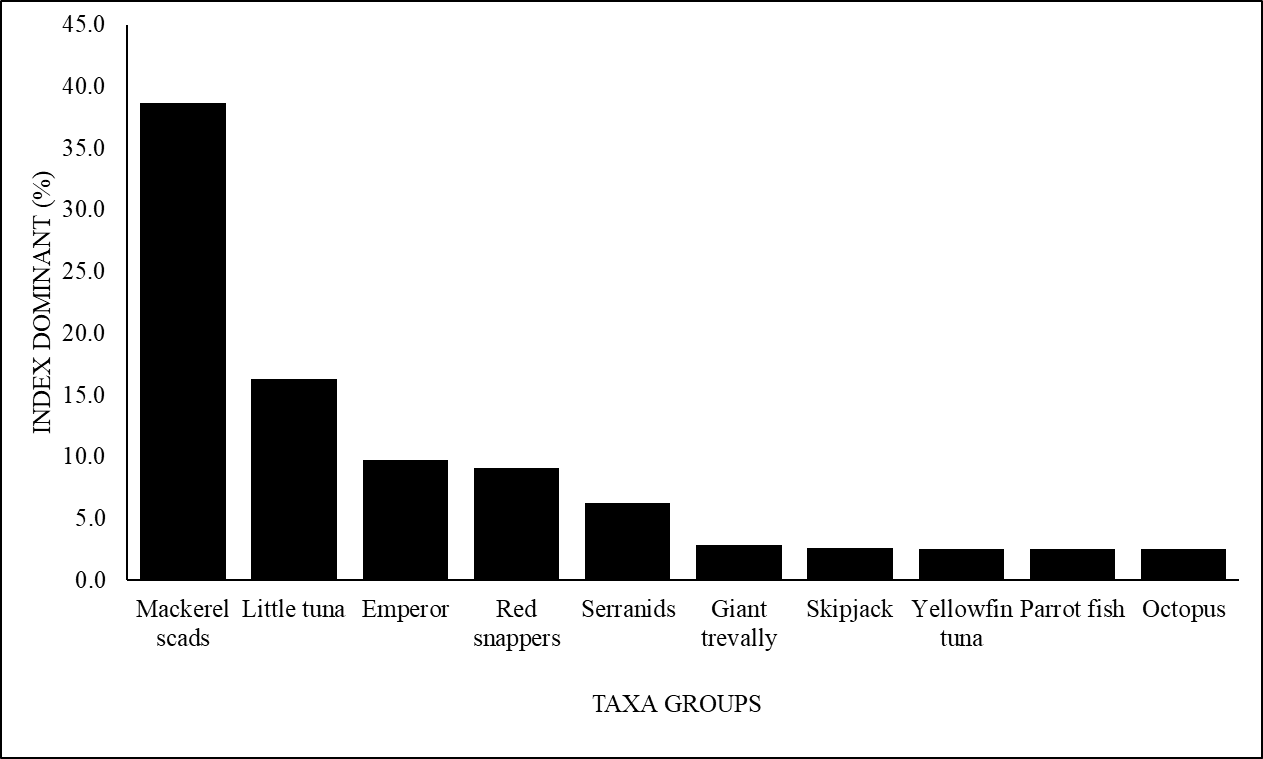
We identified eight types of fishing gear, each designed for specific taxa, based on interviews and existing fisheries data. Purse seine fishing gear landed the most fish, followed by troll lines, handlines, and gill nets, primarily targeting pelagic fish in offshore waters. The use of additional fishing gear results in comparatively lower catches, especially at the bottom of the coral waters (Table 5). The diversity in types and configurations of fishing gear contributes to exploring alternative livelihoods, showcasing fishermen's resilience in addressing the challenges posed by climate change. This adaptability not only helps sustain fish populations but also supports local economies dependent on these resources. Consequently, fostering innovative fishing practices and promoting sustainable management strategies are essential for ensuring the long-term viability of both fisheries and coastal communities.
| TAXA GROUP | % | GEAR DIVERSITY | |||||||
|---|---|---|---|---|---|---|---|---|---|
| Purse seine | Hand line | Gill net | Troll line | Spear gun | Bottom long line | Squid jigging | Pots/traps | ||
| Mackerel scads | 38.6 | x | |||||||
| Little tuna | 16.3 | x | |||||||
| Emperor | 9.7 | x | |||||||
| Red snappers | 9.1 | x | x | ||||||
| Serranids | 6.2 | x | x | ||||||
| Giant trevally | 2.8 | x | x | ||||||
| Skipjack | 2.6 | x | x | ||||||
| Yellowfin tuna | 2.6 | x | x | x | |||||
| Parrot fish | 2.5 | x | x | ||||||
| Octopus | 2.5 | x | |||||||
| Rabbitfish | 1.8 | x | x | x | |||||
This adaptability not only sustains fish populations but also supports local economies that rely on these resources. Consequently, fostering innovative fishing practices and promoting sustainable management strategies are essential for ensuring the long-term viability of both fisheries and coastal communities. By implementing collaborative approaches that involve fishermen, scientists, and policymakers, stakeholders can develop comprehensive plans that balance ecological health with economic growth. This unified effort not only protects marine biodiversity but also enhances the resilience of local communities against environmental changes.
3.5. The climatic parameters
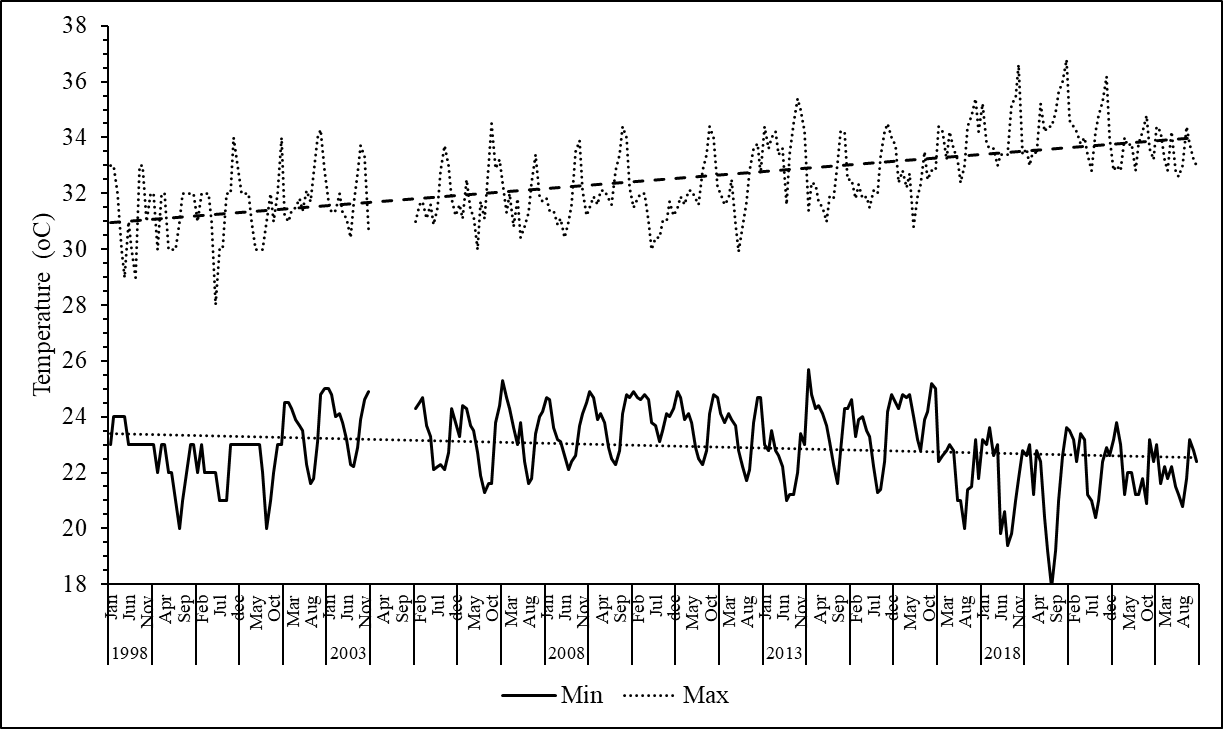
The available data identified rain, wind, and temperature as the three physical variables that have undergone the most significant change over the years. However, fishers' perception of climate change may coincide with their perception of long-term changes in meteorological variabilities in Wangi-Wangi Island and surrounding waters. Plotting the long-term land-based surface temperature analysis could also illustrate the climate drivers (Liu et al., 2021). We derived limited data and information about climatic elements from the BMKG Beto Ambari data. The surface land maximum temperature tends to increase gradually from 1998 to 2022, and the minimum temperature decreases in the same period (Fig. 3). This trend indicates a shift in the island’s climate pattern, potentially impacting local ecosystems and communities. Understanding these changes is crucial for developing adaptation strategies.
Source: BPS South-east Sulawesi province 1998–2010; BPS Wakatobi Regency 2010–2022
Adaptation strategies must consider not only the rising temperatures but also the potential for increased frequency of extreme weather events. By prioritizing sustainable practices and enhancing communities resilience, stakeholders can better prepare for the challenge posed by these evolving climatic conditions
Previous studies show that, over the past three decades, the seas surrounding Indonesia have undergone a warming trend of about 0.18°C per decade, resulting in a total increase of over half a degree Celsius (Kaczan et al., 2023). Projections indicate that, under a low global emissions scenario, sea surface temperatures will rise by 1.39 ± 0.39 °C, and under a high global emissions scenario, the increase will be 3.68 ± 0.86 °C by the end of the century compared to the period 1850-1900. Short-term and localized extremes will intersperse this prolonged warming pattern (Kaczan et al., 2023). By 2050, it can be expected that marine heatwaves, characterized by temporary spikes in ocean temperature, to extend from 1-6 months to 11-12 months, on a global scale, there is information about the impact of climate change on coastal habitats (Kaczan et al., 2023).
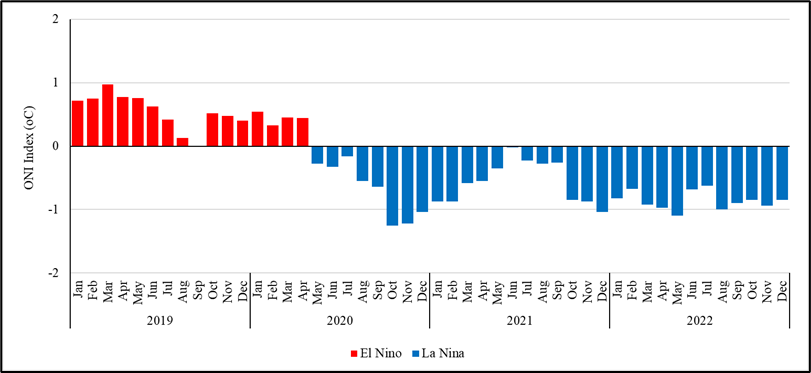
2019 was an El Niño year that followed a period of active El Niño from September 2018 to July 2019 in the Central Pacific Ocean. Transitioning into mid-2020, particularly in April, conditions shifted toward La Niña, which gained strength from October to December 2020. La Niña weakened in mid-2021 but re-strengthened to a moderate level from the end of 2021 through 2022 (Fig. 4). The occurrence of La Niña in these consecutive years is an unusual phenomenon known as triple-dip La Niña (Shi et al., 2023). This extended La Niña event has significant implications for aquatic biota due to the prolonged rising sea surface temperatures during La Niña, affecting the life of various aquatic organisms, including fish.
Source: https://psl.noaa.gov/gcos_wgsp/Timeseries/Data/nino34.long.anom.data
Coastal habitats are at risk from direct (temperature, rainfall) and indirect (sea-level rise, coastal erosion) impacts due to a changing climate (Dong et al., 2024). Beyond the environmental impacts and resulting habitat loss, the changing climate will significantly impact coastal communities, affecting everything from health to livelihoods and the loss of essential ecosystem services like coastal defense. This is especially relevant given the predicted increase in storminess (Burden et al., 2020).
Several studies demonstrate small pelagic species' sensitivity to El Niño Southern Oscillation (ENSO) fluctuations, such as sardinella distribution along the northwest African coast (López-Parages et al., 2020). These systems are susceptible to global climate change and variability. Oceanographic factors greatly influenced the brief lifespans of small pelagic fish, such as sardines, herrings, and anchovies. As a result, they are susceptible to shifts in fishing patterns attributed to climate change (Pincinato et al., 2020).
We have observed interseasonal, interannual, and spatial variability in rainfall and wind speed trends in the area, and the success of crop plantation and fishers' harvesting patterns could significantly influence their daily livelihood. The rainfall rates in the area based on weather station Betoambari data from 2005 to 2022 show that four significant peaks occurred in 2007, 2011, 2017, and 2022, and five minor peaks occurred in 2005, 2009, 2019, and 2023 (Fig. 5).
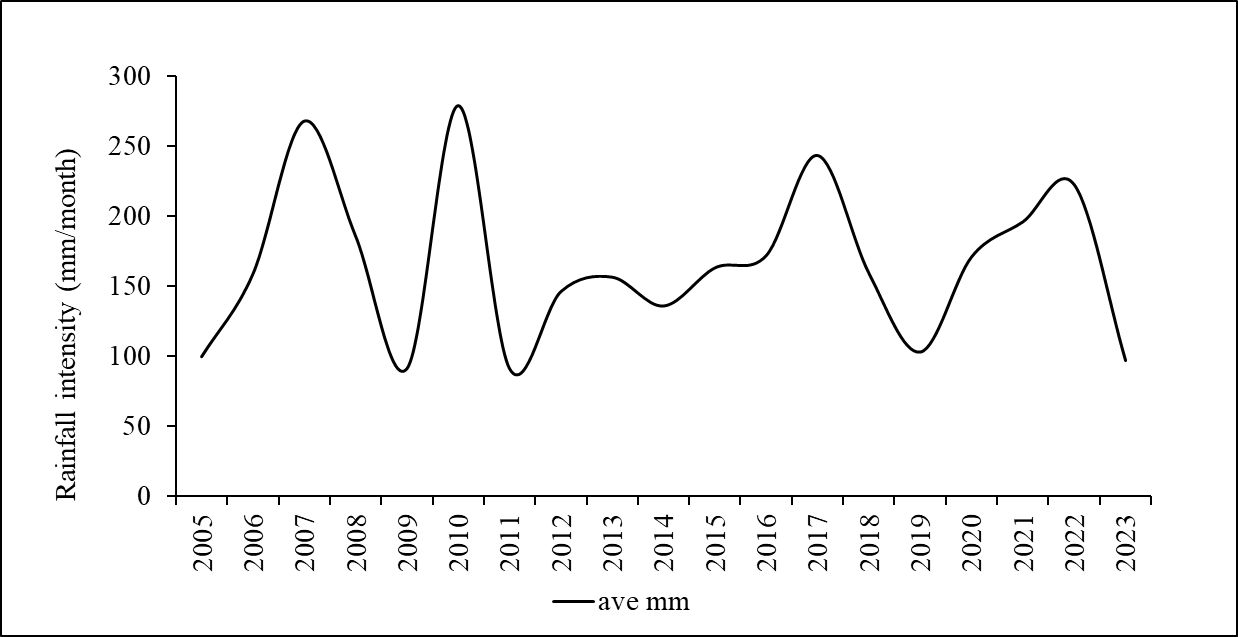
Source: BPS South-east Sulawesi Province (2005–2010) and Wakatobi Regency (2011–2023).
The average monthly rainfall over the previous five years reveals a distinct pattern, particularly from July to October. This observation aligns with the insights of fishermen regarding shifts in rainfall patterns, recognized as one of the indicators of climate change (Fig. 6). As the rainfall increases during these months, it not only affects local ecosystems but also influences fishing practices and the livelihood of those who depend on aquatic resources. Understanding these shifts is crucial for developing adaptive strategies to mitigate the impacts of climate variability on both the environment and the economy.
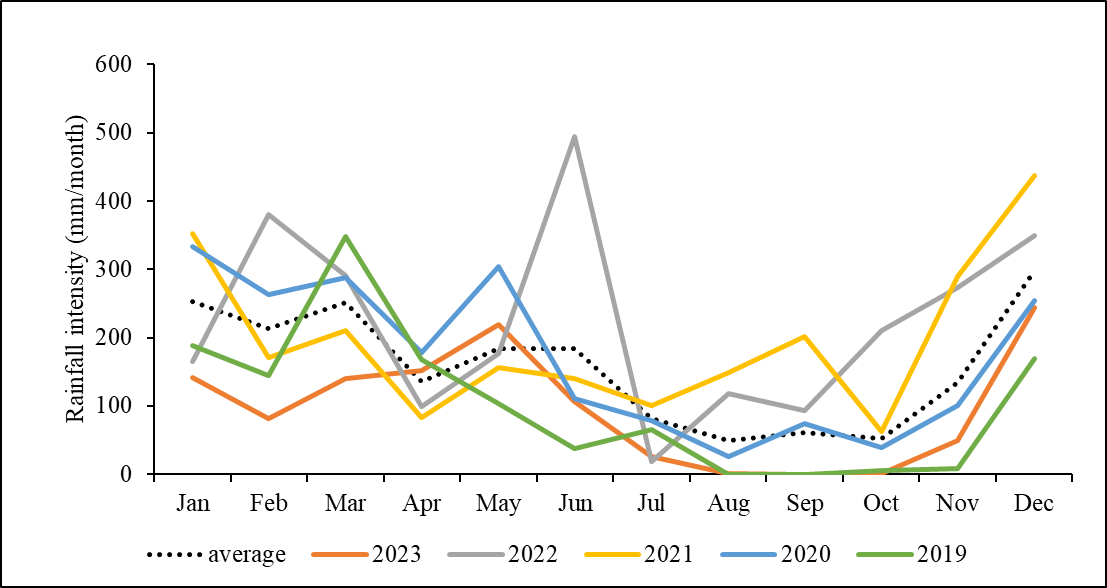
Source: BMKG https://dataonline.bmkg.go.id/data-harian
The rainfall graph resembles a wave with alternate cliffs and troughs oscillating irregularly. Surprisingly, there is a time-lapse of 4 to 6 years between significant peaks, probably indicating a pattern of such duration on the island. Over recent decades, variations in rainfall patterns have been evident across Asia, with some regions noting a decline in average yearly precipitation. This includes Northeast and North China coastal areas, dry plains in Pakistan, certain parts of Northeast India, Indonesia, the Philippines, and specific regions in Japan (Sriskanthan and Funge-Smith, 2011). Rainfall patterns influenced the extraction of terrestrial edible biodiversity, which includes crop yield in mountainous regions (Poudel and Shaw, 2016) and the local farming system in Northeast Thailand (Lacombe et al., 2017). Previous research has undertaken various studies on the effects of climate change on Indonesia's coastal environment. Rising sea level in Indonesia could potentially impact climate change in coastal areas due to global warming (Zikra et al., 2015) (Munawaroh et al., 2018). This phenomenon occurs on Wangi-Wangi Island, as informed during the interview. Table 2 lists the general findings of fishers' perceptions of climate change along with related scientific findings.
Comparable situations arise in wind speeds, with August 2023 exhibiting a relatively high level compared to 2020-2022 but aligning closely with the conditions observed in 2019 (Fig. 7). The inconsistency in the rainy season and wind speed disrupts the regularity of their fishing activities, as revealed by the interview results. Coastal communities in the study area profoundly understand natural indicators crucial to their daily livelihoods.
The Beaufort Scale, formally known as the Beaufort wind force scale, is a practical gauge that establishes a correlation between wind speed and the corresponding observed conditions at sea or on land (https://www.rmets.org/metmatters/beaufort-wind-scale). Below is a table featuring the Beaufort Scale, providing speeds in knots, miles per hour, and kilometers per hour. Notably, these speeds represent mean values, typically averaged over 10 minutes by convention, and do not encompass wind gust speeds. Weather and news reports also reference the wind speeds presented in Table 6. Using the fishers' knowledge, we predicted the wind speed and maximum wave height at 1.0-1.5 m, which resulted in a maximum sea state of 3. However, we still tolerated fishing activity and converted the information using the Beaufort scale (Table 6).
Daily operation of small-scale fisheries typically employed fishing boats with an overall length (LOA) of about 10 m. Small fishing vessels navigate the sea under challenging wave conditions, leading to significant motion amplitudes that can impair or restrict the vessel's operational capabilities. Essentially, when a small ship travels through actual sea areas during unfavorable weather, it becomes susceptible to hull damage and heightened risks to human life due to wave impacts and excessive acceleration. Moreover, the response characteristics of the ship are entirely contingent on the nature of the waves (Im and Lee, 2022). Based on weather station records, the average wind speed over a decade ranged from 1.5 to 2.5 knots (Fig. 8), with a maximum of 3.5 knots, or sea state 2. This elevated sea state poses a limitation on the fishing capacity of fishers.
| Wind Force | Description | Wind Speed | Specifications | Probable Wave Height | Sea State | |||
|---|---|---|---|---|---|---|---|---|
| km/h | mph | knots | metres | Max | ||||
| 0 | Calm | <1 | <1 | <1 | Smoke rises vertically. Sea like a mirror | -- | -- | 0 |
| 1 | Light Air | 1–5 | 1–3 | 1–3 | Direction is shown by smoke drift but not by wind vanes. Sea rippled | 0.1 | 0.1 | 1 |
| 2 | Light Breeze | 6–11 | 4–7 | 4–6 | Wind felt on face; leaves rustle; wind vane moved by wind. Small wavelets on sea | 0.2 | 0.3 | 2 |
| 3 | Gentle Breeze | 12–19 | 8–12 | 7–10 | Leaves and small twigs in constant motion; light flags extended. Large wavelets on sea | 0.6 | 1.0 | 3 |
| 4 | Moderate Breeze | 20–28 | 13–18 | 11–16 | Raises dust and loose paper; small branches moved. Small waves, reasonably frequent white horses | 1.0 | 1.5 | 3–4 |
Nevertheless, the uncertainties surrounding monthly wind speed and wave height also impact their understanding of seasonal patterns. Some fishers believe a vessel's flag flying at an angle greater than 45 degrees is a warning for sea safety. Many fishers assert that uncertainties in weather conditions have emerged since two years ago (Fig. 8), leading to unpredictable peak fishing seasons and impacting the knowledge traditionally passed down from generation to generation. This has prompted them to reconsider their traditional fishing systems, highlighting the potential benefits of readily available weather information to enhance their capacity to adapt to natural phenomena.
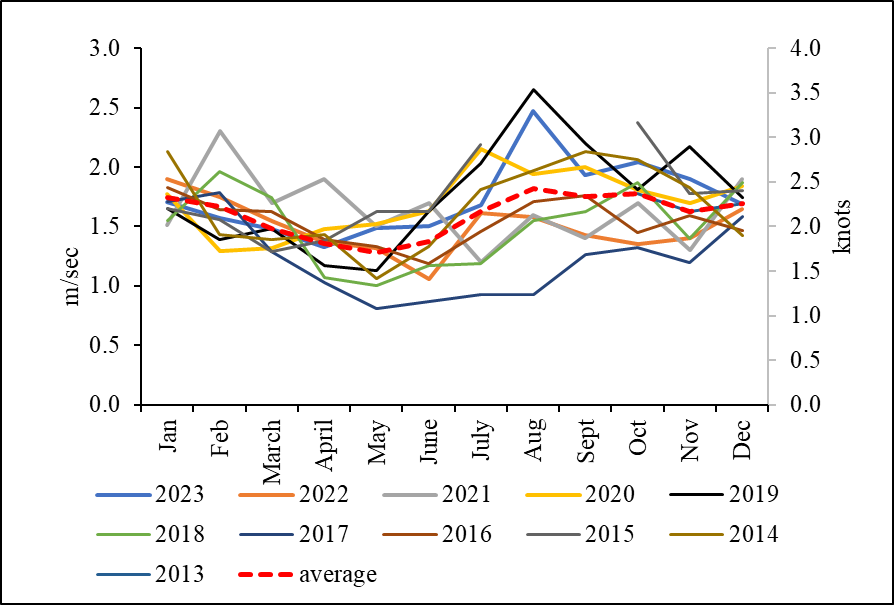
Source: BMKG https://dataonline.bmkg.go.id/data-harian
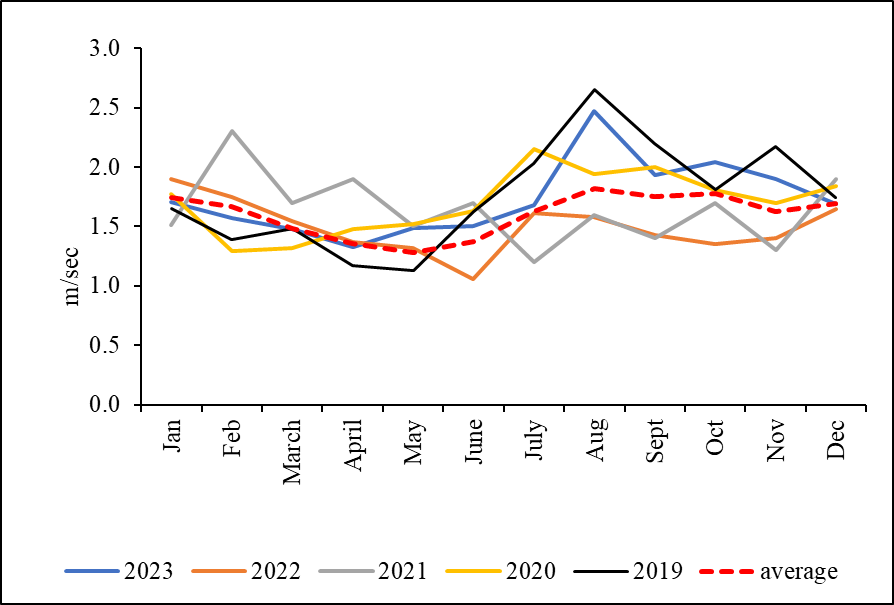
Source: BMKG https://dataonline.bmkg.go.id/data-harian
Fishers adapt to discerning winds in relation to cardinal directions North, South, East, and West. Some even associate the winds with specific times or seasons. For instance, the west wind prevailing from September to November is robust and dissuades fishers from venturing into the open sea. If caught mid-sea during an unexpectedly strong westerly wind, fishers seek refuge behind islands until the weather subsides. The transition between cardinal directions West to North, North to South, South to East, and East to North is unpredictable. Continuous rainfall and tumultuous weather prevail during months dominated by North and West winds. The resulting large waves make it challenging for fishermen to embark on sea journeys. The North Wind, prevailing from December to February, brings rain and occasionally cool temperatures. Despite the cooler weather, fishermen still venture to sea during this period, although the fish tend to be unresponsive to bait, possibly due to the cold blowing wind. Table 7 lists the general perception and knowledge indicators of climate change accompanied by scientific findings.
| Climatic variables | Climate perceptions of senior fishers | National/local indicators on climate impact | Conformity to this study |
|---|---|---|---|
| Sea-level rise | Fishermen possess limited knowledge about the LEK factors, but regular coastal floods occur. | (Zikra et al., 2015), compiling various studies and indicating the sea level rise phenomenon in the coastal waters of Indonesia | Agree |
| Coastal erosion | Slightly occurred in recent years. | (Solihuddin et al., 2021) stated that two decades of observation indicated shoreline changes in Java's north coast. | Agree |
| Temperature | Slightly perceived | The weather station Beto Ambari showed that the maximum temperature data for 1998–2022 slightly increased while the minimum decreased. This could potentially impact the likelihood of successful fishing. | Not fully agree |
| Rainfalls | This trend is becoming uncertain and unpredictable due to the shifts in monsoon patterns. | The weather station of Beto Ambari showed that the trend of rainfall rates and the number of rainy days slightly increased. | Mostly agree |
| Wind | The shifting monsoonal cycle occurs. | The weather station of Beto Ambari showed the shifting peak of annual wind speed. | Mostly agree |
3.6. The adaptation strategy
Since 1997, the WNP has implemented a zoning system, periodically adjusting it to align with current requirements and adhere to ecological and conservation principles. The decree of the Director General of Nature Resources and Ecosystem Conservation defined six categories of national park zoning in 2007. Most of the waters around Wangi-Wangi Island fall under the category of local use areas, allowing traditional development and utilization by the community, albeit with limitations to fulfill their needs. This region boasts abundant marine resources, including coral reefs with diverse marine biodiversity, presenting potential for local communities in terms of capture fisheries (Purwanto et al., 2012). Additionally, (Darman. et al., 2021) identified 30 marine tourism destinations along the coast of Wangi-Wangi Island that can contribute to community and regional income.
To address the adverse effects of climate change, Wakatobi National Park and the Wakatobi Regency Government have implemented various initiatives, including conservation and rehabilitation programs, capacity building, and ecosystem monitoring, as indicated by the findings from FGD. The respondents disclosed that the government’s response to climate change included conservation and rehabilitation programs (32%) and technical ecosystem monitoring (55%); they attributed the assistance they received to the impact of climate change. Remarkably, the majority of respondents (57%) were not aware of the government assistance. However, some respondents (43%) reported receiving assistance in the form of GTequipment, financial support, and daily basic needs (43%) (Table 8). This discrepancy in awareness reveals a potential gap in communication between the government and the communities affected by climate change. The government may need to intensify its outreach efforts to tackle this issue, making sure all residents are aware of the resources and programs available for their support.
| No. | Initiatives | Focus of the Program | % of respondent participated |
|---|---|---|---|
| 1 | Trainings and engagement in initiatives related to CC | Alternative income source | 11 |
| Conservation and rehabilitation of habitat | 32 | ||
| Capacity building (skills improvement) | 2 | ||
| Ecosystem monitoring | 55 | ||
| 2 | Direct assistance received to support livelihood | Fishing equipment | 28 |
| Direct Funding | 8 | ||
| Supply basic needs | 6 | ||
| Don’t know / never heard of such programs | 58 |
Among these, coastal communities in the Wakatobi Biosphere Conservation Area have predominantly benefited from capacity-building programs. Additionally, government-provided equipment assistance emerges as the most widely received support. Current climate variability and future expectations presents the primary challenge of enhancing development to adapt to local resource management and national agreements, with the aim of promoting the adaptive capacity of competing sustainable development objectives (Adger et al., 2003; Tomokins and Adger (2004). Human interference, mainly stemming from urban development and agricultural expansion, significantly influences natural processes in coastal areas. This interference modifies the processes and functioning of ecosystems, leading to coast transformations and an increased risk of natural hazards (Capobianco and Stive, 2000) (Silva et al., 2019). The repercussions extend to the lives of people residing in these coastal areas.
Coastal ecosystems play a crucial role in providing various benefits to human communities. These benefits include the providing habitat, support for tourism, scenic beauty, recreational opportunities, sustenance of SSF, climate regulation, carbon storage, coastal water filtration, job creation, and contributions to ocean economies. Additionally, these ecosystems reduce the risk of flooding and, in certain instances, facilitate adaptation to a changing climate (Everard et al., 2010) (Barbier et al., 2011). Recognizing the multifaceted contributions of coastal ecosystems underscores the importance of sustainable practices and management to balance human needs with preserving these vital natural environments.
4. Conclusion
We have captured the experience and fishers' perception of climate change from fishing communities on the west coast of Wangi-Wangi Island within Wakatobi National Park. Most fishers are aware of climate change issues based on the information gathered such as their observation on changing seasonal pattern that eventually affect their fishing activities. This finding challenges the conventional belief that fishermen are progressively finding their LEK irrelevant in the context of climate change. Consequently, enhancing adaptive capacity implies the importance of considering fishers' perceptions and expectations, highlighting a significant necessity for scientific support through appropriate channels to address the impacts of climate change. Fishers convey a sense of uncertainty regarding the sustainability of their profession for future generations. The challenges they encounter in being involved in governance intensify this uncertainty, adversely impacting their job opportunities and income. Encouraging community participation in decision-making serves as a means to foster ownership and offers optimism for potential solutions.
Credit authorship contribution statement
D. Oktaviani: Conceptualization, Formal Analysis, Writing–original draft, Project administration, Supervision & Funding acquisition. D. Nugroho: Conceptualization, Data curation, Writing–review & editing. C. B. Wiati: Conceptualization, Writing– review & editing. H. I. Januar: Conceptualization, Data curation, Writing–review & editing. Y. Purwanto: Conceptualization, Writing–review & editing. R. Puspasari: Conceptualization & Writing–review & editing. R. A. Purnamasari: Providing Map of site location. Radisti Ayu Praptiwi: Writing - Review & Editing.
Data availability
Data will be made available on request.
Acknowledgements
We extend our sincere gratitude to all participants and authorities from the villages of Mola Samaturu, Mola Bahari, Liya One Melangka, Mandati 1, Koroe Onowa, and Waelumu for their warm reception, generosity, openness, and the valuable time they dedicated to our research. This study received funding from the Research Organization for Social Science and Humanities, The National Research and Innovation Agency (BRIN) of the Republic of Indonesia (Rumah Program OR IPSH Tahun Anggaran 2023).
References
- Abdullah, L.O.D., Dewi, I.K., Pratiwi, E.T., Abdullah, R., Ilyas, A., Tambaru, R., 2019. Legal enforcement for chemicals uses for fishing in Wakatobi District, in: IOP Conf. Series: Earth and Environmental Science 235 (2019) 012003. https://doi.org/10.1088/1755-1315/235/1/012003
- Adger, W.N., Huq, S., Brown, K., Declan, C., Mike, H., 2003. Adaptation to climate change in the developing world. Prog. Dev. Stud. 3, 179–195. https://doi.org/10.1191/1464993403ps060oa
- Albuquerque, U.P., Cunha, L.V.F.C. da, Lucena, R.F.P., Alves, R.R.N., 2017. Methods and Techniques in Ethnobiology and Ethnoecology. https://doi.org/10.1007/978-1-4614-8636-7
- Ariando, W., 2023. Stringing The Islands: The Bajau in Wakatobi Islands. Chulalongkorn.
- Ariando, W., Arunotai, N., 2022. The Bajau as a left-behind group in the context of coastal and marine co-management system in Indonesia. J. Mar. Isl. Cult. 11, 260–278. https://doi.org/10.21463/jmic.2022.11.1.18
- Barbier, E.B., Hacker, S.D., Kennedy, C., Koch, E.W., Stier, A.C., Silliman, B.R., 2011. The value of estuarine and coastal ecosystem services. Ecol. Monogr. 81, 169–193. https://doi.org/10.1890/10-1510.1
- Bell, J.J., Jompa, J., Haris, A., Werorilangi, S., Shaffer, M., Mortimer, C., 2019. Domination of mesophotic ecosystems in the Wakatobi Marine National Park (Indonesia) by sponges, soft corals and other non-hard coral species. J. Mar. Biol. Assoc. United Kingdom 99, 771–775. https://doi.org/10.1017/S0025315418000917
- BPS Wakatobi, 2024. Statistics of Wakatobi Regency. Wakatobi.
- BPS Wakatobi, 2022. Wakatobi Regency in Figures 2022 325.
- BPS Wakatobi, 2014. Wakatobi Regency in Figures 2014.
- BPS Wangi-Wangi, 2022. Wangi-Wangi Subdistrict in Figures 2022. Wangi-Wangi.
- Burden, A., Smeaton, C., Angus, S., Garbutt, A., Jones, L., Lewis, H.D., Rees., S.M., 2020. Impacts of climate change on coastal habitats, relevant to the coastal and marine environment around the UK. MCCIP Sci. Rev. 228–255. https://doi.org/10.14465/2020.arc11.chb
- Capobianco, M., Stive, M.J.F., 2000. Soft intervention technology as a tool for integrated coastal zone management. J. Coast. Conserv. 6, 33–40. https://doi.org/10.1007/BF02730465
- Cesar, H.S.J., 2002. Coral Reefs: Their Functions , Threats and Economic Value, OceanDocs.
- Clifton, J., 2013. Refocusing conservation through a cultural lens: Improving governance in the Wakatobi National Park, Indonesia. Mar. Policy 41, 80–86. https://doi.org/10.1016/j.marpol.2012.12.015
- Cowie, W., Al Dhaheri, S., Al Hashmi, A., Solis-Rivera, V., Baigun, C., Chang, K., Cooney, R., Kamaka‘ala, S., Lindeman, K., Louwa, C., Roe, D., Walker-Painemilla, K., Al Baharna, R., Al Ameri, M., Al Hameli, S., Al Jaberi, K., Alzahlawi, N., Binkulaib, R., Al Kharusi, Y., 2020. IUCN Guidelines for gathering of fishers’ knowledge for policy development and applied use, IUCN Guidelines for gathering of fishers’ knowledge for policy development and applied use. https://doi.org/10.2305/iucn.ch.2020.11.en
- Culhane, F., Austen, M.C., Ashley, M., Javier, J., Kuit, S.H., Hung, N.P., Tran, H.D., Praptiwi, R.A., Sainal, S., Justine, E., Wulandari, P., Broszeit, S., Jontila, J.B., Johari, S., Creencia, L., Then, A.Y., Gajardo, L.J., Maharja, C., Goh, H.C., Syazwan, W.M., Affendi, Y.A., Thảo, L.N., Sugardjito, J., Mullier, T., Langmead, O., 2024. Assessing impact risk to tropical marine ecosystems from human activities with a Southeast Asian example. J. Appl. Ecol. 2897–2911. https://doi.org/10.1111/1365-2664.14812
- Darman., Putra, J.P., Poli, A.G., Ajudin, S.A.P., Hendrawan, Elfiana, 2021. TAMAN NASIONAL WAKATOBI [WWW Document]. Dive Site Wakatobi Natl. Park Part I. URL https://online.fliphtml5.com/fiajx/sjvp/ (accessed 1.14.24).
- Dong, W.S., Ismailluddin, A., Yun, L.S., Ariffin, E.H., Saengsupavanich, C., Abdul Maulud, K.N., Ramli, M.Z., Miskon, M.F., Jeofry, M.H., Mohamed, J., Mohd, F.A., Hamzah, S.B., Yunus, K., 2024. The impact of climate change on coastal erosion in Southeast Asia and the compelling need to establish robust adaptation strategies. Heliyon 10, e25609. https://doi.org/10.1016/j.heliyon.2024.e25609
- Everard, M., Jones, L., Watts, B., 2010. Have we neglected the societal importance of sand dunes? An ecosystem services perspective. Aquat. Conserv. Mar. Freshw. Ecosyst. 20, 476–487. https://doi.org/10.1002/aqc.1114
- Fleming, L.E., Landrigan, P.J., Ashford, O.S., Whitman, E.M., Swift, A., Gerwick, W.H., Heymans, J.J., Hicks, C.C., Morrissey, K., White, M.P., Alcantara-Creencia, L., Alexander, K.A., Astell-Burt, T., Berlinck, R.G.S., Cohen, P.J., Hixson, R., Islam, M.M., Iwasaki, A., Praptiwi, R.A., Raps, H., Remy, J.Y., Sowman, G., Ternon, E., Thiele, T., Thilsted, S.H., Uku, J., Ockenden, S., Kumar, P., 2024. Enhancing Human Health and Wellbeing through Sustainably and Equitably Unlocking a Healthy Ocean’s Potential. Ann. Glob. Heal. 90. https://doi.org/10.5334/aogh.4471
- Ford, J.D., King, N., Galappaththi, E.K., Pearce, T., McDowell, G., Harper, S.L., 2020. The Resilience of Indigenous Peoples to Environmental Change. One Earth 2, 532–543. https://doi.org/10.1016/j.oneear.2020.05.014
- Grant, S., Berkes, F., 2007. Fisher knowledge as expert system: A case from the longline fishery of Grenada, the Eastern Caribbean. Fish. Res. 84, 162–170. https://doi.org/10.1016/j.fishres.2006.10.012
- Haapkylä, J., Seymour, A.S., Trebilco, J., Smith, D., 2007. Coral disease prevalence and coral health in the Wakatobi Marine Park, south-east Sulawesi, Indonesia. J. Mar. Biol. Assoc. United Kingdom 87, 403–414. https://doi.org/10.1017/S0025315407055828
- Huntington, H.P., 2000. Using Traditional Ecological Knowledge in Science: Methods and Applications. Ecol. Appl. 10, 1270–1274. https://doi.org/10.2307/2641282
- Im, N., Lee, S., 2022. Effects of Forward Speed and Wave Height on the Seakeeping Performance of a Small Fishing Vessel. J. Mar. Sci. Eng. 10. https://doi.org/10.3390/jmse10121936
- Januar, H. I., Oktaviani, D., Purwanto, Y., Wiati, C.B., Puspasari, R., Nugroho, D., 2025. Habitat Vulnerability of Acropora spp. in Indonesian Wakatobi National Park on the Pressure of Future Climate Change. Ocean Coast. Res.
- Januar, H.I., Oktaviani, D., Purwanto, Y., Wiati, C.B., Puspasari, R., Nugroho, D., n.d. Habitat Vulnerability of Acropora spp. in Indonesian Wakatobi National Park on the Pressure of Future Climate Change. J. Ilm. Perikan. DAN Kelaut.
- Kaczan, D., Nurhabni, F., Cheung, W., Frölicher, T., Kuswardani, A., Lam, V., Muawanah, U., Puspasari, R., Reygondeau, G., Sumaila, U., Teh, L., 2023. Hot Water Rising. Jakarta.
- Kay, S., Avillanosa, A.L., Cheung, V. V., Dao, H.N., Gonzales, B.J., Palla, H.P., Praptiwi, R.A., Queirós, A.M., Sailley, S.F., Sumeldan, J.D.C., Syazwan, W.M., Then, A.Y.H., Wee, H.B., 2023. Projected effects of climate change on marine ecosystems in Southeast Asian seas. Front. Mar. Sci. 10, 1–17. https://doi.org/10.3389/fmars.2023.1082170
- Kifani, S., Quansah, E., Masski, H., Houssa, R., Hilmi, K., 2018. Chapter 8: Climate change impacts, vulnerabilities and adaptations: Eastern Central Atlantic marine fisheries, in: Barange, M., Bahri, T., Beveridge, M.C.M., Cochrane, K.L., Funge-Smith, S., & Poulain, F., E. (Eds.), Impacts of Climate Change on Fisheries and Aquaculture: Synthesis of Current Knowledge, Adaptation and Mitigation Options. FAO Rome, p. 654.
- Lacombe, G., Polthanee, A., Trébuil, G., 2017. Long-term change in rainfall distribution in Northeast Thailand: Will cropping systems be able to adapt? Cah. Agric. 26. https://doi.org/10.1051/cagri/2017006
- Law (UU) no. 7, 2016. On The Protection and Empowerment of Fishers, Fish Farmers, and Salt Farmers (Perlindungan dan Pemberdayaan Nelayan, Pembudi Daya Ikan, dan Petambak Garam).
- Liu, J., Hagan, D.F.T., Liu, Y., 2021. Global land surface temperature change (2003–2017) and its relationship with climate drivers: Airs, modis, and era5-land based analysis. Remote Sens. 13, 1–20. https://doi.org/10.3390/rs13010044
- López-Parages, J., Auger, P.A., Rodríguez-Fonseca, B., Keenlyside, N., Gaetan, C., Rubino, A., Woldeyes Arisido, M., Brochier, T., 2020. El Niño as a predictor of round sardinella distribution along the northwest African coast. Prog. Oceanogr. 186, 102341. https://doi.org/10.1016/j.pocean.2020.102341
- Macusi, E.D., Camaso, K.L., Barboza, A., Macusi, E.S., 2021. Perceived Vulnerability and Climate Change Impacts on Small-Scale Fisheries in Davao Gulf, Philippines. Front. Mar. Sci. 8, 1–13. https://doi.org/10.3389/fmars.2021.597385
- Madduppa, H.H., Koropitan, A.F., Damar, A., Subhan, B., Taufik, M., Minsaris, L.O.A., Taurusman, A.M.A., Ramli, A., Purwanto, A.B., 2020. Ecological Vulnerability of Coral Reef Ecosystem in Wakatobi National Park During Indian Ocean Dipole Event. H A Y IJournal Biosci. 27, 57–70. https://doi.org/10.4308/hjb.27.1.57
- Maharja, C., Praptiwi, R.A., Purwanto, Y., 2023a. Understanding the cultural impacts of climate change harms on small-scale fisher communities through the lens of cultural ecosystem services. Marit. Stud. 22, 1–17. https://doi.org/10.1007/s40152-023-00332-2
- Maharja, C., Praptiwi, R.A., Richter, I., Crummy, A., Devine, D., Gajardo, L.J.A., Ha, N.T., Johari, S., Justine, E.V., Kjørholt, A.T., Madarcos, J.R. V., Thao, L.N., Wulandari, P., 2023b. Chapter 17 - The people of the seas and the seas of the people, in: Fleming, L.E., Creencia, L.B.A., Gerwick, W.H., Goh, H.C., Maycock, B., Solo-Gabriele, H. (Eds.), Oceans and Human Health (Second Edition). Academic Press, pp. 499–530. https://doi.org/10.1016/B978-0-323-95227-9.00007-5
- Maltby, K.M., Simpson, S.D., Turner, R.A., 2021. Scepticism and perceived self-efficacy influence fishers’ low risk perceptions of climate change. Clim. Risk Manag. 31, 100267. https://doi.org/10.1016/j.crm.2020.100267
- Menon, M., Ghosh, S., Kumar, M.S., Rao, M.V.H., Mahesh, V.U., Zacharia, P.U., 2016. Fishermen’s perception of climate change - a study from Andhra Pradesh. Indian J. Fish., 63, 110–119. https://doi.org/10.21077/ijf.2016.63.3.51566-17
- Miththapala, S., 2008. Coral Reefs. Ecosystems and Livelihoods Group Asia, IUCN, Srilanka.
- Munawaroh, E., Purwanto, Y., Suryanto, J., Ajiningrum, P.S., Priatna, D., 2018. Local perceptions of changes in climate variables in managing SDAH and its environment in Wakatobi, Southeast Sulawesi (In Bahasa Indonesia). J. Pendidik. Lingkung. Hidup 6, 22–26.
- Murken, L., Gornott, C., 2022. The importance of different land tenure systems for farmers’ response to climate change: A systematic review. Clim. Risk Manag. 35, 100419. https://doi.org/10.1016/j.crm.2022.100419
- N’Souvi, K., Adjakpenou, A., Sun, C., Ayisi, C.L., 2024. Climate change perceptions, impacts on the catches, and adaptation practices of the small-scale fishermen in Togo’s coastal area. Environ. Dev. 49, 100957. https://doi.org/10.1016/j.envdev.2023.100957
- Nakashima, D.J., Galloway McLean, K., Thulstrup, H.D., Ramos Castillo, A., Rubis, J.T., 2012. Weathering Uncertainty: Traditional Knowledge for Climate Change Assessment and Adaptation., Unesco.
- Nelson, K.M., Schlüter, A., Vance, C., 2018. Funding Conservation Locally: Insights from Behavioral Experiments in Indonesia. Conserv. Lett. 11. https://doi.org/10.1111/conl.12378
- Oktaviani, D.., Sulaiman, P.S., Puspasari, R., 2021. The vulnerability of reef fishes to environmental exposure in Komodo National Park and its surrounding waters The vulnerability of reef fishes to environmental exposure in Komodo National Park and its surrounding waters, in: IOP Conf. Series: Earth and Environmental Science 805 (2021) 012014. IOP Publishing. https://doi.org/10.1088/1755-1315/805/1/012014
- Pereyra, P.E.R., Hallwass, G., Poesch, M., Silvano, R.A.M., 2021. ‘Taking Fishers’ Knowledge to the Lab’: An Interdisciplinary Approach to Understand Fish Trophic Relationships in the Brazilian Amazon. Front. Ecol. Evol. 9, 1–15. https://doi.org/10.3389/fevo.2021.723026
- Pincinato, R.B.M., Asche, F., Oglend, A., 2020. Climate change and small pelagic fish price volatility. Clim. Change 161, 591–599. https://doi.org/10.1007/s10584-020-02755-w
- Pörtner, H.-O., Roberts, D.C., Adams, H., Adelekan, I., Adler, C., Adrian, R., Aldunce, P., Ali, E., Begum, R.A., BednarFriedl, B.K., Bezner, R., Biesbroek, R., Birkmann, J., Bowen, K., Caretta, M.A., Carnicer, J., Castellanos, E., Cheong, T.S., Chow, W., Cissé, G., Clayton, S., Constable, A., Cooley, S.R., Costello, M.J., Craig, M., Cramer, W., Dawson, R., Dodman, D., Efitre, J., Garschagen, M., Gilmore, E.A., Glavovic, B.C., Gutzler, D., Haasnoot, M., Harper, S., Hasegawa, T., Hayward, B., Hicke, J.A., Hirabayashi, Y., Huang, C., Kalaba, K., Kiessling, W., Kitoh, A., Lasco, R., Lawrence, J., Lemos, M.F., Lempert, R., Lennard, C., Ley, D., Lissner, T., Liu, Q., Liwenga, E., Lluch-Cota, S., Löschke, S., Lucatello, S., Luo, Y., Mackey, B., Mintenbeck, K., Mirzabaev, A., Möller, V., Vale, M.M., Morecroft, M.D., Mortsch, L., Mukherji, A., Mustonen, T., Mycoo, M., Nalau, J., New, M., Okem, A., Ometto, J.P., O’Neill, B., Pandey, R., Parmesan, C., Pelling, M., Pinho, P.F., Pinnegar, J., Poloczanska, E.S., Prakash, A., Preston, B., Racault, M.-F., Reckien, D., Revi, A., Rose, S.K., Schipper, E.L.F., Schmidt, D.N., Schoeman, D., Shaw, R., Simpson, N.P., Singh, C., Solecki, W., Stringer, L., Totin, E., Trisos, C.H., Trisurat, Y., Aalst, M. van, Viner, D., Wairiu, M., Warren, R., Wester, P., Wrathall, D., Zaiton, I.Z., 2023. IPCC 2022 Technical Summary. Climate Change 2022 – Impacts, Adaptation and Vulnerability, in: Pörtner, H.-O., Roberts, D.C., Poloczanska, E.S., Mintenbeck, K., Tignor, M., Alegría, A., Craig, M., Langsdorf, S., Löschke, S., Möller, V., Okem, A. (Eds.), Climate Change 2022 – Impacts, Adaptation and Vulnerability. Cambridge University Press, Cambridge, pp. 37–118. https://doi.org/10.1017/9781009325844.002
- Poudel, S., Shaw, R., 2016. The relationships between climate variability and crop yield in a mountainous environment: A case study in Lamjung District, Nepal. Climate 4. https://doi.org/10.3390/cli4010013
- Purwanto, Y., Walujo, E. b, Suryanto, J., Munawaroh, E., Ajiningrum, P. s., 2012. Strategi mitigasi dan adaptasi terhadap perubahan iklim: studi kasus komunitas Napu di Cagar Biosfer Lore Lindu. J. Masy. Budaya 14, 541–570.
- Purwanto, Y., Waluyo, E.B., Suryanto, J., Munawaroh, E., 2014. Wakatobi Community Adaptation and Mitigation Strategy to Climate Change: Management of Biological Natural Resources (In Bahasa Indonesia). Pusat Penelitian Kependudukan LIP, Jakarta.
- Puspasari, R., Rachmawati, P.F., Muawanah, U., 2019. Climate variability impact on Bali sardine fishery: Ecology and fisheries perspective. Fish. Manag. Ecol. 26, 540–547. https://doi.org/10.1111/fme.12374
- Ramírez, F., Shannon, L.J., van der Lingen, C.D., Julià, L., Steenbeek, J., Coll, M., 2022. Climate and fishing simultaneously impact small pelagic fish in the oceans around the southernmost tip of Africa. Front. Mar. Sci. 9, 1–11. https://doi.org/10.3389/fmars.2022.1031784
- Seggel, A., Young, C.D., 2016. CLIMATE CHANGE IMPLICATIONS FOR FISHERIES AND AQUACULTURE - Summary of the findings of the Intergovernmental Panel on Climate Change Fifth Assessment Report. FAO, Rome.
- Shi, L., Ding, R., Hu, S., Li, X., Li, J., 2023. Extratropical impacts on the 2020–2023 Triple-Dip La Niña event. Atmos. Res. 294, 106937. https://doi.org/10.1016/j.atmosres.2023.106937
- Silva, R., Chávez, V., Bouma, T.J., van Tussenbroek, B.I., Arkema, K.K., Martínez, M.L., Oumeraci, H., Heymans, J.J., Osorio, A.F., Mendoza, E., Mancuso, M., Asmus, M., Pereira, P., 2019. The Incorporation of Biophysical and Social Components in Coastal Management. Estuaries and Coasts 42, 1695–1708. https://doi.org/10.1007/s12237-019-00559-5
- Solihuddin, T., Husrin, S., Mustikasari, E., Heriati, A., Kepel, T.L., Salim, H.L., Risandi, J., Dwiyanti, D., 2021. Coastal Inundation and Land Subsidence in North Coast of West Java: A New Hazard? IOP Conf. Ser. Earth Environ. Sci. 925. https://doi.org/10.1088/1755-1315/925/1/012015
- Sriskanthan, G., Funge-Smith, S.J., 2011. The potential impact of climate change on fisheries and aquaculture in the Asian region, FAO RAP Publication. FAO. https://doi.org/10.3923/jfas.2014.338.344
- Stacey, N., Gibson, E., Loneragan, N.R., Warren, C., Wiryawan, B., Adhuri, D.S., Steenbergen, D.J., Fitriana, R., 2021. Developing sustainable small-scale fisheries livelihoods in Indonesia: Trends, enabling and constraining factors, and future opportunities. Mar. Policy 132, 104654. https://doi.org/10.1016/j.marpol.2021.104654
- UNESCO, 2014. Weathering Uncertainty: Traditional.
- Wolverton, S., Chambers, K.J., Veteto, J.R., 2014. Climate Change and Ethnobiology. J. Ethnobiol. 34, 273–275. https://doi.org/10.2993/0278-0771-34.3.273
- Zhang, K., Li, M., Li, J., Sun, M., Xu, Y., Cai, Y., Chen, Z., Qiu, Y., 2022. Climate-induced small pelagic fish blooms in an overexploited marine ecosystem of the South China Sea. Ecol. Indic. 145, 109598. https://doi.org/10.1016/j.ecolind.2022.109598
- Zikra, M., Suntoyo, Lukijanto, 2015. Climate Change Impacts on Indonesian Coastal Areas. Procedia Earth Planet. Sci. 14, 57–63. https://doi.org/10.1016/j.proeps.2015.07.085