
Understanding plastic-dependent urban coastal communities: Plastic handling practices and perceptions of urban villages of Iligan City, Philippines
 10.21463/jmic.2025.14.2.17
Abstract
This study examined the awareness, knowledge, and perceptions of the coastal community residents in Iligan City, Philippines, regarding marine macro- and microplastic pollution. A total of 70 respondents were randomly selected, with a mean age of 36 years, predominantly female (61.43%), and most having an income of less than 5,000 PHP. The respondents' awareness regarding the impacts of plastic pollution on marine life and the fishing industry was high, while their knowledge of microplastics was relatively low, with only 17% having heard of them. Based on the data, the Internet and television were the primary sources of information. Although 72.86% of respondents practiced waste segregation, the absence of adequate waste collection infrastructure posed a significant challenge to proper plastic waste management. Additionally, plastic bags and food wraps were identified as the most prevalent types of plastic litter. Respondents have perceived high levels of plastic litter over the past 25 years, citing a lack of waste management policies and infrastructure. While some anticipated a reduction in plastic pollution due to increasing awareness and policies, others predicted a slight increase due to population growth. The findings highlight the need for a tighter policy implementation, improved waste management facilities, and enhanced collaboration between academia and government to play more active roles by providing scientific knowledge and establishing policies to mitigate plastic pollution.
Keywords
plastic litter pollution, awareness, Iligan City, urban coastal communities, plastic litter practices
1. Introduction
Plastic has become one of the primary choices for communities due to its versatility and affordability (Puji and Sumarno, 2019). The convenience it offers has led to a reliance on plastic. Its lightweight nature and low production costs have fueled global demand (Hale et al., 2020). However, this increased demand has also led to a rise in plastic pollution, with much of it being discarded into rivers, beaches, and coasts. Unlike other pollutants, plastic is non-biodegradable. The excessive consumption of plastics surpasses recycling capacities, making it evident that plastics pose a significant new threat to the environment (Nurhati and Cordova, 2020). It persists in the environment and breaks down into smaller fragments known as microplastics. Plastic pollution, particularly in coastal communities, has emerged as a substantial threat resulting in several negative impacts on the marine environment (Corcoran et al., 2009) which has become repositories for plastic waste from nearby rivers and communities (Horton and Dixon, 2018; Jambeck et al., 2015; Liu et al., 2020). This pollution has dramatically affected marine biodiversity and the ocean's ability to provide essential ecosystem services, such as food for the growing global population, hindering its capacity to recover from disturbances (Worm et al., 2006). According to Adhikari et al. (2022), over 200 marine animal species have encountered microplastics at some point in their life cycles, either by ingesting them directly or through the food chain by consuming plastic-contaminated prey.
The Philippines, a tropical archipelagic country, heavily depends on the resources and services provided by the marine environment (Madarcos et al., 2021). Despite having established institutional frameworks, such as the Ecological Solid Waste Management Act of the Philippines (Republic Act 9003), numerous studies have documented plastic contamination of marine ecosystems in the Philippines, including sandy beaches (Acot et al., 2022; Inocente and Bacosa, 2022; Kalnasa et al., 2019; Sajorne et al., 2021), mangrove areas (Jarabe et al., 2023; Navarro et al., 2022), riverine system (Gabriel et al., 2023; Requiron et al., 2023), seagrass (Celmar et al., 2024; Gaboy et al., 2022), lake and the atmosphere (Arcadio et al., 2023; Romarate et al., 2022) and marine organisms (Similatan et al., 2023). Thus, identifying the sources of plastic pollution and understanding community practices is essential to implementing sustainable management plans in the future.
Human behavior is considered the primary source of marine litter (Pahl and Wyles, 2017). The way communities manage plastic waste significantly influences its fate in the environment. Depending on local practices and their actions, plastic litter may end up in segregated bins or be released unregulated into the environment. Given the complexity of waste management and governance, understanding how local communities perceive plastic pollution is crucial in addressing the problem. While studies on marine litter, especially microplastics, dominate the scientific literature, research on the perceptions and the human dimension of plastic pollution in coastal communities is limited. Understanding local communities’ perceptions, behaviors, and practices is critical for implementing sustainable solutions to reduce plastic litter. Therefore, this study aims to determine the perception, awareness, handling practices, and knowledge regarding marine litter in selected coastal barangays (villages) in Iligan City, Lanao del Norte. The data is used to understand the relationship between the sociodemographic profile and its relevance to the community practices, perception, and awareness of the communities about marine plastic litter. The data can be used for future initiatives and sustainable solid waste management plans with institutional involvement in addressing marine plastic litter.
2. Methodology
2.1 Study area
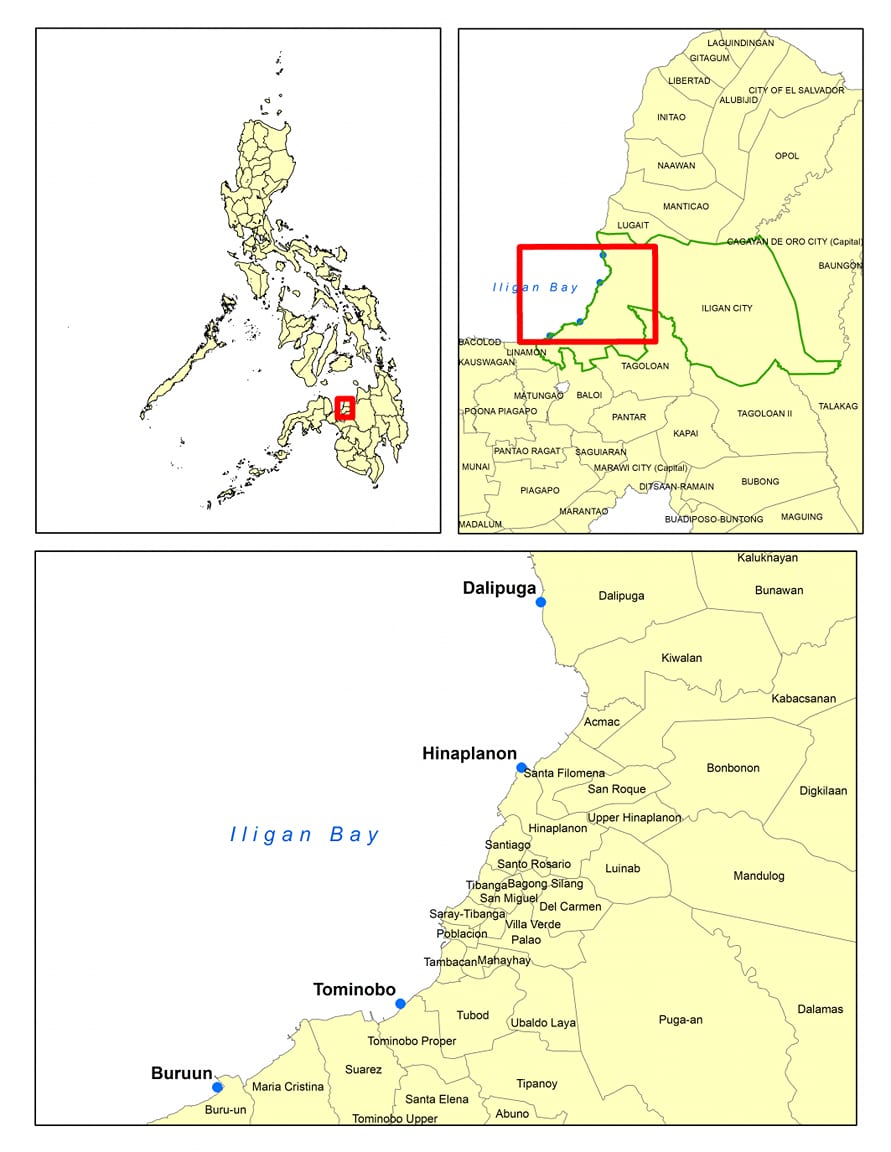
The study was conducted in Iligan City, Lanao del Norte, Philippines. Iligan City is in the northeastern part of Mindanao (8.2280° N, 124.2452° E) and faces Iligan Bay. This city is highly urbanized, with a population of 363,115 people (2020 Census, 2021-251). It is comprised of 44 barangays (villages), twelve (12) coastal, and thirty-two (32) hinterlands. The barangay is the smallest political unit in the Philippines. Four barangays were selected as study sites: Dalipuga, Hinaplanon, Tominobo, and Buru-un). Dalipuga and Hinaplanon were situated in the northern part of Iligan and represent 5.9% and 4.25% of the total population in Iligan City, respectively. Tominobo and Buru-un were located in the southern part, representing 2.66% and 4.64% of the total population, respectively. These barangays were classified as urban areas located along the city's coast.
2.2 Overview of the community survey
The community study analysis employed both quantitative and qualitative methods. This survey questionnaire was divided into five parts.
- The first part explored the socio-economic backgrounds of the respondents across all study sites.
- The second part looked into the level of awareness and perception of marine plastic litter. This part consisted of 27 questions on topics covering general awareness of plastic waste, existing policies, ocean literacy, and the impacts of plastics on the marine environment. The respondents’ level of awareness was measured on a five-point Likert scale with anchor points ranging from (1) “ not aware” to (5) “ fully aware”.
- The third part assessed the respondents' knowledge of macro and microplastics and their impacts on the marine environment.
- The fourth part studied the behavior of the respondents in handling plastic litter.
- The fifth part examined the perception of the impacts of plastic litter. This part of the study was divided into three sections: (a) It assessed the seriousness of the impacts of plastic litter on marine environments, measured on a five-point Likert scale with anchor points (1) “ not at all serious” to (5) “ very serious”; (b) It explored the past perception of plastic litter, measured on a four-point Likert scale with anchor points (1) “none” to (4) “ high”; (c) it explored the future perception of plastic litter, measured on a six-point scale with anchor points (1) “ the same” to (6) “ highly increased”. The first part consisted of nine questions, while both the second and third parts consisted of three (3) questions each.
2.3 Survey respondents
The respondents of the study were individuals residing in the selected coastal communities in Iligan City in barangays Dalipuga, Hinaplanon, Buru-un, and Tominobo. Respondents were selected randomly based on age, occupation, and length of residence (> 2 years). Occupations included fishers, fish traders, farmers, local shop owners, housewives, and local government employees. The survey sample was modified based on the study method used by Phelan et al. (2020).
The mean age of respondents was 36, with the oldest respondent at 77 years old and the youngest at 18 years old (Table 1). The majority of the respondents were females, accounting for 61.43% of all the respondents, and married individuals (51.43%). More than half of the respondents had a monthly income of 5,000 pesos or less. 21 of 70 respondents obtained a high school diploma, while two respondents obtained a college diploma. Two respondents indicated they obtained vocational education as their highest educational attainment. In terms of source of income, 81.43% of the respondents answered others as their source of income. Most of the respondents were either the owner of a sari-sari store (variety store), a karenderya (small food stall) a tricycle driver, or a housewife. Six respondents answered fishing, and another six answered private employees as their source of income. Most of the respondents were settled in residential areas (70%), and more than half of them (57.14%) had lived more than 20 years in the area.
| Individual-level variables | N | Percent |
|---|---|---|
| Age | 70 | 100 |
| Group 1 (18-29) | 35 | 50.72 |
| Group 2 (30-39) | 7 | 10.14 |
| Group 3 (50-59) | 21 | 30.43 |
| Group 4 (60-90) | 6 | 8.69 |
| Gender | ||
| Male | 27 | 38.57 |
| Female | 43 | 61.43 |
| Civil Status | ||
| Single | 25 | 35.71 |
| Married | 36 | 51.43 |
| Separated | 1 | 1.43 |
| Live-in | 4 | 5.71 |
| Widow | 4 | 5.71 |
| Monthly income | ||
| Below 5,000 php | 39 | 55.71 |
| 5,000-10,000 php | 22 | 31.43 |
| 10,000-15,000 php | 9 | 12.86 |
| 15,000 above php | 0 | 0 |
| Educational Attainment | ||
| Elementary level | 4 | 5.71 |
| Elementary graduate | 11 | 15.71 |
| High school level | 19 | 27.14 |
| High school graduate | 21 | 30 |
| College level | 11 | 15.71 |
| College graduate | 2 | 2.86 |
| Missing data (n) | 2 | 2.86 |
| Source of income | ||
| Government employee | 1 | 1.43 |
| Private employee | 6 | 8.57 |
| Aquaculture | 0 | 0 |
| Fishing | 6 | 8.57 |
| Beach Resort | 0 | 0 |
| Missing data (n) | 57 | 81.43 |
| Location | ||
| Dalipuga | 20 | 28.57 |
| Hinaplanon | 20 | 28.57 |
| Tominobo | 15 | 21.43 |
| Buruun | 15 | 21.43 |
| Household position | ||
| Mangrove area | 0 | 0 |
| Residential area | 49 | 70 |
| Beach side area | 19 | 27.14 |
| Riverbank area | 2 | 2.86 |
| Away from human settlements | 0 | 0 |
| Number of years in the area | ||
| Less than 5 years | 7 | 10 |
| 5-10 years | 11 | 15.71 |
| 10-15 years | 10 | 14.29 |
| 20 years above | 40 | 57.14 |
2.4 Survey procedure
The study was conducted through face-to-face interviews with printed survey questionnaires distributed to respondents to answer. Assistance was provided to respondents who needed help in completing the survey. To gain a better understanding of the respondents' perceptions, awareness, and knowledge of marine macro and microplastic pollution in their barangay, interviews were also conducted The survey interview was conducted based on convenience, starting at random points in each barangay, with a target sample size of seventy (70) respondents across all study sites.
Data were analyzed using t-tests to compare responses from two groups, males and females. One-way analysis of variance (ANOVA) was used to assess demographic differences involving three or more groups. The knowledge scores were recorded and adapted based on the study by Phelan et al. (2020).
3. Results
3.1 Awareness and knowledge of respondents about macro- and microplastics
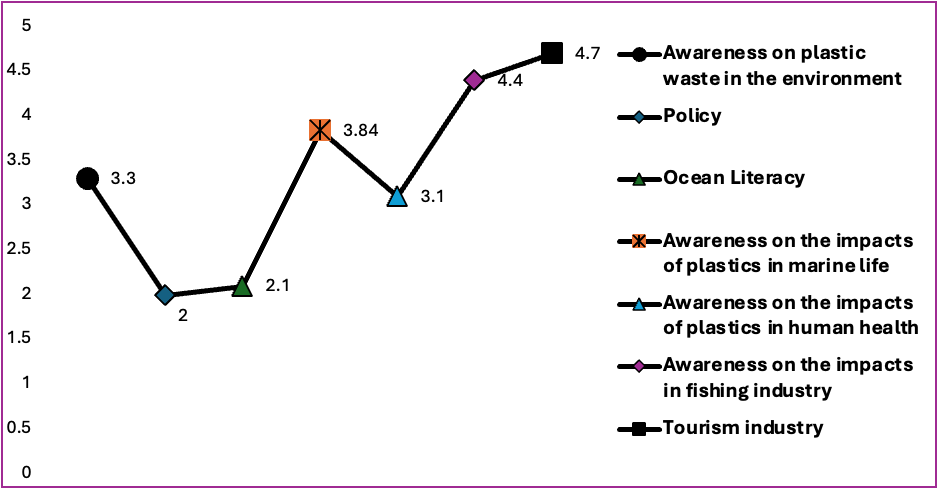
The level of awareness, which consisted of 27 questions, was subdivided into seven groupings (Table 2). Among the groupings, two answered that they were fully aware of the impacts of plastic on marine life and the fishing industry. One group answered aware of the impacts of plastics on marine life. In contrast, the other two groups stated that they were moderately aware in terms of general awareness of marine plastic litter and its impact on human health, while the last two groupings answered that they were slightly aware of the existing policies and ocean literacy.
| Issues | Over-all mean weight average | General remarks |
|---|---|---|
| 1. General awareness on marine plastic litter | 3.3 | Moderately Aware |
| 2. Awareness in existing waste policies | 2 | Slightly Aware |
| 3. Ocean Literacy | 2.1 | Slightly Aware |
| 4. Awareness on the impacts of plastics in marine life | 3.84 | Aware |
| 5. Awareness on the impacts of plastics in human health | 3.1 | Moderately Aware |
| 6. Awareness on the impacts of plastics in fishing industry | 4.4 | Fully aware |
| 7. Impacts on tourism industry | 4.7 | Fully aware |
3.2 Knowledge of the community in terms of macro- and microplastic
| Respondents | Percentage | |
|---|---|---|
| 1. Heard about macroplastics | 16 | 23% |
| 2. Heard about microplastics | 12 | 17% |
The data indicates that awareness of macro- and microplastics is relatively low in the selected coastal communities. Specifically, 16 respondents, or 23%, are aware of macroplastics, while only 12 respondents, or 17%, have heard of microplastics. During the interviews, respondents indicated that they were aware of the potential of plastics to break down into smaller pieces but they were unfamiliar with the specific terminology. They recognized the presence of plastic litter in their environment and its environmental impact. Some respondents also indicated limited access to information sources such as the Internet, television, and IECs, as factors constraining their knowledge.
3.3 Plastic litter pollution information sources
| Source of information | Rank |
|---|---|
| 1. Academe | 3 |
| 2. Television | 2 |
| 3. Internet | 1 |
| 4. Books | 5 |
| 5. Government Policy | 4 |
Information sources have played a crucial role in disseminating knowledge and promoting awareness about plastic litter. Based on respondents' responses, the sources of information regarding plastic litter were categorized according to their influence and effectiveness. The results suggest that the Internet is the primary source of information, followed by television, the academic sector, government policies, and books.
3.4 Source of plastic litter based on coastal communities’ perspective
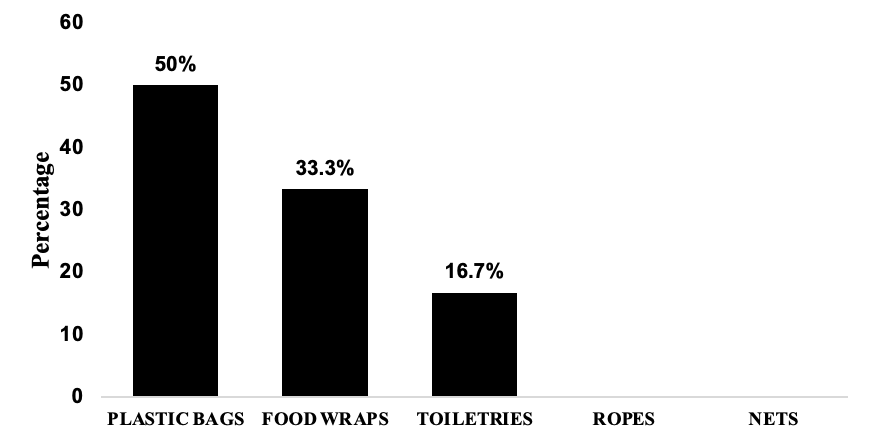
The community's behavior and dependency on plastic shape its plastic litter and pollution. Plastic types, including plastic bags, food wraps, toiletries, ropes, and nets, were ranked based on the frequency of plastic litter found in the studied area. As shown in Figure 3, plastic bags were the most dominant type of plastic litter, comprising 50% of the total. In the interviews, respondents shared that plastic bags and food wraps are the most common plastic litter due to their convenience and affordability. Food wraps were ranked second with 33.3%, followed by toiletries, which accounted for 16.7%. Meanwhile, ropes and nets were the least common.
3.5 Plastic movement and community practices in handling plastic
The community’s practices and behavior in handling plastic waste significantly affect the overall outcome of this plastic pollution problem. The Improper handling of plastic waste may result in several negative environmental impacts. As shown in Table 5, 55% of the respondents frequently buy products wrapped in plastic. Although Most of the respondents (72.86%) usually segregate their garbage. They face difficulty disposing of their garbage due to the lack of designated waste collection points and the absence of garbage truck collectors in their area to pick up their garbage. Although respondents understand that plastic litter is a problem in their area, it continues due to the low recycling rates in the community
| STATEMENTS | 5 | 4 | 3 | 2 | 1 | Total | Range Scale | Remarks | Interpretation |
|---|---|---|---|---|---|---|---|---|---|
| 1. Frequency of buying products wrapped/use plastics. | 39 | 25 | 3 | 3 | 0 | 70 | 4.4 | Everytime | Very frequent |
| 2. Frequency of disposing the garbage | 9 | 51 | 7 | 3 | 0 | 70 | 3.9 | Usually | Frequently |
| 3. Segregation of garbage before disposing | 28 | 29 | 5 | 6 | 2 | 70 | 4.1 | Usually | Frequently |
| 4. Practice reduce, reuse, and recycle | 6 | 4 | 5 | 12 | 43 | 70 | 1.8 | Never | Never |
| 5. Placing the garbage in the designated collection point | 17 | 32 | 7 | 2 | 12 | 70 | 3.6 | Usually | Frequently |
| 6. Plastic litters found is a problem in the community | 47 | 11 | 3 | 3 | 6 | 70 | 4.3 | Everytime | Very Frequent |
3.6 Perceived plastic litter before and after 5, 10, and 25 years
Most respondents perceived high plastic litter levels 25 years, 10 years, and 5 years ago. A primary reason cited was the lack of ordinances and policies for waste management. Additionally, respondents noted the absence of essential facilities, such as Material Recovery Facilities (MRF), along with limited access to garbage trucks and waste collection points.
| STATEMENTS | Range Scale | REMARKS |
|---|---|---|
| 1. Amount of plastic litter 5 years ago. | 3.5 | High |
| 2. Amount of plastics litter 10 years ago. | 3.3 | High |
| 3. Amount of plastic litter 25 years ago. | 3.3 | High |
Respondents generally perceived that the amount of plastic litter generated over the next 5, 10, and 25 years would slightly increase. During interviews, some expressed optimism, believing that plastic litter may slightly decrease due to current waste management ordinances and policies. They also noted that Environmental Information Campaigns (EICs) have been conducted in their respective barangays. However, other respondents predicted a slight increase in plastic litter, attributing this to the gradual annual population growth, which could lead to higher plastic consumption. Additionally, some respondents highlighted ongoing issues with waste mismanagement, particularly in barangays lacking designated collection points. In these areas, residents face challenges in waste disposal, often resorting to disposing of garbage along the shore or burying it. Some barangays, like Hinaplanon, have proactively established their own collection points and community pits specifically for biodegradable waste.
| STATEMENTS | Range Scale | REMARKS |
|---|---|---|
| 1. Amount of plastic litter that will be generated in 5 years. | 4.5 | Slightly Increase |
| 2. Amount of plastics litter that will be generated in the 10 years. | 5.0 | Slightly Increase |
| 3. Amount of plastic litter that will be generated in the 25 years. | 5.1 | Slightly Increase |
4. Discussion
We examined the awareness, knowledge, and perceptions of the coastal community in Iligan City regarding plastic pollution. Most respondents are female, underscoring their crucial role in making sustainable consumption and disposal decisions for their families and communities (Three Experts on Why Eradicating Plastic Pollution Will Help Achieve Gender Equality, 2024). The majority of them(55.71%) have an income below 5,000 pesos. Low-income families often struggle to live sustainably, primarily concerned with survival and providing food for their households. Additionally, many respondents own sari-sari stores and karinderya (small food stalls), which frequently contribute to using single-use plastics. These plastics are commonly used for food packaging, particularly for fast food, ready-to-eat meals, on-the-go beverages, and snacks, among other items (Imam, Glenn, and Chiellini 2012; Ncube et al. 2021). This finding is further supported by Figure 3, which shows that the most predominant types in the community are plastic wrappers (50%) and food wraps (33.33%). The sachet culture in the Philippines can also be directly associated with low income, which forces them to buy goods in the smallest retail packaging, which is not economical but practical for them (Manalo and Manalo 2022). The convenience, affordability, and widespread availability make it a preferred choice for various applications. (Cordova et al. 2022; Kumar et al. 2021; Law and Thompson 2014). Table 5 further supports the claims of sachet culture, showing that respondents frequently purchase products wrapped in plastic or use plastic. The availability and affordability of plastic have replaced traditional products in local markets, driven by global value chains and imported business models that aim to catch up with current trends. (Barrowclough and Birkbeck 2022) and increase product marketability. This sachet culture can contribute to the clogging of canals, waterways, and riverine systems, potentially exacerbating flooding. The Philippines is known to be one of the flood-prone countries and faces even more challenges as it deals with the worsening effects of plastic pollution.
In terms of awareness, most respondents recognize plastic litter pollution and its effects on the ocean’s ecosystem (Table 2). However, despite this public awareness, plastic generation in the area remains high. Although quantitative and qualitative survey data indicate a high level of public awareness regarding the issues of plastic consumption and pollution, plastic production and consumption continue to be high (Walker et al., 2023), presenting a problematic yet practical situation. Furthermore, respondents demonstrated low awareness of emerging pollutants such as macro- and microplastics, as shown in Table 3. This lack of understanding contributes to the limited proactive measures taken to address plastic litter pollution, as many respondents are unfamiliar with the specific effects of these pollutants on the environment and human health. Macro- and microplastics can enter the human food chain by consuming seafood and terrestrial food products, which can potentially lead to adverse health effects (Karbalaei et al., 2018). Additionally, if consumed, microplastics can act as endocrine disruptors, altering hormonal signaling pathways essential for proper reproductive system function, causing physical damage to reproductive tissues such as the ovaries and testes due to their abrasive nature, and being ingested by marine organisms, which can result in digestive blockages, malnutrition, and ultimately death (Ghosh et al., 2023).
Plastic information campaigns can significantly impact plastic management. As shown in Table 4, the Internet is the primary source of information, while books rank last. Given the roles of the academe and government policy, there is a pressing need for these sectors to enhance their involvement in community development, as they can provide essential scientific knowledge and effective policies to minimize plastic pollution. Raising awareness about the connection between ecosystems and human systems (Munien et al., 2024) is crucial. Furthermore, Table 5 indicates that coastal communities in Iligan City do not practice the principles of reduction, reuse, and recycling, resulting in the use of single-use plastics and contributing to the growing problem of plastic litter. Most respondents perceived that plastic litter levels were high 25 years, 10 years, and 5 years ago, primarily due to the lack of ordinances and policies for waste management during those times. Essential facilities are lacking, such as material recovery facilities, along with limited access to garbage trucks and waste collection points. Looking ahead, most respondents generally expect that the amount of plastic litter generated over the next 5, 10, and 25 years will slightly increase. However, some expressed optimism, believing that current waste management ordinances and policies may slightly decrease plastic litter.
5. Conclusions and Implications
The analysis of the coastal communities in Iligan City reveals significant challenges associated with plastic pollution, underscoring the urgent need for improved waste management practices. The prevalence of low-income households in these communities has fostered a sachet culture, where respondents heavily rely on single-use plastics. Combined with the lack of waste disposal facilities, this situation has led to a culture of indiscriminate waste disposal. While there is a general awareness of the impacts of plastic waste on ocean ecosystems, the persistent reliance on single-use plastics and the limited engagement of key sectors such as the academe and government indicate significant gaps in effective plastic management strategies. To address these challenges, targeted educational campaigns, improved waste management policies, and the promotion of sustainable yet adaptable practices can empower communities to mitigate the effects of plastic pollution.
Author Contributions
F.M.A: conceptualization, investigation, formal analysis, writing—original draft. S.M.G.: sorting and data collection. and M.J.W, H.P.B.: conceptualization, supervision, investigation, formal analysis, writing—review, and editing. All authors have read and agreed to the published version of the manuscript.
Funding
This study was funded by the Department of Science and Technology—Accelerated Science and Technology Human Resource Development Program (ASTHRDP) scholarship.
Acknowledgments
The researchers would like to thank the funding program of this research: DOST-SEI through the Accelerated Science and Technology Human Resource Development Program (ASTHRDP) scholarship program.
Conflicts of Interest
The authors declare no conflict of interest.
References
- Acot, F.T., Sajorne, R.E., Omar, N.A.K., Suson, P.D., Rallos, L.E.E., Bacosa, H.P., 2022. Unraveling macroplastic pollution in rural and urban beaches in Sarangani bay protected seascape, Mindanao, Philippines. J. Mar. Sci. Eng. 10. https://doi.org/10.3390/jmse10101532
- Adhikari, P.L., Bam, W., Campbell, P.L., Oberhaensli, F., Metian, M., Besson, M., Jacob, H., Swarzenski, P.W., 2022. Evaluating microplastic experimental design and exposure studies in aquatic organisms. Springer, Cham. pp. 69–85. https://doi.org/10.1007/978-3-030-78627-4_3
- Arcadio, C.G.L.A., Navarro, C.K.P., Similatan, K.M., Inocente, S.A.T., Ancla, S.M.B., Banda, M.H.T., Capangpangan, R.Y., Torres, A.G., Bacosa, H.P., 2023. Microplastics in surface water of Laguna de Bay: First documented evidence on the largest lake in the Philippines. Environ. Sci. Pollut. Res. 30, 29824–29833. https://doi.org/10.1007/s11356-022-24261-5
- Barrowclough, D., Birkbeck, C.D., 2022. Transforming the global plastics economy: The role of economic policies in the global governance of plastic pollution. Soc. Sci. 11. https://doi.org/10.3390/socsci11010026
- Celmar, J.M., Gabriel, A.D., Hung, C.C., Bacosa, H.P., 2024. Microplastic pollution on seagrass blades in two coastal bays in Northern Mindanao, Philippines. Reg. Stud. Mar. Sci. 77. https://doi.org/10.1016/j.rsma.2024.103636
- Corcoran, P.L., Biesinger, M.C., Grifi, M., 2009. Plastics and beaches: A degrading relationship. Mar. Pollut. Bull. 58, 80–84. https://doi.org/10.1016/j.marpolbul.2008.08.022
- Cordova, M.R., Ulumuddin, Y.I., Purbonegoro, T., Puspitasari, R., Afianti, N.F., Rositasari, R., Yogaswara, D., Hafizt, M., Iswari, M.Y., Fitriya, N., Widyastuti, E., Harmesa, Lestari, Kampono, I., Kaisupy, M.T., Wibowo, S.P.A., Subandi, R., Sani, S.Y., Sulistyowati, L., Nurhasanah, Muhtadi, A., Riani, E., Cragg, S.M., 2022. Seasonal heterogeneity and a link to precipitation in the release of microplastic during COVID-19 outbreak from the Greater Jakarta area to Jakarta Bay, Indonesia. Mar. Pollut. Bull. 181. https://doi.org/10.1016/j.marpolbul.2022.113926
- Gaboy, S.M.M., Guihawan, J.Q., Leopardas, V.E., Bacosa, H.P., 2022. Unravelling macroplastic pollution in seagrass beds of Iligan City, Mindanao, Philippines. Mar. Pollut. Bull. 185. https://doi.org/10.1016/j.marpolbul.2022.114233
- Gabriel, A.D., Amparado, R.F., Lubguban, A.A., Bacosa, H.P., 2023. Riverine microplastic pollution: Insights from Cagayan de Oro River, Philippines. Int. J. Environ. Res. Public Health 20. https://doi.org/10.3390/ijerph20126132
- Ghosh, Shampa, Sinha, J.K., Ghosh, Soumya, Vashisth, K., Han, S., Bhaskar, R., 2023. Microplastics as an emerging threat to the global environment and human health. Sustain. https://doi.org/10.3390/su151410821
- Hale, R.C., Seeley, M.E., La Guardia, M.J., Mai, L., Zeng, E.Y., 2020. A global perspective on microplastics. J Geophys. Res. Oceans. https://doi.org/10.1029/2018JC014719
- Horton, A.A., Dixon, S.J., 2018. Microplastics: An introduction to environmental transport processes. Wiley Interdisciplinary Reviews: Water 5. https://doi.org/10.1002/WAT2.1268
- Imam, S.H., Glenn, G.M., Chiellini, E., 2012. Utilization of biobased polymers in food packaging: assessment of materials, production and commercialization * *Names are necessary to report factually on available data; however, the United States Department of Agriculture (USDA) neither guarantees nor warrants the standard of the product, and the use of the name by the USDA implies no approval of the product to the exclusion of others that may be suitable., in: Emerging Food Packaging Technologies. Elsevier, pp. 435–468. https://doi.org/10.1533/9780857095664.4.435
- Inocente, S.A.T., Bacosa, H.P., 2022. Assessment of macroplastic pollution on selected tourism beaches of Barobo, Surigao Del Sur, Philippines. J. Mar. Isl. Cult. 11, 203–214. https://doi.org/10.21463/jmic.2022.11.1.14
- Jambeck, J.R., Geyer, R., Wilcox, C., Siegler, T.R., Perryman, M., Andrady, A., Narayan, R., Law, K.L., 2015. Plastic waste inputs from land into the ocean. Sci. (1979) 347, 768–771. https://doi.org/10.1126/science.1260352
- Jarabe, J.G.P., Torres, A.G., Guihawan, J.Q., Bacosa, H.P., 2023. Occurrence of COVID-19-related Personal Protective Equipment (PPE) litter in mangroves and Beaches in Davao City, Philippines. Water Air Soil Pollut. 234. https://doi.org/10.1007/s11270-023-06408-3
- Kalnasa, M.L., Lantaca, S.M.O., Boter, L.C., Flores, G.J.T., Galarpe, V.R.K.R., 2019. Occurrence of surface sand microplastic and litter in Macajalar Bay, Philippines. Mar. Pollut. Bull. 149. https://doi.org/10.1016/j.marpolbul.2019.110521
- Karbalaei, S., Hanachi, P., Walker, T.R., Cole, M., 2018. Occurrence, sources, human health impacts and mitigation of microplastic pollution. Environ. Sci. Pollut. Res. https://doi.org/10.1007/s11356-018-3508-7
- Kumar, Rakesh, Verma, A., Shome, A., Sinha, R., Sinha, S., Jha, P.K., Kumar, Ritesh, Kumar, P., Shubham, Das, S., Sharma, P., Prasad, P.V.V., 2021. Impacts of plastic pollution on ecosystem services, sustainable development goals, and need to focus on circular economy and policy interventions. Sustain. https://doi.org/10.3390/su13179963
- Law, K.L., Thompson, R.C., 2014. Microplastics in the seas. Sci. https://doi.org/10.1126/science.1254065
- Liu, K., Wang, X., Song, Z., Wei, N., Li, D., 2020. Terrestrial plants as a potential temporary sink of atmospheric microplastics during transport. Sci. Total Environ. 742. https://doi.org/10.1016/j.scitotenv.2020.140523
- Madarcos, J.R. V., Creencia, L.A., Roberts, B.R., White, M.P., Nayoan, J., Morrissey, K., Fleming, L.E., 2021. Understanding local perceptions of the Drivers/Pressures on the coastal marine environment in Palawan, Philippines. Front. Mar. Sci. 8. https://doi.org/10.3389/fmars.2021.659699
- Manalo, H., Manalo, M.R., 2022. Slave to sachet economy: Socio-cultural insights. Transnatl. Mark. J. 10, 103–118. https://doi.org/10.33182/tmj.v10i1.2097
- Munien, S., Adhikari, P.L., Reycraft, K., Mays, T.J., Naidoo, T., Pruitt, M., Arena, J., Sershen, 2024. Application and efficacy of management interventions for the Control of Microplastics in Freshwater Bodies: A Systematic Review. Water. https://doi.org/10.3390/w16010176
- Navarro, C.K.P., Arcadio, C.G.L.A., Similatan, K.M., Inocente, S.A.T., Banda, M.H.T., Capangpangan, R.Y., Torres, A.G., Bacosa, H.P., 2022. Unraveling microplastic pollution in mangrove sediments of Butuan Bay, Philippines. Sustain 14. https://doi.org/10.3390/su142114469
- Ncube, L.K., Ude, A.U., Ogunmuyiwa, E.N., Zulkifli, R., Beas, I.N., 2021. An overview of plasticwaste generation and management in food packaging industries. Recycl. 6, 1–25. https://doi.org/10.3390/recycling6010012
- Nurhati, I.S., Cordova, M.R., 2020. Marine plastic debris in Indonesia: Baseline estimates (2010-2019) and monitoring strategies (2021-2025). Mar. Res. Indones. 45, 97–102. https://doi.org/10.14203/mri.v45i2.581
- Pahl, S., Wyles, K.J., 2017. The human dimension: How social and behavioural research methods can help address microplastics in the environment. Analytical Methods. https://doi.org/10.1039/c6ay02647h
- Phelan, A.A., Ross, H., Setianto, N.A., Fielding, K., Pradipta, L., 2020. Ocean plastic crisis—Mental models of plastic pollution from remote Indonesian coastal communities. PLoS One 15. https://doi.org/10.1371/journal.pone.0236149
- Potts, T., Pita, C., O’Higgins, T., Mee, L., 2016. Who cares? European attitudes towards marine and coastal environments. Mar. Policy 72. https://doi.org/10.1016/j.marpol.2016.06.012
- Puji, R.P.N., Sumarno, 2019. Plastic waste product development: Environment preservation efforts, in: IOP Conference Series: Earth and Environ. Sci. Inst. of Phys. Publishing. https://doi.org/10.1088/1755-1315/243/1/012149
- Requiron, J.C.M., Gutierrez, C.S., Inocente, S.A.T., Pacilan, C.M., Gaboy, S.M.M., Sison, C.P.M., Amparado, R.F., Bacosa, H.P., 2023. Aquaculture farmers’ perception and level of awareness of plastic litter in San Pedro, Dapitan City, Mindanao, the Philippines. J. Sustain. Sci. Manag. 18, 77–91. https://doi.org/10.46754/jssm.2023.03.006
- Romarate, R.I.A., Ancla, S.M.B., Patilan, D.M.M., Inocente, S.A.T., Pacilan, C.J.M., Sinco, A.L., Guihawan, J.Q., Capangpangan, R.Y., Lubguban, A.A., Bacosa, H.P., 2022. Breathing plastics in Metro Manila, Philippines: Presence of suspended atmospheric microplastics in ambient air. Environ. Sci. Pollut. Res. https://doi.org/10.21203/rs.3.rs-1751821/v1
- Sajorne, R.E., Bacosa, H.P., Cayabo, G.D.B., Ardines, L.B., Sumeldan, J.D.C., Omar, J.M., Creencia, L.A., 2021. Plastic litter pollution along sandy beaches in Puerto Princesa, Palawan Island, Philippines. Mar. Pollut. Bull. 169. https://doi.org/10.1016/j.marpolbul.2021.112520
- Similatan, K.M., Arcadio, C.G.L.A., Navarro, C.K.P., Capangpangan, R.Y., Bacosa, H.P., 2023. Microplastic ingestion by adult milkfish Chanos chanos (Forsskål, 1775) in aquaculture system: The case of Butuan Bay, Philippines. Mar. Pollut. Bull. 194. https://doi.org/10.1016/j.marpolbul.2023.115409
- Walker, T.R., Baechler, B.R., Markley, L., Grünzner, M., Akuoko, I.S.G., Bowyer, C., Menzel, C., Muntaha, S.T., Macdonald, A., Allen, D., Cowan, E., 2023. Plastic pulse of the Public: A review of survey-based research on how people use plastic. Cambridge Prisms: Plastics 1. https://doi.org/10.1017/plc.2023.8
- Worm, B., Barbier, E.B., Beaumont, N., Duffy, J.E., Folke, C., Halpern, B.S., Jackson, J.B.C., Lotze, H.K., Micheli, F., Palumbi, S.R., Sala, E., Selkoe, K.A., Stachowicz, J.J., Watson, R., 2006. Impacts of biodiversity loss on ocean ecosystem services. Sci. 314, 787–790. https://doi.org/10.1126/science.1132294