
The Ecological and Economic Value of Seagrass Ecosystems in Kemujan Island, Karimun Jawa National Park (TNKJ), Central Java Province, Indonesia
 10.21463/jmic.2025.14.2.15
Abstract
The seagrass ecosystem is one of the most critical ecosystems in the sea. It supports a variety of marine life, just like coral reefs and mangroves. Seagrasses are commonly found in the Atlantic and Indo-Pacific seas of tropical waters. In Indonesia, there are 60 seagrass species, and 12 of them are found in the country. The seagrass ecosystem is linked to local economic activities, which means that the livelihoods of coastal communities depend on seagrass beds. A research study examined the economic value of the seagrass ecosystem on Kemujan Island, Karimunjawa National Park (TNKJ), from March to June 2021. The method used was purposive sampling, which involved taking four observation stations. The study found seven types of seagrass on Kemujan Island, with the C. serrulata seagrass type having the highest Importance Value Index (INP) value. This indicates that the presence of this seagrass type is crucial to the condition of the seagrass community in the waters of Kemujan Island. The water quality conditions in the area meet the quality standards to support seagrass growth based on Minister of Environment Decree No. 51 of 2004. The economic value of the seagrass ecosystem on Kemujan Island was calculated to be IDR 28,261,235,060.00 per year. This value includes a direct use value of IDR 12,778,630,000.00/year (45.22%), an indirect use value of IDR 12,343,071,477.00/year (43.67%), an option value of IDR 1,672,082,583.00/year (5.92%), an existence value of IDR 189,588,000.00/year (0.67%), and bequest value of IDR 1,277,863,000.00/year (4.52%).
Keywords
Seagrass ecosystem, Kemujan Island, Social-Ecological System, Economic Valuation
1. Introduction
Coastal areas are significant sources of natural resources and unique regional characteristics (Ramadhan et al., 2017). The development of coastal and marine resources can support development in Indonesia. Seagrass beds are one such resource with high potential. They are essential ecosystems supporting marine life, coral reefs, and mangroves (Hartati et al., 2017). Seagrasses in tropical waters are primarily found in the Atlantic and Indo-Pacific oceans (Rosalina et al., 2018). Of 60 seagrass species worldwide, 12 are recorded in Indonesia (Hidayat et al., 2019; Syukur, 2015). Seagrass ecosystems have significant ecological and economic value. They provide organic carbon to the surrounding ecosystem, offer food and habitat for specific biota, and maintain sediment and coastline stability (Adi et al., 2019; Cappenberg & Wulandari, 2019; de la Torre Castro, 2019; Supratman et al., 2019). Coastal waters receive sufficient sunlight to penetrate the bottom of the waters (Ismail et al., 2019). These waters are rich in nutrients and have high organic productivity due to land and sea sources (Sipahelut et al., 2020). The supportive environment in coastal waters allows seagrass to live and develop optimally (Samson et al., 2020).
Seagrass beds provide various benefits, including supporting fish diversity and exhibiting secondary productivity (Rappe, 2010). These ecosystems also offer valuable environmental services to society, both economically and socially (Tebaiy, 2015). The seagrass ecosystem has an option value that emphasizes preserving its function for future use (Tangke, 2010). To obtain accurate resource and environmental values, experts use economic valuation to determine the economic benefits (Tebaiy, 2015). Coastal communities in Indonesia use coastal and marine resources to meet their daily needs (Wahyudin et al., 2017). Optimal and sustainable development of coastal and seagrass resources requires meeting three ecological requirements: utilizing coastal and marine resources following their carrying capacity, harmoniously using coastal area space, and absorbing environmental capacity in coastal areas by environmental capabilities (Wallner-Hahn et al., 2022). Integrated management planning must accommodate all the interests of coastal development actors (Efendy, 2009).
The Karimunjawa Islands are situated northeast of Semarang City and can be found at coordinates 5° 40' 39" to 5° 55' 00" South Latitude and 110° 05' 57" to 110° 31' 15" East Longitude. The area, consisting of 22 small islands, is a national park and nature conservation area. Four islands are inhabited (Karimunjawa et al.). The national park covers an area of 111,625 hectares. It has various ecosystem types, such as lowland tropical rainforests (1,285.5 hectares), coastal forests, mangrove ecosystems (222.2 hectares), and water areas, which include seagrass and coral reef systems covering an area of 110,117 hectares. This research aims to evaluate the ecological and economic value of the seagrass ecosystem in the waters of Kemujan Island, Karimunjawa National Park. The results of this research can provide valuable information to the community, government, and environmental observers (especially coastal ecosystems) regarding the asset value of seagrass ecosystem resources. This information can help maintain sustainability and increase the economic value of seagrass ecosystems on Kemujan Island, Karimunjawa National Park, which could be used in making management policies in the future.
2. Material and Methods
2.1. Research Location
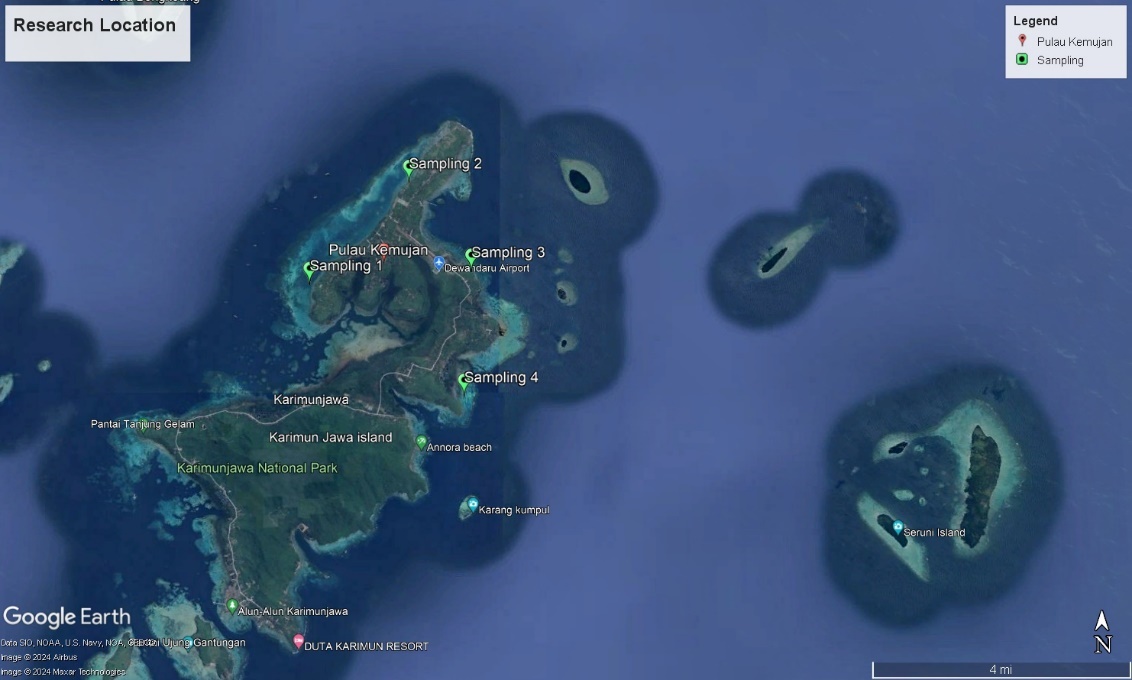
The study was conducted in the Karimunjawa National Park (TNKJ), specifically on Kemujan Island. This island is administratively located in Jepara Regency, Central Java Province. The selection of the research location was based on the distribution and existence of seagrass ecosystems and the activities of surrounding coastal communities. The research was carried out for four months, from March to June 2021. A detailed map of the research location can be seen in Figure 1.
2.2. Collecting Data
The research included both primary and secondary data. Primary data consisted of economic and ecological data. Economic valuation data was obtained through interviews using questionnaires, which provided information on the use of seagrass ecosystems (Lahjie et al., 2019). Ecological data was collected through field observations, including water conditions, species and number of seagrass, relative density, species frequency, percentage cover, and important value index (INP). Line transects and quadratic frames were used to determine the condition of the seagrass ecosystem. Three line transects measuring 100 meters each were set up with a distance of 50 meters between each transect, resulting in a total area of 100 meters x 100 meters. On each transect, a quadrat frame measuring 50 cm x 50 cm was placed on the right side, measuring 10 meters between each quadrat and 11 quadrats. The quadrat frame's starting point (0 meters) was placed 5 meters from the first seagrass found on the beach towards the sea (Hutomo & Nontji, 2014). Water quality parameters were also observed as supporting data.
The research data used in this study involved primary and secondary data. The respondents were selected through the purposive sampling method, meaning they were not chosen randomly but based on their status as users of the mangrove ecosystem. The number of respondents was chosen based on specific characteristics such as their ability to communicate effectively and their knowledge and experience in fisheries activities or seagrass ecosystems, among others.
Regarding collecting economic valuation data, Arkham et al. (2023) conducted face-to-face interviews with respondents using a semi-structured questionnaire. The secondary data used in the study included general conditions of research locations and fisheries obtained from previous research, the Central Java Provincial Maritime Affairs and Fisheries Service, BPS (Central Statistics Agency), and the Karimunjawa National Park Office, research reports related to the location, as well as several related research journals.
2.3. Data Analysis
2.3.1. analysis data of ecology
a. Identification of Seagrass Species
Species identification is done by comparing data such as the shape of seagrass leaves, flowers, and roots with catalogues to identify different species of seagrass in the field. Once the identification is made, the species of seagrass are presented in tabular form per the guidelines provided by the Minister of Environment Decree No. 200 of 2004. In identifying seagrass species accurately, it is recommended that the seagrass identification guide developed by McKenzie in 2003 be used.
b. Relative Density
Seagrass species density is calculated by observing the seagrass density using the formula: Ki = Ni/A, where Ki is the species density; Ni is the total area of individual stands of species-i; A is the total area of the sampling area. Relative density compares the number of individuals of species-i and the total number of individuals of all species (English et al., 1994). Relative density is calculated using the formula: KRi = Ni/Ʃn x 100, where KRi is the relative density; Ni is the total number of individual stands of species-i; Ʃn is the total number of stands of all species.
c. Relative Frequency
The total area of the sampling area has been determined previously. Relative density compares the number of individuals of species-i and the total number of individuals of all species (English et al., 1994). Calculation of relative density is carried out using the formula: KRi = Ni/Ʃn x 100, where KRi is the relative density; Ni is the total number of individual stands of species-i; Ʃn is the total number of stands of all species.
d. Percentage of Seagrass Coverage
The percentage of seagrass coverage was calculated using the Rapid Assessment method. According to English et al. (1994), to determine the percentage cover (Ci) in each 50x50 cm² quadrant, the formula used is: Ci = Ʃ(Mi x Fi)/ Ʃfi, where Mi is the midpoint; Fi is the frequency of occurrence of the ith species; and ƩFi is the total number of occurrence frequencies of all species. Percentage relative cover (CRi) is a comparison between the cover of individual species-i and the total cover of all types, according to the formula proposed by Mc Kenzie et al. (2009): CRi = Ci/ƩCi x 100, where CRi is the relative closure; Ci is the area covered by the ith species; and Ʃci is the closure of all species.
e. Importance Value Index (INP)
The seagrass importance value index (INP) is used to calculate and estimate the overall role of one type (species) in a community. The INP value range ranges from 0 to 300%. INP provides an overview of the influence or role of a type of plant on an area. The higher the INP value of a type compared to other types, the greater its role in the community. To calculate INP, the formula (Brower et al., 1989) is used, namely: INP = KRi + FRi + CRi, where KRi is relative density, FRi is relative frequency, and CRi is relative coverage.
2.3.2. analysis of economic valuation
a. Direct Use Value
Direct use value is the value resulting from the direct use of a resource, which can also be interpreted as a benefit that can be consumed or enjoyed so that the benefits are felt directly. From the results of field observations, various types of biota, such as fish, shellfish, snails, and others, were found that could be utilized. So, the direct benefit value can be calculated using the equation (Pandelaki et al., 2020) as follows:
$$ DUV = {∑}_{i=1,2,3,n}^n(DUVi) $$
b. Indirect Use Value
Indirect benefit value is the utilization value based on the indirect function of the existence of the seagrass ecosystem. One of its indirect functions is as a breakwater. The formulation of this benefit calculation, according to Wawo et al. (2014), is as follows:
$$ IUV = (Pgt \times Dt \times B) $$
c. Option Value
The option value is the economic value obtained from the potential direct or indirect use of resources. In determining the value of the benefits of this choice, the equation is used (Widiastuti, 2011):
$$ \textit{Option Value} = \text{The area of the seagrass bed (Ha)} \times \text{The value of biodiversity} $$
d. Existence Value
Existence value is a value measured from the benefits felt by society from the existence of an ecosystem after other benefits have been removed from the analysis. So, it is formulated as follows (Ruitenbeek, 1991 in Marhayana et al., 2021):
$$ \text{EV} = {∑}_{i=1,2,3,n}^n ({{EVi} \over n}) $$
e. Bequest Value
The bequest value of the seagrass ecosystem cannot be assessed using a market value approach. Therefore, the heritage value can be calculated using an approximate approach. In this regard, the heritage value is estimated to be no less than 10% of the direct benefits (Ruitenbeek, 1991 in Marhayana et al., 2021). With the following formula:
$$ \text{BV} = 10\% \times \text{Total of Direct Use Value} $$
f. Total Economic Value
The total Economic Value (TEV) of seagrass ecosystems on Kemujan Island, TNKJ, can be calculated by the following mathematical equation (Mascariňas & Otadoy, 2023):
$$ \text{TEV} = \text{(DUV+IUV+OV)+(EV+BV)} $$
3. Results and Discussion
3.1. Results
3.1.1. Seagrass ecological conditions
a. Water Quality Parameters
Water quality parameters have been measured in the seagrass ecosystem at our research location. These parameters include physical (temperature, current speed, brightness, and substrate) and chemical (pH and salinity) characteristics. The results of measurements taken at four different research points indicate that the temperature ranges from 30-31 °C, current speed ranges from 0.4-0.5 m/s, brightness reaches 100%, salinity falls between 29-30‰, pH levels vary from 6-7, and the bottom substrate is typically comprised of sand and coral fragments (as detailed in Table 1). Overall, the physico-chemical characteristics of the water are still within the acceptable limits for marine life as defined by the Minister of Environment Decree No. 51 of 2004.
| Parameters | Quality standard | Stations | |||
|---|---|---|---|---|---|
| I | II | III | IV | ||
| Physics | |||||
| Temperature (°C) | 28-30)* | 31 | 30 | 30 | 30 |
| Current Speed (m/s) | 0.5)** | 0.4 | 0.4 | 0.4 | 0.5 |
| Brightness (%) | 100)* | 100% | |||
| Substrate | mud, sand, gravel and coral fragments)** | Sand and coral fragments | Fine sand, slightly muddy | Sand and coral fragments | Sand and coral fragments |
| Chemical | |||||
| Salinity (‰) | 33-34)* | 30 | 30 | 29 | 29 |
| pH | 6.5-8.5)* | 6 | 7 | 7 | 7 |
)*: Minister of Environment Decree No. 51 of 2004
)**: Dahuri, 2003
b. Species and Seagrass Density Conditions
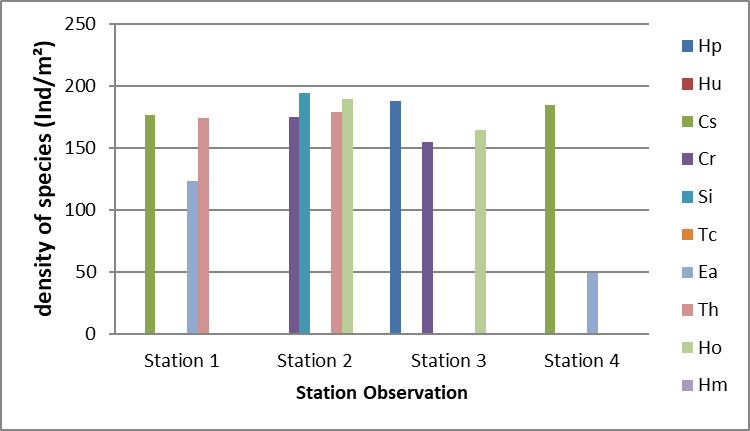
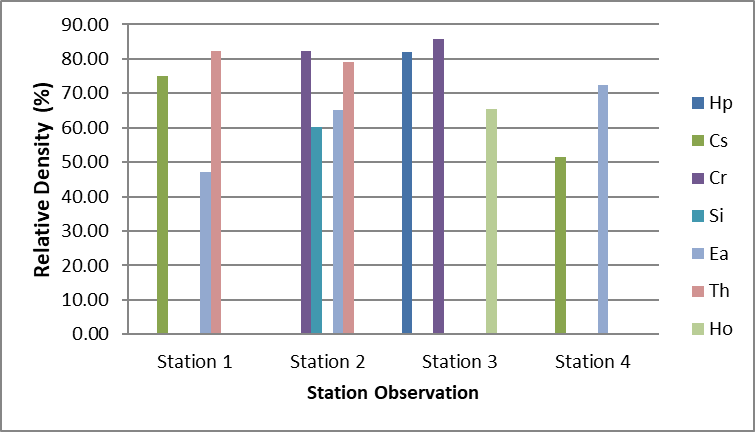
Based on identification results obtained from four observation stations on Kemujan Island, Karimun Jawa National Park, Jepara Regency, seven species of seagrass were found, which belonged to two families, namely Hydrocharitaceae and Potamogetonaceae. These species include Enhalus acoroides (Ea), Thalassia hemprichii (Th), Halophila ovalis (Ho), Cymodocea rotundata (Cr), Cymodocea serrulata (Cs), Halodule pinifolia (Hp), and Syringodium isoetifolium (Si). The average density of seagrass species between stations in the waters of Kemujan Island ranges from 0 to 195 individuals/m², while the average total relative density ranges from 0 to 85.68% (see Figure 2). The type of seagrass with the highest density of the seven most commonly found is S. isoetifoinum, with the highest average total density at station 2, reaching 195 individuals/m2. At stations 1 and 4, C. serrulata showed the highest density, 177 and 185 individuals/m2, respectively, while at station 3, H. pinifolia had the highest density of 188 individuals/m2. In contrast to the species density value, the highest relative density value at the research location was obtained from the seagrass species C. rotundata, with a relative density value reaching 85.68%. Details of the assessment of species density and relative density of seagrass ecosystems at the research location can be seen in Figure 2.
 |
 |
| (a) | (b) |
c. Coverage of Seagrass Species Condition
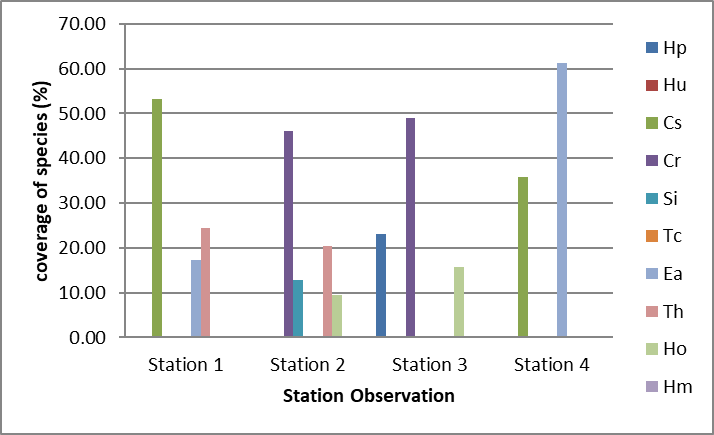
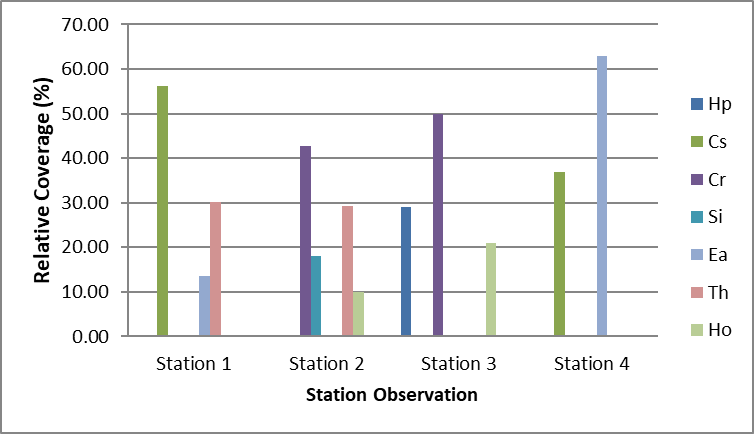
The condition of seagrass beds at a specific location at a particular time can be assessed using the percentage of area cover (Dewi & Prabowo, 2015). On average, the percentage of seagrass cover in the waters of Kemujan Island ranges from 0 to 61.20% (see Figure 3). The highest percentage of species cover and relative seagrass cover (see Figure 3) was shown by the Enhalus acoroides type found at station 4, with a value above 60% compared to other seagrass types at the four observation stations. This is caused by the massive size of the leaves of H. acoroides compared to other types of seagrass. On the other hand, smaller seagrass individuals have lower percentage cover values because they have relatively more minor leaves.
 |
 |
| (a) | (b) |
d. Frequency of Seagrass Species
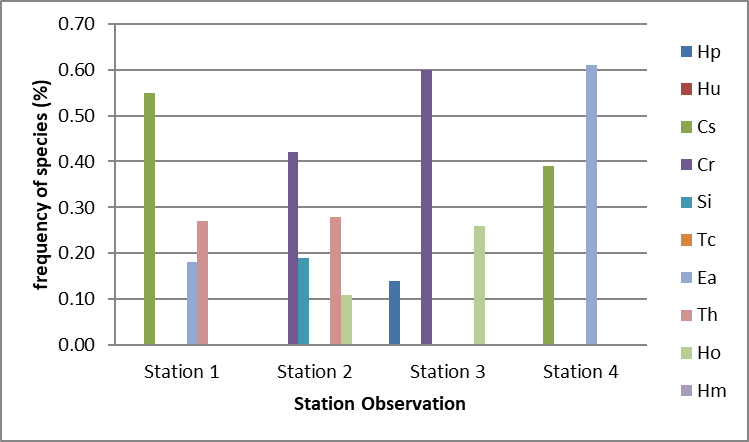
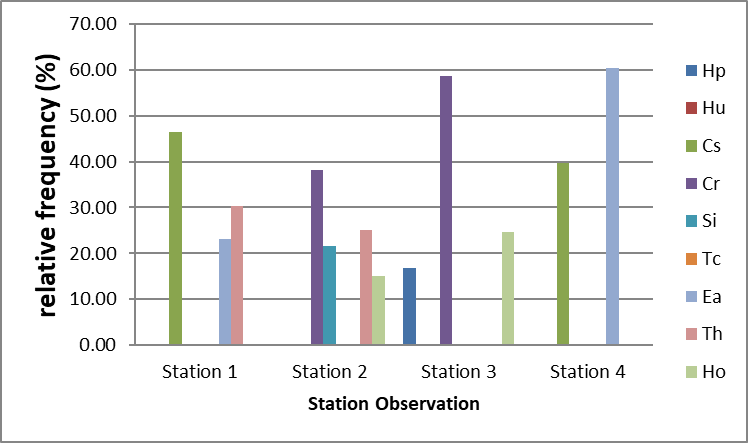
The frequency of seagrass occurrence in the waters of Kemujan Island indicates the level of distribution of seagrass species within its community. The frequency of seagrass species at each station varies, where Enhalus acoroides dominate the highest frequency value of seagrass species, with a frequency occurrence value of 0.61 (61%) found at station 4. At station 1, the highest occurrence frequency of seagrass species is Cymodocea serrulata, with a value of 0.55 (55%). In contrast, at stations 2 and 3, the highest seagrass species are Cymodocea rotundata, with values of 0.42 (42%) and 0.60 (60%), respectively. Details of the frequency of the occurrence of seagrass species at the research site can be seen in Figure 4.
 |
 |
| (a) | (b) |
e. Importance Value Index (INP)
In calculating and comprehensively assessing the role of a species in a seagrass community, the Importance Value Index (INP) is used, with values ranging from 0 to 300. From the analysis results, the highest INP was found in the species Cymodocea serrulata, indicating that the seagrass species Cymodocea serrulata (278.04) plays a significant role as a critical species related to the condition of the seagrass community in the water area. This species greatly influences its community (Harnianti et al., 2017). Meanwhile, the lowest INP was found in the species Syringodium isoetifolium (66.40) (Table 2).
| Family | Species | Station | Total | |||
|---|---|---|---|---|---|---|
| I | II | III | IV | |||
| Hydrocharitaceae | Enhalus acoroides | 60.45 | - | - | 118.65 | 179.10 |
| Thalassia hemprichii | 142.86 | 79.66 | - | - | 222.52 | |
| Halophila ovalis | - | 82.19 | 89.09 | - | 171.28 | |
| Potamogetonaceae | Cymodocea rotundata | - | 71.75 | 133.78 | - | 205.53 |
| Cymodocea serrulata | 96.69 | - | - | 181.35 | 278.04 | |
| Halodule pinifolia | - | - | 77.13 | - | 77.13 | |
| Syringodium isoetifolium | - | 66.40 | - | - | 66.4 | |
3.1.2. Economic Value of Seagrass Ecosystem
The economic valuation of seagrass ecosystems can be conducted by calculating the direct and indirect benefits. Direct benefits include the utilization of fisheries resources and biota around seagrass ecosystems. In contrast, indirect benefits refer to the value or function of the seagrass ecosystem itself for the biota surrounding the seagrass beds. Below are the economic valuation results based on the identified benefits at the research site.
a. Direct Use Value
The direct use value of the seagrass ecosystem in Kemujan Island, Karimunjawa National Park (TNKJ), includes the economic value derived from fishermen's catches (fish and sea cucumbers) and the research value on Kemujan Island, TNKJ. Based on the calculations, the economic value of the direct benefits of the seagrass ecosystem at the research site is IDR 12,778,630,000.00 per year. The most significant direct benefit based on research results comes from the sea cucumber collection benefit, which amounts to 90.5% or IDR 11,569,500,000.00. Details of the economic value calculations of the direct benefits from the seagrass ecosystem on Kemujan Island, TNKJ, can be seen in Table 3.
| Direct Use Value Details | Units | Economic Value | Percentage (%) |
|---|---|---|---|
| A. Activities of Capture Fisheries | |||
| Average of Fish Productions | Kg/Year | 1,379 | |
| Average of Operational Cost | IDR/Year | 9,366,625.00 | |
| Average of Net Revenue (Reduced by Cost) | IDR/Year | 26,090,875.00 | |
| Total Fisherman | Person | 40 | |
| Value of Capture Fisheries Benefits | IDR/Year | 1,043,635,000.00 | 8.2 |
| B. Activities of Sea Cucumbers Collecting | |||
| Average of Sea Cucumbers Productions | Kg/Year | 455 | |
| Average of Net Revenue (Reduced by Cost) | IDR/Year | 385,650,000.00 | |
| Average of Operational Cost | IDR/Year | 1,100,000.00 | |
| Total Fisherman of Sea Cucumbers | Person | 30 | |
| Value of Sea Cucumbers Benefits | Rp/Year | 11,569,500,000.00 | 90.5 |
| C. Research Activities | |||
| Total Research | Activities/Year | 33 | |
| Research Cost | IDR/Activities | 5,015,000.00 | |
| Value of Research Benefits | IDR/Year | 165,495,000.00 | 1.3 |
| Total of Direct Use Value | 12,778,630,000.00 | 100 | |
- Fisheries Resources
Based on the calculation results, the average production of fish resources obtained within one year is 1379.25 kg. The average operational costs incurred by fishermen amount to IDR 9,366,625.00 per year, and the average selling price of fish is IDR 25,875.00 per kg, resulting in an average net income of fishermen of IDR 26,090,875.00 per year. With 40 fishermen in the location, the direct benefits from the catch associated with seagrass amount to IDR 1,043,635,000.00 per year.
- Sea Cucumbers
Based on the calculation results, the average production of collected sea cucumbers obtained within one year is 455 kg. The average operational cost incurred by fishermen is IDR 1,100,000.00 per year, resulting in an average net income of IDR 385,650,000.00 per year. With 30 fishermen in the location, the direct benefit value from sea cucumber catches amounts to IDR 11,569,500,000.00 per year.
- Research Activities
The direct use value (DUV) is calculated using the benefit transfer (BT) method based on the transferred value of research funding expended by researchers. Researchers who visited and conducted research in the Karimunjawa National Park regarding the seagrass ecosystem, based on statistical data from the Karimunjawa National Park Office (BTNKJ) in 2020, amounted to 33 researchers/research activities. The average duration of the research is one week, with one visit per year. The expenditure incurred by researchers during the research period averages IDR 5,015,000.00. Therefore, the direct benefit value of research in the Karimunjawa National Park (TNKJ) is IDR 165,495,000.00 annually.
b. Indirect Use Value
The calculated indirect benefits include the value of seagrass ecosystems as essential habitats for fish and non-fish resources and carbon absorption. The importance of the habitat is seen through the benefits of seagrass ecosystems as spawning, nursery, and feeding grounds. Based on the calculations, the economic value of the indirect benefits of seagrass ecosystems in the research area amounts to IDR 12,343,071,477 per year. The most significant indirect benefit from the research findings is the importance of seagrass habitats, which accounts for 68.59% or IDR 8,505,840,000.00. Details of the calculation results for the direct economic benefits of seagrass ecosystems in Kemujan Island, Karimunjawa National Park, can be seen in Table 4.
| No | Types of Indirect Use Value (IUV) | Indirect Use Value (IDR/Year) | Percentage (%) |
|---|---|---|---|
| 1 | Essential Habitats (spawning ground, nursery ground, and feeding ground) | 8,505,840,000 | 68.9 |
| 2 | Carbon Absorption | 3,837,231,477 | 31.1 |
| Jumlah | 12,343,071,477 | 100 |
- Essential Habitats (spawning ground, nursery ground, and feeding ground)
The Contingent Valuation Method (CVM) calculates the indirect benefits value of crucial habitats by gauging the community's willingness to pay if the seagrass ecosystem were to deteriorate. Based on interviews with 70 respondents who utilize the seagrass meadows in Kemujan Island, Karimunjawa National Park (TNKJ), the average willingness to accept the degradation of the seagrass ecosystem is IDR 11,620,000 per person per year. According to data from the Karimunjawa Marine and Fisheries Agency, in 2020, there were 732 individuals whose livelihoods depended on fishing in Kemujan Island. The economic value of the seagrass ecosystem as a vital habitat for fishermen is IDR 8,505,840,000 per year.
- Carbon Absorption
The value of carbon is an indirect benefit, as it plays a crucial role in helping reduce the rate of climate change using the Benefit Transfer method. The carbon price set by the World Bank is US$10 per ton (Mandela, 2020), or approximately IDR 144,921.50 per ton, with the exchange rate as of July 18, 2021, at IDR 14,492.15. The carbon absorption by seagrass in Kemujan Island is 26,478 tons of CO2, with an area of 7,684 hectares (Aji et al., 2020). The annual carbon value is obtained by multiplying the seagrass ecosystem area, carbon absorption per hectare, and carbon price per ton (Marhayana et al., 2021). Based on these calculations, the economic value of seagrass ecosystems as carbon sinks is IDR 3,837,231,477 per year.
c. Option Value
The option value from the seagrass ecosystem in Kemujan Island, Karimunjawa National Park (TNKJ), is calculated in this study using the benefits transfer (BT) method based on the biodiversity in the seagrass ecosystem. The Benefit Transfer assessment method refers to research conducted by Ruitenbeek (1991) (Arkham et al., 2023). Indonesia has a biodiversity value of US$1,500 per square kilometre or US$15 per hectare per year, equivalent to IDR 217,605.75 (US$1 = IDR 14,507.05 as of July 14, 2021). This value can also be applied throughout Indonesia if the seagrass ecosystem is ecologically essential and naturally preserved. The economic assessment also considers the area of the seagrass ecosystem in Kemujan Island, which is 7,684 hectares, resulting in the option value from the biodiversity of the seagrass ecosystem amounting to IDR 1,672,082,583 per year.
d. Existence Value
Existence Value is a benefit directly perceived by the community from the existence of seagrass ecosystems. Existence Value is calculated using the CVM (Contingent Valuation Method) by observing how much the community is willing to pay for goods or services produced by the seagrass ecosystem (Arkham et al., 2023). Based on data from 70 respondents utilizing the seagrass ecosystem, all respondents are willing to pay varying amounts, with an average willingness to pay IDR 259,000 per person per year. With a population of 732 on Kemujan Island, the Existence Value obtained is IDR 189,588,000 per year.
e. Bequest Value
The Bequest Value of seagrass ecosystems is derived from the ecosystem benefits that will be enjoyed by future generations, categorized as cultural services in the form of knowledge systems contained within the seagrass ecosystem (Fauzi, 2004). Therefore, the Bequest Value of seagrass ecosystems cannot be assessed using market value approaches, so the Bequest Value can be estimated at least 10% of the direct use value of seagrass ecosystems. From the data analysis, the estimated Bequest Value of seagrass ecosystems in Kemujan Island is 10% x IDR 12,778,630,000.00 = IDR 1,277,863,000 per year. The magnitude of the Bequest Value will significantly impact the survival of biota in seagrass beds in the future.
f. Total Economic Value (TEV)
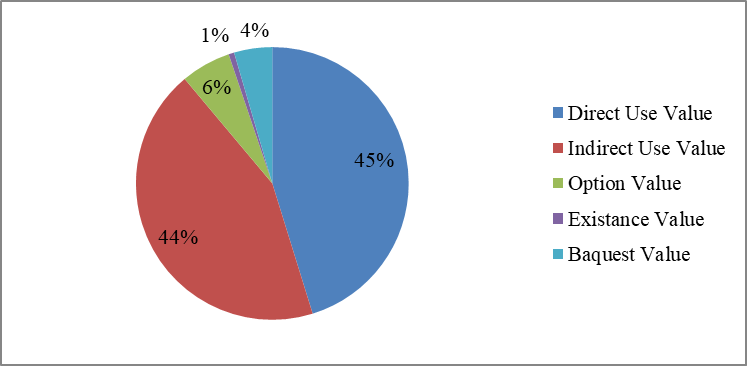
The total economic value is the economic value contained within a resource or seagrass ecosystem, which includes direct, indirect, and non-use values. Based on calculations, the total economic value of the seagrass ecosystem in Kemujan Island, Karimunjawa National Park (TNKJ) is IDR 28,261,235,060.00 per year. This value is obtained by summing up each component of the seagrass ecosystem benefits. The economic value of direct benefits is Rp. 12,778,630,000.00 per year (45.22%), the value of Indirect Benefits is Rp. 12,343,071,477.00 per year (43.67%), the option value is Rp. 1,672,082,583.00 per year (5.92%), the existence value is Rp. 189,588,000.00 (0.67%), and the heritage value is Rp. 1,277,863,000.00 (4.52%). Here are the details of assessing the economic value of the seagrass ecosystem based on its benefits in Kemujan Island, TNKJ, which can be seen in Table 5.
| No | Total Economic Value | IDR/year | Percentage (%) |
|---|---|---|---|
| 1 | Direct Use Value | 12,778,630,000.00 | 45.22 |
| 2 | Indirect Use Value | 12,343,071,477.00 | 43.67 |
| 3 | Option Value | 1,672,082,583.00 | 5.92 |
| 4 | Existence Value | 189,588,000.00 | 0.67 |
| 5 | Bequest Value | 1,277,863,000.00 | 4.52 |
| Total | 28,261,235,060.00 | 100.00 |
Based on the calculation results, the total economic value of seagrass ecosystems in Kemujan Island, Karimunjawa National Park (TNKJ), indicates that the direct benefits of the seagrass ecosystem's existence contribute the most, amounting to 45.22%. Meanwhile, the smallest ecosystem service value of the seagrass ecosystem is found in the existence value, which is 0.67%. The percentage of the economic value of the seagrass ecosystem in Kemujan Island, TNKJ, can be seen in Figure 5.
3.2. Discussion
The results of water quality observations indicate that the water quality at the research site is suitable for seagrass growth. This is because the assessment of water quality parameters at the research site still meets the water quality standards. Normal temperature distribution is one of the parameters contributing to seagrass growth control (Fourqurean et al., 2012). Hartati et al. (2017) stated that the salinity range affecting seagrass growth is between 10 and 40‰. See et al. (2018) mentioned that the pH of coastal and marine waters generally ranges from 7.7 to 8.4. According to Dahuri (2003), a current speed of about 0.5 m/s allows Thalassia testidinum to grow optimally. The seabed substrate also affects the growth of seagrass species. Kiswara (2004) explained that seagrass growing in sandy or sandy substrate mixed with dead coral fragments has smaller and shorter leaves than seagrass growing in muddy or murky seabed substrates.
The presence of these seagrass species is uneven and only found at some observation stations. Station 2 is the station where the most seagrass species are found compared to Station IV, where only two species are found because it is the docking place for fishermen's boats, which affects the life of the seagrass (waste and boat propellers damaging seagrass vegetation). Overall, at all observation stations, the distribution of seagrass species in Kemujan Island, TNKJ, falls into the mixed vegetation category because more than one seagrass species populates each observation station. The diversity of seagrass in Kemujan Island, TNKJ, is identified in 2 families, namely Hydrocharitaceae and Potamogetonaceae. These findings also align with the research of Hidayah et al. (2019), which shows that the diversity of seagrasses in Karimunjawa National Park is identified in two families, namely Hydrocharitaceae and Cymodocea.
The species of seagrass found at the research site also indicates seagrasses with small and short leaves. This corresponds to the substrate found at the research site, which is generally sandy with a mixture of dead coral fragments. This is because the nutrients in sandy and mixed sand with dead coral fragments have lower content (Kiswara, 2004). The most frequently occurring seagrass species is C. rotundata, found at Stations 2 and 3. This indicates that this seagrass species can adapt to the characteristics of the aquatic habitat on Kemujan Island. According to Short and Carruthers (2010), C. rotundata is a seagrass species with excellent adaptation ability through its roots. Kiswara (1997) adds that Magnososterid seagrass species (with long ribbon-like leaves) can be found in various habitats, from shallow areas to exposed areas during low tides.
The Importance Value Index (INP) provides an overview of the influence or role of a plant species on a particular area. The higher the INP value of a species relative to other species, the greater its role in the community (Bengkal et al., 2019). The research results indicate that Cymodocea serrulata plays an essential role as a critical species related to the condition of seagrass communities in Kemujan Island, Karimunjawa National Park (TNKJ). If damage occurs to the Cymodocea serrulata seagrass species, other seagrass species found in the waters of Kemujan Island will be at risk of damage. This is in line with the statement by Fahruddin et al., 2023, that the INP is an importance index that illustrates the importance of vegetation roles in its ecosystem. If the INP of a vegetation species is high, it significantly influences the stability of that ecosystem. Additionally, as Suhud et al. (2012) stated, INP dramatically depends on the relative frequency value, density, and cover.
Estimating the economic value of resources is an effort to assess the benefits and costs of resources in monetary terms, taking into account the environment, also known as economic valuation. The valuation of fisheries resources aims to determine the allocation of efficient and sustainable natural resource management policies by estimating total economic value (Saputra et al., 2017). Based on the research findings of Pristira (2020), most of the inhabitants of the Karimunjawa Islands are captured fishermen. The proximity of the seagrass ecosystem to the community makes it dependent on the natural resources in that ecosystem. One of the activities in the area is gleaning. Gleaning (collecting small-scale invertebrates or other animals from substrates, usually by hand or with limited tools or simple equipment) has become essential and popular. This activity occurs in shallow coastal ecosystems, such as coral reefs, mudflats, sandy or rocky areas, mangroves, and seagrass beds (Nessa et al., 2019). This fishing activity is likely characterized by people who are economically disadvantaged and dependent on the availability of natural resources. Those who engage in this activity are called gleaners. Typically, people do this as their side job. This fishing activity significantly meets the community's household needs (Quiros et al., 2018).
Based on the assessment of the total economic value of seagrass ecosystems, it is stated that the most significant value comes from direct benefits at 45.22% and indirect benefits at 43.67%. The direct benefits of seagrass ecosystems as fishing grounds are considered to provide direct benefits to the community as a source of income and food. Based on interviews with respondents, it is known that the type of fish utilized by fishermen around the seagrass ecosystem of Kemujan Island is the Rabbitfishes. Rabbitfishes caught by fishermen are sold and distributed to restaurants and eateries in the Karimunjawa National Park (TNKJ). Another direct benefit of seagrass ecosystems is that they are a harvesting ground for sea cucumbers by fishermen and sea cucumber harvesters in Kemujan Island, Karimunjawa National Park (TNKJ), for consumption and sale in dried form. Based on interview results, fishermen collect sea cucumbers in the seagrass meadow area on Kemujan Island, TNKJ. Sea cucumbers collected by fishermen are sold and utilized in dried form, where the selling price range of dried sea cucumbers is Rp 800,000 - Rp 900,000/kg. The distribution of sea cucumbers extends beyond Karimunjawa Island to areas such as Jepara and other regions in Central Java, where they are distributed using package deliveries via express boats and ferries. Based on research by Arkham et al. (2015), the presence of seagrass as a provider of fish resources and other biota, such as sea cucumbers and conch (snails), provides direct benefits. It can be a source of income for local fishermen. Other research results also mention the function of seagrass ecosystems as a provider of fish resources as one of the most significant contributions to food security, especially for small-scale fishermen (de la Torre-Castro, 2019; Harper et al., 2020; Riadi et al., 2022).
The indirect benefits of seagrass ecosystems in Kemujan Island lie in their critical role as essential habitats and carbon sinks. According to the calculations, the value of crucial habitats ranks higher than carbon absorption. All marine organisms initially spawn, grow, and seek sustenance in seagrass beds. Therefore, it is assumed that if seagrass beds deteriorate, marine life cannot spawn, nurture offspring, or find food within these habitats. Consequently, fish catches will decline, potentially resulting in fishermen losing their livelihoods due to the absence of marine life. If seagrass ecosystems degrade, the amount every Kemujan Island fisherman is entitled to receive annually is equivalent to that value. The dominance of seagrass habitat in coastal and marine areas can provide crucial functions and services to marine ecosystems and human welfare (Duarte et al., 2008; Boström et al., 2011). The ecological functions of seagrass beds include providing food and serving as habitats for various invertebrates and vertebrates due to the productivity of the waters generated by seagrass and the structure of their canopy (Thomsen et al., 2010; Barbier et al., 2011).
The lowest value of the total economic value of seagrass ecosystems in Kemujan Island is the existence value, which accounts for 0.67% or IDR 189,588,000 annually. The low value indicates that the community of Kemujan Island, especially the fishermen, has not fully realized or is not sufficiently aware of the importance of preserving the seagrass ecosystem. If the seagrass ecosystem is damaged, the willingness of the community to pay for the conservation costs of the seagrass ecosystem in the future remains low. The low value of seagrass existence is influenced by several factors, including the socioeconomic characteristics of respondents, such as age, education level, income, experience as fishermen, and respondents' perceptions of the seagrass ecosystem (Hamuna et al., 2018; Bundal et al., 2018).
4. Conclusion
The research findings have shown that seagrass ecosystems' ecological and economic value has significant implications for government policies and the protection of these ecosystems as valuable natural resources. Recommendations based on this research serve as the scientific basis needed to conserve seagrass ecosystems. This economic value can also be utilized to assess the asset value of the coastal and marine resources owned by Kemujan Island, particularly concerning seagrass ecosystems.
The results of calculating the ecological and economic value are expected to assist in managing and protecting seagrass ecosystems. Additionally, these economic values can serve as alternative funding sources for mitigation and restoration strategies to minimize the impacts of seagrass ecosystem damage on Kemujan Island. Restoration efforts include rehabilitating seagrass ecosystems, restoring biodiversity, monitoring pollution, and developing more robust policies and regulations for managing coastal and marine areas.
Based on the ecological assessment using the Importance Value Index (INP) calculation, the presence of the seagrass species C. serrulata has been proven to play a significant role as a critical species related to the condition of the seagrass community in the waters of Pulau Kemujan. If damage occurs to the C. serrulata seagrass species, other seagrass species found in the waters of Pulau Kemujan will also be at risk of damage. Furthermore, the water quality indicates conditions suitable for seagrass growth based on the standards. The economic value of seagrass in Pulau Kemujan is calculated based on its benefits, both directly and indirectly, to its users. Seagrass ecosystems in Pulau Kemujan are crucial for the local community's economy. According to research, the estimated economic value of seagrass ecosystems in this area is IDR 28,261,235,060.00 per year. The economic value of seagrass consists of direct benefits amounting to IDR 12,778,630,000.00/year (45.22%), indirect benefits of IDR 12,343,071,477.00/year (43.67%), option value of IDR 1,672,082,583.00/year (5.92%), existence value of IDR 189,588,000.00/year (0.67%), and bequest value of IDR 1,277,863,000.00/year (4.52%). The presence of seagrass plays an essential role in climate change mitigation and adaptation strategies. The estimated economic value of seagrass can serve as the basis for seagrass conservation policies and strategies, the implementation of blue carbon, and the enhancement of social welfare (human well-being).
To enhance the ecological and economic value of seagrass ecosystems in Kemujan island, local governments need to establish seagrass conservation zones in the Coastal Area and Small Islands Zoning Plan (RZWP3K) by adopting a co-management approach between the government and local communities, including educational materials on the function of seagrass in local curricula and community empowerment programs and local regulations that limit fishing and tourism activities in seagrass dense areas and developing a data-based marine ecosystem monitoring system, including for seagrass.
Authors' Statement:
Conflict of interest: The authors declare no conflict of interest.
Availability of data: The datasets analyzed during the current study are available from the author on reasonable request.
References
- Adi, W., Nugraha, A. H., Dasmasela, Y. H., Ramli, A., Sondak, C. F. A.,Sjafrie, N. D. M. (2019). Struktur Komunitas Lamun Di Malang Rapat, Bintan. J. Enggano, 4(2), 148–159.
- Aji, F. B., Febrianto, S., Afiati, N. (2020). Estimasi Stok Karbon Di Padang Lamun Pulau Nyamuk Dan Pulau Kemujan, Balai Taman Nasional Karimunjawa, Jepara. Jurnal Ilmu Dan Teknologi Kelautan Tropis, 12(3), 805–819.
- Arkham, M. N., Adrianto, L., Wardiatno, Y. (2015). Social-Ecological System of Seagrass and Small-Scale Fisheries Connectivity in Malang Rapat and Berakit Villages, Bintan District, Riau Islands. Jurnal Ilmu dan Teknologi Kelautan Tropis, 7(2), 433–452. https://doi.org/10.29244/jitkt.v7i2.10992
- Arkham, M. N., Riadi, S., Wahyudin, Y., Krisnafi, Y. (2023). Economic value of mangrove ecosystem services in the coastal area of Bintan Island, Indonesia. Wetlands Ecology and Management, Sustaining Life Below Water: Conserving, managing, and protecting our marine and freshwater resources. https://doi.org/10.1007/s11273-023-09955-y.
- Balai Taman Nasional Karimunjawa, (2004). Penataan Zonasi Taman Nasional Karimunjawa Kabupaten Jepara Provinsi Jawa Tengah. Semarang: Balai Taman Nasional Karimunjawa.
- Barbier, E.B., Hacker, S.D., Kennedy, C., Koch, E.W., Stier, A.C., Silliman, B.R., (2011). The value of estuarine and coastal ecosystem services. Ecol. Monogr. 81 (2), 169–193.
- Bengkal, K., Manembu, I., Sondak, C., Wagey, B., Schaduw, J., Lumingas, L. (2019). Identifikasi Keanekaragaman Lamun Dan Ekhinodermata Dalam Upaya Konservasi. Jurnal Pesisir Dan Laut Tropis, 7(1), 29–39.
- Boström, C., Pittman, S.J., Simenstad, C., Kneib, R.T. (2011). Seascape ecology of coastal biogenic habitats: advances, gaps, and challenges. Mar. Ecol. Prog. Ser. 427, 191-217.
- Brower, J.E., Zar, J.H. & von Ende, C.N. (1989). Field and Laboratory Methods for General Ecology 3rd ed., WMV Brown Publisher, Indiana, 237 p
- Bundal, K. S. M., Subade, R., Taperla, R. R. (2018). Willingness to pay households for the conservation of seagrasses in Nueva Valencia, Guimaras, Philippines. Asian Fisheries Science, 31(4), 297–318. https://doi.org/10.33997/j.afs.2018.31.4.005
- Cappenberg, H. A., Wulandari, D. A. (2019). Struktur Komunitas Moluska Di Padang Lamun Perairan Pulau Belitung Provinsi Bangka Belitung. Jurnal Ilmu Dan Teknologi Kelautan Tropis, 11(3), 735–750.
- Dahuri, R. (2003). Keanekaragaman Hayati Laut. Penerbit PT. Gramedia Pustaka Utama, Jakarta XXXIII + 412 hlm.
- de la Torre-Castro, M. (2019). Inclusive management through gender consideration in small-scale fisheries: the why and the how. Front. Mar. Sci. 6, 156.
- Dewi, N. K., Prabowo, S. A. (2015). Status Padang Lamun Pantai-Pantai Wisata Di Pacitan. Biogenesis: Jurnal Ilmiah Biologi, 3(1), 53–59.
- Duarte, C.M., Dennison, W.C., Orth, R.J.W., Carruthers, T.J.B. (2008). The charisma of coastal ecosystems: Addressing the imbalance. Estuaries Coasts 31 (2), 233–238.
- Efendy, M. (2009). Pengelolaan Wilayah Pesisir Secara Terpadu: Solusi Pemanfaatan Ruang, Pemanfaatan Sumberdaya Dan Pemanfaatan Kapasitas Asimilasi Wilayah Pesisir Yang Optimal Dan Berkelanjutan. Jurnal Kelautan: Indonesian Journal Of Marine Science And Technology, 2(1), 81–86.
- English, S.C., Wilkinson., Baker, V. (1994). Survey Manual for Tropical Marine Resources. Australian Institute of Marine Science. Townville.
- Fahruddin, M., Suriyadin, A., Murtawan, H., Abdurachman, M. H., Setyono, B. D. H., Saputra, A.,Ilyas, A. P. (2023). Struktur Komunitas Lamun di Perairan Ketapang, Lombok Barat. Journal of Marine Research, 12(1), 61–70. https://doi.org/10.14710/jmr.v12i1.34537.
- Fauzi, A. (2004). Ekonomi Sumber Daya Alam Dan Lingkungan: Teori Dan Aplikasi. Gramedia Pustaka Utama.
- Fourqurean JW, Duarte CM, Kennedy H, Marba N, Holmer M, Mateo MA, Apostolaki ET, Kendrick GA. (2012). Seagrass ecosystems are a globally significant carbon stock. Nat Geosci 5: 505–509. DOI:10.1038/ngeo1477
- Freeman, A. M. (2003). Economic Valuation: What And Why. In A Primer On Nonmarket Valuation(Pp. 1–25). Springer.
- Hamina, B., Rumahorbo, B. T., Keiluhu, H. J., Alianto. (2018). Persepsi Masyarakat Untuk Keberadaan Ekosistem Lamun di Teluk Youtefa, Jayapura (Pendekatan Willingness to Pay). EnviroScienteae, 14(2), 86–93.
- Harnianti, N., Karlina, I., Irawan, H. (2017). Laju Pertumbuhan Jenis Lamun Enhalus Acoroides Dengan Teknik Transplantasi Polybag Dan Sprig Anchor Pada Jumlah Tunas Yang Berbeda Dalam Rimpang Di Perairan Bintan. Intek Akuakultur, 1(1), 15–26.
- Harper, S., Adshade, M., Lam, V.W.Y., Pauly, D., Sumaila, U.R., Tsikliras, A.C. (2020). Valuing invisible catches: Estimating the global contribution by women to small-scale marine capture fisheries production. PLoS ONE 15 (3), e0228912.
- Hartati, R., Widianingsih, W., Santoso, A., Endrawati, H., Zainuri, M., Riniatsih, I., Saputra, W. L., Mahendrajaya, R. T. (2017). Variasi Komposisi Dan Kerapatan Jenis Lamun Di Perairan Ujung Piring, Kabupaten Jepara. Jurnal Kelautan Tropis, 20(2), 96–105.
- Hidayah, A. N. K. R., Ario, R., Riniatsih, I. (2019). Studi Struktur Komunitas Padang Lamun Di Pulau Parang, Kepulauan Karimunjawa. Journal of Marine Research, 8(1), 107–116. https://doi.org/10.14710/jmr.v8i1.24335.
- Hidayat, S., Rumengan, A. P., Darwisito, S., Ompi, M., Mingkid, W. M., Wagey, B. T., Paruntu, C. P. (2019). Studi Perumusan Strategi Pengelolaan Ekowisata Bahari Kota Manado Di Era Revolusi Industri 4.0 Berdasarkan Analisis Swot. Jurnal Pesisir Dan Laut Tropis, 7(3), 142–156.
- Hutomo, M Nontji, A. (Ed.). (2014). Panduan Monitoring Padang Lamun. COREMAP – CTI Lembaga Ilmu Pengetahuan Indonesia. Jakarta
- Ismail, F., Akbar, N., Paembonan, R. E., Tahir, I. (2019). Kajian Pemanfataan Padang Lamun Sebagai Lahan Budidaya Ikan Baronang Di Pulau Sembilan Kabupaten Sinjai. Jurnal Ilmu Kelautan Kepulauan, 2(1).
- Kasim, M. (2013). Struktur Komunitas Padang Lamun Pada Kedalaman Yang Berbeda Di Perairan Desa Berakit Kabupaten Bintan. Jurnal. Programme Study of Marine Science Faculty Of Marine Science And Fisheries, Maritime Raja Ali Haji University.
- Kiswara, W. (1997). Struktur Komunitas Padang Lamun Perairan Indonesia In: Inventarisasi dan Evaluasi Potensi Laut-Pesisir, Geologi, Kimia, Biologi, dan Ekologi. Jurnal Lembaga Ilmu Pengetahuan Indonesia, 10(2):54-61.
- Kiswara, W. (2004). Kondisi Padang Lamun (seagrass) di Teluk Banten 1998 - 2001. Pusat Penelitian dan Pengembangan Oseanologi. Lembaga Ilmu Pengetahuan Indonesia, Jakarta.
- Kordi, M. G. H. (2011). Ekosistem Lamun (Seagrass); Fungsi, Potensi Dan Pengelolaan. Rineka Cipta. Jakarta, 170.
- Kristiningrum, R., Lahjie, A. M., Masjaya, Yusuf, S., Ruslim, Y., Ma'ruf, A. (2020). Fauna diversity, production potential and total economic value of mangrove ecosystems in Mentawir village, east Kalimantan, Indonesia. Biodiversitas, 21(5), 1940–1953. https://doi.org/10.13057/biodiv/d210522.
- Lahjie, A. M., Nouval, B., Lahjie, A. A., Ruslim, Y., Kristiningrum, R. (2019). Economic valuation from direct use of mangrove forest restoration in Balikpapan Bay, East Kalimantan, Indonesia. F1000Research, 8(May), 1–14. https://doi.org/10.12688/f1000research.17012.2.
- Mandela H, Fachrudin A, Yulianto G. (2020). Valuasi ekonomi jasa ekosistem mangrove di Kecamatan Mandah, Provinsi Riau. ECSOFIM: Journal of Economic and Social of Fisheries and Marine. 07(02):142-156.
- Marhayana, S., Halid, I. I., Halid, I. (2021). Pengelolaan Dan Pola Pemanfaatan Ekosistem Lamun Untuk Perikanan Baronang Lingkis Berkelanjutan. Deepublish.
- Mascariňas, H. J. C., Otadoy, J. B. (2023). Economic valuation of seagrass ecosystem in Maribojoc Bay, Bohol, Philippines. Biodiversitas, 24(8), 4448–4456. https://doi.org/10.13057/biodiv/d240826.
- Nessa, N., Ambo-Rappe, R., Cullen-Unsworth, L. C., Unsworth, R. K. F. (2019). Social-Ecological Drivers And Dynamics Of Seagrass Gleaning Fisheries. Ambio, 1–11.
- Oktawati, N. O., Sulistianto, E., Fahrizal, W., Maryanto, F. (2018). Nilai Ekonomi Ekosistem Lamun Di Kota Bontang. Enviroscienteae, 14(3), 228–236.
- Pandelaki, L., Rompas, R. M., Rembet, U. N. W. J., Wantasen, A. S., Gerung, G. S., Ngangi, E. L. A. (2020). Economic value of seagrass ecosystem in Nain Island, South Minahasa Regency, North Sulawesi, Indonesia. AACL Bioflux, 13(5), 2687–2693.
- Pristira, A. L. (2020). Indeks Kepekaan Lingkungan (Ikl) Ekosistem Lamun Berdasarkan Pemanfaatan Sumberdaya Perikanan Di Karimunjawa. Saintek Perikanan: Indonesian Journal Of Fisheries Science And Technology, 17(1).
- Quiros, T. A. L., Beck, M. W., Araw, A., Croll, D. A., Tershy, B. (2018). Small-Scale Seagrass Fisheries Can Reduce Social Vulnerability: A Comparative Case Study. Ocean &Coastal Management, 157, 56–67.
- Ramadhan, A., Suryawati, S. H., Koeshendrajana, S. (2017). Pendekatan Valuasi Ekonomi Untuk Menghitung Dampak Ekonomi Akibat Tumpahan Minyak Di Wilayah Pesisir Dan Laut. Jurnal Sosial Ekonomi Kelautan Dan Perikanan, 12(1), 1–10.
- Rappe, R. A. (2010). Struktur Komunitas Ikan Pada Padang Lamun Yang Berbeda Di Pulau Barrang Lompo Fish Community Structure In Different Seagrass Beds Of Barrang Lompo Island. Jurnal Ilmu Dan Teknologi Kelautan Tropis, 2(2), 63.
- Riadi, S., Arkham, M. N., Bayu, R., Haris, K., Tiku, M. (2022). Nilai Ekonomi Ekosistem Lamun di Perairan Barat Kabupaten Rote Ndao, Provinsi Nusa Tenggara Timur, Indonesia: Sebagai Penyedia Sumberdaya Ikan. Jurnal Ilmu-Ilmu Perikanan dan Budidaya Perairan, 17(1), 48–57. https://jurnal.univpgri-palembang.ac.id/index.php/ikan
- Rosalina, D., Herawati, E. Y., Risjani, Y., Musa, M. (2018). Keanekaragaman Spesies Lamun Di Kabupaten Bangka Selatan Provinsi Kepulauan Bangka Belitung. Enviroscienteae, 14(1), 21–28.
- Ruitenbeek, H. J. (1991). Mangrove Management: An Economic Analysis Of Management Options With A Focus On Bintuni Bay, Irian Jaya. School For Resource And Environmental Studies, Dalhousie University.
- Samson, E. S., Kasale, D., Wakano, D. (2020). Kajian Kondisi Lamun Pada Perairan Pantai Waemulang Kabupaten Buru Selatan. BIOSEL (Biology Science And Education): Jurnal Penelitian Science Dan Pendidikan, 9(1), 11–25.
- Saputra, N. E., Zen, L. W., Azizah, D., Eka, S. (2016). Keanekaragaman Jenis Dan Valuasi Ekonomi Ekosistem Padang Lamun Di Kampung Tanjung Duku Kelurahan Dompak Tanjungpinang.
- Sese MR, Annawaty A, Yusron E. (2018). Keanekaragaman Echinodermata (Echinoidea dan Holothuroidea) di Pulau Bakalan, Banggai Kepulauan, Sulawesi Tengah, Indonesia. Scripta Biologica. 5 (2): 73-77.
- Short, F.T., Carruthers, T.J.R., (2010). Halophila ovalis. The IUCN Red List of Threatened Species.
- Sipahelut, P., Wakano, D., Sahertian, D. E. (2020). Keanekaragaman Jenis Dan Dominansi Mangrove Di Pesisir Pantai Desa Sehati Kecamatan Amahai, Kabupaten Maluku Tengah. BIOSEL (Biology Science And Education): Jurnal Penelitian Science Dan Pendidikan, 8(2), 160–170.
- Suhud, M. A., Pratomo, A., Yandri, F. (2012). Struktur Komunitas Lamun Di Perairan Pulau Nikoi. Artikel Tugas Akhir. Department S-1 Of Marine Science Faculty Of Marine Science And Fisheries, Maritime Raja Ali Haji University.
- Supratman, O., Sudiyar, S., Farhaby, A. M. (2019). Kepadatan Dan Pola Sebaran Bivalvia Pada Ekosistem Padang Lamun Di Perairan Pulau Semujur, Kepulauan Bangka Belitung. Jurnal Biosains, 5(1), 14–22.
- Syukur, A. (2015). Distribusi, Keragaman Jenis Lamun (Seagrass) Dan Status Konservasinya Di Pulau Lombok. Jurnal Biologi Tropis, 15(2).
- Tangke, U. (2010). Ekosistem Padang Lamun (Manfaat, Fungsi Dan Rehabilitasi). Agrikan: Jurnal Agribisnis Perikanan, 3(1), 9–29.
- Tebaiy, S. (2015). Kontribusi Ekonomi Sumberdaya Padang Lamun Berdasarkan Fungsinya Sebagai Habitat Ikan Di Teluk Youtefa Jayapura Papua (Penedekatan Effect On Production).
- Thomsen, M., Wernberg, T., Altieri, A., Tuya, F., Gulbransen, D., McGlathery, K., Holmer, M., Silliman, B. (2010). Habitat cascades: the conceptual context and global relevance of facilitation cascades via habitat formation and modification. Integr. Comp. Biol. 50, 158-175.
- Wahyudin, Y., Kusumastanto, T., Adrianto, L., Wardiatno, Y. (2017). Jasa Ekosistem Lamun Bagi Kesejahteraan Manusia. Omni-Akuatika, 12(3).
- Wallner-Hahn, S., Dahlgren, M., de la Torre-Castro, M. (2022). Linking seagrass ecosystem services to food security: The example of southwestern Madagascar’s small-scale fisheries. Ecosystem Services, 53:1-9 (101381).
- Wawo, M., Adrianto, L., Bengen, D.G., Wardianto, Y. (2014). Valuation of seagrass ecosystem services in Kotania Bay Marine Natural Tourism Park, West Seram, Indonesia, Asia. Journal of Scientific Research, 7(4): 591-600.
- Widiastuti, A. (2011). Kajian Nilai Ekonomi Produk Dan Jasa Ekosistem Lamun Sebagai Pertimbangan Dalam Pengelolaannya (Studi Kasus Konservasi Padang Lamun Di Pesisir Timur Pulau Bintan). Universitas Negeri Jakarta.