
Visitors’ Willingness to Pay for Mangrove Conservation in East Kalimantan, Indonesia: A CVM-DBDC Approach Linking Coastal Ecotourism to Climate Change Mitigation
 10.21463/jmic.2025.14.2.12
Abstract
Mangroves in Indonesia play a vital role in climate change (CC) mitigation, coastal protection, and ecotourism. Although the country holds about 21% of the world’s mangrove forests, these ecosystems are experiencing significant degradation. This study examines the visitors' willingness to pay (WTP) in East Kalimantan, Indonesia, to financially support mangrove conservation using the Contingent Valuation Method (CVM) with a Double-Bounded Dichotomous Choice (DBDC) approach. The findings show that most visitors are willing to contribute financially to conservation efforts. Demographic factors, including age, education, income, and perception factors, such as mangrove benefits, CC threats, and the importance of conservation programs, significantly influence WTP. The findings suggest that ecotourism revenues could serve as a practical and locally supported funding mechanism for mangrove conservation, particularly in the context of Indonesia’s emission reduction targets. This study provides valuable insights for integrating mangrove conservation into national climate policy and promoting blue carbon initiatives under the Paris Agreement.
Keywords
Contingent Valuation Method, Ecotourism, Conservation, Climate Change, East Kalimantan
1. Introduction
As the world’s largest archipelagic state, Indonesia ranks among the 35 countries most vulnerable to climate change (CC) (World Bank Group, 2021). The effects of CC include rising sea levels, changes in rainfall patterns, more frequent floods and droughts, and higher temperatures, all of which threaten approximately 17,000 of its islands. At the same time, Indonesia is also the world’s sixth-largest greenhouse gas (GHG) emitter, producing approximately 1,475.83 million tonnes of CO₂ in 2021, which accounts for 3.11% of global emissions (Climate Watch, 2024). About 52.3% of these emissions come from land-use changes, particularly the conversion of mangroves and peatlands into oil palm plantations (Groom et al., 2022; Arifanti et al., 2022). In response, under the National Action Plan for Reducing Greenhouse Gas Emissions (RAN-GRK), the Indonesian government aims to reduce emissions by 29% by 2030, potentially reaching 41% with international support (MNDP, 2019).
Mangroves have been vital to Indonesia's climate strategy. Approximately 21% of the world’s mangroves are found in Indonesia, distributed across the islands of Papua, Kalimantan, Sumatra, Java, and Sulawesi (FAO, 2023). Indonesia’s mangrove ecosystems cover approximately 3.3 million hectares and are home to 45 of the world's 75 most diverse mangrove species (FAO, 2023; Spalding et al., 2010). In CC mitigation efforts, Indonesia’s mangroves act as essential carbon sinks, storing around 3.14 petagrams of carbon (PgC) while sequestering and storing large amounts of carbon (Kauffman et al., 2020; Murdiyanto et al., 2015).
East Kalimantan's mangroves, with 217,350 hectares, are Indonesia’s third-largest mangrove area. They play a critical role in CC mitigation and coastal livelihoods. The Mangroves in this province account for around 6.46% of the total mangrove ecosystems in Indonesia (MEF, 2021). As “blue carbon” sinks, they sequester and store carbon in above-ground biomass, root systems, and sediment layers (Friesen, 2017; Huxham et al., 2015). Moreover, these mangroves provide direct benefits through forest products and coastal ecotourism opportunities and sustain biodiversity (Carugati et al., 2018; FAO, 2023). They also offer indirect benefits for protecting against tidal waves, preventing erosion, and filtering suspended solids (Everard and Russell, 2014). The benefits demonstrate how mangroves help mitigate CC impacts and encourage sustainable coastal livelihoods.
Although mangroves significantly benefit East Kalimantan’s coastal communities, the province has experienced rapid mangrove degradation. Ilman et al. (2016) reported a loss of approximately 300,000 hectares of mangroves between 1998 and 2001, primarily due to conversion into shrimp ponds. Additionally, Indonesia leads globally in mangrove deforestation nationally, with an annual loss of 21,100 hectares over the past decade (FAO, 2020). Drivers of this decline include urbanization, unsustainable shrimp aquaculture, industrialization, and pollution (Goldberg et al., 2020; Fauziyah et al., 2023). The destruction of Indonesia’s mangroves contributes 42% of global mangrove-related emissions, releasing 0.15–1.02 petagrams of CO2-equivalent (PgCO2e) annually. Furthermore, global “blue carbon” emissions from mangrove loss equate to 3–19% of GHG emissions from terrestrial deforestation, causing annual economic damages of US$6-42 billion per year for US$41 per ton of CO2 (Pendleton et al., 2012; Murdiyanto et al., 2015). The reduction of mangrove areas in East Kalimantan province has negatively affected the abovementioned benefits.
Given these challenges, conserving mangroves to reduce CC impacts is increasingly urgent. Its economic value can offer a basis for funding and conservation judgments, eventually contributing to Indonesia's conservation efforts and investment strategies. Ecotourism, particularly nature-based tourism exploring mangrove ecosystems, is on the rise and can support mangrove conservation. Spalding and Parrett (2019) note that mangrove tourism is a multi-billion-dollar industry attracting millions of visitors globally, while Aronsson (2000) suggests it promotes rural development and biodiversity protection. Moreover, mangrove ecosystems also improve coastal ecotourism by mitigating CC's impacts (Dushani et al., 2022).
Quantifying the economic benefits of mangrove ecosystems provides a foundation for developing targeted and sustainable conservation policies, and identifying community willingness to pay (WTP) can support estimated funding alternatives for programs, particularly in developing countries with limited budgets (Abdeta, 2022; Fauziyah et al., 2023). Few studies have estimated the WTP for mangrove conservation in Indonesia. Fauziyah et al. (2023) evaluated the annual WTP per household for Sembilang National Park mangroves in Indonesia at IDR65,417 to IDR80,417 (US$4.41 to US$5.42) for nonparametric estimates and IDR60,596 to IDR60,274 (US$4.08 to US$4.06) for parametric estimates. Similarly, Yudhistira et al. (2023) found the individual WTP for mangrove conservation in Ciletuh Bay to be US$44.94 annually. However, these studies overlooked the impact of CC on the long-term success of conservation efforts. This gap is crucial because mangroves' carbon sequestration capacity directly ties their conservation to national and global climate targets.
Previous studies have estimated WTP for mangrove restoration in Southeast Asia, using households interacting with the mangrove ecosystem for their livelihoods as respondents to assess responses to CC (Tuan et al., 2014; Pham et al., 2018). These studies employed the Contingent Valuation Method (CVM) with a single-bounded dichotomous choice (SBDC) model, which uses a single question to determine whether a bid is accepted or rejected. However, previous studies have found that the double-bounded dichotomous choice (DBDC) is more suitable for estimating WTP than the SBDC model, providing more reliable and less biased estimates (Hanemann et al., 1991; Gelo and Koch, 2015; Susilo et al., 2017; Dushani et al., 2022). The DBDC model uses two questions: accepting the first bid leads to a higher second bid, and rejecting it results in a lower bid. Additionally, studies on WTP for mangrove conservation based on visitors’ preference for coastal ecotourism sites in the context of CC in Southeast Asia remain limited.
Therefore, this study addresses these gaps by estimating visitors' WTP for mangrove conservation in the context of CC by applying the CVM-DBDC approach. Additionally, it identifies socioeconomic and perceptual factors that influence WTP. This study focuses on coastal ecotourism visitors as key actors who fund conservation, offering another alternative to sustainable financing strategies for mangrove conservation. The results are intended to support Indonesia’s RAN-GRK targets and contribute to global blue carbon initiatives within frameworks such as Article 6 of the Paris Agreement.
2. Research Methodology
2.1. Study Area and Samples
Two coastal ecotourism sites in East Kalimantan were selected in this study: Bontang Mangrove Park (BMP) and Wisata Mangrove Edu Park Berbas Pantai (WEDP) (Fig. 1). These sites represent East Kalimantan’s mangrove ecosystems, which are critical to Indonesia’s biodiversity conservation and CC mitigation efforts. BMP is an ecotourism destination with conservation-based educational facilities. Covering approximately 294.78 hectares, it is home to 21 mangrove species, predominantly from the Rhizophoraceae family, which play a critical role in coastal protection and carbon sequestration (Maulidar et al., 2024). Moreover, WEDP is an ecotourism destination managed by the local community with a conservation-based approach. Spanning 3.5 hectares, its mangrove ecosystem is dominated by four species: Rhizophora mucronata, Rhizophora apiculata, Sonneratia alba, and Avicennia marina (Ardian et al., 2023).
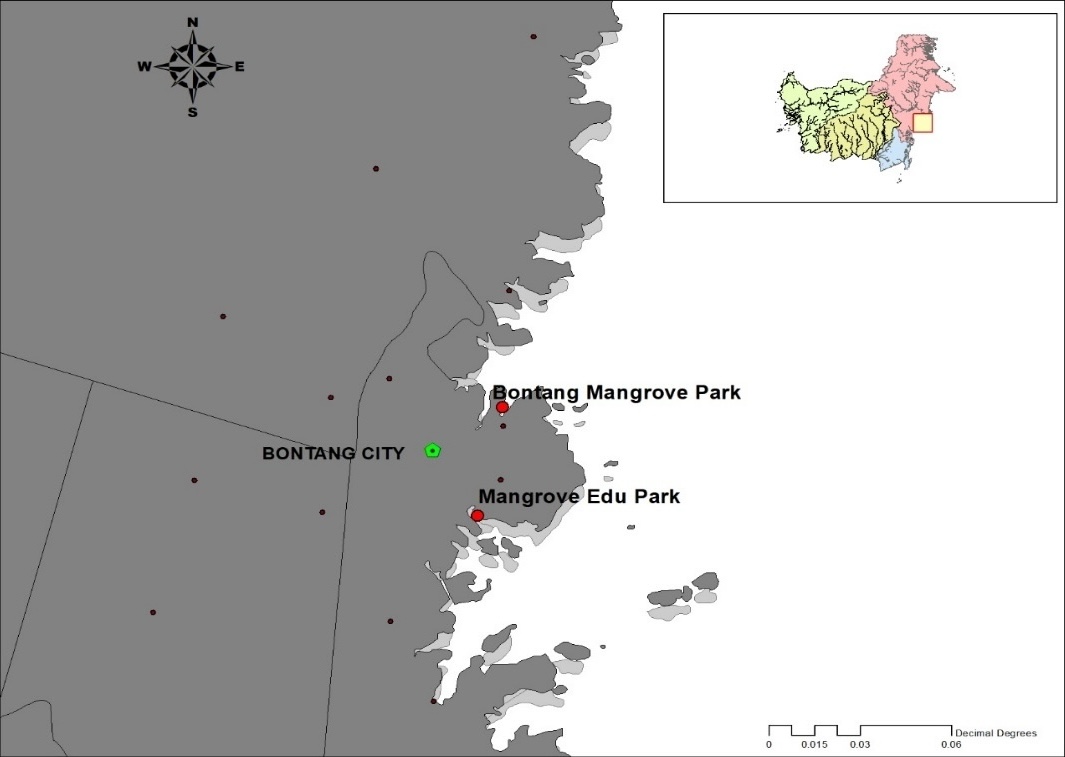
Sampling was conducted through in-person interviews from July to September 2024. A pre-test was carried out with 30 visitors before the formal survey. Trained enumerators distributed the questionnaires to ensure clarity. An initial questionnaire was also used to determine the lowest and highest bids by applying a reasonable open-ended format for visitors. For the formal survey, visitors were randomly selected and interviewed. The Slovin formula with a 10% margin of error was applied to calculate the sample size (Tejada and Punzalan, 2012) as follows:
$$ = { N \over { 1+Ne^2 } } $$
where N is the population, referring to the total number of visitors in 2023, n is the sample size, and e is the desired margin of error.
The total number of visitors in the study area in 2023 was 44,352 for BMP and 83,631 for WEDP (BPS Bontang, 2025). Using Slovin's formula with a 10% margin of error, the minimum required sample size was calculated as 100 visitors per site. In the end, 200 visitors (100 from each site) were randomly selected to ensure more reliable results.
2.2. Survey design
The CVM is widely employed to estimate individuals’ WTP for mangrove conservation and associated ecosystem services (Pham et al., 2018; Iqbal and Hossain, 2022; Dushani et al., 2022; Fauziyah et al., 2023). As a survey-based approach, it is a well-established tool for evaluating the conservation of ecosystem services in a specific area (Makwinja et al., 2022). Two primary WTP elicitation formats exist. The first type is direct or open-ended, and the second is a dichotomous choice (DC). Within the DC framework, the SBDC and the DBDC models are frequently applied (Pham et al., 2018; Sajise et al., 2021; Fauziyah et al., 2023). Cooper and Loomis (1992) stated that DC reduces strategic response biases (e.g., hypothetical bias) but requires advanced statistical techniques. It, however, necessitates intricate statistical analysis. This study adopted the DBDC model to estimate the WTP using four bid levels.
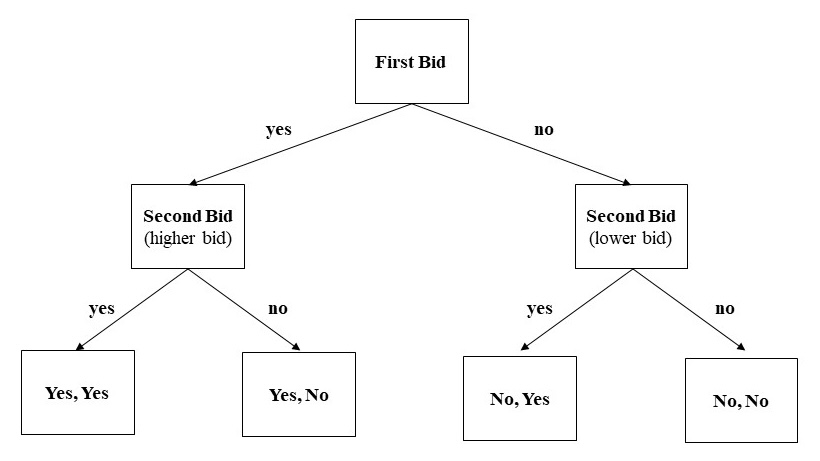
Based on the DBDC model, a questionnaire was designed to investigate respondents' perceptions of mangrove conservation, followed by a measure of their WTP. The questionnaire also included a section measuring WTP. The final questionnaire was revised based on pre-test feedback, which was conducted using an open-ended format to measure respondents' initial WTP values (Trung et al., 2020; Fauziyah et al., 2023). The questionnaire consisted of three main sections and was administered through face-to-face interviews. In the first part, respondents were requested to provide information regarding the socioeconomic characteristics of their households. The second part contained information about the respondents' awareness of climate change and their knowledge about mangrove benefits. Finally, the third part was the central question in the DBDC format to analyze the respondents' WTP for mangrove conservation. In this format, each respondent was presented with two bid amounts. The second bid was contingent on the response to the first. The second bid was higher if the respondent answered 'yes' to the first bid. Conversely, if 'no,' the second bid was lower (Fig. 2). Four initial bid values were determined based on a pre-test survey with open-ended questions: IDR5,000, IDR10,000, IDR15,000, and IDR20,000.
2.3. Statistical analysis
Both parametric and nonparametric methods were employed to estimate the mean WTP of surveyed visitors.
Nonparametric estimation
This study estimates the mean WTP using the Kaplan-Meier-Turnbull (KMT) method as follows (Hanemann and Kanninen, 1991):
$$ E(WTP) = \sum_{i=1}^{I} \left( \hat{P}_I - \hat{P}_{i+1} \right) B_{i1} \equiv \sum_{i=1}^{I} \hat{\pi}_i B_{i1} $$
where \(\hat{P}_I\) and \(\hat{\pi}_i\) represent the estimated survival probability and the estimated change in survival probability.
Parametric estimation
A linear function can model an individual's WTP for mangrove conservation (Abed et al., 2020).
$$ WTP_i (x_i \alpha + \varepsilon_i) $$
where \(x_i\) represents a vector of the explanatory variables assumed to impact the WTP, \(\alpha\) denotes a vector of parameters, and \(\varepsilon_i\) is a normally distributed error term \({N}(0, \sigma^2)\). The response probability of an individual to the bids (B) offered follows one of the four equations below.
$$ 1) \quad\, B_i^1 = 1; \quad B_i^2 = 1 $$ $$ \qquad Pr(\text{yes}, \text{yes}) = Pr(x_i \alpha + \varepsilon_i > B^1, \; x_i \alpha + \varepsilon_i > B^2) $$
$$ 2) \quad\, B_i^1 = 1; \quad B_i^2 = 0 $$ $$ \qquad Pr(\text{yes}, \text{no}) = Pr(B^1 \leq x_i \alpha + \varepsilon_i < B^2) $$
$$ 3) \quad\, B_i^1 = 0; \quad B_i^2 = 1 $$ $$ \qquad Pr(\text{no}, \text{yes}) = Pr(B^2 \leq x_i \alpha + \varepsilon_i < B^1) $$
$$ 4) \quad\, B_i^1 = 0; \quad B_i^2 = 0 $$ $$ \qquad Pr(\text{no}, \text{no}) = Pr(x_i \alpha + \varepsilon_i < B^1, \; x_i \alpha + \varepsilon_i < B^2) $$
Applying the Lopez-Feldman (2012) method and following the equations above, a log-likelihood function was formed to estimate two parameters, α, and σ, through the maximum-likelihood estimation.
$$ \sum_{i=1}^{N} \left[ c_i^{YY} \ln \left( \Phi\left( x_i' \frac{\alpha}{\sigma} - \frac{B^2}{\sigma} \right) \right) + c_i^{YN} \ln \left( \Phi\left( x_i' \frac{\alpha}{\sigma} - \frac{B^1}{\sigma} \right) - \Phi\left( x_i' \frac{\alpha}{\sigma} - \frac{B^2}{\sigma} \right) \right)\right] $$ $$ + c_i^{NY} \ln \left( \Phi\left( x_i' \frac{\alpha}{\sigma} - \frac{B^2}{\sigma} \right) - \Phi\left( x_i' \frac{\alpha}{\sigma} - \frac{B^1}{\sigma} \right) \right) $$ $$ + c_i^{NN} \ln \left( 1 - \Phi\left( x_i' \frac{\alpha}{\sigma} - \frac{B^2}{\sigma} \right) \right) $$
where \(c_i^{YY}\), \(c_i^{YN}\), \(c_i^{NY}\), and \(c_i^{NN}\) represent dummy variables taking the value of 0 or 1 based on individual choices in response to bids, and \(\Phi\) denotes the standard normal cumulative distribution function.
3. Results and Discussion
3.1. Descriptive Statistics
Table 1 presents the descriptive statistics of the respondents. Most respondents are between 29 and 39 years old, suggesting that this age group tends to have stronger pro-environmental attitudes, although actual behaviors may vary across age groups. While Casaló and Escario (2018) found that younger individuals exhibit stronger pro-environmental attitudes, the current data suggest that adults in their late 20s to 30s may also demonstrate high levels of environmental concern. Moreover, the average education level of visitors is senior high school, suggesting they possess the fundamental skills necessary to understand environmental information. This knowledge is important for making informed judgments about contributing financially to mangrove conservation. Tianyu and Meng (2020) highlighted that educational attainment significantly enhanced individuals' ability to process environmental information and make strategic decisions regarding their participation in conservation efforts. Furthermore, the average monthly income of visitors ranges from IDR 3 million to IDR 5 million, approximately US$187.50 to US$312.50. This income range indicates sufficient financial capacity to participate in conservation financing mechanisms. Fauziyah et al. (2023) showed that individuals with moderate income levels are more likely to engage in conservation financing mechanisms, as they have the financial flexibility to support environmental initiatives while maintaining their basic needs.
| Variables | All | BMP | WEDP | |||
|---|---|---|---|---|---|---|
| Mean | Std. Dev | Mean | Std. Dev | Mean | Std. Dev | |
| Age | 2.41 | 1.28 | 2.40 | 1.29 | 2.43 | 1.29 |
| Education | 2.99 | 0.80 | 3.02 | 0.77 | 2.95 | 0.85 |
| Income | 2.78 | 0.87 | 2.84 | 0.77 | 2.71 | 0.96 |
3.2. Perceptions of Mangrove Importance, Climate Change (CC) Threats, and Conservation Effectiveness
Table 2 presents respondents’ perceptions of the benefits of mangrove ecosystems, CC threats, and the effectiveness of mangrove conservation programs. The results reveal that most respondents (42%) recognize the important role of mangrove ecosystems in addressing CC impacts, indicating their awareness of the ecological benefits, such as carbon sequestration and coastal protection. This finding is in line with Pham et al. (2018), who also found that local communities in the Cat Ba Biosphere Reserve were aware of the vital role of mangroves in climate change mitigation, particularly in coastal protection and carbon storage. Interestingly, Afonso et al. (2022) demonstrated that communities tend to recognize mangrove ecosystem services that offer direct benefits, such as food and firewood, over indirect benefits, like carbon sequestration and coastal protection.
In addition, 50% of respondents stated that CC poses a significant threat to coastal communities, indicating visitors’ awareness of risks such as sea-level rise, coastal erosion, and extreme weather events. This perception is consistent with Alcantara et al. (2023), who found that most participants perceived CC as a significant threat to the coastal marine ecosystem. Furthermore, about 43.5% of respondents believe that mangrove conservation programs contribute to mitigating the impacts of CC, indicating that visitors understand the ecological role of mangrove ecosystems and trust the effectiveness of the mangrove conservation programs. It supports the findings of Arifanti et al. (2022), who highlighted that mangrove restoration in Indonesia has significant potential to reduce carbon emissions and contribute to national climate targets.
| Statement | Strongly disagree | Disagree | Neutral | Agree | Strongly agree | |
|---|---|---|---|---|---|---|
| Mangrove ecosystems play an important role in addressing the impacts of climate change | BMP | 22 | 28 | 12 | 26 | 12 |
| WEDP | 10 | 29 | 15 | 26 | 20 | |
| All | 16 | 28.5 | 13.5 | 26 | 16 | |
| Climate change poses a significant threat to the lives of coastal communities | BMP | 10 | 23 | 7 | 44 | 16 |
| WEDP | 20 | 27 | 13 | 20 | 20 | |
| All | 15 | 25 | 10 | 32 | 18 | |
| Mangrove conservation programs contribute to addressing the impacts of climate change | BMP | 15 | 17 | 22 | 34 | 12 |
| WEDP | 15 | 31 | 13 | 30 | 11 | |
| All | 15 | 24 | 17.5 | 32 | 11.5 |
3.3. Bid responses
Table 3 presents the number of respondents and their WTP responses across each bid level. The percentage of respondents accepting the base bid (BB) and upper bid (UB) declined from 38,75% to 6.67%. Similarly, the percentage of those accepting the BB but refusing the UB decreased from 27.50% to 20.00%. Conversely, the percentage of respondents refusing the BB but accepting the lower bid (LB) increased from 17.50% to 31.67%. Meanwhile, the percentage of those refusing both the BB and LB increased from 16.25% to 41.67%.
| First Bid (IDR)a | Base bid (BB) and upper bid (UB) | Base bid (BB) and lower bid (LB) | Total | |||||||
|---|---|---|---|---|---|---|---|---|---|---|
| Yes-Yes | Yes-No | No-Yes | No-No | |||||||
| N | % | N | % | N | % | N | % | N | % | |
| 10,000 | 31 | 38.75 | 22 | 27.50 | 14 | 17.50 | 13 | 16.25 | 80 | 100.00 |
| 15,000 | 8 | 13.33 | 12 | 20.00 | 19 | 31.67 | 21 | 35.00 | 60 | 100.00 |
| 20,000 | 4 | 6.67 | 12 | 20.00 | 19 | 31.67 | 25 | 41.67 | 60 | 100.00 |
3.4. Parametric and Nonparametric Estimations of WTP for Mangrove Conservation
Table 5 shows the parametric mean WTP, estimated using the maximum likelihood method. For mangrove conservation under CC mitigation (BMP), the mean WTP was IDR 12.91 thousand, while for WEDP, it was IDR 12.58 thousand. The overall mean WTP was IDR 12.93 thousand, with a confidence interval ranging from IDR 12.14 thousand to IDR 13.71 thousand.
Meanwhile, the nonparametric KMT method was applied to estimate the proportion of respondents willing to pay within the specified monetary intervals (Turnbull, 1976). The lower bound estimate of the mean WTP was obtained by calculating the change in density for each interval and multiplying it by the interval's lower bound. Table 4 reveals that approximately 15% of respondents in BMP, 18% in WEDP, and 16% in the overall sample fall within the IDR0 to 5,000 intervals. Across all groups, around 7% of respondents were willing to pay more than IDR30,000. Accordingly, the nonparametric estimates of mean WTP are IDR14,590 per visitor for BMP, IDR13,894 for WEDP, and IDR14,242 for the overall sample (Table 4).
When comparing the mean WTP, the results from parametric and nonparametric methods differed, with the nonparametric methods yielding higher estimates than the parametric ones. These findings are in line with the results of Fauziyah et al. (2023). Meanwhile, studies conducted in Vietnam indicate that the WTP for the parametric model was higher than that for the nonparametric model (Tuan et al., 2014; Truong et al., 2020). In the context of CC, the mean WTP values in this study were lower than those reported in previous studies. For example, in the Rekawa Coastal Wetland, Sri Lanka, the WTP for mangrove restoration aimed at mitigating CC impacts on ecotourism was USD 2.65 for domestic tourists and USD 11.40 for foreign tourists (Dushani et al., 2023). Similarly, in Vietnam, the mean WTP for mangrove restoration in the Cat Ba Biosphere Reserve was VND 192,780 (USD 8.64), while in Thi Nai Lagoon, Quy Nhon City, it ranged from VND 131,670 (USD 5.90) to VND 146,700 (USD 6.57) per household per year (Pham et al., 2018; Tuan et al., 2014). The differences in results are likely attributable to variations in respondents' demographic characteristics and preference profiles across study areas, due to the use of different methods for estimating the mean WTP.
| Lower bound \( (B_i) \) | Upper bound \( (B_{i+1}) \) | Yes answer | Sample size | Survival Probability \( \hat{P}_i \) | Change in density \( \left( \hat{\pi}_i = \hat{P}_i - \hat{P}_{i+1} \right) \) | \( \hat{\pi}_i B_i \) |
|---|---|---|---|---|---|---|
| BMP | ||||||
| 0 | 5,000 | 34 | 40 | 0.85 | 0.15 | 0 |
| 5,000 | 15,000 | 48 | 70 | 0.69 | 0.16 | 821 |
| 15,000 | 20,000 | 43 | 100 | 0.43 | 0.26 | 3,836 |
| 20,000 | 25,000 | 12 | 60 | 0.20 | 0.23 | 4,600 |
| 25,000 | 30,000 | 2 | 30 | 0.07 | 0.13 | 3,333 |
| 30,000 | ∞ | 0 | 0 | 0.00 | 0.07 | 2,000 |
| E(WTP) | 14,590 | |||||
| WEDP | ||||||
| 0 | 5,000 | 33 | 40 | 0.83 | 0.18 | 0 |
| 5,000 | 15,000 | 44 | 70 | 0.63 | 0.20 | 982 |
| 15,000 | 20,000 | 43 | 100 | 0.43 | 0.20 | 2,979 |
| 20,000 | 25,000 | 12 | 60 | 0.20 | 0.23 | 4,600 |
| 25,000 | 30,000 | 2 | 30 | 0.07 | 0.13 | 3,333 |
| 30,000 | ∞ | 0 | 0 | 0.00 | 0.07 | 2,000 |
| E(WTP) | 13,894 | |||||
| All Samples | ||||||
| 0 | 5,000 | 67 | 80 | 0.84 | 0.16 | 0 |
| 5,000 | 15,000 | 92 | 140 | 0.66 | 0.18 | 902 |
| 15,000 | 20,000 | 86 | 200 | 0.43 | 0.23 | 3,407 |
| 20,000 | 25,000 | 24 | 120 | 0.20 | 0.23 | 4,600 |
| 25,000 | 30,000 | 4 | 60 | 0.07 | 0.13 | 3,333 |
| 30,000 | ∞ | 0 | 0 | 0.00 | 0.07 | 2,000 |
| E(WTP) | 14,242 | |||||
3.5. Factors influencing the visitor WTP
Table 5 presents the results of the maximum likelihood estimation. In this table, age, education, income, perceived importance of mangroves, perceived climate threat, and participation in conservation were the primary factors influencing WTP for mangrove conservation as a CC mitigation strategy. The goodness-of-fit test (Wald chi-squared) confirmed that the model for All, BMP, and WEDP adequately fit the data (p-value > 0.000). It suggests that including independent variables enhanced the model's predictive accuracy for estimating mean willingness to pay (WTP).
For BMP, five of the six explanatory variables were statistically significant. Education (p < 0.05) and income (p < 0.05) had a positive effect on visitors' willingness to pay (WTP), while mangrove importance (p < 0.05), climate threat (p < 0.01), and conservation participation (p < 0.10) also positively influenced visitors’ WTP. For WEDP, five variables were significant. Age (p < 0.10) had an adverse effect on visitors' WTP, whereas education (p < 0.01) and income (p < 0.10) showed positive effects. Mangrove importance (p < 0.10) and conservation participation (p < 0.01) also contributed positively to visitors’ WTP.
In the overall samples, all variables were statistically significant. Age (p < 0.05) had a negative effect on visitors’ WTP, whereas education (p < 0.01) and income (p < 0.01) had positive effects. Perception variables, including mangrove importance (p < 0.01), climate threat (p < 0.05), and conservation participation (p < 0.01), also positively influenced visitors’ WTP.
The negative relationship between age and WTP indicates that younger respondents are more willing to pay than older ones. These findings contrast with previous studies in Southeast Asia on households’ WTP for mangrove conservation in the context of CC (Tuan et al., 2014; Pham et al., 2018), which found age to be an insignificant factor. The discrepancy could be attributed to younger generations in Indonesia being more exposed to environmental issues and responsive to conservation efforts. Furthermore, the education variable positively and significantly affects WTP, indicating that more educated visitors are willing to contribute more. Similar findings were reported by Dushani et al. (2022), who demonstrated that education significantly increases the likelihood of bid acceptance among domestic and foreign tourists. Another demographic variable was income, which positively and significantly affected WTP, indicating that higher-income visitors were more willing to contribute to mangrove conservation. This finding contrasts with Pham et al. (2018), who reported that household income had no significant influence on WTP. The discrepancy may be attributed to differences in respondent characteristics, as the current study focused on tourist visitors, while Pham et al. (2018) surveyed local households. Tourists often perceive conservation as enhancing their recreational experience, whereas local communities tend to prioritize their daily economic needs (Mercado and Lassoie, 2002; Gidebo, 2023). Consequently, tourists are more willing to pay for sustainable and environmentally friendly initiatives.
Additionally, visitor perceptions of mangrove importance, climate change (CC) threats, and the effectiveness of conservation efforts were all positively and significantly associated with WTP. It implies that individuals who understand the ecological roles of mangroves, recognize the risks posed by CC, and trust in the efficacy of conservation efforts are more willing to contribute financially to mangrove conservation (Hatfield and Hong, 2017). These findings support previous studies that found perceptions of mangrove functions, CC risks, and belief in conservation effectiveness as key drivers of individual support for conservation actions (Pham et al., 2018; Afonso et al., 2022; Wenzel et al., 2023).
| Variables | All Samples | BMP | WEDP | |||
|---|---|---|---|---|---|---|
| Coef. | Std. Err. | Coef. | Std. Err. | Coef. | Std. Err. | |
| Beta | ||||||
| Age | -0.702** | 0.319 | -0.350 | 0.401 | -0.871* | 0.470 |
| Education | 3.125*** | 0.712 | 1.970** | 0.990 | 3.645*** | 1.080 |
| Income | 1.819*** | 0.559 | 2.325** | 1.160 | 1.326* | 0.764 |
| Mangrove importance | 1.399*** | 0.418 | 1.074** | 0.498 | 1.708* | 0.929 |
| Climate threat | 0.769** | 0.348 | 2.090*** | 0.703 | 0.368 | 0.460 |
| Conservation participation | 1.533*** | 0.449 | 1.246* | 0.676 | 1.686*** | 0.626 |
| Constant | -11.039*** | 2.755 | -12.814*** | 3.730 | -11.043*** | 4.177 |
| Sigma | ||||||
| Constant | 3.701*** | 0.300 | 3.057*** | 0.372 | 4.007*** | 0.460 |
| Mean WTP | 12.928*** | 0.399 | 12.908*** | 0.523 | 12.584*** | 0.615 |
| Log Likelihood | -137.181 | -58.679 | -72.217 | |||
| Observations | 200 | 100 | 100 | |||
| Wald chi-squared | 197.49 | 112.48 | 91.65 | |||
| Probability > chi-squared | 0.000 | 0.000 | 0.000 | |||
4. Conclusion
This study offers valuable insights into the potential financing of mangrove conservation through visitors’ WTP in Indonesia, particularly in the context of CC mitigation. Unlike previous studies that primarily focused on households using the CVM-SBDC model, this study highlights visitors as a potential funding source. It introduces an innovative financing strategy aligned with the National Action Plan for Reducing Greenhouse Gas Emissions (RAN-GRK) and the global blue carbon initiative. Moreover, the CVM-DBDC model enables more accurate WTP estimation by minimizing potential bias. This study offers a new perspective on sustainable mangrove ecosystems by directly linking mangrove conservation with CC mitigation and ecotourism.
This study employed parametric and nonparametric models to estimate visitors’ WTP. Both methods provided a more comprehensive and reliable estimation of visitors’ WTP. The parametric analysis effectively identified key factors influencing WTP using maximum likelihood estimation. Meanwhile, the nonparametric Kaplan-Meier-Turnbull (KMT) method unbiasedly estimated the average WTP. The results indicated that the nonparametric WTP value was higher than the parametric estimate, which aligns with prior studies in Indonesia but differs from studies in Vietnam. This discrepancy underscores the importance of accounting for methodological differences and local contextual factors when designing mangrove conservation payment schemes.
The results showed that the average visitor WTP was significant and was positively influenced by demographic factors (age, education, income) and perceptions of mangrove importance, climate threats, and conservation participation. The findings suggest that improved environmental communication and public awareness could enhance conservation initiatives and promote visitor participation in conservation efforts.
The study suggests policy measures to strengthen mangrove conservation financing, such as introducing moderate ecotourism fees, raising public awareness of mangroves’ climate resilience benefits, promoting public-private partnerships, creating incentives like carbon credits, and integrating conservation into global climate frameworks (e.g., Paris Agreement’s Article 6). The WTP values obtained in this study can serve as a basis for designing an entrance fee scheme through official ticketing systems. These collected funds could be allocated to a transparent mangrove conservation fund jointly managed by stakeholders, including village government, and local community groups. However, the implementation of this strategy still encounters multiple challenges. The existence of overlapping institutional roles and limited coordination between institutions weakens its practical implementation. In addition, insufficient public awareness also reduces both the legitimacy and impact of the policies implemented. Moreover, inadequate technical capacity to manage conservation funds transparently and efficiently in the study area further complicates implementation. Addressing these issues is crucial to ensure that WTP-based mechanisms are feasible, equitable, and sustainable. Taken together, these approaches highlight visitor-based financing as a practicable tool for Indonesia’s climate and ecosystem goals, though further study is required to estimate long-term payment models and cross-country policy comparisons for optimal design.
Acknowledgements
This study was supported by the Public Service Agency of Mulawarman University under the Rector’s Decree Number: 2100/UN17/HK.02.03/2023. The authors also express their gratitude to the enumerators, local stakeholders, and all the visitors who participated in the survey.
References
- Abdeta, D., 2022. Willingness to pay for forest conservation in developing countries: a systematic literature review. Environ. Sustain. Indic. 16: 100201. https://doi.org/10.1016/j.indic.2022.100201
- Abed, R., Sseguya, H., Flock, J., Mruma, S., Mwango, H., 2020. An evolving agricultural extension model for lasting impact: How willing are Tanzanian farmers to pay for extension services?. Sustainability. 12(8473): 1-13. https://doi.org/10.3390/su12208473
- Afonso, F., F´elix, P.M., Chainho, P., Heumüller, J.A., de Lima, R.F., Ribeiro, F., Brito, A. C., 2022. Community perceptions about mangrove ecosystem services and threats. Reg. Stud. Mar. Sci. 49: 102114. https://doi.org/10.1016/j.rsma.2021.102114
- Alcantara, L., Creencia, L., Madarcos, J., Madarcos, K., Jontila, J., Culhane, F., 2023. Climate change awareness and risk perceptions in the coastal marine ecosystem of Palawan, Philippines. UCL Open: Environ. 5: 1–22. https://doi.org/10.14324/111.444/ucloe.000054
- Ardian, H., Yasser, M., Kusumaningrum, W., 2023. The suitability of mangrove ecotourism in beach-based mangrove park areas Bontang Kalimantan Timur. Jurnal Ilmu Perikanan Tropis Nusantara. 2(1): 50-58. https://doi.org/10.30872/jipt.v2i1.334
- Aronsson, L., 2000. The development of sustainable tourism. London: Continuum. https://www.worldcat.org/oclc/44527534
- Arifanti, V.B., Kauffman, J.B., Ilman, M., Tosiani, A., Novita, N., 2022. Contributions of mangrove conservation and restoration to climate change mitigation in Indonesia. Glob. Change Biol. 28: 4523–4538. https://doi.org/10.1111/gcb.16216
- BPS (Badan Pusat Statistik). 2023. Kota Bontang Dalam Angka 2023. Kota Bontang: Badan Pusat Statistik. [Online]. Available at: https://bontangkota.bps.go.id/ [Accessed 8 December 2024].
- Carugati, L., Gatto, B., Rastelli, E., Lo Martire, M., Coral, C., Greco, S., Danovaro, R., 2018. Impact of mangrove forests degradation on biodiversity and ecosystem functioning. Sci. Rep. 8(1): 13298. https://doi.org/10.1038/s41598-018-31683-0
- Casalo, L.V., Escario, J.J., 2018. Heterogeneity in the association between environmental attitudes and pro-environmental behavior: a multilevel regression approach. J. Clean. Prod. 175: 155e163. https://doi.org/10.1016/j.jclepro.2017.11.237
- Climate Watch, 2024. Washington, DC: World Resources Institute. Available at: https://www.climatewatchdata.org/countries/IDN?end_year=2021&start_year=1990
- Cooper, J., Loomis, J., 1992. Sensitivity of willingness-to-pay estimates to bid design in dichotomous choice contingent valuation models. Land Econ. 68(2): 211–224. https://doi.org/10.2307/3146775
- Dushani, S.N., Aanesen, M., Armstrong, C.W., 2022. Willingness to pay for mangrove restoration to reduce the climate change impacts on ecotourism in Rekawa coastal wetland, Sri Lanka. J. Environ. Econ. Policy. 12(1): 19-32. https://doi.org/10.1080/21606544.2022.2065364
- Everard, M., Jha, R.R., Russell, S., 2014. The benefits of fringing mangrove systems to Mumbai. Aquat. Conserv. 24(2): 256-274. https://doi.org/10.1002/aqc.2433
- Fauziah., Agustriani, F., Oktavianis, R.E., Ulqodry, T.Z., Aprianti, N., 2023. Willingness to pay for mangrove conservation in Sembilang National Park, South Sumatra, Indonesia. Ocean Coast. Manag. 243: 106756. https://doi.org/10.1016/j.ocecoaman.2023.106756
- Food and Agriculture Organization (FAO). 2020. Global Forest Resources Assessment 2020: Main report. Rome: FAO. https://doi.org/10.4060/ca9825en
- Food and Agriculture Organization (FAO), 2023. The world’s mangroves 2000–2020. Rome. FAO. https://doi.org/10.4060/cc7044en
- Friesen, S.D., Dunn, C., Freeman, C., 2017. Decomposition as a Regulator of Carbon Accretion in Mangroves: A Review. Ecol. Eng. 114: 173–178. https://doi.org/10.1016/j.ecoleng.2017.06.069
- Gelo, D., Koch, S.F., 2015. Contingent valuation of community forestry programs in Ethiopia: Controlling for preference anomalies in double-bounded CVM. Ecol. Econ. 114: 79-89.
- Gidebo, H.B., 2022. Linking livelihood and biodiversity conservation in protected areas: Community based tourism development perspective from developing country. Tour. Hosp. Res. 22: 1–15. https://doi.org/10.1177/146735842211026
- Goldberg, L., Lagomasino, D., Thomas, N., Fatoyinbo, T., 2020. Global declines in human-driven mangrove loss. Glob. Change Biol. 26(10): 5844–5855. https://doi.org/10.1111/gcb.15275
- Groom, B., Palmer, C., Sileci, L., 2022. Carbon emissions reductions from Indonesia’s moratorium on forest concessions are cost-effective yet contribute little to Paris pledges. Proceedings of the National Academy of Sciences, PNAS, 119 (5). https://doi.org/10.1073/pnas.2102613119
- Hanemann, M., Loomis, J., Kanninen, B., 1991. Statistical Efficiency of Double-bounded Dichotomous Choice Contingent Valuation. Am. J. Agric. Econ. 73(4): 1255–1263. https://doi.org/10.2307/1242453
- Hatfield, S.C., Hong, S.K., 2017. Islanders of South Korea: Culture, climate change, and traditional ecological knowledge. J. Mar. Isl. Cult. 6(2): 64–77. https://doi.org/10.21463/jmic.2017.06.2.05
- Huxham, M., Emerton, L., Kairo, J., Munyi, F., Abdirizak, H., Muriuki, T., Nunan, F., Briers, R.A., 2015. Applying Climate Compatible Development and Economic Valuation to Coastal Management: A Case Study of Kenya’s Mangrove Forests. J. Environ. Manag. 157: 168–181. https://doi.org/10.1016/j.jenvman.2015.04.018
- Ilman, M., Dargusch, P., Dart, P., Onrizal., 2016. A historical analysis of the drivers of loss and degradation of Indonesia's mangroves. Land Use Policy. 54: 448–459. https://doi.org/10.1016/j.landusepol.2016.03.010
- Iqbal, M., Hossain, M., 2022. Tourists’ willingness to pay for restoration of Sundarbans Mangrove forest ecosystems: A contingent valuation modeling study. Env. Dev. Sustain. 25: 2443–2464. https://doi.org/10.1007/s10668-022-02140-w
- Kauffman, J.B., Adame, M.F., Arifanti, V.B., Schile-Beers, L.M., Bernardino, A.F., Bhomia, R.K., Donato, D.C., Feller, I.C., Ferreira, T.O., Garcia, M.D.C.J., MacKenzie, R.A., Megonigal, J.P., Murdiyarso, D., Simpson, L., Trejo, H.H., 2020. Total ecosystem carbon stocks of mangroves across broad global environmental and physical gradients. Ecol Monogr. 90(2): 1-18. https://doi.org/10.1002/ecm.1405
- Lopez-Feldman, A. 2012. Introduction to contingent valuation using Stata [Technical report]. Mexico: CIDE. Available at: https://mpra.ub.uni-muenchen.de/41018/ [Accessed 6 December 2024].
- Makwinja, R., Mengistou, S., Kaunda, E., Alamirew, T., 2022. Willingness to pay for the ecological restoration of an inland freshwater shallow lake: case of Lake Malombe, Malawi. Heliyon 8: e08676. https://doi.org/10.1016/j.heliyon.2021.e08676
- Maulidar, M. F., Susilo, H., Juliani., 2024. Economic Value of Ecotourism of Bontang Mangrove Park, Kutai National Park, East Kalimantan. Pena Akuatika: Jurnal Ilmiah Perikanan dan Kelautan. 23(2): 75-85. https://jurnal.unikal.ac.id/index.php/akuatika/article/view/4202
- Mercado, L., Lassoie, J.P. 2002. Assessing Tourists' Preferences for Recreational and Environmental Management Programs Central to the Sustainable Development of a Tourism Area in the Dominican Republic. Environ. Dev. Sustain. 4: 253–278. https://doi.org/10.1023/A:1021188701673
- Ministry of Environment and Forestry (MEF). 2021. National Mangrove Map. The Ministry of Environment and Forestry, Jakarta. Avalaible at: https://pdasrh.menlhk.go.id/vo/download.php?id=59&token=gWBCAzL6ACrzQ9GlgO35AljlLpXwRdgK [Accessed 5 December 2024].
- Ministry of National Development Planning (MNDP). 2019. Low carbon development: a paradigm shift towards a green economy in Indonesia. Republic of Indonesia, Ministry of National Development Planning. Available at: https://lcdi-indonesia.id/wp-content/uploads/2022/03/Low-Carbon-Development-A-Paradigm-Shift-Towards-a-Green-Economy-in-Indonesia-Policymakers-Summary-2019.pdf [Accessed 5 December 2024].
- Murdiyarso, D., Purbopuspito, J., Kauffman, J.B., Warren, M.W., Sasmito, S.D., Donato, D.C., Manuri, S., Krisnawati, H., Taberima, H., Kurinianto, S., 2015. The potential of Indonesian mangrove forests for global climate change mitigation. Nat. Clim. Chang. 5: 1089–1092. https://doi.org/10.1038/nclimate2734
- Pendleton, L., Donato, D.C., Murray, B.C., Crooks, S., Jenkins, W.A., Sifleet, S., Craft, C., Fourqurean, J.W., Kauffman, J.B., Marba, N., Megonigal, P., Pidgeon, E., Herr, D., Gordon, D., Baldera, A., 2012. Estimating global “blue carbon” emissions from conversion and degradation of vegetated coastal ecosystems. PLOS ONE. 7(9): e43542. https://doi.org/10.1371/journal.pone.0043542
- Pham, T.D., Kaida, N., Yoshino, K., Nguyen, X.H., Nguyen, H.T., Bui, D.T., 2018. Willingness to pay for mangrove restoration in the context of climate change in the Cat Ba biosphere reserve, Vietnam. Ocean Coast Manag. 163: 269–277. https://doi.org/10.1016/j.ocecoaman.2018.07.005
- Sajise, A.J., Samson, J.N., Quiao, L., Sibal, J., Raitzer, D.A., Harder, D., 2021. Contingent Valuation of Nonmarket Benefits in Project Economic Analysis: A Guide to Good Practice. Asian Development Bank, Manila. Available at: http://dx.doi.org/10.22617/TCS210514-2 [Accessed 6 December 2024].
- Spalding, M., Kainuma, M. & Collins, L. 2010. World Atlas of Mangroves. London, UK and Washington, DC, USA: Earthscan. https://doi.org/10.4324/9781849776608
- Spalding, M., Parrett, C.L., 2019. Global Patterns in Mangrove Recreation and Tourism. Marine Policy. 110: 103540. https://doi.org/10.1016/j.marpol.2019.103540
- Susilo, H., Takahashi, Y., Yabe, M., 2017. The opportunity cost of labor for valuing mangrove restoration in Mahakam Delta, Indonesia. Sustainability. 9: 2169. https://doi.org/10.3390/su9122169
- Tejada, J.J., Punzalan, J.R.B., 2012. On the misuse of Slovin’s Formula. Philipp. Stat. 61: 129–136. https://www.psai.ph/docs/publications/tps/tps_2012_61_1_9.pdf
- Tianyu, J., Meng, L., 2020. Does education increase pro-environmental willingness to pay? Evidence from Chinese household survey. J Cleaner Prod. 275:122713. https://doi.org/10.1016/j.jclepro.2020.122713
- Trung, H.V., Nguyen, T.V., Simioni, M., 2020. Willingness to pay for mangrove preservation in Xuan Thuy National Park, Vietnam: do household knowledge and interest play a role? J. Environ. Econ. Policy. 9: 402–420. https://doi.org/10.1080/21606544.2020.1716854
- Tuan, T.H., My, N.H.D., Anh, L.T.Q., Toan, N.V., 2014. Using contingent valuation method to estimate the WTP for mangrove restoration under the context of climate change: a case study of Thi Nai lagoon, Quy Nhon city, Vietnam. Ocean Coast Manag. 95: 198–212. https://doi.org/10.1016/j.ocecoaman.2014.04.008
- Turnbull, B.W. 1976. The empirical distribution function with arbitrarily grouped, censored and truncated data. J. R. Stat. Soc. B 38(3): 290–295. https://www.jstor.org/stable/2984980
- Wenzel, M., Rowland, Z., Nielsen, K.S., Lange, F., 2023. The impact of perceived threat and perceived coping efficacy on individual actions toward biodiversity conservation: A registered report. J. Environ. Psychol. 88: 102038. https://doi.org/10.1016/j.jenvp.2023.102038
- World Bank Group, 2021. Climate Change Knowledge Portal (2023). Available at: https://climateknowledgeportal.worldbank.org/country/indonesia/vulnerability
- World Bank Group. 2021. Climate Change Knowledge Portal (Indonesia vulnerability). Available at: https://climateknowledgeportal.worldbank.org/country/indonesia/vulnerability [Accessed 7 December 2024].
- Yudhistira, E., Kusumastanto, T., Adrianto, L., Yulianda, F., 2023. An economic valuation analysis of mangrove conservation using contingent valuation method: A case study at Ciletuh Bay. AACL Bioflux. 16(1): 398-412. http://www.bioflux.com.ro/docs/2023.398-412.pdf