
Deconstructing the Resort Development Cases through An Analytical Framework for Coastal Tourism
 10.21463/jmic.2025.14.3.09
Abstract
There is a significant contribution that coastal tourism makes to the economy of the entire world, and resort development is a vital component of this tourism sector. This research conducts a global cross-case analysis of 24 coastal resort development projects, using qualitative comparative analysis (QCA) and typological analysis to identify configurations of conditions associated with successful and sustainable outcomes. The results indicate that effective coastal resort development depends on several elements, such as the availability of natural resources, sufficient infrastructure, a favorable regulatory framework, and the degree of community involvement. The results suggest that the development of a successful coastal resort relies on a number of factors, including access to natural resources, infrastructure, a conducive regulatory environment, and the extent to which the community is involved in the development project. The findings of this analysis highlight four unique development pathways—luxury tourism hubs, cultural and historical sites, environmental and eco-tourism sites, and economic regeneration projects—each of which is defined by specific combinations of natural resource, infrastructure, regulatory environment and community engagement. Furthermore, our research identifies four different types of coastal resort development: the luxury tourism centers, the cultural and historical sites, the environmental and eco-tourism spots, and the economic revitalization projects, which have particular characteristics and growth pathways. The study continues by analyzing the relevance of these results for politicians and developers involved in coastal tourism development, providing insights and recommendations specific to each type. The results show how these pathways involve various economic, social, and environmental trade-offs, and make typology-specific policy recommendations for planners and developers who aim to create more sustainable coastal tourism.
Keywords
Coastal Tourism, Resort Development in Coastal Cities, Cross Case Study, QCA, Typology (Typological) Analysis
1. Introduction
Coastal tourism is a vital feature of the worldwide tourist business, greatly contributing to the economic progress of various nations (Hall, 2019; Miller and Auyong, 2004). Coastal attractions are key in the tourism sector, offering vital services, including hotels, amenities, and recreational activities for tourists. The economic advantages of coastal tourism are enormous, earning billions of dollars yearly (World Tourism Organization [UNWTO], 2021). The increased focus on sustainable development necessitates a full investigation of coastal resort development’s environmental, social, and economic implications (Bramwell and Lane, 2011).
Many coastal municipalities have been upgrading their beach regions for recreational resorts and attractions to boost regional economic success, drawing more tourists and visitors (Orams , 1999). Coastal resorts provide facilities and opportunities for maritime activities.Recently, there has been a major trend toward the sustainable growth of coastal tourism, prompted by the imperative to reconcile economic expansion with securing the environment and social fairness (Hunter, 1997). This change has resulted in a growing amount of studies to grasp the complicated implications of resort development on coastal ecosystems, local inhabitants, and regional economies (Liu and Var, 1986). The intricacy of these consequences shows the significance of establishing a complete strategy for planning and managing coastal resort development, not merely focused on economic considerations.
Existing scholarship has focused on various types of resorts—luxury tourism centres, heritage and cultural sites, eco-tourism sites and tourism-driven regeneration projects—and has tended to view these as separate phenomena that require different analytical frameworks and policy approaches. However, a systematic understanding of how varying combinations of contextual conditions (natural resources, infrastructure, institutional frameworks, and community involvement) yield these types of resorts and predictably different sustainability outcomes is underdeveloped. This configurational perspective is required for the development of generalizable frames which are useful across a variety of global contexts.
To overcome this gap, this study asks three inter-related research questions: (1) What different typologies of coastal resort development can be identified when global cases are viewed on the basis of a configurational analytical approach? (2) How do particular combinations of natural resources, infrastructure development, regulatory structures and community engagement structures contribute to these typological differences and create differential sustainability results across the economic, social and environmental dimensions? (3) What typology specific governance strategies, policy frameworks and management approaches are best suited to achieve sustainable outcomes for each coastal resort development pathway?
Correspondingly, the study has three main objectives. First, we aim at identifying and empirically classifying different typologies of coastal resort development on the basis of systematic cross-case comparison of 24 globally distributed projects. Second, we want to explain the configurational mechanisms through which specific combinations of contextual conditions generate these typologies and their pathways of sustainability. Third, we develop practical policy and governance recommendations for each typology, thereby giving policy makers and developers a diagnostic structure for anticipating likely development outcomes and to choose context appropriate sustainability strategies. By meeting these goals, the research is able to move beyond the descriptive framework of classification to explanatory and predictive frameworks that will advance a greater understanding of how coastal resort development occurs under a range of institutional, economic, and ecological conditions.
This research presents a cross-case evaluation of coastal resort development across 24 worldwide areas. The investigation employs qualitative comparative analysis (QCA) and typological analysis to clarify the qualities that contribute to successful resort development. QCA is a rigorous methodological framework that systematically analyzes cases to determine the causative components that result in certain results (Ragin, 1987; Ragin, 2000). Our researchers blend QCA with typological analysis to understand the various kinds of coastal resort development and their individual characteristics.
The results of this study reveal that effective coastal resort development rely on various critical components. These components comprise natural resource accessibility, appropriate infrastructure, a favorable legal framework, and the degree of community engagement and support. The study delineates several typologies of coastal resort development, each distinguished by unique traits and growth trajectories. The repercussions of these findings are enormous for politicians and entrepreneurs engaged in coastal tourism development. We highlight the primary elements of successful resort development, giving important insights to assist the design and execution of sustainable development efforts. Our work closes by exploring the actual applications of these insights and their implications to the larger discourse on sustainable coastal tourism development.
2. Literature Review
2.1. Coastal Tourism and Resort Development
Coastal tourism is a dynamic and swiftly changing business, pushed by the growing worldwide demand for leisure and recreational activities in appealing coastal settings (Hall, 2001; Honey, 2007). Resort development, a fundamental aspect of coastal tourism, is essential for offering tourists lodging, facilities, and services, influencing the whole visitor experience and affecting local economies and habitats (Inskeep, 1991; Orams, 1999). The research concerning coastal tourism and resort development has expanded considerably in recent decades, underscoring the sector’s growing significance and complex ramifications (Gössling et al., 2009; Miller, 2004).
Coastal tourism includes many activities, such as beach, marine, and coastal heritage tourism (Hall, 2001). Developers frequently view the establishment of coastal resorts as a strategy to exploit coastal regions’ natural allure and recreational opportunities (Inskeep, 1991). However, the swift expansion of coastal tourism has prompted apprehensions over its environmental and social repercussions, resulting in demands for more sustainable development methods (Gössling et al., 2009).
2.2 Sustainable Coastal Tourism Development
The literature predominantly addresses sustainable coastal tourism development, highlighting the necessity of reconciling economic advantages with environmental conservation and social equality (Butler, 1999; Gössling, 2002). This approach acknowledges the carrying capacity of coastal ecosystems and the possible adverse effects of unregulated tourism development, including habitat degradation, pollution, and cultural erosion (Hall, 2001; Honey & Krantz, 2007). Sustainable coastal tourism development aims to mitigate negative consequences while enhancing economic advantages for local populations and maintaining the enduring viability of tourism operations (Inskeep, 1991; Orams, 1999).
the Covid-19 pandemic has had a profound effect on the tourism sector worldwide with coastal and resort tourism; the vulnerabilities in existing sustainable tourism frameworks. Several studies highlight how the pandemic led to unprecedented disruptions in the travels of people, economic losses and awareness of the need for resilient and sustainable tourism models (Gössling et al., 2021; Pham et al., 2021). The crisis exposed systemic weaknesses such as overreliance on mass tourism and lack of adaptive capacity in many resort areas. Consequently, there is an emerging scholarly consensus that sustainable tourism should not only include but also environmental and social sustainability, and resilience to global shocks and pandemic risks. This pandemic therefore serves as a catalyst to rethink to sustainable tourism pathways, moving towards diversified and community-inclusive approaches for a balanced approach between the economic revival and ecological stewardship.
Sustainable tourism development entails adopting methods that minimize the environmental impact of tourism operations, including using renewable energy, waste minimization, and water resources conservation (Gössling et al., 2009). It includes initiatives to save and rehabilitate natural environments, foster cultural heritage, and involve local populations in tourism planning and decision-making (Miller, 2004; Weaver, 2006). The efficacy of sustainable tourism programs frequently relies on the cooperation among governmental bodies, business sector participants, and local populations (Butler, 1999; Gössling, 2002).
2.3. Factors Influencing Successful Resort Development
A complex interaction of elements determines the success of coastal resort development, such as natural resource availability, infrastructure development, regulatory frameworks, and community support (Butler, 1999; Gössling, 2002). The availability of premium-quality natural resources, like beaches, coral reefs, and picturesque landscapes, is essential for drawing tourists to coastal locations (Hall, 2001; Honey & Krantz, 2007). Robust infrastructure, encompassing transportation systems, utilities, and public services, facilitates tourism growth and guarantees tourist satisfaction (Inskeep, 1991; Orams, 1999).
Recent studies have also focused on environmental issues related to coastal tourism. Zhang and Xing (2023) examined the correlation between tourism and development in developing nations, emphasizing the distinct problems encountered by coastal areas in these locations. Their research addresses the necessity of reconciling economic development with environmental preservation in these regions. Beeharry et al. (2021) examined methods for maintaining anti-littering behavior in coastal and marine ecosystems, whereas Ronda et al. (2023) assessed the composition of beach litter and its environmental hazards in a tourist coastal city in Argentina. These studies underscore the persistent difficulties in preserving environmental quality in renowned coastal locales. Wu et al. (2022) and Aziz and Niazi (2023) have examined the influence of visitor behavior on the advancement of sustainable coastal tourism. Both findings underscore the necessity of cultivating ecologically responsible conduct among tourists to save coastal ecosystems and guarantee the sustainable profitability of tourism in these regions. Hampton et al. (2023) investigated the dynamics of coastal tourism in Southeast Asia, emphasizing the factors influencing spatial development in the region. Their research elucidates the intricate interactions among economic, political, and social elements influencing coastal tourism growth in emerging nations.
Supportive governmental policies, explicit rules, and effective planning processes can promote responsible growth and reduce social disputes (Butler, 1999; Gössling, 2002). Enacting zoning restrictions and environmental impact assessments can safeguard vulnerable coastal regions from excessive development (Miller, 2004). The engagement and support of local communities are essential for guaranteeing the social and cultural sustainability of resort development (Hall, 2001; Honey & Krantz, 2007). Community-based tourism projects, which include local inhabitants in the development and administration of tourist activities, have demonstrated the capacity to augment the advantages of tourism for local communities and foster cultural preservation (Weaver, 2006).
2.4. Typologies of Coastal Resort Development
The research examines many typologies of coastal resort development, classifying them according to scale, tourism type, environmental effect, and community involvement (Butler, 1999; Gössling, 2002). These typologies elucidate the range of resort development models and their distinct qualities. Resorts can vary from extensive, mass-tourism enterprises to modest, environmentally sustainable initiatives (Hall, 2001; Honey & Krantz, 2007). Large-scale resorts often offer comprehensive facilities and services to accommodate diverse visitors, whereas small-scale eco-friendly resorts prioritize sustainability and reducing environmental side effects (Inskeep, 1991; Orams, 1999).
Resorts can accommodate several categories of tourism, including those pursuing leisure, adventure, or cultural experiences (Inskeep, 1991; Orams, 1999). Beach resorts often appeal to travelers seeking sun, sand, and sea, whereas adventure resorts include activities like diving, snorkeling, and water sports (Hall, 2001). Cultural resorts value the preservation and promotion of local history, allowing tourists with opportunities to participate in regional traditions and customs (Gössling, 2002).
Community involvement in planning and decision-making processes can vary considerably, affecting the resort development’s social and economic consequences (Butler, 1999; Weaver, 2006). Elevated levels of community engagement correlate with enhanced societal advantages, including employment generation, revenue production, and cultural conservation (Miller, 2004). In contrast, insufficient community engagement may result in social disputes, the relocation of local inhabitants, and a decline in cultural identity (Gössling, 2002)..
2.5. Emerging Trends and Challenges
The literature considers emerging trends and challenges in coastal resort development, including the rising demand for authentic and personalized experiences, heightened awareness of climate change and its effects on coastal regions, and the necessity for enhanced inclusivity and accessibility in tourism development (Hall, 2001; Honey & Krantz, 2007). These trends and difficulties necessitate new planning and management strategies emphasizing sustainability, resilience, and community welfare (Inskeep, 1991; Orams, 1999).
The increasing desire for genuine and tailored experiences has resulted in the emergence of specialized tourism markets, including eco-tourism, cultural tourism, and adventure tourism (Gössling et al., 2009). These marketplaces provide travelers desiring distinctive and significant experiences, frequently including engagements with local populations and natural surroundings (Gössling, 2002). The growing awareness of climate change has led to climate-resilient tourism practices, including using renewable energy, sustainable construction materials, and climate adaptation strategies (Weaver, 2006).
Inclusivity and accessibility are increasingly significant factors in tourism development, with a heightened focus on making tourism facilities and services available to all, including those with disabilities and disadvantaged populations (Miller, 2004). This factor necessitates the use of universal design principles, the availability of accessible transportation and lodging, and enacting inclusive tourism legislation (Gössling, 2002).
The literature provides a thorough grasp of the elements affecting coastal resort development; nevertheless, a more nuanced study is necessary to examine the intricate interaction of these factors in various situations. This research fills this gap through a cross-case qualitative comparative analysis of 24 coastal resort construction projects worldwide.
Some works illustrate the efficacy of QCA and typological analysis in tourism research, especially for comprehending intricate phenomena with several causal paths. Pappas and Papatheodorou (2017) demonstrated that QCA may elucidate the complexities of tourism crisis management solutions, emphasizing the method's capacity to reveal subtle linkages under difficult circumstances. Olya and Gavilyan (2017) utilized QCA to examine cruise travel loyalty, uncovering the intricate configurations of consumer characteristics that affect loyalty in the tourism industry. Scholtz and Slabbert (2018) employed typological analysis to develop a framework for evaluating tourism's effects on poverty alleviation, demonstrating the method's ability to classify and examine complex socio-economic phenomena. Truong et al. (2015) used QCA and typological analysis to investigate community-based tourism development in Vietnam, illustrating how two complementing methodologies may yield a thorough comprehension of tourism development processes and results. These studies jointly highlight the significance of QCA and typological analysis in tourism research, providing rigorous methodological frameworks for examining intricate causal linkages and formulating substantive typologies across various tourism contexts.
Existing literature on sustainable tourism discusses widely the broad principles and practices, but still there are specific gaps in terms of the typological classifications of resorts. Few studies have been conducted to systematically classify coastal resorts on the basis of their development characteristics, sustainability issues and growth patterns. This gap in research prevents the personalization of policy and management strategies for the unique characteristics and needs of various types of resorts. In order to address these gaps, this study adopts qualitative comparative analysis (QCA) and typological approaches to provide a nuanced classification of resort typologies, add to theoretical knowledge and offer actionable insights for planners and policy makers interested in sustainable forms of coastal tourism. This classification assists in explaining the various ways in which resort models interact with dimensions of sustainability and stakeholder interests in different ways, which is important in formulating targeted strategies on sustainable development.
We chose the instances meticulously to exemplify various geographical regions, economic situations, and political systems. The study discerns the principal factors influencing successful resort development by comparing and contrasting these examples and then categorizing them into separate typologies based on their distinctive attributes. This method facilitates a comprehensive knowledge of the variety of coastal resort development concepts and the particular elements that influence their success or failure in the long run.
3. Research Design
The Qualitative Comparative Analysis (QCA) method used in this study was especially selected to identify consistent patterns of causal conditions consistent with the research questions relating to the coastal resort development success factors. Despite the diversity of the 24 cases, QCA makes it possible to identify homogeneous sets of conditions that contribute to the creation of different typologies. These configurations show how combinations of different elements of the environment, economy, infrastructure and the community, all collectively have an effect on development outcomes. By systematically comparing these factors across the cases, the analysis moves beyond comparison of isolated attributes to uncover complex and multicausal pathways relevant to each typology. This comparative approach therefore directly addresses the objectives of this study by becoming clear of the cross-case causal patterns and by informing targeted strategies for development. Thus, this study utilizes an extensive investigation approach that combines qualitative comparative analysis (QCA) and typological analysis to analyze 24 coastal resort development case studies to answer the research questions:
- R1:
- What are the key factors that contribute to successful coastal resort development across different global contexts?
- R2:
- How do different typologies of coastal resort development impact local economies, environments, and communities?
- R3:
- What are the challenges and opportunities in balancing luxury tourism development with environmental conservation and cultural preservation in coastal areas?
The two analytical techniques enable a comprehensive investigation of the elements influencing coastal resort development and categorizing various coastal resorts according to their distinct attributes. QCA is a methodological framework that systematically compares several examples to discern the causal factors that result in certain results (Pappas and Papatheodorou, 2017). This approach is especially effective for examining intricate social phenomena since it facilitates the discovery of several conjunctural causations. This study uses QCA to examine the causal impact of factors like natural resource availability, infrastructure, regulatory environment, and community support on the success of coastal resort development. QCA facilitates the recognition of patterns and combinations of elements linked to effective results across various scenarios (Olya and Gavilyan, 2017).
As a result, typological analysis is a methodology for organizing situations into different categories based upon their attributes (Collier, LaPorte, and Seawright, 2012; Meyer, Tsui, and Hinings, 1993). This method helps to identify unique categories or typologies of coastal resort development, which are defined by some characteristics and developmental paths. Through typology analysis, researchers can group case studies into distinct types based on shared characteristics from QCA. This approach helps understand the diversity of coastal resort development models and their specific features. We used typological analysis to classify the 24 case studies into several categories of coastal resorts, considering criteria such as geographical location, economic conditions, and political systems. This categorization offers a detailed comprehension of the variation in coastal resort development and the distinct attributes of each category (Table 1).
| Case No. | Nation | Coastal City |
|---|---|---|
| 1 | Singapore | Marina Bay |
| 2 | United States | Destin, Florida |
| 3 | Canada | Notre Dame Island |
| 4 | Nigeria | Eko Atlantic |
| 5 | Dubai | Palm Jumeirah |
| 6 | Germany | Hermann-Göring-Koog |
| 7 | Italy | Venetian Lido |
| 8 | Spain | Costa del Sol |
| 9 | Monaco | Le Portier |
| 10 | Monaco | Fontvieille |
| 11 | Netherlands | Marken Island |
| 12 | United States | San Francisco |
| 13 | Greece | Crete |
| 14 | Italy | Venice |
| 15 | United Kingdom | Blackpool |
| 16 | France | La Grande Motte |
| 17 | Mexico | Cancun |
| 18 | Bahamas | Paradise Island |
| 19 | Maldives | Island Resorts |
| 20 | United States | Outer Banks, North Carolina |
| 21 | China | Hainan Island |
| 22 | Australia | Gold Coast |
| 23 | Thailand | Phuket |
| 24 | Indonesia | Bali |
The selection of cases in this study was guided by the use of a purposive sampling strategy with the intention of capturing a wide diversity of coastal resort development projects. We carefully selected examples that reflect differences in geographical location, economic situations, and political systems so as to ensure a wide representation of different worldwide situations. This diversity is critical to the aims of the study which is to identify and compare the circumstances affecting the success of coastal resort developments in different settings.
Such purposive case selection is congruent with the requirements of QCA, which is especially useful in studies involving small to medium sized samples with the aim of identifying configurational causality. QCA has the advantage of incorporating cases where there is meaningful variation in the explanatory factors so it is possible to identify patterns of conditions sufficient or necessary for certain outcomes. By maximizing diversity in case characteristics, this approach helps to increase the robustness of causal inferences and increases the applicability of the results. Priority was given to the selection of cases that represent distinctive typologies of development and unique combinations of socio-economic and environmental factors of relevance to the research objectives. Consequently a number of countries have more than one resort included if more than one different typology or development trajectory is present, and other countries have only one representative resort in order to illustrate an important or typical case. This way, the sample represents as much as possible a wide range of development paths, rather than trying to achieve equal numerical representation per country. These criteria allow to systematically compare on the basis of QCA by allowing variation to be maximized in significant explanatory conditions across cases. This methodologically circuitous selection helps one to respond to the research questions by facilitating systematic cross-case comparison and the formulation of typologies based on empirical variation.
We obtained data for the case studies from several sources, including governmental papers, scholarly journals, and news stories. This multi-source data-gathering method guarantees the reliability and quality of the data utilized in the study. Government publications furnished details regarding regulatory frameworks, infrastructural development, and community participation activities. Scholarly pieces presented insights into the theoretical and empirical dimensions of coastal resort development, while news items delivered current information on recent advancements and obstacles encountered by coastal resorts.
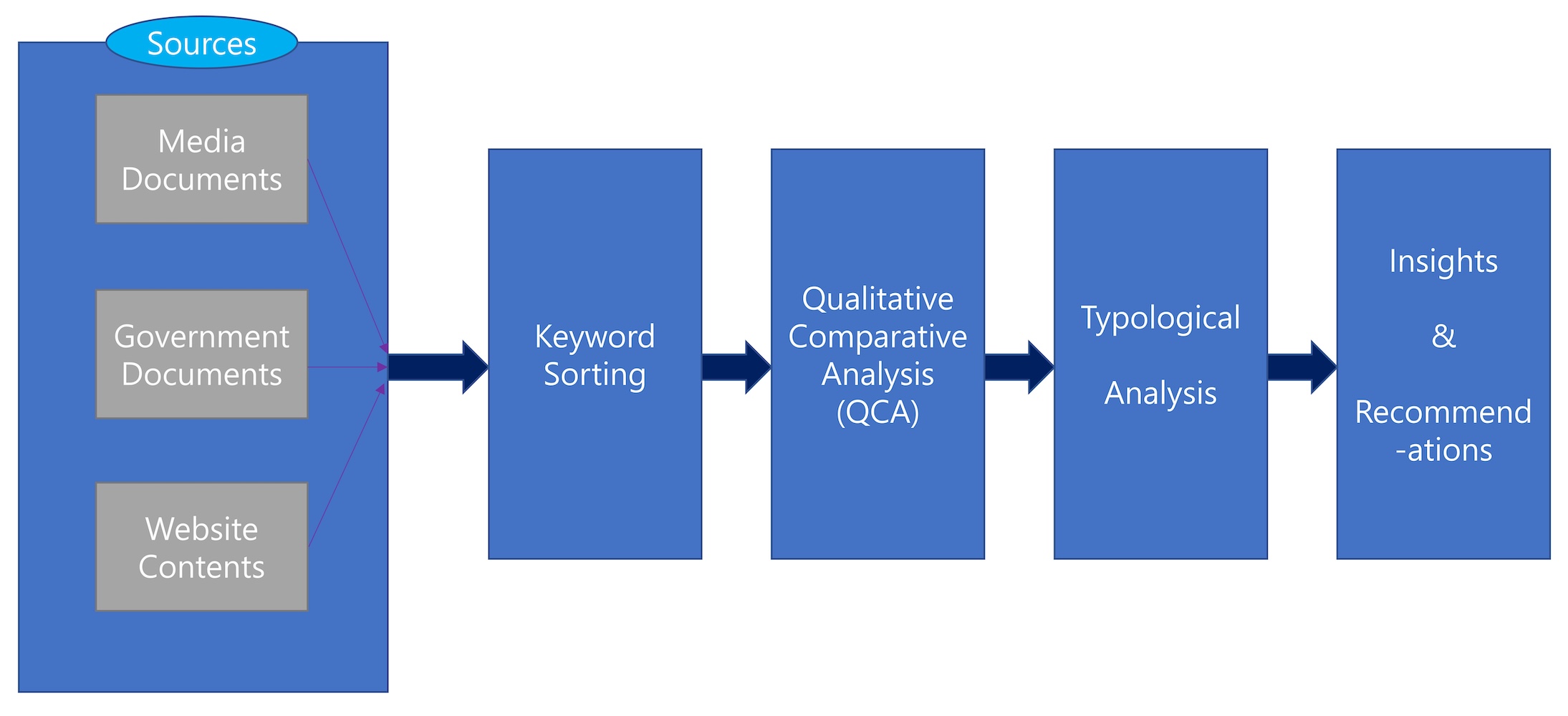
After the case selection and data gathering phases, the study process advanced as outlined below (Figure 1). We methodically sorted and coded the gathered data to enable QCA, which entailed identifying essential variables and their combinations that facilitate effective coastal resort development. We accomplished this using software tools (Dedoose and Atlas.ti) specifically intended for QCA, enabling systematic case comparison and the detection of causal patterns. Consequently, the QCA findings guided the typological analysis, organizing the instances into specific categories according to their attributes. The amalgamation of QCA and typological analysis yielded an extensive comprehension of the determinants affecting coastal resort development and the variety of resort classifications.
We methodically studied the data gathered from diverse sources using QCA and typological analysis, following categorization into developmental backgrounds, processes, contents, and implications. QCA entailed identifying essential variables and their combinations that facilitate effective coastal resort development. We applied a typological analysis that sorted the instances into specific categories according to their features. The amalgamation of these two analytical methodologies yielded a thorough comprehension of the determinants affecting coastal resort development and the variety of resort classifications.
4. Results
4.1. Qualitative Comparative Analysis Result
The qualitative comparative analysis (QCA) of 24 global coastal tourism sites uncovered critical insights into the determinants of successful resort development and the various typologies of coastal resorts. QCA can illustrate theme classification’s advantages in analyzing several case studies. We tried to extract the key features from the document and printed resources review issued by governments, media, and public organizations. We organized the findings into thematic categories based on each case’s development backgrounds, processes, contents, and implications, based on the QCA results.
4.1.1. Development Backgrounds
The study reveals that the principal motives for coastal resort development vary significantly across geographical regions. Prevalent motivators encompass the necessity for economic revitalization (e.g., Marina Bay in Singapore, Destin in Florida, and Eko Atlantic in Nigeria), the aspiration to foster luxury tourism and entice foreign investment (e.g., Palm Jumeirah in Dubai and Le Portier in Monaco), and the imperative to confront environmental issues such as coastal erosion (e.g., Eko Atlantic in Nigeria and Marken Island in the Netherlands). Moreover, historical and cultural relevance is paramount in certain instances, as shown by Venice in Italy and San Francisco in the United States.
4.1.2. Development Processes
The development processes of coastal resorts often encompass several stages, including land reclamation, infrastructural development, and the building of visitor amenities. The creation of Marina Bay in Singapore and Palm Jumeirah in Dubai necessitated significant land reclamation and the erection of prominent structures. Conversely, the evolution of Destin in Florida and the Outer Banks in North Carolina emphasized strategic planning and the incremental enhancement of tourism infrastructure. The research underscores the significance of public debate and community involvement in influencing development plans, as demonstrated by the Marina Bay and Crete situations.
4.1.3. Development Contents
The contents of coastal resort developments vary significantly, reflecting each location’s unique characteristics and strategic goals. Typical components encompass opulent resorts and hotels (e.g., Palm Jumeirah in Dubai and Paradise Island in the Bahamas), leisure facilities (e.g., Joe’s Bayou Recreation Area in Destin and the San Francisco Maritime National Historical Park), and cultural landmarks (e.g., Notre Dame Island in Canada and Bali in Indonesia). The development of artificial islands and the conservation of natural and cultural heritage are significant aspects, like Marken Island in the Netherlands and Venice in Italy.
4.1.4. Implications
The implications of coastal resort development are complex, involving economic, environmental, and social aspects. Successful resort projects economically enhance tourism, generate employment opportunities, and draw foreign investment. The construction of Marina Bay in Singapore and Cancun in Mexico has substantially enhanced the local economy. The analysis indicates beneficial and detrimental environmental implications. Some initiatives have resulted in the rehabilitation of coastal wetlands and the establishment of freshwater reservoirs (e.g., Marina Bay and Destin), while others have elicited apprehensions over their effects on marine ecosystems and the viability of tourist operations (e.g., Palm Jumeirah and Phuket). Coastal resorts can significantly alter local communities, exemplified by Hermann–Göring–Koog in Germany and Blackpool in the United Kingdom; however, it may also result in challenges concerning the equitable distribution of tourism benefits and the displacement of residents, as observed in Eko Atlantic and Paradise Island.
4.2.Typology (Typological) Analysis Result
After the QCA, we used typological analysis to categorize the 24 case studies into four unique classifications based on their attributes: 1) luxury tourism hubs, 2) cultural and historical destinations, 3) environmental and eco-tourism sites, and 4) economic revitalization projects. We discuss these classifications in the following.
4.2.1. Typology 1: Luxury Tourism Hubs (Type A)
The luxury tourism hub typology develops the traditional model of mass coastal resort development model, with a clear emphasis on including the institutional and community dimensions alongside the infrastructure and natural resources. Classical models of coastal resort development have been largely concerned with capital accumulation, infrastructure investment and market-driven growth (Butler, 1999; Inskeep, 1991). However, the results obtained by means of this research show that luxury tourism hubs are not defined only by high-end facilities and goods positioning in the market, but rather by certain configurations such as the combination of very strong regulations (e.g., regarding the environment, in Dubai, Monaco) and strategic involvement of the government in urban planning. This is a refinement of the current models of luxury resorts to show how governance structures and regulatory clarity can facilitate building of sustained luxury tourism growth while managing environmental risks. The typology therefore extends previous work by demonstrating that the success of luxury tourism is based on conjunctural causation—the specific combination of natural endowments, sophistication of infrastructure, institutional support and market positioning, rather than just one factor alone.
Palm Jumeirah in Dubai is an artificial island designed as a palm tree, with luxurious houses, hotels, and many upscale facilities. Paradise Island in the Bahamas is a renowned tourist destination recognized for its opulent resorts, casinos, and beaches. Maldives Island Resorts provides luxury experiences like overwater villas, diving, and many activities designed for affluent clientele. Upscale resorts, opulent facilities, and an emphasis on appealing to wealthy travelers distinguish destinations like Palm Jumeirah, Le Portier, and Paradise Island. These locations provide exclusive experiences and often include luxury hotels, private beaches, high-end shopping, gourmet cuisine, and recreational amenities such as golf courses and marinas. E affluent individuals and foreign capital is the motivation behind establishing these luxury tourism hubs, thereby enhancing the local economy. Palm Jumeirah in Dubai is an artificial island emblematic of luxury living, showcasing renowned structures like the Atlantis Hotel and several upscale residential estates. Likewise, Le Portier in Monaco and Paradise Island in the Bahamas provide wealthy travelers with luxurious lodgings and unique activities. The economic ramifications of these innovations are considerable since they yield significant money and generate job prospects. Nonetheless, there are environmental issues, especially regarding the effects on marine habitats and the sustainability of extensive projects (Table 2).
| Case No. | Nation | Region | Features |
|---|---|---|---|
| 5 | Dubai | Palm Jumeirah | Artificial islands with luxury villas, hotels, and exclusive amenities. |
| 9 | Monaco | Le Portier | Upscale residential and commercial development catering to affluent residents and tourists. |
| 18 | Bahamas | Paradise Island | Luxury resorts, casinos, and private beaches. |
| 19 | Maldives | Island Resorts | High-end resorts on private islands with a focus on exclusivity and pristine natural beauty. |
4.2.2. Typology 2: Cultural and Historical Destinations (Type B)
The cultural and historical destinations typology builds upon the heritage tourism and cultural tourism literature by showing how these destinations are achieving a balance between preservation goals and tourism development, through particular governance and community configurations. While extant heritage tourism frameworks stress the importance of cultural authenticity and local identity preservation (Hall, 2001; Honey & Krantz, 2007), the findings of this study reveal that successful cultural tourism destinations such as Venice, San Francisco, and Bali reflect a more subtle integration of three key conditions: (1) strong institutional protection of cultural assets, through zoning and heritage regulations, (2) stakeholder involvement in tourism governance by the community, and (3) infrastructure that is calibrated to manage the flow of visitors without overwhelming cultural sites. This typology is a refinement of the heritage tourism model, which shows that the heritage is not preserved simply through conservation, but through institutional-community-infrastructure configurations that preserve the authenticity of the site and enable economic benefit. Furthermore, the findings show that the key to the sustainability of cultural tourism is the management of the "commodification of culture"—the potential for authentic traditions to become staged performances—through participatory governance and capacity management strategies.
Marken Island in the Netherlands maintains traditional wooden dwellings and a distinctive cultural setting, attracting tourists eager to engage with Dutch heritage. Destinations such as Venice, San Francisco, and Bali emphasize preserving cultural heritage and historical importance as fundamental to their growth plan. These locations use their extensive history, distinctive architecture, and cultural resources to attract tourists. People celebrate Venice for its ancient canals, palaces, and art, establishing it as a prominent cultural tourism destination. The city’s endeavors to reconcile tourism with conserving its delicate ecology and cultural legacy remain persistent problems. San Francisco’s Maritime National Historical Park commemorates the city’s maritime heritage, showcasing restored historic vessels and museums that inform tourists about the city’s history. Bali, characterized by its distinctive amalgamation of natural splendor and cultural depth, allows visitors to engage with traditional Balinese culture, encompassing temples, dance performances, and artisanal goods. The economic advantages of cultural and historical tourism are considerable, as these sites draw various people and provide substantial cash. The conservation of cultural assets necessitates meticulous management to avert over-tourism and guarantee the survival of these locations (Table 3).
| Case No. | Nation | Region | Features |
|---|---|---|---|
| 11 | Netherlands | Marken Island | Preservation of traditional architecture and cultural heritage. |
| 12 | United States | San Francisco | Maritime history, museums, and cultural attractions. |
| 13 | Greece | Crete | Focus on sustainable tourism, local culture, and historical sites. |
| 14 | Italy | Venice | Rich historical significance, museums, cultural attractions, and preservation efforts. |
| 24 | Indonesia | Bali | Unique cultural traditions, temples, and artistic heritage. |
4.2.3. Typology 3: Environmental and Eco-tourism Sites (Type C)
The environmental and eco-tourism sites typology further develops the eco-tourism literature by transcend the simple distinction between mass tourism and ecotourism to show how successful environmental tourism is dependent upon particular combinations of community based management, environmental governance frameworks, and sustainable infrastructure. Traditional models of eco-tourism focus on environmental conservation and limited human impact (Weaver, 2006); however, this study shows that sites such as Crete, the Outer Banks and Marken Island have sustainable results because of its active community involvement in site management, explicit environmental impact monitoring systems and infrastructure investments dedicated to ecological preservation (e.g. wetland rehabilitation, pathways to natural areas). This is the departure from the passive "preservation only" model to the active adaptive management approach where local communities are both the stewards and the beneficiaries. The typology therefore refines existing frameworks of eco-tourism to demonstrate that environmental sustainability and local economic benefit are co-achievable through configurational arrangements of governance, community agency and infrastructure design, rather than being inherently trade-offs.
Crete promotes ecological and cultural tourism projects, emphasizing community-based tourism and local collaborations to save the island’s natural and cultural heritage. The Outer Banks in North Carolina provides many tourist activities, including animal observation, kayaking, and nature walks, while confronting issues associated with coastal erosion and storm-related damage. Locations like Crete, the Outer Banks, and Marken Island prioritize sustainable tourism initiatives and preserving natural ecosystems. The distinguishing features of these locations include their dedication to environmental preservation, community-oriented tourism, and advancing eco-tourism initiatives. Crete has established eco-tourism projects to conserve the island’s natural and cultural heritage while delivering economic advantages to local communities. The Outer Banks in North Carolina provides many eco-tourism activities, such as animal observation, kayaking, and nature excursions, while confronting issues associated with coastal erosion and storm destruction. Marken Island in the Netherlands has maintained its traditional wooden dwellings and cultural landscape, attracting tourists to engage with its distinctive legacy. The economic ramifications of environmental and eco-tourism are favorable since these locales draw ecologically aware tourists and bolster local economies. The success of these programs relies on efficient administration and engaging residents to guarantee the long-term sustainability of tourism activities (Table 4).
| Case No. | Nation | Region | Features |
|---|---|---|---|
| 2 | United States | Destin, Florida | Coastal wetland restoration, boat launches, nature walks, and educational opportunities. |
| 3 | Canada | Notre Dame Island | Artificial island with parks, recreational facilities, and natural areas. |
| 11 | Netherlands | Marken Island | Preservation of traditional architecture and cultural heritage. |
| 13 | Greece | Crete | Focus on sustainable tourism, local culture, and historical sites. |
| 20 | United States | Outer Banks, North Carolina | Beaches, historic sites, fishing, water sports, and ecotourism activities. |
4.2.4. Typology 4: Economic Revitalization Projects (Type D)
The economic revitalization projects typology contributes to the studies of tourism-led regeneration models, which were traditionally characterised by land reclamation, large-scale investment in infrastructure and capital attractions (Hall, 2001; Miller, 2004), by reinforcing the importance of the institutional regulatory frameworks and long-term planning horizons in guaranteeing that economic revitalisation became a process of sustained local benefit and not some short-term speculative development. Classical regeneration models focus on fast-tracking capital mobilization and physical transformation; yet this research shows that successful examples such as Marina Bay and Cancun are those in which large-scale investment is coupled with (1) clear regulatory frameworks and zoning policies that target the benefits to local stakeholders, (2) community consultation mechanisms that anticipate and mitigate the pressures of displacement and (3) infrastructure investments that provide for several economic sectors in addition to tourism. The typology therefore prolongs the regeneration literature by showing that the social sustainability of economic revitalization requires institutional and governance configurations that guarantee equitable distribution of benefits and economic diversification to avoid the fate of tourism-dependent economies exposed to market shocks or resource depletion.
Fostering economic growth motivates projects such as the Marina Bay, Eko Atlantic, and Costa Del Sol. These initiatives frequently include extensive infrastructure construction, land reclamation, and establishing new metropolitan zones. Marina Bay in Singapore exemplifies an economic redevelopment initiative that has altered the metropolitan center, showcasing renowned structures such as Marina Bay Sands and Gardens by the Bay. Eko Atlantic in Nigeria mitigates coastal erosion while establishing a new economic center including high-rise structures, a marina, and commercial facilities. Costa del Sol, Spain, has prioritized strategic planning and the enhancement of recreational amenities to augment tourism and generate employment. The economic advantages of these initiatives are significant since they draw investment, provide money, and offer job possibilities. Nonetheless, environmental and social difficulties exist, including the effects on coastal ecosystems and the relocation of local inhabitants, necessitating meticulous attention and control (Table 5).
| Case No. | Nation | Region | Features |
|---|---|---|---|
| 1 | Singapore | Marina Bay | Luxury hotels, iconic architecture, high-end dining, and entertainment. |
| 4 | Nigeria | Eko Atlantic | Land reclamation to create a new economic hub and attract foreign investment |
| 6 | Germany | Hermann-Göring-Koog | Land reclamation for agricultural production and job creation |
| 7 | Italy | Venetian Lido | Tourism development to revitalize the Lido and protect Venice from flooding |
| 8 | Spain | Costa del Sol | Large-scale tourism development to stimulate economic growth |
| 10 | Monaco | Fontvieille | Land reclamation to expand Monaco's territory and create economic opportunities |
| 15 | United Kingdom | Blackpool | Development of amusement parks and entertainment venues to attract tourists and boost the economy |
| 16 | France | La Grande Motte | Purpose-built resort town to promote tourism and economic development |
| 17 | Mexico | Cancun | Government-led initiative to create a world-class tourist destination and generate economic growth |
| 21 | China | Hainan Island | Development of tourism infrastructure and resorts to attract foreign investment and stimulate economic activity |
| 22 | Australia | Gold Coast | High-rise development and theme parks to attract tourists and boost the economy |
| 23 | Thailand | Phuket | Mass tourism development to drive economic growth |
Qualitative comparative and typological analyses of coastal resort developments elucidate their varied motives, methods, and outcomes (Table 6). The findings highlight the necessity of including several issues, such as economic, environmental, and social aspects, in the design and administration of coastal tourist growth. This study identifies the primary factors of famous resort developments and categorizes examples into specific typologies, offering significant insights for policymakers and developers aiming to foster sustainable and inclusive coastal tourism and regional economic renewal. The results of our investigation indicate a link between several elements and prominent seaside resort developments. Factors influencing coastal development encompass the availability of natural resources, the buildup of infrastructure, legislation, and the extent of embedded community support. The typological investigation specifically identified many forms of seaside resort developments. Ultimately, coastal resort development projects primarily seek to provide extensive mass tourism infrastructure, use natural resources, and preserve heritage to attract visitors who would benefit the local economy.
Collectively, these refined typologies show an important development in theory: successful coastal resort development is not based on single dominating forces (e.g., natural resources, infrastructure, or market demand), but on specific conjunctural configurations of conditions that span natural, institutional, social, and infrastructural domains. This configurational approach, based on QCA methodology, moves beyond fragmented models of tourism development that center around isolated aspects (e.g. cultural preservation or environmental management) to provide an integrated approach that explains how different resort types have emerged and survived. The results highlight the fact that developers and policy-makers cannot just copy models from luxury resorts, heritage tourism or eco-tourism; instead, the particular institutional, community and governance set up that enables success in one place needs to be adapted painstakingly to local conditions and stakeholder interests in another.
| Case No. | Nation | Coastal City | Type |
|---|---|---|---|
| 1 | Singapore | Marina Bay | D |
| 2 | United States | Destin, Florida | C |
| 3 | Canada | Notre Dame Island | C |
| 4 | Nigeria | Eko Atlantic | D |
| 5 | Dubai | Palm Jumeirah | A |
| 6 | Germany | Hermann-Göring-Koog | D |
| 7 | Italy | Venetian Lido | D |
| 8 | Spain | Costa del Sol | D |
| 9 | Monaco | Le Portier | A |
| 10 | Monaco | Fontvieille | D |
| 11 | Netherlands | Marken Island | B+C |
| 12 | United States | San Francisco | B |
| 13 | Greece | Crete | B+C |
| 14 | Italy | Venice | B |
| 15 | United Kingdom | Blackpool | D |
| 16 | France | La Grande Motte | D |
| 17 | Mexico | Cancun | D |
| 18 | Bahamas | Paradise Island | A |
| 19 | Maldives | Island Resorts | A |
| 20 | United States | Outer Banks, North Carolina | C |
| 21 | China | Hainan Island | D |
| 22 | Australia | Gold Coast | D |
| 23 | Thailand | Phuket | D |
| 24 | Indonesia | Bali | B |
5. Discussions
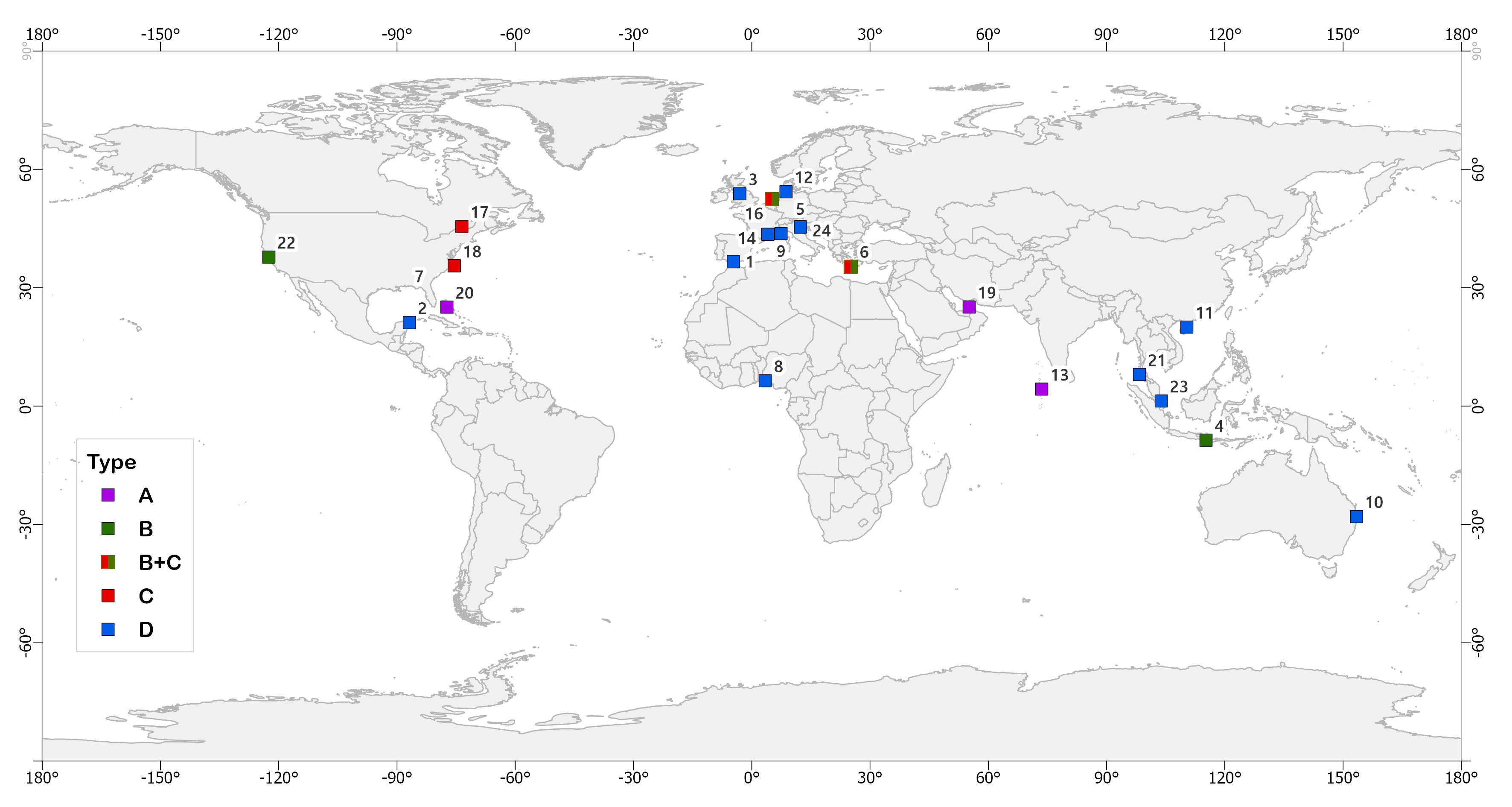
This study’s results are pertinent to governing bodies and developers engaged in coastal tourism development. The research indicates that effective coastal resort development relies on several elements encompassing access to natural resources, existing infrastructure, development motivations, and degree of community support. The research also delineates various categories of coastal resort development. Every category of growth possesses distinct features and ramifications for sustainability. For instance, our examination of 24 international cases (Figure 2) identified four unique categories of coastal resort development: luxury tourism hubs, cultural and historical destinations, environmental and eco-tourism sites, and economic revitalization projects. Each typology signifies a distinct methodology for coastal tourist development, encompassing unique origins, procedures, contents, and consequences.
Luxury tourism hubs (Type A) such as Palm Jumeirah in Dubai and Paradise Island in the Bahamas aim to attract affluent visitors by providing unique experiences, lavish lodgings, and premium services. These projects can yield significant cash and job possibilities, although they also elicit concerns over their environmental consequences and the fair allocation of tourism advantages (Weaver, 2006; Bramwell & Lane, 2011). This continuous dispute highlights the intricacy of establishing high-end tourism destinations. Specifically, in luxury tourism hubs, we should evaluate the equilibrium between materialistic gains and intangible local traditions alongside ecological preservation.
Cultural and historical destinations (Type B) such as Venice and San Francisco emphasize preserving cultural assets and historical relevance as fundamental to their growth plan. They draw tourists by highlighting their extensive history, distinctive architecture, and cultural assets. Although these places provide considerable economic advantages and support cultural preservation, they have difficulties reconciling tourism with safeguarding their cultural and natural assets (Weaver, 2006; Bramwell & Lane, 2011). Venice, characterized by its complex canal system, historic architecture, and dynamic art culture, provides a unique insight into Renaissance Europe. San Francisco’s amalgamation of Victorian architecture, its significant Gold Rush past, and its crucial involvement in the tech boom uniquely represent American society. The economic benefit derived from tourism in these cities is significant, supporting local enterprises and conserving cultural landmarks.
This surge also presents a series of obstacles. A significant concern is the effect on the local ecosystem and inhabitants. The substantial foot traffic in Venice adds to the degradation of its historic towers and delicate ecology. The substantial influx of tourists might result in congestion, exerting pressure on resources and infrastructure. Similarly, San Francisco has the challenge of reconciling its preservation of famous landmarks with the requirements of an expanding population, contemporary development demands, and coastal areas (Hall, 2001). Consequently, these seaside communities, renowned for their cultural and historical significance, contend with the monetization of culture. As visitor numbers increase, there is a danger that people will perceive cultural heritage places as attractions rather than embodiments of living history. This perception may compromise the authenticity of the experience, as local practices and traditions are occasionally modified to accommodate visitor expectations instead of being maintained in their original form. Cultural and historical sites illustrate the intricate equilibrium between using cultural heritage for commercial benefit and securing it for posterity. This persistent problem necessitates novel strategies for tourism management, including sustainability and the preservation of cultural integrity.
Environmental and eco-tourism sites (Type C) such as Crete and the Outer Banks prioritize sustainable tourism techniques and conserving natural ecosystems. Crete, characterized by its unspoiled beaches, diverse ecosystems, and historical relics, provides a sanctuary for individuals desiring a fusion of nature and culture. The island’s dedication to sustainable tourism is apparent in its many eco-friendly lodgings and conserved natural regions. Likewise, the Outer Banks, featuring its pristine shoreline and distinctive fauna, draws people seeking nature-focused activities. They frequently emphasize environmental preservation, community-oriented tourism, and promoting eco-tourism projects. These locations appeal to environmentally aware travelers and bolster local economies; nevertheless, their success relies on proficient administration and residents' support to guarantee the enduring sustainability of tourism endeavors (Weaver, 2006). These environmental and eco-tourism areas bolster local economies by fostering locally owned enterprises and employing residents in tourism-related endeavors. Sustaining this equilibrium necessitates continuous care to prevent over-tourism and ecological deterioration (Pappas & Papatheodorou, 2017).
Beyond the four main typologies, however, this study has found an important hybrid category that is defined by the co-occurrence of cultural and historical preservation and environmental and eco-tourism development. Two important cases, Marken Island, Netherlands (Case 11) and Crete, Greece (Case 13) are examples of this B+C configuration and it discloses a sophisticated and increasingly relevant approach to coastal resort development.
Marken Island is a unique case in which traditional cultural heritage and environmental conservation go hand-in-hand. The preservation on the island of traditional wooden dwellings, vernacular architecture and cultural landscape is at the same time a cultural tourist attraction and a mechanism for achieving the ecological integrity of the island. The preservation of traditional building styles limits development that is resource-intensive, and thus limits environmental degradation. In this design, cultural preservation serves as an environmental protection mechanism per se. The community's commitment to preserve authentic Marken culture is a disincentive to mass tourism infrastructure that would otherwise damage coastal ecosystems. This produces a virtuous circle whereby the cultural authenticity relies on the quality of the environment—people want authentic experiences because of the unspoiled character of the island. Similarly, environmental management practices that preserve wetlands and traditional waterways simultaneously preserve the cultural landscape that visitors experience: economic sustainability is dependent on both cultural and environmental preservation (Weaver, 2006).
Crete shows a more complex picture of B+C typology, where several strategic initiatives combine in order to connect cultural heritage protection and environmental sustainability. The tourism development on the island focuses on eco-friendly accommodation possibilities, locally-sourced tourism experiences, and protected nature areas in combination with preservation of historical sites, traditional villages and archaeological heritage. Unlike Type B destinations (e.g. Venice, San Francisco) where tourism pressure frequently threatens both the authenticity of the cultural landscape and the quality of the environment, or Type C sites (e.g. Outer Banks) where cultural integration and environmental management might take place with little integration of the two, in Crete tourism development is consciously promoted as a way of financing cultural preservation and environmental conservation at the same time. Community-based tourism initiatives in Crete often engage local stakeholders in both heritage site management and natural area stewardship, forming a governance configuration where cultural and environmental goals support one another instead of competing.
This B+C hybrid typology offers us a number of crucial insights on coastal resort development theory and practice. First, it shows that cultural heritage and environmental sustainability are not competing development priorities. In many contexts, a set of the same constraints that maintain cultural integrity—limited industrialization, limited infrastructure development, retention of traditional practices—maintain environmental degradation. Communities dedicated to preserving cultural authenticity have often at the same time made environmental conservation a priority, as both rely on the restriction of extractive and exploitative patterns of development.
Second, the B+C configuration implies that visitors are more and more looking for experiences that combine cultural authenticity and environmental quality. The economic viability of Type B+C destinations is dependent on the integration of cultural experiences or beauty in nature being valued rather than the sum of the two. This is a move away from the traditional way of segmenting the tourism market (heritage tourists vs. eco-tourists) towards a much smarter consumer preference for holistic and authentic place-based experiences. This preference generates market incentives for destinations to preserve both cultural and environmental integrity, a confluence of market forces and sustainability goals that is not necessarily achieved in purely economic (Type D) or purely luxury (Type A) models of behavior.
The identification of the Type B+C hybrid typology adds a new layer of analysis by acknowledging that successful development of coastal resorts is increasingly based on the integration (rather than segregation) of cultural heritage preservation and environmental sustainability objectives. This arrangement is one promising route to more holistic and resilient coastal tourism development, and one whose success critically depends on supportive governance, community commitment and market positioning strategies.
Economic revitalization projects (Type D) such as Marina Bay in Singapore and Destin in Florida are motivated by the necessity to foster economic growth and generate new economic prospects. Marina Bay exemplifies contemporary urban development, illustrating how strategic planning and innovation can alter a city’s topography. The region currently has prominent towers such as the Marina Bay Sands and the Gardens by the Bay, drawing tourists and investors. Destin, characterized by its immaculate beaches and accommodating tourism infrastructure, encounters comparable issues as it progresses and draws visitors. These projects frequently entail extensive infrastructure construction, land reclamation, and new urban zones. Although they can substantially enhance local economies, they necessitate meticulous evaluation of their environmental and social repercussions, including resident relocation and possible pressure on natural resources (Hall, 2001). This swift advancement requires meticulous evaluation of its ecological consequences, including residents’ relocations and the pressure on natural resources. Reconciling expansion with environmental preservation and social equality is a key issue.
While in principle many hybrid combinations can be considered, empirically the 24 cases in this study show that there are only five different types (four primary types A, B, C, D and one viable hybrid B+C): This pattern reflects the underlying logic of how the development of coastal resorts actually operates—as coherent and internally consistent development pathways that are substantially constrained by resource endowments, institutional arrangements, market dynamics, and sustainability imperatives. Other possible combinations do not show because they represent logically or practically incompatible combinations. This finding adds to the validity of the typological framework by showing that the types identified do not represent simple and convenient analytical categories, but rather represent real and substantive differences in how coastal resort development takes place within different contexts.
While economic revitalization is certainly a building element that underlies the creation and continuity of all coastal resorts, this aspect of the typologies established in this study is not enough to distinguish them. Each typology has different emphases that extend beyond the economic goals to incorporate different social, cultural, and environmental priorities. For example, Typology 2 (Type B) focuses more on preserving cultural heritage and community involvement, and Typology 3 (Type C) focuses more on environmental sustainability and eco-tourism development. These characteristics influence divergent patterns of development and policy implications, though they are all working within an overriding context in which economic viability is a requirement to success. Clarification of this hierarchical relationship between economic revitalization as a universal precondition and other typological differentiations as defining characteristics will add to the conceptual sharpness of the typologies and to their better service to practical applications.
The selection of typology—whether to emphasize sustainable tourism or economic revitalization—hinges on several variables, including accessible natural and cultural resources, the economic and political landscape, and the local community’s interests. The study’s findings indicate that the most successful coastal resort complexes employ a holistic strategy, considering economic, environmental, and social factors. Incorporating these factors can facilitate a sustainable and profitable future for seaside resorts, ensuring their continued appeal and viability for future generations.
The results of this study hold significance for urban planners and tourism policymakers. With the expansion of coastal tourism, it is imperative to implement sustainable development strategies that reduce the environmental repercussions of tourism activities while enhancing the economic advantages for locals (Hunter, 1997). This approach includes deploying renewable energy technology, waste minimization tactics, and water conservation initiatives. Moreover, it is essential to engage residents in the planning and decision-making processes for coastal tourist development (Liu & Var, 1986), thus guaranteeing that tourism development aligns with the needs and objectives of the local community and ensuring equitable distribution of tourism’s benefits. Besides the four typologies established in this study, there is potential for creating innovative approaches to coastal tourism that amalgamate aspects from several typologies. A luxury resort might include sustainability techniques and the protection of cultural heritage in its design and operations. Ultimately, it is crucial to acknowledge that coastal tourism is not a cure-all for economic advancement. Diversifying local economies and mitigating dependence on tourism is crucial. By implementing a holistic and sustainable strategy for coastal tourism development, cities could guarantee that tourism enhances its residents’ long-term economic, social, and environmental welfare.
Our study offers a significant overview of coastal resort growth; yet, it is crucial to recognize its limitation about the sample size. The examination of 24 case studies, although providing varied examples, may not comprehensively reflect the extensive spectrum of coastal resort developments worldwide. An increased sample size may yield more thorough insights.
This study emphasizes the collective responsibility of governments, developers, and communities to guarantee the sustainable profitability of coastal tourism. By creating a conducive climate for sustainable practices, assessing the comprehensive impacts of projects, and integrating community viewpoints, we may strive to reconcile economic benefits with conserving cultural and environmental assets. Future research should examine the impacts of climate change on coastal tourism and explore novel approaches to integrate sustainability, cultural preservation, and economic development. This paper advocates for comprehensive and nuanced solutions in coastal resort development, highlighting the potential advantages and sustainability of coastal tourism destinations and calls for further research.
6. Conclusions
Our study employed qualitative comparative analysis (QCA) and typological analysis to examine 24 worldwide case studies and clarify many facets of coastal resort development. The findings highlight the complex interaction of elements that facilitate effective growth, including the availability of natural resources, infrastructure, legal framework, and community support. The study identified four major typologies of coastal resort development, each possessing distinctive characteristics and consequences for sustainability: luxury tourism hubs, cultural and historical destinations, environmental and eco-tourism sites, and economic revitalization projects.
These typologies underscore the varied methodologies of coastal tourism development, each characterized by distinct motives, procedures, outputs, and repercussions. Luxury tourism hubs, distinguished by lavish infrastructure and unique experiences, can provide significant economic advantages but need a meticulous evaluation of their environmental consequences and fair allocation of tourism gains. Cultural and historical destinations, prioritizing heritage conservation, continually confront the difficulty of reconciling tourism with safeguarding their distinctive cultural and natural resources. Environmental and eco-tourism sites, emphasizing sustainable practices and ecological conservation, illustrate the possibility for responsible tourist growth that enhances local economies and reduces environmental damage. Economic revitalization projects, motivated by economic growth and employment expansion, sometimes include extensive infrastructure construction and necessitate meticulous evaluation of their environmental and social impacts.
A thorough evaluation must inform the selection of typology of available resources, economic and political factors, and the interests of the local community. The study’s findings indicate that the most effective coastal resort complexes employ a comprehensive strategy, incorporating economic, environmental, and social factors to guarantee enduring sustainability and resilience. Our research enhances comprehension of coastal resort development and offers significant insights for politicians, developers, and local communities involved in the future of coastal tourism. Coastal tourism may stimulate economic growth by adopting sustainable methods, fostering community involvement, and emphasizing the preservation of cultural and natural heritage, thus assuring the long-term health and welfare of coastal communities and ecosystems.
Funding
This work was supported by a Research Grant of Pukyong National University (2025).
References
- Aziz, S., Niazi, M.A.K., 2023. Protecting coastal tourism through developing tourists’ environment responsible behaviour. J. Destin. Mark. Manag. 27: 100956.
- Beeharry, Y., Bekaroo, G., Bokhoree, C., Phillips, M.R., Jory, N., 2021. Sustaining anti-littering behavior within coastal and marine environments: Through the macro-micro level lenses. Mar. Pollut. Bull. 164: 112019.
- Bramwell, B., Lane, B., 2011. Sustainable tourism: An evolving global approach. Routledge.
- Bramwell, B., Lane, B., 2011. Critical research on the governance of tourism and sustainability. J. Sustain. Tour. 19: 411–421.
- Butler, R.W., 1999. Sustainable tourism: A state-of-the-art review. Tour. Geogr. 1: 7–25.
- Collier, D., LaPorte, J., & Seawright, J. 2012. Putting typologies to work: Concept formation, measurement, and analytic rigor. Political Research Quarterly, 65(1), 217-232.
- Gössling, S., 2002. Global environmental consequences of tourism. Glob. Environ. Change 12: 283–302.
- Gössling, S., Hall, C.M., Weaver, D.B., 2009. Sustainable tourism futures: Perspectives on systems, restructuring and innovations. Routledge.
- Gössling, S., Scott, D., Hall, C.M., 2021. Pandemics, tourism and global change: A rapid assessment of COVID-19. J. Sustain. Tour. 29: 1–20.
- Hall, C.M., 2001. Trends in ocean and coastal tourism: The end of the last frontier? Ocean Coast. Manag. 44: 601–618.
- Hall, C.M., 2019. Tourism and development in the developing world. Routledge.
- Hampton, M.P., Bianchi, R., Jeyacheya, J., 2023. Dynamics of coastal tourism: Drivers of spatial change in South‐East Asia. Singap. J. Trop. Geogr. 44: 455–472.
- Honey, M., Krantz, D., 2007. Global trends in coastal tourism. Center on Ecotourism and Sustainable Development.
- Hunter, C., 1997. Sustainable tourism as an adaptive paradigm. Ann. Tour. Res. 24: 850–867.
- Inskeep, E., 1991. Tourism planning: An integrated and sustainable development approach. Van Nostrand Reinhold.
- Liu, J.C., Var, T., 1986. Resident attitudes toward tourism impacts in Hawaii. Ann. Tour. Res. 13: 193–214.
- Miller, G., 2004. The development of indicators for sustainable tourism: Results of a Delphi survey of tourism researchers. Tour. Manag. 24: 351–362.
- Miller, M.L., Auyong, J., 2004. Coastal zone tourism: A potent force affecting environment and society. Mar. Policy 28: 457–468.
- Meyer, A. D., Tsui, A. S., & Hinings, C. R. 1993. Configurational approaches to organizational analysis. Academy of Management Journal, 36(6), 1175-1195.
- Olya, H.G., Gavilyan, Y., 2017. Configurational models to predict residents’ support for tourism development. J. Travel Res. 56(7): 893–912.
- Orams, M., 1999. Marine tourism: Development, impacts and management. Routledge.
- Pappas, N., Papatheodorou, A., 2017. Tourism and the refugee crisis in Greece: Perceptions and decision-making of accommodation providers. Tour. Manag. 63: 31–41.
- Pham, T.D., Dwyer, L., Su, J.J., Ngo, T., 2021. COVID-19 impacts of inbound tourism on Australian economy. Ann. Tour. Res. 88: 103179.
- Ragin, C.C., 1987. The comparative method: Moving beyond qualitative and quantitative strategies. University of California Press.
- Ragin, C.C., 2000. Fuzzy-set social science. University of Chicago Press.
- Ronda, A.C., Arias, A.H., Oliva, A.L., Marcovecchio, J.E., 2023. Beach litter in a touristic coastal city from Argentina: Amounts, composition, source inference and associated environmental threats. Mar. Pollut. Bull. 186: 114405.
- Scholtz, M., Slabbert, E., 2018. A remodelled approach to measuring the social impact of tourism in a developing country. Dev. South. Afr. 35(6): 743–759.
- Truong, V.D., Hall, C.M., 2015. Exploring the poverty reduction potential of social marketing in tourism development. Adv. Southeast Asian Stud. 8(2): 125–142.
- Weaver, D., 2006. Sustainable tourism: Theory and practice. Butterworth-Heinemann.
- World Tourism Organization (UNWTO), 2021. World Tourism Barometer.
- Wu, Y., Wen, J., Chen, M., Hao, S., 2022. Environmentally responsible behavior in tourism: A perspective of Chinese tourists. Tour. Manag. 88: 104429.
- Zhang, H., Xing, Z., 2023. Tourism and development in the developing world. Mar. Policy 28: 457–468.