
The Sea as A Representation of Ecological Knowledge: Case Study of ‘Suti Solo do Bina Bane’ Tale on Rote Island, Indonesia
 10.21463/jmic.2025.14.2.10
Abstract
The tale ‘Suti Solo do Bina Bane’ from the Rotenese community in Rote Island, Indonesia, portrays the sea as a central symbol in life, cosmology, and conservation practices. This study employs a qualitative thematic analysis framework, drawing on theories of maritime symbolism, indigenous ecological knowledge, and ritual ecology. Data were collected through transcription of two versions of the story documented in Master Poets, Ritual Masters: The Art of Oral Composition Among the Rotenese of Eastern Indonesia (James J. Fox, 2016, published by ANU Press), interviews with six local informants (including storyteller Jonas Mooy), and literature reviews on coastal cultural heritage. Findings reveal the sea’s dual role as a source of life and a spiritual bridge between humans and nature. The story reflects ecological wisdom through rituals honoring marine resources, such as using coconuts as symbols of fertility. Comparing the two versions shows a shift from mythological narratives to ritualistic practices tied to daily life, illustrating evolving perceptions of marine conservation. This research highlights how oral traditions can inform sustainable resource management, bridging cultural heritage and environmental stewardship.
Keywords
marine symbolism, indigenous ecological knowledge, ritual ecology, ‘Suti Solo do Bina Bane’, Rotenese
Introduction
The Rote community on Rote Island, East Nusa Tenggara Province, Indonesia, has a long history of life closely tied to the sea. Their economy is highly dependent on fishing and marine resources (Fox, 2016:25). Fox reveals that the Rote community bases their beliefs and spirituality on cultural values derived from marine life, even extending to marine conservation practices. Their long history and memories of marine life have given rise to a story passed down from generation to generation in the tale of ‘Suti Solo do Bina Bane’.
As a cultural heritage, the oral story of ‘Suti Solo do Bina Bane’ is not just an ordinary oral story but serves as evidence of how the ancestors of the Rote people synthesised their life experiences regarding the origin of plant seeds and marine life as the central focus of their cosmology and conservation practices. Various versions of ‘Suti Solo do Bina Bane’ demonstrate that the ancestors of the Rote people had a wealth of perspectives on the cosmology of life on Rote Island. Today, these various versions pose challenges for the current generation of Rote society, particularly those outside Rote. The issue is that not all of them understand the implied meanings in ‘Suti Solo do Bina Bane’ due to difficulties in understanding the language structure and the increasing absence of elders who understand, comprehend, and can convey the story to the current generation. Through thematic analysis and symbolism, this research aims to examine the theme of the sea in the story, analyze the symbolism of the sea as a reflection of ecological wisdom, and explore the connection between the ritual story and marine conservation practices.
In the context of maritime life, ‘Suti Solo do Bina Bane’ can serve as a medium to understand the values of maritime life through its various implied meanings. This study focuses on uncovering the issues of (1) the representation of the sea and maritime values, (2) the symbolic meaning of the sea, and (3) the ancestral knowledge of the Rote community regarding marine ecosystem conservation. By analysing themes and symbols related to the sea, these three issues help spark important global conversations about how the beliefs, spirituality, and myths of the Rote community shape their view of the sea and support the development of ecological knowledge for managing and protecting marine resources sustainably.
The story ‘Suti Solo do Bina Bane’ is an important part of intangible cultural heritage that teaches cultural values and local wisdom to coastal communities in Indonesia, particularly in the context of ritual stories and natural symbolism. UNESCO (2018), in its report on the Intangible Cultural Heritage of Humanity, emphasizes the importance of intangible cultural heritage in maintaining the sustainability (Ounanian et al., 2021:4) of local communities. ‘Suti Solo do Bina Bane’ is an example of intangible cultural heritage that contains conservation values and local wisdom in natural resource management. World Wildlife Fund (2019) also explains that local wisdom in marine conservation, such as the Sasi Laut system in Maluku, can serve as a model for sustainable marine resource management.
This study bases the theoretical framework in three main aspects: First, the symbolism of the sea in coastal culture, which explains how the sea is used as a symbol in ritual stories to depict concepts such as life, death, and the balance of nature (Eliade, 1957:15; Turner, 1967:48). Second, mythology and the sea, which describes the role of the sea in mythology as a sacred entity and a symbol of abundance (Eliade, 1957:42). Third, marine conservation in coastal traditions, explains how ritual stories can serve as a means to preserve knowledge about the sea and the importance of conservation (Berkes, 1999:139; Rappaport, 1968:224). Through this study, focuses on ‘Suti Solo do Bina Bane’, there is potential to gain new insights into how the oral literature of coastal communities can serve as a valuable source of knowledge in efforts toward marine conservation and sustainable natural resource management.
The study on the Rotenese tale ‘Suti Solo do Bina Bane’ makes significant academic contributions to international marine conservation and cultural heritage research. The research provides concrete empirical examples of how maritime symbolism functions within a specific cultural context, deepening theoretical understanding of maritime symbolism in anthropology and cultural studies. Through careful transcription, coding, and categorizing two versions of the Rotenese tale, this study demonstrates how qualitative thematic analysis can be systematically applied to oral traditions to uncover Indigenous ecological knowledge. The approach combines text analysis with cultural context to understand the relationship between marine symbolism and conservation practices holistically.
The study reveals how indigenous ecological knowledge evolves in response to social, religious, and environmental changes. Therefore, this study contributes to a broader understanding of how local knowledge systems maintain relevance amidst globalization and modernization. By highlighting how indigenous conservation practices can inform contemporary sustainability efforts, the research demonstrates how spiritual beliefs can support ecological balance through practices like marine protected areas. The study also provides valuable comparative insights by connecting Rotenese practices with global conservation traditions such as the Sasi system in Maluku, the Tabu tradition in Polynesia, and the Ra'ui practice in the Cook Islands. Finally, this research documents and analyzes intangible cultural heritage, demonstrating how oral narratives serve as living archives of ecological knowledge and cultural identity. This study contributes novel insights into the nexus of oral traditions, maritime symbolism, and indigenous ecological knowledge for sustainable marine stewardship, aligning with the journal's focus.
Methods
This study uses a thematic analysis to analyse the symbolism of the sea and conservation values in the ritual story ‘Suti Solo do Bina Bane’ from the Thie region, Rote Island, East Nusa Tenggara, Indonesia. The initial data for this study were collected through observation and reading of two versions of the story ‘Suti Solo do Bina Bane’ that appeared in 1973 and 2011 told by Jonas Mooy, a storyteller in Oebou Village, Southwest Rote, Rote Ndao, East Nusa Tenggara, documented in Master Poets, Ritual Masters: The Art of Oral Composition Among the Rotenese of Eastern Indonesia (Fox 2016). Based on these preliminary observations, this study then conducted interviews with six informants, including Jonas Mooy, in November and December 2024. The interviews addressed local interpretations of the symbolism of the sea in stories associated with marine conservation practices. Furthermore, the study conducted a literature review to relate local interpretations to maritime mythology, local policies, and the intangible cultural heritage of Indonesian coastal communities, including UNESCO (2018) report and World Wildlife Fund (2019) publications.
| Informants | Position in the community |
|---|---|
| Informant 1 | Jonas Mooy, a storyteller of Version II ‘Suti Solo do Bina Bane’ |
| Informant 2 | WM, an elder who has vast knowledge of Rote folklore |
| Informant 3 | MM, a village secretary who has vast knowledge of Rote folklore |
| Informant 4 | AM, a former teacher who is also the father of MM |
| Informant 5 | SM, an elder who used to be an expert sailor |
| Informant 6 | DB, a service worker who often interacts with local people and foreign tourists |
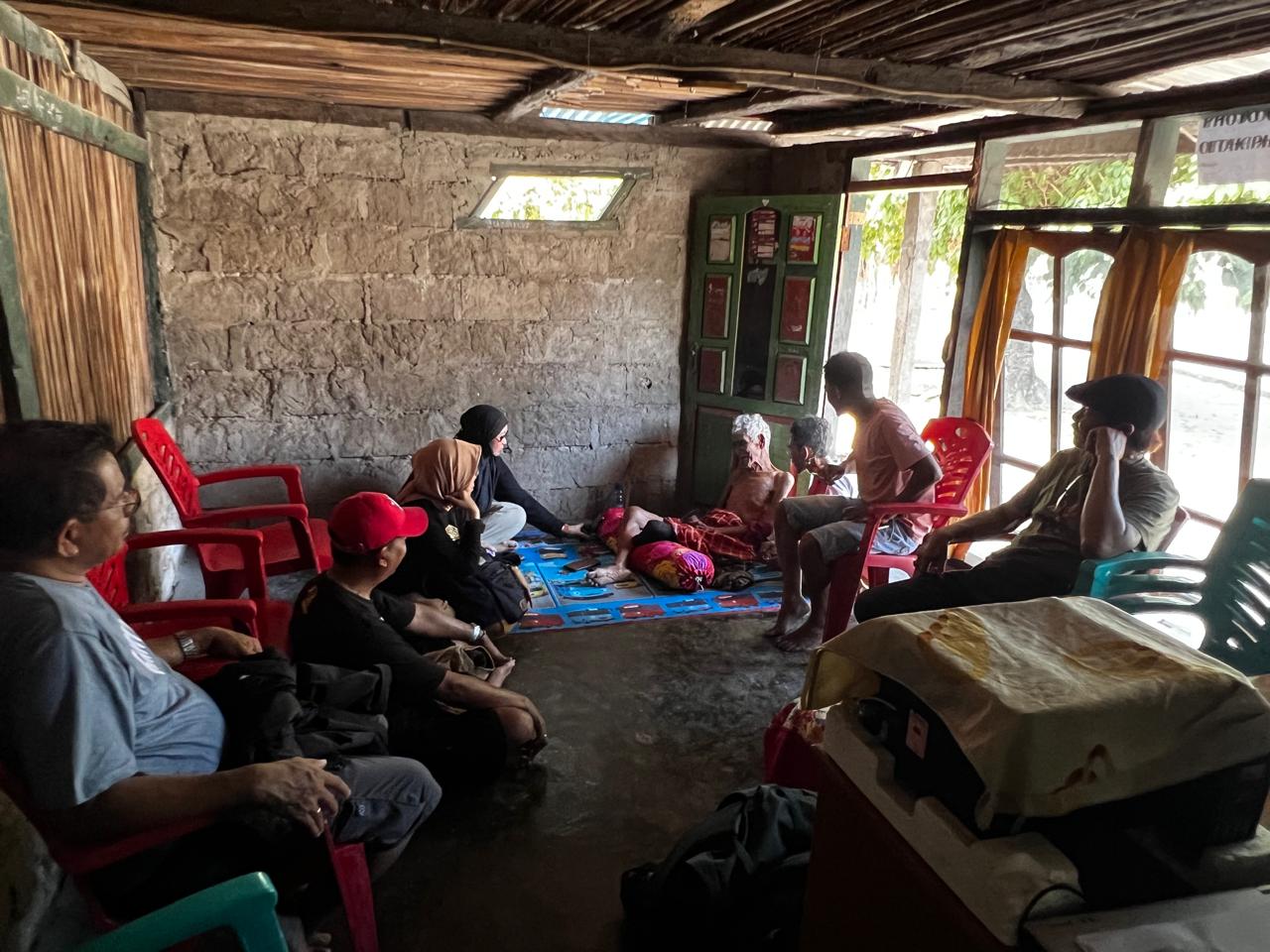
The data analysis procedure included three stages. The first stage was coding and thematic categorization. This process began with open coding, where each element in the story text ‘Suti Solo do Bina Bane’ and interview data related to marine symbolism was carefully identified. These elements included the concepts of source of life, balance of nature, and conservation rituals. Each element was assigned a unique code to facilitate further analysis. Then, category development was carried out by grouping related codes into higher-level thematic categories. For example, codes related to the rebirth of food crops or rituals honoring sea deities were developed into ‘marine symbolism as a source of life’ or ‘ritual practices for ecological balance’.
The second stage was symbolism analysis. This analysis used Mircea Eliade's (1957) theory of the sea as a space beyond time and space and Victor Turner's (1967) theory of water as a symbol of rebirth and renewal. This approach allowed for an in-depth interpretation of how marine symbolism functions within the Rotenese cultural context. Additionally, local symbolism was identified, such as using coconuts in the Limba ceremony, which was analyzed within the context of indigenous ecological knowledge. This symbolism was linked to local conservation practices, such as seasonal fishing bans.
The third stage was version comparison. The two versions of the story, 1973 (more mythological) and 2011 (more ritualistic), were analyzed in parallel. Differences in marine symbolism were analyzed using Geertz's (1973) theory of cultural change to understand how perceptions of the sea and marine conservation have evolved. The comparative coding process involved identifying elements present in both versions and those unique to each version, allowing for the identification of shifts in conservation practices and cultural values related to the sea.
Method triangulation was utilized to ensure the validity of the findings, incorporating data from three primary sources: story transcriptions, interviews with six local informants, and literature reviews on Indonesian coastal cultural heritage. Data from these sources reinforced each other and provided a more comprehensive perspective. The analysis results were then discussed again with several key informants to ensure accurate interpretation. This process involved discussions on how the analysis reflected actual practices and beliefs within the Rotenese community. While the qualitative nature of the interviews and the focus on a specific cultural context limit the scope for broad statistical generalization, the triangulation of data from multiple sources—including the documented versions of the tale and relevant literature—aims to provide a rich and validated understanding of the Rotenese perspective on marine ecological knowledge.
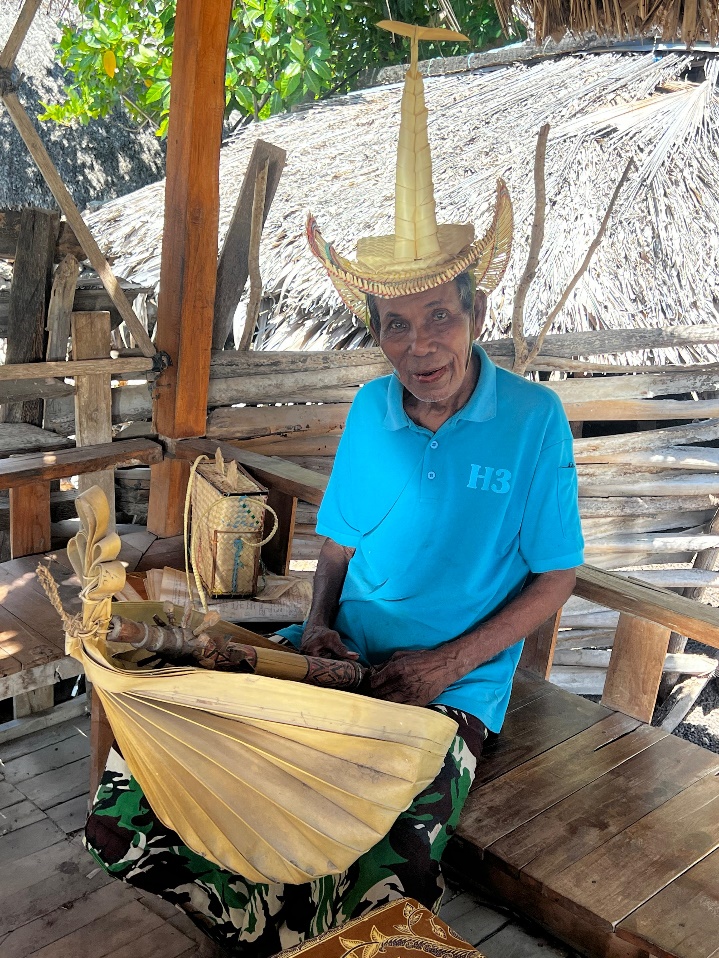
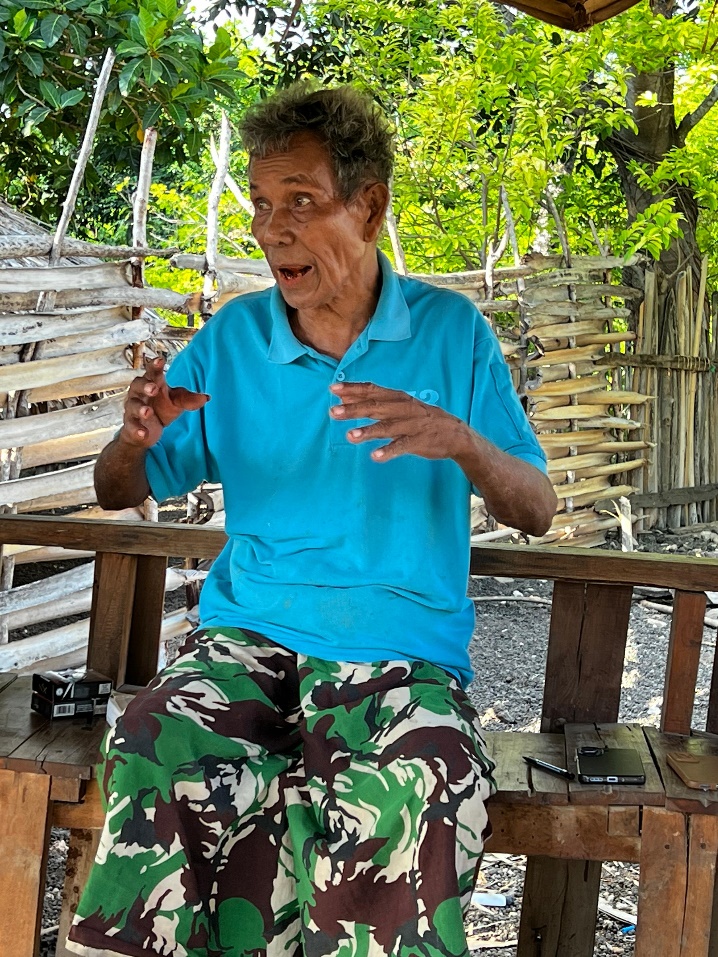
By integrating all these components, the study comprehensively examines marine symbolism in the tale ‘Suti Solo do Bina Bane’. It offers broader insights into how marine conservation practices have developed within changing cultural and historical contexts.
Results and Discussion
About James J. Fox's version of ‘Suti Solo do Bina Bane’
James J. Fox's version of ‘Suti Solo do Bina Bane’ is a comprehensive study of the oral compositions of the Rotenese people in Eastern Indonesia. This book, titled Master Poets, Ritual Masters: The art of oral composition among the Rotenese of Eastern Indonesia, published by ANU Press in 2016, provides an in-depth analysis of the narrative structure, symbolism, and variations of ‘Suti Solo do Bina Bane’ across different dialects and communities. ‘Suti Solo do Bina Bane’ is one of the most frequently recorded ritual compositions by the author. This composition tells the story of the arrival of benefits from the sea, with the personification of two sea shells (Suti Solo and Bina Bane). This composition can turn into a death chant (widow and orphan), which describes the search for the right place in society.
Fox, an anthropologist with over 50 years of research experience, began his fieldwork on the island of Rote in 1965 and has since recorded numerous versions of this chant from master poets. His work highlights the significance of canonical parallelism in Rotenese oral literature and the role of poets as custodians of traditional knowledge. The book offers valuable insights into the cultural richness and diversity of the Rotenese oral traditions, making it a significant contribution to the field of oral poetry studies.
The book is structured into two main parts. Part I focuses on the versions of ‘Suti Solo do Bina Bane’ from the Termanu domain, presenting detailed analyses of nine different versions. These versions showcase the variations in narrative structure and the use of oral formulae, providing a rich understanding of the chant's complexity and depth. Part II explores the chant's variations across other domains, including Landu, Ringgou, Bilba, Ba'a, Thie, and Dengka. This comparative approach highlights the differences and similarities in the chant's composition across the island, emphasizing the cultural and linguistic diversity of the Rotenese people. The detailed analyses of the semantic parallelism used in the chants illustrate how specific word pairs and formulaic expressions are employed to convey cultural meanings and values.
Fox's research also delves into the historical and cultural context of Rote, discussing the island's political history and the impact of Dutch colonialism on its linguistic landscape. He explains how the island's complex dialect chain and the distinct traditions of each domain contribute to the richness of its oral traditions. The book includes detailed analyses of the semantic parallelism used in the chants, illustrating how specific word pairs and formulaic expressions are employed to convey cultural meanings and values. Rotenese uses a special ritual language that relies on strict semantic parallelism, which is part of a broader tradition of oral composition found in various literatures around the world. The concept of canonical parallelism, developed by Roman Jakobson, describes compositions where certain similarities between successive verbal sequences are obligatory or highly preferred.
In addition to his analysis of ‘Suti Solo do Bina Bane’, Fox also explores other aspects of Rotenese oral traditions, such as the role of poets as custodians of traditional knowledge and the importance of ritual language in maintaining cultural identity. He discusses the various modes of performance, including chanting, singing, and storytelling, and how these practices are integral to the social and cultural life of the Rotenese people. The role of poets (manahelo) in Rote is crucial as they are considered ‘men of knowledge’ who are responsible for communicating ritual knowledge without alteration. They are valued based on their deep ritual knowledge and the quality of their compositions. Most master poets are elderly individuals who have accumulated knowledge over many years.
Overall, Fox's version of ‘Suti Solo do Bina Bane’ provides a comprehensive and detailed account of the oral compositions of the Rotenese people, offering valuable insights into their cultural heritage and the art of oral poetry. His work is a testament to the richness and diversity of oral traditions and their significance in preserving cultural identity and history. The book not only offers a deep understanding of this particular oral composition but also provides insights into how the oral traditions of the Rotenese serve as a means to preserve and appreciate their cultural values. Fox explains how poets use ritual language to depict the relationships between nature, humans, and deities, as well as to convey the cultural values and life philosophies of the Rotenese community.
Two Versions of ‘Suti Solo do Bina Bane’
James J. Fox has recorded the story ‘Suti Solo do Bina Bane’ at Thie Domain, Rote Island, East Nusa Tenggara, which is divided into Version I and Version II. The two versions of this tale can be analyzed through their cultural and historical contexts, which highlight the evolution of traditional practices and the impact of modernity. Symbolically, these versions use traditional and potentially new symbols to convey complex cultural meanings. Mythologically, they reflect a blend of local and regional narratives, maintaining their relevance in contemporary society. This analysis underscores the dynamic nature of folklore and its ability to adapt to changing cultural landscapes.
Version I was recorded in 1973 when the Limba ceremony was still regularly conducted, and the story was part of a larger series of ritual chants. Version II was recorded in 2011 when the Limba ceremony had become rare due to the influence of the church. The story is more nostalgic, emphasizing the importance of maintaining ritual traditions despite changes. The shift from cosmological myths to ritual practices integrated with daily life reflects the adaptation of the Rotenese community to social and religious changes. Version I (1973) of ‘Suti Solo do Bina Bane’, recorded by James J. Fox in Thie, Rote, is more mythological, focusing on the conflict between sky deities (Ledo Horo/Bula Kai) and sea deities (Manetua Sain/Danga Lena Liun). The story depicts an epic battle that causes Suti Solo and Bina Bane to be tainted with blood and tossed about in the sea, with a detailed genealogical background. In contrast, Version II (2011), recorded from Jonas Mooy, emphasizes daily ritual practices, particularly the role of coconuts in fertility ceremonies. This version is more instructional, with detailed instructions on how to conduct the ceremony, including the use of coconuts to distribute gentle dampening dew and cool rainwater to prepare the earth.
Version I began with a cosmological prologue acknowledging the rule of Heaven and Earth, then directly depicts the war between sky and sea deities at Lau Mara//Leme Niru. The story follows the chronological sequence from the battle to the discovery of grains in the sea and the journey of Suti Solo/Bina Bane to various locations in Thie. Version II, on the other hand, jumps straight into the action with a storm hitting the sea, with Suti Solo and Bina Bane asking to be taken to the shore. The story focuses more on ritual instructions, such as the use of coconuts and flat stones for the Limba ceremony.
In Version I, the main characters are the sky deities (Ledo Horo/Bula Kai) and sea deities (Manetua Sain/Danga Lena Liun), as well as human figures like Bui Len and Eno Lolo, who retrieve Suti Solo/Bina Bane from the sea. The story also involves Adu Ledo and Ndu Bulan, the sons of the sky deities who marry the daughters of the sea deities. Version II focuses more on local figures, Tola Mesa and Le’e Lunu, the founders of Thie, who encounter Suti Solo/Bina Bane after the storm. The shells in this version are more active in giving ritual instructions, such as asking to be taken to specific places and using coconuts in the ceremony.
Version I used cosmological symbolism, with the sea as the arena of battle between deities and a source of life that must be respected. The story describes rituals for planting grains in specific locations in Thie, emphasizing the role of orphan and widow as symbols of continuity. Version II is more ritualistic, with coconuts at the center of the ceremony, distributing gentle dampening dew and cool rainwater to prepare the earth. The story also depicts the establishment of the first Limba ceremony in Thie, with detailed instructions on the use of coconuts and flat stones.
Version I used the Thie dialect with specific characteristics, such as replacing ‘l’ with ‘r’ and ‘ng’ with ‘ngg’. For example: lulik//sangu replace with lurik//sanggu (storm//cyclone). Version II incorporates new terms like limba//oli to describe the origin ceremony in Thie, as well as phrases like lada mbeda//lole heu (taste of food//beauty of clothing), which do not have direct equivalents in Termanu. The use of coconuts in wedding rituals also reflects the integration of Christian symbols with local practices.
The differences between the two versions reflect the evolution of narrative from cosmological myths to ritual practices integrated with daily life. Version I focused more on mythological origins with detailed genealogies, while Version II is more instructional, which emphasizing fertility rituals and the role of coconuts. These changes show how oral traditions adapt to social and religious changes while maintaining cultural values such as respect for the sea and the importance of ecological balance.
The Sea as a Central Element of Coastal Community Life
The sea is not merely a backdrop but a central element in the ritual and cosmology of the Rotenese people (SM, Informant 5), as depicted in the tale ‘Suti Solo do Bina Bane’. It is portrayed as the abode of sea deities such as Manetua Sain and Danga Lena Liun, who play crucial roles in the mythology. The conflict between the sky deities and the sea deities forms the starting point of the narrative, highlighting the sea as a space of interaction between the underwater and the sky realms.
“The Canon of Origins: Relations between the Sun and Moon and the Lords of the Sea... This episode, which serves to introduce the recitation, recounts the attack of the Sun and Moon, Ledo Horo and Bula Kai, and their children on the Lords of the Ocean and Sea, Manetua Sain and Danga Lena Liun.” (Fox, 2016:313)
In ‘Suti Solo do Bina Bane’, the sea functions as a source of life, a medium of transformation, and a ritual element that connects the human world with the spiritual realm. This aligns with Mircea Eliade’s theory in The Myth of the Eternal Return (1957), where the sea is often seen as a ‘place beyond time and space’ that links the human world with the divine or the afterlife (Eliade, 1957:16). For instance, in Greek mythology, Poseidon’s dominion over the sea symbolizes not only physical power but also influence over life and death. Similarly, in many coastal cultures, including those in Indonesia, the sea is considered sacred, connecting the human world with the spirit world and often serving as the passage for souls in the afterlife.
The shells of Suti Solo and Bina Bane, found in the sea and brought to the land, symbolize the cycle of rebirth and regeneration. Shells, in many cultures, represent life’s protection and are often associated with birth or rebirth in mythology. This discovery and relocation from the sea to the land signify a transition or transformation between the two worlds. The cycle can be seen as a symbol of life, death, and rebirth, with the sea as the origin of life and the shells as reminders of life’s continuity.
Regeneration and rebirth are vital concepts in mythology and cosmology. Objects found in the sea, like shells, can symbolize souls undergoing the cycle of life and death, with the potential for rebirth or renewal. This process is often linked to rituals of purification, transformation, or achieving higher consciousness. In Bali, for example, purification ceremonies involving water rituals are believed to cleanse and renew the spirit. The Balinese ritual of Melukat (purification) is performed at sacred water sources such as rivers, springs, or waterfalls, where water is seen as a conduit for spiritual energy (Kuckreja 2024; Bali Yoga School 2024). During Melukat, participants bathe in holy water to release negative energy and restore inner balance (Kuckreja 2024).
Overall, the sea as a transitional space holds multiple layers of meaning across various cultures, symbolizing rebirth, regeneration, and inevitable spiritual journeys (Taum et al., 2024:174). In the context of ‘Suti Solo do Bina Bane’, the sea acts as a place where the dead or lost are found and returned to the land, symbolizing a new beginning.
The Sea as a Source of Life
The sea is portrayed as the origin of sustenance and fertility, providing essential resources to coastal communities (Suwondo et al., 2023:54). In ‘Suti Solo do Bina Bane’, shells from the sea—Suti Solo and Bina Bane—are transformed into grains (e.g., rice and millet), symbolizing the sea’s role in nourishing humanity.
The Blood of Battle Falls on Suti Solo and Bina Bane and They Flee
57. Dan, ana nonosi
58. Ma oen, ana tititi.
59. Ana tititi la’eBlood, it pours out
And water, it drips out.
It drips on(Fox, 2016:322)”
The sea is depicted as a battleground where deities clash, but it also becomes the source of life when the blood of battle touches the shells, triggering their transformation into grains. This duality reflects the sea’s role as both a destructive and generative force.
A Celebration Brings the Rains and Prepares the Earth for the Planting of Seeds
…
118. De ara hene Tola Mesa non
119. Ma ketu Le’e Lulu non
120. De ara leli sau neu sara.
121. Boe ma ara bamba lololo neu sara
122. De ana ba’e dinis mai dae
123. Ma ana bati udan mai lane.
124. Boe ma rae: So they say:
125. ‘Udan dai dae ena
126. Ma dinis konda lane ena
127. Tehu ai mini bini buik nai ia
128. Ma mbule sio nai ia.
……
They climb Tola Mesa’s coconut
And they pluck Le’e Lulu’s coconut
They soften and cool them.
They beat the drum steadily
It distributes the dew upon the earth
And it allots the rain upon the fields.
‘If the rain is sufficient for the earth
And the dew falls upon the fields
Then we bring the basic grains with us here
And the nine seeds with us here.
…(Fox, 2016:341)
The sea is where blood (symbolizing death) and water mix, catalyzing the shells’ metamorphosis into grains. This process mirrors the sea’s role as a space of rebirth, aligning with Victor Turner's (1967:85) theory that water symbolizes fertility and renewal. Fox (2016:23) notes that in many maritime cosmologies, the sea is seen as a life-giving force, often associated with deities who control fertility. Similarly, the shells’ journey from sea to land in ‘Suti Solo do Bina Bane’ underscores the sea’s role as the origin of sustenance for coastal communities.
The Sea as a Sacred Entity in Life
In Rotenese cosmology, the sea is revered as a sacred space and the origin of life. The tale depicts the sea as the dwelling of powerful deities—Manetua Sain and Danga Lena Liun—who govern marine life and cosmic order. Their presence underscores the sea’s role as a spiritual realm intertwined with human existence. The sea deities and marine creatures symbolize the sea’s sacredness, embodying forces that sustain life and demand respect. This aligns with Mircea Eliade's (1957:48) concept of the sea as a sacred space where divine and human realms intersect.
“A sacred space is created around a ‘sitting stone and standing tree’ where there is dancing and the beating of drums and gongs to bring cooling rain down on the earth. Although initially rice and millet are planted, the chant expands its designation of what is planted, referring to ‘the nine seeds and the basic grains, the nine children of Lakamola’. This is a ritual designation for all of the seeds that Rotenese plant in their fields.” (Fox, 2016:343)
This sacred view of the sea is echoed in global traditions, where marine deities symbolize the ocean’s dual role as a life-giver and moral authority. In Javanese mythology, Nyi Roro Kidul is revered as the guardian of the South Sea (Kristianto et al., 2024:105). Her influence extending over coastal fertility and the fortunes of fishermen, embodying the sea’s nurturing yet unpredictable power (Geertz, 1976:29). Similarly, in Hinduism, the deity Varuna governs the cosmic ocean (Beggiora, 2022:153), enforcing moral order and justice, reflecting the sea’s capacity to sustain life while demanding respect (Parpola, 2015:112; Shchuko et al., 2006:1948). Among the Inuit, the goddess Sedna controls marine animals, illustrating the sea’s role as both a provider of sustenance and a spiritual guide, central to survival in Arctic environments (Pearce et al., 2024:218; Usher, 2000:184). These deities underscore the sea’s sacredness across cultures, emphasizing its role as a source of life that must be honored and protected.
Suti Solo and Bina Bane as Orphan and Widow Achieve Their Rest in the Fields of Thie
…
171. Lain bati malole
172. Ma ata ba’e mandak
173. Ruma mana parinda kisek mai a
174. uma tema sion mai
175. Numa bate falu mai ooo ……
The Heights distribute the good
The Heavens allocate the proper
From them is a single rule
From the fullness of nine
From the completeness of eight …(Fox, 2016:327)
Symbolism of the Sea in Coastal Community Cosmology
The sea holds profound symbolic meaning in coastal societies, serving as a bridge between life, death, and ecological balance. The palm tree that is the source of life for the Rote people is also believed to be a plant that comes from the ocean. WM (Informant 2) who was also confirmed by MM (Informant 3) said that the palm tree that is characteristic of the Rote people is a fruit that was stranded from the ocean on the land of Rote. That is why it is called sai boa (ocean fruit). In the Rotenese tale ‘Suti Solo do Bina Bane’ (from Thie Domain, Rote Island, Indonesia), the sea is depicted as a source of life, a realm of transformation, and a model for sustainable living. Below is a detailed analysis of its symbolism, enriched with quotes and references.
The Sea as a Space of Transformation
The sea is frequently linked to death, spiritual journeys, and rebirth. Mircea Eliade (1957:73) argues that water in mythology symbolizes chaos but also purification and renewal. In Rotenese cosmology, the sea acts as a transitional realm where death leads to new life.
“Suti Solo and Bina Bane then ask to be carried eastward so that at dawn they may be placed at the boundary stone and field’s border. It is at this point that the lines occur: ‘So let it be: a hundred rise and a thousand mount at the rice field dike and the dry field boundary.’ These metaphoric lines signal the planting of the shells as the first seeds of rice and millet and foretell the harvests (‘a hundred rise//a thousand mount’ refers to the myriad stalks in the fields) that will come from them.” (Fox, 2016: 324-325)
“This coconut has five layers:
The husk embraces the shell
The shell embraces the flesh
The flesh embraces the water
And the water embraces the kernel.
So let it be:
That this boy and this girl
Let one embrace the other
And let one cling to the other
That the sprout of the coconut may come forth
And the core of areca nut may appear
That they may give birth to nine times nine
And bring forth eight times eight.”
(Fox, 2016:346-347)
The shells came out of the sea, where they drift alone, symbolizing detachment from their origins. This mirrors the sea’s role as a space of liminality, where entities undergo transformation. The waves propel the shells toward new destinations, symbolizing the sea’s role in guiding souls or objects through transitions. This aligns with Eliade's (1957:190) concept of water as a medium for spiritual journeys and rebirth.
“Suti Solo and Bina Bane’s first request to Bu Len and Eno Lolo is to be placed on ufa and bau trees when they are in blossom. Both of these trees produce beautiful flowers. The ufa tree is otherwise known as the Malabar plum tree, rose apple or Malay apple tree (Syzygium jambos), while the bau tree is the hibiscus tree (Hibiscus tiliaceus). But almost immediately this proves unsatisfactory.” (Fox, 2016:323)
“Suti Solo and Bina Bane’s next request is to be carried into the house and placed on two of the major beams of the house. These are the places where sacrifices are carried out in the traditional house in Thie.” (Fox, 2016:324)
In many coastal cultures, the sea is seen as a passage to the afterlife. For example, in Balinese Hinduism, the ritual of Melukat (water purification) symbolizes cleansing and renewal, reflecting the sea’s transformative power (Bali Yoga School 2024). Similarly, there is the tale of Suti Solo and Bina Bane, who 'perished' at sea after being attacked by the Sun and Moon; Ledo Horo and Bula Kai, along with their children, who rose against the Lord of the Sea and Ocean; and Manetua Sain and Danga Lena Liun, the divine rulers entwined in this cosmic conflict. During the attack, Suti Solo and Bina Bane were stained by the blood of the battle that was spilt, causing the two shells to drift into the sea.
The Sea as a Representation of Ecological Balance
Coastal communities view the sea as integral to ecological balance, requiring respect to prevent disasters. Roy Rappaport's (1968) theory of ecological reciprocity highlights rituals that sustain human-environment harmony. In ‘Suti Solo do Bina Bane’, the sea is depicted as a balanced system where sky and sea deities collaborate to distribute fertility.
The sea is depicted as the origin of sustenance and fertility, providing essential resources to coastal communities. In ‘Suti Solo do Bina Bane’, shells from the sea—Suti Solo and Bina Bane—are transformed into grains (e.g., rice and millet), symbolizing the sea’s role in nourishing humanity (Fox, 2016:324). The sea is portrayed as part of a cosmic order where balance is maintained through cooperation between celestial and marine realms. This mirrors indigenous ecological wisdom, such as the Sasi system in Maluku, which regulates marine resource use through customary law (Fox, 2016:343). The sea’s duality as a site of conflict and renewal reflects Eliade's (1957:78) notion of water as both chaotic and regenerative. The shells’ metamorphosis from sea to land mirrors the ecological balance between marine and terrestrial realms (Fox, 2016:321). A key ceremony involves coconuts, which ‘distribute the dew and allot the rain’ to prepare the earth for planting. This ritual symbolizes the interdependence of marine and terrestrial ecosystems (Fox, 2016:346). The sea in coastal mythology symbolizes life, death, and ecological balance, reflecting humanity’s spiritual and ecological relationship with the marine environment. In ‘Suti Solo do Bina Bane’, the sea’s symbolism underscores its role as a source of sustenance, a space of transformation, and a model for sustainable living (Fox, 2016:327).
Nadel-Klein (2020:45) emphasizes that coastal societies often encode ecological knowledge in myths, using rituals to maintain harmony with the sea. The shells’ journey in ‘Suti Solo do Bina Bane’—from sea to land—symbolizes the need for sustainable resource management, aligning with Rappaport's (1968:5) model of ecological reciprocity.
The sea in coastal mythology symbolizes life, death, and ecological balance, reflecting humanity’s spiritual and ecological relationship with the marine environment. In ‘Suti Solo do Bina Bane’, the sea’s symbolism underscores its role as a source of sustenance, a space of transformation, and a model for sustainable living. These themes resonate with broader anthropological theories on water symbolism and ecological reciprocity.
Rituals and Symbols of Ecological Balance
The story highlights rituals that honor the sea’s life-giving properties. A key ceremony involves coconuts, which ‘distribute the dew and allot the rain’ to prepare the earth for planting (Fox, 2016:343). This ritual symbolizes the interdependence of marine and terrestrial ecosystems.
Coconuts, a marine resource, mediate between sea and land, reflecting the community’s reliance on the sea for agricultural fertility. This practice mirrors the ecological reciprocity described by Roy Rappaport (1968), where rituals sustain environmental balance.
“In the second version, there is a particular emphasis on the coconut that the ancestors must gather and bring to the ceremony. Although it is not made explicit, this coconut is the focus of the origin ceremony: it brings ‘gentle dampening dew and the cool rainwater’ that pour down upon the earth.” (Fox, 2016:346)
Rituals around the globe highlight the profound connection between coastal communities and the sea, emphasizing its role in maintaining ecological balance. In Java, the Larung Sesaji ritual involves casting offerings of food and flowers into the ocean to placate Nyi Roro Kidul, the guardian of the South Sea, thereby securing calm waters and abundant harvests (Saddhono et al.:381, 2019). Similarly, in Maluku, the Sasi Laut tradition, documented by McLeod et al. (2009:660), sees communities adhering to customary laws that restrict fishing during specific seasons, allowing marine life to replenish and thrive, serving as a model for community-based conservation (Hallatu et al., 2019:985; Lewerissa et al., 2021:3; Uktolseja and Balik, 2022:15). In Japan, the mythical Ryūgū-jō, the palace of Ryūjin, the dragon king of the sea, embodies the sea's mystical ability to influence weather patterns and marine ecosystems (Goto, 2020:35; Johnson, 2021:363; Heo and Lee, 2018:178). These diverse rituals underscore the sea's function as a vital intermediary between humanity and the divine, utilizing spiritual practices to foster and maintain ecological harmony.
Marine Conservation in Coastal Community Traditions
The tale ‘Suti Solo do Bina Bane’ from Thie Domain, Rote Island, Indonesia, offers a profound narrative of how coastal communities have historically integrated marine conservation into their cultural and spiritual practices. This section explores the story’s ecological themes, weaving together indigenous knowledge, global examples, and scientific frameworks to illustrate the profound relationship between coastal societies and marine ecosystems.
The Sea as a Space of Transition and Renewal
The sea is portrayed as a liminal zone between life and death, where transformation occurs. The shells Suti Solo and Bina Bane journey from the sea to land, symbolizing rebirth and the cycle of nature. It can be seen from the closing verse of Version I of the story 'Suti Solo do Bina Bane'.
“Although some versions end with a return to the sea, others conclude with a resting place on Rote. In a truncated fashion, for example, the conclusion of this version of Suti Solo do Bina Bane resembles the conclusion of Kornalius Medah’s version of Suti Solo do Bina Bane from Bilba. Instead of the Pandanus River road and the Forest Jasmine path leading to the Nilu Neo and Ko Nau trees, complete with ‘the fullness of nine and the abundance of eight’ (tema sio//bate falu), the shells in this version come to rest as seeds in fields that continue to produce their harvests—an order that presides over the Heavens and Heights ‘in the fullness of nine and in the abundance of eight’ (tema sio//bate falu).” (Fox, 2016:328)
The sea’s duality as a site of conflict and renewal reflects Eliade's (1957:79) notion of water as both chaotic and regenerative. The shells’ metamorphosis from sea to land mirrors the ecological balance between marine and terrestrial realms.
This duality of the sea as both chaotic and regenerative aligns with Eliade's (1957:29) concept of water as a symbol of renewal. The shells’ journey mirrors the ecological balance between marine and terrestrial realms, illustrating how coastal communities view the sea as a space of continuous renewal. Eliade (1957:128) posits that water embodies the potential for both destruction and regeneration, reflecting the sea’s unpredictable yet life-sustaining qualities. This duality is evident in the shells’ journey in the Rotenese tale, where their transformation from marine to terrestrial entities mirrors the ecological balance between the ocean and land, illustrating the sea’s role as a space of continuous renewal.
The sea’s capacity to facilitate life while also harboring destructive forces is a motif that appears in numerous mythologies and rituals worldwide. For instance, in Greek mythology, Poseidon (the god of the sea), is depicted as a powerful deity who can unleash storms and calm the waves, symbolizing the sea’s dual potential for destruction and renewal. Scolnic (2024:143) and Panchenko (2019:460) note that Poseidon’s trident, a symbol of his authority, could shatter rocks and summon storms, yet he was also revered for his ability to create springs and bestow fertility. Similarly, the Māori ritual of Tikanga Moana in New Zealand involves ceremonies to honor marine spirits and ensure sustainable fishing practices (Aschenbrenner, 2023:57;[1] Maxwell et al., 2020:5; Te Aho, 2019:1617). Aschenbrenner (2023:70) describes how these rituals acknowledge the sea’s regenerative power while also recognizing its capacity to inflict harm if not treated with respect. These global parallels underscore the sea’s role as a dynamic force that embodies both chaos and renewal, a concept deeply ingrained in the cultural and spiritual practices of coastal communities.
Indigenous Conservation Practices and Oral Traditions
Indigenous communities have long utilized oral traditions to transmit ecological knowledge, embedding principles of sustainability within their cultural narratives. As told by DB (Informant 6), the Rote community believes that there are several types of fish that are prohibited from being caught and consumed. This is a form of local wisdom of indigenous peoples to protect the marine environment (AM, Informant 4). Apart from that, the Rotenese tale ‘Suti Solo do Bina Bane’ exemplifies this practice, conveying respect for the sea as a sacred entity whose balance must be maintained to avert disaster. This aligns with Berkes' (2012:75) assertion that indigenous stories encode environmental wisdom, guiding practices that ensure resource renewal and ecological harmony (Pyo 2017). Through rituals like coconut ceremonies and offerings to sea spirits, the narrative emphasizes reverence for marine deities, reflecting broader themes of interconnectedness between humanity and the natural world.
Key conservation themes in the story mirror traditional practices observed globally. Rituals honoring marine deities, such as offerings to sea spirits, underscore the belief that ecological balance is achieved through spiritual reciprocity. Similarly, the tale implies seasonal restrictions on harvesting, akin to the Sasi Laut system in Maluku, where taboos on overfishing ensure resource regeneration (Hallatu et al., 2019:986; Sahusilawane et al., 2024:3; Saptenno and Timisela, 2024:1407). The narrative also portrays the sea as a moral judge, rewarding stewardship and punishing exploitation—a motif echoed in many indigenous cultures. These principles highlight how oral traditions serve as repositories of ecological knowledge, fostering sustainable practices long before modern conservation movements emerged.
Globally, indigenous knowledge systems have guided resource management for centuries, often predating contemporary conservation strategies. In Polynesia, the Tabu system designates sacred zones where fishing is prohibited to preserve biodiversity, as documented by (Guampedia, 2019; Johannes, 2002:321). The Ra’ui tradition in the Cook Islands restricts fishing in specific areas to prevent overexploitation, ensuring marine life replenishes sustainably (Hoffmann, 2002:405). This practice has been integrated into the national conservation strategy in the Cook Islands, combining traditional knowledge with modern science (Miller et al., 2012:180). Canada, which has a marine conservation target of 30% by 2030, includes indigenous communities (such as the Mi'kmaq in Nova Scotia) in the management of marine protected areas (Denny and Fanning, 2024:7; Warrior et al., 2022:1299). These examples illustrate how indigenous practices, rooted in oral traditions and spiritual beliefs, have long sustained ecological balance, offering timeless lessons for modern conservation efforts.
Modern conservation increasingly recognizes the value of indigenous practices, integrating traditional ecological knowledge into community-based conservation initiatives. Research shows that CBC efforts, which engage local communities, lead to higher biodiversity and resource sustainability (Jennings et al., 2024:2). For instance, in Lake Kolleru, India, fishers use traditional gear to sustainably harvest fish, avoiding destructive practices like dynamite fishing (Jammu et al., 2016:42). This approach not only preserves marine life but also maintains the ecological balance of the lake, benefiting both the environment and local livelihoods. Similarly, in Zanzibar, the Marine Conservation Areas (MCAs) involve local fishers collaborating with authorities to protect mangroves, coral reefs, and seagrass beds. This partnership balances livelihoods with conservation, ensuring that marine ecosystems remain healthy while supporting the economic needs of coastal communities (Mbarouk, 2022:10).
Large-scale conservation efforts, such as those at the Great Barrier Reef, also demonstrate the effectiveness of integrating traditional ecological knowledge with modern strategies. By strategically placing marine reserves and habitat corridors, conservationists promote ecological connectivity, creating a model for sustainable marine stewardship (Conservation Corridor 2024). These examples illustrate how traditional ecological knowledge and community-based conservation can complement modern conservation strategies, offering scalable solutions that enhance biodiversity and ensure the sustainable use of natural resources.
Oral traditions, such as the Rotenese tale ‘Suti Solo do Bina Bane’, serve as living archives of ecological knowledge, enabling communities to adapt to environmental changes by preserving ancestral wisdom. These narratives document historical ecological patterns, offering insights into sustainable practices and resilience strategies. For example, the Gullah/Geechee community in the U.S. Southeast relies on oral histories to track shifts in fisheries and coastal ecosystems, preserving memories of sea-level rise and resource depletion that inform modern adaptation efforts (Jennings et al., 2024:4). Their narratives, passed down through generations, highlight the interconnectedness of human activities and environmental health, advocating for coastal protection and sustainable resource use. Similarly, initiatives like NOAA’s Voices Oral History Archives (National Oceanic and Atmospheric 2024) document how coastal communities worldwide use traditional knowledge to address climate impacts, bridging cultural heritage with contemporary environmental stewardship (Delaney and Frangoudes, 2024:26). These examples underscore the vital role of oral histories in fostering environmental resilience by connecting past experiences to present challenges.
Fox (2016:17) highlights the profound interconnectedness between marine ecosystems and human societies, emphasizing the critical role of traditional knowledge in sustainable resource management. He argues that coastal communities often view the sea as an extension of their cultural identity, integrating marine resources into rituals, myths, and daily practices. For example, traditional practices like rotational fishing and seasonal taboos have historically maintained ecological balance, offering valuable lessons for modern conservation efforts. These indigenous stewardship practices reflect a deep understanding of marine ecosystems, demonstrating how cultural traditions can foster sustainable resource use.
In the Rotenese tale ‘Suti Solo do Bina Bane’, this connection is exemplified through rituals like coconut ceremonies and taboos on overharvesting, which mirror global traditions such as Bali’s water purification rituals (Bali Yoga School 2024). This practice underscores the sea’s spiritual and ecological significance, illustrating how respect for marine environments ensures their continued bounty. In an era of climate change and biodiversity loss, Fox’s insights remind us that ecological balance is deeply intertwined with cultural heritage. The tale’s message—that reverence for the sea fosters sustainability—remains as relevant today as it was centuries ago, offering a timeless model for coexisting with marine ecosystems.
Cultural Changes and Dynamics of Ritual Stories
The Rotenese tale ‘Suti Solo do Bina Bane’ reflects evolving cultural perceptions of the sea, as seen in its two distinct versions. The differences between the two versions of the story reflect a change in the Rotenese people's understanding of the sea, from a more mythological one to a more ritualistic one related to everyday life.
Version I
"Suti Solo and Bina Bane Ask to be Carried to the East and to the Headland... ‘Keko ai dulu miu dei (Shift us to the east). Ma lali ai langga miu dei (And transfer us to the headland). Fo ai Timu Dulu miu dei (So that we may be in the Dawning East). Ma ai Sepe Langga miu dei (And at the Reddening Headland). Fo ai Timu Dulu miu dei (So that we may be in the Dawning East). Ma ai Sepe Langga miu dei (And at the Reddening Headland). Mbeda ai miu to batu (Take us to the border stone). Ma na te ndae ai miu lane tiner (And carry us to the field’s border).” (Fox, 2016:325)Version II
"The coconut is the focus of the origin ceremony: it brings ‘gentle dampening dew and the cool rainwater’ that pour down upon the earth.” (Fox, 2016:346)
The first version, recounted by Guru Pah and Samuel Ndun (1973), emphasizes a mythological narrative of conflict between sky and sea deities, focusing on the journey of the shells Suti Solo and Bina Bane as they seek a suitable place to grow. The second version, documented by Jonas Mooy (2011), shifts focus to ritual practices, highlighting the coconut’s role in fertility ceremonies. This transition from mythological to ritualistic themes mirrors broader cultural shifts toward integrating spiritual traditions with daily life, underscoring the sea’s role as a bridge between the sacred and the mundane.
The sea’s symbolic meaning in coastal cultures extends to ecological balance, a concept deeply embedded in indigenous knowledge systems (Ounanian et al., 2021:6). For the Rotenese, the sea is not merely a resource but a spiritual entity requiring respect. Rituals like post-fishing thanksgiving ceremonies and seasonal fishing taboos reflect a belief in the sea’s regenerative power, aligning with Roy Rappaport's (1968:225) theory of cultural ecology. In his seminal work Pigs for the Ancestors, Rappaport argued that rituals serve as mechanisms to maintain ecological harmony by reinforcing reciprocal relationships between humans and nature. Similarly, the Rotenese practice of restricting fishing during specific seasons ensures marine regeneration, illustrating how cultural traditions can foster sustainability.
This dynamic interplay between ritual and ecology is echoed globally (Moutinho, 2009:250). For instance, the Gullah/Geechee community in the U.S. Southeast uses oral histories to track shifts in fisheries and advocate for coastal protection, preserving memories of sea-level changes to inform modern adaptation strategies. These narratives, like the Rotenese tale, highlight the sea’s dual role as a provider and a force to be respected, offering timeless lessons in environmental stewardship. By honoring the sea’s spiritual and ecological roles, indigenous communities provide models for sustainable coexistence, reminding us that ecological balance is deeply intertwined with cultural heritage.
Conclusion
The Rotenese tale ‘Suti Solo do Bina Bane’ offers a profound lens through which to understand the interplay between cultural heritage and ecological stewardship. This study has illuminated the sea’s dual role as a source of life and a spiritual bridge between humans and nature, as reflected in the narrative’s portrayal of marine deities, rituals, and the shells’ transformative journey. The comparison of the two versions—Version I (1973) emphasizing mythological conflict and Version II (2011) focusing on ritualistic practices—reveals a cultural evolution from abstract cosmological narratives to tangible, daily rituals tied to resource management. This shift underscores the adaptive nature of oral traditions, which reflect communities’ shifting priorities while preserving core ecological wisdom.
The research underscores the sea’s symbolic significance in coastal cosmology, aligning with global indigenous practices that honor marine ecosystems through rituals, taboos, and seasonal restrictions. The traditions demonstrate how spiritual beliefs can foster ecological balance a concept echoed in Roy Rappaport’s theory of cultural ecology. By integrating ritual with resource management, the Rotenese community exemplifies how indigenous knowledge systems can sustainably govern marine environments, offering timeless lessons for modern conservation.
Furthermore, this study highlights the critical role of oral histories in preserving ecological knowledge and promoting environmental resilience. Narratives like ‘Suti Solo do Bina Bane’ serve as repositories of ancestral wisdom, guiding communities in adapting to climate impacts while maintaining cultural continuity. In an era marked by biodiversity loss and climate change, the tale’s message—that reverence for the sea ensures its bounty—remains profoundly relevant. James Fox’s insights on marine conservation further emphasize the need to honor indigenous practices as models for sustainable coexistence, bridging cultural heritage with ecological sustainability.
Ultimately, this research contributes to the growing body of literature on marine conservation in coastal cultures, advocating for the integration of traditional ecological knowledge into contemporary stewardship efforts. By recognizing the sea’s spiritual and ecological roles, the Rotenese tradition offers a compelling example of how cultural narratives can inspire sustainable living, underscoring the enduring value of indigenous wisdom in global conservation strategies.
For future research recommendations, the geographical scope of the research needs to be expanded to other regions in Indonesia (or other parts of the maritime world) with a diversity of informants through a longitudinal approach to observe long-term changes. In addition, an interdisciplinary approach that combines anthropology with environmental science and comparative cross-cultural analysis can provide deeper insights. Finally, mixed methods (qualitative and quantitative) and direct collaboration with local communities can increase the relevance and effectiveness of research results in sustainable conservation efforts.
Acknowledgments
The authors are grateful to the Head of the Archaeological, Language, and Literature Research Organization, as well as the Head of the Language, Literature, and Community Research Center at the National Research and Innovation Agency, Indonesia, for the opportunity given to conduct this research. The authors would also like to thank the Education Fund Management Institute (LPDP) as the organizer of Research and Innovation for Advanced Indonesia – Expedition (RIIM – Expedition). The authors also wish to express heartfelt thanks to the reviewers for their helpful comments and suggestions.
Endnotes
References
- Aho, L. T., 2019. Te Mana o Te Wai : An Indigenous Perspective on Rivers and River Management. River Research and Applications 35 (10): 1615–1621. doi:10.1002/rra.3365.
- Aschenbrenner, M., 2023. The Political Ecology of a Diverse Urban Ethics of Marine Stewardship in Auckland, Aotearoa New Zealand. Urban Ethics as Research Agenda. London: Routledge. doi:10.4324/9781003346777-4.
- Bali Yoga School., 2024. Water Purification Ceremony with Sound Healing in Bali. Bali Yoga School. https://www.baliyogaschool.com/water-purification-session-in-ubud-bali/.
- Beggiora, S., 2022. Aquatic Mythologies: Divine, Liminal and Fantastic Creatures in the Indian Tradition. Shima: The International Journal of Research into Island Cultures 16 (2): 143–159. doi:10.21463/shima.181.
- Berkes, F., 1999. Sacred Ecology: Traditional Ecological Knowledge and Resource Management. Taylor & Francis. https://philpapers.org/rec/BERSET.
- Berkes, F., 2012. Sacred Ecology. New York: Routledge. doi:10.4324/9780203123843.
- Conservation Corridor., 2024. Case Studies: Marine Connectivity Conservation. Conservationcorridor.Org. https://conservationcorridor.org/ccsg/working-groups/mcwg/mcwg-activities/case-studies/.
- Delaney, A. E., Frangoudes., 2024. Coastal and Maritime Cultural Heritage: From the European Union to East Asia and Latin America. Maritime Studies 23 (2): 26. doi:10.1007/s40152-024-00369-x.
- Denny, S. K., Fanning, L.M., 2024. Challenges and Opportunities for Mi’kmaq Aboriginal and Treaty Rights to Fish in Nova Scotia, Canada. Marine Policy 166 (August): 106223. doi:10.1016/j.marpol.2024.106223.
- Eliade, M., 1957. The Sacred and the Profane: The Nature of Religion. New York: Harcourt, Brace & World. https://monoskop.org/images/b/b1/Eliade_Mircea_The_Sacred_and_The_profane_1963.pdf.
- Fox, J., 2016. Master Poets, Ritual Masters: The Art of Oral Composition among the Rotenese of Eastern Indonesia. ANU Press. http://www.jstor.org/stable/j.ctt1d10h31.
- Geertz, C., 1973. The Interpretation of Cultures. New York: Basic Books, Inc., Publishers. https://web.mit.edu/allanmc/www/geertz.pdf.
- Geertz, C., 1976. The Religion of Java. The University of Chicago Press. https://press.uchicago.edu/ucp/books/book/chicago/R/bo3627129.html.
- Goto, A., 2020. Cultural Astronomy of the Japanese Archipelago. Routledge. doi:10.4324/9780367809126.
- Guampedia. 2019. Pop Cultures: People of Polynesia. Www-Guampedia-Com. https://www-guampedia-com.translate.goog/people-of-pacific-cultures/people-of-polynesia/?_x_tr_sl=en&_x_tr_tl=id&_x_tr_hl=id&_x_tr_pto=tc.
- Hallatu, T.G.R., Palittin, I.D., Umanailo, M.C. B., 2019. Culture and Religion in Sasi Tradition. In Proceedings of the International Conference on Industrial Engineering and Operations Management. IEOM Society. https://www.scopus.com/record/display.uri?eid=2-s2.0-85080936369&origin=scopusAI.
- Heo, N., Lee, H., 2018. Sea Deity Beliefs of the Kuroshio Oceanic Cultural Sphere: Maritime Traditions and Cultural Interaction among Jeju Island, Zhoushan Archipelago, and the Ryukyu Islands. Island Studies Journal 13 (1): 171–184. doi:10.24043/isj.55.
- Hoffmann, T. C., 2002. The Reimplementation of the Ra’ui: Coral Reef Management in Rarotonga, Cook Islands. Coastal Management 30 (4): 401–418. doi:10.1080/089207502900282.
- Jammu, C.S.R., Rao, K.G., Simhachalam, G., Raju, C.S., 2016. Fishing Methods, Use of Indigenous Knowledge and Traditional Practices in Fisheries Management of Lake Kolleru. Journal of Entomology and Zoology Studies 4 (5): 37–44. https://www.researchgate.net/publication/306323384_Fishing_methods_use_of_indigenous_knowledge_and_traditional_practices_in_fisheries_management_of_Lake_Kolleru#fullTextFileContent.
- Jennings, V., Antonio, K.M.S., Brown, M.J., Choice, L., Simpson, Q., Ford, I., Cho, H.J., Solis, P., Lacey, A., Robinson. D.M., 2024. Place-Based Conservation in Coastal and Marine Ecosystems: The Importance of Engagement with Underrepresented Communities. Sustainability 16 (22): 9965. doi:10.3390/su16229965.
- Johannes, R. E., 2002. The Renaissance of Community-Based Marine Resource Management in Oceania. Annual Review of Ecology and Systematics 33 (1): 317–340. doi:10.1146/annurev.ecolsys.33.010802.150524.
- Johnson, H., 2021. Island Narratives in the Making of Japan: The Kojiki in Geocultural Context. Island Studies Journal 16 (2): 363–380. doi:10.24043/isj.164.
- Kristianto, A., Singgih, E.G., Haryono, S.C., 2024. Nyi Roro Kidul and Marine Eco-Pneumatology. International Journal of Asian Christianity 7 (1): 103–18. doi:10.1163/25424246-07010006.
- Kuckreja, R., 2024. The Origins of Balinese Traditions. Honeycombers Bali. https://thehoneycombers.com/bali/melukat-water-purification-ceremony-bali/.
- Lewerissa, Y. A., Ashri, M., Muhadar, Asis, A., 2021. Sasi Laut as a Non Penal Effort Treatment of Illegal Fishing for Sustainable Utilization of Fishery Resources. IOP Conference Series: Earth and Environmental Science 800 (1): 012021. doi:10.1088/1755-1315/800/1/012021.
- Maxwell, K., Awatere, S., Ratana, K., Davies, K., Taiapa, C., 2020. He Waka Eke Noa/We Are All in the Same Boat: A Framework for Co-Governance from Aotearoa New Zealand. Marine Policy 121 (November): 104213. doi:10.1016/j.marpol.2020.104213.
- Mbarouk, F.A., 2022. Aquaculture and Marine Conservation: Zanzibar Case Study. Zanzibar. https://iucn.org/sites/default/files/2022-09/zanzibar_case_study_2020.pdf.
- McLeod, E., Szuster, B., Salm, R., 2009. Sasi and Marine Conservation in Raja Ampat, Indonesia. Coastal Management 37 (6): 656–676. doi:10.1080/08920750903244143.
- Miller, S.L., Shima, J.S., Phillips, N.E., 2012. Effects of Microhabitat Availability on Estimates of Density of a Reef Fish: Implications for Assessments of Marine Protected Areas. Hydrobiologia 685 (1): 173–190. doi:10.1007/s10750-011-0911-1.
- Moutinho, I., 2009. The Sea and the Changing Nature of Cultural Identity. In Shared Waters, 245–260. BRILL. doi:10.1163/9789042027671_021.
- Nadel-Klein, J., 2020. Fishing for Heritage. Routledge. doi:10.4324/9781003085409.
- National Oceanic and Atmospheric., 2024. Voices Oral History Archives. Www.Noaa.Gov. https://www.noaa.gov/.
- Ounanian, K., van Tatenhove, J.P.M., Hansen, C.J., Delaney, A.E., Bohnstedt, H., Azzopardi, E., Flannery, W., Toonen, H., Kenter, J.O., Ferguson, L., Kraan, M., Macias., J.V., Lamers, M., Pita, C., da Silva, A.M.F., Helena Albuquerque, H., Alves, F.A., Mylona, D., Frangoudes, K., 2021. Conceptualizing Coastal and Maritime Cultural Heritage through Communities of Meaning and Participation. Ocean and Coastal Management 212 (October): 105806. doi:10.1016/j.ocecoaman.2021.105806.
- Panchenko, D., 2019. Tritogeneia, Poseidon’s Trident and Early Sacred Trinity. ΣΧΟΛΗ. Ancient Philosophy and the Classical Tradition 13 (2): 451–462. doi:10.25205/1995-4328-2019-13-2-451-462.
- Parpola, A., 2015. The Roots of Hinduism: The Early Aryans and the Indus Civilization. Illustrate. Oxford University Press.
- Pearce, T D., Gallagher, C.P., Lea, E.V., Kudlak, G., Kuptana, D., Pettitt-Wade, H., Smart, J., Memogana, S., Scanlon, H., Loseto, L., 2024. Inuit Traditional Ecological Knowledge of Anadromous Arctic Char, Iqalukpik (Salvelinus Alpinus) Under Changing Climatic Conditions in the Amundsen Gulf, Western Canadian Arctic. ARCTIC, May: 217—232. doi:10.14430/arctic79391.
- Pyo, J., 2017. The Modern Colonial Period and the Sea Narrative in the Korean Mythological Work, Samgukyusa (The Retained History of Three Kingdoms): Choi Nam-Seon’s Imagination of the Sea. Journal of Marine and Island Cultures 6 (2): 20—30. doi:10.21463/jmic.2017.06.2.02.
- Rappaport, R.A., 1968. Pigs for the Ancestors: Ritual in the Ecology of a New Guinea People. 1st ed. New Haven: Yale University Press. https://www.google.co.id/books/edition/Pigs_for_the_Ancestors/sY4bAAAAQBAJ?hl=en&gbpv=1&printsec=frontcover.
- Saddhono, K., Pertiwi, K.R., Anggrahini, D., 2019. Larung Sesaji Tradition: Symbolic Meaning and Ritual Value with Water Concept in Lake Ngebel Ponorogo, East Java. In Proceedings of the 1st International Conference on Life, Innovation, Change and Knowledge (ICLICK 2018). Paris, France: Atlantis Press. doi:10.2991/iclick-18.2019.80.
- Sahusilawane, M.M., Sunardi, Iskandar, J., 2024. Implementation of Sasi Which Impact on the Sustainability of Ecosystem Services in Maluku. Edited by B.B. Andriana, D.K. Verma, S. Withaningsih, G.L. Utama, D. Supyandi, and A.D. Malik. E3S Web of Conferences 495 (February): 01005. doi:10.1051/e3sconf/202449501005.
- Saptenno, M.J., Timisela, N.R., 2024. Assessing the Role of Local Sasi Practices in Environmental Conservation and Community Economic Empowerment in Maluku, Indonesia. International Journal of Sustainable Development and Planning 19 (4): 1407–1413. doi:10.18280/ijsdp.190418.
- Scolnic, B., 2024. The Failure of Poseidon, ‘Averter of Disaster’ and the Mythical Geography of Isaiah. Acta Antiqua Academiae Scientiarum Hungaricae 63 (2–3): 141–151. doi:10.1556/068.2023.00032.
- Shchuko, O.B., Coradini, A., Orosei, R., Shchuko, S.D., 2006. Varuna: Thermal Evolution. Advances in Space Research 38 (9): 1946–1951. doi:10.1016/j.asr.2006.06.005.
- Sukarno, S. 1982. Larung Sesaji: Ritual Masyarakat Pesisir. Pustaka Jaya.
- Suwondo, T., Wahyuni, D., Zamzuri, A., Yohanes Adhi Satiyoko, Y.A., Saptawuryandari, N., 2023. Creative Battle Space: The Sea in Indonesian Newspaper Short Stories. Journal of Marine and Island Cultures 12 (2): 53—68. doi:10.21463/jmic.2023.12.2.04.
- Taum, Y.Y., Sunarti, S., Rahmawati, Syahrul, N., Atisah, Nur, M., Kembaren, E.S., 2024. The Death of the Youngest Lamafa: Love and the Struggle for Survival of Whale Hunters in Lamalera. Journal of Marine and Island Cultures 13 (3):160—179. doi:10.21463/jmic.2024.13.3.09.
- Turner, V., 1967. The Forest of Symbols: Aspects of Ndembu Ritual. Ithaca: Cornell University Press. https://books.google.co.uk/books?id=62bKQB5xEo0C&printsec=frontcover#v=onepage&q&f=false.
- Uktolseja, N., Balik, A., 2022. Peranan Kewang Laut Dalam Pelaksanaan Sasi Laut Di Desa Pasinalo Kabupaten Seram Bagian. Jurnal Hukum Bisnis Bonum Commune, February, 10–24. doi:10.30996/jhbbc.v5i1.5660.
- UNESCO., 2018. Intangible Cultural Heritage of Humanity, issued 2018.
- Usher, P.J., 2000. Traditional Ecological Knowledge in Environmental Assessment and Management. ARCTIC 53 (2): 183—193. doi:10.14430/arctic849.
- Warrior, M., Fanning, L., Metaxas, A., 2022. Indigenous Peoples and Marine Protected Area Governance: A Mi’kmaq and Atlantic Canada Case Study. Edited by Nicole L. Klenk. FACETS 7 (January): 1298–1327. doi:10.1139/facets-2021-0128.
- World Wildlife Fund., 2019. Marine Conservation in Indonesia. Jakarta: WWF-Indonesia